Amid swirling speculations about a potential merger in Belize’s telecommunications sector, Prime Minister John Briceño remained tight-lipped when questioned about the rumored acquisition of Speednet Communications by Belize Telemedia Limited (BTL). The rumors, which first surfaced in July 2025, have yet to be officially confirmed or denied. During a recent event hosted by BTL, reporters seized the opportunity to press the Prime Minister for clarity. However, Briceño deftly sidestepped the inquiries, redirecting journalists to his brother, Jaime Briceño, with a curt response: ‘Talk to Jaime. His number is 670-1234.’ When pressed further, the Prime Minister firmly declined to engage, stating, ‘I am not going to go into a banter with you.’ This evasive stance has left the public and industry stakeholders in suspense, fueling further speculation about the future of Belize’s telecom landscape. The potential merger, if realized, could significantly reshape the competitive dynamics of the sector, but for now, the government’s silence continues to cloud the situation.
分类: business
-

GHTA celebrates members’ success at 32nd Annual World Travel Awards
The Grenada Hotel and Tourism Association (GHTA) has proudly announced the remarkable achievements of its members at the 32nd Annual World Travel Awards, held on October 4, 2025, at the Sandals Grande Saint Lucian in St. Lucia. This prestigious event, renowned for celebrating excellence in the global travel, tourism, and hospitality industries, highlighted Grenada’s exceptional contributions to Caribbean hospitality. Several of the island’s top resorts were honored with distinguished awards, further cementing Grenada’s reputation as a premier destination. Among the winners, Sandals Grenada Resort & Spa was named Grenada’s Leading All-Inclusive Resort 2025, while Spice Island Beach Resort claimed the title of Grenada’s Leading Beach Resort 2025. Calabash Luxury Boutique Hotel continued its winning streak, securing Grenada’s Leading Boutique Hotel 2025 for the 11th consecutive year. Six Senses La Sagesse earned dual accolades as Grenada’s Leading Green Hotel 2025 and Grenada’s Leading Resort 2025, and Silversands Grenada was recognized as Grenada’s Leading Wedding Resort 2025. Arlene Friday, CEO of GHTA, emphasized that these awards reflect the unwavering dedication of Grenada’s hospitality sector to excellence, innovation, and sustainability. She noted that these achievements not only elevate Grenada’s global profile but also inspire the industry to continue setting new standards for luxury and authenticity in the Caribbean. The GHTA commended its members for their outstanding contributions and their role in enhancing Grenada’s position as a world-class tourism destination.
-

Senator Dwayne George Represents Antigua and Barbuda at IMF and World Bank Annual Meetings
Senator Dwayne George, leading a delegation from the Ministry of Finance, represented Antigua and Barbuda at the 2025 Annual Meetings of the International Monetary Fund (IMF) and the World Bank in Washington, D.C. The high-profile event brought together finance ministers, central bank governors, and policymakers from around the world to deliberate on pressing economic issues, policy frameworks, and strategies for sustainable development. Antigua and Barbuda’s active participation highlighted the nation’s dedication to responsible economic governance and its engagement with the global financial community. During the meetings, Senator George and his team championed the cause of Small Island Developing States (SIDS), shedding light on critical challenges such as climate resilience, debt sustainability, and access to concessional financing. The forum also provided a platform to explore technical assistance and capacity-building initiatives aimed at bolstering national development and economic stability. By engaging in these global discussions, Antigua and Barbuda reinforced its presence on the international stage and strengthened ties with key global partners and institutions. The delegation’s efforts underscored the country’s commitment to addressing the unique vulnerabilities of SIDS while fostering collaborative solutions for shared economic challenges.
-

Financing secured for Castries–Gros Islet highway expansion
The Government of Saint Lucia has achieved a significant milestone in its infrastructure development agenda by securing $33 million in financing for the expansion of the Castries–Gros Islet Highway. This critical project aims to address persistent traffic congestion and enhance road safety along one of the island’s most heavily traveled routes. The funding was secured through two separate loan agreements with international development partners, marking a pivotal step forward for the nation’s transportation network.
-

GOB to Acquire Fortis’s Hydropower Plants and BEL Shares
In a historic move, the Government of Belize (GOB) has finalized a groundbreaking agreement with Canadian energy giant Fortis Inc. to acquire its entire electricity sector assets in Belize. This includes Fortis’s three major hydropower plants and its 33.3% ownership stake in Belize Electricity Limited (BEL). Prime Minister John Briceño is set to announce the deal in the House of Representatives on Friday, where he will introduce a Bill seeking parliamentary approval for the acquisition. The proposed legislation will authorize the purchase of Fortis’s hydropower facilities on the Macal River, which consist of the 25-megawatt Mollejon Plant, the 7 MW Chalillo Plant and Reservoir, and the 19 MW Vaca Plant. Collectively, these facilities generate over one-third of Belize’s annual electricity supply. Commissioned between 1996 and 2010, these plants have been pivotal in Belize’s renewable energy infrastructure. The government aims to complete the acquisitions by November 15, 2025, with funding allocated through a special budgetary appropriation. Post-acquisition, the government plans to issue domestic equity and debt offerings to recoup the initial investment. Financial specifics of the transaction will be disclosed when the Bill is presented. The existing power purchase agreements between the hydropower plants and BEL extend to 2050 for Mollejon and Chalillo, and to 2060 for Vaca. David Hutchens, President and CEO of Fortis Inc., expressed his congratulations to the Belizean government, highlighting Fortis’s long-standing partnership and operational success in Belize since 1999. The new entity, Hydro Belize Limited, will be headquartered in San Ignacio, Cayo District, under the leadership of CEO Kay Menzies. The company’s 48-member team will be entirely Belizean, with an Interim Board chaired by Ambassador Lynn Young, a seasoned professional with experience at both BEL and Fortis Belize. Advisors to the government included NERA Consulting UK, Hallmark Advisory, Marsh LLP, and Sukhnandan Consulting LLC.
-

Dominica Hotel and Tourism Association to gov’t: stop hike in visitor fees immediately
The Dominica Hotel and Tourism Association (DHTA) has voiced strong objections to the government’s recent implementation of steep visitor site fees, calling the move abrupt and poorly executed. While the DHTA acknowledges ongoing discussions with the government regarding sustainable funding for marketing and natural attraction maintenance, it criticized the lack of consultation and timing of the fee increases, which have surged by over 300% in some cases. The association argues that this approach disrupts collaborative efforts, risks harming local businesses, and could lead to confusion among international partners, ultimately undermining confidence in Dominica as a tourism destination. The new fee structure, effective October 1, 2025, ranges from US$20 for a single-day pass to US$50 for weekly access to eco-tourism sites. Finance Minister Dr. Irving McIntyre defended the changes, stating they are necessary to support eco-tourism infrastructure and marketing efforts, with additional fees for visitors set to take effect in January 2026. However, the DHTA highlights that these increases disproportionately affect stayover visitors, who contribute significantly to the local economy, while cruise visitors continue to pay minimal fees, creating an unfair imbalance. The association has called for an immediate suspension of the new fees to allow for transparent planning and equitable solutions, reaffirming its commitment to working with the government to ensure a sustainable future for Dominica’s tourism sector.
-
Grenada Co-operative Bank Your Financial Future 2.0 Summit
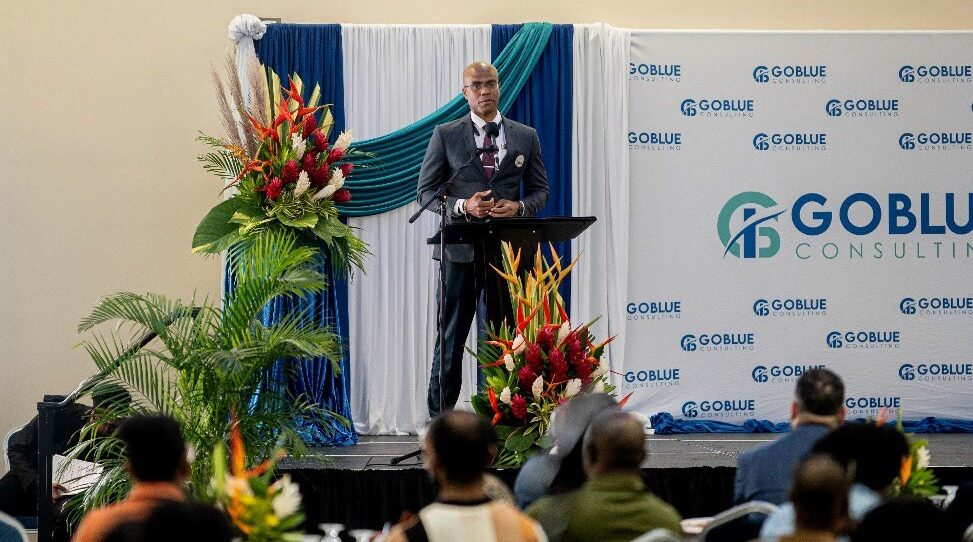
Grenada Co-operative Bank Limited (GCBL), the nation’s sole indigenous commercial bank, took center stage as the Legacy Partner of *Your Financial Future 2.0*, a transformative financial wellness summit held on October 9, 2025. Organized by GoBlue Consulting, the event aimed to equip Grenadians with practical tools and expert insights to enhance their financial literacy and security. The summit featured a series of engaging sessions led by industry leaders, including GCBL’s Managing Director, Larry Lawrence, who delivered the opening keynote titled *The Wealth Within: Rewiring Your Money Mindset*. Lawrence delved into the psychology of financial behavior, shedding light on the mental and emotional factors that shape how individuals manage their finances. Jennifer Robertson, Executive Manager of Risk, led a breakout session titled *Crush the Debt Cycle: A Practical Reset*, offering actionable strategies to overcome debt. Dr. Aaron Logie, Executive Manager of Finance and Wealth Management, participated in a panel discussion on smart financial strategies tailored to today’s economic landscape. Tanya K Lambert, Corporate Secretary and Executive Manager of Legal, contributed to a panel on wills, trusts, and legacy planning. Beyond knowledge-sharing, GCBL seized the opportunity to engage with both current and prospective customers, showcasing its products and services while gathering valuable feedback on financial needs. Ericka Hosten, Manager of Marketing and Customer Insight, emphasized the bank’s commitment to community development, stating, ‘Financial education is a cornerstone of our outreach. We aim to empower our citizens with the tools they need to achieve financial wellbeing.’ The summit underscored GCBL’s dedication to fostering financial literacy and resilience among Grenadians.
-
Come clean on collapse of import cover
In a startling revelation, Trinidad and Tobago’s import cover has dropped to a mere 5.4 months, the lowest level recorded in decades. This critical metric, which measures how long foreign reserves can sustain national imports in the event of disrupted foreign earnings, serves as a barometer of economic stability. The sharp decline has sparked widespread concern among policymakers and citizens alike, signaling potential vulnerabilities in the nation’s financial health.
When the People’s National Movement (PNM) assumed office in 2015, the import cover stood at a robust 11 months. Over the subsequent decade, it gradually decreased to approximately eight months by early 2025. This decline, though worrisome, unfolded against a backdrop of global challenges, including energy shocks, inflation, and the COVID-19 pandemic.
However, the situation has taken a dramatic turn under the United National Congress (UNC) administration. In just five months, the import cover has plummeted from eight months to five months, a steeper decline than witnessed over the entire previous ten-year period. This rapid deterioration suggests deeper systemic issues, such as unsustainable foreign exchange spending, mismanagement of reserves, or a failure to restore investor and export confidence.
While supporters of the UNC may attribute the economic fragility to the PNM’s legacy, the current administration cannot evade accountability for its policy decisions. The alarming pace of the decline indicates either a lack of control or a failure to grasp the urgency of the situation. Trinidad and Tobago cannot afford a repeat of past foreign exchange crises.
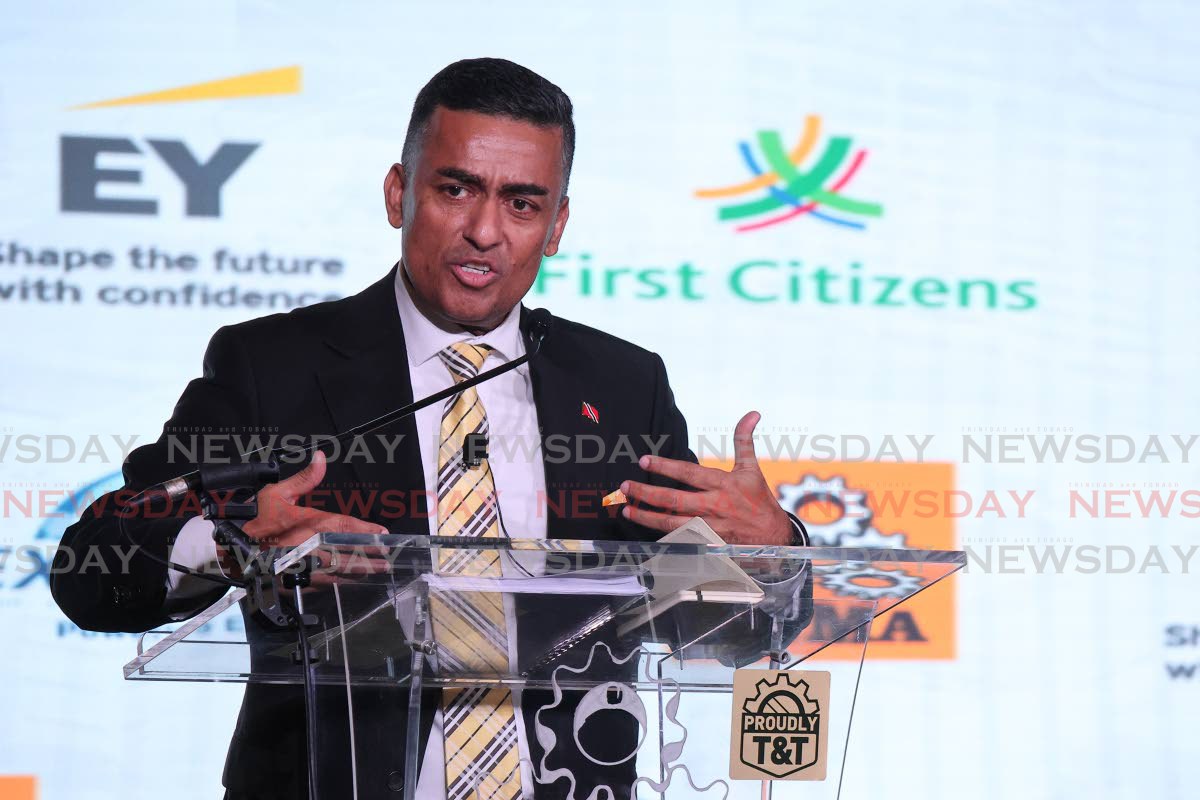
Finance Minister Davendranath Tancoo and the Central Bank must now provide transparent explanations to the public. What policies have contributed to this steep decline in reserves? Are factors such as capital flight, excessive imports, or the depletion of savings to fund short-term consumption at play?
The numbers are unequivocal: the economy is losing reserves at an unprecedented rate. The government must act swiftly and with transparency to restore confidence and prevent a further downward spiral. The stakes are high, and the time for decisive action is now.
-
Budget economically precarious
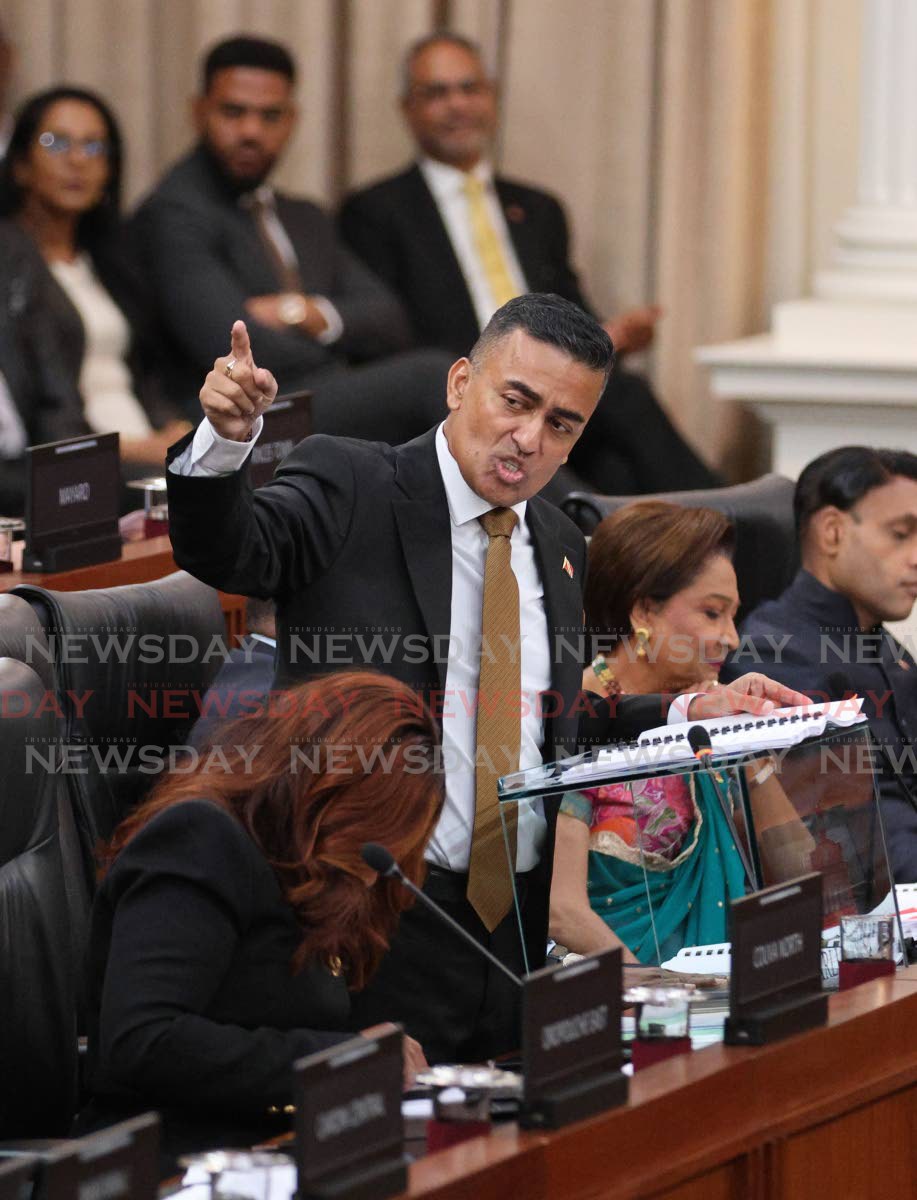
Finance Minister Davendranath Tancoo unveiled Trinidad and Tobago’s 2025-2026 national budget on October 13 at the Red House in Port of Spain. The budget, delivered with confidence and compassion, promises significant relief measures, including wage increases for public servants, fuel subsidies, and investments in education and housing. However, the fiscal framework hinges on optimistic assumptions about oil and gas revenues, raising concerns about its long-term sustainability.
Central to the budget is the assumption of an oil price of US$73.25 per barrel, which underpins the projected modest deficit of 2.17% of GDP. However, global forecasts from institutions like the IMF and the World Bank predict Brent crude prices averaging US$60-65 per barrel in 2026—a 15-20% shortfall compared to the government’s estimates. Given Trinidad and Tobago’s oil production of 55,000 barrels per day, this discrepancy could result in a petroleum revenue shortfall of $1.3 to $1.6 billion. Combined with potential delays in gas field development, total revenue could fall short by $4-5 billion, pushing the deficit closer to 5-6% of GDP.
The budget also assumes a rise in natural gas production from 2.6 to 3.2 billion cubic feet per day by 2027, largely dependent on projects like Shell’s Manatee field. However, industry timelines suggest even a one-year delay could derail these projections. Meanwhile, oil production remains near historic lows, with no major new discoveries monetized, casting doubt on the energy sector’s ability to deliver the anticipated revenues.
On the expenditure side, the budget is ambitious, committing to a 10% wage increase for public servants, costing $214 million annually, and reinstating part of the fuel subsidy by reducing super gasoline prices by $1 per litre. Additionally, multi-billion-dollar allocations for infrastructure, education, and social support programs further strain the fiscal framework. While these measures are individually defensible, collectively they embed a permanently higher wage and subsidy bill that will persist even if energy revenues falter.
To bolster non-energy revenue, the government introduced new measures, including a 0.25% asset levy on banks and insurers, a $0.05 per kilowatt-hour electricity surcharge, and higher excise duties on alcohol and tobacco. These are expected to generate $1-1.5 billion in additional revenue, but this falls short of addressing a potential $4 billion shortfall. Moreover, the asset levy may lead to higher lending rates and service fees, potentially dampening private-sector investment.
The budget’s development promises, such as 20,000 affordable homes and $150 million for laptops, are commendable but overly ambitious given the country’s fiscal capacity and implementation track record. Without robust private-sector partnerships or multilateral financing, many projects may face delays or downsizing as fiscal pressures mount.
Tobago’s allocation of 6.3% (approximately $3.7 billion) represents a modest improvement, but the 10% wage increase across the public service signifies a structural shift in expenditure. This higher wage cost limits future fiscal flexibility unless revenues rise sharply—a scenario unlikely under current global energy conditions.
If oil prices average US$62-65 per barrel and gas production remains flat, total revenue could hover around $51-52 billion against expenditures of $59 billion, resulting in a deficit closer to $7-8 billion. Financing this gap would require new borrowing or drawdowns from the Heritage and Stabilisation Fund, both of which would weaken fiscal resilience.
In conclusion, while the 2025-2026 budget is socially generous and politically astute, it is economically precarious. It offers short-term relief and comfort after years of austerity but bets heavily on an energy rebound that may not materialize soon enough. The real risk lies in a country counting on oil dollars that the market may never deliver, trading short-term satisfaction for long-term vulnerability.
-
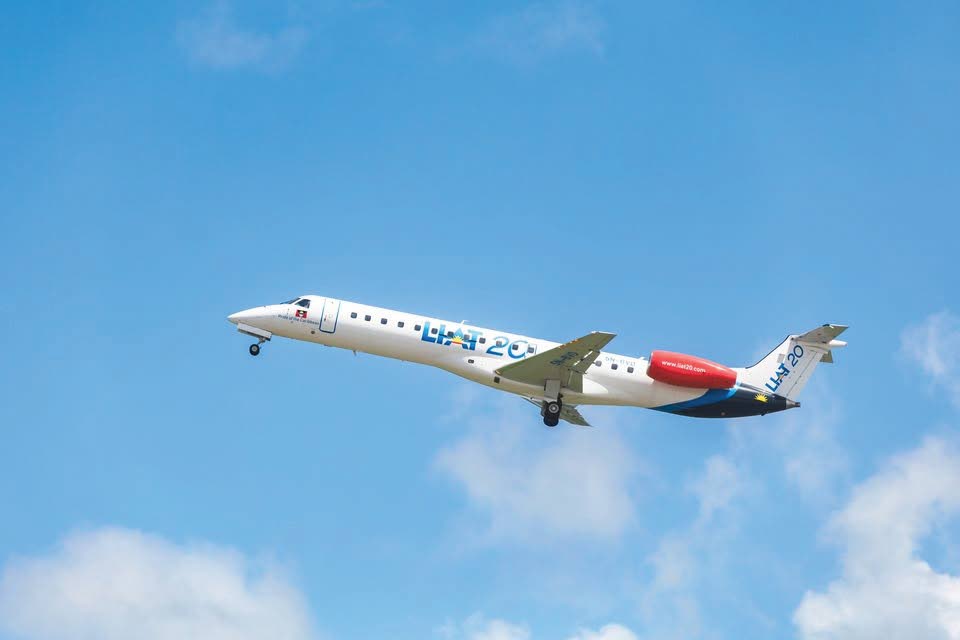
LIAT Air to expand its services to Dominican Republic
ST JOHN’S, Antigua (CMC) — LIAT Air, a regional airline headquartered in Antigua, has announced the launch of new flight routes to Santo Domingo and Punta Cana in the Dominican Republic, starting in December. This strategic expansion underscores the airline’s dedication to enhancing regional connectivity and fostering economic and cultural ties across the Caribbean. The inaugural flight to Santo Domingo is scheduled for December 12, followed by the Punta Cana route on December 15.
Hafsah Abdulsalam, LIAT Air’s Chief Executive Officer, emphasized the significance of this move, stating, ‘Our entry into the Dominican Republic aligns with our mission to connect the Caribbean. These routes address the increasing demand for seamless travel between key destinations and reinforce our commitment to supporting tourism, economic growth, and cultural exchange.’ She also highlighted the airline’s renowned warm and friendly service, inviting travelers to experience it firsthand.
Santo Domingo, the Dominican Republic’s capital and commercial hub, is a vital destination for business travelers, government officials, and students. Meanwhile, Punta Cana, celebrated for its luxurious resorts and stunning beaches, is a prime choice for leisure travelers. LIAT Air’s new routes aim to cater to a diverse clientele, including Caribbean nationals, international tourists, and regional professionals.
The airline, jointly owned by the Antigua and Barbuda Government and Air Peace Caribbean Limited, views this expansion as a pivotal step in strengthening its regional network. The new flights are expected to facilitate not only passenger travel but also the movement of goods and services, fostering trade and collaboration between markets. This initiative reflects LIAT Air’s broader vision of building a robust, accessible, and interconnected Caribbean network.