分类: business

  • Na groen licht president: Grassalco trekt stekker uit Guysure-activiteiten in Guyana

    Na groen licht president: Grassalco trekt stekker uit Guysure-activiteiten in Guyana

    In a significant corporate restructuring move, Suriname’s state-owned mining company Grassalco has officially terminated all third-party contracts held by its subsidiary Guysure in Guyana. The decision comes with written authorization from President Jennifer Simons, granting full approval to resolve this financially burdensome operation.

    Grassalco’s supervisory board chairman Berto Sampie confirmed to Starnieuws that the Guyana operations were creating unsustainable financial pressure on the state enterprise. Monthly expenditures exceeded $300,000, including $275,000 for port facilities alone, with additional costs for expatriated workers and rental properties.

    The termination process will follow a two-month notice period, with ongoing discussions already initiated with Pritipalsingh Port in Guyana regarding the removal of Grassalco equipment from the premises. This measured approach aims to ensure an orderly winding down of operations.

    Financial scrutiny has intensified around Guysure, established in 2021 with over $10 million in investments. The company’s ownership structure reveals concerning details: shares are held by four Grassalco employees, including suspended CEO Wesley Rozenhout, while a Guyanese legal advisor owns 20% without being a Grassalco employee—raising questions about corporate governance.

    Preliminary investigations indicate irregularities in Guysure’s establishment, including backdated documentation and missing share transfer records to Grassalco. Decisions regarding share structure recovery and the $10 million investment remain pending, with Sampie noting that ‘the final word on this matter has not yet been spoken.’

  • Employers urge more tripartite talks to navigate economic turbulence

    Employers urge more tripartite talks to navigate economic turbulence

    Barbados business representatives have addressed growing public concerns following a series of high-profile company closures, acknowledging significant operational challenges while maintaining confidence in the island’s economic fundamentals. During a press briefing at the Barbados Employers’ Confederation (BEC) headquarters, executive director Sheena Mayers-Granville confirmed that multiple sectors are experiencing substantial cost pressures without indicating a systemic economic crisis.

    Recent months have witnessed the shutdown of several establishments including Bryden’s Pharmacies, Cavi and Vino, and Mojos Bar and Restaurant, with Berger Paints announcing imminent factory closure plans. Mayers-Granville emphasized that each business cessation creates ripple effects throughout the economy, noting that ‘when a business closes, it is not just a company that disappears – it is jobs, livelihoods and economic activity.’

    Business leaders identified Barbados as operating within a high-cost jurisdiction characterized by elevated expenses across labor, energy, and transportation sectors. However, they clarified that business failures typically result from multiple converging factors rather than single issues. Contrary to public speculation, the recently implemented minimum wage increase has not been cited by members as the primary driver behind closures, according to BEC president Gail-Ann King.

    Global economic uncertainties have introduced additional complications for local enterprises. Middle Eastern tensions and consequent oil price volatility have created unpredictable conditions that require careful monitoring. Mayers-Granville observed that ‘the price of oil has jumped drastically in the last week or two. But how long will that price jump last? None of us knows.’

    The confederation highlighted Barbados’ established tradition of social dialogue between government, labor representatives, and private sector stakeholders as a critical mechanism for navigating external economic shocks. This collaborative approach has historically helped the nation weather previous economic challenges.

    Despite recent closures, BEC leadership reported no widespread discontent among businesses operating in Barbados. Most members remain focused on operational continuity rather than cessation plans. Mayers-Granville cautioned against overinterpreting a limited number of closures within a condensed timeframe, noting that the majority of Barbadian businesses are small-to-micro enterprises whose market entry and exit represents normal economic evolution.

    The organization emphasized that sustainable enterprise development remains paramount for maintaining employment stability. ‘Only a sustainable enterprise is going to offer continued employment,’ Mayers-Granville stated, adding that ‘we cannot be calling for workers to be employed if we are not allowing business fertile ground within which to be sustainable and which to grow.’

  • Farm work scheme sees fewer new recruits as Canada favours returning workers

    Farm work scheme sees fewer new recruits as Canada favours returning workers

    Barbados’ longstanding Seasonal Agricultural Worker Programme (SAWP) is undergoing significant operational shifts as Canadian employers increasingly prioritize experienced laborers over new recruits, according to testimony presented to the nation’s House of Assembly on Monday.

    During the Ministry of Labour’s Estimates hearing, officials revealed that while the program remains active, placement numbers have demonstrated a consistent downward trajectory. Acting Director of the Barbados Employment Career and Counselling Service, Moreen Bowen, presented data showing participation dropping from 102 workers in 2024 to 86 in 2025, with only 59 positions currently requested for 2026.

    The decline stems primarily from Canadian employers specifically requesting ‘repeat workers’—Barbadians with prior experience in Canadian agricultural operations. This preference for pre-trained labor has reduced opportunities for new participants despite continued overseas demand for the program.

    Labour Minister Colin Jordan confirmed the program’s continuation under its official SAWP designation, though noted many citizens still refer to it as the traditional ‘farm labour programme.’ He emphasized that Barbados maintains vigorous advocacy with Canadian authorities, particularly valuable amid increasingly restrictive global migration policies.

    Program administrators are implementing strategic adaptations to preserve Barbados’ competitive position within the regional labor export market. New employment avenues are being developed, including a recent initiative in New Brunswick’s seafood processing sector where 16 Barbadians will commence work in April.

    Bowen explained that Canadian unemployment rates directly impact recruitment, as regulations require employers to hire locally when provincial unemployment exceeds six percent.

    Minister Jordan issued stern warnings regarding participant conduct, establishing zero tolerance for workplace violations—particularly cannabis use despite Canada’s legalization. ‘Once you strike, you’re out,’ Jordan stated, emphasizing that disciplinary breaches jeopardize Barbados’ entire participation framework.

    The ministry also reinforced merit-based selection processes, prohibiting name-dropping or external influence in recruitment decisions. Both men and women remain eligible for the program, though final hiring determinations rest with Canadian employers.

    Historically established in 1966 as a bilateral arrangement between Canada and Jamaica, the program expanded to include Barbados and Trinidad and Tobago in 1967. It originally addressed domestic unemployment while providing workers access to superior wages and supplying Canadian farmers with reliable seasonal labor.

  • Tourism makes ‘record’ gains, plans for sustained growth

    Tourism makes ‘record’ gains, plans for sustained growth

    Barbados has achieved an unprecedented milestone in its tourism sector, recording a historic 729,310 long-stay visitors throughout 2025. Tourism Minister Ian Gooding-Edghill presented these groundbreaking figures to Parliament on Tuesday, simultaneously unveiling strategic plans to capitalize on this success and attract further industry investment.

    The Central Bank of Barbados reported a 3.3% increase in arrivals compared to 2024, surpassing the previous record of 704,340 visitors. This remarkable growth was primarily driven by an 8.1% surge from the United States market, alongside strong performances from Canada (90,209 visitors) and increased arrivals from European and CARICOM nations, which contributed 98,336 visitors.

    Enhanced regional air connectivity and improved inter-Caribbean services significantly contributed to these numbers. The industry demonstrated robust performance across key metrics, with hotel occupancy rates climbing 1.3 percentage points to reach 65.3%, while stronger room rates and sustained accommodation demand boosted overall tourism earnings.

    Minister Gooding-Edghill emphasized tourism’s role as a major economic driver, creating productive employment opportunities and strengthening linkages with construction, manufacturing, and agriculture sectors. The government has allocated $31.57 million to the Ministry of Tourism and International Transport for the upcoming period, with $10.5 million designated for wages and salaries, $11.8 million for goods and services, and $7.34 million for capital spending.

    Private sector investment continues to flourish with several major developments: The Blue Monkey Hotel (28 suites) scheduled for June opening, Hotel Indigo Barbados (130 rooms) already operational on the south coast, and Royalton CHIC Barbados (220 rooms) set to launch in June.

    Looking forward, the ministry will focus on three core areas: policy development, legislative reform, and service delivery. Planned initiatives include introducing a timeshare fractional ownership bill, modernizing existing tourism legislation, and implementing policies to expand the accommodation base.

    Air connectivity expansion remains crucial to sustained growth. Recent successes include negotiated increases with major US carriers, KLM’s three weekly Amsterdam services initiated in October, Air Canada’s twice-daily Friday and Sunday flights, JetBlue’s enhanced Boston service, and Virgin Atlantic’s twice-daily London Heathrow operations. A new agreement with Condor Airlines and expanded Copa Airlines service (now five weekly flights) further solidifies Barbados’ position as a regional aviation hub.

  • WATCH: $200/hr call centre pay claims not consistent with standards, says former BPIAJ president

    WATCH: $200/hr call centre pay claims not consistent with standards, says former BPIAJ president

    KINGSTON, Jamaica — Industry leaders have forcefully rejected media allegations suggesting Jamaican call center operators are paying workers as little as $200 per hour, calling the claims unrepresentative of the legitimate business process outsourcing (BPO) sector.

    Gloria Henry, former president of the Business Process Industry Association of Jamaica, addressed the controversy during the launch event for the Portmore Informatics Park Incubator and JAMPRO Linkages initiative last Wednesday. She asserted that compliant BPO operators functioning under Jamaica’s Special Economic Zone Act, Companies Act, and national labor regulations adhere strictly to statutory wage requirements.

    Henry emphasized that established operators—including tier one, two, and three companies—must comply with compensation standards set by the Ministry of Labour and Social Security, including contributions to the National Insurance Scheme (NIS). She clarified that formal sector wages typically range from $400 to $650 hourly for entry-level positions, with additional compensation through attendance incentives, performance commissions, and overtime premiums.

    The industry advocate issued a direct challenge regarding wage violation claims: “We say categorically, bring the pay slips to the secretariat… because that would be half of the national minimum wage. If that is out there, we, as a country, must call out that perpetrator.” She stressed the association’s zero-tolerance policy toward verified breaches while cautioning against generalizing isolated incidents across an industry employing thousands.

    Henry shifted the conversation toward productivity and global competitiveness, noting that Jamaica maintains strengths in customer experience and accent neutrality but faces challenges in some transactional operations. She acknowledged that lower productivity per agent can lead to intensified performance management, but distinguished between workplace pressure and exploitation.

    Looking forward, Henry called for industry evolution amid global competition, rising labor costs, and technological disruption. “We have to move up the value chain,” she urged, advocating for higher-paying roles in analytics, compliance, FinTech, and digital services, including the establishment of AI labs in Jamaica.

    She highlighted the sector’s significant contributions to employment and export earnings, particularly during the COVID-19 pandemic, and concluded that the industry must remain focused on transformation and sustainable growth despite challenges.

  • JN Life expands share of pensions market in 2025

    JN Life expands share of pensions market in 2025

    KINGSTON, Jamaica — JN Life Insurance Company Limited has demonstrated remarkable resilience and growth throughout 2025, substantially expanding its foothold in Jamaica’s pension sector despite facing significant operational challenges from Hurricane Melissa during the final quarter.

    The company’s individual retirement scheme emerged as a standout performer, generating unprecedented pension contributions totaling $89.7 million—a significant increase from the previous record of $68 million established in 2023. According to Othneil Blagrove, Chief of Sales and Marketing, this achievement represents an extraordinary 200 percent growth in the company’s market share within Jamaica’s pension industry.

    Blagrove emphasized the magnitude of this accomplishment, noting that the 2023 record was “shattered” through a combination of transfer transactions and new enrollment activities. The company’s comprehensive performance remained strong across all three core business segments: individual life insurance, group life coverage, and pension services.

    In a testament to its sales excellence, seven JN Life agents earned qualification for the prestigious Million Dollar Round Table (MDRT) in 2025—an international recognition typically reserved for the top six to ten percent of insurance professionals worldwide. The distinguished agents—Jellena Sutherland, Winsome Atkinson, Deon Graveney, Shanalee Givans, Sanya Malcolm, Tiffany Lyn, and Gayon Knight—are scheduled to participate in the MDRT annual conference in Anaheim, California, in June 2026.

    The company’s operations faced substantial disruption from Hurricane Melissa, a Category Five storm that impacted economic activity across Jamaica during the critical fourth quarter. Despite these challenges, JN Life maintained its growth trajectory.

    Earl Jarrett, Chief Executive Officer of The Jamaica National Group, confirmed the organization’s ongoing commitment to expanding JN Life’s operations, including strategic investments in digital technology designed to transform business processes and enhance service delivery.

  • Another wage warning

    Another wage warning

    Jamaica’s fiscal stability faces a critical juncture as its Independent Fiscal Commission issues a stark warning against the nation’s escalating public sector wage bill. Fiscal Commissioner Courtney Williams cautioned that the current trajectory—where compensation costs consume an ever-growing portion of tax revenues—threatens to undermine long-term economic growth and climate resilience.

    The Commission’s February 2026 Economic and Fiscal Assessment Report identifies multiple structural challenges creating mounting fiscal pressures. These include wage growth disconnected from economic performance, systematic under-execution of capital projects, and recurring climate shocks. The report emphasizes that this combination necessitates immediate structural corrections to preserve fiscal sustainability.

    Statistical evidence reveals a dramatic shift in budget allocation patterns. Wages and salaries now claim 56% of tax collections—a sharp increase from just over 36% in FY2021/22. During the review period, compensation reached $381.2 billion, exceeding projections by approximately 2%. Meanwhile, capital expenditure plummeted to 37.2% below original estimates, creating a dangerous imbalance between recurrent spending and productivity-enhancing investments.

    The timing mismatch between wage negotiations and budget cycles continues to exacerbate fiscal uncertainty. Despite a contingency allocation of $42.8 billion for wage settlements in the 2026/27 fiscal plan, the Commission questions whether this adequately covers ongoing negotiations. Potential shortfalls could force the government toward increased borrowing or disruptive budgetary adjustments.

    The report concludes with urgent recommendations for structural reform: aligning wage discussions with budget cycles, tethering compensation growth to economic performance, and implementing stronger fiscal rules. These measures aim to balance necessary public sector compensation with the critical investments required for Jamaica’s sustainable development.

  • Banking reset

    Banking reset

    The Jamaican government is implementing sweeping financial reforms aimed at addressing longstanding consumer frustrations with banking paperwork, opaque fee structures, and cumbersome account switching procedures. Finance Minister Fayval Williams announced these measures during her opening of the 2026/27 Budget Debate in the House of Representatives, highlighting how these initiatives will transform the country’s financial landscape.

    The comprehensive package includes two flagship digital solutions: a banking cost comparison platform and a national electronic Know Your Customer (eKYC) system. The comparison tool, scheduled for launch this year, will empower consumers to evaluate banking charges across different institutions through an intuitive online interface. This transparency initiative has already received development approval, with focus group testing and marketing campaigns planned prior to its official rollout.

    Simultaneously, the Bank of Jamaica is developing a centralized digital identity verification platform that will streamline account opening procedures. This eKYC system will serve as a secure gateway for identity verification and customer due diligence, eliminating repetitive paperwork and standardizing onboarding processes across financial institutions. The project has reached approximately 50% completion, with vendor selection and implementation planning currently underway, maintaining alignment with its targeted 2027 launch timeline.

    Minister Williams emphasized that these reforms extend beyond consumer benefits to strengthen Jamaica’s entire financial ecosystem. The increased transparency is expected to foster more competitive deposit pricing, reduce funding costs for financial institutions, and improve monetary policy transmission. For the government, these changes will support more accurate pricing and greater participation in domestic debt instruments, ultimately lowering borrowing costs for public and private sectors alike.

    The minister positioned these initiatives within Jamaica’s broader strategy to modernize financial infrastructure through digital integration. She noted that digitized systems would enhance market accessibility, strengthen investor confidence, improve efficiency, and reduce operational risks across the financial sector. These developments represent a significant step toward creating a more inclusive, competitive, and transparent banking environment for all Jamaicans.

  • NCB to host tax seminar for businesses navigating statutory payments

    NCB to host tax seminar for businesses navigating statutory payments

    KINGSTON, Jamaica — In a strategic move to bolster financial resilience among local enterprises, National Commercial Bank Jamaica Limited (NCB) is set to conduct a specialized online seminar focused on navigating statutory tax obligations without compromising operational liquidity. Scheduled for Thursday, March 12, 2026, between 6:00 pm and 8:00 pm, the virtual event ‘NCB Business Tax Seminar: Master Tax Season and Get Rewarded’ will be broadcast live on the bank’s official YouTube platform.

    The seminar will assemble a multidisciplinary panel of taxation authorities, financial strategists, and payment solutions experts to dissect regulatory compliance and unveil pragmatic approaches for managing fiscal responsibilities during peak payment periods. Danielle Cameron Duncan, NCB’s Acting Senior Vice-President for Payments and Enterprise Operations, emphasized that the initiative directly responds to the liquidity constraints frequently encountered by businesses during tax cycles.

    ‘Unstructured management of tax liabilities can exert substantial pressure on a company’s cash flow,’ Cameron Duncan noted. ‘Our objective is to empower small and medium-sized enterprises (SMEs) with the knowledge to tackle this challenge methodically.’

    The discourse will extend to the intelligent application of credit facilities and digital payment instruments, demonstrating how these resources can provide operational flexibility while meeting government mandates. ‘When deployed judiciously, financial tools can offer crucial breathing space, enabling businesses to sustain smooth operations amid statutory demands,’ she added. ‘We aim to equip entrepreneurs with techniques that safeguard liquidity and enhance fiscal discipline.’

    Featured contributors include representatives from Tax Administration Jamaica, global payment giant Mastercard, and NCB’s internal experts. Entrepreneurs, independent contractors, and SME proprietors can secure virtual participation by registering at www.tinyurl.com/NCBTaxesSeminar2026.

  • Scotia rolls out new digital services under five-year strategy

    Scotia rolls out new digital services under five-year strategy

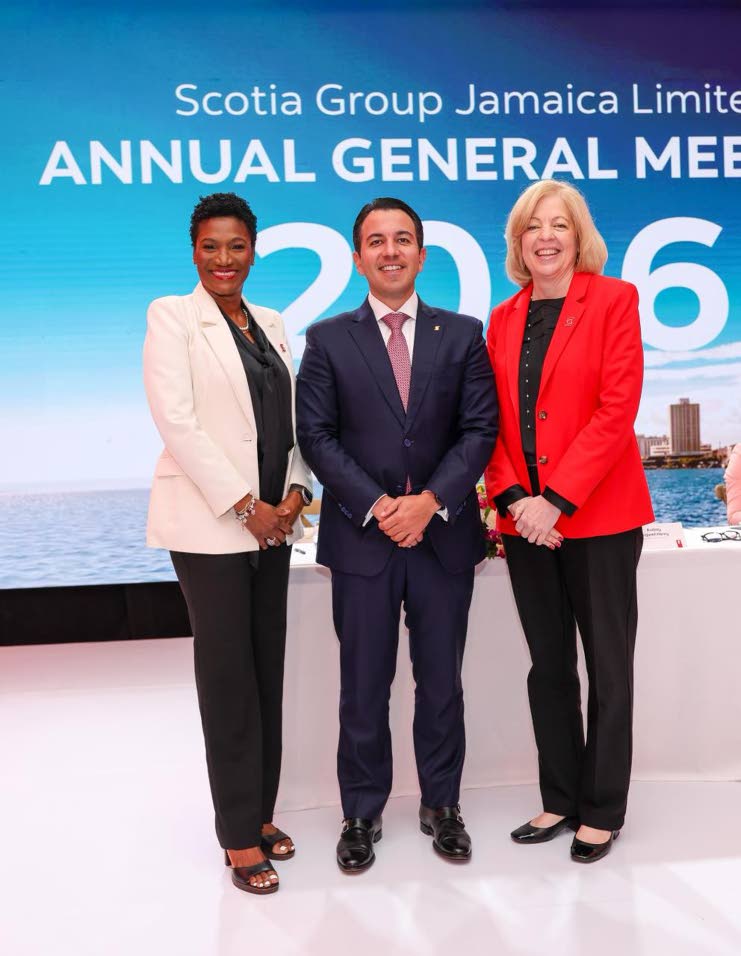
    Scotia Group Jamaica Limited is intensifying its digital banking evolution as it progresses through the third year of a comprehensive five-year strategic plan designed to fortify client relationships. This initiative, originally launched globally by parent company Bank of Nova Scotia in late 2023 under CEO Scott Thomson, is built upon four foundational pillars: expanding priority business segments, deepening primary client relationships, streamlining customer interactions, and enhancing internal collaboration.

    In Jamaica, this strategy has materialized through the deployment of innovative digital tools aimed at revolutionizing the customer experience. President and CEO Audrey Tugwell Henry emphasized the client-centric approach during the March annual general meeting in Montego Bay, stating, “We implemented several strategic initiatives to make it very easy for our clients to do business with us. We introduced digital solutions to strengthen security, improve usability and add more value.”

    Significant technological advancements implemented during the October 2025 fiscal year include enhanced debit card controls and dispute resolution features within the bank’s online and mobile platforms, empowering customers to manage security settings and address issues digitally. The mobile application now also provides deposit alerts to notify users of successful transfers.

    The bank has pioneered digital onboarding for loans and credit cards, enabling existing clients to initiate and monitor applications online before finalizing documentation at branches. This innovation has dramatically reduced processing times while increasing transparency, with over 600,000 clients already enrolled in digital services.

    The Scotia Caribbean mobile application is being transformed into a comprehensive hub connecting services across the group’s subsidiaries. Clients of Scotia Investments Jamaica Limited can now access investment balances and statements through the app, while Scotia Jamaica Life Insurance Company Limited customers will receive monthly statements via the mobile platform beginning May 2026.

    Future enhancements include the anticipated introduction of Apple Pay and online wire transfers by late 2026, complementing existing payment innovations such as Garmin Pay and American Express integration.

    Despite Hurricane Melissa’s impact, which destroyed 17 automated banking machines (ABMs) reducing operational units to 244 by December 2025, the bank remains committed to physical infrastructure development. Plans include installing 128 new ABMs during the current fiscal year, improving accessibility through ramp installations, and expanding services for visually impaired clients.

    The group continues to expand the Scotiabank Women Initiative, which has disbursed $6.2 billion in loans to over 1,000 women entrepreneurs during the past four years. An additional $5 billion has been allocated for lending between 2026 and 2029.

    Operational improvements include the upcoming implementation of ScotiaFlow, an internal case management system designed to accelerate customer issue resolution later this year. The insurance subsidiary, ScotiaProtect, expanded its partnership with GraceKennedy Limited to Barbados, Turks and Caicos Islands, and The Bahamas in early 2026.

    These developments occur against a challenging economic backdrop following Hurricane Melissa. While total operating income grew by eight percent to $17.90 billion, consolidated net profit declined by $84.72 million to $4.12 billion in the first quarter ending January, attributed to increased asset tax charges, hurricane-related expenses, and rising staff costs.

    Chair Anya Schnoor expressed satisfaction with the bank’s resilience, noting, “We’re very pleased with the first-quarter performance and how we’ve been able to support our customers and the recovery that we see.” The group’s stock closed at $50.48, representing a five percent annual decline, with a market capitalization of $157.08 billion. Shareholders will receive a $0.45 dividend payment on April 14.