
The Caricom Single Market and Economy (CSME) Skills Certificate has emerged as a transformative tool for skilled Caribbean nationals, enabling them to live, work, and thrive across member states without the need for a work permit. This initiative, formally known as the Certificate of Recognition of Caricom Skills Qualification, has empowered hundreds of individuals to pursue careers, establish businesses, and maintain family unity while relocating to another Caribbean country.
分类: business
-

Bureau of Standards hosts collaborative facility tour
The Trinidad and Tobago Bureau of Standards (TTBS) recently hosted members of the Trinidad and Tobago Chapter of the International Facility Management Association (TTIFMA) for an insightful tour of its Macoya headquarters on October 22. The visit underscored the critical role of standards, testing, and measurement in ensuring safe and efficient facilities nationwide. Participants explored various laboratories, including chemical, electrical, fibre, and materials testing units, as well as the metrology division, which offers calibration services for mass, pressure, temperature, and electrical measurements. The tour emphasized the application of international standards, such as ISO 15189:2022, to improve operational efficiency and competitiveness in facility management. Acting TTBS Executive Director Karlene Lewis described the event as a vital link between science, standards, and sustainability, highlighting the importance of integrating technical standards into everyday operations to enhance safety, efficiency, and quality of life. TTBS and TTIFMA also reaffirmed their commitment to advancing Trinidad and Tobago’s national quality infrastructure and ensuring compliance with global standards. Edward Kacal, Chair of the National Mirror Committee, praised the collaboration for fostering professional practice and operational excellence in the country.
-

Fitch upgrades Sagicor’s investment rating
Sagicor Financial Company Ltd has achieved a significant milestone as global credit rating agency Fitch Ratings elevated its long-term issuer default rating from BBB- to BBB. Additionally, the company’s senior unsecured debt rating was upgraded from BB+ to BBB-. Fitch also assigned Sagicor a ‘stable’ outlook, reflecting confidence in the company’s financial health. The upgrade was attributed to Sagicor’s improved core profitability, consolidated contributions from its Canadian subsidiary ivari over the past two years, reduced debt financing costs, and a robust capitalisation profile. Fitch further affirmed ivari’s financial strength rating at A-, maintaining a stable outlook. Andre Mousseau, Sagicor’s President and CEO, expressed satisfaction with the upgrade, emphasizing its validation of the company’s strong capitalisation and its alignment with stable and profitable growth strategies. He noted that the enhanced rating would improve Sagicor’s access to capital and support the execution of its strategic initiatives. Founded over 180 years ago, Sagicor is a leading financial services provider headquartered in Barbados, offering a diverse portfolio of products and services, including life, health, and general insurance, banking, pensions, annuities, investment management, and real estate across the Caribbean.
-

Phillip Morris announces launch of CCA cluster
In a strategic move to consolidate its presence in the Caribbean, Central America, and the Andean region, Philip Morris International (PMI) has established the new Philip Morris CCA (Caribbean, Central America, and Andean) cluster. This initiative aims to unify over 30 countries under a single operational framework, enhancing market development and regional integration. PMI emphasized that this decision underscores its dedication to fostering growth and opportunities within these diverse markets. The newly formed cluster will leverage PMI’s extensive multi-category portfolio, positioning Trinidad and Tobago (TT) as a pivotal hub for the Caribbean community. Concurrently, PMI announced the appointment of Dominic Lau as the new commercial manager for TT and the Caribbean Community (Caricom). Lau will spearhead the expansion of Philip Morris TT Ltd’s (PMTT) product portfolio, focusing on offering reduced-harm alternatives for adult smokers and ensuring responsible commercialization practices. This dual announcement highlights PMI’s commitment to innovation and regional development.
-

UTC signs eKYC agreement with NPIC-TT, TSTT
In a landmark move towards digital modernization, Trinidad and Tobago has unveiled NOBIS, a national electronic Know Your Customer (eKYC) platform. The initiative, a collaborative effort between the Unit Trust Corporation (UTC), the National Payment and Innovation Company of TT (NPIC-TT), and the Telecommunications Services of TT (TSTT), was formalized through a recent agreement signing ceremony. The platform, developed locally by NPIC-TT’s Innovative Centre, aims to revolutionize identity verification and account onboarding processes by replacing traditional manual methods with a secure, efficient, and paperless system. UTC will be the first entity to implement NOBIS for digital onboarding, reflecting its commitment to customer convenience and trust. TSTT will provide the necessary telecommunications and cloud infrastructure to ensure a seamless national rollout. Dawn Nelson, Vice President of the Innovative Centre, emphasized the system’s scalability and security, underscoring its local development as a testament to Trinidad and Tobago’s technological capabilities. Beyond financial services, NOBIS will be extended free of charge to government ministries and state agencies, enabling a unified digital identity for services such as passport renewals, driver’s license updates, and government fee payments. This initiative positions Trinidad and Tobago as a regional leader in secure and inclusive digital services, setting the stage for a fully digital future.
-
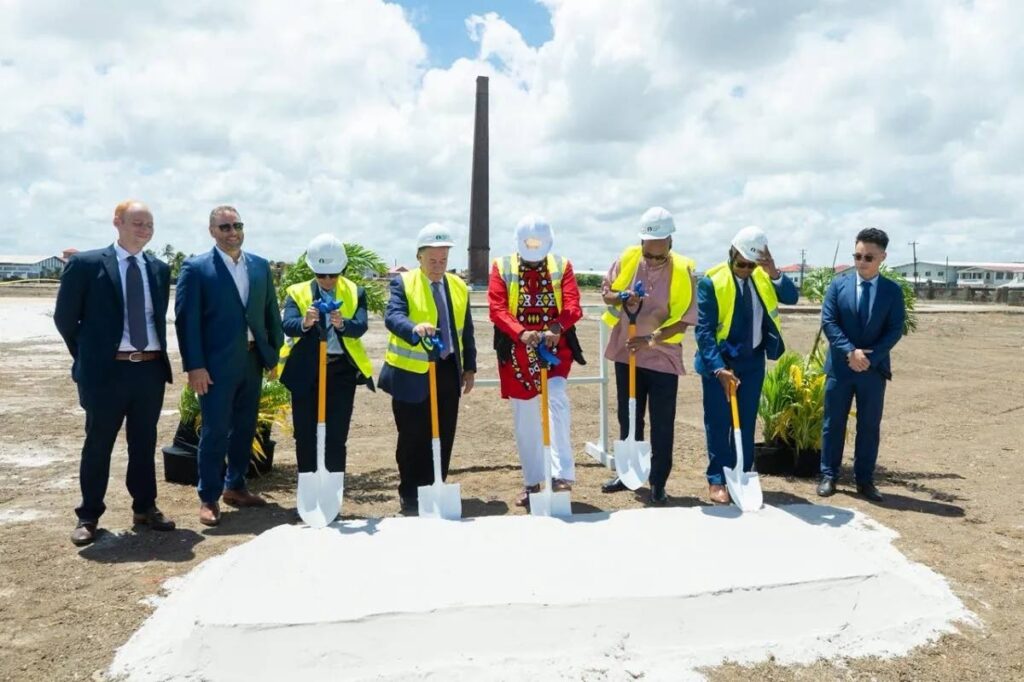
Ansa McAL celebrates Guyanese mall opening
Guyana’s retail and cultural landscape is set for a transformative leap with the commencement of the $60 million Chateau Margot Mall, a project spearheaded by Ansa McAL. The groundbreaking ceremony, held recently, was attended by Guyanese President Dr. Mohammed Irfaan Ali, Ansa McAL Chairman Norman Sabga, and Managing Director of Ansa McAL Distribution Inc Guyana, Troy Cadogan. The 110,000 square-foot mixed-use development, located along Guyana’s east corridor, marks a bold new chapter in the nation’s economic and cultural narrative. Designed by internationally renowned architect Varchi, the mall will feature over 60 stores, cultural landmarks, public spaces, premium office suites spanning 24,000 square feet, and nearly 500 parking spaces. The project’s proximity to the historic Chateau Margot Chimney, a symbol of Guyana’s industrial heritage, underscores its commitment to preserving the nation’s past while driving future progress. Ansa McAL has collaborated closely with the National Trust of Guyana to ensure the integrity of the site’s heritage is maintained. Group Chairman Norman Sabga emphasized that the mall is not merely a commercial development but a testament to regional expertise and collaboration. President Ali highlighted the project’s alignment with Guyana’s vision for societal transformation, rooted in human development. As Guyana embraces its moment of growth, the Chateau Margot Mall stands as a beacon of progress and partnership.
-

Give CSO greater role in budget affairs
The Central Statistical Office (CSO) recently announced a decline in inflation to one per cent for the previous month. While this is a positive development, questions arise about the timing of this information, released just four days after Finance Minister Davendranath Tancoo presented the national budget. The budget included fiscal measures directly impacting prices, such as reductions in super gasoline costs and increased duties on alcohol and tobacco. This raises concerns about the CSO’s role in forecasting the effects of such budgetary measures. Currently, the CSO collaborates with government departments in data collection and analysis but lacks a formal role in projecting budget impacts. Historically, the CSO’s data has been somewhat delayed, though this gap has significantly narrowed in recent years. The budget process is inherently forward-looking, with only a minor focus on past reporting. Given the CSO’s annual budget of at least $55 million, there is a strong argument for its involvement in estimating future fiscal impacts. Globally, independent fiscal oversight bodies, such as the UK’s Office for Budget Responsibility and the US Congressional Budget Office, are common. Locally, the establishment of an Economic Resilience Council is underway, but a neutral, independent body outside Parliament is deemed essential for thorough budget scrutiny. Utilizing existing institutions like the CSO and the Central Bank could enhance the timeliness and relevance of fiscal data, ensuring it remains useful rather than outdated.
-

Unleashing the creative industry
Trinidad and Tobago’s 2025/2026 budget has been hailed as one of the most progressive in recent years, addressing key areas such as the green economy, agriculture, marginalized groups, and young families. However, the creative industries have once again been sidelined, reflecting a longstanding pattern of political and institutional neglect. Despite the sector’s potential to generate significant foreign exchange through music, carnival, fashion, and film, it received minimal attention in the budget speech, with only two brief mentions and a few buried items in budget documents. This lack of focus fails to align with international standards or the local reality, where the creative economy could thrive with proper policy, legislative, and institutional support. In response, a coalition of artists has called for a closed-door summit with the government to address these gaps. The budget’s vague references to a ‘Creative Value-Chain Fund’ and enhanced IP protection have left many in the sector confused, especially given the previous administration’s dismantling of key agencies like FilmTT, FashionTT, and MusicTT. These agencies were replaced with a new entity tied to Eximbank, created without stakeholder consultation and with unclear operational mechanics. The creative sector’s underfunding has been a persistent issue, with film grant funding once plummeting to just $1 million—insufficient even for catering on a small foreign production. To unlock the sector’s potential, experts propose several interventions, including a national ‘buy-local’ campaign, the enactment of local content policies, the establishment of a national arts council, increased funding for CreativeTT, and the launch of a national tour company to export Trinidad and Tobago’s creative IP. Additionally, addressing the human crisis among local creatives, building creative hubs, and setting growth targets for Carnival are seen as critical steps. Without these measures, the creative sector’s vast potential will remain untapped, leaving Trinidad and Tobago lagging behind global peers like the UK, where the creative industries generate billions annually.
-

Unlocking the next generation economy
The Trinidad and Tobago Chamber of Commerce (TT Chamber) recently hosted its annual post-budget meeting at the Le Rêve Conference Centre in San Fernando, marking a historic milestone in its mission to strengthen engagement with the nation’s business communities. Under the theme *Unlocking TT’s Next Generation Economy*, the event emphasized the Chamber’s commitment to fostering economic resilience and diversification in a volatile global landscape.
-

Request for Applications: For Grants, Loans, and Interest Subsidization Pilot Programme by UNDP
The Entrepreneurial Development Programme (EDP), in partnership with the Antigua and Barbuda Investment Authority (ABIA) and the United Nations Development Programme (UNDP), has unveiled the Innovative Finance Pilot Programme. This groundbreaking initiative seeks to bolster local businesses by reducing borrowing costs and enhancing access to financial resources through a mix of grants, loans, and interest subsidies. The programme is a key component of broader efforts to foster financial inclusion and sustainable economic growth in Antigua and Barbuda.
Eligible participants include Small and Medium-sized Enterprises (SMEs), Youth Entrepreneurs aged 18 to 35, and Female Business Owners. Applicants must operate registered businesses that contribute to local employment and economic development. Selected participants will benefit from complimentary training and mentorship in financial literacy, business planning, and entrepreneurial development, equipping them with the tools to scale their ventures.
Application forms are available at the EDP Office, located in the Sagicor Financial Centre, St. John’s. Submissions must include a cover letter referencing the UNDP Pilot Programme and must be received by October 31, 2025. Interested individuals are urged to apply promptly to seize this transformative opportunity.
The UNDP, operating in 170 countries and territories, champions sustainable development and inclusive growth. The EDP focuses on providing financial access to small entrepreneurs, while the ABIA drives investment and business development in Antigua and Barbuda. Together, these organizations aim to create a thriving entrepreneurial ecosystem in the region.