分类: business

  • John Mencias Leaves Transformed BEL Behind

    John Mencias Leaves Transformed BEL Behind

    In 2019, John Mencias took the helm as Chief Executive Officer of Belize Electricity Limited (BEL) at a critical juncture for the national utility. At that time, the company was grappling with two major interconnected challenges: decades-old, deteriorating infrastructure that struggled to keep up with rapidly growing consumer and commercial energy demand across the small Central American nation.

    Seven years into his tenure, as Mencias prepares to step down from his leadership role, he leaves an organization that has been fundamentally remade from the inside out, positioning BEL to support Belize’s ongoing national development for decades to come. Under his strategic guidance, BEL prioritized large-scale infrastructure modernization, pouring resources into updating outdated generation and distribution systems to strengthen the entire national power grid. This massive overhaul has translated to tangible improvements for end users, with far more consistent energy reliability across every region of Belize, even as overall energy demand has continued to climb.

    Beyond physical infrastructure, Mencias spearheaded a cultural and operational shift to center customer experience, a departure from the utility’s more traditional service model. He led the rollout of a suite of new digital self-service tools and comprehensive service upgrades that cut wait times, streamlined common customer interactions, and made accessing BEL support faster and more convenient than ever before.

    Internally, Mencias centered his leadership on BEL’s most valuable asset: its people. He implemented initiatives to foster a culture of innovation across all levels of the organization, made targeted investments in ongoing talent development and upskilling for employees, and built a more inclusive, collaborative workplace culture that aligned with the company’s modernization goals.

    The cumulative impact of these changes is a utility that is far more closely aligned with the needs of its customers, the priorities of its workforce, and the broader economic development goals of Belize. As Mencias departs, he leaves with gratitude for his time at the organization and confidence in the path BEL has forged. Stepping in to provide continuity for the ongoing transformation is Ambassador Lynn Young, who returns to the role of Executive Chairman, bringing decades of deep institutional experience and a steady hand to guide the utility through its next chapter of growth.

  • Delegation of Chinese investors in Cap

    Delegation of Chinese investors in Cap

    In a development that highlights growing cross-continental investment interest in underserved regional markets, a delegation of business investors from mainland China held a landmark meeting with the Cap-Haïtien Municipal Commission on Thursday, April 9. This exploratory visit was coordinated with logistical and diplomatic support from the Haitian Embassy based in the Dominican Republic, marking a unique channel for direct engagement between local municipal leaders and international business groups.

    Headlined by Caleli Decorative Materials Co. S.R.I. Group, the investment mission has a clear core objective: to map out and evaluate viable commercial and infrastructure investment openings across northern Haiti. The scope of the delegation’s assessment covers both private sector commercial projects and large-scale public infrastructure developments, many of which fall under the broad framework of the Belt and Road Initiative, a global infrastructure and economic cooperation program launched by China. Notably, the delegation opted to hold direct talks with the Cap-Haïtien Municipal Commission instead of engaging with Haiti’s national government, which maintains official diplomatic relations with Taiwan.

    During the closed-door discussions, participants focused heavily on the practical feasibility of two major proposed developments: a dedicated regional industrial park and a large-scale integrated commercial complex. Beyond these flagship projects, talks also centered on designing investment activities that would deliver long-term tangible benefits to the local population, specifically through the creation of sustainable local employment opportunities and increased economic value added for the northern Haitian region.

    For the Cap-Haïtien Municipal government, this exploratory visit aligns with its long-term strategic push to rebrand the coastal city as a dynamic, competitive investment destination that can attract international capital. If the proposed projects move forward to implementation, they are projected to generate more than 1,000 new local jobs. What’s more, the initiative plans to integrate innovative environmental solutions, with a key focus on developing plastic waste recovery systems that address local pollution challenges while supporting circular economic goals.

  • Port of Belize Expansion Gets Environmental Clearance, PM Calls It a “Game Changer”

    Port of Belize Expansion Gets Environmental Clearance, PM Calls It a “Game Changer”

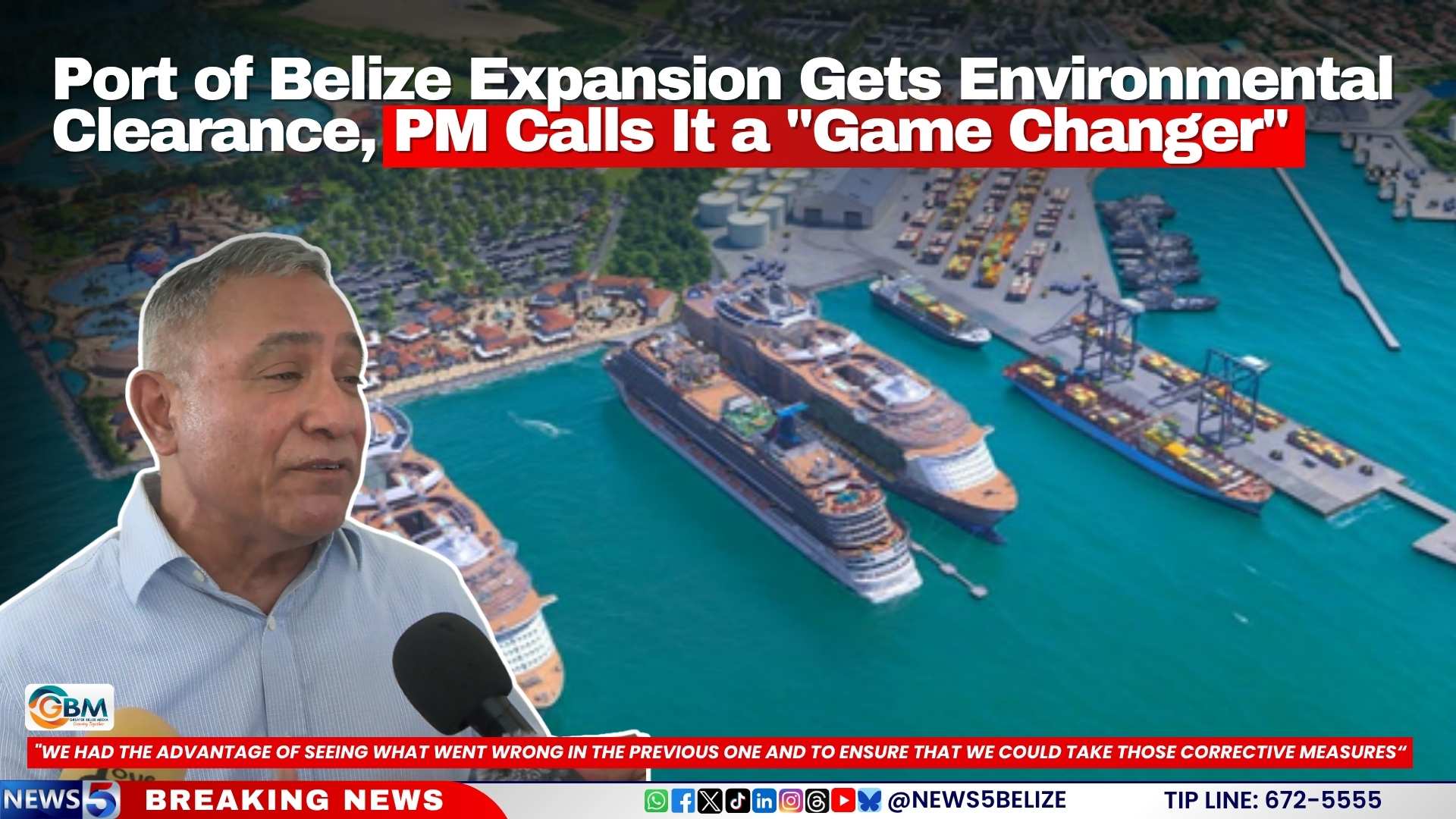
    After decades of stalled attempts and contentious regulatory review, the long-awaited expansion of the Port of Belize has crossed a critical threshold, earning conditional environmental approval from the country’s top environmental assessment body that clears the way for the project to move into its investment sourcing phase.

    Prime Minister John Briceño framed the green light as a transformative milestone for Belize’s economic development in an interview with local outlet News Five, describing the planned facility as a game-changing world-class hub that will serve both cruise tourism and container cargo shipping. The project has a decades-long history of failure, with multiple previous attempts to launch the expansion dating back to the early 2000s never coming to fruition.

    Briceño credited coordinated support from his cabinet and careful preparation led by a dedicated public implementation unit headed by Dr. Aguile Canton for finally advancing the project past this key regulatory hurdle. “We had the advantage of seeing what went wrong in the previous attempts, so we were able to implement targeted corrective measures to address past gaps,” he explained.

    The approval was issued with specific binding conditions by the National Environmental Appraisal Committee (NEAC), the independent body tasked with reviewing the project’s environmental impact. Amid circulating claims that the government exerted political pressure to force a favorable vote from NEAC, Briceño rejected the allegations as baseless nonsense, emphasizing that NEAC is composed of highly qualified independent professionals who operate free from political interference.

    The Prime Minister also downplayed expectations of upcoming legal challenges from private sector entities, including the Waterloo Group, a firm that has previously raised objections to the project. Briceño noted that the government has already completed the acquisition of Waterloo’s stake in the project, putting that potential source of dispute to rest. “We have followed every regulatory step required by law, and we are on solid legal ground moving forward,” he said.

    Not all stakeholders have welcomed the approval, however. Local environmental advocacy groups have raised persistent concerns about the project, arguing that Port of Belize Limited failed to address major unmitigated ecological risks and should have been required to submit a fully revised impact assessment before approval was granted. Briceño acknowledged that any large infrastructure development will inevitably generate some environmental impact, comparing it to the unavoidable footprint of building a new residential home. But he stressed that the government has committed to rigorous mitigation measures to minimize the project’s ecological effects as much as technically and financially possible.

    With environmental clearance now secured, the government is advancing immediately to the next phase: securing a private development partner to finance and execute the expansion. Briceño confirmed that multiple major international firms have already submitted preliminary expressions of interest, including U.S.-based SSA Marine, which counts global investment giant BlackRock as its parent company, Turkey’s Global Port Holdings, and a Mexican investment consortium. To ensure structured, transparent negotiations with prospective partners, the government has re-engaged Moffat and Nichols, the engineering firm that developed the project’s original master plan, to draft formal terms of reference for the upcoming bidding and negotiation process.

  • NBD’s net profit for 2023–2024 signals strong financial performance, says chairman

    NBD’s net profit for 2023–2024 signals strong financial performance, says chairman

    At its 21st Annual General Meeting of Shareholders held Thursday at the St. Alphonsus Parish Hall in Goodwill, the National Bank of Dominica Ltd. (NBD) announced a robust financial performance for the 2023–2024 fiscal year spanning July 1, 2023, to June 30, 2024. NBD Board Chairperson Urania Williams revealed the leading Dominican financial institution recorded an 18 million Eastern Caribbean dollar net profit for the period, a result that leadership framed as a major milestone amid challenging market conditions.

    In the bank’s newly released annual report, NBD provided a full transparent accounting of its outcomes and activities delivered to its core stakeholders: shareholders, employees, customers and the local Dominican community. Williams noted that the bank built on the solid foundational growth cultivated in preceding years to advance a broad organizational transformation initiative, all while navigating an increasingly complex and highly competitive regional financial ecosystem.

    “Our strategy remained anchored in five core pillars: strengthening overall financial performance, elevating end-to-end customer experience, enhancing enterprise-wide operational excellence, deepening governance and compliance maturity, and investing in our people and organizational culture,” Williams explained during the meeting. She added that the structure of the 2023–2024 annual report is fully aligned with the institution’s annual performance plan for the fiscal year, ensuring clear connection between core strategic goals, on-the-ground execution, and stakeholder accountability across both sustained finance and market performance initiatives.

    Williams emphasized that hitting the XCD $18 million net profit target is no small achievement, crediting the strong result to the bank’s clear long-term vision, consistent disciplined execution, and its skilled, dedicated team. She noted that strategic decisions implemented in prior years created the stable foundation required for this outcome, and have positioned NBD to deliver even stronger returns in the upcoming 2024–2025 fiscal cycle.

    Key strategic initiatives that drove year-over-year revenue growth centered on expanding income from new and existing product and service lines, most notably new card-based financial offerings, including full credit card services powered by the FISERV digital platform. Williams pointed out that these expansions directly align with the bank’s core priority of diversifying revenue streams to match shifting consumer and business demands across Dominica.

    Improving overall loan portfolio asset quality remains a top organizational priority for NBD, Williams confirmed. The bank has rolled out a series of targeted measures to reduce its share of non-performing loans (NPLs), with the explicit goal of bringing the NPL ratio in line with the institution’s long-term strategic target. These actions include the sale of impaired debt portfolios to external third-party collection agencies, the launch of a standardized early delinquency notification system, and the creation of formal protocols to proactively move high-risk vulnerable accounts to the bank’s in-house Recoveries Unit for accelerated intervention.

    Williams noted that these combined efforts have reinforced NBD’s longstanding commitment to prudent, risk-aware credit management, reduced the bank’s overall credit risk exposure, and strengthened the long-term sustainability of its entire loan portfolio.

    As the largest leading financial institution in Dominica, NBD reported total consolidated assets of XCD $1.77 billion, equal to roughly USD $655.9 million, as of the June 30, 2024 end of the fiscal year. Founded in 1978, the bank has centered its mission on empowering individual consumers, local businesses, and community groups across the island. It has also earned formal recognition from the Eastern Caribbean Central Bank (ECCB) for its standout work as a responsible corporate citizen. For the 2022–2023 fiscal year, NBD reported a net profit of more than XCD $11 million, marking a more than 63% year-over-year increase in net profit for the 2023–2024 period.

  • BEL Proposes Monthly Cost Adjustments

    BEL Proposes Monthly Cost Adjustments

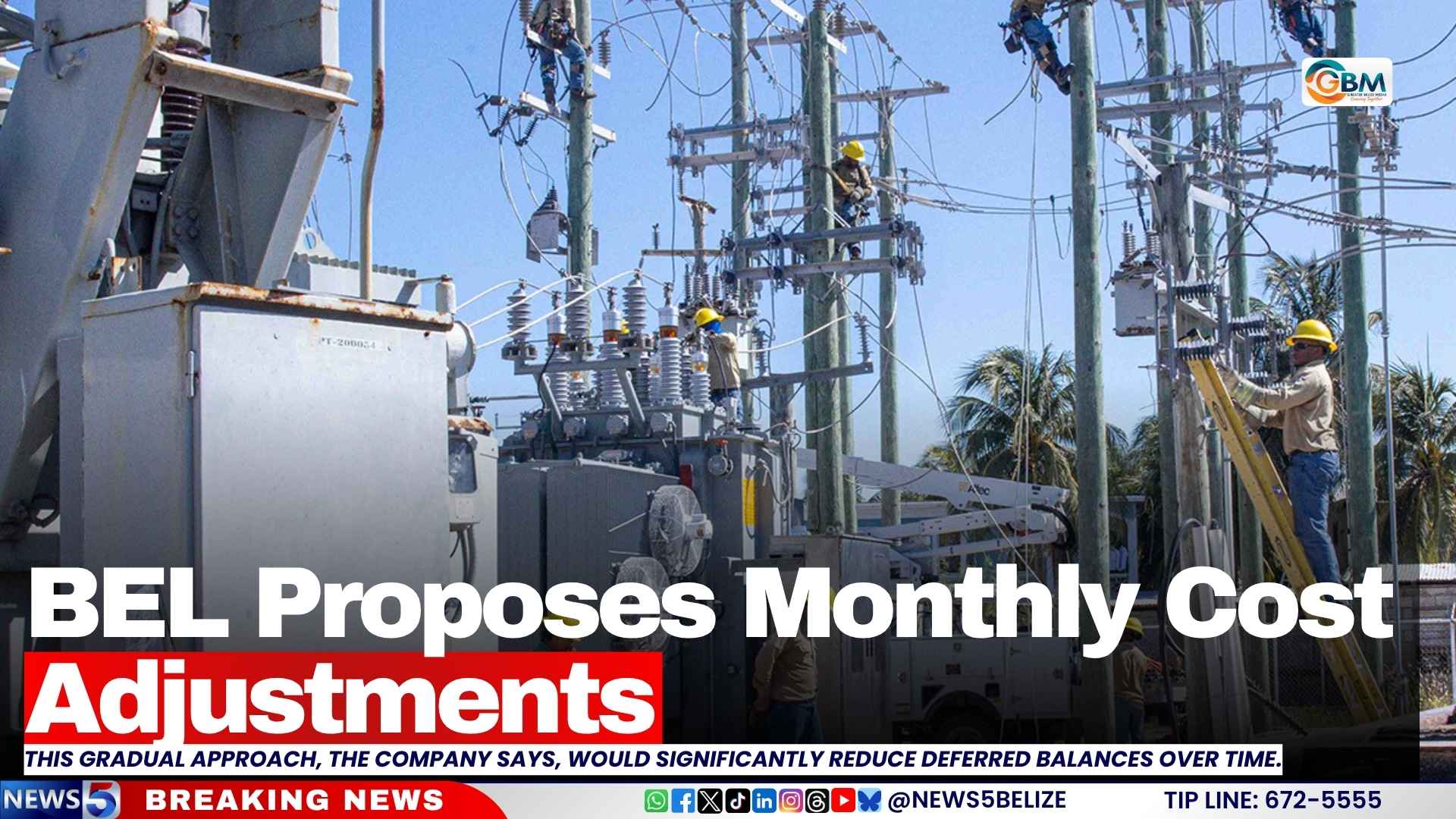
    Belize Electricity Limited (BEL), the country’s primary power provider, has submitted a formal regulatory proposal that would introduce automatic monthly adjustments to customer electricity bills, a shift designed to mitigate the growing financial strain caused by persistent swings in global and domestic energy costs that have outpaced current fixed tariff structures.

    Filed on April 1 as part of the company’s 2025–2026 Annual Review Proceeding, the request includes a plan to maintain the existing base Mean Electricity Rate (MER) at $0.4428 per kilowatt-hour and hold the Reference Cost of Power (RCOP) steady at $0.3033 per kilowatt-hour, meaning consumers would not face an immediate jump in base electricity rates if the plan is approved by the Public Utilities Commission (PUC), Belize’s independent energy regulatory body.

    The core policy change at the heart of the proposal is the new automatic monthly Cost of Power (COP) adjustment framework. BEL officials argue the mechanism is a critical response to long-standing cost volatility stemming from structural characteristics of Belize’s national energy system. Though the country maintains a diversified energy portfolio that includes hydroelectric generation, biomass power, imported energy, and thermal production, this diversity has not insulated the provider from extreme price fluctuations. BEL’s filing documents show that actual power generation costs have varied from as little as $0.16 per kilowatt-hour to $0.46 per kilowatt-hour during extreme market events. When paired with ongoing delays in the development of new lower-cost energy infrastructure, these swings have eroded BEL’s financial stability, the company explained.

    To prevent sudden, jarring changes to consumer bills, the proposed framework includes built-in guardrails: monthly adjustments would be capped at plus or minus 5 percent of the fixed RCOP. All adjustments would be calculated using a six-month rolling average of verified actual power costs, a design intended to smooth out short-term price spikes while ensuring changes reflect real market conditions rather than projections. Any gap between the actual cost of power and the approved RCOP would be clearly marked as a separate line item on customer bills, either as a cost recovery for underpayments or a rebate for overpayments. Deferred balances from under-recovery or over-recovery periods would be tracked systematically and settled incrementally over time, rather than being passed to consumers in a single large adjustment.

    BEL says the new model would replace the current regulatory approach, which relies on infrequent but very large tariff overhauls, with smaller, more predictable monthly changes. This shift would cut the risk of sudden, unaffordable bill jumps for households and businesses while improving overall transparency around how power costs are calculated, the company argues.

    Financial data included in the filing underscores the urgency of BEL’s request. For the 2024–2025 regulatory period, the provider recorded an under-recovery of roughly $6.7 million, meaning actual costs were $6.7 million higher than revenue collected from current tariffs. That gap is projected to balloon to $22.8 million for 2025–2026, and grow further to $40.35 million in 2026–2027 before falling to $25.78 million in 2027–2028. Cumulative regulatory under-recovery balances could exceed $110 million by 2027, a level that would create severe cash flow risks for the company, BEL forecasts. Under the proposed monthly adjustment system, the company projects incremental monthly recoveries would fall between $1.3 million and $1.6 million, a gradual pace that would steadily shrink the growing deferred balance over the coming years. The proposal now awaits review and a final ruling from the PUC.

  • GTA bolsters market presence with strategic Barbados mission

    GTA bolsters market presence with strategic Barbados mission

    The Grenada Tourism Authority (GTA) has recently concluded a targeted sales mission to neighboring Barbados, marking another key step in its long-term strategy to deepen regional tourism cooperation and solidify Grenada’s standing as a top travel choice for both Caribbean and international visitors. Unlike broad international outreach, this regional mission prioritizes strengthening bonds with nearby industry stakeholders that play an outsized role in driving intra-Caribbean travel, a fast-growing segment that has gained renewed attention in post-pandemic Caribbean tourism recovery.

    During the mission, GTA representatives held face-to-face discussions with a wide range of core tourism partners, including local travel agents, corporate industry leaders, and airline stakeholders. These on-the-ground engagements gave the GTA team firsthand insight into how Grenada’s travel offering is perceived across regional markets, highlighting existing strengths while uncovering untapped opportunities for expansion in three high-potential segments: luxury getaways, experiential cultural travel, and multi-destination Caribbean itineraries. A major priority of the outreach was raising awareness of Grenada’s lineup of one-of-a-kind annual festivals, headlined by the iconic Spicemas carnival, the popular Grenada Chocolate Festival, and the newly launched Lobster, Lambie and Seafood Festival that showcases the island’s world-class coastal cuisine.

    Stacey Liburd, Chief Executive Officer of the GTA, emphasized the outsized importance of these regional engagement efforts to Grenada’s overall tourism growth strategy. “These regional missions are critical to fostering the partnerships that drive our tourism growth,” Liburd said. “Our discussions with the Barbados Tourism Marketing Inc (BTMI) and other industry leaders have laid a solid foundation for future joint marketing initiatives and improved airlift connectivity, positioning Grenada as a multi-dimensional Caribbean leader.”

    Beyond B2B stakeholder meetings, the GTA delegation expanded its public reach through targeted media partnerships and a collaborative promotional campaign with Virgin Atlantic, one of its key airline partners. The campaign centered on a radio contest that awarded a lucky winner a free round-trip ticket to Grenada, an activation that generated widespread public excitement and increased grassroots awareness of the island’s travel offerings among Barbadian travelers.

    Samantha Thomas, Marketing Executive at the GTA, noted that the mission delivered immediate, tangible results by equipping regional trade partners with the tools to sell Grenada more effectively. “Our mission in Barbados enables information sharing, which gives agents the confidence to effectively speak about Grenada’s evolving products,” Thomas explained. “Through our training sessions and interviews, we saw an immediate surge in interest for our diverse accommodation sector and upcoming festivals. Providing these partners with real-time tools and event details ensures that the high demand we’re seeing translates directly into economic growth for Grenada.”

    Looking ahead, the GTA plans to build on the momentum generated by the Barbados mission, with a full calendar of upcoming events and a continued commitment to expanding regional partnership networks. By closing the gap between the island’s unique on-the-ground experiences and regional travel trade networks, the authority is working to steadily elevate Grenada’s reputation as the premier destination for discerning travelers throughout the Caribbean, with the ultimate goal of driving consistent, long-term growth in visitor arrivals and tourism-related economic activity.

  • AKMOS slaat alarm over trage bouwvergunningen en vraagt ingrijpen overheid

    AKMOS slaat alarm over trage bouwvergunningen en vraagt ingrijpen overheid

    On April 10, the Association of Small and Medium-sized Enterprises in Suriname (AKMOS) issued an urgent call for the Surinamese government to step in and address persistent long delays in the processing of construction permits, warning that the backlog has become a major drag on the country’s economic expansion. In a formal letter addressed to Stephen Tsang, Minister of Public Works and Spatial Planning (OWRO), AKMOS outlined growing complaints from small and medium-sized business owners who face extended waiting periods and repeated bureaucratic hurdles when applying for necessary construction approvals, with tangible negative consequences for ongoing building projects and planned investments across the sector.

    The construction industry stands as one of the core driving forces of Suriname’s economy, AKMOS emphasized. Beyond generating large-scale direct employment for local workers, the sector also ripples out to boost activity across connected industries, including wholesale and retail trade, transportation, and a wide range of business and consumer services. For Suriname’s large community of small and medium-sized enterprises (SMEs), which form the backbone of domestic private-sector activity, a healthy, growing construction sector is non-negotiable for sustained livelihoods and business development.

    AKMOS detailed the multiple cascading problems caused by permit processing delays. First, extended waiting periods push up costs for building materials and labor, squeezing already thin profit margins for smaller construction firms. Second, the systemic delays have put growing pressure on Suriname’s overall investment climate, making both local entrepreneurs and foreign investors increasingly cautious about committing capital to new projects in the country. Third, project delays caused by permit backlogs have put thousands of potential and existing construction jobs at risk, undermining domestic employment gains.

    Beyond just delays, AKMOS also identified deep-rooted structural issues within the current permit system: inefficient outdated processes, unclear guidance for applicants throughout the approval trajectory, and redundant repeated administrative steps that waste business owners’ time and fuel widespread frustration. These systemic inefficiencies do not just harm individual firms — they cause Suriname to lose out on high-impact economic opportunities that could drive broader national growth, the association noted.

    AKMOS is calling on Minister Tsang to launch a formal review of the current bottlenecks and implement targeted policy measures to streamline and speed up the entire permit approval workflow. Key proposals put forward by the association include shifting the entire process to digital systems, establishing transparent public tools that let applicants track their permit requests in real time, and expanding staffing and skills training for government agencies involved in the approval process. The association also called for a dedicated, well-staffed help desk that can provide clear, accurate guidance to business owners at every stage of the application process.

    AKMOS emphasized that it is ready to collaborate with government stakeholders to co-design and implement practical solutions, and expressed confidence that a more efficient construction permit system would lay the groundwork for a more competitive business climate and inclusive long-term economic growth across Suriname.

  • TDC Automotive Division Launches the 2026 Toyota RAV4

    TDC Automotive Division Launches the 2026 Toyota RAV4

    On April 10, 2026, TDC Automotive Division, the trusted automotive solutions provider for St. Kitts and Nevis, welcomed a highly anticipated new addition to its vehicle lineup: the 2026 Toyota RAV4, one of the world’s most popular and reliable sport utility vehicles. The model made its debut at a soft launch event hosted at the division’s facility located in the C A Paul Southwell Industrial Park, where invited customers and local staff got an exclusive first look at the SUV’s upgraded design, technology, and performance features.

    During the launch, Duran Merchant, Sales and Services Manager for TDC Automotive Division’s St. Kitts branch, framed the launch of the 2026 RAV4 as a reflection of the division’s longstanding commitment to meeting the changing needs of local drivers by delivering durable, high-quality vehicles. “This model strikes the ideal balance between contemporary style, practical functionality, and consistent on-road performance,” Merchant told attendees.

    Merchant went on to outline the 2026 RAV4’s key upgrades, highlighting a modern, streamlined exterior profile paired with a roomy, tech-forward interior cabin. Drivers will gain access to a state-of-the-art infotainment system, an expanded collection of driver-assist tools, and refined handling characteristics that make the SUV equally suited for daily urban commutes and off-the-grid weekend getaways. Beyond comfort and capability, the 2026 model also delivers improved fuel economy compared to its predecessor, a premium refined interior that prioritizes both passenger comfort and seamless connectivity, and builds on Toyota’s decades-long reputation for long-term reliability.

    Staying true to Toyota’s industry-leading legacy of vehicle safety, the 2026 RAV4 comes standard with an upgraded comprehensive safety suite engineered to give drivers and passengers full peace of mind on every trip. From enhanced collision prevention technology to updated systems that boost driver awareness, the new model’s safety features set a new benchmark for consistent protection on the road.

    For years, TDC Automotive Division has built its standing as a trusted provider of automotive products and services across St. Kitts and Nevis, and the launch of the 2026 RAV4 reinforces the organization’s ongoing commitment to delivering excellence in both product quality and customer service. The new model is now available for viewing and consultation at the division’s C A Paul Southwell Industrial Park showroom.

  • Global economy feels strain as Middle East Conflict sends shockwaves

    Global economy feels strain as Middle East Conflict sends shockwaves

    Five years after the worst of the COVID-19 pandemic, the global economy still struggles to find its footing in a steady, broad-based recovery. Now, a new and destabilizing shock has emerged: the lingering economic fallout from a recently paused conflict in the Middle East is sending ripples through every corner of the global economy, amplifying existing vulnerabilities and threatening progress for vulnerable nations and communities.

    The most immediate and acute impact has played out in global energy markets, where the conflict created the largest global energy supply shock in decades. At the height of hostilities, analysts estimate that roughly 13 percent of the world’s daily oil supply and 20 percent of global liquefied natural gas (LNG) exports were pulled from the market, triggering a dramatic spike in prices. Before the conflict began, benchmark Brent crude traded at around $72 per barrel; at its peak, the price surged to $120 per barrel. While prices have pulled back from their highest point following the pause in fighting, they remain well above pre-conflict levels, forcing importing countries to pay steep premiums to secure enough fuel to meet domestic demand.

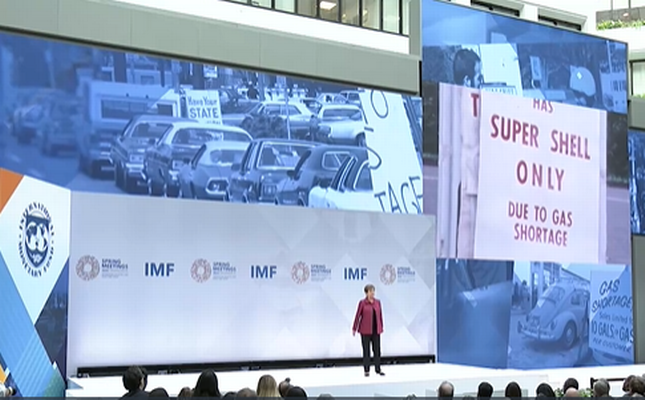
    This energy market disruption has cascaded across nearly every sector of the global economy, touching populations far beyond the Middle East. The conflict’s human toll is already severe: millions of people around the world face growing uncertainty about access to basic goods, and food insecurity has deepened dramatically. Kristalina Georgieva, Managing Director of the International Monetary Fund (IMF), outlined the scope of the crisis in remarks delivered Thursday at the World Bank’s pre-meeting Curtain Raiser Event. She noted that transport disruptions tied to energy price hikes have pushed an additional 45 million people into food insecurity, raising the total number of people facing acute hunger globally to more than 360 million. Rising fertilizer costs, driven by higher energy and natural gas prices, are expected to worsen this crisis in the coming months by suppressing agricultural output.

    Industrial supply chains, which have only just begun to unwind pandemic-era backlogs, are also facing new strain. Key industrial materials that are largely produced in the Middle East, including sulfur, helium, and naphtha, have seen widespread shortages. These inputs are critical to everything from semiconductor manufacturing to medical imaging equipment and plastic production, meaning shortages are now rippling through advanced manufacturing sectors on a global scale.

    Small island developing states, such as St. Kitts, are among the hardest hit by the crisis. Sitting at the end of most long-haul supply chains, these nations rely on consistent fuel shipments to power their economies and support critical sectors like tourism. Ongoing disruptions have left these countries facing heightened uncertainty over when their next fuel deliveries will arrive, pushing their already fragile economies closer to crisis.

    Economists categorize the crisis as a textbook large-scale global supply shock: one that hits unevenly across regions, with low-income and vulnerable nations bearing a far greater burden than large advanced economies. The combination of higher energy costs, disrupted production chains, and rising consumer prices has created a difficult balancing act for policymakers: higher energy costs are pushing overall inflation upward across most major economies, while also dampening consumer and business demand. Recent data shows short-term inflation expectations have risen in major economies including the United States and the eurozone, though longer-term expectations have remained steady – a small positive that offers policymakers some breathing room to avoid a sustained wage-price inflation spiral.

    In just days, top international financial leaders, finance ministers, and central bank governors from around the world will gather in Washington, D.C. for the annual spring meetings of the IMF and World Bank, where addressing this new crisis will top the agenda. The gathering is expected to focus on forging coordinated global policy responses to stabilize volatile energy markets, untangle snarled supply chains, and deliver targeted support to the vulnerable populations and low-income nations that are bearing the brunt of the new shock.

  • National Bank Renews Its Partnership with Nevis Island Administration to Champion Youth Development

    National Bank Renews Its Partnership with Nevis Island Administration to Champion Youth Development

    BASSETERRE, St. Kitts – April 10, 2026 – One of the Federation of St. Kitts and Nevis’ most prominent financial institutions has reaffirmed its dedication to nurturing the next generation by extending its longstanding collaborative partnership with the Nevis Island Administration’s Ministry of Education, Library Services, Information Technology, Youth and Sports.

    St. Kitts-Nevis-Anguilla National Bank Ltd. (SKNANB) made the formal announcement of the renewed agreement in early April 2026, framing the continuation of this work as a core reflection of the bank’s institutional mission to invest in the long-term success of young people across the Federation.

    For multiple years, this cross-sector partnership has delivered tangible opportunities for Nevisian youth, with SKNANB serving as the headline sponsor for a suite of popular athletic and academic programs that serve diverse student interests. On the sporting side, the bank’s backing has enabled the staging of beloved regional competitions, including the annual Primary Schools Football Tournament and the multi-discipline Nevis Inter-Primary Schools’ Championship, which brings together young competitors from across the island in both football and track and field events.

    These annual competitions have grown far beyond casual recreational events, emerging as critical pipelines for emerging athletic talent while teaching young participants foundational life skills including collaborative teamwork, personal discipline, and respect for healthy competition. But the partnership’s impact extends well beyond the athletic field, reaching into academic and personal development programming designed to build critical skills for the next generation of leaders. SKNANB’s financial and logistical support has also enabled youth-focused initiatives including inter-school spelling bees, hands-on STEM activities, immersive youth camps, and public elocution competitions – all curated to encourage academic excellence, strengthen critical thinking abilities, and build confident, clear communication skills among young participants.

    Looking ahead to the coming year of collaboration, SKNANB leadership expressed excitement to continue working alongside the Nevis Ministry of Education to advance their shared goal: empowering Nevis’ children and young people through a combination of accessible education and athletic opportunity.

    As the leading premier financial institution in the Federation, SKNANB has long anchored its corporate identity in commitment to broad-based economic and social progress across the islands. The bank’s ongoing youth development partnership is just one core component of its broader institutional focus on community uplift, intentional corporate social responsibility, and cross-sector collaborations that deliver sustained, positive change for residents across the Federation.

    Media inquiries about the partnership and SKNANB’s community programming can be directed to the bank’s Marketing Department via email at marketing@sknanb.com, by phone at (869) 465-2204, or through the institution’s official website www.sknanb.com.