分类: business

  • Another harvest delay could finish off sugar industry – planters

    Another harvest delay could finish off sugar industry – planters

    Barbados’ centuries-old sugar sector, a foundational part of the island nation’s agricultural and economic landscape, is on the brink of total collapse if the 2026 harvest does not proceed as scheduled this Friday, private cane growers have warned. The urgent alarm comes amid a fresh, intractable disagreement between factory management and the Unity Workers Union (UWU) that has already delayed operations and put thousands of livelihoods at risk.

    The stark warning was delivered Thursday by Mark Sealy, chairman of Barbados Sugar Industry Limited (BSIL) – the cooperative that supplies 65 percent of all cane processed annually at Portvale, Barbados’ only remaining sugar mill. The conflict ignited after UWU threatened to pull its members from Portvale this weekend if management proceeds with plans to implement a mandatory shift system for workers.

    UWU General Secretary Caswell Franklyn has taken the firm stance that Portvale falls under the island’s Shops Act, meaning it must operate like a standard retail establishment with no structured shift scheduling. However, the Barbados Energy and Sugar Company (BESCO), the cooperative that oversees Portvale’s daily operations, argues that the facility is legally classified as a factory, falling under the 2013 Safety and Health at Work Act (SHAW), which permits shift-based work arrangements.

    This is not the first disruption to hit the 2026 harvest. Earlier this week, Agriculture Minister Dr. Shantal Munroe-Knight announced that limited grinding operations had resumed using cane that was delivered to the factory before UWU workers launched a prior strike. That industrial action was called to protest working conditions, wage levels, and BESCO’s refusal to recognize UWU as the workers’ official collective bargaining agent.

    For small-scale cane farmers, who form the backbone of BSIL’s membership, any further delay to harvest operations could be catastrophic. Cane already standing in fields is beginning to degrade, and extended delays will push marginal producers – who lack the financial reserves to absorb extended interruptions – out of business entirely, Sealy explained. That would leave the factory unable to meet its required daily processing target of 2,000 tonnes of cane, putting the entire annual quota at risk and triggering irreversible collapse of the industry.

    “People need to understand now that this is crunch time,” Sealy told Barbados TODAY in an exclusive interview. “This is now April 9, and we have hardly harvested any cane. We can’t continue with that; timing is of the essence. We have been trying to sustain the sugar industry for quite some time now. If we have any other drop out of marginal farmers, it will be very difficult to recover from that, because even the larger farmers will not be able to deliver 2,000 tonnes of cane to the factory per day.”

    Sealy added that small-scale producers without sufficient cash flow and reserve resources could be forced to exit the industry permanently if the 2026 crop is entirely lost to delays, creating a gap that cannot be quickly filled by remaining growers.

    Complicating the timeline further is the narrow harvest window before the arrival of the annual rainy season in June. Once soils become saturated, farm equipment cannot access fields to harvest remaining cane, making it impossible to salvage the crop. Sealy pushed back on UWU’s legal classification of the mill, noting that the facility’s function as a factory makes its classification under SHAW unambiguous. “Anybody can see that a factory is a factory. We need to get the whole thing sorted out because we can’t afford any more delays,” he said.

    On the contentious question of union recognition, Sealy threw BSIL’s support behind the Barbados Workers’ Union (BWU), which he says has been the recognized bargaining agent for sugar sector workers for nearly a decade. “For the past eight years and even before I was chairman of BSIL, we have been sitting down in negotiations with the BWU and BAMC, which is now BESCO, and going through the issues with mutual respect,” he said.

    Already, the weeks-long delay to the harvest, which was originally scheduled to begin February 15, has caused measurable damage. Standing cane has degraded, leading to lower sugar quality and reduced overall tonnage. Any additional delays will erode the economic benefits the sugar industry delivers to Barbados, pushing the centuries-old sector over the edge, Sealy warned. He called on all parties to negotiate an immediate resolution to allow the 2026 harvest to proceed for the benefit of workers, the general public, and the broader Barbados economy.
  • Hormuz slowdown signals prolonged pressure on fuel prices

    Hormuz slowdown signals prolonged pressure on fuel prices

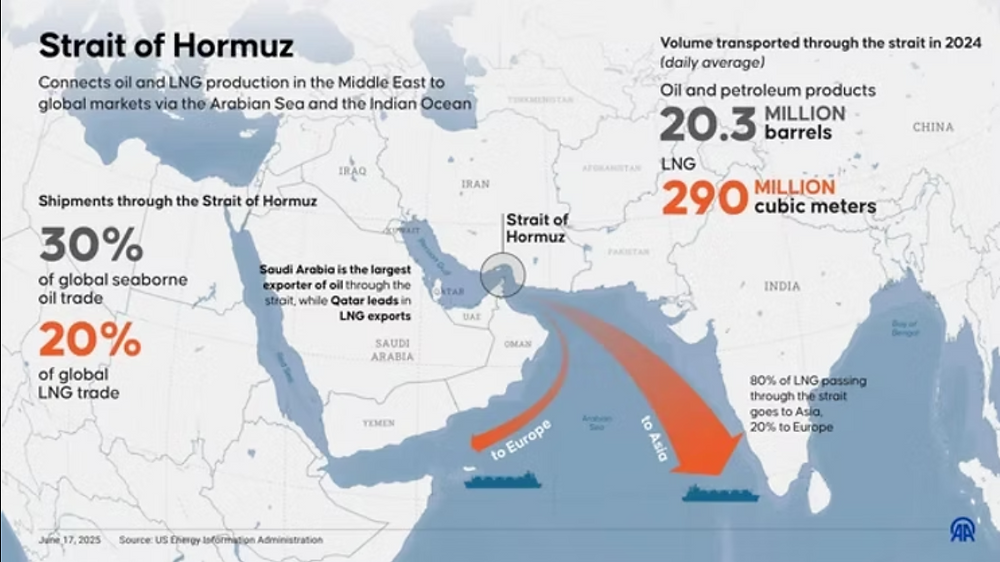
    Nearly a week after a regional ceasefire was announced to de-escalate tensions around the Strait of Hormuz, one of the world’s most critical energy chokepoints, global oil and gas shipments through the waterway have failed to stage any meaningful recovery. Shipping data collected in the first full day after the ceasefire went into effect paints a stark picture of ongoing disruption: just one oil products tanker and five dry bulk vessels completed transits through the corridor, a dramatic drop from the typical daily average of 140 vessels.

    The strategic strait handles roughly 20% of the world’s total daily shipments of oil and liquefied natural gas, making even minor disruptions to its operation ripples across global energy markets. The massive gap between pre-crisis traffic volumes and current activity underlines a key reality: formal diplomatic announcements of de-escalation have not yet translated into the large-scale resumption of energy supply movement that markets have been waiting for.

    Ongoing geopolitical uncertainty is the primary driver of the continued slowdown. Iran has retained strict oversight and restrictions on vessel passage, pointing to unresolved tensions stemming from ongoing Israeli military operations in Lebanon. This de facto bottleneck has been maintained even as formal ceasefire agreements have been announced, keeping global energy supply constrained against a backdrop of tentative diplomatic progress.

    The economic fallout of this disruption hits small, import-reliant open economies like Belize hardest. Unlike larger industrialized nations with strategic reserves and more diversified supply chains, Belize’s domestic fuel prices are directly tied to global benchmark pricing, which reacts not just to current supply levels but also to market expectations of future disruption. When a critical energy artery like the Strait of Hormuz operates at less than 10% of its normal capacity, markets price in inherent supply scarcity, which has already contributed to a sharp recent uptick in global crude prices.

    The scale of the current disruption cannot be overstated. A collapse from 140 daily transits to fewer than 10 effectively brings activity at the chokepoint to a near standstill. Even if the disruption proves temporary, the sudden contraction has injected significant volatility into global energy supply chains, throwing off shipping schedules, reducing consistent inputs for refineries worldwide, and putting sustained upward pressure on retail fuel prices.

    For Belize, where nearly every core sector of the domestic economy relies on imported fuel, the shock propagates rapidly. Higher global crude prices translate immediately to increased prices at the pump, which in turn push up costs for public and private transportation, electricity generation, food distribution, and nearly every goods and service across the country. The knock-on effects can quickly erode household purchasing power and strain small business operations.

    The slow pace of traffic resumption also suggests that price pressures may last longer than initially hoped by many market observers. Until vessel transits return to near-normal, consistent volumes, global energy markets will remain hypersensitive to any new development in the region. While ceasefire announcements and diplomatic negotiations can trigger temporary dips in oil prices, sustained market stabilization and normalization will only come when the secure, unimpeded passage of energy shipments through the strait is fully restored.

  • Port of Belize Expansion Approved, But with Heavy Conditions

    Port of Belize Expansion Approved, But with Heavy Conditions

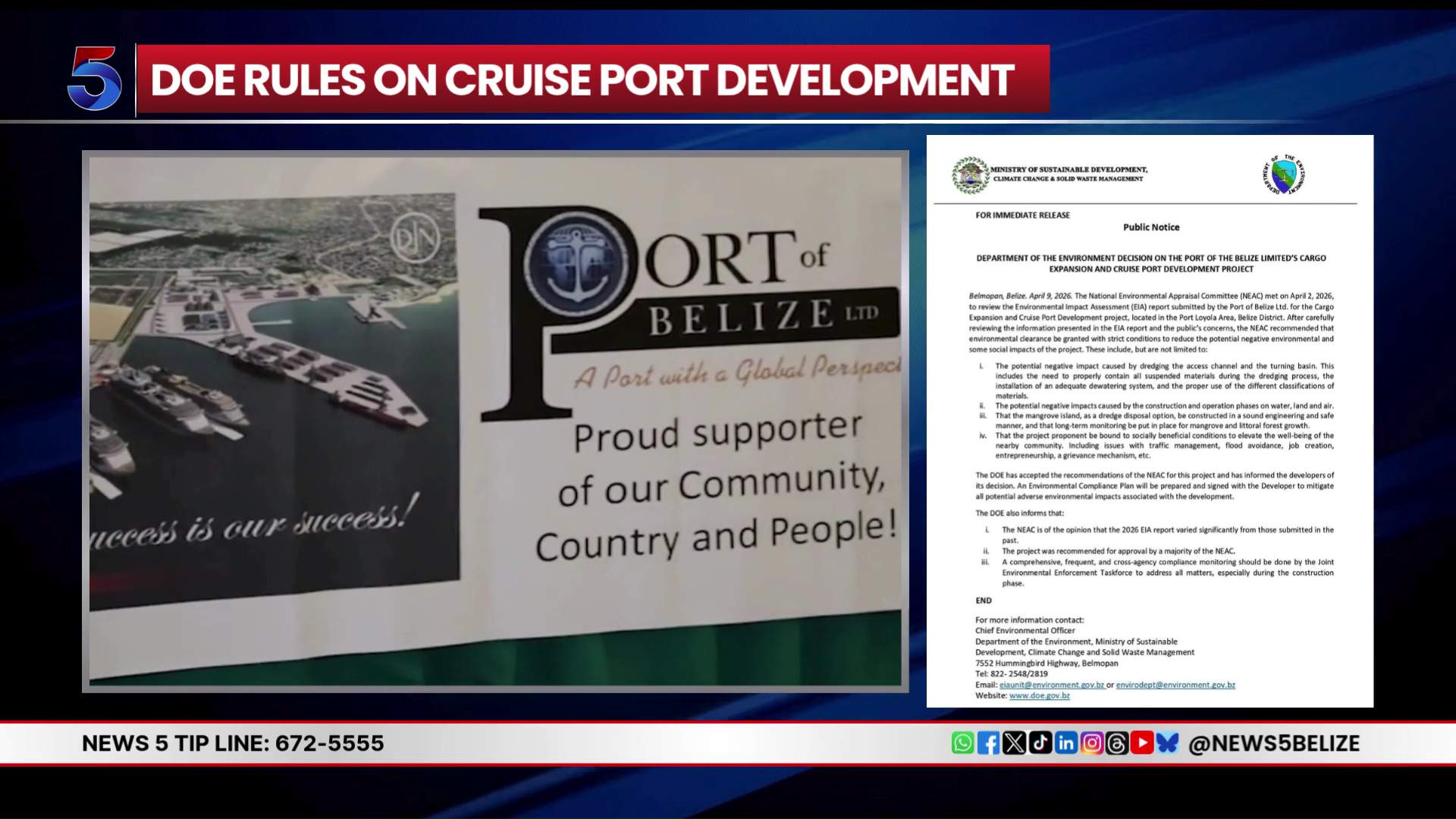
    After years of community pushback, regulatory objections, and repeated project revisions, one of Belize’s most contested infrastructure developments has cleared a critical regulatory hurdle. On April 2, 2026, Belize’s National Environmental Appraisal Committee (NEAC) granted conditional approval to Port of Belize Ltd.’s dual Cargo Expansion and Cruise Port Development project, located in the Port Loyola district of Belize City.

    The approval came after a comprehensive review of the developer’s updated 2026 Environmental Impact Assessment (EIA), which addressed longstanding public and regulatory concerns about the project’s ecological and social footprint. NEAC emphasized that development work can only commence once all mandatory environmental and community benefit conditions are fully formalized and enforced.

    Unregulated dredging, a core point of contention for environmental scientists and local activists since the project was first proposed, remains the committee’s top priority. NEAC issued strict, non-negotiable guidelines for dredging activities: developers must implement rigorous sediment control measures, install industry-standard dewatering systems, and follow tightly regulated protocols for the handling and disposal of dredged material. The agency warned that inadequate dredging management poses irreversible risks to Belize’s fragile coastal marine ecosystems, which support both local fisheries and the country’s $500 million annual tourism industry.

    Beyond dredging, NEAC also flagged broader risks to water quality, terrestrial habitats, and air quality throughout the construction and operational phases of the project, requiring developers to implement permanent, ongoing mitigation measures to reduce harm. The controversial proposal to create a dedicated mangrove island for dredge waste disposal has been allowed to move forward, but only under strict terms: the structure must be engineered to international safety standards, and subject to decades of continuous monitoring to confirm that mangrove and coastal forest ecosystems successfully establish and thrive on the site.

    Regulators also centered community interests in their approval framework, tying project progress to binding requirements around local infrastructure and opportunity. Conditions mandate that developers address expected increases in local road traffic, upgrade drainage systems to reduce existing flood risks in Port Loyola, prioritize local hiring for construction and permanent operations, reserve a share of business opportunities for local entrepreneurs, and establish a formal, independent grievance mechanism to address resident concerns throughout the project’s lifespan.

    Following NEAC’s recommendation, Belize’s Department of the Environment has signed off on the conditional approval and will require developers to submit a formal Environmental Compliance Plan that codifies all required safeguards before any ground (or seabed) breaking can occur. Regulators noted that the 2026 revised EIA represents a dramatic improvement over earlier, less comprehensive versions of the assessment, which helped secure majority support from the NEAC committee—though the approval was not unanimous, with some members still raising unresolved concerns.

    Even with the green light, regulatory oversight will not end once construction begins. Joint inter-agency enforcement teams will conduct continuous, on-site monitoring of all project activities, with a particular focus on compliance during the high-risk dredging and construction phases. For Belize’s environmental regulators, the project represents more than a single infrastructure development: it is a landmark test of whether large-scale economic expansion can proceed without sacrificing the country’s unique natural environment or ignoring the needs of adjacent local communities.

  • Market Makeover Raises Fears for Dangriga’s Streetside Vendors

    Market Makeover Raises Fears for Dangriga’s Streetside Vendors

    A planned revitalization initiative for Dangriga’s central town market, designed to modernize the coastal district’s commercial landscape and improve urban mobility, has left hundreds of informal streetside vendors uncertain about their livelihoods, just as the local community navigates a post-pandemic recovery for small business. The proposal, unveiled by the Dangriga Town Council, would relocate vendors currently operating in high-foot-traffic zones near the municipal bus terminal and along Ecumenical Drive into the underused central market square. Council leaders frame the move as a long-overdue upgrade that will bring the town in line with other major population centers across Belize that operate structured, successful public markets.

    In an interview following a public consultation held Wednesday to address vendor concerns, Market Councilor Hilberto Bernardez outlined the multiple public benefits the council expects the overhaul to deliver. He noted that the current scattered layout of street vendors has created persistent traffic congestion along Ecumenical Drive, one of the town’s busiest arterial roads, and blocked critical access routes for emergency responders including police and fire services. Relocating all vendors to a centralized market will clear these roadways, easing through traffic and improving public safety for all residents.

    Beyond infrastructure and safety gains, Bernardez emphasized that a centralized, organized market will also support Dangriga’s growing tourism sector. Visitors to the town frequently search for a dedicated market space to purchase local handicrafts, souvenirs, and traditional Belizean food, and a revitalized central market will meet that demand, boosting local economic activity in the process. He added that the current unregulated system, which allows out-of-town vendors to set up unapproved stalls anywhere in high-traffic areas, has created disorganization that holds the town back from reaching its commercial potential. Right now, the central market square is largely underutilized, lagging far behind the well-run, thriving markets found in Belize City, Cayo, Belmopan, Punta Gorda, Orange Walk and Corozal.

    For the streetside vendors who would be affected by the move, however, the plan carries significant personal and financial risk. Many vendors rely on the constant foot and vehicle traffic near the bus terminal and Ecumenical Drive to attract the repeat and passing customers that make up their steady income. Moving to the central market square would cut them off from this reliable customer flow, vendors argue, and many fear their small businesses will not survive the shift.

    As the proposal moves forward, the core challenge for Dangriga officials and vendors alike remains striking a fair balance between the town’s goal of creating a more organized, tourist-friendly commercial hub and protecting the livelihoods of the low-income small vendors who have built their businesses on the town’s busiest streets. The public consultation Wednesday marked the first formal step in addressing vendor concerns as the council refines its plan ahead of a final vote.

  • Caribbean Development Bank adds US$12 million to finalize groundbreaking agricultural initiative in Jamaica

    Caribbean Development Bank adds US$12 million to finalize groundbreaking agricultural initiative in Jamaica

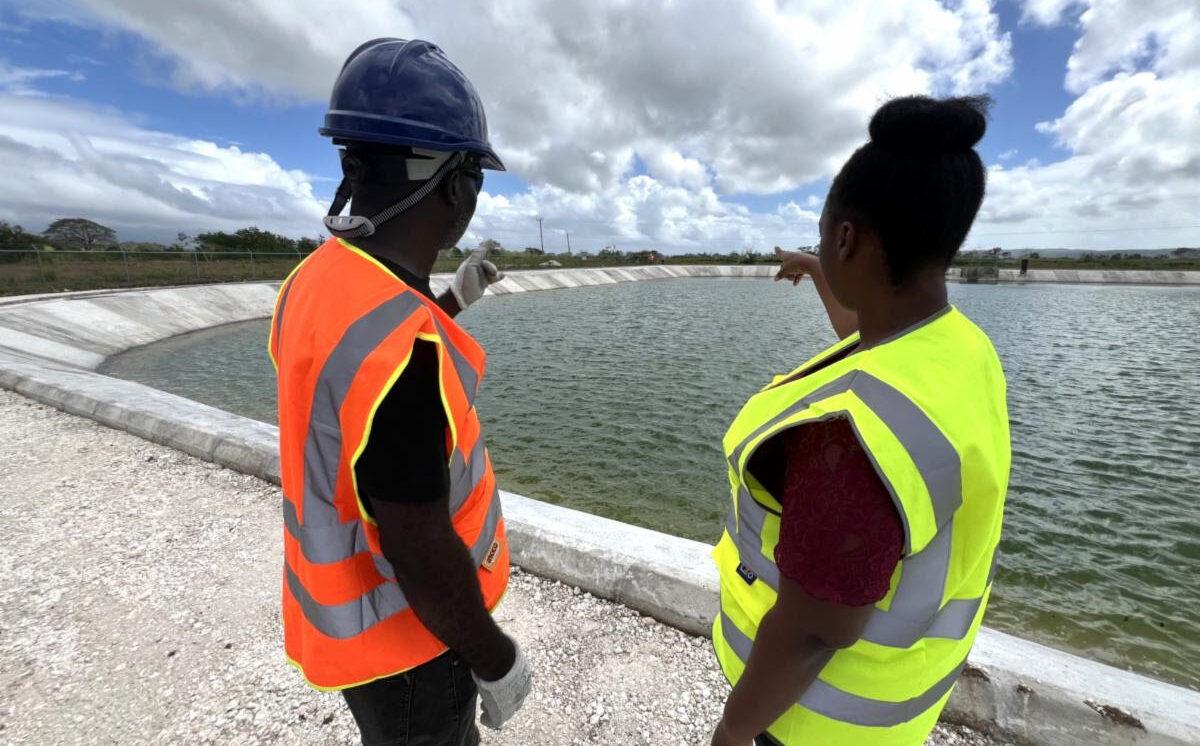
    Against a backdrop of escalating climate shocks and lingering global economic disruptions, the Caribbean Development Bank (CDB) Board of Directors has greenlit an additional $12 million in concessional financing to help the Government of Jamaica cross the finish line on its transformative Southern Plains Agricultural Development (SPAD) Project.

    Labeled a landmark climate adaptation initiative for the island nation in an official CDB press statement, the SPAD Project’s core mission is to reimagine Jamaica’s climate-vulnerable farmland as robust, high-productivity agricultural zones that can withstand extreme weather and shifting growing conditions.

    The new funding comes via a low-interest loan disbursed through CDB’s Special Development Fund. It is specifically designed to address unforeseen cost overruns that have plagued the project since its launch, stemming from overlapping global crises: widespread supply chain breakdowns triggered by the COVID-19 pandemic and the ongoing war in Ukraine, combined with costly delays and damage from intensifying extreme weather events hitting the Caribbean. By closing the remaining project funding gap, the supplementary financing paves the way for full completion of all SPAD components by 2028.

    “This additional financing is essential to safeguard and build on the gains already achieved under the SPAD Project,” noted L. O’Reilly Lewis, CDB’s Director of Projects, in remarks accompanying the funding announcement. “Completing this innovative initiative will strengthen Jamaica’s food security, safeguard rural livelihoods and ensure that climate resilient infrastructure continues to deliver long term benefits for farmers and communities.”

    The $12 million will be allocated to wrap up the project’s remaining critical components. Key work includes the full installation and testing of modern irrigation systems at the Amity Hall site, as well as the construction of specialized produce handling and packhouse facilities in two locations: Amity Hall in St. Catherine parish and Parnassus in Clarendon parish. The financing will also cover related costs for engineering oversight, on-site supervision, and end-to-end project management.

    Beyond physical infrastructure, the funding will sustain ongoing farmer support programs designed to make long-term climate adaptation accessible to local producers. These include the Matching Grant Scheme, which helps smallholders access affordable climate-smart irrigation equipment, hands-on training in Good Agricultural Practices and Climate Smart Agriculture techniques, and the development of formal systems for ongoing operation and maintenance of new infrastructure after project completion.

    Implemented by CDB through the United Kingdom Caribbean Infrastructure Fund Programme, the SPAD Project has already delivered tangible, measurable progress across Jamaica’s Southern Plains, the country’s most productive agricultural heartland. To date, more than 790 hectares of previously underserved farmland have been connected to reliable irrigation systems, and approximately 40 kilometers of deteriorated farm access roads have been fully rehabilitated to improve market access for producers. The initiative has also expanded economic opportunity for small and medium-scale producers, including marginalized women and young farmers, by lowering barriers to land, water, modern irrigation technology, professional training, and formal agricultural markets.

    A defining innovation of the SPAD Project is its shift from wasteful traditional flood irrigation to highly efficient, climate-resilient water management systems. This transition has already allowed participating farmers to better survive prolonged drought periods, keep production levels stable year-round, cut costly crop losses, and boost household incomes. CDB officials emphasize that these improvements are far more than incremental upgrades: they are critical for Jamaica’s agricultural sector, which has faced repeated devastating climate events in recent years, including Hurricanes Melissa and Beryl. As of the funding announcement, irrigation infrastructure at the Parnassus site is already fully operational, with work at the Amity Hall site nearing completion.

    The new financing also aligns directly with the core goals of CDB’s newly launched 2026–2035 Strategic Plan, which prioritizes building economic, social, and environmental resilience across the Caribbean region. Through targeted investments in climate-resilient food systems, sustainable rural livelihoods, and long-lasting infrastructure, the plan seeks to equip local communities across the region to better withstand and bounce back from future systemic shocks.

  • DOE Grants Conditional Environmental Clearance for Port of Belize Expansion Project

    DOE Grants Conditional Environmental Clearance for Port of Belize Expansion Project

    In a landmark decision announced on April 9, 2026, Belize’s Department of the Environment (DOE) has issued conditional environmental approval for the large-scale cargo expansion and cruise terminal development project led by Port of Belize Ltd., located in the Port Loyola district of Belize. This green light follows months of technical review and public consultation, marking a key milestone for what is expected to be one of the country’s most significant infrastructure investments in recent years. The project’s path to approval included rigorous evaluation by the National Environmental Appraisal Committee (NEAC), which convened on April 2 to conduct a comprehensive assessment of the project’s updated Environmental Impact Assessment (EIA). After careful examination of the revised technical documentation and thorough consideration of concerns raised by local communities and environmental stakeholders, the committee delivered a majority vote in favor of conditional approval, which the DOE formally adopted and communicated to the project developer this week. One of the most heavily scrutinized components of the project is the planned dredging work for the shipping access channel and vessel turning basin, a process that has long raised alarms over potential harm to Belize’s fragile coastal ecosystems. To address these risks, NEAC has laid out binding requirements that the developer must follow, including robust containment systems to control the spread of suspended sediment during dredging operations, installation of fit-for-purpose dewatering infrastructure, and categorized handling and disposal of all dredged materials based on their contamination level. Beyond dredging-specific regulations, the committee also flagged potential risks to water, terrestrial, and air quality across both the construction and long-term operational phases of the project. Of particular note is the developer’s proposal to use a newly created mangrove island as a disposal site for dredged material. To ensure this does not cause lasting ecological harm, NEAC has mandated that all construction of the island adhere to strict engineering and safety standards, with required long-term ecological monitoring to track the health and growth of mangrove and littoral forest habitats on site. In addition to stringent environmental protections, the approval includes a suite of social conditions designed to deliver tangible benefits to adjacent communities and mitigate local disruptions. These mandatory requirements cover everything from targeted traffic management plans to reduce congestion in Port Loyola to infrastructure upgrades for flood mitigation, a commitment to prioritize local hiring for project jobs, targeted support for local small business and entrepreneurship opportunities, and the creation of a formal, accessible grievance mechanism for community members to raise concerns throughout the project’s lifecycle. To formalize all these requirements, the DOE confirmed that a binding Environmental Compliance Plan will be finalized and signed by both the regulator and the developer in the coming weeks, outlining specific mitigation measures that will be legally enforced to minimize any adverse social and environmental impacts. Officials also emphasized that the 2026 EIA submission reviewed by NEAC includes substantial revisions that address gaps identified in earlier proposals, bringing the project into alignment with current national environmental standards before the committee’s vote.

  • SLM schort vaste vluchten naar Barbados op, inzet voortaan seizoensgebonden

    SLM schort vaste vluchten naar Barbados op, inzet voortaan seizoensgebonden

    Surinam Airways (SLM), the national carrier of the South American nation Suriname, has announced that it will halt its scheduled regular flight operations between its hub in Paramaribo and Bridgetown, Barbados, effective April 19, 2026. The airline confirmed that the decision to pause the bi-weekly route, which previously operated every Sunday and Wednesday, was driven by a combination of operational performance challenges and shifting commercial market demands.

    This route adjustment forms a core part of SLM’s broader company-wide initiative to optimize its entire route network, the carrier explained. Under the optimization strategy, the airline is realigning its available capacity and flight frequencies across all routes to better match current travel demand patterns, while boosting overall operational efficiency across its business.

    Contrary to initial speculation that the route would be cut entirely, Barbados will remain a key part of SLM’s long-term route network. Following the April 19 suspension of regular services, the carrier will shift to a seasonal service model for the destination, with flights only operated during peak travel periods and in conjunction with major annual events hosted on the Caribbean island. The first seasonal operating window under the new model will run from July 1, 2026, through January 15, 2027.

    The shift in service model has resulted in a number of pre-scheduled flight cancellations in the interim period between April 19 and the launch of the first seasonal window. Affected flights include all services between April 19 and May 10, the flight scheduled for May 17, and all services from May 24 through June 28. Notably, the services operated on May 13 and May 20, designated by flight numbers PY331 and PY332, will remain operational and operate according to their original published schedules.

    SLM has confirmed that all passengers holding confirmed tickets for travel after April 19 on the suspended route are being proactively notified of the schedule changes. Passengers will be contacted directly by the airline or through their third-party travel agents, who will walk them through available alternative travel arrangements. Depending on passenger preference and applicable ticket terms, eligible bookers will be offered either rebooking onto alternate services or a full refund of their ticket cost, in line with SLM’s standard customer policies.

  • Telecom and banking leaders partner to advance Caribbean digital economy

    Telecom and banking leaders partner to advance Caribbean digital economy

    Two leading Caribbean industry bodies have announced a landmark strategic partnership set to reshape the region’s digital economy, uniting the telecommunications and financial sectors around a shared mission to drive digital transformation and foster innovative financial solutions.

    The Caribbean Association of Banks (CAB), the collective voice of regional financial institutions, and CANTO, the Caribbean’s primary ICT industry trade association, formalized their collaboration via a signed Memorandum of Understanding (MoU), according to an official press release from CAB. The structured partnership is explicitly designed to bridge long-standing operational and strategic gaps between the telecom and banking sectors, two foundational pillars of the Caribbean’s growing digital economy. Both organizations have confirmed the agreement aligns with their shared objectives: upgrading legacy financial services and building the robust digital infrastructure required to support modern digital commerce.

    The timing of this alliance could not be more relevant, as the overlapping growth of digital connectivity, fintech innovation, and digital financial services continues to redefine the Caribbean’s economic landscape. By combining their industry expertise, networks, and resources, the two groups have outlined four core priorities: expanding access to digital financial services for unbanked and underbanked populations, upgrading regional cybersecurity protections to counter evolving threats, modernizing outdated core banking systems, and building resilient, future-ready digital infrastructure across all Caribbean nations.

    To deliver on these goals, the partnership will launch a series of coordinated cross-industry initiatives. First, the organizations will collaborate on participation in major regional gatherings, including CANTO’s annual flagship CANTO Connect event, CAB’s Annual General Meetings, and other key industry conferences. Second, they will roll out joint marketing and public outreach campaigns targeted at stakeholders across the Caribbean to raise awareness of digital transformation benefits. Third, an annual Telecom-Banking Roundtable will be convened, bringing together C-suite leaders from both sectors, top regional regulators, and national policymakers to align on strategic priorities. Fourth, the partnership will develop specialized training and capacity-building programs focused on high-priority areas including digital banking operations, artificial intelligence integration, cybersecurity defense, enterprise risk management, and regulatory adaptation for digital innovation. Finally, the two groups will establish a regular framework for sharing insights on emerging fintech trends, growing cyber and fraud threats, new payment system innovations, and best practices for building digital resilience.

    These collaborative efforts aim to break down silos between the two sectors, equipping telecom providers, financial institutions, and public officials to tackle shared pressing challenges that have held back regional growth. Key issues the alliance will address include streamlining inefficient cross-border payment systems, scaling accessible mobile financial services, and developing interoperable, secure digital identity frameworks.

    Founded in 1985, CANTO boasts a broad membership network spanning telecom operators, ICT service providers, national governments, and regional development institutions, and has long played a central role in shaping the Caribbean’s regional digital strategy. CAB, by contrast, serves as the unified advocacy body for the Caribbean banking sector, working to advance responsible innovation, preserve financial stability, and support inclusive, sustainable economic growth across the region.

    In statements following the signing of the MoU, leadership from both organizations reaffirmed their commitment to building a more digitally connected, inclusive, and globally competitive Caribbean economy, where technological progress and financial development work in lockstep to drive long-term, shared prosperity.

    CANTO Secretary General Teresa Wankin emphasized the unique value of cross-sector collaboration for the region, noting that aligning the Caribbean’s robust connectivity ecosystem with its financial sector unlocks new opportunities for innovation, broadened financial inclusion, and accelerated inclusive economic growth across all island nations.

    Wendy Delmar, Chief Executive Officer of CAB, echoed this sentiment, highlighting that the partnership strengthens the banking sector’s ability to innovate securely, adapt to rapidly shifting regulatory and risk landscapes, and deliver more inclusive, customer-centric digital financial services to populations across the region. Delmar added that closer strategic alignment between telecom and banking creates a stronger foundation for a more resilient, competitive regional economy that can compete on the global stage.

    As digital transformation accelerates across every global region, this cross-industry alliance positions the Caribbean to capitalize on emerging digital opportunities, leveraging coordinated action, technological innovation, and shared expertise to drive sustainable, long-term economic progress for the region.

  • Andersen Global expands Caribbean presence with member firm launch in Grenada

    Andersen Global expands Caribbean presence with member firm launch in Grenada

    International professional services network Andersen Global has pressed forward with its strategic regional expansion in the Caribbean, after local firm JD Consulting formally rebranded under the Andersen name and joined the network as an official member firm, establishing a new branded presence in Grenada.

    The newly launched Andersen in Grenada delivers a full suite of professional services spanning accounting, tax planning and compliance, and bespoke business advisory, serving a diverse client base that includes high-net-worth private clients, owner-operated enterprises, small and medium-sized businesses (SMEs), and organizations across a wide cross-section of local industries. At the helm of the new member firm is Managing Director and Partner Johnson Dion, who leads a team that blends deep, on-the-ground market expertise with the global reach and specialized resources of the broader Andersen network. This combination allows the firm to craft customized, pragmatic solutions that help clients strengthen financial stability, streamline operational efficiency, and advance long-term sustainable growth.

    In a statement marking the rebranding and membership launch, Dion emphasized that aligning with the Andersen brand represents a major milestone in the firm’s developmental journey. “Our practice has always centered on delivering high-quality, client-centric advisory services rooted in core values of integrity and professional excellence,” Dion explained. “Becoming part of the Andersen Global network expands our collective capabilities to serve clients more comprehensively, while allowing us to retain the personalized, hands-on approach that has always been the cornerstone of our work with the Grenadian community.”

    Mark L Vorsatz, Global Chairman and Chief Executive Officer of Andersen Global, noted that the launch of the Grenada member firm is a natural reflection of the local practice’s longstanding standing in the Grenadian market and its steady evolution over years of operation. “Johnson Dion has built a practice defined by unwavering integrity and consistent delivery of quality service,” Vorsatz said. “Under his leadership, this new member firm will directly advance our shared goal of growing our footprint across the Caribbean region.”

    Founded in 2013 by U.S. member firm Andersen Tax LLC, Andersen Global operates as an international association of independently owned, legally distinct member firms, bringing together more than 50,000 tax, legal, and valuation professionals across the globe. Through its network of member firms and collaborating entities, the organization now maintains a physical presence in more than 1,000 locations worldwide.

  • Antigua Cruise Port Development Advances with Day Club Pool and Commercial Build-Out

    Antigua Cruise Port Development Advances with Day Club Pool and Commercial Build-Out

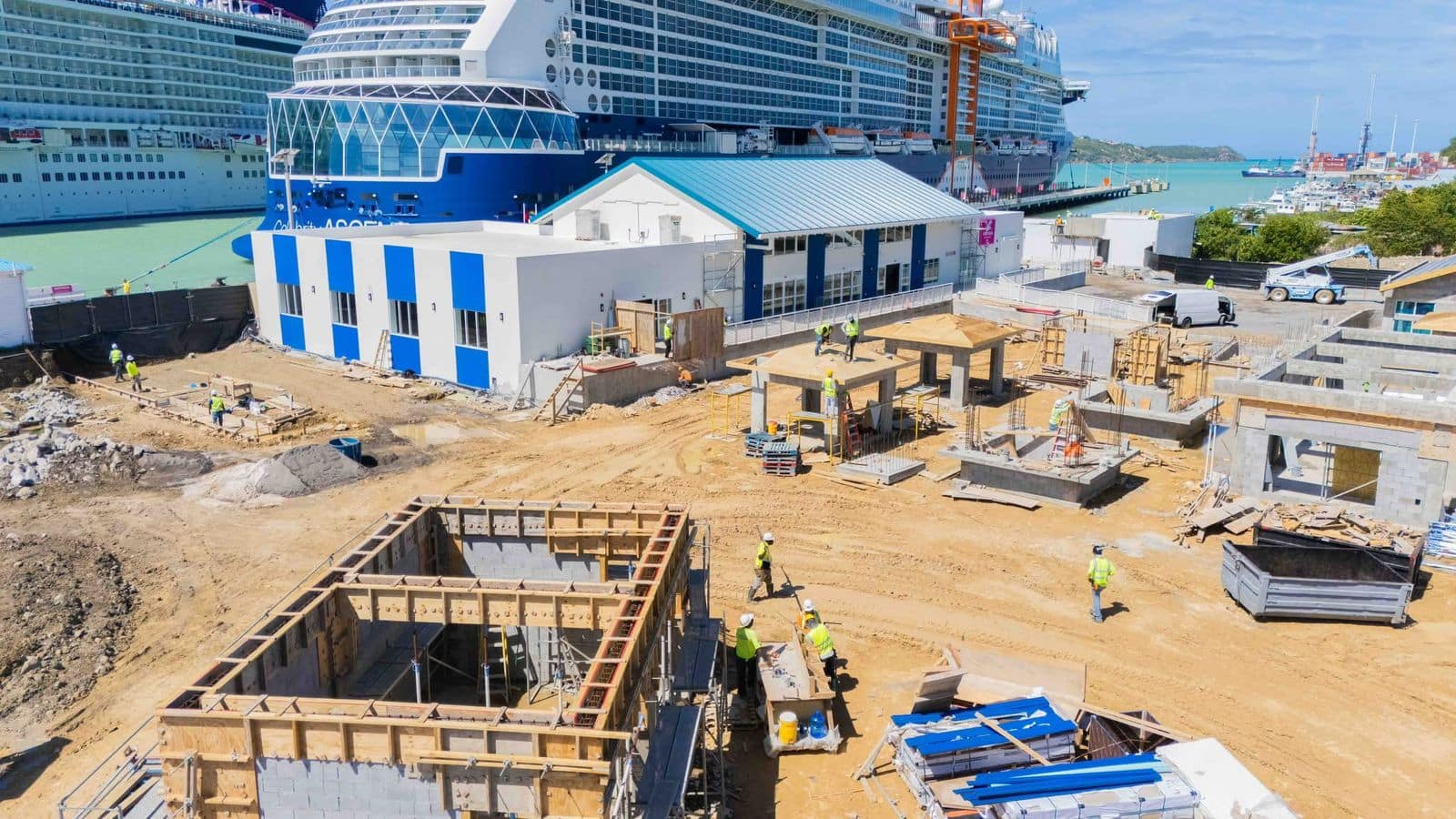
    The long-awaited expansion and upgrade project at Antigua’s cruise port has reached a key new phase, with construction now underway on two high-profile components: a luxurious beachside day club with an infinity-edge pool and a sprawling commercial district designed to cater to the growing number of cruise passengers visiting the island each year.

    Project leaders confirmed that the build-out, which is part of a broader $100 million redevelopment initiative to transform Antigua into a top-tier Caribbean cruise destination, is on track to meet its scheduled 2025 completion timeline. The day club, positioned along a scenic stretch of coastline adjacent to the main cruise berth, will offer day passes for disembarking passengers seeking relaxation, featuring private cabanas, food and beverage service, and direct beach access.

    The commercial build-out component, meanwhile, will span more than 20,000 square feet of mixed-use space, housing local craft retailers, duty-free shops, casual dining outlets, and tourist information centers. Developers note that the new facilities are designed to address longstanding gaps in visitor amenities, as the port has seen a steady 12% annual growth in passenger arrivals over the past three years, outpacing the capacity of existing on-site services.

    Local government officials emphasize that the project is expected to deliver widespread economic benefits beyond the port itself, creating more than 200 new construction jobs and an additional 350 permanent hospitality and retail positions once the facility opens. Antigua’s tourism sector, which accounts for nearly 60% of the island’s total GDP, has prioritized port upgrades to attract larger cruise vessels and extend the average length of visitor stays, boosting overall spending across local accommodation, transportation, and attraction businesses.

    Project stakeholders also highlighted that the development incorporates sustainable design features, including solar panel installations for common area energy needs, water conservation systems, and locally sourced building materials to minimize the environmental footprint of the expansion. Once completed, the upgraded port is projected to accommodate an extra 300,000 passengers annually, solidifying Antigua’s position as a leading stop on Eastern Caribbean cruise itineraries.