分类: business

  • Dominican economist at FIED urges Africa to build its own farm–to–market highways

    Dominican economist at FIED urges Africa to build its own farm–to–market highways

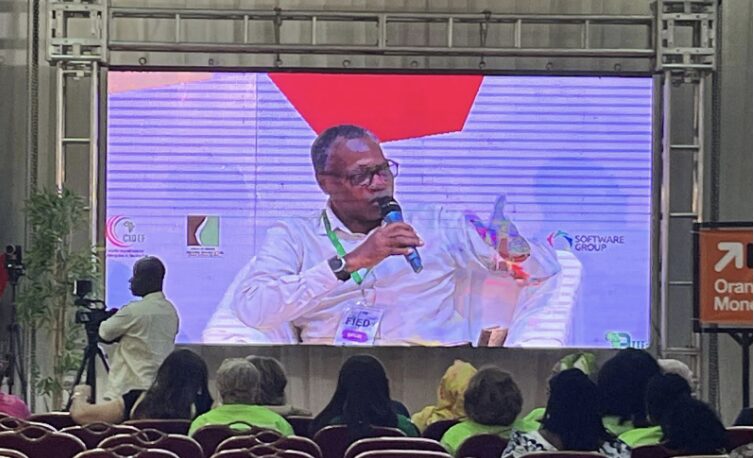
    At the International Forum of Dynamic Women Entrepreneurs (FIED) in Ouagadougou, agricultural economist McCarthy Marie delivered a compelling vision for transforming Africa’s agricultural trade landscape. Speaking before delegates from approximately 30 African nations, Marie emphasized that unlocking the full potential of intra-African trade requires urgent investment in physical infrastructure and thoughtful food processing policies.

    The Dominican economist, who accompanied Creole music icon Ophelia to the forum, presented a dual-focused strategy during a high-level panel on strengthening agricultural trade. His first priority addressed the continent’s infrastructure deficit, noting that reliable transportation networks form the foundation of successful trade ecosystems.

    “We must establish efficient pathways from farming communities to distribution centers,” Marie asserted. “This demands substantial investment not just in export corridors but within rural areas themselves—roads, storage facilities, logistics systems, and market infrastructure are all essential components.”

    Marie highlighted the paradoxical reality where shipping agricultural products to Europe often proves easier and cheaper than transporting them to neighboring African regions. He advocated for developing an integrated continental grid of farm-to-market highways connecting West, Central, East, and Southern Africa through both road and rail networks.

    Turning to food policy, the economist issued a cautionary warning based on Caribbean experiences with ultra-processed foods. He noted that aggressive promotion of heavily processed products has led to devastating health consequences, including skyrocketing rates of diabetes, hypertension, and cardiovascular diseases that now overwhelm public health budgets.

    “African nations have the unique opportunity to design food systems that protect public health rather than compromise it,” Marie advised. “Processing is necessary, but over-processing creates preventable health crises.”

    The economist pointed to Burkina Faso’s cotton sector as an exemplary model of value chain development. He praised how Burkinabè producers have mastered the entire production process—from cultivation to spinning, dyeing, design, and garment fabrication—thereby capturing more value within the country.

    Marie further advocated for increased utilization of intellectual property tools, particularly geographical indications. He suggested that legally protecting products like Burkinabè cotton textiles through geographical indications could significantly enhance their market value and establish recognizable quality benchmarks worldwide.

    The forum, which gathered entrepreneurs, investors, and policymakers from across Africa, focused on practical strategies to strengthen intra-continental trade, with agriculture identified as a crucial driver for job creation, food security, and industrialization.
  • FIHAV 2025 ends with Cuba’s economic highlights

    FIHAV 2025 ends with Cuba’s economic highlights

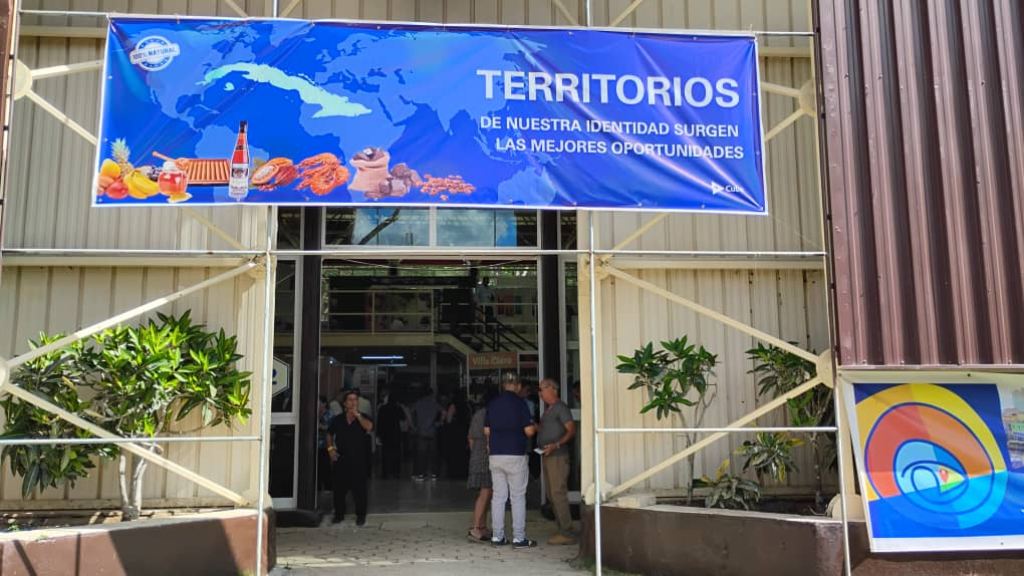
    Havana’s International Trade Fair has become the focal point for significant foreign investment policy revelations, with government officials detailing an ambitious macroeconomic stabilization program. Deputy Prime Minister and Minister of Foreign Trade and Foreign Investment Oscar Perez-Oliva presented these transformative measures during the 8th Investment Forum, capturing the attention of international companies and economic experts alike.

    The comprehensive reforms include the strategic expansion of Special Economic Zones beyond the established Mariel Special Development Zone (ZEDM) model. These new zones will target specific sectors including technology parks and real estate development, creating specialized hubs for foreign investment.

    Financial innovation forms a cornerstone of the new policy framework, particularly through Selective Swap Operations. This sophisticated financial mechanism enables targeted debt restructuring to generate foreign currency earnings and secure international financing. The government simultaneously introduced a groundbreaking real estate initiative that allows foreign investors to fund residential projects under specific conditions.

    All proposed business ventures must demonstrate financial self-sufficiency in foreign currency while adhering to stringent requirements for heritage conservation, energy efficiency standards, and implementation of renewable energy sources. These environmental and cultural protections form an integral part of the investment criteria, ensuring sustainable development aligns with economic objectives.

  • Renewables body wants ‘fair access’ to grid after new utility licence approved

    Renewables body wants ‘fair access’ to grid after new utility licence approved

    The Barbados Renewable Energy Association (BREA) has issued a compelling call for strengthened regulatory safeguards and equitable grid access policies following the government’s decision to award Barbados Light and Power Company with a substantial 30-year national grid management license. This development, formalized through an agreement with the Ministry of Energy, has prompted BREA President Meshia Clarke to emphasize the critical need for transparency and accountability within the island’s power sector.

    While recognizing the license agreement as a pivotal milestone that provides essential regulatory clarity and establishes the legal framework for utility operations, BREA maintains that the true measure of success will lie in its implementation. The association contends that mere contractual formalization falls short without concrete mechanisms ensuring fair grid accessibility and accelerated renewable integration.

    BREA’s leadership articulated both the opportunities and responsibilities inherent in this long-term arrangement. The license presents potential for sustained investment and technological innovation within Barbados’ electricity infrastructure. Conversely, it carries the responsibility to guarantee nondiscriminatory grid access, particularly for small and medium enterprises, independent power producers, and residential consumers seeking renewable interconnection.

    The association emphasized that delayed interconnection processes and restrictive practices would directly undermine national energy objectives and effectively limit grid accessibility. With regulatory stability now established, BREA expects the utility to prioritize resolving grid stability challenges to facilitate seamless renewable integration.

    Acknowledging Light and Power’s previous cooperation in energy transition efforts and consistent service delivery despite prior licensing ambiguities, BREA nevertheless stressed the necessity of robust oversight. The Ministry of Energy and Fair Trading Commission must ensure utility operations align with national policy directives without compromising consumer or investor interests.

    The recent devastation caused by Hurricane Melissa in Jamaica served as a sobering reminder of why community resilience through energy participation is fundamentally essential rather than optional. BREA advocates for meaningful involvement pathways for schools, churches, and community organizations in the energy transition process.

    Transparent performance reporting and public disclosure mechanisms were highlighted as critical components for building institutional trust and maintaining accountability. As Barbados pursues ambitious 2035 renewable energy and carbon-neutrality targets, BREA insists the new license must catalyze accelerated adoption rather than perpetuate outdated practices. The association pledged continued stakeholder engagement through technical collaboration and public education initiatives to transform the license into an instrument for inclusive growth and sustainable energy transformation.

  • Parliament adjusts excise tax to encourage import and trading of older vehicles

    Parliament adjusts excise tax to encourage import and trading of older vehicles

    The Commonwealth of Dominica has enacted significant fiscal legislation through parliamentary approval, introducing a dual-measure approach to transportation policy. The Excise Tax Amendment for 2025 establishes a tiered taxation system for imported vehicles based on manufacturing age, while simultaneously reintroducing the Highway Maintenance Levy to fund infrastructure projects.

    Finance Minister Dr. Irving McIntyre presented the comprehensive policy framework during the 2025-2026 National Budget address. The revised excise structure maintains a minimal 1 percent charge on vehicles under five years old, while implementing progressive increases: $3,000 for vehicles aged 5-10 years, $4,000 for 10-15 years, and $10,000 for vehicles exceeding 15 years. Concurrently, the general excise tax rate for vehicles under ten years will decrease from 28 percent to 25 percent.

    Dr. McIntyre emphasized the environmental and economic rationale behind these measures. “This initiative encourages population transition toward newer, more efficient vehicles with reduced carbon emissions and lower maintenance costs,” he stated during parliamentary proceedings. The minister highlighted multiple benefits including improved road safety, reduced environmental impact, and support for local vehicle commerce.

    Separately, the government legislated the reinstatement of the Highway Maintenance Levy effective October 1, 2025. Private vehicles will incur a $100 annual charge, with motorcycles assessed at $50. Commercial vehicles face scaled rates based on weight classifications, ranging from $150 for vehicles under 6,721 pounds to $500 for those exceeding 33,600 pounds.

    The levy, originally implemented in 2015-2016 and generating $10.4 million before its 2022 suspension, previously funded critical infrastructure including the Charles Avenue rehabilitation project. Dr. McIntyre noted the initial repeal responded to fuel price surges during the Russia-Ukraine conflict, but current normalized fuel prices and substantial road infrastructure investments necessitate the levy’s restoration.

    Vehicle owners are encouraged to consider these contributions as investments in national development and infrastructure sustainability.

  • Govt, Light & Power sign licences to unlock $500m in renewable projects

    Govt, Light & Power sign licences to unlock $500m in renewable projects

    In a transformative move for its energy future, Barbados has successfully averted potential grid collapse and secured long-term electricity stability through newly ratified licensing agreements with the Barbados Light and Power Company (BLPC). The landmark signing ceremony at Warrens Office Complex, presided over by Energy Minister Senator Lisa Cummins, clears the path for over $500 million in renewable energy investments while extending operational frameworks beyond the previous 2028 expiration deadline.

    Minister Cummins characterized the previous energy infrastructure as being in ‘gridlock’ due to insufficient storage capacity, emphasizing that these newly negotiated licenses fundamentally restructure the nation’s power procurement ecosystem. The comprehensive agreement establishes a modernized framework for power purchase agreements between independent renewable energy producers and BLPC as the primary off-taker, effectively democratizing energy generation while ensuring grid reliability.

    The licensing breakthrough enables financial institutions, notably Scotiabank as represented at the signing, to release previously frozen capital for massive renewable infrastructure development. This financial unlocking addresses what energy officials described as a critical investment bottleneck that had hampered Barbados’ transition to sustainable energy sources.

    BLPC Managing Director Roger Blackman hailed the 30-year licensing arrangement as ‘an important milestone’ that creates unprecedented operational certainty. The new structure separates generation/storage operations from transmission/distribution activities, establishing distinct regulatory frameworks for each sector while ensuring coordinated grid management. This bifurcated approach allows for streamlined integration of independent power producers while maintaining BLPC’s oversight of grid stability.

    The minister highlighted the legislative evolution from the outdated Electric Light and Power Act to the contemporary Electricity Supply Act, requiring meticulous alignment between existing operations and new regulatory standards. The transition eliminates a potential regulatory vacuum that could have emerged after 2028, ensuring continuous investment in grid modernization and preventing infrastructure deterioration that might have led to blackouts.

    This strategic energy sector overhaul coincides with Barbados’ Energy Month celebrations, marking the culmination of what Minister Cummins described as ‘a genuinely aggressive period’ of behind-the-scenes restructuring. The new licenses take immediate effect upon revocation of previous orders, creating seamless regulatory continuity that promises to transform Barbados’ energy landscape for generations to come.

  • Belastingopbrengsten kelderen: oliecontract kost Guyana US$ 2.3 miljard aan vrijstellingen

    Belastingopbrengsten kelderen: oliecontract kost Guyana US$ 2.3 miljard aan vrijstellingen

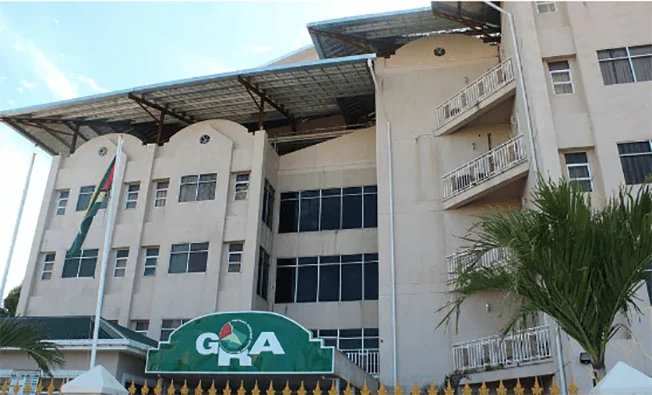
    The Guyana Revenue Authority (GRA) has reported a significant 4.9% decline in income tax revenue during the first half of 2025, collecting 123.4 billion Guyanese dollars compared to the same period in 2024. This downturn occurs against the backdrop of substantial tax exemptions granted to major oil corporations operating in the country’s lucrative Stabroek Block under a contentious Production Sharing Agreement (PSA).

    Financial documents reveal that Guyana effectively waived approximately GYD 493 billion (equivalent to USD 2.3 billion) in income taxes for the three primary operators—ExxonMobil Guyana Limited, Hess Guyana Exploration Ltd., and China’s CNOOC—during 2024 alone. The contractual framework requires the Guyanese government to pay these corporations’ taxes from its own profit share, creating a paradoxical situation where recorded tax revenues never actually enter state coffers.

    The PSA structure allocates 75% of oil production to cost recovery, with the remaining 25% designated as profit oil—split equally between Guyana and the consortium. While companies pay a mere 2% royalty on their share, the government must subsequently cover their tax obligations from its 12.5% portion. This arrangement has drawn widespread international and domestic criticism for effectively granting tax immunity to energy giants.

    Despite President Irfaan Ali’s administration defending the agreement’s sanctity, specific clauses explicitly exempt ExxonMobil and its subsidiaries from various taxes related to petroleum activities. Article 15.4 further mandates that the petroleum minister pays amounts equivalent to due taxes to GRA, with ExxonMobil even receiving tax certificates to avoid double taxation in the United States.

    Paradoxically, overall government revenue streams—excluding funds from the Natural Resource Fund and carbon credit sales—increased by 3.6% to GYD 235.4 billion, driven by a 2.3% rise in total tax collections to GYD 221 billion. This growth was supported by favorable economic fundamentals in both non-oil and oil sectors, though income tax declines were primarily attributed to reduced personal income taxes (down 14.8% to GYD 33.6 billion) and sharp decreases in withholding taxes (falling 21.7% to GYD 30.8 billion). Notably, taxes from private enterprises surged 17.1% to GYD 57.1 billion, partially offsetting declines from state-owned enterprises, which dropped 12.4% to GYD 1.8 billion.

  • Larimar City & Resort promotes the country’s first “Smart City”

    Larimar City & Resort promotes the country’s first “Smart City”

    Spanish infrastructure firm CLERHP has officially inaugurated the initial phase of Larimar City & Resort, marking the Dominican Republic’s inaugural Smart City development. The landmark ceremony, attended by over 300 distinguished guests including government officials, business leaders, and international investors, coincided with National Larimar Day celebrations honoring the country’s unique precious stone.

    Located in La Otra Banda sector of Punta Cana, this groundbreaking urban development spans 3.6 million square meters with an initial investment commitment of €600 million. The project enjoys formal endorsement from the Dominican government and holds placement within ProDominicana’s official investment portfolio.

    Juan Andrés Romero, CEO of Larimar City & Resort and President of CLERHP, emphasized the project’s transformative vision: “Larimar represents a paradigm shift in urban conception—merging innovation, sustainability, and strategic foresight. This initiative demonstrates our capacity to lead globally significant urban developments after more than a decade of dedicated research and planning.”

    The inauguration ceremony featured traditional ribbon-cutting protocols and included a philanthropic component where the Funeyca Foundation received corporate donations supporting youth cultural programs in the Punta Cana region. The event concluded with a sunset reception at Farallón de Punta Cana, attended by Spanish Embassy representative Pilar Serret Murga and local mayor Alexander Rodríguez, with ceremonial blessings provided by Bishop Jesús Castro Marte.

    Dubbed “The Jewel of the Caribbean,” Larimar City & Resort incorporates sustainable mobility systems, intelligent resource management, and extensive green spaces covering 700,000 square meters. The development will feature Mediterranean-inspired architecture, three kilometers of waterfront promenades, artificial beach areas with lakes and pools, and diverse residential options across six planned phases.

    Construction commenced in January 2025 with foundational work on Prime Towers, with Phase One completion anticipated for 2026-27. The project is projected to generate approximately 1,500 direct and indirect employment opportunities, signaling substantial economic and social impact for the La Altagracia province.

  • ‘Unnecessary’ pork imports harming farmers, economy, BAS warns

    ‘Unnecessary’ pork imports harming farmers, economy, BAS warns

    Barbados faces a growing agricultural crisis as local pork producers confront what industry leaders describe as unfairly priced imports that threaten to undermine domestic farming operations. With Christmas traditions driving heightened demand for ham, Barbados Agricultural Society CEO James Paul has sounded the alarm about import practices that he claims disadvantage both farmers and the national economy.

    Paul asserts that Barbados has achieved sufficient domestic production to completely meet seasonal demand for both pork and poultry, rendering imports unnecessary. Despite local farmers increasing output specifically for the holiday season, certain companies continue to import pork products at significantly reduced duty rates. This practice, according to Paul, results in millions of dollars in lost foreign exchange and deprives government coffers of substantial tariff revenue.

    “The farmers of Barbados have catered this year for the Christmas season, and we have ample supplies,” Paul stated in an interview with Barbados TODAY. “We have a situation where people have Champagne tastes and mauby pockets. We utilize valuable foreign exchange that we have borrowed to finance unnecessary importation.”

    The agricultural representative highlighted particular concern over imported products entering at approximately 184% below the appropriate duty rate. This pricing advantage creates what Paul characterizes as “unfair competition” that potentially includes dumped products from both within and outside the region.

    Meanwhile, Acado (Barbados) Limited, the nation’s leading distributor of local ham brands including Farmer’s Choice, EVE, and Hilldale, reports preparing for strong seasonal demand. Food and Consumer Director Joy-Ann Carter indicated that retailers are maintaining robust inventory levels to accommodate Christmas traditions, with heightened visibility and product variety expected throughout December.

    “While hams are available throughout the year, our Bajan traditions of consuming ham increase during the Christmas season,” Carter noted, adding that the company also offers turkey alternatives for consumers who avoid pork.

    The contrasting narratives reveal a complex economic tension between supporting domestic agricultural production and meeting consumer preferences during Barbados’ most significant culinary season.

  • BEL Requests Tariff Adjustment to Cover $108M Shortfall

    BEL Requests Tariff Adjustment to Cover $108M Shortfall

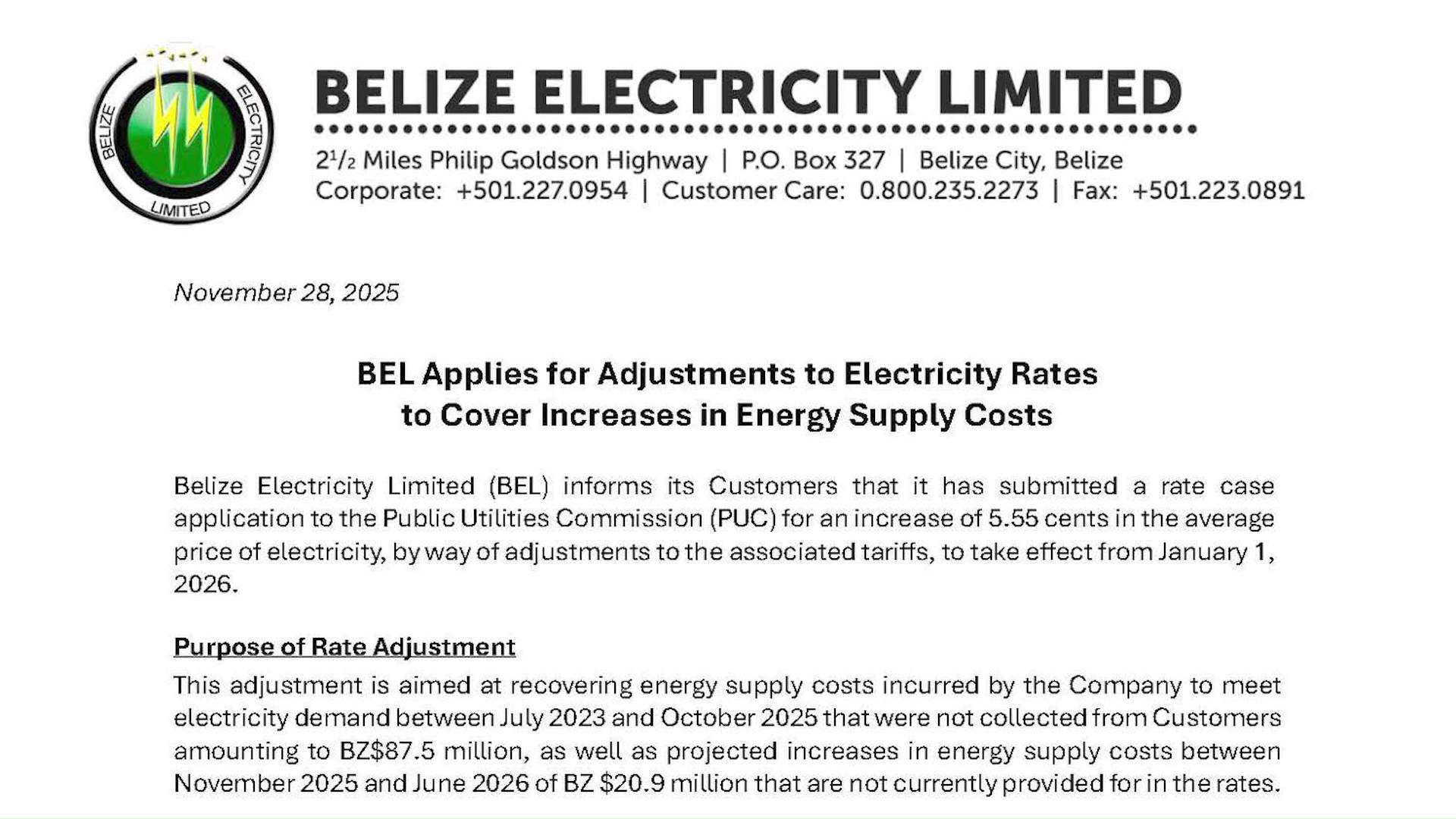
    Belize Electricity Limited (BEL) has formally petitioned the Public Utilities Commission for a substantial rate increase of approximately five cents per kilowatt-hour, slated to take effect January 1, 2026. This strategic move aims to address a significant financial deficit totaling $108 million, comprising $87.5 million in unrecovered past energy supply expenses and an additional $21 million in projected operational costs for the upcoming six-month period.

    The proposed tariff adjustment emerges amid growing concerns from both residential consumers and commercial entities, who now face the prospect of heightened financial pressure on already strained budgets. Critical inquiries have surfaced regarding the timing of this request, with stakeholders questioning why these costs weren’t collected through previous billing cycles and which parties should shoulder responsibility for the substantial shortfall.

    BEL management contends the increase is imperative to meet escalating energy demand during the anticipated dry season, fund temporary generation solutions, and offset rising import expenses from Mexican suppliers. Company representatives emphasize that despite the proposed hike, Belize will maintain some of the most competitive electricity rates within the regional landscape.

    The utility’s proposal outlines a two-year implementation framework designed to balance consumer affordability with operational viability. However, this development raises fundamental questions about Belize’s long-term energy security strategy and whether periodic consumer-funded bailouts indicate deeper structural deficiencies within the national power infrastructure.

    As regulatory authorities examine BEL’s application, the decision transcends mere financial calculations, touching upon core issues of institutional transparency, public trust, and the future trajectory of Belize’s energy sector. The outcome will determine whether this measure genuinely fortifies the national grid or ignites a comprehensive national dialogue on sustainable energy management.

  • BEL Applies to Increase Rates to Cover Estimated $108M in Energy Costs

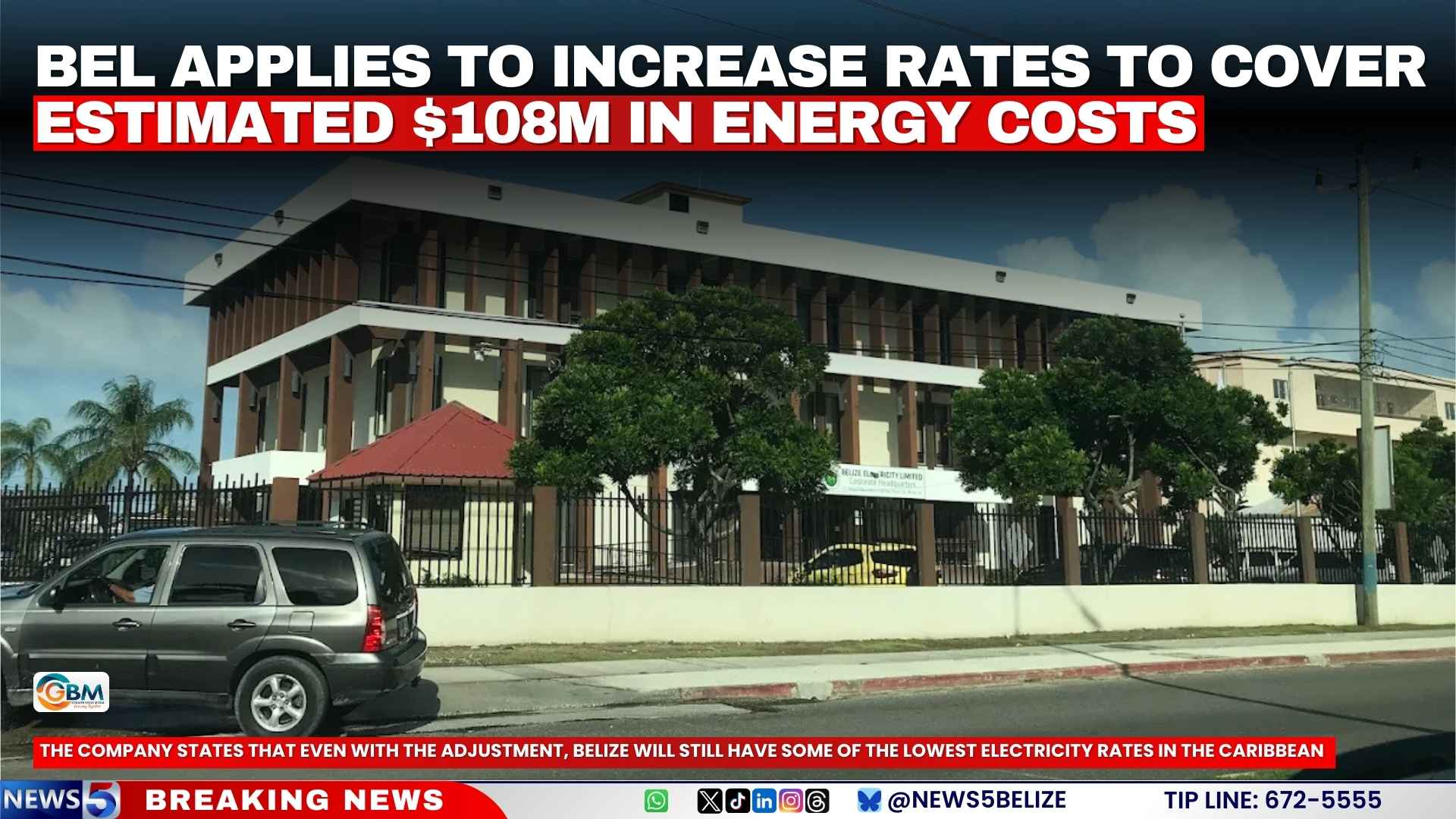
    BEL Applies to Increase Rates to Cover Estimated $108M in Energy Costs

    Belize Electricity Limited (BEL) has formally submitted an application to the Public Utilities Commission (PUC) requesting authorization to implement an average electricity price increase of 5.55 cents per kilowatt-hour, effective January 1, 2026.

    The utility company cites substantial financial pressures as the primary driver behind this proposed adjustment. BEL seeks to recover approximately BZ$87.5 million in accumulated energy expenditures incurred between July 2023 and October 2025. Additionally, the company anticipates requiring another BZ$20.9 million to cover projected costs through June 2026, bringing the total sought recovery to approximately BZ$108.4 million.

    Multiple factors contribute to these financial challenges, according to BEL’s filing. Seasonal demand surges during dry periods have necessitated increased reliance on higher-cost gas turbine generation. The company has also incurred expenses for temporary generation solutions and more expensive electricity imports from Mexico to meet national demand.

    Despite the proposed rate increase, BEL emphasizes that Belize’s electricity prices would remain among the most competitive in the region. The company asserts that even with this adjustment, Belize would maintain lower rates than most Caribbean and Central American nations.

    The Public Utilities Commission will now conduct a comprehensive review of BEL’s application, examining the justification for the requested increase and its potential impact on consumers. The regulatory body will evaluate the company’s cost recovery claims before rendering a final decision on the proposed rate adjustment.