分类: business

  • WATCH: KFC opens first restaurant in St Thomas

    WATCH: KFC opens first restaurant in St Thomas

    ST THOMAS, Jamaica — Amid ongoing recovery efforts from Hurricane Melissa, Restaurant of Jamaica (ROJ) has inaugurated its new KFC establishment in Morant Bay, marking a significant milestone for local economic revitalization. The facility commenced operations on Tuesday under the leadership of ROJ Brand Manager Andrei Roper, who characterized the launch as both a symbolic and practical step toward regional recovery.

    Roper acknowledged the profound challenges faced by communities across Jamaica, particularly in western regions and St Thomas parish, where hurricane impacts have been most severe over the past month. “This opening represents our commitment to normalcy and progress despite recent adversities,” he stated during the inauguration ceremony.

    The executive emphasized ROJ’s long-term investment strategy, noting the immediate positive public response with customers arriving early and maintaining steady patronage throughout opening day. Beyond immediate commerce, Roper highlighted the restaurant’s role in job creation, community partnerships, and broader economic development throughout the St Thomas region.

    This expansion forms part of ROJ’s strategic growth initiative, demonstrating corporate resilience while contributing to post-disaster economic stabilization. The operation expects to establish enduring community ties while generating sustained employment opportunities and commercial partnerships across the parish.

  • Dominican Republic hits 10.2 million in tourist arrivals

    Dominican Republic hits 10.2 million in tourist arrivals

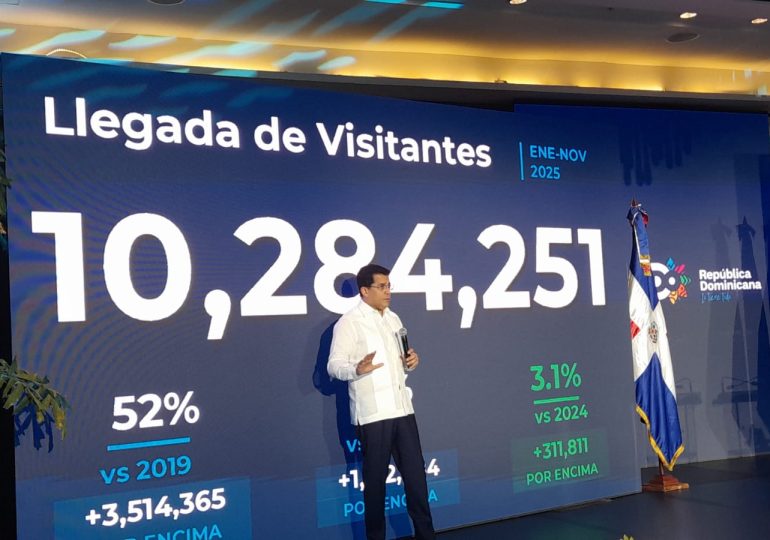
    The Dominican Republic’s tourism sector has achieved unprecedented growth, demonstrating remarkable resilience and economic vitality. According to Tourism Minister David Collado, the nation welcomed a staggering 10,284,251 visitors by November 30, 2025, representing a monumental 52% increase compared to the 6.7 million tourists received in 2019.

    This explosive growth becomes even more significant considering the loss of approximately 600,000 annual visitors from Russia and Ukraine due to ongoing geopolitical conflicts. The sector has shown consistent upward trajectory with a 13% improvement over 2023 figures and a 3.1% increase compared to 2024 performance. The eastern region and numerous destinations nationwide are experiencing exceptional demand, with hotels reporting complete occupancy from December through April.

    Air arrivals between January and November reached 7,884,421, marking a 3% increase over 2024 and a substantial 35% surge compared to 2019. Cruise tourism similarly flourished with 2,399,833 arrivals, also reflecting a 3% growth pattern. The visitor composition included 6,585,380 foreign tourists (+2%) and 1,299,041 Dominican nationals traveling with international passports (+8%).

    Projections indicate the sector will conclude 2025 with approximately 11.7 million visitors and generate over US$12 billion in foreign exchange earnings. The tourism boom has created employment opportunities for more than 800,000 individuals across tourism, agriculture, and commerce sectors. The industry contributed US$16.781 billion to GDP and provided RD$73.6 billion in government revenue, funding essential services including education, healthcare, and infrastructure development.

  • INTABACO begins distribution of seedlings for the 2025–2026 harvest

    INTABACO begins distribution of seedlings for the 2025–2026 harvest

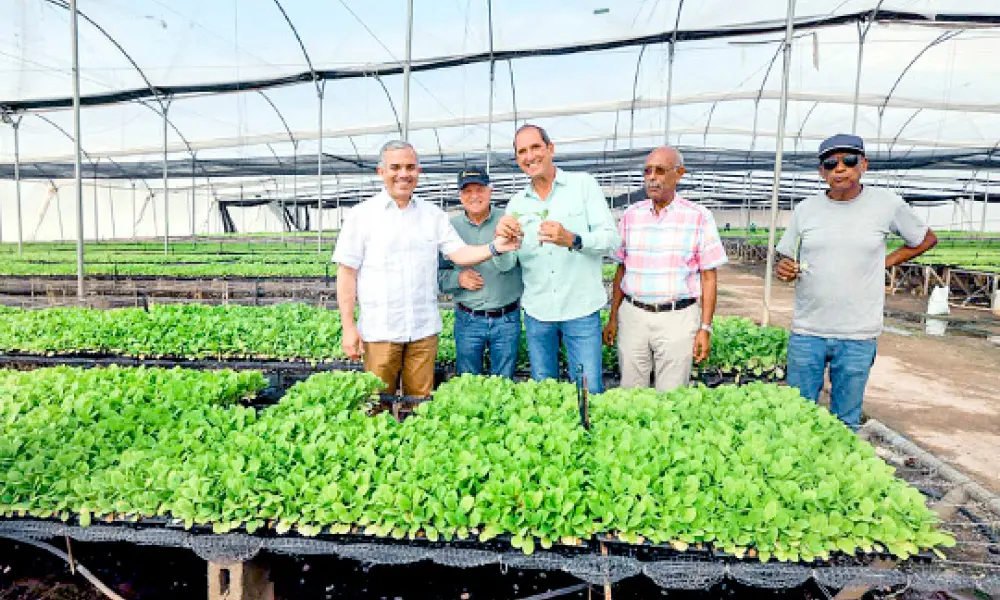
    SANTIAGO DE LOS CABALLEROS – In a significant agricultural development, the Tobacco Institute of the Dominican Republic (INTABACO) has launched a major production initiative, cultivating 15 million tobacco seedlings destined for the 2025–2026 harvest season. Under the leadership of its director, Iván Hernández Guzmán, the program is designed to substantially aid small-scale producers by providing access to high-quality, subsidized planting materials. This ambitious project will facilitate the cultivation of over 10,000 ‘tareas’—a local land measurement equivalent to approximately 1.2 hectares—bolstering the national tobacco sector’s foundation. The initiative formally commenced with the distribution of an initial batch of 160,000 seedlings of the premium IT-154 variety. These are being offered to farmers at a heavily subsidized rate of just 35 pesos per seedling, a price point that reflects a dramatic 61% reduction from standard market costs. Director Hernández Guzmán emphasized that this critical financial support is enabled through direct backing from the nation’s Presidency. He further detailed the superior qualities of the IT-154 strain, noting its exceptional leaf quality, refined texture, and superior aroma and flavor profile, attributes that are highly prized in both domestic and international markets. The production of these seedlings is being carried out through a strategic collaboration with the agricultural firm Transplanta, ensuring quality and scalability for the program.

  • Economy : Status of Diaspora Remittances to Haiti

    Economy : Status of Diaspora Remittances to Haiti

    A comprehensive analysis by the Inter-American Development Bank (IDB) Group reveals complex dynamics within Caribbean remittance flows for 2025, with Haiti presenting particularly contradictory economic signals despite maintaining its position as the region’s second-largest recipient nation.

    The report “Remittances to Latin America and the Caribbean in 2025” indicates the Caribbean sub-region will experience a 9.2% growth in diaspora transfers, though this pace remains more moderate than Central American counterparts. Total remittances across all Caribbean nations are projected to reach approximately $20.9 billion, predominantly driven by the Dominican Republic’s remarkable $11.9 billion inflow.

    Geographic distribution analysis identifies the United States as the primary source of Caribbean remittances (50.4%), followed by Canada (10.6%). Haiti’s remittance profile shows even stronger dependence on U.S. sources, which account for 62.8% of its total inflows, with Canada contributing another 10.6%. Notably, a significant portion of remaining transfers originates from Haitians residing in the Dominican Republic.

    Despite receiving $4.9 billion in remittances—surpassing Jamaica and Trinidad and Tobago—Haiti demonstrates concerning economic metrics. While remittances’ share of Caribbean GDP is projected to increase from 9.2% to 10.0% overall, Haiti experiences a 3.6% decline in this critical indicator, suggesting deeper structural economic challenges beneath surface-level financial inflows.

  • FLASH : Sunrise Airways announces its Cap

    FLASH : Sunrise Airways announces its Cap

    Haiti’s flagship carrier Sunrise Airways has unveiled strategic expansion plans with the inauguration of direct flight services connecting Cap-Haïtien International Airport (CAP) to Fort Lauderdale-Hollywood International Airport (FLL). The new route, scheduled to commence operations on December 15, 2025, will operate tri-weekly with flights every Monday, Wednesday, and Friday.

    The flight schedule establishes convenient morning departures from Cap-Haïtien at 10:00 AM local time, arriving in Fort Lauderdale at noon (Flight S6 612). Return services (Flight S6 611) will depart Florida at 1:15 PM, touching down in northern Haiti at 3:15 PM. This carefully timed scheduling facilitates both business and leisure travel with optimal connectivity.

    This development marks Fort Lauderdale as the second Floridian destination in Sunrise Airways’ network, complementing their existing daily Miami services launched in October 2023. The airline will deploy modern Airbus A320 aircraft on this route, configured in a single-class cabin arrangement accommodating up to 179 passengers per flight.

    Gary Stone, the incoming Chief Executive Officer set to assume leadership in June 2026, emphasized the strategic importance of this expansion: ‘The integration of Fort Lauderdale into our operational network provides an attractive and convenient alternative for enhancing connectivity between Haiti and South Florida, addressing growing travel demands in the region.’

    The new air bridge is expected to stimulate economic activity, foster tourism exchange, and strengthen diaspora connections between northern Haiti and Florida’s southeastern coast. Travelers may book flights and obtain additional information through the airline’s official portal at www.sunriseairways.net.

  • Zijin investeert US$ 30 miljoen in nieuw zonnepark voor groene goudwinning

    Zijin investeert US$ 30 miljoen in nieuw zonnepark voor groene goudwinning

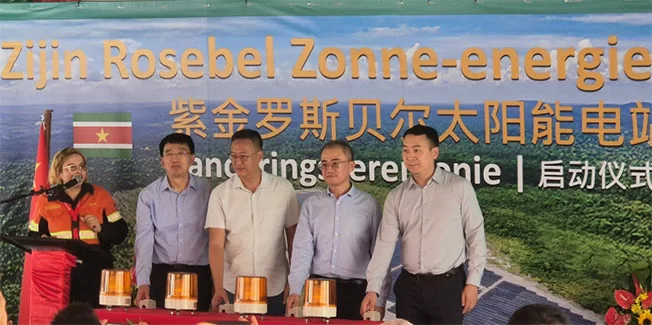
    Zijin Rosebel Gold Mines has officially inaugurated its second solar park, marking a significant advancement in its commitment to sustainable mining operations. The newly activated facility, boasting a capacity of 25 megawatts, represents a strategic effort to reduce dependency on fossil fuels and minimize harmful emissions. This initiative aligns with the company’s broader environmental goals, following the August introduction of seven fully electric 90-ton mining trucks—the first of their kind in the region.

    Suriname’s Minister of Public Works, Stephen Tsang, praised the investment as a powerful signal to the international community. In an interview with Starnieuws, he emphasized that multinational corporations like Zijin are not obligated to pursue sustainable development but are choosing to lead by example. He noted that the solar park enhances energy independence in an eco-friendly manner and serves as a model for other major enterprises and the state-owned energy company EBS. Minister Tsang connected the project to Suriname’s national ambition for a green policy, supported by the country’s 92% forest coverage.

    Construction of the solar farm, spanning 20 hectares and equipped with 40,572 solar panels, converters, and storage batteries, was completed in eight months. According to Karel Abinie, Electrical Superintendent at Rosebel, and Jerry Huangfu of Zijin Longking Clean Energy, the installation will supply approximately 17% of the mine’s annual energy demand. Currently, 5 MW of energy is stored in batteries, with plans to expand storage capacity to improve energy security.

    The project required a total investment of over $30 million USD and is expected to pay for itself within a decade. The inauguration ceremony was attended by Jerry Huangfu, Minister Tsang (representing President Jenny Simons), Xian Jian Guo—CEO of Zijin Gold International—and Liu Zhenhua from the Chinese Embassy. Officials highlighted the growing cooperation between Suriname and China, particularly in sustainable and green development initiatives.

  • Debunking some myths shaping Saint Lucia’s energy laws

    Debunking some myths shaping Saint Lucia’s energy laws

    In a striking analogy highlighting institutional conflict of interest, Saint Lucia’s energy sector faces critical scrutiny over whether electricity providers should dictate energy policy. This situation mirrors allowing drug dealers to write drug laws—a fundamentally flawed approach that stifles progress, limits employment opportunities, and prevents consumer investments from yielding financial returns during economically challenging times.

    While residents face restrictions on residential and commercial solar installations, the island’s primary utility provider LUCELEC has strategically expanded its own solar capabilities. The company has developed a 3MW solar farm in La Tourney Vieux-Fort and installed a 75kW rooftop system at its Cul-de-Sac headquarters, simultaneously investing in its solar subsidiary Energise.

    Despite abundant sunshine, Saint Lucian families continue grappling with exorbitant energy costs. The authentic impediments to solar adoption are structural rather than technical, perpetuated by LUCELEC’s substantial influence over energy policy through repeatedly debunked arguments.

    Myth 1: Grid Destabilization Concerns
    The notion that excessive solar integration causes blackouts persists despite evidence from smaller grids achieving remarkable stability. Kauaʻi in Hawai’i, serving 70,000 residents, operates at nearly 70% renewable energy—primarily rooftop solar—through sophisticated grid management including smart inverters, grid-forming batteries, demand response mechanisms, and community collaboration. The genuine challenge involves modernizing infrastructure rather than limiting solar potential.

    Myth 2: Cost-Shifting to Non-Solar Customers
    Contrary to claims that solar users avoid fair grid contribution, research from Lawrence Berkeley Lab and Brookings Institution demonstrates solar adoption reduces peak demand, decreases infrastructure requirements, and lowers generation costs. These substantial benefits frequently remain unacknowledged in policy deliberations. Evidence-based legislation must recognize solar’s comprehensive value for creating balanced energy futures.

    Myth 3: Financial Inaccessibility Argument
    The perception of solar as prohibitively expensive contradicts reality: if households can pay electricity bills, they can afford solar. Photovoltaic technology has been commercially available in Saint Lucia for over fifteen years, with prices declining below $5 per watt for specific projects. Local financial institutions offer financing options eliminating upfront costs, with monthly payments frequently matching or outperforming conventional utility bills. Commercial systems typically achieve return-on-investment within three to five years, delivering decades of subsequent savings.

    Myth 4: Baseload Power Necessity Fallacy
    The outdated concept requiring constant fossil fuel generation is superseded by modern grid flexibility. Australia—an industrialized island nation—anticipates sourcing over 75% of energy from solar and wind by 2030 without cross-border electricity dependence. Distributed solar networks combined with battery storage and smart grid technology effectively balance energy systems, eliminating baseload power requirements.

    Myth 5: Utility Policy Dominance Justification
    LUCELEC’s policymaking influence stems from governmental capacity gaps rather than inevitable monopoly rights. Recent policies favor obsolete technologies and protect the utility’s diminishing generation role rather than facilitating renewable transition. Establishing an independent committee guided by empirical evidence and national interests should determine energy policy, with LUCELEC providing technical consultation without legislative authority.

    Citizen investments warrant equal protection to monopoly interests. As Barbados Prime Minister Mia Mottley articulated regarding abundant solar and wind resources, “Why should we be paying the price for energy when we have those gifts in abundance?” Embracing this perspective enables Saint Lucia to forge equitable, sustainable energy futures through regulatory modernization and renewable adoption.

  • Different activities held throughout Business Month in November 2025

    Different activities held throughout Business Month in November 2025

    Saint Lucia has launched an expansive Business Month celebration throughout November 2025, uniting the nation’s commercial ecosystem under the forward-looking theme ‘Securing Tomorrow, Powered by Sustainability, Built on Resilience.’ The initiative, now marking its tenth anniversary since its establishment by Commerce Minister Emma Hippolyte, features 25 coordinated events designed to highlight the private sector’s critical role in national development.

    The official commencement on October 30 saw strong endorsements from business leaders including Brian Louisy, Executive Director of the Saint Lucia Chamber of Commerce, who emphasized that “businesses are the backbone of the economy” while specifically acknowledging the contributions of farmers, fishermen, and entertainers as essential business operators. Minister Hippolyte reaffirmed her ministry’s comprehensive engagement across all economic sectors.

    A significant development emerged on November 11 with the expansion of the Micro, Small and Medium Enterprise (MSME) Loan-Grant Facility, introducing specialized support for bakers and producer cooperatives. Sophia Alfay-Henry revealed that the program has already exceeded expectations, benefiting over 700 MSMEs despite initially planning for just 500 applications. The facility specifically promotes automation, standardization, and value addition while improving financial access for small enterprises.

    Educational institutions joined the celebration through innovative programs like the Agribusiness Pitch Competition hosted by the Ministry of Agriculture in partnership with the Saint Lucia TVET Institute. Held on November 21 in Dennery, the event featured Form 4 and Form 5 students presenting value-added agricultural products addressing market needs, climate resilience, and food security. Sonia Bispack, Head of the TVET Department, observed the profound impact on participants who experienced the satisfaction of creating marketable products.

    The youth entrepreneurship movement gained further momentum through the Youth Investment Forum 2025 on November 25, organized by the Youth Economy Agency (YEA). Chairman Thomas Leonce articulated the transformative power of branding, telling young entrepreneurs that “a strong brand is more than a logo or a catchy slogan” but rather “the story of the business.” The agency continues to provide comprehensive support through business registration, financial literacy, product development, and market access initiatives.

    The month-long program included numerous collaborative events including the Saint Lucia-Taiwan Partnership Trade Show (November 7-9), Accountants Week (November 8-15), and Global Entrepreneurship Week (November 17-23), demonstrating the government’s holistic approach to economic development through multi-sector partnerships.

  • Touchstone begins drilling in central block after 19 years

    Touchstone begins drilling in central block after 19 years

    Touchstone Exploration Inc. has officially recommenced development drilling operations in Trinidad’s Central Block, marking the first such activity in the region since 2006. The energy company, led by President and CEO Paul Baay, initiated drilling at the Carapal Ridge-3 development well near Princes Town in southern Trinidad.

    The Ministry of Energy and Energy Industries confirmed the operational restart on December 1, highlighting that Touchstone assumed control of the 6,600-acre Central Block following a successful transfer from Shell Trinidad Central Block Ltd on May 16. Since acquiring the asset, the company has conducted comprehensive resource evaluations and formulated plans for four developmental wells across the block.

    Notably, the ministry facilitated an accelerated timeline that enabled drilling operations to begin three weeks ahead of the original schedule. Touchstone’s internal projections indicate that production from the Central Block could potentially exceed 50 million standard cubic feet per day (mmscf/d) of natural gas.

    In an official statement, the Ministry expressed enthusiasm for the renewed drilling activity: “These investments in drilling by Touchstone are welcomed as they aid in bringing much needed natural gas to market. The MEEI welcomes this renewed activity in our onshore natural gas fields and looks forward to further collaboration with all operators in revitalising our energy sector to benefit the citizens of the Republic of TT.”

    The development represents a significant step in revitalizing Trinidad’s domestic energy sector and addressing the nation’s natural gas supply requirements through increased exploration activity.

  • International investors still gung-ho on Jamaica, says Bartlett

    International investors still gung-ho on Jamaica, says Bartlett

    NEGRIL, Westmoreland — Jamaica’s tourism industry demonstrates remarkable resilience as investor confidence remains steadfast following the devastating impact of Category 5 Hurricane Melissa. Tourism Minister Edmund Bartlett confirmed that all previously announced hotel expansion projects will proceed without delay, signaling strong global belief in the destination’s long-term viability.

    During an inspection tour of Negril’s recovery progress, Bartlett revealed that not a single investor has withdrawn or postponed development plans despite widespread infrastructure damage. This extraordinary vote of confidence comes as Jamaica enters its critical winter tourism season with approximately 65% of properties operational.

    Substantial development projects continue according to schedule across multiple parishes. The Palladium resort group will commence construction on 1,000 additional rooms in January 2026, while Sandals International has reaffirmed its commitment to previously announced developments. Bahia Principe is not only refurbishing its existing 1,300 rooms but adding 365 luxury suites, potentially creating 3,000 new jobs alongside their current workforce of 2,000 employees.

    Minister Bartlett characterized this sustained investment as testament to Jamaica’s symbolic resilience and the international community’s trust in the destination’s recovery capabilities. “Within one month of experiencing the worst weather event in the northern Caribbean, we can genuinely declare that Jamaica is open and ready for business,” Bartlett stated.

    The tourism minister extended gratitude to international visitors and partners while praising utility companies, government agencies, and hospitality workers for their extraordinary recovery efforts. Bartlett projected that over 80% of tourism assets would be operational by mid-2026, reaching 90% capacity by early 2027.

    Highlighting Jamaica’s competitive advantage of diverse destination experiences—from Ocho Rios and Port Antonio to Kingston and Negril—Bartlett invited global travelers to support recovery efforts through visitation. “The best way to support Jamaica after Melissa is to visit us,” he urged, describing the nation as a “wonderful piece of paradise” poised for full restoration.