分类: business

  • Look to Guyana for feedstock to save forex

    Look to Guyana for feedstock to save forex

    A compelling public letter from Fazir Khan of St Augustine has sounded an urgent alarm regarding Trinidad and Tobago’s substantial foreign exchange expenditures on poultry feed imports, calling for strategic regional collaboration with neighboring Guyana.

    The communication highlights recent disclosures by Finance Minister Davendranath Tancoo revealing that poultry-sector companies accessed over US$150 million in forex reserves between 2020 and mid-2025. This staggering investment in imported feedstock represents a significant drain on the nation’s limited foreign currency resources.

    The analysis identifies a transformative opportunity emerging within the Caribbean Community. Guyana has achieved remarkable agricultural progress, cultivating approximately 12,000 acres of corn and soya in 2024 with ambitious expansion targets of 25,000-30,000 acres by 2025-2026. This development positions Guyana to achieve self-sufficiency in livestock feed while generating surplus grains for export to fellow Caricom nations.

    The core argument questions whether Trinidad’s major poultry integrators, feed millers, agricultural experts, mechanical engineers, and relevant government agencies have initiated formal engagement with Guyanese authorities. Such collaboration could secure long-term supply arrangements for Guyanese corn and soya, potentially priced to gradually reduce Trinidad’s forex exposure.

    Concurrently, the letter urges immediate assessment of Trinidad’s readiness for this regional transition, including evaluation of port facilities, storage capacity, handling capabilities, quality assurance protocols, and necessary legislative or contractual modifications to facilitate trade diversification from distant suppliers to a Caricom partner.

    The conclusion emphasizes that meaningful forex conservation requires more than routine reassurances. It demands a coordinated regional strategy where both private sector and government entities collaborate to transform Guyana’s emerging agricultural production into a stable, cost-effective, intra-Caricom supply chain for poultry feed, ultimately reducing risk and enhancing regional food security.

  • Sygnus parks big money in Lakes Pen

    Sygnus parks big money in Lakes Pen

    Sygnus Group has significantly expanded its real estate portfolio with a strategic US$20-million investment to develop the Lakespen Industrial Park in St. Catherine, Jamaica. This major infrastructure initiative is designed to fuel the nation’s growing logistics and industrial sectors by offering secure, state-of-the-art operational spaces for businesses aiming to expand or modernize their facilities.

    During the project’s groundbreaking ceremony, Berisford Grey, CEO of Sygnus Capital and company co-founder, articulated the vision behind the investment: “Our commitment stems from a firm belief that Jamaica is positioned to lead the Caribbean in logistic infrastructure development.”

    The 55.4-acre property, acquired in March 2020, will feature 34 serviced lots ranging from one to three acres after accounting for essential infrastructure. The development plan emerged from a meticulous master planning process with leading architectural consultants and a comprehensive feasibility study conducted by a renowned Washington, DC-based industrial consultancy. This study identified a substantial market demand, revealing over 1 million square feet of need for industrial warehousing space in Jamaica.

    David Cummings, Vice President and Head of Real Estate & Project Finance at Sygnus, explained how these findings shaped their strategy: “The analysis uncovered a distinct market segment comprising businesses that lack the capital to develop their own facilities. This insight drove our decision to create an industrial subdivision with ready-to-build lots.”

    The Lakespen Industrial Park will incorporate robust security measures including a 2.4-meter perimeter wall with anti-climb features, surveillance systems, and an armed security presence. Critical infrastructure enhancements feature a 70,000-gallon water reserve tank and an underground electrical distribution system—a design element that provides crucial business continuity advantages, particularly following Hurricane Melissa’s recent impact.

    Cummings emphasized: “The underground electrical system was integral to our original design, not merely a reaction to hurricane conditions.”

    With regulatory approvals secured and a construction contract awarded to China Harbour Engineering Company (CHEC), the project remains ahead of its original 2026 schedule. Lot handovers are now targeted for summer 2027, following Prime Minister Andrew Holness’s call to accelerate economic activity after Hurricane Melissa.

    The development forms part of Jamaica’s broader strategy to establish the Lakes Pen and Caymanas corridor as a premier logistics hub. This initiative complements adjacent projects including the Port Authority of Jamaica’s Caymanas Logistics Hub and the Urban Development Corporation’s Raintree industrial park.

    Prime Minister Holness expressed strong confidence in the development: “These strategic decisions will transform the Caymanas area into a powerful logistics hub that integrates seamlessly with Portmore.”

    The Lakespen project joins Sygnus’s growing real estate investment pipeline valued at over US$300 million, which includes developments like One Belmont. According to Grey, approximately 40% of Sygnus’s deployed capital currently invests in Jamaican projects, supported by the company’s ability to secure international investment funding. Grey further emphasized the need for greater participation from Jamaican institutional and individual investors in alternative investment markets to drive value creation across the economy.

  • American Airlines adds four new routes from Punta Cana to the U.S.

    American Airlines adds four new routes from Punta Cana to the U.S.

    In a significant boost to Caribbean air connectivity, American Airlines has announced a major expansion of its operations in the Dominican Republic. The carrier has inaugurated four new seasonal routes from Punta Cana International Airport to key U.S. metropolitan centers: Indianapolis, Nashville, Pittsburgh, and Raleigh-Durham.

    This strategic enhancement reinforces the airline’s five-decade presence in the Dominican market, substantially improving accessibility between the popular tourist destination and the United States. The new Saturday-exclusive services, operating through April 4, 2026, will utilize Boeing 737 aircraft configured with 172 seats.

    Oliver Bojos, American Airlines’ Regional Operations Manager for the Central Caribbean, emphasized that these additions make Punta Cana “increasingly accessible” to American travelers. The expansion received enthusiastic endorsement from Punta Cana Airport executives, with Giovanni Rainieri highlighting the positive implications for regional tourism development and national economic growth.

    The route expansion forms part of a broader winter season capacity increase that will see American Airlines operate up to 95 weekly flights from Punta Cana to 11 U.S. cities. The airline is boosting its Punta Cana capacity by over 12% and increasing overall operations by 13% for the season.

    Concurrently, American Airlines is strengthening its footprint across the Dominican Republic, with plans to operate more than 162 weekly flights to five Dominican destinations. In a complementary move, the carrier will launch a new Philadelphia-Santo Domingo service commencing December 18, 2025, further expanding connectivity options between the two nations.

  • Abinader inaugurates Dreams and Secrets Playa Esmeralda hotels

    Abinader inaugurates Dreams and Secrets Playa Esmeralda hotels

    MICHES, DOMINICAN REPUBLIC – In a landmark event for the nation’s tourism sector, President Luis Abinader has officially inaugurated the Dreams and Secrets Playa Esmeralda hotel complex. This dual-property development, representing a monumental investment of RD$23 billion, establishes a new benchmark for luxury hospitality in the Eastern corridor and is poised to transform Miches into a premier global destination.

    The inauguration underscores a pivotal achievement in the government’s strategic plan to decentralize tourism and stimulate substantial economic growth beyond traditional hubs. The project is a testament to a successful public-private partnership model that has rapidly accelerated development in the region.

    Tourism Minister David Collado heralded Miches as ‘the new tourist destination of the Dominican Republic,’ attributing its swift ascent to the synergistic collaboration between government initiatives and private enterprise. This concerted effort has yielded the construction of over 2,000 new hotel rooms in a relatively short timeframe, with the Inversora Playa Esmeralda complex being the latest and most significant addition.

    Demonstrating exceptional market confidence, Minister Collado revealed the resort’s remarkable performance metrics. Despite the absence of a local airport, which is often considered critical for accessibility, the property has achieved occupancy levels surpassing 80%. This figure is projected to climb to 85% in December, indicating robust demand and validating the strategic bet on Miches’s potential. The immediate commercial success signals strong investor and consumer confidence in the government’s vision for the area.

  • Column: SLM op IC – vluchtroute richting mortuarium

    Column: SLM op IC – vluchtroute richting mortuarium

    Surinam Airways (SLM) has reached a critical inflection point, with a recent diagnostic assessment revealing the national carrier’s condition to be far more dire than previously acknowledged by officials. The airline, which has been operating as an intensive care patient for years, now faces an existential crisis that demands immediate and decisive intervention.

    The comprehensive review exposes decades of systemic failures including political indecision, financial mismanagement, and operational neglect that have brought the carrier to the brink of collapse. Despite employee dedication and national pride, the airline has operated with an aging fleet, excessive costs, and inefficient operations that rendered it more reminiscent of a aviation museum than a modern airline enterprise.

    President Jennifer Simons now confronts the formidable task of making determinations that previous administrations consistently avoided. The assessment makes clear that superficial changes—board reshufflings or leadership musical chairs—will not address fundamental structural deficiencies. The aircraft’s corroded fuselage cannot be remedied by rearranging personnel.

    The core challenges remain stark: without substantial funding, clear vision, strong political backing, and executable recovery strategy, no meaningful transformation can occur. The playing field itself requires renovation, not merely player substitutions. More than 500 employees deserve certainty about their future.

    Suriname’s emotional attachment to maintaining a national carrier conflicts with economic realities. While SLM once symbolized national pride and global connectivity, sentiment cannot finance fuel costs, lease payments, maintenance, or millions in accumulated debt. Aviation operates on rigorous business principles, modern fleets, operational discipline, and financial sustainability—not nostalgia.

    The president must now make painful choices regarding which components merit preservation, which require privatization, and where to draw the line between national pride and financially strangling prestige. The assessment, while not simplifying these decisions, makes them unavoidable.

    The time for political poetry has passed. The nation requires clarity instead of delay, courage rather than sentiment, and a future where aviation connects rather than financially constricts the country.

  • Guyana proposes to supply high quality food to Grenada

    Guyana proposes to supply high quality food to Grenada

    In a significant move to bolster Caribbean food security, Guyana has formally proposed establishing a comprehensive agricultural partnership with Grenada. President Irfaan Ali announced the initiative during the official opening of Grenada’s Consulate in Guyana, signaling a new chapter in bilateral relations between the two Caribbean nations.

    President Ali revealed that Guyana is preparing to supply Grenada with high-quality agricultural produce through an elaborate bilateral agreement targeted for signing in the first quarter of next year. “We are investing heavily in regional food security and we hope that our two sides can sit down and sign an agreement where Guyana can be your most trusted partner in supplying quality, consistent food at consistent prices to Grenada,” President Ali stated during the ceremony.

    The Guyanese leader emphasized substantial investments in infrastructure and technology, noting collaboration with several international players to enhance agricultural capacity. Beyond basic food supplies, the proposal includes joint investment opportunities to revitalize Grenada’s spice industry, particularly in developing processing and packaging capabilities for regional and international markets.

    The newly established consulate, headed by Honorary Consul Komal Singh—a prominent Guyanese businessman—will serve as a crucial bridge for economic cooperation. Singh expressed commitment to stimulating greater awareness among Grenadians about opportunities in business, investment, education, and cultural exchange. “This office will serve as a bridge; a place where connections are made, support is given, and initiatives are built that benefit both nations,” Singh affirmed.

    The diplomatic advancement comes against the backdrop of Guyana’s substantial support following Hurricane Beryl’s devastation in 2024, which Prime Minister Dickon Mitchell described as “rock hard” assistance. Mitchell emphasized the strategic importance of strengthening ties with regional partners rather than distant nations with limited common interests. Direct flights between the two countries already facilitate transportation and exchange.

    Both leaders identified the removal of artificial trade barriers as essential for regional progress, noting that outdated laws and regulations remain significant obstacles to Caribbean economic integration. The partnership represents a concrete step toward deeper diplomatic, political, and economic cooperation within CARICOM, with Guyana positioning itself as both a reliable food security partner and gateway to South American markets.

  • BEL Chairman Marshalleck Resigns After Five Years

    BEL Chairman Marshalleck Resigns After Five Years

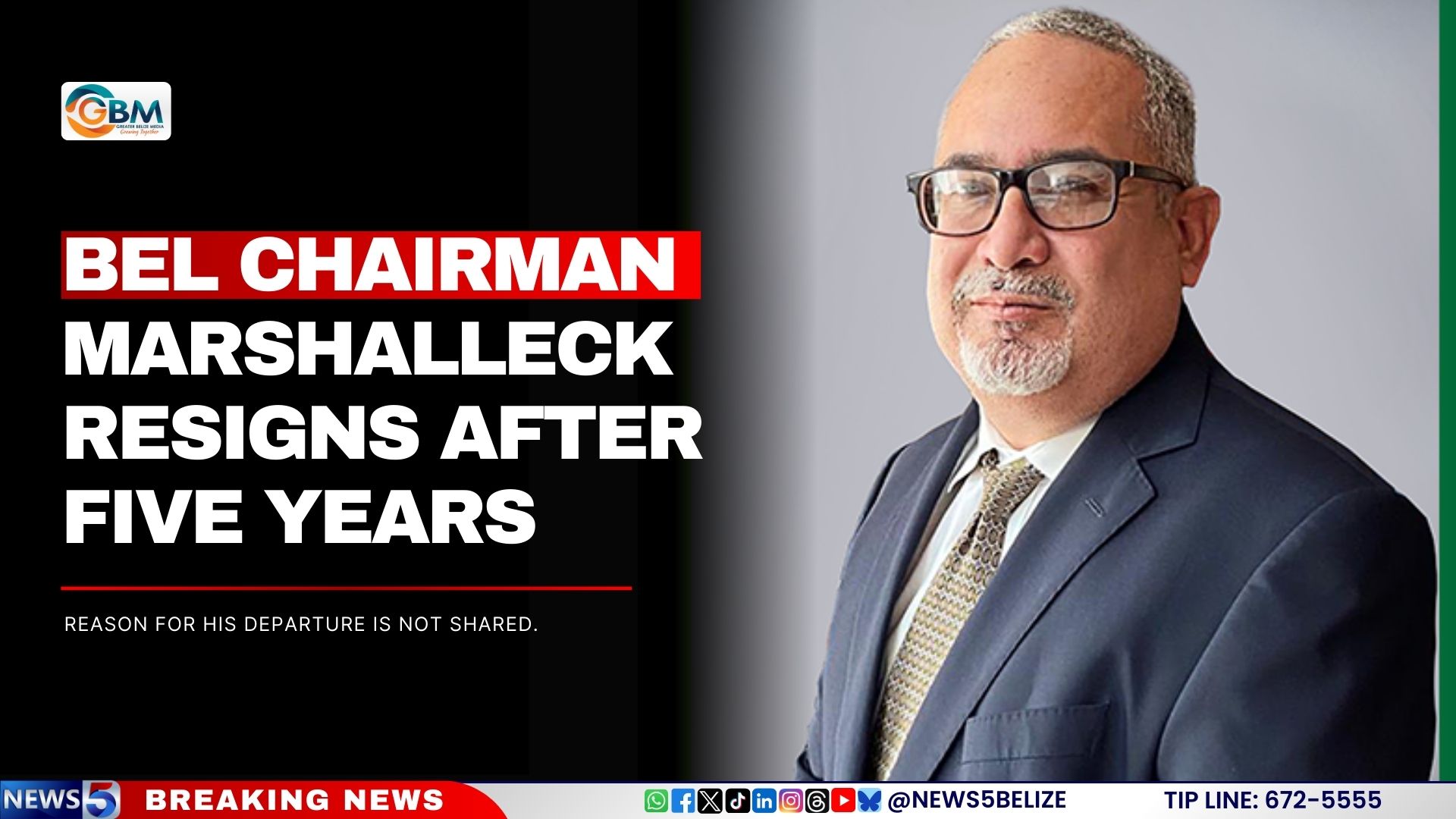
    Belize Electricity Limited (BEL) has announced the forthcoming departure of its Board Chairman, E. Andrew Marshalleck, S.C., effective December 31, 2025. Marshalleck will conclude his five-year leadership tenure that witnessed substantial advancements in the nation’s power infrastructure.

    Appointed to the Board in December 2020, Marshalleck’s chairmanship was marked by significant strategic achievements. Under his guidance, BEL executed critical enhancements to the national grid, most notably expanding generation capacity by 30 megawatts and boosting transmission substation capacity by 92 MVA. These infrastructural investments yielded a dramatic improvement in system reliability, reducing network outages by more than 30 percent compared to pre-2021 performance metrics.

    A landmark accomplishment during his term was the finalization of Belize’s inaugural power purchase agreement for a utility-scale solar energy facility, signaling a strategic pivot toward renewable energy sources.

    In a formal statement reflecting on his service, Marshalleck expressed gratitude for his tenure, stating: ‘I am grateful for the opportunity to have served and for the chance to meet and work with many of the talented managers and employees of BEL … they, together with the people of Belize, deserve a truly successful BEL.’

    The company’s announcement did not specify reasons for the leadership transition. Marshalleck’s successor will be Lyn Young, the former Chief Executive Officer of the utility company.

  • Services, vehicles, guns, ammo excluded from VAT-free shopping

    Services, vehicles, guns, ammo excluded from VAT-free shopping

    The Inland Revenue Department (IRD) has unveiled comprehensive operational guidelines for the nation’s inaugural VAT Zero-Rated Day scheduled for this Friday, marking the New Democratic Party administration’s first implementation of this fiscal policy measure. This temporary tax suspension represents a significant consumer stimulus initiative targeting non-commercial purchases across multiple retail sectors.

    The tax exemption framework specifically applies to transactions involving VAT-registered businesses supplying eligible tangible goods to non-commercial consumers. Critical eligibility requirements mandate that all tax-exempt products must be physically present in merchant inventory at close of business on Thursday, with both sale and full payment processing occurring exclusively during Friday’s designated tax holiday period.

    Comprehensive eligibility categories encompass consumer electronics (televisions, computers, smartphones), household appliances (refrigerators, stoves, washing machines), food and beverages including alcoholic items, clothing and footwear, furniture selections, building materials, automotive parts excluding complete vehicles, cosmetics and toiletries, alongside general merchandise including toys, books and kitchenware.

    The exclusion list maintains several significant categories outside the tax relief program. All service-based transactions remain fully taxable, including tourism and hospitality services. Prepared meals and beverages from restaurants, hotels and similar establishments remain subject to standard VAT rates. Additional exclusions encompass motor vehicles, tobacco products, firearms and ammunition, with hire purchase arrangements similarly excluded from tax exemption benefits.

    The IRD has expressed anticipation for seamless implementation of this economic stimulus measure, encouraging public participation while emphasizing strict adherence to published guidelines for both retailers and consumers.

  • Could Netflix-Warner Bros. $82 Billion Deal Mean Higher Prices for Subscribers?

    Could Netflix-Warner Bros. $82 Billion Deal Mean Higher Prices for Subscribers?

    The monumental $82.7 billion acquisition of Warner Bros. by streaming titan Netflix has triggered significant regulatory attention and consumer advocacy concerns regarding potential market consolidation effects. Announced on December 5, 2025, this landmark transaction would transfer control of Warner Bros.’ extensive entertainment portfolio—including film and television studios, HBO, and HBO Max—to the streaming platform giant.

    This unprecedented merger combines Netflix’s global distribution infrastructure with Warner Bros.’ century-spanning content library, encompassing legendary franchises from Harry Potter and DC Universe to Game of Thrones and The Big Bang Theory. Netflix co-CEO Ted Sarandos emphasized the strategic value, stating the union would enhance content delivery by merging Warner’s iconic collection—from classics like Casablanca to contemporary hits—with Netflix’s culture-defining original programming.

    Despite the expanded content offering, industry analysts warn subscribers could face increased subscription fees following the consolidation. This concern amplifies existing consumer apprehensions, particularly as Netflix implemented price increases earlier in 2025.

    The transaction has drawn critical responses from prominent political figures. Senator Elizabeth Warren condemned the merger as ‘an anti-monopoly nightmare,’ cautioning that reduced market competition could diminish consumer choice and elevate costs. Simultaneously, former President Donald Trump expressed reservations about the combined entity’s substantial market dominance, indicating his intention to participate in regulatory review processes.

    The acquisition now faces impending scrutiny from antitrust regulators who will evaluate its potential impact on market competition and consumer pricing in the rapidly consolidating streaming industry.

  • Gifting shoes this Christmas? Look for quality, comfort

    Gifting shoes this Christmas? Look for quality, comfort

    As the Christmas shopping season reaches its peak, consumers face a critical purchasing decision: authentic branded footwear versus counterfeit alternatives. This choice carries significant implications for both personal wellness and economic integrity.

    Premium footwear manufacturers like Nike, Adidas, and Crocs have built their market dominance through decades of research and development. Their products incorporate engineered materials specifically designed for anatomical support, impact absorption, and long-term durability. The manufacturing processes undergo rigorous quality control measures to ensure consistent performance standards.

    Conversely, counterfeit footwear operations prioritize cost reduction over quality and safety. These unauthorized manufacturers typically utilize substandard materials that compromise structural integrity and comfort. The absence of proper biomechanical engineering in knockoff designs can lead to foot discomfort, improper alignment, and potential injury with extended use.

    From an economic perspective, authentic purchases support legitimate businesses that invest in innovation, employment, and consumer protection. Counterfeit transactions inadvertently fund unregulated operations that often violate intellectual property rights and labor standards.

    Consumer protection experts emphasize that branded footwear represents more than just a logo—it embodies scientific research into foot health, quality materials sourcing, and manufacturing accountability. The higher initial investment typically translates to longer product lifespan and better value per wear.

    This holiday season, consumers should consider that gifting footwear involves not just immediate satisfaction but long-term foot health and ethical consumption practices. While counterfeit options may present tempting short-term savings, they carry hidden costs in comfort, durability, and potential health implications.

    Industry professionals like Delicia Burris, owner of Glorious Touch Health and Wellness Spa, reinforce that footwear choices directly impact musculoskeletal health and overall wellbeing during seasonal activities.