分类: business

  • St. John’s Development Corporation Announces Start of Carnival Vending Applications for 2026 Season

    St. John’s Development Corporation Announces Start of Carnival Vending Applications for 2026 Season

    Preparations for the 2026 St. John’s Carnival are already underway, with the St. John’s Development Corporation (SJDC) officially announcing key details for this year’s vending program. The annual Carnival Vending event is scheduled to run from July 11 through August 8, 2026, giving local and visiting vendors a six-week window to operate during one of the city’s busiest and most high-profile cultural events.

    Interested vendors can now pick up official application forms from two convenient locations across the city: the SJDC Head Office, situated at Vendors Mall on Thames Street, and the Craft Market housed within the city’s Public Market Complex. Application collections are available on weekdays, from Monday to Friday, between the hours of 8:30 a.m. and 2:00 p.m., giving aspiring participants plenty of time to secure their paperwork ahead of the event. The full breakdown of vending fees, which vary by product category, is clearly outlined on each application form to give vendors full transparency on associated costs.

    According to the SJDC’s official announcement, approved vending operations will be allowed across two main zones: throughout the incorporated city limits of St. John’s, and within specifically marked enclosed areas designated for vending during the Carnival period.

    The corporation has emphasized that all participating vendors are required to strictly adhere to the full set of rules and regulations established for Carnival vending. To maintain a safe, orderly experience for attendees, vendors, and local residents alike, the SJDC has committed to diligent monitoring and consistent enforcement of these guidelines throughout the duration of the event. The organization notes that this proactive oversight is a core part of its plan to deliver a smooth and successful 2026 Carnival season for all stakeholders.

    Vendors with questions about the application process, fee structures, or vending regulations are encouraged to reach out directly to the St. John’s Development Corporation for additional clarification. Interested participants can also access the application online via the official link shared by the SJDC.

  • Beyond the boom: The ECCU’s decade of decision

    Beyond the boom: The ECCU’s decade of decision

    ## Introduction\nIn April 2020, finance and business strategy advisor Fletcher St Jean published an analysis tracking 30 years of economic evolution in the Eastern Caribbean Currency Union (ECCU). The region had shifted from an agricultural base built on bananas, sugar and nutmeg, through the collapse of preferential trade agreements after the end of the Lomé Convention, to a tourism-led growth model that became its economic cornerstone. At that time, Jean put forward a two-part argument: tourism would remain the ECCU’s primary revenue driver, but the COVID-19 pandemic had laid bare critical overconcentration risk that made urgent economic diversification unavoidable.\n\nSix years later, hard data has arrived to test that 2020 thesis. Tourism has not only recovered from the pandemic collapse, but now outperforms pre-2020 peaks in most ECCU member states. Progress on diversification, however, has been deeply uneven: partial gains have been made in agriculture, Citizenship by Investment (CBI) has been transformed beyond recognition, and the healthcare sector remains almost entirely untouched by reform. Compounding these uneven outcomes is a sharply more challenging global context: a major global energy crisis triggered by the closure of the Strait of Hormuz, the Caribbean Development Bank (CDB)’s official designation of this period as the Caribbean’s “decade of decision,” and a hemispheric energy realignment driven by the rapid expansion of Guyana’s oil and gas sector. This updated analysis revisits Jean’s 2020 framework, maps emerging high-impact opportunities that should anchor ECCU strategy, and puts forward a refreshed set of actionable policy recommendations.\n\n## The Tourism Thesis: Vindicated, But New Concentration Risk Emerges\nJean’s 2020 prediction that tourism would retain its status as the ECCU’s dominant economic engine has been confirmed by the Eastern Caribbean Central Bank (ECCB)’s 2024-2025 Annual Report. Visitor arrivals in most member states have exceeded pre-pandemic levels, expanded construction activity has boosted fixed capital investment, and the average ECCU debt-to-GDP ratio has edged down from 77% to 76% – marking the first sustained improvement in this metric since 2008.\n\nThis strong recovery, however, carries hidden risks if interpreted without critical analysis. Before the pandemic, tourism contributed 30% to 40% of total GDP across the ECCU, and accounted for well over half of foreign exchange earnings in several smaller member states. The post-pandemic recovery has restored this concentration – and in some cases, deepened it. The systemic vulnerability that the pandemic exposed has not been resolved; it has grown more acute.\n\nThe ECCB itself has publicly acknowledged this challenge. Its latest strategic plan outlines the “Big Push” initiative, which sets a goal of doubling the overall size of the ECCU economy over the coming decade. This target cannot be achieved through further expansion of tourism alone. It requires that the diversification the region has debated for 30 years finally moves from policy communiques to tangible implementation.\n\n## Citizenship by Investment: From Niche Revenue Stream to Existential Policy Question\nOf all the shifts that have reshaped the ECCU since 2020, none have unfolded faster or carry higher stakes than the transformation of CBI programmes. The 2020 analysis noted that CBI was already facing growing external pressure, particularly from the United States government. By 2026, the question is no longer whether CBI faces pressure – it is whether current CBI models will survive the end of the decade.\n\nThree major developments have reshaped the operating environment for ECCU CBI. In July 2023, the United Kingdom revoked visa-free access for holders of Dominica’s passports, citing failures in CBI due diligence processes. In April 2025, the European Court of Justice issued a landmark ruling that Malta’s investor citizenship programme violated EU law, establishing a precedent that blocks member states from operating transactional citizenship schemes. The European Commission hardened this position further in its December 2025 Visa Suspension Mechanism report, which concluded that the operation of CBI programmes “in itself” constitutes sufficient grounds to suspend Schengen-area visa-free access for programme participants.\n\nIn response to this mounting pressure, ECCU member states have undertaken the most significant institutional reform of CBI in the programme’s 40-year history. A 92-article draft agreement signed on 1 July 2025 established the Eastern Caribbean Citizenship by Investment Regulatory Authority (ECCIRA), headquartered in Grenada, with operations set to launch in early 2026. The new regulatory regime introduces a harmonized US$200,000 minimum investment floor, mandatory biometric due diligence, required in-person applicant interviews, annual caps on total applications, a 30-day in-country residency requirement, and 5-year initial passport validity contingent on ongoing compliance.\n\nThese reforms have already had substantial fiscal impacts. St Kitts and Nevis recorded a 60% drop in CBI revenue in 2024 alone, contributing to an estimated budget deficit equal to 11% of national GDP. Member states that have long relied on CBI inflows to fund capital expenditure now face structurally lower revenue ceilings. For these governments, the core strategic question is no longer how to protect existing CBI revenue streams – it is how to redirect the capital that CBI has historically generated into new, sustainable growth areas. This is where the opportunity of medical tourism becomes centrally important.\n\n## Medical Tourism: The ECCU’s Most Underexploited Growth Opportunity\nGlobal medical tourism is one of the fastest-growing service sectors in the world. The market was valued at roughly US$76 billion in 2025, and is projected to hit US$174 billion by 2035, representing an 8.4% compound annual growth rate. Across the Caribbean, Barbados has already built a strong, credible position in this space: its healthcare and medical tourism sector was valued at US$538 million in 2024, and is forecast to approach US$950 million by 2034. The Cayman Islands’ Health City has also demonstrated that a single well-capitalized, internationally accredited tertiary medical facility can completely reshape a small island’s economic and healthcare profile.\n\nBy comparison, ECCU participation in this high-growth market remains negligible. This is not due to any inherent disadvantage: the ECCU’s geography, tropical climate, and proximity to major source markets in North America and Europe all give it a competitive edge. Instead, the gap stems from a failure of capital allocation. The ECCU has not made the required investments to upgrade its tertiary medical facilities to meet international accreditation standards, and as a result, has ceded a potential hundreds-of-millions-of-dollars market opportunity to competitors including Barbados, the Cayman Islands, the Dominican Republic and major Latin American medical hubs.\n\nThe strategic case for redirecting CBI capital into medical tourism is compelling. The structurally declining CBI revenue streams can be deliberately and systematically redirected into a sector that delivers three simultaneous high-value returns: it creates a new export industry that generates stable foreign exchange, it delivers tangible upgrades to domestic healthcare quality for ECCU citizens, and it sends a credible signal to regional and international partners that CBI capital is being deployed to support genuine, long-term development.\n\nThe proposed policy path is straightforward. ECCU member governments should formally earmark a minimum of 25% of net CBI inflows to a dedicated Regional Medical Excellence Fund (RMEF). The fund’s core mandate would be to finance the construction or upgrade of one specialized tertiary medical center per ECCU member state, bringing each facility up to internationally recognized accreditation standards (such as those set by the Joint Commission International or Accreditation Canada International). Specializations would be distributed across member states to avoid duplication, with high-potential areas including cardiology, orthopedics, oncology, fertility treatment, dialysis and renal care, and rehabilitation medicine. The ECCU is well positioned to compete on the cost-quality-climate combination that drives medical tourism patient decision-making.\n\nA single mid-sized, international-standard specialty center that attracts 700 to 1,000 international patients annually can generate between US$17 million and US$25 million in gross annual revenue. When aggregated across the ECCU’s seven member states, with targeted specialization, the region could capture between US$150 million and US$250 million in annual revenue within a decade. This compares favorably to structurally declining CBI revenue, and is far more sustainable over the long term. Every year of delay allows competitors to cement market share that will become progressively harder to displace.\n\n## The 2026 Energy Crisis and the New Caribbean Energy Landscape\nThe 2020 commentary was written in the wake of the largest global demand shock in modern economic history, triggered by the COVID-19 pandemic. This 2026 update is written against the backdrop of the largest global energy supply shock in recent memory. The closure of the Strait of Hormuz following the outbreak of hostilities on 28 February 2026 has created what the International Energy Agency describes as the single greatest threat to global energy security in history. Daily ship transits through the strait fell from roughly 130 in February 2026 to just six in March. Brent crude prices, which averaged US$67.74 in 2025, jumped roughly 65% at the peak of the disruption, and remain above $100 per barrel even after the April ceasefire agreement.\n\nFor the ECCU, which imports nearly all of its energy in the form of refined petroleum products, the impacts are immediate. Higher energy costs flow directly into higher electricity prices, transportation costs, and food prices – driven in large part by spiking fertilizer costs, as more than 30% of global urea trade passes through the Strait of Hormuz. Higher energy costs also squeeze tourism operating margins. While the Eastern Caribbean dollar’s peg to the U.S. dollar protects the region from currency-driven import inflation, it does not insulate the ECCU from underlying commodity price increases, which are already visible in early 2026 economic data.\n\nThis crisis has also accelerated a hemispheric energy realignment that began when Guyana produced its first commercial oil in 2019. By February 2026, Guyana was producing roughly 926,550 barrels of oil per day from the Stabroek Block, overtaking Venezuela to become South America’s second-largest oil producer. Production is forecast to hit 1.7 million barrels per day by 2030. Guyana’s economy grew 19.3% in real terms in 2025, and is projected to grow a further 16.2% in 2026.\n\nMore importantly for the ECCU, Guyana is evolving from a major oil producer into a potential regional energy supplier. The Lisa gas-to-energy project is on track to be completed by the end of 2026, and will deliver natural gas to a 300-megawatt domestic power plant, displacing fuel oil for domestic electricity generation. ExxonMobil’s proposed Longtail development could ultimately produce up to 1.5 billion cubic feet of natural gas per day through a dedicated liquefied natural gas (LNG) export facility. Many Caribbean countries currently spend up to 15% of GDP on fuel imports for power generation, and Trinidad and Tobago – the region’s traditional LNG supplier – has seen export volumes drop roughly 40% since the pandemic. A regional energy partnership centered on Guyanese supply is no longer a hypothetical concept. ECCU member states that position themselves as anchor offtake partners between 2026 and 2028 will secure far more favorable long-term energy pricing than countries that delay engagement.\n\n## Food Security: Progress Made, Target Missed, and the Path to 2030\nIn 2020, Jean argued that ECCU governments needed to allocate larger budget shares to commercial agriculture and fisheries, reduce the prohibitive 12% average interest rates faced by smallholder and commercial farmers, and build a functional internal market for regional agricultural goods. The regional response to this call came in the form of Caricom’s “25 by 2025” initiative, which aimed to cut the region’s roughly US$6 billion annual food import bill by 25% by the end of 2025. The target was not met. At the 48th Caricom Heads of Government Meeting in February 2025, the initiative was formally extended to 2030 and rebranded “25 by 2025+5.”\n\nThe extension reflects both significant headwinds and genuine progress. Headwinds include Hurricane Beryl in July 2024, global commodity price spikes, and the 2026 Strait of Hormuz disruption that has driven further increases in fertilizer costs. Even so, regional production achievement rates have risen steadily from 57% in 2022 to 70% in 2023 and 82% in 2024, delivering a 23.1% increase in total regional food production. Caricom has now set a new target of 4.3 million tons of annual regional food production by 2030.\n\nAchieving meaningful food security specifically for the ECCU – distinct from the broader Caricom aggregate, which is buoyed by Guyana’s large agricultural capacity – requires a more focused strategic approach. Four key interventions would materially improve the ECCU’s food security profile by 2030:\nFirst, establish a regional Agricultural Credit Guarantee Facility, capitalized through partnerships between the ECCB, CDB and member governments, to bring effective borrowing costs for qualified commercial farmers down from the current 10% to 12% range to a globally competitive 4% to 6%. The cost of borrowing, not a lack of farmer capability, is the binding constraint on ECCU agricultural competitiveness.\nSecond, mandate that a minimum of 35% of food consumed in ECCU hotels, hospitals, schools and government facilities be sourced from regional producers by 2030. This type of demand-side guarantee has anchored agricultural development in every major emerging market success story. It imposes no direct cost on public budgets and creates the offtake certainty that mobilizes private sector investment.\nThird, treat the ECCU’s exclusive economic zone – which covers more than 600,000 square kilometers of ocean – as the strategic economic resource it is. Commercial fisheries, aquaculture, sustainable mariculture, and sargassum valorisation are all revenue-generating activities that are currently treated as cost centers or environmental nuisances in most national budgets.\nFourth, remove remaining internal ECCU and Caricom barriers to intra-regional agricultural trade. The anomaly of free movement for labor without corresponding free movement for agricultural goods, which was identified in 2020, persists in 2026. Closing this gap remains the single most impactful reform available to the region at zero fiscal cost.\n\n## The CDB Strategic Plan 2026-2035: A Framework for Coordinated Action\nIn February 2026, the Caribbean Development Bank’s Board of Directors approved the institution’s 10-year Strategic Plan for 2026-2035, themed “Innovate. Transform. Thrive.” CDB President Daniel M. Best, addressing the bank’s annual press conference on 3 March 2026, described this period as the Caribbean’s “decade of decision” and outlined the region’s financing needs: an estimated US$65.2 billion will be required between 2024 and 2033 just to prevent economic stagnation. Achieving meaningful climate adaptation, upgrading core infrastructure, and building fiscal buffers could double that requirement.\n\nThe Strategic Plan is built on three interconnected pillars: Social Resilience, Economic Resilience, and Environmental Resilience, anchored by a core commitment to poverty reduction. The core themes of this analysis – economic diversification, food security, healthcare modernization, energy transition, and climate adaptation – all fit squarely within this strategic framework.\n\nThe opportunity for ECCU member states is not theoretical. The CDB has retained its AA+ credit rating from Fitch, raised CHF 100 million on the Swiss capital market, executed a US$450 million Exposure Exchange Agreement, and announced a forthcoming Euro Medium-Term Note Programme of up to US$1 billion over three years. The institution now has more lending capacity than at any point in its history. ECCU member governments and the ECCB should treat the period from mid-2026 through 2027 as a focused alignment exercise: national development plans, the ECCB’s “Big Push” initiative, the OECS Development Strategy, and member state budget cycles should all be explicitly mapped to the CDB’s three strategic pillars. Member states that come to the CDB with credible, pillar-aligned project pipelines will capture a disproportionate share of the bank’s available capital.\n\n## Refreshed Recommendations for the Decade of Decision\nSix years of additional data, combined with the new pressures and opportunities outlined above, require a substantial expansion of the original 2020 recommendations. Eight core priorities are put forward for member governments, the ECCB, the CDB, and the regional private sector:\n1. Translate the ECCB’s “Big Push” doubling target into measurable, member-state-level diversification milestones. Each member state should publish, alongside its annual budget, a Diversification Index showing the share of GDP, employment, and government revenue derived from each key sector – including tourism, CBI, agriculture, fisheries, financial services, medical tourism, and the digital economy – with explicit five-year targets for shifting the sectoral mix.\n2. Establish the Regional Medical Excellence Fund (RMEF) by earmarking a minimum of 25% of net CBI inflows, with the goal of bringing one accredited tertiary specialty center online per member state within seven years.\n3. Frame the CBI transition as a structural fiscal adjustment, not a temporary cyclical fluctuation. Member states where CBI contributes more than 10% of total government revenue should publish formal CBI Transition Plans outlining how projected revenue declines will be absorbed without adding new unsustainable public debt.\n4. Negotiate a regional energy partnership with Guyana during the 2026-2028 window, leveraging the Lisa gas-to-energy project and the projected Longtail LNG development to reduce the ECCU’s dependence on imported fuel oil. The 2026 Strait of Hormuz crisis has converted this from a strategic preference to an urgent fiscal necessity.\n5. Close the agricultural finance gap through a regional Agricultural Credit

  • Positive Saint Lucian arrival trends confirmed at Caribbean Marketplace

    Positive Saint Lucian arrival trends confirmed at Caribbean Marketplace

    Saint Lucia’s tourism industry is hitting an accelerated growth trajectory, after industry leaders left the 44th Caribbean Travel Marketplace held last week in Antigua with optimistic projections for rising international visitor numbers.

    Leading the delegation at the key industry event, the Saint Lucia Tourism Authority (SLTA), under chief executive officer Louis Lewis, was joined by 20 of the island’s leading accommodation providers and destination management organizations. Over the course of the gathering, the Saint Lucian team held productive meetings with a broad range of global tourism stakeholders, including international tour operators, travel wholesalers, travel advisors, and global media partners.

    The delegation not only closed new commercial contracts and expanded existing collaborative partnerships but also successfully showcased the island nation’s core tourism advantages: diverse natural and cultural attractions, reliable, extensive flight connections to key global markets, vibrant indigenous culture, and a pipeline of innovative new development projects that are reshaping Saint Lucia’s tourism offering.

    “This year, we have received concrete confirmation that Saint Lucia is on an upward global trend, which puts us in a strong position to see marked growth in visitor arrivals,” Lewis noted in a post-event statement. “This is exactly the kind of positive news our sector needs, particularly amid the ongoing global economic and geopolitical disruptions that continue to put pressure on international tourism worldwide.”

    Lewis emphasized that the Caribbean Travel Marketplace fills a critical role for Saint Lucia’s tourism ecosystem, offering a rare in-person space for local trade partners to build direct connections with global buyers. “Partners are able to finalize contracts, carry out direct sales activities, engage face-to-face with existing and new collaborators, solidify long-term working relationships, and share the latest updates on new developments across Saint Lucia’s tourism landscape,” he explained.

    Private sector players echoed the positive outlook emerging from the event. Bay Gardens Resorts, one of the island’s leading hospitality groups, announced it had forged valuable new connections with technology suppliers and marketing partners committed to expanding global promotion of Saint Lucia as a travel destination. Another major resort brand, Ti Kaye, used the platform to publicly unveil plans for an upcoming property expansion.

    For the SLTA, all these outcomes mark a clear step forward in the organization’s ongoing strategic goals: deepening collaborative ties across the global tourism supply chain, driving sustained growth in visitor arrivals, and cementing Saint Lucia’s position as one of the most desirable travel destinations in the Caribbean.

  • Sagicor Financial renames Saint Lucian headquarters

    Sagicor Financial renames Saint Lucian headquarters

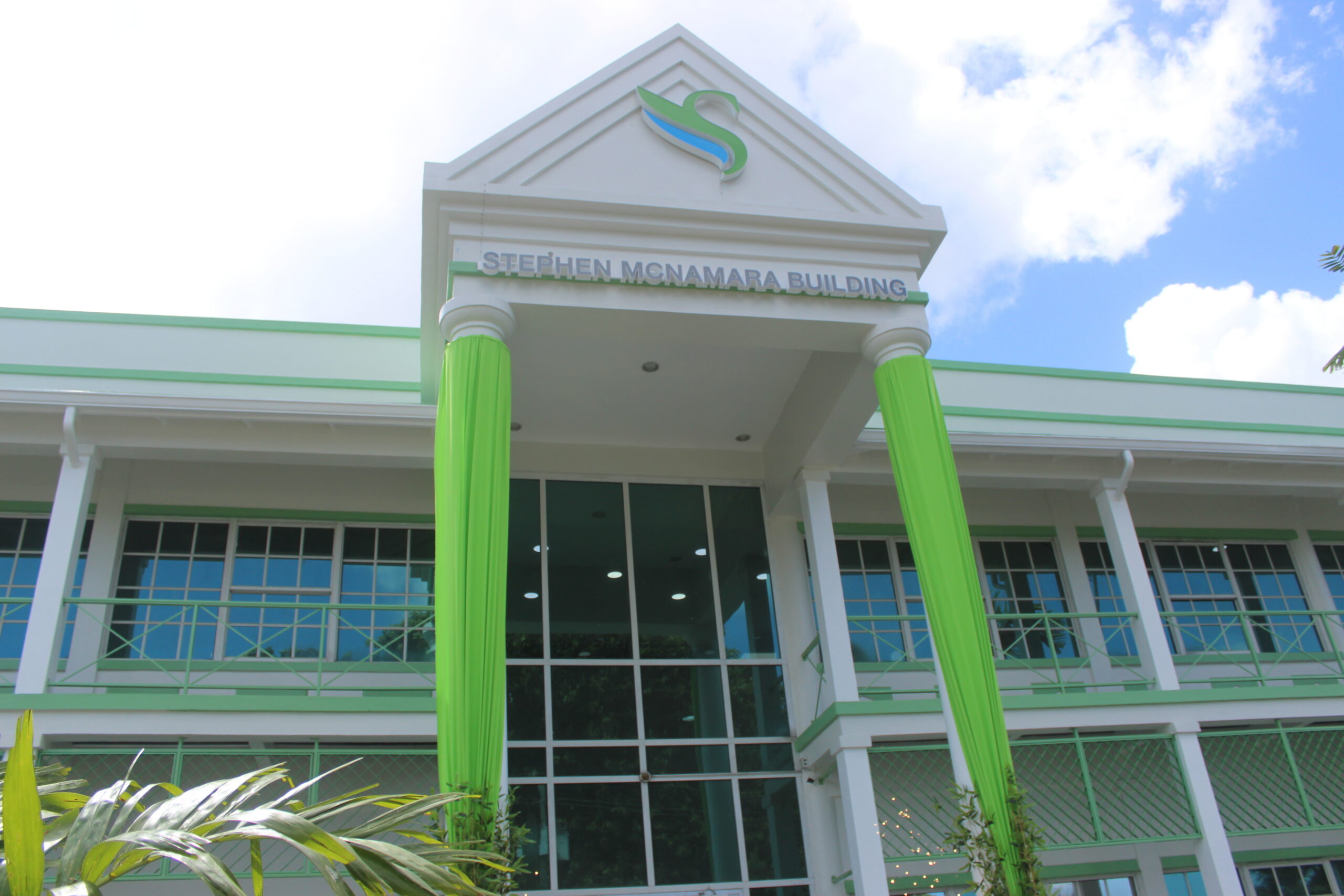
    In an official ceremony held last week at Choc Estate, Saint Lucia, the Sagicor Financial Centre was formally renamed the Dr. Stephen McNamara Financial Centre, marking a permanent tribute to the outgoing chairman’s 25 years of transformative leadership across the Caribbean region. The event drew senior officials and dignitaries from both Saint Lucia and Barbados, gathering to celebrate a career that reshaped one of the Caribbean’s most prominent financial institutions.

    Andre Mousseau, Chief Executive Officer of Sagicor Financial, opened remarks by noting the ceremony was part of a company tradition launched three years prior, which honors standout contributors by renaming key company properties after them. The tradition began when the historic Mutual building in Barbados was renamed the Dodridge Miller Building for Economic Justice. Mousseau shared that when the idea of renaming the Choc Estate centre for McNamara was first floated, it received immediate, universal support from across the organization. “When it was brought to my attention that we might do this for our Chairman, I was overwhelmed with enthusiasm, because of the importance that he has held for all of Sagicor,” Mousseau said, adding that internal feedback uniformly framed the move as a long-overdue recognition. Mousseau went on to describe McNamara as the gold standard for modern leadership of a complex multinational organization, noting he commands both widespread respect and genuine affection across the company and the region.

    Dodridge Miller, former group president and CEO of Sagicor Financial and current Chancellor of the University of the West Indies, reflected on McNamara’s arrival at the firm in 1997, when Sagicor was a respected but small-scale regional player. “What follows, over the next two and a half decades, was one of the most remarkable transformations in Caribbean corporate history and Dr McNamara stood at the centre of it all,” Miller stated. Miller detailed a string of landmark milestones achieved under McNamara’s stewardship that many once deemed impossible for a Caribbean-based financial firm: the historic demutualization of the 160-year-old Barbados Mutual, which created more than 40,000 new shareholders across the Caribbean, including over 8,000 in the Eastern Caribbean; Sagicor’s trailblazing listing on the main board of the London Stock Exchange, the first Caribbean firm to earn that position; the company’s strategic 2005 entry into the U.S. insurance market; a groundbreaking international bond placement the following year; the first ever investment rating assigned to a Caribbean firm by global ratings agency Standard & Poor’s; and ultimately the merger with Linevest Capital that led to the company’s listing on the Toronto Stock Exchange. “These achievements would be impressive for a global company. For a Caribbean company, they were extraordinary. They required courage, clarity of purpose and governance of the highest order and Dr McNamara brought all three to the table,” Miller emphasized.

    After the official unveiling of the building’s new nameplate and a commemorative bust of McNamara, the honoree addressed the crowd with a mix of gratitude and good humor. Joking that the grand tribute felt “somewhat overwhelming and perhaps even a trifle Trumpian,” McNamara said he was still processing the magnitude of the honor. “I am deeply grateful for having this building, a place of purpose, trust, stability and one that serves the future of Saint Lucia, bearing my name. This is an honour I accept with pride and I wish to emphasise and recognise that no journey like mine is made alone,” he said, thanking colleagues, friends, and family for their ongoing support.

    Saint Lucia Prime Minister Philip J. Pierre, who attended the ceremony, extended official recognition of McNamara’s far-reaching contributions beyond the financial sector, highlighting his impact on law, sports, community development, and public life across the island. “As a lawyer, his practice was marked by ethics, fairness and within the framework of justice and respect for the rule of law,” Pierre said, noting McNamara was instrumental in growing tennis in Saint Lucia and nurturing homegrown athletic talent. Earlier this year, McNamara was awarded the Order of the Saint Lucia Cross, the nation’s second-highest civilian honor, in recognition of his decades of service. “Each sphere presents a different dimension of his character, yet together they present a portrait of a man who has given much to the island of Saint Lucia,” Pierre said. He added that the renaming is more than a ceremonial gesture: “Today, as we stand in recognition of his achievement, let us also be reminded that honouring such individuals is not merely ceremonial, it’s the reaffirmation of the values we hold dear as a people – service, excellence and devotion to country.”

  • The growing intersection of AML Frameworks and Estate and Property Management in Caribbean

    The growing intersection of AML Frameworks and Estate and Property Management in Caribbean

    Over the past decade, global financial regulators have steadily elevated the role of legal professionals in curbing money laundering and cross-border illicit financial flows, positioning attorneys as key frontline gatekeepers in the global integrity system. This shift is particularly noticeable across Caribbean jurisdictions including Trinidad and Tobago and Grenada, where attorneys handling high-value real estate deals, corporate entity structuring, and cross-generational wealth transfers now operate under strict anti-money laundering (AML) frameworks that demand unprecedented levels of financial transparency.

    While most public conversations about AML compliance center on traditional financial institutions such as retail banks and investment firms, its reach extends far beyond the banking sector. In practice, some of the largest private wealth movements globally occur through non-bank channels: real property purchases, bespoke estate planning structures, and the post-death administration and distribution of large estates. This reality has turned these core areas of private legal practice into critical points of alignment between traditional legal service and modern regulatory compliance expectations.

    From the very outset of estate planning and succession structuring, questions surrounding the source of accumulated wealth and ultimate beneficial ownership arise when assets are placed into trusts, passed along through wills, or reorganized within family-held holdings. Real estate remains the single most common vehicle for long-term wealth accumulation across the Caribbean region, making it the central component of most large intergenerational wealth transfer arrangements. When properties have been held across multiple generations, acquired through informal historical transactions, or bundled into the holdings of corporate entities, the requirement for formal documentation and full transparency grows especially urgent.

    The same heightened scrutiny applies during the estate administration and management phase. Executors and personal administrators often encounter assets that require full provenance verification before they can be legally transferred or liquidated to beneficiaries. Today, banks, land registries, and other regulated entities routinely demand formal due diligence covering the origin of acquisition funds, the beneficial ownership of companies that hold real property, and the verified identity of all ultimate beneficiaries before they will process any asset movement.

    These cumulative changes mark a fundamental shift in how wealth and property ownership are regulated around the world. Estate and property legal matters are no longer viewed exclusively through the narrow lens of succession law and conveyancing practice; they now operate within a far broader compliance ecosystem designed to ensure that all assets entering or moving through the formal legal system are rooted in legitimate, fully transparent origins.

    For practicing legal professionals across the Caribbean, this evolving regulatory landscape underscores the urgent need to adopt an integrated approach that combines deep expertise in estate law, real property practice, and modern AML compliance awareness. Taking this integrated approach does not only help clients meet regulatory requirements; it also ensures that wealth transfer processes proceed smoothly, efficiently, and with minimal costly disruption to families and businesses.

    As regulatory frameworks continue to mature and strengthen across the Caribbean, the overlap between estate planning, property ownership, and AML compliance will only grow more pronounced. Legal advisors who can master both the traditional legal dimensions and the evolving regulatory requirements of private wealth structuring will play an increasingly vital role in guiding clients through the complexities of modern estate and property management.

    As a regional legal practice focused on private client wealth and property work, K C Legal Consultancy continues to actively monitor and adapt to these regulatory developments, as part of its ongoing commitment to helping clients successfully navigate the evolving intersection of wealth, property ownership, and regulatory compliance.

  • M&C Drugstore St Lucia is hiring: Pharmacist

    M&C Drugstore St Lucia is hiring: Pharmacist

    A prominent retail pharmaceutical outlet based in Soufriere, St. Lucia is actively searching for a qualified, service-focused pharmacist to join its growing full-time team. M&C Drugstore, a local subsidiary of the financially stable, globally expanding multinational conglomerate Goddard Enterprises Limited (GEL), has outlined an open role for a results-driven professional who aligns with the company’s core values of innovation, continuous improvement, and exceptional customer service.

    GEL has built its reputation around fostering purpose-driven work environments, where every team member’s contribution is recognized and supported. The company’s mission prioritizes balanced success that delivers value to customers, employees, business partners, and shareholders alike, with a dedicated focus on creating supportive growth opportunities that help staff reach their full professional potential.

    As a pharmacist on the M&C Drugstore team, the selected candidate will take on a range of critical responsibilities centered on patient care and retail pharmacy operations. Core duties include accurate, timely dispensing of prescription medications, counseling patients on safe medication use and proper drug therapy regimens, and answering clinical questions from external healthcare providers. The role also requires overseeing efficient medication procurement and storage, maintaining fully compliant, up-to-date patient and operational records, supporting periodic company-wide stock-taking processes, and driving retail sales growth while improving patient retention. Additionally, the successful candidate will supervise pharmacy technicians and support staff, organize daily team workflows, and ensure full adherence to all local pharmaceutical regulatory standards.

    To be considered for the position, candidates must meet a set of clear eligibility requirements. Applicants need to hold either an Associate Degree or Bachelor of Science Degree in Pharmacy, have a minimum of two years of hands-on experience in professional pharmacy practice, and be eligible to obtain official registration with the St. Lucia Pharmacy Council. Required soft skills and competencies include a demonstrated commitment to service excellence and patient-centered care, strong interpersonal and communication skills (both written and oral), working knowledge of St. Lucia’s Pharmacy Act and associated regulations, proven ability to lead and supervise a team to meet organizational goals, sound analytical and decision-making skills, a general understanding of the retail pharmaceutical sector, and basic computer proficiency including competency in Microsoft Word and Excel.

    The selected candidate will receive a competitive remuneration and benefits package tailored to their level of professional experience. Benefits include access to the company’s group life and medical insurance plans, ongoing formal training and professional development opportunities, and eligibility for GEL’s Employee Share Option Plan (ESOP), which allows qualifying staff to become partial owners of the conglomerate and share in the company’s continued growth.

    This is an opportunity to join a dynamic, mission-focused organization that celebrates team achievements and prioritizes employee advancement. Interested candidates can submit their applications through the official listing portal at the link: https://tinyurl.com/yc7hkah6. This position posting is presented by M&C Drugstore, and NOW Grenada holds no responsibility for the content of this contributor posting, with a dedicated channel available for reporting abusive content.

  • SEOB en IMF: Suriname nog onvoldoende voorbereid op olie-inkomsten

    SEOB en IMF: Suriname nog onvoldoende voorbereid op olie-inkomsten

    As Suriname prepares to tap into its emerging offshore oil and gas reserves that promise to deliver billions in new state revenue, two leading financial oversight bodies — the International Monetary Fund (IMF) and the Suriname Economic Oversight Board (SEOB) — have issued urgent calls for sweeping structural reforms to avoid a repeat of the country’s past economic crises. Both institutions warn that without stronger financial institutions, tightened fiscal discipline and greater governance transparency, the incoming oil windfall risks being mismanaged rather than driving long-term inclusive growth.

    In its latest technical assistance report focused on Suriname’s fiscal preparedness, the IMF acknowledges that the South American nation has already taken initial positive steps to update its regulatory framework, including reforms to its accounting law and the establishment of a national Savings and Stabilization Fund designed to manage volatile commodity revenue. However, the fund stresses that practical implementation of these reforms has fallen drastically behind schedule. Key governing bodies, enforcement decisions and independent oversight mechanisms required for the new system to operate effectively have yet to be put in place, the report notes.

    The IMF’s core warning centers on the risk that unregulated oil revenue could trigger the same boom-and-bust economic cycle that has plagued many resource-dependent developing nations. Without a robust fiscal framework in place, the fund argues, incoming oil money could lead to unsustainable expansion of government spending, a renewed rise in national debt and widespread macroeconomic instability. To mitigate these risks, the IMF highlights the critical need for clear binding fiscal rules, standardized transparent public spending reporting and fully independent oversight of all state expenditures drawn from oil revenue.

    Looking at the role of the newly established Savings and Stabilization Fund, the IMF outlines that the vehicle is intended to serve two core long-term purposes: acting as a financial buffer to absorb sudden swings in global oil prices, and preserving a share of resource wealth for future generations of Surinamese. But the fund makes clear that these goals can only be achieved if the fund operates under strict, legally binding rules for withdrawals, debt management and independent external oversight.

    In its own latest public bulletin, the SEOB echoed the IMF’s concerns and raised additional red flags about unresolved structural vulnerabilities in Suriname’s economy. The board notes that the country continues to grapple with persistent structural government deficits, a still-unsustainable high national debt burden and chronically weak institutional capacity across government agencies. Beyond fiscal risks, the SEOB warns that Suriname’s economy remains overly reliant on mining and oil extraction, with meaningful progress on broad-based economic diversification lagging far behind what is needed to build long-term resilience.

    The SEOB also drew attention to a separate, underreported risk to Suriname’s oil sector ambitions: the recent shutdown of the Anti-Money Laundering Project Implementation Unit (AML-PIU), a specialized body that led the country’s national efforts to counter money laundering and terrorist financing. The oversight board warns that the dissolution of this unit could cause severe damage to Suriname’s international reputation at a critical time, when the country is courting major foreign direct investment from global energy companies to develop its new oil and gas projects. A weakened anti-financial crime framework could lead to increased international scrutiny, restricted access to global financial markets and deter potential foreign investors, the board argues.

    Both the IMF and SEOB agree that the coming half-decade will be a make-or-break period for Suriname’s long-term economic trajectory. Without urgent action to address institutional weaknesses and implement promised structural reforms, both bodies warn, the country risks squandering its once-in-a-generation oil windfall and repeating the patterns of economic crisis, budget collapse and governance instability that have held back growth for decades.

  • Antigua Cruise Port Reports Progress on Waterfront Boardwalk and Commercial Units

    Antigua Cruise Port Reports Progress on Waterfront Boardwalk and Commercial Units

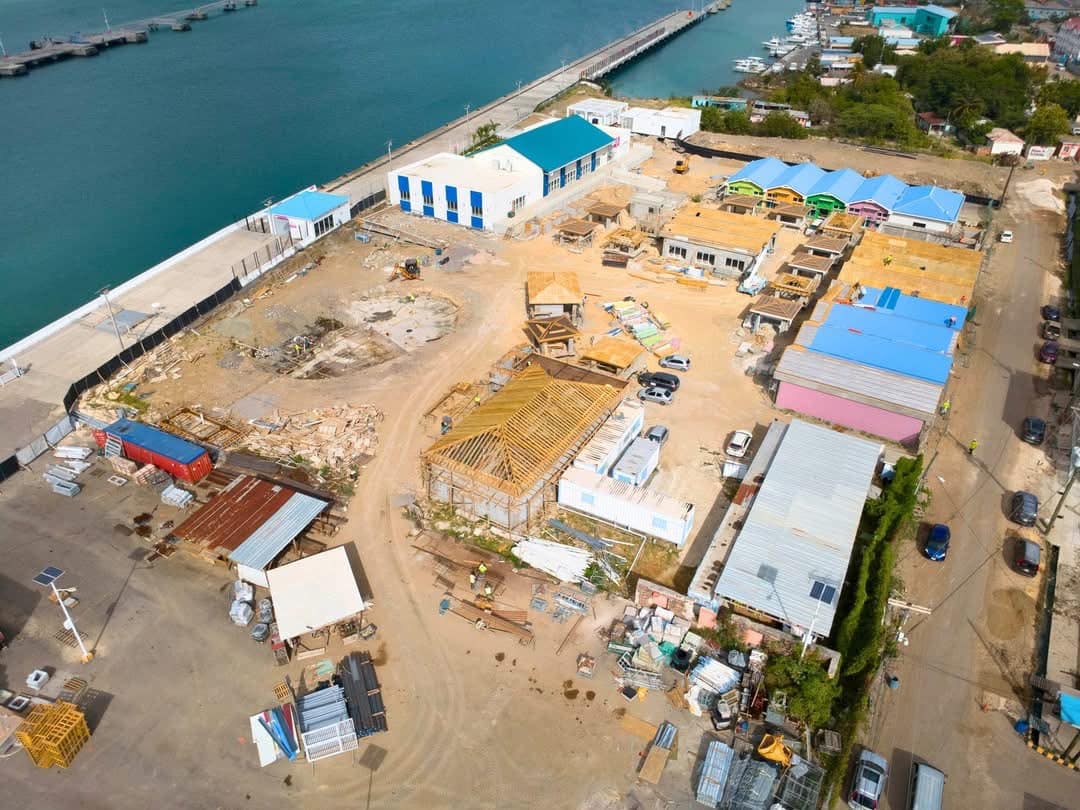
    Antigua Cruise Port, a key infrastructure hub driving the island nation’s tourism-dependent economy, has recently announced notable milestones in its ongoing waterfront revitalization project, confirming steady progress on both the public boardwalk and new commercial retail units.

    The transformative initiative, which first broke ground to answer growing demand from cruise line operators and millions of annual visitors, is designed to overhaul Antigua’s outdated cruise waterfront into a modern, visitor-friendly destination that complements the island’s reputation as a top Caribbean leisure stop. According to project updates from port leadership, construction teams have already completed the foundational phase for the new multi-use waterfront boardwalk, a pedestrian-focused corridor that will connect arrival terminals to nearby downtown attractions and local waterfront view points. When finished, the boardwalk will offer wide walking paths, shaded rest areas, public art installations highlighting Antigua’s cultural heritage, and unobstructed views of the Caribbean Sea, creating a more welcoming experience for guests stepping off cruise ships.

    Parallel to boardwalk construction, work on the new commercial units is also moving ahead on schedule. These flexible retail and hospitality spaces are being built to accommodate a mix of local small businesses, regional artisan vendors, and well-known international brands, giving visitors more options for dining, shopping, and cultural experiences before they explore the rest of the island. Port officials note that the commercial component is intentionally structured to prioritize local entrepreneurs, helping to keep more tourism revenue within Antigua’s local economy rather than flowing to outside operators.

    Industry analysts point out that the project’s progress comes at a critical time for Caribbean cruise tourism, which has seen a strong rebound in passenger volumes since the end of global pandemic travel restrictions. By upgrading its port infrastructure, Antigua is positioning itself to capture a larger share of the growing cruise market, attract larger, newer cruise ships that require modern facilities, and extend the average length of visitor stays in the country. Port management has reaffirmed that the entire project remains on track for its projected completion date, with no expected delays to the current construction timeline that would disrupt opening plans.

    Local business leaders have welcomed the progress, noting that the improved waterfront and new commercial spaces are expected to drive increased foot traffic to surrounding neighborhoods and create new long-term job opportunities for Antiguan residents. The project represents a key investment in Antigua’s tourism future, laying the groundwork for sustained economic growth in the cruise sector for years to come.

  • Carlisle Bay Employee Kalin Fontaine Ranked Among Top 10 Hospitality Professionals Globally

    Carlisle Bay Employee Kalin Fontaine Ranked Among Top 10 Hospitality Professionals Globally

    A standout hospitality worker from Antigua has cemented her place among the world’s elite luxury service providers, after being honored with a 2026 Leading Quality Assurance (LQA) Sirius Award, one of the industry’s most prestigious recognitions for frontline hospitality excellence.

    Officials from Carlisle Bay, the five-star Antiguan resort where Kalin Fontaine has built her career, confirmed the achievement in an official statement. Fontaine was selected as one of just 100 global honorees for the 2026 LQA Sirius Awards, an accolade that draws thousands of nominations from luxury hospitality properties across the globe. Out of this select group of 100, Fontaine climbed to a top 10 ranking, a historic milestone for Caribbean hospitality.

    Notably, Fontaine is the only professional from the entire Caribbean region to earn a spot on this year’s list of awardees, all of whom are drawn from properties affiliated with Leading Hotels of the World. This distinction highlights not just Fontaine’s individual talent, but also the growing reputation of Caribbean luxury hospitality on the global stage.

    The LQA Sirius Awards were created to shine a spotlight on individual team members who go above and beyond to deliver transformative luxury guest experiences. Unlike industry awards that recognize properties or brands, this honor centers frontline workers, celebrating those who win guests over through sincere warmth, proactive intuitive service, and one-of-a-kind stays that leave lasting impressions.

    Fontaine first joined the Carlisle Bay resort team back in 2018, and over nearly a decade has built a reputation for her unwavering dedication to guests, meticulous attention to every detail of a visitor’s stay, and a natural ability to build genuine connections with people from all over the world. In their statement, resort leadership described Fontaine as a true ambassador for both Carlisle Bay and the broader Caribbean hospitality sector, noting that her work embodies the warm, welcoming culture the region is known for.

    Leadership at Carlisle Bay emphasized that Fontaine’s award is far more than an individual win: it is a reflection of the consistent culture of excellence that the entire resort team cultivates every day. Calling the well-earned honor a testament to the property’s commitment to elevating luxury service standards, the resort extended its formal congratulations to Fontaine for her groundbreaking achievement.

  • ‘Drip-drip’ investment from diaspora can help boost SVG’s economy — Bramble

    ‘Drip-drip’ investment from diaspora can help boost SVG’s economy — Bramble

    Against a stark backdrop of worsening debt vulnerability flagged by the International Monetary Fund, St. Vincent and the Grenadines (SVG)’s top foreign affairs and foreign investment official has issued a urgent call: the small island nation must tap its global diaspora network and upend its outdated investment playbook to climb out from under its growing debt burden.

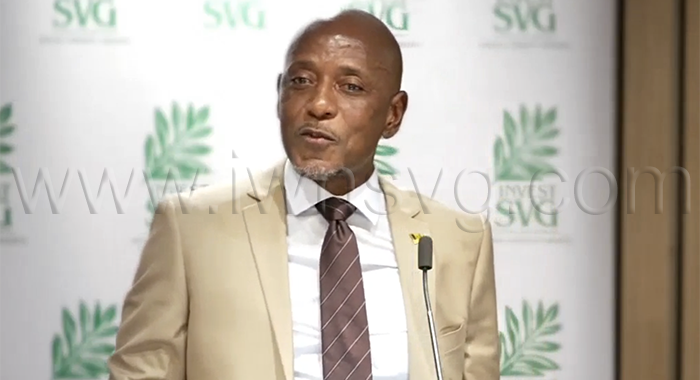
    Speaking at an Invest SVG diaspora outreach event hosted in Toronto on Saturday, Minister Fitzgerald Bramble — an economist serving his second term as Member of Parliament for East Kingstown — told assembled Vincentians and SVG supporters that the IMF’s latest assessment has pulled back the curtain on the country’s true fiscal reality, leaving no room for delay in overhauling SVG’s economic growth strategy.
    Bramble laid out the unvarnished numbers: SVG’s current debt-to-GDP ratio sits at 113% and continues to climb, meaning the nation owes $1.13 for every dollar of annual economic output it generates. He added that IMF analysis confirms even steady modest growth will do almost nothing to meaningfully reduce the country’s debt load. If GDP grows by just 1% annually over the next five years, the national debt ratio will only fall by six percentage points, a drop too small to ease fiscal pressure. To make a tangible difference to the debt burden, the IMF projects SVG needs to sustain annual growth of at least 3% — hitting a range of 2.5% to 2.7% as a minimum baseline — over the coming half-decade.

    The scale of the challenge was already put on public record by Prime Minister and Finance Minister Godwin Friday, who revealed that as of December 31, 2025, SVG’s total public debt hit EC$3.5 billion. Friday has blamed the previous Unity Labour Party administration for reckless pre-election spending ahead of the November 27 general election to drive the debt to current levels. Back in April, the IMF warned that without immediate, decisive policy shifts, the debt trajectory will only worsen: the debt-to-GDP ratio is projected to surge to 145% by 2031, with gross financing needs jumping to 26% of GDP. The country already faces high risk of debt distress, making urgent fiscal consolidation a critical priority.

    Bramble characterized the IMF’s findings as a long-overdue “rude awakening” for SVG, but clarified that the current government will not adopt a one-size-fits-all fiscal prescription pushed by the fund. “While the IMF has outlined potential solutions they see for our challenges, Prime Minister Friday and our administration have been clear that we will pursue a home-grown approach tailored to SVG’s unique needs to resolve this crisis,” he said.

    Linking the required growth targets directly to increased investment, Bramble argued that SVG cannot hit the 3% annual growth benchmark without ramping up capital inflows into productive domestic sectors. “How can you expect consistent economic expansion without commensurate or even expanded levels of investment?” he asked.

    The minister, who also holds oversight for foreign trade and diaspora affairs, criticized the narrow, outdated framing of investment that has dominated SVG’s policy approach to date. He noted that for too long, the country has restricted its definition of productive investment to large-scale projects from foreign investors based in North America and Europe — most often big hotel developments or similar large infrastructure builds. While Bramble confirmed the government still welcomes these large foreign projects, he argued they cannot be the only, or even the primary, driver of national growth. Instead, he pushed for a greater focus on what he calls the “drip-drip effect” of cumulative small-scale investment, particularly from members of the SVG diaspora living around the world.

    Outlining the model to the Toronto audience, Bramble illustrated how widespread small investments from diaspora members can add up to transformative change. “If just 10 diaspora Vincentians return home to invest CA$50,000 each, the cumulative impact of that inflow would already move the needle for our economy,” he explained. “If we can replicate that level of engagement across diaspora communities in North America, Europe, Asia and every other region where our people live, it would completely reshape our country’s economic trajectory for the better.”

    Bramble pushed back against the common assumption among diaspora members that small individual contributions do not matter, urging them not to underestimate their own capacity to drive change. “Don’t ever think ‘my small idea, my $200 a month in savings, that can’t possibly make a difference,’” he said. “That simply is not true.”

    He drew on a personal, recent lesson from his late mother Mona Bramble, who passed away one week before the Toronto event, to drive the point home. Mona Bramble built a small but successful and impactful local business starting from nothing, selling homemade tamarind balls. “She started by tying four tamarind balls in a small plastic bag, worked her way up to a heat sealer, then eventually to branded packaging,” Bramble recalled. “She grew that little business into something that supported her and helped countless people in our community. There even came a time when she used her tamarind ball savings to buy me goalkeeper gloves when I was representing St. Vincent and the Grenadines at a competition in Trinidad.”

    From that example, Bramble extended a clear invitation to the global diaspora: even small monthly contributions, small personal investments, or small business partnerships can create enormous long-term value for SVG. “Whether you’re starting your own small business back home, or partnering with an existing entrepreneur on the island, your $200 a month, your $50 a month in investment goes a very long way to supporting the growth of micro and small enterprises across our country,” he said. “It makes a huge, huge difference for all of us.”