分类: business

  • Paramount pursues a bidding war for Warner Bros. Discovery

    Paramount pursues a bidding war for Warner Bros. Discovery

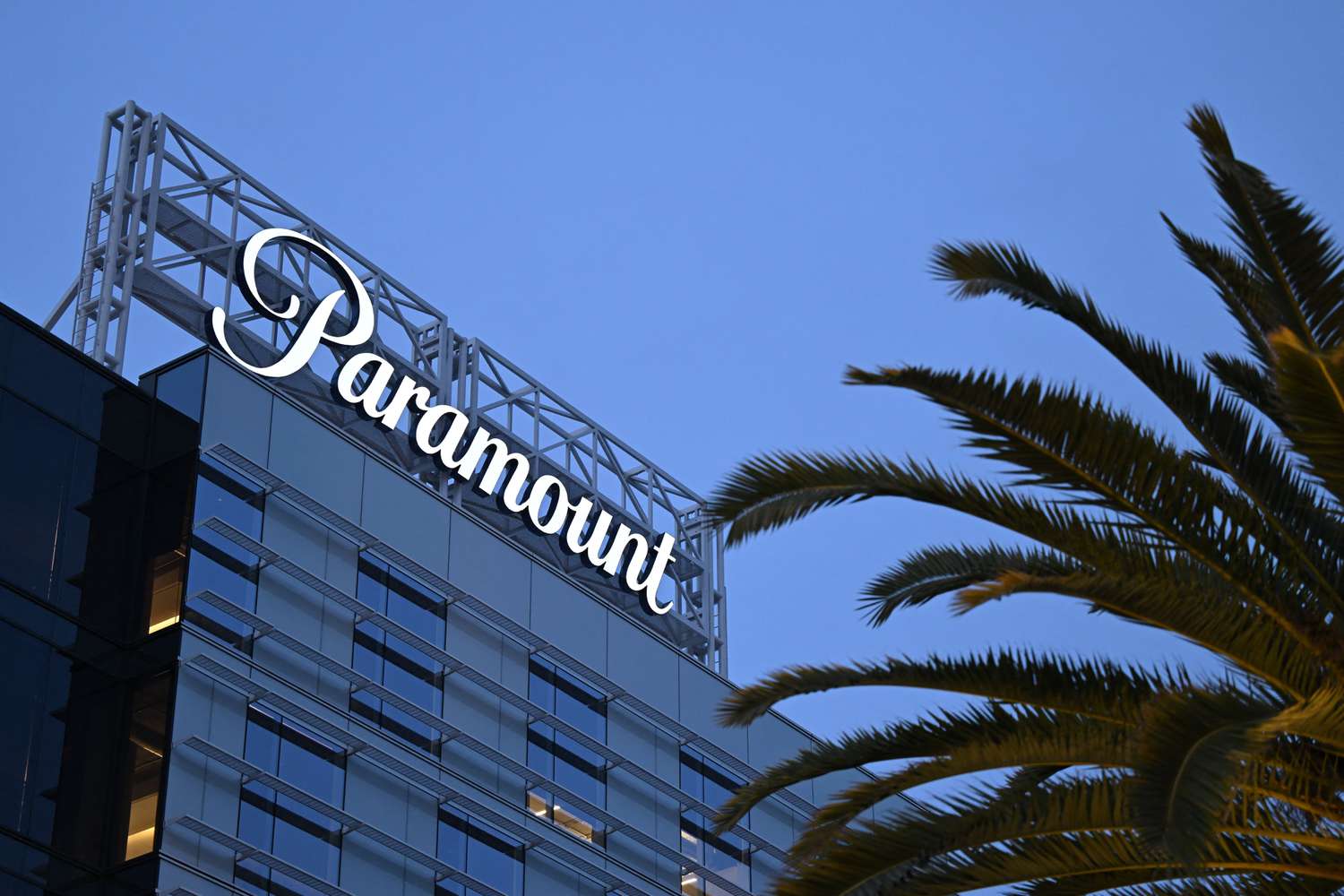
    In a dramatic escalation of media industry consolidation, Paramount Global has launched an aggressive $108.4 billion hostile takeover bid for Warner Bros. Discovery, directly challenging Netflix’s previously agreed $72 billion acquisition offer. The stunning development emerged on December 8th, setting the stage for a monumental corporate battle that could redefine the entertainment landscape.

    Paramount’s audacious move bypasses Warner Bros. Discovery’s established management by appealing directly to shareholders with a superior financial proposition. The bid comprehensively targets Warner’s entire business portfolio, including valuable cable assets that Netflix had strategically excluded from its acquisition framework. This distinction represents a fundamental strategic divergence between the competing offers.

    The proposed merger would unite some of entertainment’s most iconic properties, combining Paramount’s assets (including CBS, MTV, and Nickelodeon) with Warner’s extensive portfolio (encompassing HBO, CNN, and DC Studios). Such a consolidation would create an unprecedented content library and distribution network with potentially dominant market positioning.

    Warner Bros. Discovery’s board has acknowledged Paramount’s unsolicited offer, confirming they will conduct a formal review process. However, the board maintained its current recommendation of Netflix’s proposal, indicating no immediate shift in their strategic alignment despite the substantially higher valuation from Paramount.

    Industry analysts note this bidding war reflects the intense pressure on traditional media companies to achieve scale and content depth capable of competing with streaming giants. The outcome will significantly influence competitive dynamics across entertainment, news, and sports broadcasting, potentially creating a new industry titan with unparalleled content creation and distribution capabilities.


  • TWA’s role in keeping BWIA in the skies

    TWA’s role in keeping BWIA in the skies

    In 1968, BWIA International Airways underwent a significant corporate transformation through a series of complex negotiations and agreements. The culmination of nine months of intense discussions resulted in binding contractual obligations for the Trinidad and Tobago government and the airline, formalized through agreements dated May 24, 1968. These arrangements did not represent a departure from previously contemplated plans but rather established an acceptable framework for executing agreed undertakings, with copies promptly distributed to interested West Indian governments.

    The restructuring initiative began with a board reconstitution in February 1968, following Sir Patrick Hobson’s resignation. Hobson explicitly noted that BWIA’s viability depended on association with strong external financial interests, modern equipment acquisition, and managerial reorganization. The newly formed board, chaired by Sir Ellis Clarke with directors J M Scoon, Gerald Montes de Oca, and Donald J Urgo, immediately engaged Trans World Airlines (TWA) through a 90-day interim management and technical assistance agreement.

    A three-member TWA advisory team led by J I Greenwald arrived in Port of Spain on February 12, 1968. Within two days, the board designated Greenwald as acting CEO to implement essential organizational reforms, addressing the managerial and technical skill deficiencies identified by the previous leadership. This advisory contract was subsequently extended to July 1968 pending US Civil Aeronautics Board (CAB) approval of a proposed three-year management agreement.

    The comprehensive arrangement included a ground handling agreement at New York’s JFK Airport effective November 1, 1968, and a reciprocal sales agency agreement originally scheduled for October 1, 1968. However, neither the management assistance nor sales agency agreements were implemented due to adverse rulings from the CAB, which held jurisdiction over TWA. These interconnected agreements formed a composite arrangement whose failure in one component undermined the entire structure.

    Simultaneously, an investment agreement involving Goldfield Corporation—whose shares traded on the American Stock Exchange—Caribbean International Ltd, R W Pressprich and Co International Ltd, and Lorenzo, Carney and Company Inc., collapsed when Goldfield deemed US Foreign Direct Investment Regulations too onerous. By December 1968, it became apparent that Caribbean International could not fulfill its obligations under the May 24 agreements.

    Subsequent negotiations produced revised agreements in 1969 that increased BWIA’s compensation from $6 million to $8 million while maintaining hotel development commitments at Rockly Point, Tobago. The government facilitated this arrangement by repurchasing British Overseas Airways Corporation’s 10% shareholding for $250,000—the same price originally paid in 1961. Payments of $2 million on January 31, 1969, and $6 million on June 23, 1969, were ultimately executed under these revised terms.

  • Ramps Logistics celebrates Aura of people

    Ramps Logistics celebrates Aura of people

    Ramps Logistics concluded its most transformative year with an extraordinary celebration that blended corporate achievement with cultural festivity. The company’s annual Aura 2025 event, held on November 28 at Vice nightclub in Port of Spain, served as both a recognition ceremony and a testament to the organization’s expanding regional influence.

    The evening transformed into a vibrant tapestry of high-energy performances and heartfelt acknowledgments, creating an atmosphere that resonated with the company’s core values of unity and excellence. From the moment guests arrived, the venue pulsed with an infectious energy that reflected the collective spirit of a team that has consistently elevated service standards across the logistics industry.

    CEO Shaun Rampersad set the tone for the evening, emphasizing the fundamental role of human capital in the company’s success. ‘Aura represents a moment of reflection—a powerful reminder that our people constitute our greatest competitive advantage, while our ambition serves as our driving force,’ Rampersad declared. He highlighted the significant contributions from teams across Trinidad and Tobago, Guyana, Suriname, and other operational territories that made 2025 a breakthrough year.

    The entertainment lineup featured an impressive roster of Caribbean talent, including electrifying performances by Ravi B, Patrice Roberts, Travis World, and Salty. These artists carried the audience on a musical journey that transformed the event into a shared cultural experience. The celebration was further enhanced by aerial performances, expertly crafted signature cocktails, and gourmet food stations that provided a sophisticated backdrop for networking and camaraderie.

    Beyond the festivities, Aura 2025 served as a strategic platform showcasing the company’s expanding footprint across the Caribbean and South America. The presence of diplomatic representatives from Colombia, Panama, and Chile underscored Ramps Logistics’ growing international partnerships and regional significance.

    The event effectively woven together the year’s accomplishments in logistics innovation, technological adoption, and customer service excellence into its celebratory fabric. As the evening culminated in high spirits, it not only celebrated past achievements but also signaled the company’s ambitious trajectory for 2026, positioning Ramps Logistics for continued regional leadership and operational excellence.

  • Cipriani Bellini: The Luxury in Simplicity

    Cipriani Bellini: The Luxury in Simplicity

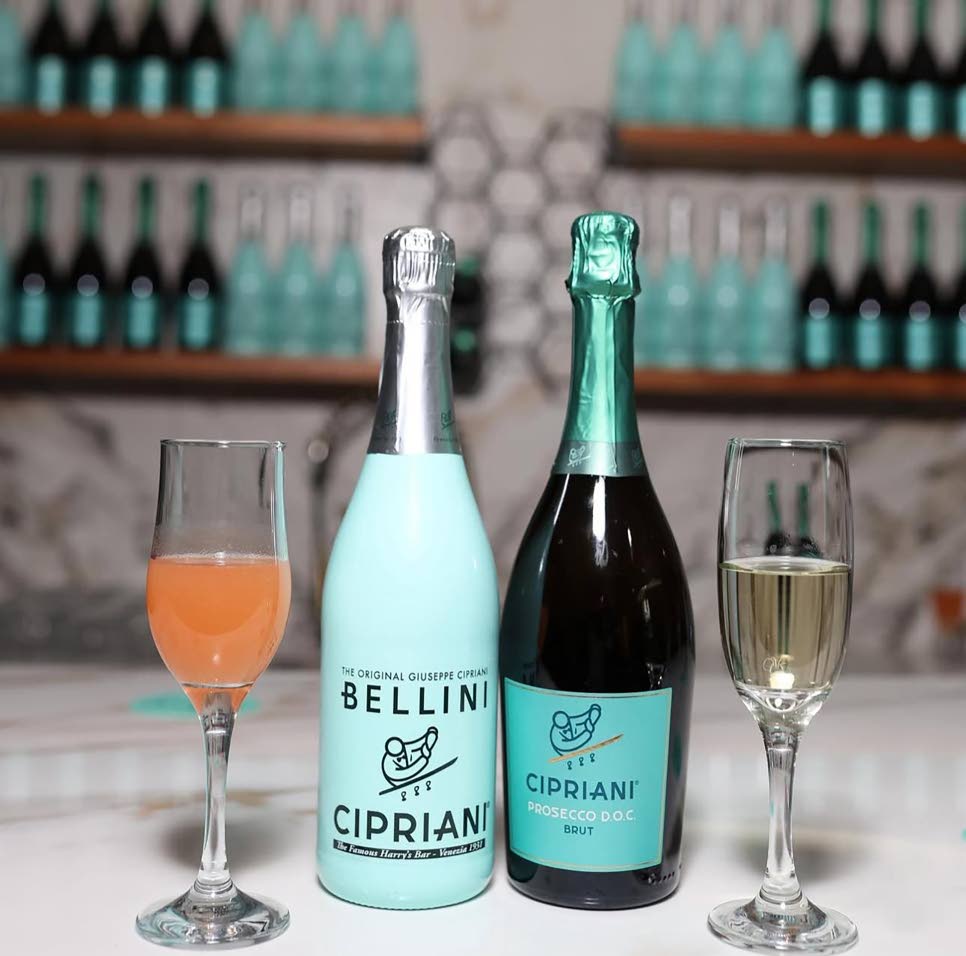
    The legendary Bellini cocktail, an enduring symbol of Italian elegance since its 1948 creation at Venice’s Harry’s Bar, has officially arrived in Jamaica through a strategic partnership between Cipriani Drinks and Harbour Wines & Spirits. Founded by Giuseppe Cipriani and inspired by the soft pink hues of Renaissance artist Giovanni Bellini’s paintings, the cocktail has transcended its Venetian origins to become a globally recognized aperitif.

    The official launch event, held on December 6th at the luxurious Opulenz Villa in St. Ann, marked the Caribbean introduction of both the ready-to-drink bottled Bellini and Cipriani’s proprietary Prosecco. Francesco Portello, National Sales Director for the Americas at Cipriani Drinks, traveled from Miami to personally oversee the introduction, emphasizing the brand’s commitment to global expansion while maintaining its century-old legacy of impeccable service and Italian charm.

    Dr. Debbian Spence-Minott, Commercial Manager at Harbour Wines & Spirits, detailed how the partnership emerged from Wine Paris, an international trade show where the brand’s unique combination of heritage and modern presentation captured their attention. ‘One sip of the Bellini and the Prosecco and we knew we had a hit on our hands,’ Spence-Minott enthused, noting the products’ alignment with evolving Jamaican consumer preferences and their exposure to international flavor profiles through travel.

    The event itself embodied the Cipriani experience, with brand ambassadors in blue and white tulle creations reminiscent of the brand’s iconic Majolica print, smooth Prosecco pours, and culinary creations from award-winning Chef Trevanne Donegal that incorporated the Bellini into dessert offerings. Against a backdrop of sunset and blue-illuminated pool decks, guests toasted with miniature 200ml bottles of the ready-to-serve cocktail, celebrating what both companies anticipate will be a successful market penetration.

    The convenience of the bottled format maintains the cocktail’s essential character: a precise blend of high-quality Prosecco and Mediterranean white peach purée with only 5.5% alcohol content, offering subtle sweetness without overwhelming potency. This presentation strategy acknowledges modern consumer preferences for both quality and convenience while preserving the drink’s artisanal origins.

  • Bar associations say government tax hike a losing bet

    Bar associations say government tax hike a losing bet

    Trinidad and Tobago’s hospitality industry is mounting a significant challenge against the government’s unprecedented 400% tax increase on gaming machines, setting the stage for a crucial meeting between industry representatives and Finance Minister Dave Tancoo on December 11.\n\nThe TT Coalition of Bars and Restaurants (TTCOBAR) and the Barkeepers Owners/Operators Association of TT (BOATT) characterize the tax hike as \”drastic and illogical,\\” warning it will devastate legal operators while driving gambling activities underground. Both organizations maintain that enhanced enforcement of existing tax rates—not increased taxation—represents the solution to revenue collection challenges.\n\nBOATT representative Satesh Moonessar expressed surprise at receiving the minister’s invitation, coming just days after Parliament passed sweeping gambling legislation that instituted fines up to $3 million for illegal operations. The government contends these measures address tax evasion, money laundering, and other criminal activities associated with unregulated gambling.\n\nMoonessar vigorously challenged the government’s rationale, arguing that compliance issues stem from chronic enforcement failures rather than tax rates. \”If someone was not paying the tax at $6,000, how in God’s name are they going to become compliant now when you’ve raised it by 400 percent?\” he questioned, noting that selective enforcement practices have undermined compliance efforts.\n\nThe industry representative projected that 50-75% of bars cannot afford the increased tax burden, potentially forcing widespread closures. He warned of cascading economic consequences, including job losses and impacts on related businesses such as food vendors and suppliers.\n\nTTCOBAR advocates for a modified approach that includes quarterly tax payments instead of full upfront payments and a reduced rate increase. The association estimates that a 50% reduction from the proposed hike could generate approximately $200 million annually through improved compliance.\n\nIndustry representatives emphasize that gaming revenue provides essential financial support for bars operating on thin profit margins. They contest government estimates of machine profitability, asserting that typical monthly earnings per machine are approximately $2,000—far below the official $10,000 projection.\n\nIn response, Minister Tancoo acknowledged significant tax evasion and fraud within the industry, noting that many amusement machines operated unregistered for years while generating unreported revenue. Despite his firm stance on ending these practices, he expressed openness to dialogue.\n\nThe dispute escalated on December 9 when approximately 30 bar operators gathered peacefully at Woodford Square near Parliament, accusing the government of victimization through consecutive measures targeting their industry, including increased alcohol taxes, commercial electricity rates, and landlord taxes.

  • More heads roll on forex issue

    More heads roll on forex issue

    In a sweeping financial sector overhaul, Trinidad and Tobago’s government has intensified its crackdown on foreign exchange management with the dismissal of Eximbank CEO Navin Dookeran on December 6. This move represents the latest in a series of high-profile executive removals that began in June with the abrupt revocation of Central Bank Governor Alvin Hilaire’s appointment, followed by the August departure of First Citizens Group CEO Karen Darbasie.

    The government maintains strategic silence regarding these personnel changes, yet evidence suggests profound disagreements over forex data disclosure and auditing protocols precipitated these actions. Dr. Hilaire’s dismissal reportedly followed contentious debates about transparency, while Ms. Darbasie’s exit has been linked to examinations of forex distribution channels and potential leakage.

    This executive purge coincides with alarming economic indicators: foreign exchange purchases plummeted by 19.2% year-on-year as of August, creating severe disequilibrium between supply and demand. Central Bank Governor Larry Howai’s September presentation highlighted the Eximbank’s increasingly pivotal role in forex dynamics, noting the urgent need to ‘address the Eximbank facility with respect to pricing and revolving.’

    Mr. Dookeran, who had led Eximbank since 2019, declined extensive commentary but previously expressed pride in his tenure accomplishments. His departure signals heightened governmental scrutiny of financial institutions amid growing pressure to resolve the currency crisis.

    Prime Minister Kamla Persad-Bissessar’s administration promises forthcoming revelations from its comprehensive review of financial systems and key operatives. However, business leaders like Vivek Charran, president of the Confederation of Regional Business Chambers, emphasize that rhetoric and dismissals cannot substitute for actionable solutions. ‘We are talking about generational family businesses fighting for survival,’ Charran stated, underscoring the urgent need for ‘fair and equitable means of forex distribution.’

    While Governor Howai has found no evidence of the ‘forex cartel’ alleged by the Prime Minister, he acknowledges that foreign exchange management may require stricter controls. The business community now awaits substantive policy measures rather than symbolic personnel changes as the nation grapples with one of its most significant financial challenges in decades.

  • Ex-Jamaican MP urges Caribbean women to prepare of the age of AI

    Ex-Jamaican MP urges Caribbean women to prepare of the age of AI

    In a powerful address at the inaugural Women in Tourism Caribbean Retreat, former Jamaican Parliament member Lisa Hanna issued a compelling call for women across the region to actively prepare for the artificial intelligence revolution and embrace professional reinvention. The landmark gathering, held November 13-16 in the Turks and Caicos Islands, brought together female tourism professionals from across the Caribbean basin for a transformative professional development experience.

    Hanna delivered her keynote message during the November 15 Brunch and Conversation event, where she emphasized the critical importance of women remaining vigilant to global geopolitical shifts while leveraging their unique ability to combine passion with pragmatic decision-making. Her address formed the centerpiece of a retreat specifically designed to explore challenges including work-life balance, navigation of male-dominated environments, leadership development, and mutual support systems among women in the industry.

    The retreat, conceptualized by Turks and Caicos Hotel and Tourism Association CEO Stacy Cox, represented the physical evolution of a virtual platform initially launched during the pandemic to recognize women driving the tourism sector forward. Participants from Dominica, Belize, Grenada, Barbados, Saint Lucia, the US Virgin Islands, The Bahamas, Jamaica, and Toronto engaged in carefully curated activities including school outreach visits, with Hanna joining delegates at the Special Needs Association Providenciales (SNAP) Centre.

    In a gesture of regional solidarity, organizers presented Hanna with a charitable donation to support relief efforts for victims of Hurricane Melissa in Jamaica. The retreat’s significance was further underscored by the attendance of prominent government officials including Deputy Governor Anya Williams, Tourism Minister Zhavargo Jolly, and permanent secretary Wesley Clerveaux at the opening reception hosted at Beaches Turks and Caicos.

    Reflecting on the event’s success, Cox expressed profound satisfaction: ‘This retreat provided a space for women to remove their masks, discuss authentic life challenges, draw strength from shared experiences, and ultimately build a powerful sisterhood.’ Buoyed by its inaugural success, organizers have already announced that the Women in Tourism Caribbean Retreat will return to the Turks and Caicos Islands in November 2026.

  • Business Outlook Index at end of 2025: Short-term strain, cautious optimism for the future

    Business Outlook Index at end of 2025: Short-term strain, cautious optimism for the future

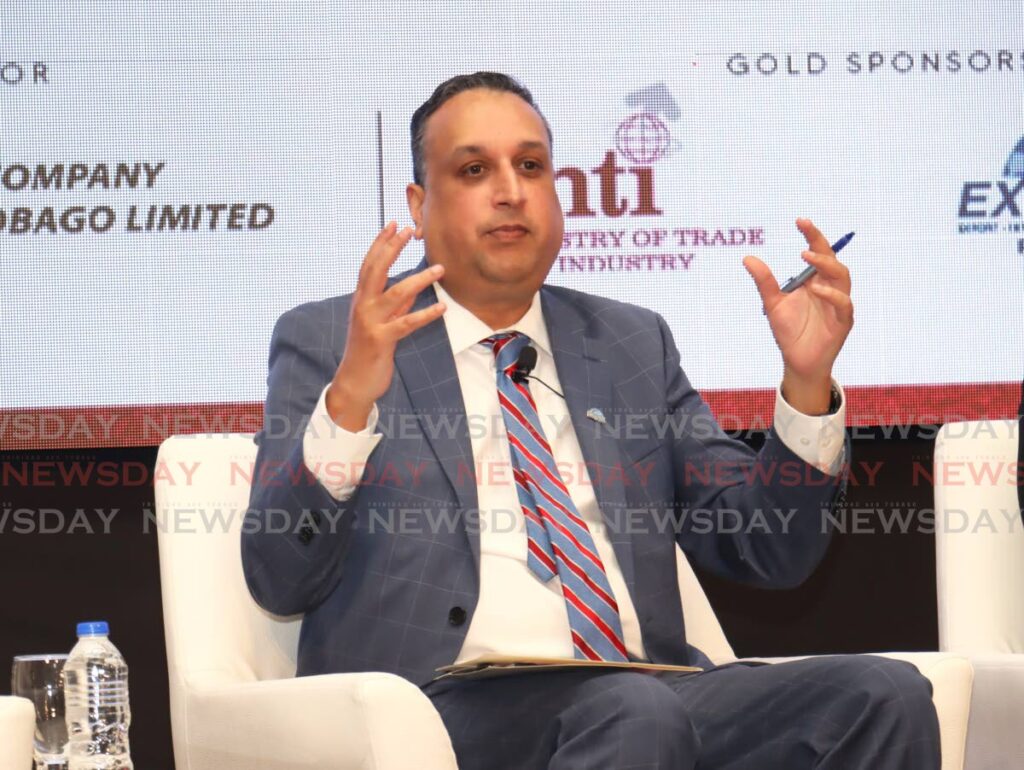
    A comprehensive business survey reveals Trinidad and Tobago’s private sector is navigating significant short-term challenges while maintaining guarded optimism for medium-term recovery. The Q4 2025 Business Outlook Index, jointly compiled by the TT Chamber of Industry and Commerce and Arthur Lok Jack Global School of Business and released December 10, presents a complex picture of an economy in transition.

    The data indicates substantial current pressures, with 54% of executives reporting worsened financial performance over the past six months. Only 3% of businesses described their performance as “much better” compared to the beginning of the year, while 43% reported some improvement. The survey reveals stark sectoral variations: while administrative and support services saw 100% of respondents reporting better conditions, the agricultural sector experienced universal deterioration with 100% reporting worse conditions.

    The energy sector emerged as particularly challenged, with over 66% of respondents noting deteriorated economic conditions. Conversely, accommodation and food services showed remarkable resilience with 75% reporting improved conditions (50% better, 25% much better). Construction and manufacturing displayed mixed signals, with 45% and 54.55% respectively reporting better conditions.

    Significant uncertainty surrounds government policy impacts, with 24% of businesses unsure which areas would benefit from current policies. Only 17% anticipated enhanced public-private collaboration, while 16% predicted better foreign exchange access and 14% expected improved ease of doing business.

    The recent 100% excise duty increase on alcohol announced in the October budget has dramatically altered hiring intentions in the food and beverage sector. Pre-announcement, 75% of accommodation and food service businesses planned hiring within 6-12 months. Post-announcement, 40% anticipate employment decreases within six months, while 50% expect reductions within twelve months.

    Despite these challenges, businesses maintain medium-term confidence. The global economic outlook shows improvement from negative to positive over the next year, reflecting expectations of easing inflation, recovering energy demand, and improved logistical conditions. The chamber notes that for an energy-exporting nation like Trinidad and Tobago, improved global prospects typically translate to enhanced business confidence.

    The report concludes that while current conditions remain challenging, businesses view these as cyclical rather than permanent. The chamber recommends strengthened public-private dialogue to reduce policy uncertainty and support sector-specific adjustments following recent fiscal changes.

  • Marketing in 2026: The biggest shift we’ve seen in a decade

    Marketing in 2026: The biggest shift we’ve seen in a decade

    The digital marketing paradigm that has dominated for over a decade is undergoing its most profound transformation as we approach 2026. For fifteen years, brands operated under the assumption that social media supremacy—achieved through relentless posting, engagement, and algorithm manipulation—was the ultimate path to growth. This era is now concluding, not due to the disappearance of social platforms, but because fundamental changes in consumer behavior are rewriting the rules of digital engagement.

    Global social media usage has begun its first sustained decline since the early 2010s, with users—particularly younger demographics—spending less time scrolling and engaging with more intentionality. The feed has lost its central position in digital life, now competing with streaming services, podcasts, private messaging, gaming, and increasingly, AI-powered tools. This shift reflects growing user fatigue with repetitive content, misinformation, and algorithmic noise.

    The most significant disruption emerges from artificial intelligence’s rapid evolution into the internet’s new gateway. Consumers are increasingly turning to AI assistants for tasks previously reserved for search engines: product comparisons, local business recommendations, and purchasing decisions. Unlike traditional search results that provide links, AI delivers direct answers, creating a new battleground for brand visibility. Those without optimized product information, structured data, and review systems risk digital invisibility.

    Remarkably, consumers now rate AI recommendations as more trustworthy than influencer endorsements, representing a seismic shift in digital credibility. This trust transfer stems from influencer marketing’s perceived shortcomings: paid promotions, undisclosed partnerships, and credibility scandals. In contrast, AI systems draw from diverse sources, provide balanced comparisons, and maintain contextual awareness without brand bias.

    The consumer journey has compressed dramatically. What once involved multiple stages—awareness, research, comparison, and decision—now frequently occurs within a single AI conversation. Discovery happens across fragmented touchpoints: AI chats, Reddit discussions, YouTube explainers, private communities, and niche reviews rather than traditional social feeds.

    In this new landscape, trust emerges as the ultimate competitive advantage. Brands demonstrating authentic human experience, transparency, consistent expertise, and community validation will thrive amidst AI-generated content and misinformation. Successful businesses are building diversified ecosystems encompassing email newsletters, YouTube channels, private communities, podcasts, and offline events rather than relying on unpredictable algorithms.

    To prepare for 2026, brands must prioritize AI discoverability, invest in high-quality content, highlight human elements, develop owned platforms, create hybrid experiences, and foster genuine communities. Organizations embracing this transformation will gain significant competitive advantage, while those clinging to outdated social media playbooks face gradual digital irrelevance.

  • First Citizens lifts profit to $990m as assets surpass $49b

    First Citizens lifts profit to $990m as assets surpass $49b

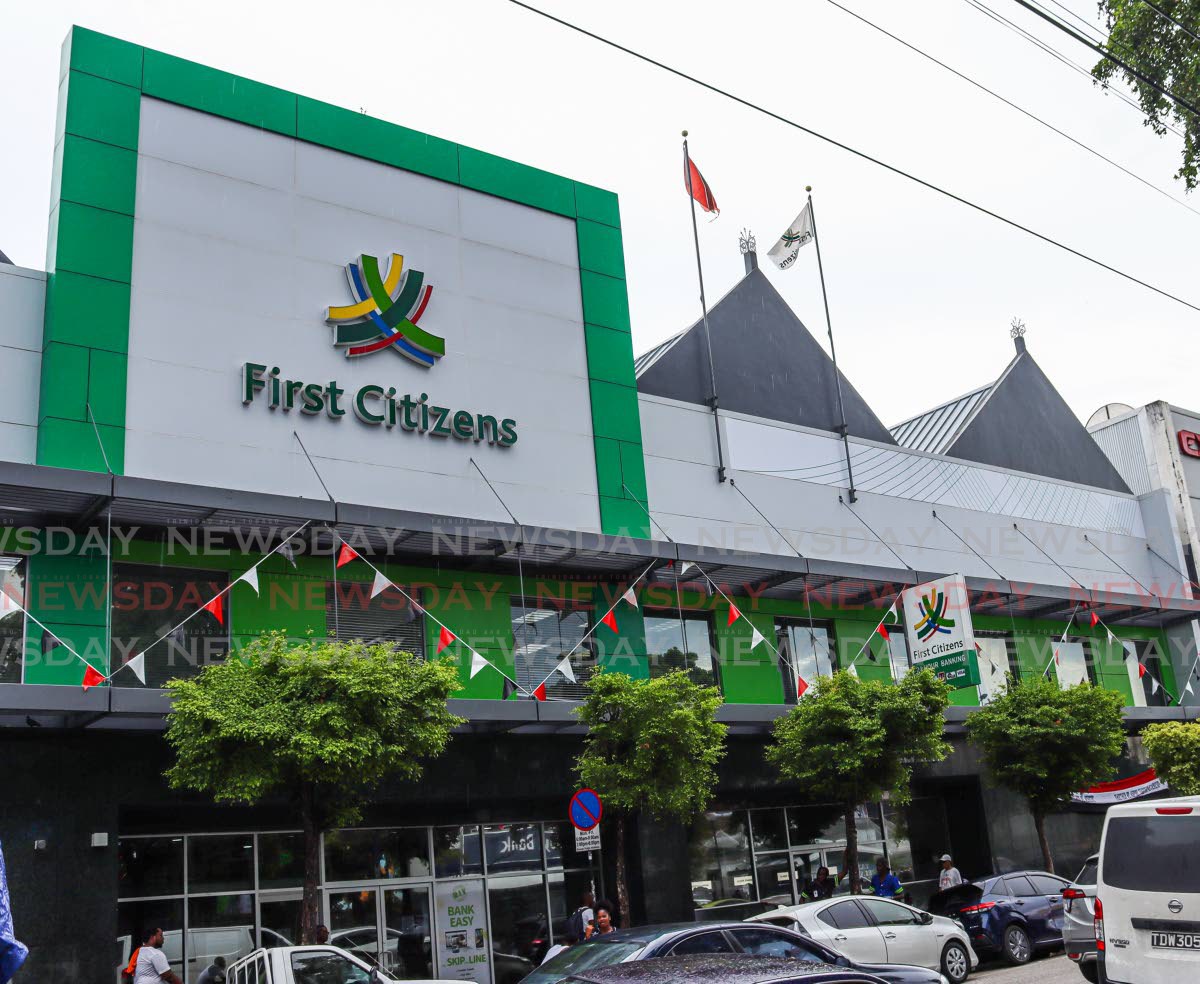
    First Citizens Group has demonstrated formidable financial resilience with an after-tax profit of $989.6 million for the fiscal year concluding September 30, 2025. The Trinidad-based financial institution revealed total assets soaring to $49.167 billion, marking another year of substantial growth and stability.

    Audited by PricewaterhouseCoopers, with engagement partner Sean Ramirez overseeing the process, the consolidated financial statements received an unmodified audit opinion on December 8, affirming their accuracy and compliance with accounting standards. The board officially approved these results on December 4.

    The group’s pre-tax profit climbed significantly to $1.365 billion, up from $1.270 billion in 2024. Revenue streams showed positive momentum with net interest income reaching $2.101 billion and fee and commission income growing to $552.9 million. Total net revenue expanded to $2.875 billion, bolstered by increased other income.

    Basic earnings per share stood at $3.93, calculated on a weighted average of 251.35 million ordinary shares. The balance sheet exhibited robust growth with total loans before allowances climbing to $24.198 billion. Net loans settled at $23.780 billion after accounting for a loan-loss allowance of $417.6 million.

    While non-performing loans experienced a slight increase to $776.6 million from $746.2 million the previous year, impairment expenses rose to $54.5 million from $13.7 million in 2024. Customer deposits, the group’s primary funding source, grew to $30.895 billion.

    Shareholders’ equity strengthened to $9.131 billion, supported by annual profits and a positive $149.8 million movement in other comprehensive income. This included an $86.6 million gain from re-measuring the group’s defined benefit plan and fair value gains on equity instruments.

    PwC highlighted the valuation of expected credit losses on credit-impaired demand loans as a key audit matter. These loans totaled $647 million with an expected credit loss allowance of $128 million, requiring significant judgment in collateral assessment and recovery estimation.

    Business segment performance varied: retail banking earned $447.1 million, corporate banking $635.4 million, treasury and investment banking $241.1 million, and trustee and asset management $38.3 million. Group functions contributed $1.179 billion, collectively generating $2.917 billion in pre-tax profit before consolidating to $989.6 million after tax.

    Operating costs remained substantial with administrative expenses at $854.9 million and other operating expenses at $634.3 million. Depreciation and amortization of intangible assets amounted to $102.1 million and $27.1 million respectively.

    Liquidity metrics remained solid with cash and bank balances at $2.130 billion and short-term investments totaling $2.695 billion. Net cash and cash equivalents stood at $1.959 billion after deducting amounts owed to other banks. Statutory deposits with the Central Bank were $2.268 billion.

    The group reported higher average interest rates on short-term deposits throughout the year. Equity method investments, including stakes in St Lucia Electricity Services Ltd, Term Finance Holdings Ltd and Infolink Services Ltd, totaled $285.2 million, generating $28.6 million in profit share.

    Dividend distributions reached $608.1 million during the year. Treasury share activities reduced recorded share capital from $458.6 million to $427.3 million, while retained earnings closed at $6.402 billion.

    PwC’s audit opinion confirmed that the financial statements ‘present fairly, in all material respects, the financial position of the Group as at 30 September 2025,’ validating the institution’s strong capital position and operational excellence.