
分类: business

  • Central Bank holds repo rate amid policy uncertainty

    Central Bank holds repo rate amid policy uncertainty

    In a decisive move reflecting cautious economic stewardship, the Central Bank has maintained its Repo rate at 3.50 percent, marking an unprecedented period of monetary policy stability that has persisted since March 2020. This significant decision was formally announced in the institution’s November 2025 Monetary Policy Report, released under the guidance of Central Bank Governor Larry Howai.

    The comprehensive report paints a complex picture of the global economic landscape, highlighting how diminished international confidence and escalating policy uncertainties have collectively contributed to weakening economic prospects and tightening financial conditions worldwide. These findings align with the International Monetary Fund’s October 2025 World Economic Outlook, which projects global output expansion to moderate to 3.2 percent in 2025—a slight 0.1 percentage point decrease from previous year’s performance.

    Energy markets have experienced substantial volatility, with crude oil prices undergoing sharp declines between June and October 2025. Trade tensions and market oversupply fundamentally undermined pricing structures, resulting in West Texas Intermediate and Brent crude oil averages falling by 13.9 percent year-on-year to settle at US$66.56 per barrel. Parallel declines affected natural gas markets, with UK and Asian prices dropping 8.4 percent annually to establish a natural gas basket price of US$11.53 per mmbtu.

    Despite these challenging global headwinds, the domestic energy sector shows promising signs of stabilization in the short to medium term, primarily driven by the commencement of gas production from bpTT’s Cypre and Mento fields. This positive development, however, is tempered by concerns regarding downstream energy output constraints following the shutdown of Nutrien operations.

    The non-energy sector demonstrates concerning signs of deceleration, with leading indicators such as cashless payments growth showing markedly slower momentum. Labor market conditions face additional pressure due to recent policy developments, particularly the closure of major state employment programs including CEPEP and URP. These closures have eliminated crucial employment opportunities for thousands of low-skilled workers who may encounter significant challenges transitioning to other sectors.

    Conversely, the Central Bank notes potential long-term benefits from government initiatives to fill longstanding public service vacancies and transition from contract-based employment arrangements. These measures could ultimately enhance employment stability and strengthen domestic demand patterns over extended time horizons.

  • Scotia Group grows top line, but costs dampen profits

    Scotia Group grows top line, but costs dampen profits

    Scotia Group Jamaica Limited (SGJ) has announced a 17% decline in fourth-quarter net profit, which fell to $5.14 billion from $6.16 billion, primarily driven by escalating operational expenditures and one-time costs associated with Hurricane Melissa. This occurred despite the group achieving substantial growth across key financial metrics and solidifying its position as Jamaica’s leading mortgage provider.

    Throughout the 2025 financial year, SGJ expanded its total loan portfolio by 12% to $350.44 billion, with residential mortgages reaching $118 billion. This expansion fueled a 9% annual increase in operating income, which climbed to $64.71 billion. The fourth quarter alone saw operating income rise by 4% to $16.31 billion.

    However, these gains were significantly offset by a 29% surge in quarterly operating expenses, which jumped to $8.82 billion. This increase was attributed to multiple factors: a 44% rise in staff salaries and benefits to $4.21 billion following union negotiations, a 28% increase in cash handling costs due to vendor repricing, and $817 million in non-recurring expenses for efficiency initiatives, asset write-downs, and hurricane-related provisions.

    President and CEO Audrey Tugwell Henry addressed the cost pressures, noting the challenges of cash transportation for their extensive network of 300 automated banking machines, two-thirds of which are located offsite. The bank also adjusted various customer fees effective May 1st in response to these rising costs.

    Despite the catastrophic impact of Hurricane Melissa on Jamaica’s western region, SGJ leadership expressed confidence in their resilience. The group’s non-accrual loans stood at $4.8 billion (1.3% of gross loans), with credit loss provisions exceeding total non-performing loans by 123%. The bank has implemented client assistance programs offering payment deferrals and insurance flexibility for affected customers.

    SGJ demonstrated significant market strength throughout the year, accounting for 55% of the total loan growth across Jamaica’s eight commercial banks. Consolidated net interest income grew by 8% to $50.01 billion for the full year. For the 2025 FY, consolidated net profit declined marginally by 1% to $19.90 billion, with earnings per share of $6.40.

    The group continues to advance its digital transformation strategy under Scotiabank’s global ‘make it easy to do business with us’ initiative. Recent enhancements include online onboarding, digital debit card controls, investment portfolio visibility through mobile banking, and plans to introduce Apple Pay and digital wire transfers, though specific timelines remain undisclosed.

    SGJ’s total assets grew by 10% to $773.78 billion, while shareholder’s equity increased by 9% to $150.51 billion. The company declared a dividend of $0.45 per share, payable January 21, bringing the annual dividend yield to 3.44%. Despite short-term challenges, CEO Tugwell Henry affirmed the institution’s strong positioning to navigate current conditions and deliver robust future performance.

  • Mexico Hits China With Tariffs Up to 50%

    Mexico Hits China With Tariffs Up to 50%

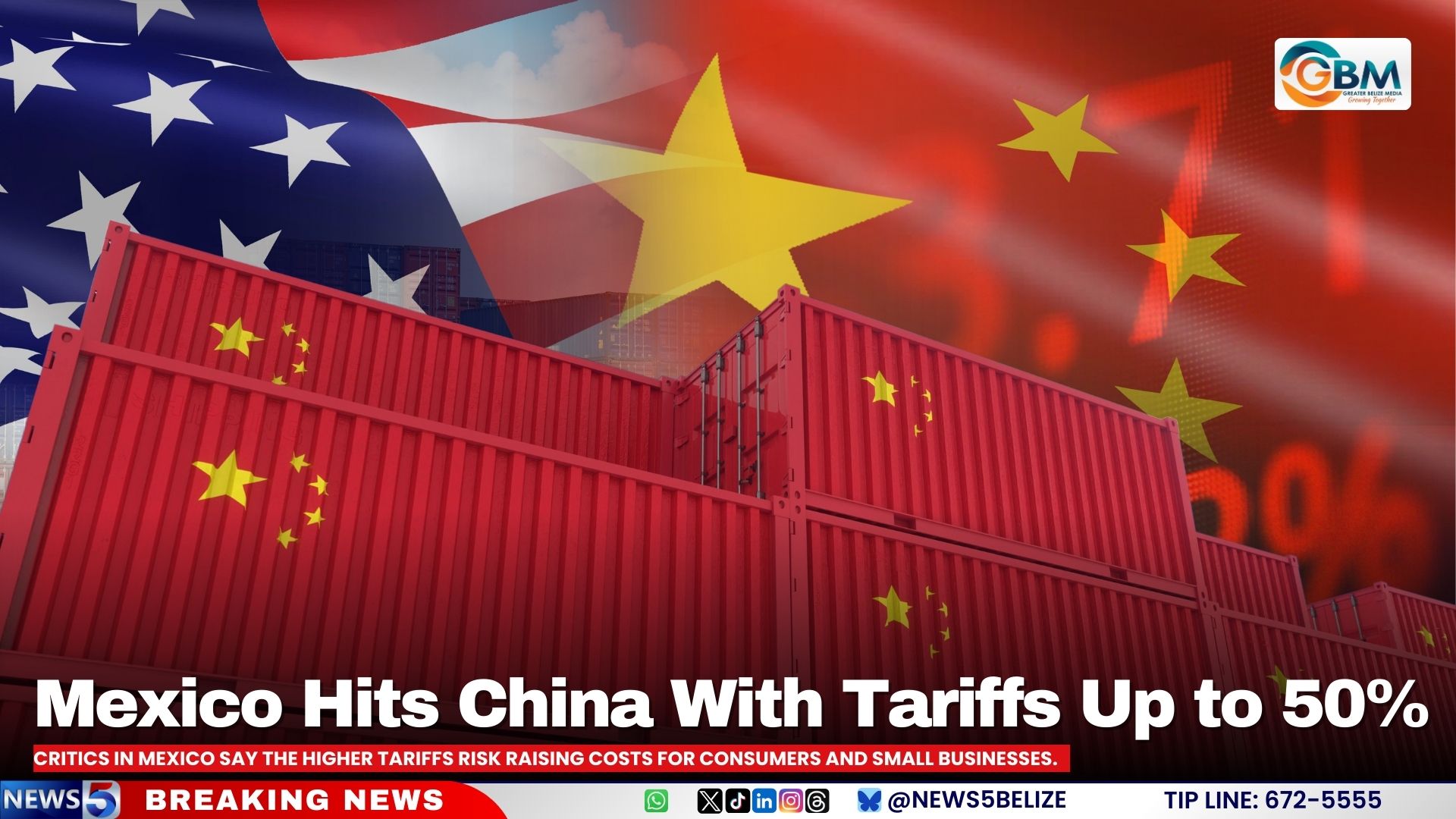
    In a significant trade policy shift, Mexico’s Senate has authorized comprehensive tariff increases exceeding 50% on imports from China and numerous non-free-trade-agreement nations, scheduled for implementation on January 1, 2026. The protective measures encompass approximately 1,400 product categories including industrial metals, automotive vehicles, textile apparel, and household appliances.

    Government officials assert these tariffs align with World Trade Organization regulations and are designed to bolster domestic manufacturing capabilities. Senator Claudia Selene Ávira emphasized the policy’s objective to “safeguard commodities that Mexican industrial sectors possess adequate production capacity to manufacture locally.”

    The automotive sector faces particularly stringent barriers, with Chinese-manufactured vehicles subject to the maximum 50% duty rate. This development occurs amid rapid market expansion by Chinese automotive giants BYD and MG within the Mexican marketplace.

    The Mexican Auto Industry Association has enthusiastically endorsed the protectionist measures. Association President Rogelio Garza characterized the policy as “exceptionally favorable for entities investing in Mexican industrial development and employment generation.”

    This strategic trade action coincides with ongoing negotiations between Mexican and United States trade representatives following former President Donald Trump’s allegations that Mexico serves as a transshipment conduit for Chinese commodities. Trump has previously threatened imposing substantial tariffs on Mexican steel, aluminum, and agricultural exports.

    Despite governmental assurances, economic analysts within Mexico caution that these protective tariffs may inadvertently elevate consumer prices and operational expenses for small-to-medium enterprises reliant on imported components.

  • LETTER TO THE EDITOR: Inter-Caribbean Airways and Inter-Caribbean Tourism – a fatal alliance

    LETTER TO THE EDITOR: Inter-Caribbean Airways and Inter-Caribbean Tourism – a fatal alliance

    A severe crisis in regional air connectivity is threatening the economic foundation of Caribbean tourism, according to a detailed account from traveler Anthony E. Le Blanc. The analysis presents a stark contrast between the historical service of the defunct LIAT and the current operations of its predominant replacement, Inter-Caribbean Airways.

    While LIAT was known for occasional minor delays, the carrier maintained a reputation for overall reliability and affordability. In sharp contrast, Inter-Caribbean Airways has established what the author describes as a near-guarantee of significant delays or outright cancellations. These disruptions frequently extend from several hours into multiple days, creating monumental complications for travelers with tight schedules.

    The consequences of these operational failures are both immediate and severe. Passengers routinely face financial losses from forfeited hotel and car rental reservations, miss critical business meetings, and even fail to attend important family events like funerals. Unlike traditional carriers that assume responsibility for passenger welfare during extended delays, Inter-Caribbean Airways reportedly avoids covering expenses for additional airport transportation, accommodation, or any form of compensation for incurred losses.

    The economic impact extends beyond individual travelers to affect the entire region’s productivity. Airports have transformed into unproductive waiting areas where significant economic potential is lost. Most alarmingly, the credibility of inter-Caribbean travel itself has been severely damaged, dealing what the author characterizes as a ‘near fatal blow’ to regional tourism over the past two years.

    The commentary highlights Caribbean Airlines as a notable exception, describing its service as ‘a breath of fresh air’ and suggesting that expanded operations from this carrier could help salvage the region’s vital tourism industry from the operational onslaught of Inter-Caribbean Airways.

    The author concludes that unless Inter-Caribbean Airways is compelled to bear the financial costs of the inconveniences it creates, the perception of reliable regional air transport will continue to deteriorate, with lasting consequences for the Caribbean economy.

  • Two New Abattoirs Planned as Government Targets Reduced Meat Imports

    Two New Abattoirs Planned as Government Targets Reduced Meat Imports

    In a strategic move to bolster national food security and reduce dependency on imports, Antigua and Barbuda’s government has unveiled a comprehensive agricultural modernization plan. Agriculture Minister Anthony Smith detailed during his 2026 Budget Debate address a multi-faceted initiative targeting the nation’s substantial annual meat import expenditure, which currently stands at approximately $75 million.

    The cornerstone of this agricultural transformation involves a significant infrastructure investment exceeding $4 million dedicated to revolutionizing the livestock processing sector. This funding will facilitate the construction of two specialized abattoirs alongside a complete renovation of the existing facility. The first new abattoir will exclusively handle poultry processing, while the second will be dedicated to pork and small ruminants. The retrofitted existing facility will transition to focus solely on beef production.

    Minister Smith emphasized the economic rationale behind this strategic investment, revealing that pork imports alone account for $20-25 million of the national import bill. He confirmed that local producers already possess the capacity to scale operations to meet domestic demand, indicating that the infrastructure development represents the missing component in the agricultural value chain.

    Beyond physical infrastructure, the ministry announced complementary support programs for agricultural workers nationwide. These initiatives include mass distribution of solar-powered lighting systems to enhance farm security, provision of seeds and fencing materials for crop farmers, and specialized wire for fisherfolk constructing fish pots.

    Smith, who has served as minister for approximately one year, framed these developments as part of a broader paradigm shift in agricultural policy that prioritizes affordability and sustainability alongside production metrics. The infrastructure expansion is strategically designed to attract private sector investment while creating a more resilient and self-sufficient food production system for the nation.

  • Cigarettes Dominate Free Zone Imports Despite PM’s Claim

    Cigarettes Dominate Free Zone Imports Despite PM’s Claim

    BELIZE CITY – A significant discrepancy has emerged between official statements and statistical evidence regarding import patterns within Belize’s commercial free zones. Prime Minister John Briceño has publicly asserted that tobacco products do not dominate the economic activity of the Corozal Free Zone. However, newly released data from the Statistical Institute of Belize (SIB) for the first ten months of 2025 presents a contrasting narrative.

    The latest trade figures reveal a substantial upswing in free zone imports, registering an increase exceeding $10.3 million compared to the corresponding period in 2024. Total imports surged from $291.8 million to $302.1 million. A detailed analysis identifies cigarette imports as the primary catalyst for this growth, accounting for a dominant 32% of all goods entering the zones. This segment alone approached a total value of $100 million, reflecting a net increase of approximately $20 million year-over-year.

    The statistical evidence was formally presented by SIB Statistician II Ronald Orellana. During a subsequent inquiry, when pressed to specify the exact proportion of growth attributable to cigarette imports, Orellana committed to providing a detailed breakdown following the presentation, underscoring the data’s complexity.

    This economic trend raises pertinent questions about the composition of Belize’s import economy and the dynamics of its commercial free zones, highlighting a clear divergence between political rhetoric and empirical data.

  • Belize’s Cost of Living Under the Microscope

    Belize’s Cost of Living Under the Microscope

    BELIZE CITY – A heated political confrontation over Belize’s escalating cost of living has intensified between the governing administration and opposition forces, revealing profound disparities in economic perspectives. The United Democratic Party (UDP) maintains that ordinary citizens face unsustainable financial pressures, while Prime Minister John Briceño’s administration highlights substantial social investments as evidence of progressive economic management.

    Recent statistical data from Belize’s authoritative Statistical Institute indicates a complex economic landscape. While overall inflation has demonstrated a moderating trend compared to previous years, essential categories including food commodities, housing expenditures, utilities, and transportation costs continue to exert significant pressure on household budgets. Particularly notable are price increases observed in non-alcoholic beverages, purified water, soft drinks, fruit juices, cereal products, meats, and various nuts.

    The housing sector has experienced a 2.4 percent price escalation, predominantly driven by rental costs increasing by 2.3 percent. Simultaneously, restaurant and accommodation services have recorded a 2.3 percent rise, primarily attributable to elevated food and beverage service costs climbing by 2.6 percent.

    Opposition representative Miguel Guerra articulated the UDP’s position, emphasizing that escalating costs for groceries, fuel, utilities, educational materials, and housing have created a quality-of-life crisis rather than merely an economic challenge. “Families are stretching their dollar further than it can go,” Guerra stated, noting that earned incomes increasingly fail to provide adequate purchasing power.

    Prime Minister Briceño countered these assertions by detailing governmental initiatives including minimum wage increases, expanded scholarship programs, nationwide school feeding initiatives, free educational provisions, and the comprehensive expansion of the National Health Insurance program. The Prime Minister acknowledged the limitations of price control on imported goods while defending fuel taxation as a necessary revenue mechanism funding these social programs.

    The fundamental dispute transcends statistical interpretations, reflecting deeper philosophical divisions regarding economic governance and social responsibility. As Belizeans navigate daily financial decisions at supermarkets, rental offices, and gasoline stations, the political discourse continues to evolve, with no immediate resolution in sight.

  • Economy : The US Congress is making progress toward renewing the HOPE/HELP program

    Economy : The US Congress is making progress toward renewing the HOPE/HELP program

    In a significant bipartisan move, the U.S. House Ways and Means Committee has initiated proceedings to renew critical trade legislation supporting Haiti’s economic stability. On December 10, 2025, lawmakers advanced discussions regarding the extension of both the HOPE II Act (Haitian Hemispheric Opportunity Through Partnership for Encouragement) and the HELP Act (Haiti Economic Lift Program). These preferential trade agreements have served as fundamental pillars for Haiti’s textile and apparel industry, providing tariff advantages for exports to the United States.

    Committee Chairman Jason Smith articulated the strategic importance of these programs, emphasizing their dual benefit for both nations. “Establishing equitable and mutually advantageous trade relations with Haiti generates employment opportunities and fosters stability in a nation historically challenged by humanitarian emergencies,” Smith stated during the session. “Haiti’s economic prosperity directly correlates with enhanced security outcomes for the United States within the Western Hemisphere.”

    The legislative package under consideration represents a continuation of trade policies initially established through the original HOPE Act. These measures have effectively positioned Haiti’s manufacturing sector as a primary driver of economic activity by enabling competitively priced access to the vast U.S. market. The renewal process demonstrates continued American commitment to supporting sustainable development in Haiti through structured economic partnership rather than direct aid.

    Industry analysts note that the textile and apparel sector accounts for approximately 90% of Haiti’s exports to the United States, making these trade preferences essential for maintaining economic stability. The bipartisan support for the renewal indicates recognition across political divides that economic development in Haiti aligns with broader regional security and diplomatic objectives.

  • Sugar Crop Start in Limbo as BSI & Cane Farmers Deal Still Pending

    Sugar Crop Start in Limbo as BSI & Cane Farmers Deal Still Pending

    The commencement of Belize’s crucial sugar harvesting season hangs in precarious balance as Belize Sugar Industries (BSI) and the Belize Sugar Cane Farmers Association (BSCFA) have yet to finalize a commercial agreement for the current season. This recurring deadlock has historically triggered industrial actions that paralyzed milling operations, resulting in substantial financial losses across the agricultural sector and broader economy.

    Compounding the contractual impasse, unfavorable weather conditions and ongoing maintenance at processing facilities have already delayed the season’s start. Industry analysts warn that any further postponement could severely impact crop yields and economic outcomes for all stakeholders.

    Despite the tension, Marcos Osorio, Chairman of the Sugar Industry Control Board, maintains cautious optimism. In an official statement, Osorio revealed that BSI maintains its position requiring seven-year contract terms, while confirming a critical meeting scheduled for next Tuesday involving all stakeholders and government representatives.

    “We remain hopeful that an agreement can be reached within coming days or before year’s end,” Osorio stated. “Both parties must approach negotiations in good faith with willingness to compromise. True negotiation requires flexibility from all sides to reach an amicable solution.”

    The industry now faces a race against time, with the combination of contractual delays, weather challenges, and milling readiness creating a perfect storm that could determine the season’s profitability for thousands of cane farmers and the national economy.

  • Sugar Crop Start Delayed Again Amid Mill and Road Setbacks

    Sugar Crop Start Delayed Again Amid Mill and Road Setbacks

    The commencement of the annual sugar harvest is confronting significant operational delays, with industry authorities now projecting a mid-January start date. This postponement stems from a confluence of logistical challenges affecting both industrial infrastructure and transportation networks.

    Central to the delay are protracted maintenance operations at the primary processing facility. Initial projections from mill engineers in late October indicated completion by the first week of December, with subsequent steam trials scheduled to facilitate an immediate harvest initiation. However, supply chain complications have extended the maintenance timeline, with completion now anticipated for the first week of January.

    Concurrently, critical infrastructure improvements have been hampered by meteorological conditions. Roadway maintenance contracts finalized with government contractors in late October have encountered repeated weather-related interruptions. Persistent precipitation has created unfavorable field conditions, preventing contractors from initiating essential repairs to the transportation network vital for crop movement.

    Marcos Osorio, Chairman of the Sugar Industry Control Board, maintains an optimistic outlook despite these challenges. “We’re confronting operational hurdles, but the industry’s fundamental strength remains intact,” Osorio stated. The revised schedule now anticipates steam trials immediately following January maintenance completion, with crop processing commencing approximately one week thereafter, assuming favorable operational conditions.

    The industry’s resilience is being tested by these dual challenges, though leadership expresses confidence in achieving strong seasonal results despite the compressed timeframe.