分类: business

  • Tax Service Workers Clash with Government Over SARA Transition

    Tax Service Workers Clash with Government Over SARA Transition

    Belize Tax Services employees are preparing for a confrontation with the government over the proposed transition to the Semi-Autonomous Revenue Agency (SARA). While officials claim the move will enhance efficiency and increase revenue, the Public Service Union (PSU) remains skeptical. The union has raised concerns for months, warning that employees could lose essential benefits and face job security uncertainties. Additionally, they question the validity of the government’s revenue-boosting claims, citing a lack of concrete evidence. PSU President Dean Flowers has highlighted the growing discontent among workers, emphasizing the government’s failure to address their concerns. Following a recent meeting, the union has declared a formal dispute and issued a 21-day notice to the Minister of Labor, signaling potential industrial action. Flowers criticized the Briceño administration for its lack of accountability and transparency, stressing that public officers deserve clear communication and dialogue. The escalating tension underscores the broader challenges in Belize’s public sector reforms.

  • Will the Public Service Union Strike over SARA Implementation?

    Will the Public Service Union Strike over SARA Implementation?

    The Public Service Union (PSU) in Belize is on the brink of declaring a trade dispute as tensions escalate over the government’s plan to transition into the Semi-Autonomous Revenue Agency (SARA). PSU President Dean Flowers has voiced frustration, stating that the union’s concerns have been consistently ignored, with only one meeting held to address the issue. Prime Minister John Briceño maintains that the shift to SARA is essential for improving efficiency and boosting revenue but acknowledges the union’s right to strike if necessary. Flowers has outlined the legal steps required before any industrial action, including notifying the Minister of Labor to attempt mediation. He emphasized that while strike action remains a last resort, the union is prepared to explore various forms of protest to safeguard essential services and protect national revenue streams. The situation remains fluid as both sides await potential intervention from the Ministry of Labor.

  • Belizeans Tighten Spending as Consumer Confidence Slips

    Belizeans Tighten Spending as Consumer Confidence Slips

    Recent data from the Statistical Institute of Belize reveals a concerning dip in consumer confidence, with the index dropping to 45.7% in September from 46.8% in August. This decline marks a return to the downward trend observed earlier in the year, signaling growing economic uncertainty among Belizeans. The index, which gauges public sentiment on the economy, personal finances, and major purchases, indicates a widespread sense of caution. Notably, confidence in buying durable goods like appliances, vehicles, and furniture fell by 2.2%, reflecting households’ efforts to tighten spending. Regionally, Corozal experienced the sharpest decline, with consumer sentiment plummeting to 38.1%, driven by a 28.3% drop in confidence for major purchases. However, Stann Creek bucked the trend, recording a 5.8% increase in overall confidence due to more optimistic future expectations. Urban and rural areas both reported lower confidence, though rural regions showed a slight uptick in durable goods spending. Gender-wise, both men and women expressed reduced confidence, with women particularly hesitant about big-ticket purchases. Interestingly, young adults aged 18 to 24 defied the trend, with their confidence index surging to 60, a 26.8% increase, and their optimism for durable goods purchases soaring by over 64%. This generational divide highlights shifting spending behaviors among Belize’s youth. As consumer confidence is a critical indicator of future economic activity, the prevailing caution among most groups suggests businesses and policymakers may need to brace for slower growth in the coming months.

  • Tourism sector records strong growth as St. Kitts and Nevis Prepares for 2026

    Tourism sector records strong growth as St. Kitts and Nevis Prepares for 2026

    The tourism industry in St. Kitts and Nevis is experiencing robust growth, with significant increases in both air and cruise arrivals, as the nation gears up for its 2026 strategic objectives. Tourism Minister Marsha Henderson highlighted these positive trends during a recent stakeholder meeting, emphasizing key achievements such as an 18% rise in seat capacity, a 10% increase in visitor arrivals from January to September 2025, and a 29% surge in cruise arrivals compared to the previous season. Cruise passenger spending also climbed from $135 to $145 per person. Henderson underscored accessibility as a cornerstone of tourism expansion. As the government prepares its 2026 national budget, which will outline development priorities, Henderson described the stakeholder sessions as crucial for reflecting on accomplishments, identifying areas for improvement, and refining strategies for future goals. Tourism remains a vital economic driver for the Federation, benefiting related industries and sustaining economic activity. The minister outlined three core objectives for the sector: building resilience to external shocks, promoting year-round visitation to reduce seasonal vulnerabilities, and ensuring sustainable growth rooted in community partnerships. The Ministry has aligned its policies with this vision, updating the National Tourism Strategy to guide development through 2026 and beyond. Efforts include professionalizing the sector through initiatives like the Lifeguard Policy, which enhances visitor safety, and legislative amendments to the Prescribed Areas Act to support diverse tourism-related businesses. Cross-ministerial collaborations with the Ministries of Environment, Public Infrastructure, and Energy aim to strengthen sustainability through waste management, renewable energy adoption, and coastal conservation practices. As global travel trends evolve, St. Kitts and Nevis is poised to build on these achievements, ensuring tourism remains a sustainable and inclusive economic engine.

  • Saint Lucia calls for Caribbean unity in driving sustainable trade agenda

    Saint Lucia calls for Caribbean unity in driving sustainable trade agenda

    Saint Lucia has issued a compelling call for Caribbean nations to redefine their economic trajectories by embracing sustainable trade and bioeconomy strategies. This initiative aims to align climate action with innovation, value creation, and global competitiveness. The two-day workshop, titled ‘Crafting a Sustainable and Inclusive Trade and Bioeconomy Agenda for CARICOM,’ held from October 29–30 at the Harbor Club, focused on five key thematic sessions designed to drive regional transformation through sustainable trade and bioeconomic development. These sessions included: defining the nexus between trade, climate, and the Caribbean bioeconomy; exploring innovation, digital trade, and AI; unlocking the ocean economy; building resilient food systems; and financing the bioeconomy and green industrial policy. Permanent Secretary Janelle Modeste-Stephen emphasized the critical role of trade policy in facilitating access to green technologies, promoting regional value addition, and ensuring the free movement of environmental goods and services across borders. She highlighted that sustainable trade is not just a pathway but a necessity for the survival and prosperity of small island states. The workshop aimed to shape a unified regional strategy for sustainable trade, climate resilience, and bioeconomic transformation. Modeste-Stephen warned that the Caribbean is at a historic turning point, facing overlapping global crises such as climate change, rising protectionism, and the impact of trade wars. She stressed the need for decisive action, unity, and creativity to navigate these challenges and position the Caribbean as a leader in sustainable and inclusive trade and bioeconomy.

  • Belize’s Inflation Holds Steady, but Some Costs Bite

    Belize’s Inflation Holds Steady, but Some Costs Bite

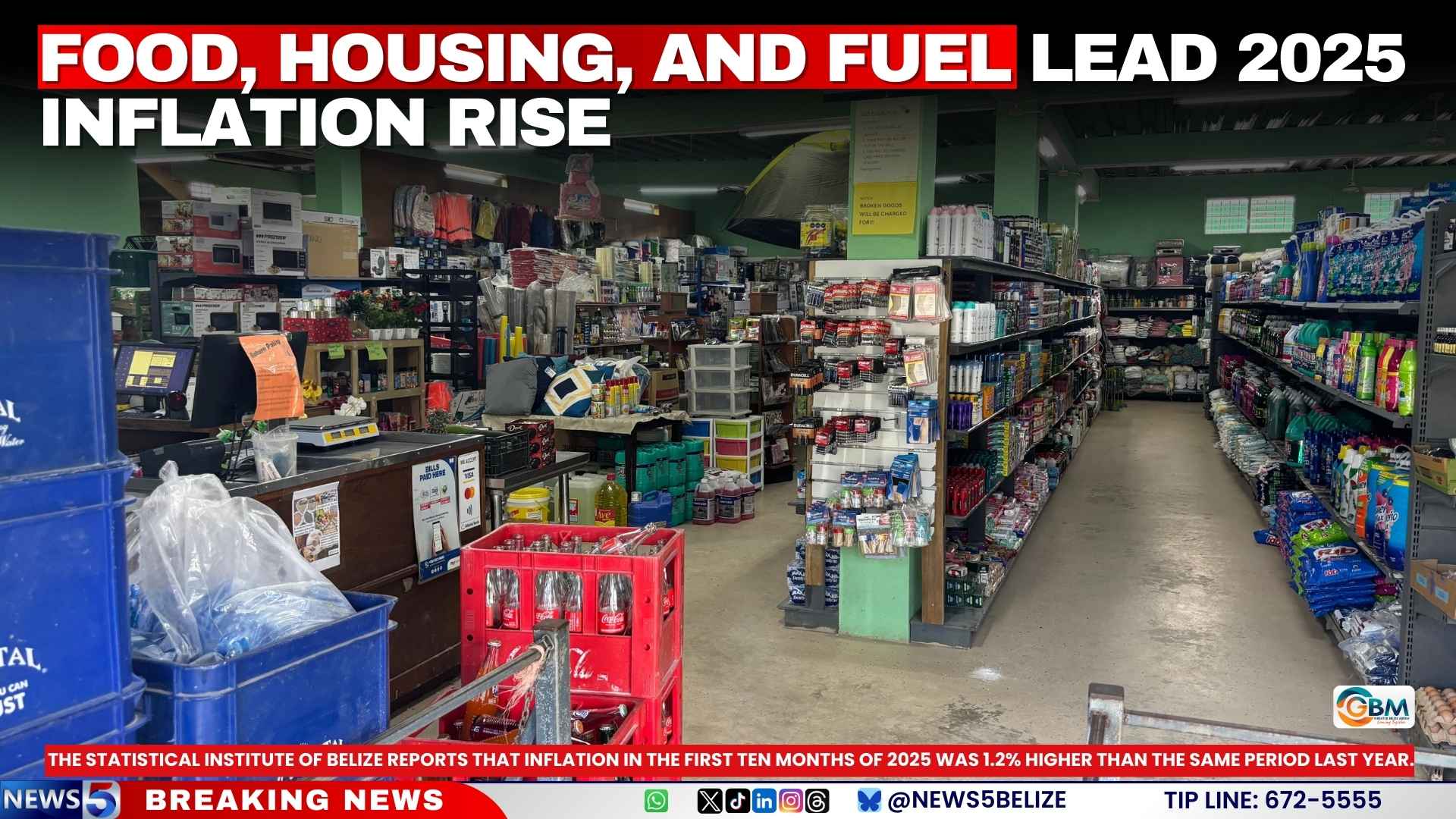
    Belize’s inflation rate held steady in September 2025, with a modest 0.6% year-on-year increase, as reported by the Statistical Institute of Belize. However, a closer look reveals significant shifts in the cost of essential goods and services, impacting household budgets across the nation. Housing and utility costs emerged as the primary drivers of inflation. Notably, the price of a 100-pound LPG cylinder surged by 11.6%, rising from $116.58 to $130.07, while rental prices also inched upward, adding financial strain to many families. Dining out became more expensive, with the Restaurants and Accommodation Services category climbing 2.8%, largely due to higher prices at restaurants and cafés. On a brighter note, fuel prices saw a decline, offering some relief to drivers. Regular gasoline dropped by $0.63 per gallon, premium by $0.62, and diesel by $0.18. Over the first nine months of 2025, the overall price increase stood at 1.2% compared to the same period in 2024. Key contributors to this rise included food, housing, dining out, and personal care items, while transport and technology-related costs experienced a downward trend.

  • Belizeans Preparing for Tighter Budgets

    Belizeans Preparing for Tighter Budgets

    Belizeans are increasingly cautious about their spending habits as economic uncertainty looms, according to the latest Consumer Confidence Index released by the Statistical Institute of Belize. The national confidence score for September 2025 dropped to 45.7, down from 46.8 in August, reflecting growing financial apprehension among the population. This decline signals that more households are preparing for tighter budgets in the coming months. Notably, confidence in making significant purchases, such as furniture, vehicles, or appliances, plummeted to 38.7, the lowest among all categories. The outlook for the next twelve months also weakened, with the index slipping to 54.1. The trend was widespread, with Corozal experiencing the sharpest decline, while Stann Creek residents reported a slight uptick in optimism. Rural areas were hit harder than urban centers, highlighting the uneven impact of economic pressures. Interestingly, younger Belizeans aged 18 to 24 bucked the trend, recording a significant rise in confidence to 60.0, the highest of any age group. Analysts attribute the overall decline to rising prices and persistent economic instability, which continue to weigh heavily on families across the nation.

  • Belize is Buying More and Selling Less

    Belize is Buying More and Selling Less

    Belize’s economic landscape is under mounting pressure, as revealed by the latest trade report from the Statistical Institute of Belize. The data highlights a concerning trend: the nation is importing significantly more while its exports struggle to keep pace. In September 2025, Belize’s imports surged to $251 million, marking a $20 million increase compared to the previous year. Key imports included fuel, food, and heavy machinery, with rising costs for essentials like gas and cooking gas exacerbating the situation. Notably, imports of baby formula, cereal, and frozen fries also climbed, reflecting a growing reliance on foreign goods and higher consumer prices. On the export front, Belize earned just $31 million, a marginal increase from last year. The sugar industry, a cornerstone of the economy, suffered a significant blow, with sugar sales plummeting by over $26 million this year. This decline has left farmers and workers in the sector facing substantial losses. Despite these challenges, there are glimmers of hope. Lobster exports rose by more than $8 million, bean sales increased by nearly $4 million, and cattle exports also saw growth, helping to offset the decline in sugar revenue. The United Kingdom remains Belize’s largest trading partner, followed by the United States and Mexico. However, the widening trade deficit underscores the urgent need for strategic economic interventions to stabilize the nation’s financial health.

  • Toll collection for May Pen to Williamsfield highway set to start December

    Toll collection for May Pen to Williamsfield highway set to start December

    KINGSTON, Jamaica – TransJamaican Highway Limited has officially announced that toll collection on the newly completed Phase 1C segment of the PJ Patterson Highway, stretching from May Pen to Williamsfield, will commence on December 1, 2025. This date signifies the definitive start of revenue-generating operations on this critical road extension. The timeline follows the formalization of a Concession Agreement between TransJam Highway Operators Limited (THO), a wholly-owned subsidiary of TransJamaican Highway Limited, and the National Road Operating and Constructing Company (NROCC) on October 23, 2025. The agreement grants THO the authority to operate, maintain, and collect tolls on the new section for a concession period lasting until June 1, 2038, ensuring operational control for approximately twelve and a half years. This segment represents a significant easterly expansion of the East-West leg of Highway 2000, officially named the PJ Patterson Highway. It is anticipated to greatly improve connectivity for motorists traveling to and from central Jamaican parishes, including Manchester. TransJamaican Highway Limited, through its subsidiaries, currently manages major toll corridors in Jamaica, such as the original Highway 2000 and the East-West segment from Kingston to May Pen. Stakeholders are now awaiting further details on toll rates and ancillary arrangements ahead of the December 2025 start date.

  • Republic Bank empowers SMEs to ‘think global’

    Republic Bank empowers SMEs to ‘think global’

    Republic Bank, in partnership with the Caribbean Association of Banks (CAB), successfully hosted its third annual SME Workshop and Marketplace on October 28 at the Hyatt Regency in Port of Spain, Trinidad. The event, themed ‘Expanding from Local to Global: Turning Sustainability into an Export Differentiator,’ aimed to equip small and medium-sized enterprises (SMEs) from the manufacturing and agricultural sectors with actionable strategies to enhance their operations, embrace sustainability, and prepare for global export opportunities.

    Richard Sammy, Vice President of Republic Bank, emphasized the bank’s commitment to supporting entrepreneurs beyond financial services. ‘Our entrepreneurs challenge us to listen, understand their realities, and provide more than just credit facilities. We are dedicated to offering resources, training, and tools that empower SMEs to thrive. At Republic Bank, we see it as our responsibility to be true partners in their growth,’ he stated.

    The workshop featured interactive presentations and success stories from industry leaders, including Rachel Renie-Gonzales, founder and CEO of d’Market Movers; Tisha Marajh, Group Sustainability Officer at Republic Bank; Fedell Solomon, co-founder of Nabdell Enterprise Ltd; and export specialists from Global TT and the Caribbean Export Development Agency (CEDA). Attendees were encouraged to integrate sustainability practices into their business models to gain a competitive edge in global markets.

    Republic Bank’s initiative underscores its dedication to fostering innovation, sustainability, and economic resilience within the region’s MSME sector. Through tailored financing, capacity-building programs, and strategic collaborations, the bank continues to champion entrepreneurship and sustainable development across the Caribbean.