分类: business

  • Support us!

    Support us!

    Jamaica’s prestigious coffee sector is navigating a complex recovery path as government initiatives face scrutiny from growers who argue that current support levels remain insufficient. The Jamaica Agricultural Commodities Regulatory Authority (JACRA) recently distributed 5,000 bags of fertilizer valued at $35 million to coffee farmers, representing part of a broader $120 million intervention package jointly funded by the agency and the national government.

    This assistance falls under the Coffee Crop Resuscitation and Establishment Programme (CREP), a five-year strategy designed to establish nurseries and facilitate widespread replanting across both Blue Mountain and High Mountain coffee regions. JACRA’s acting director general Wayne Hunter confirmed the readiness of 10,000 seedlings for High Mountain varieties and an additional 15,000 planting materials for Blue Mountain cultivation, scheduled for distribution during the April planting season.

    Despite these measures, Jamaica Coffee Growers Association President Donald Salmon expressed concerns about the pace and scale of support. “While we appreciate what we get from the Government… I don’t want to sound greedy, but we need much more. It is significant assistance, but the farmers are really hurting,” Salmon stated during the handover ceremony.

    The industry has endured consecutive challenges from extreme weather events, including a devastating blow from Category 5 Hurricane Melissa on October 28. Preliminary estimates from Jamaica Coffee Exporters Association Chairman Norman Grant indicate losses reaching $1 billion, with accumulated deficits totaling $2.5 billion.

    Agriculture Minister Floyd Green acknowledged the need for urgent CREP reforms, noting that the program required enhancement even before the hurricane’s impact. The government has allocated approximately $100 million specifically for coffee sector recovery, with focused attention on providing farming materials identified as critical needs by growers.

    Minister Green revealed innovative approaches to addressing infrastructure challenges, stating: “The coffee roads require, in my view, a separate program.” The ministry is collaborating with the National Works Agency to develop cost estimates for specialized road rehabilitation in coffee-growing regions, recognizing the unique engineering demands of the mountainous terrain.

    Salmon advocated for additional measures including revived insurance schemes for climate-vulnerable farmers and technological modernization of farming practices. He emphasized the global reputation of Jamaican coffee while highlighting structural challenges: “The farmers who produce 80% are either squatters, have no land title, are very small and capital starved.”

    The association president concluded with a stark reminder of the industry’s foundation: “Without the coffee growers and the farmers there’s no JACRA for coffee. No exporter. So support us.”


  • New online skills resource helps job seekers ace interviews

    New online skills resource helps job seekers ace interviews

    In response to mounting challenges facing job seekers in today’s intensely competitive employment landscape, the Association of Chartered Certified Accountants (ACCA) has introduced an innovative digital solution. The newly launched ACCA Virtual Skills platform specifically targets Generation Z professionals and career entrants seeking to distinguish themselves during application and interview processes.

    This comprehensive digital resource center provides ACCA members and affiliates with practical career preparation tools developed through professional expertise. Lindsay Degouve de Nunques, ACCA’s Director of Brand and Marketing, emphasized the organization’s commitment: ‘ACCA is dedicated to equipping our members and future members with the skills and knowledge essential for career success. This practical resource empowers new professionals to approach their futures with greater confidence.’

    The platform addresses identified gaps in practical career guidance through two primary components. First, a series of on-demand interview preparation videos cover critical career topics including CV crafting, creating impactful first impressions, optimizing LinkedIn profiles, appropriate interview attire, navigating compensation discussions, and formulating strategic questions.

    Second, visually engaging virtual flashcards distill key insights from ACCA’s research on artificial intelligence, technology, global economics, and sustainability. These downloadable resources serve as conversation starters during networking events and provide substantive talking points for interviews.

    Developed in direct response to employer expectations regarding candidates’ soft skills, the platform has already garnered positive feedback from recruitment professionals. This initiative represents ACCA’s ongoing investment in future-oriented employment capabilities and complements the existing career support services offered through ACCA Careers, the organization’s specialized accounting and finance recruitment platform.

  • NAGICO Insurances gets excellent A- rating from A M Best

    NAGICO Insurances gets excellent A- rating from A M Best

    In a significant endorsement of financial stability, Caribbean insurance leader NAGICO Insurances has achieved a major milestone with its upgraded financial strength rating from global credit agency AM Best. The rating elevation from BBB+ to A- (Excellent) positions the insurer among the region’s most reliable providers.

    The upgraded assessment reflects AM Best’s thorough evaluation of NAGICO’s reinforced balance sheet, sustained operational improvements, and rigorous risk management protocols. The rating agency specifically acknowledged the company’s successful implementation of long-term strategic initiatives across multiple Caribbean jurisdictions.

    This enhancement carries profound implications for policyholders and regulatory bodies throughout the catastrophe-prone Caribbean region. The A- classification serves as an independent verification of NAGICO’s capacity to honor policy commitments despite exposure to natural disasters and economic fluctuations.

    Chief Executive Officer Kyria Ali characterized the achievement as testament to the organization’s foundational principles. ‘This independent endorsement validates our financial discipline and operational excellence,’ Ali stated. ‘For our clients throughout the Caribbean and French territories, it reinforces their confidence in our commitment to protect their families and enterprises during critical moments.’

    The AM Best rating system represents the global benchmark for insurance sector financial health assessments. An A- designation signifies exceptional balance sheet resilience, consistent performance improvement, prudent underwriting standards, and sustainable business modeling.

    Executive Chairman Imran McSood Amjad emphasized the strategic significance within the Caribbean context. ‘Our region faces distinctive challenges ranging from climate volatility to economic disruptions,’ Amjad noted. ‘This upgrade demonstrates our deliberate enhancements to governance frameworks and risk mitigation strategies that strengthen our foundational stability.’

    The accomplishment reflects collective efforts across NAGICO’s operational network, underscoring the group’s dedication to sustainable expansion and value delivery. Future initiatives will prioritize technological innovation for customer experience enhancement and development of region-specific insurance solutions.

    Established in 1982, the NAGICO Group maintains 32 operational locations throughout the Caribbean and Metropolitan France, offering comprehensive property, casualty, life, and health insurance products.

  • 5 land on-the-job training at Angostura in the new year

    5 land on-the-job training at Angostura in the new year

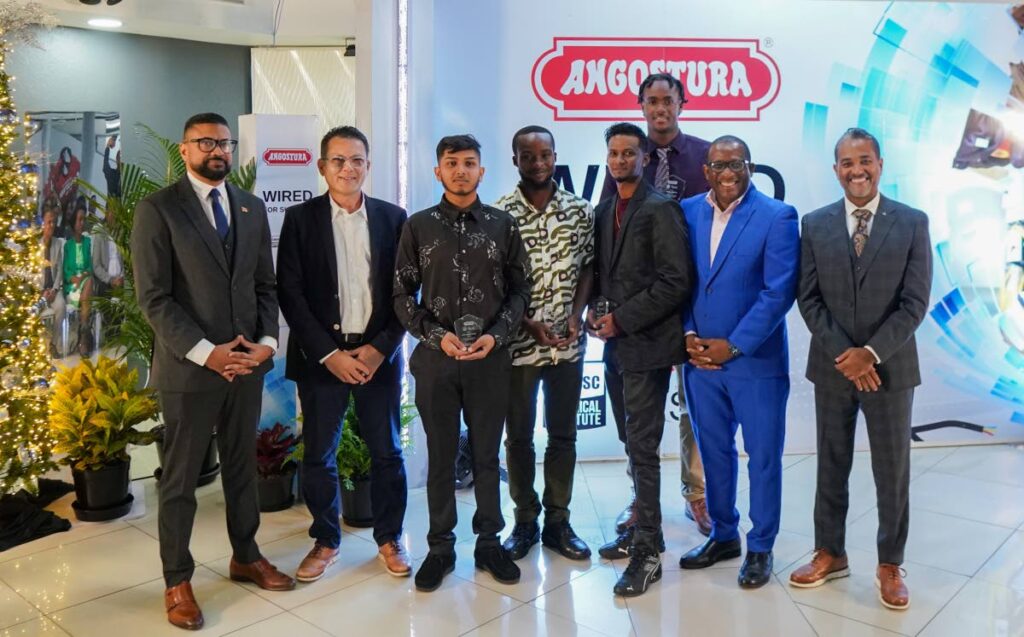
    In a significant workforce development initiative, five electrical program graduates have been selected for a two-month professional placement at Angostura Holdings beginning January. The selection follows the completion of an intensive nine-week training program called ‘Wired for Success,’ funded by the renowned beverage company and administered in partnership with the NESC Technical Institute (NESC-TI).

    The specialized curriculum focused on residential electrical installation with commercial applications, attracting approximately 600 applicants within days of its September 30 announcement. From this pool, thirty participants from diverse national communities were chosen to undergo the rigorous training regimen.

    During a December 17 graduation ceremony at Angostura House in Laventille, successful participants received NESC-TI certifications aligned with Caribbean Vocational Qualification standards. The event was attended by key figures including Hansen Narinesingh, Parliamentary Secretary in the Ministry of Tertiary Education and Skills Training, Angostura Holdings Chairman Gary Hunt, NESC-TI President Kern Dass, and Acting Angostura CEO Ian Forbes.

    Gary Hunt emphasized the program’s practical objectives: ‘Our aim is to provide real-world, job-ready skills that open doors. Through programmes like Wired for Success, participants have not only built technical capability but have also developed responsibility, confidence, and the professional readiness needed to succeed in a growing field.’

    The comprehensive training covered critical areas including lock-out/tag-out safety procedures, electrical laws and circuit analysis, code compliance, conduit bending and installation, and the operation of electrical testing instruments. Participants additionally gained exposure to commercial electrical applications, including foundational knowledge of splitter units used in multi-unit buildings—providing them with competitive advantages in the job market.

    Kern Dass highlighted the successful industry-education partnership: ‘Wired for Success demonstrates the impactful results achievable through collaboration between industry and NESC-TI. We take pride in partnering with Angostura to deliver relevant training that equips participants with practical, employment-ready skills.’

    The two-month on-the-job training component will enable the five selected graduates to apply their newly acquired expertise within Angostura’s operational environment, representing both a workforce transition opportunity and an investment in developing the next generation of electrical professionals.

  • Digicel gets CIPS accreditation

    Digicel gets CIPS accreditation

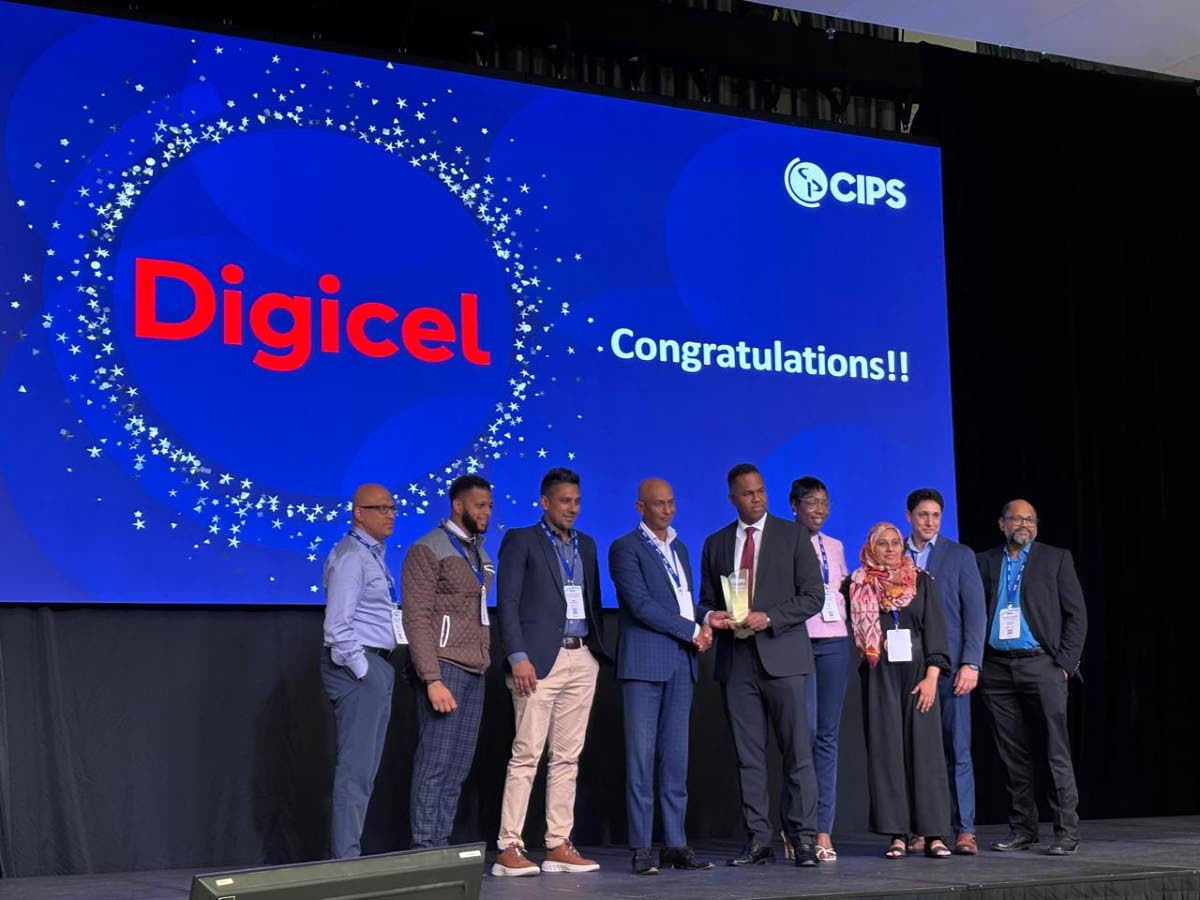
    In a groundbreaking achievement for Caribbean business standards, Digicel Group has secured the prestigious Chartered Institute of Procurement and Supply (CIPS) Corporate Ethical Procurement and Supply Kitemark, becoming the first Caribbean-based organization to receive this international recognition. The historic announcement was made during the inaugural CIPS Caribbean Conference and Awards 2025 held at Hyatt Regency in Port of Spain, Trinidad, where Digicel’s procurement leadership accepted the distinction.

    The telecommunications giant, operating across 25 markets throughout the Caribbean, Central America, and South America including Trinidad and Tobago, now joins an exclusive global consortium of enterprises recognized for exemplary ethical procurement practices and supply chain integrity. The accreditation follows rigorous independent audits that validated Digicel’s adherence to consistent ethical standards throughout its procurement operations.

    Arshad Ali, Director of Group Procurement, Supply Chain and Real Estate for Digicel, emphasized the significance of this milestone: “This accreditation fundamentally reflects our business philosophy. It showcases the substantial advancements we’ve achieved in implementing ethical, transparent, and accountable procurement methodologies across the Group while reinforcing our dedication to establishing new benchmarks for responsible sourcing and supply chain governance throughout the region.”

    The CIPS Kitemark serves as a powerful assurance mechanism for customers and business partners, confirming that Digicel maintains ethical and responsible operations throughout its extensive supply network. Procurement decisions are now demonstrably guided by both commercial merit and ethical considerations, ensuring all business interactions embody integrity and accountability.

    Michael Watson, Chief Compliance and Cyber Security Officer for Digicel Group, added: “This recognition underscores our unwavering commitment to ethical business conduct and the continuous improvement of our ethics and compliance programs. It provides our customers, suppliers, and partners with concrete evidence that Digicel upholds the most stringent ethical standards in all operations.”

    This landmark achievement solidifies Digicel’s position as an ethical leader in the telecommunications sector while demonstrating the company’s dedication to responsible growth and sustainable value creation for the Caribbean region and beyond.

  • Procurement expert says profession must be people-centred, value-driven

    Procurement expert says profession must be people-centred, value-driven

    Veteran procurement leader John Dickson has issued a compelling call for the profession’s fundamental transformation, challenging deep-seated industry conventions during his keynote address at the Chartered Institute of Procurement and Supply’s Caribbean Conference and Awards 2025.

    Addressing regional supply chain leaders at Port of Spain’s Hyatt Regency on December 10, Dickson argued that procurement stands at a critical inflection point, requiring a decisive move beyond its traditional cost-cutting obsession. He proposed a radical repositioning of the function as a strategic driver of organizational value, resilience, and long-term competitive advantage.

    Dickson employed a powerful iceberg analogy to illustrate how most organizations perceive procurement: “The one-ninth that businesses see typically concerns cost reduction and cash generation,” he noted, emphasizing that “what drives this function runs much deeper than surface-level financial metrics.”

    Drawing upon four decades of industry experience, Dickson traced procurement’s evolutionary trajectory from 1990s cost control through 2000s process efficiency reforms to the digital transformation era of the 2010s. The current phase, he asserted, represents “true intelligent integration” fueled by artificial intelligence, automation, and machine learning technologies.

    However, Dickson delivered a crucial caveat against technological determinism: “Procurement needs to align intelligence with purpose. Technology alone cannot deliver meaningful change. The critical question becomes how digital tools mold into organizational direction and strategy.”

    This technological integration directly connects to procurement’s strategic relevance. Dickson challenged professionals to examine whether their function remains deeply embedded within business ecosystems or merely influences spending patterns: “When discussing the broader business agenda, that’s where procurement sometimes underperforms,” he observed, referencing conversations with executives who question why procurement rarely features at board-level discussions.

    The address gained particular resonance within the Caribbean context, where regional vulnerabilities including hurricane exposure, fuel price volatility, and global trade disruptions dominated earlier conference panels. Dickson emphasized that these realities demand procurement’s evolution from reactive problem-solving to predictive scenario planning, even when not all risks can be anticipated.

    He illustrated this imperative with a compelling case study from AstraZeneca’s COVID-19 vaccine development, which achieved in eight months what typically requires six years. This breakthrough succeeded because “suppliers didn’t engage in usual trading off or negotiation—we lacked the time. The concept of shared purpose proved critical for ecosystem collaboration.”

    This experience fundamentally shaped Dickson’s perspectives on sustainability, which he reframed not as competitive advantage but as potential disadvantage when ignored: “I perceive sustainability as competitive disadvantage when organizations fail to engage collectively, particularly in industries relying on shared supplier bases.”

    While addressing growing cybersecurity concerns and resilience-building through supplier risk assessment, Dickson firmly rejected notions of human obsolescence: “Human-centric talent isn’t disappearing—it’s transforming. Leaders should remain curious and learn from younger, digitally-fluent colleagues rather than pretending to master every emerging technology.”

    Returning to his central thesis, Dickson concluded that people remain the foundation of procurement performance: “Cultivate the soil. Care for your people. Know your people.” For a profession historically defined by savings targets, he asserted that future success hinges on deeper integration, shared purpose, and translating intelligence into consequential decisions—particularly in disruption-prone regions where theoretical concepts must yield practical resilience.

  • Employers split on Christmas ‘bonus’ to staff after Melissa

    Employers split on Christmas ‘bonus’ to staff after Melissa

    A stark divergence has emerged within Jamaica’s business community regarding the traditional Christmas bonus payments to employees, following the devastating impact of Hurricane Melissa. While major corporations maintain their bonus programs, numerous small and medium-sized enterprises (SMEs) are withholding these year-end payments due to severe financial strain caused by the Category 5 storm.

    Garnett Reid, President of the Small Business Association of Jamaica (SBAJ), revealed that many member companies, including those in Kingston far from the storm’s direct path, have suffered sales declines of 20-30%. This economic pressure has forced them to cancel both cash bonuses and holiday festivities. Reid, who also owns Rent-A-Car Caribbean & Tours Limited, stated his own company would not issue bonuses after experiencing a 30% sales drop and numerous service cancellations as customers prioritize rebuilding efforts.

    The challenges for SMEs are further compounded by an impending 7% electricity rate hike from Jamaica Public Service Company (JPS). This increase, resulting from Hurricane Melissa’s disruption to natural gas supplies and a 30% reduction in electricity sales, will significantly impact operational costs for businesses dependent on power for machinery, refrigeration, and computing.

    Contrasting this outlook, several larger enterprises confirmed their commitment to maintaining performance-based bonus schemes. Red Stripe’s Head of Human Resource Management, Judon Bowen, emphasized their reward framework remains operational, with bonuses tied to individual and company performance targets. The brewery has additionally provided hurricane relief support to affected employees.

    Similar commitments came from Fontana Pharmacy (contingent on final sales figures), Auto Channel Limited, and CSL Auto Sales Limited, whose directors noted their staff would receive bonuses alongside special hurricane relief efforts. Moon Palace Jamaica also confirmed bonus payments and traditional Christmas packages for employees.

    This division highlights the uneven economic recovery across business sectors following natural disasters, with larger corporations demonstrating greater resilience while smaller businesses face existential challenges that force difficult decisions regarding employee compensation.

  • Government leans in to bank ownership

    Government leans in to bank ownership

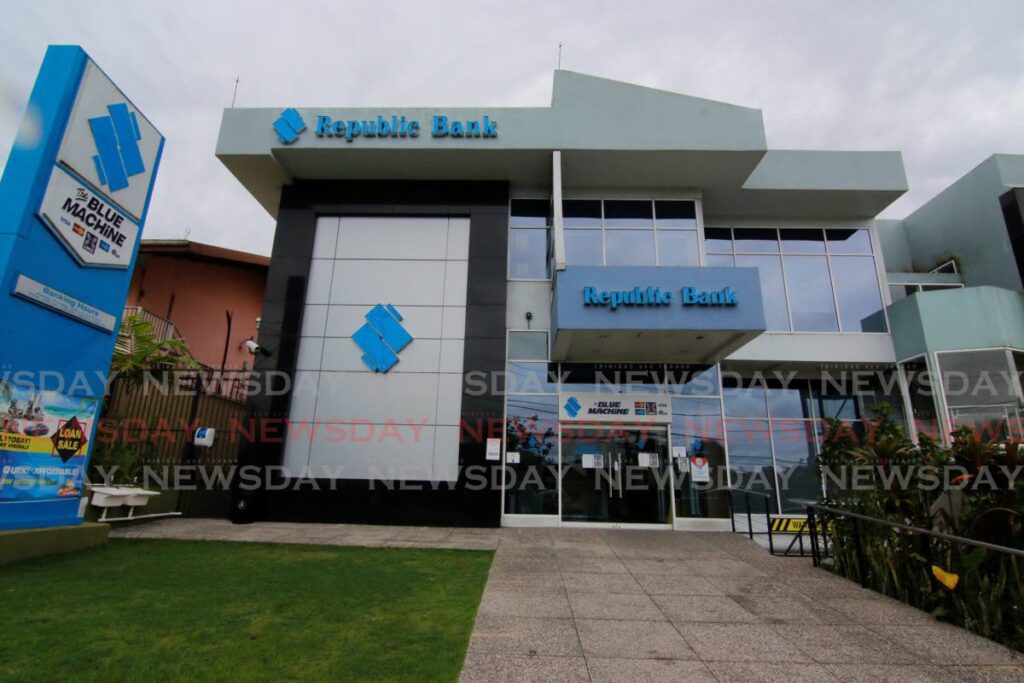
    In a significant move consolidating state influence over Trinidad and Tobago’s financial sector, Republic Financial Holdings Ltd has undergone a comprehensive board reconstitution effective December 15. The appointment of Yashmid Karamath as chairman this week finalizes the government’s pledge to assert stronger control over the nation’s most extensive banking network, casting doubt on prospects for banking liberalization.

    The leadership transition follows the retirement of former chairman Vincent Perreira, 70, who steered the institution through a period of remarkable financial growth despite customer service complaints. Under Perreira’s tenure from 2020 onward, post-tax profits demonstrated consistent growth: from $1.3 billion in 2021 to $2.2 billion in 2025, while total assets expanded from $109.2 billion to $127.1 billion. This financial performance occurred against the backdrop of pandemic-related economic challenges, though service quality concerns persisted among account holders.

    Karamath assumes leadership amidst broader board restructuring triggered by the untimely passing of director Mark Loquan and resignations of Waltnel Sosa and Shameer Mohammed. The newly configured board features several government-backed appointments including Timothy Affonso (public international law expert), Nalini Bansee (legal practitioner), Rhion Karim (security and counter-terrorism specialist), Patricia Mohammed (gender scholar with economics training), Sandra Sookram (economist), and Gregory Armorer (civil attorney). This directorate is mandated to serve a three-year term.

    This governance shift aligns with Finance Minister Davendranath Tancoo’s October budget commitment to install a majority director bloc at Republic Bank, echoing similar changes at First Citizens and EximBank. The administration has explicitly stated intentions to collaborate with these financial institutions and the National Insurance Board to fulfill public sector obligations.

    Ownership structure analysis reveals substantial government-linked entities hold dominant stakes: National Investment Fund (29.9%), National Insurance Board (18.8%), Trintrust Ltd (7%), and other state-connected holders. This ownership framework, originating from the 2008 Clico bailout, now appears permanently institutionalized under the current administration.

    While the new board establishes nominal government oversight with purported operational independence, industry observers express concern regarding this trend’s implications for privatization and competitive banking. The critical question remains whether heightened state involvement will ultimately benefit consumers who continue grappling with service deficiencies, elevated fees, unfavorable interest rates, and foreign exchange scarcity.

  • New EMA board gives approval to 2 EOG wells

    New EMA board gives approval to 2 EOG wells

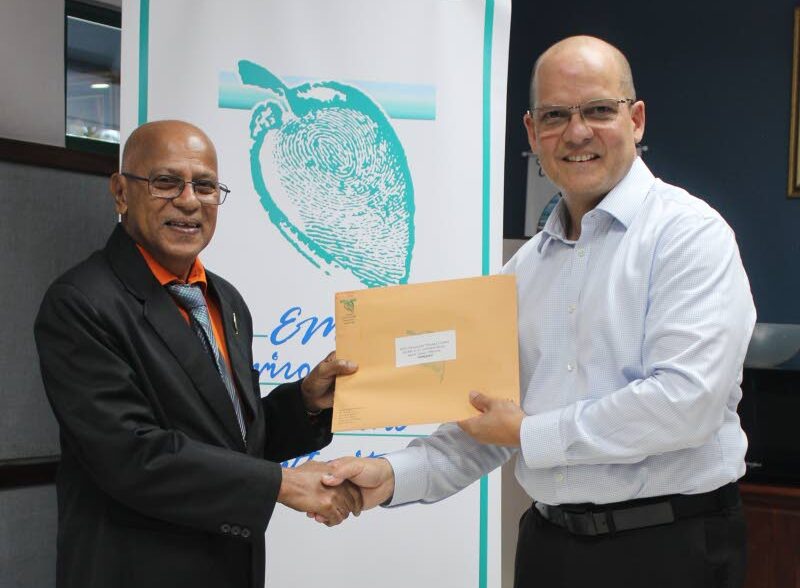
    In a significant development for Trinidad and Tobago’s energy sector, the Environmental Management Authority (EMA) has formally issued a Certificate of Environmental Clearance (CEC) to Houston-based EOG Resources for offshore gas exploration activities. The authorization permits the company to proceed with drilling operations at two designated gas wells, TG1 and TG2, situated within the NCMA 4(a) Unlimited Block off the nation’s North Coast.

    The approval marks the first CEC issued by the EMA under its newly appointed board of directors. Chairman Doolar Ramlal emphasized that the decision was rendered well within the statutory timeframe, highlighting the agency’s dedication to efficient, transparent, and timely regulatory processes. The application, initially submitted on March 5, underwent a comprehensive technical review. This rigorous assessment included advanced hydrocarbon spill modeling, drill cuttings dispersion analysis based on comparable offshore projects, and evaluation of a detailed emergency response plan for potential accidents and natural disasters.

    EOG Resources, which has maintained operations in Trinidad and Tobago since the 1990s, reaffirmed its long-term commitment to the country’s upstream energy sector. This sentiment was echoed during a November meeting between EOG Chairman Ezra Yacob and Energy Minister Dr. Roodal Moonilal. Both parties expressed mutual interest in strengthening collaboration to boost oil and gas production, advance the nation’s hydrocarbon development agenda, and support broader energy objectives. The UNC government acknowledged EOG’s consistent contributions to local production and emphasized its commitment to maintaining strong partnerships with industry stakeholders.

    The EMA’s approval demonstrates a balanced approach to facilitating energy development while upholding stringent environmental safeguards, aligning with the Prime Minister’s vision for sustainable national development.

  • Deepening trade relationships in Latin America

    Deepening trade relationships in Latin America

    In a significant development for Caribbean-Latin American economic relations, the Trinidad and Tobago Chamber of Industry and Commerce (TT Chamber) has established a formal trade partnership with Mexico’s Business Council for Foreign Trade, Investment and Technology (COMCE). The landmark memorandum of understanding was signed on October 30 during the 31st Mexican Foreign Trade Congress in Querétaro, facilitated by the Mexican Embassy in Trinidad and Tobago.

    This institutional framework creates a structured collaboration mechanism between the private sectors of both nations, focusing on sustainable growth, innovation, and regional economic integration. The agreement establishes concrete cooperation protocols for joint project development, information exchange, business missions, and mutual support in trade and investment promotion.

    The signing ceremony occurred within the context of a comprehensive TT trade mission to Mexico from October 25-31, led by TT Chamber president Sonji Pierre-Chase. During high-level working sessions, Pierre-Chase presented substantial collaboration opportunities to Mexican business leaders, emphasizing her organization’s role as Trinidad and Tobago’s primary economic representative and the largest business association within the Caribbean Community (Caricom).

    A particularly strategic dimension emerged through the TT Chamber’s participation in the COMCE Mesoamerican Foreign Trade Council, which convened public and private sector representatives across Central America and the Caribbean. Mexican Ambassador Víctor Hugo Morales highlighted Trinidad and Tobago’s crucial position within Caribbean markets and Mexico’s opportunity to diversify exports while integrating more deeply into regional value chains. The diplomat specifically noted TT’s potential role in maritime transport initiatives due to its extensive infrastructure and connectivity throughout the Eastern Caribbean.

    Pierre-Chase stated, ‘Our participation in COMCE provides significant leverage for TT businesses to explore opportunities beyond Caricom markets. Given how global politics directly impact trade, we consider it prudent to seek new market opportunities within the Pan Caribbean region. This engagement positions Trinidad and Tobago to potentially become the first English-speaking country invited to join Mesoamerica.’

    The Congress featured thematic panels on global logistics trends, disruptive trade strategies, corporate responsibility, and artificial intelligence’s impact on business management. The TT delegation actively engaged in the Made in Mexico with Quality B2B program, demonstrating strong interest in developing strategic supply chains and joint manufacturing partnerships.

    The mission included substantive meetings with Querétaro government officials to explore initiatives promoting trade, investment, and cultural-educational exchanges. Business representatives Sarah Gangadeen and Clint Groves of Firestone Bread Co Ltd conducted successful negotiations with San Luis Potosí officials and local producers, establishing food sector procurement agreements and arranging acquisition of additional industrial baking equipment with Mexican embassy support.

    Flavio González, the embassy’s head of trade and cooperation, outlined Mexico’s trade promotion strategies in TT while highlighting opportunities to strengthen regional presence and engage Caribbean partners for internationalizing the ‘Plan Mexico’ initiative.

    The trade mission successfully enhanced bilateral economic cooperation, established new business collaboration channels, and positioned both nations as dynamic, reliable partners in the region. The TT Chamber reaffirmed its commitment to advancing regional economic growth through continued engagement with business chambers, relevant organizations, and governments.