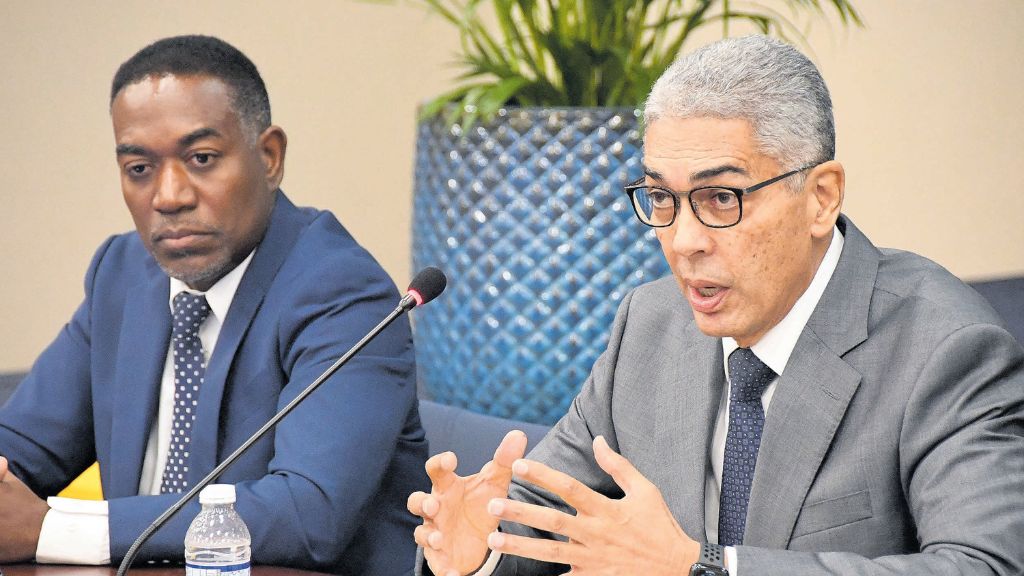
Renowned economist Jeremy Stephen has called on the private sector to abandon its risk-averse mindset and embrace bolder investments, emphasizing that over-reliance on government spending is hampering economic growth and perpetuating unsustainable public debt levels. Speaking in response to the Latin American Economic Outlook 2025 report by the Organisation for Economic Co-operation and Development (OECD), Stephen highlighted the urgent need for governments to prioritize mobilizing private investment and move away from ineffective tax incentives. He stressed that innovative financing mechanisms, such as green bonds, could play a pivotal role in attracting both local and foreign investors. Stephen argued that excessive dependence on government initiatives fosters complacency, stifling the economy’s potential. He pointed to Barbados’ weak private sector participation as a key factor behind its unsustainable debt, urging businesses to take calculated risks despite the challenging environment. The OECD report underscores Barbados’ heavy reliance on tourism, which leaves the economy vulnerable to external shocks and limits inclusive growth. It advocates for diversification into sectors like creative industries, renewable energy, and digital services to build resilience. Stephen also criticized the lack of private initiatives in exploring new tourism markets, citing the absence of self-funded roadshows to regions like China and the Middle East. He emphasized the need for a stronger enabling environment to encourage risk-taking and innovation. The report recommends a comprehensive strategy to mobilize private investment, reduce government dependency, and improve fiscal space. Stephen concluded that redefining the public-private partnership model is essential for reducing Barbados’ debt and securing sustainable growth.
分类: business
-

Dominican Republic records US$692.5 million in Cocoa exports for 2024–2025 season
The Dominican Republic has marked a historic milestone in its cocoa industry, achieving record-breaking exports during the 2024–2025 harvest year. A total of 77,453.6 metric tons of cocoa, valued at $692.5 million, were exported, representing a 25% increase in volume and a significant 63.8% rise in revenue compared to the previous year’s figures of 61,877.11 metric tons worth $422.8 million. This surge added an impressive $269.7 million to the nation’s export earnings.
-

TDC Hosts 52nd Annual General Meeting: Building Dreams and Securing Futures
The St. Kitts Nevis Anguilla Trading and Development Company Limited (TDC) marked a historic milestone during its 52nd Annual General Meeting (AGM), held on November 5, 2025, at the St. Kitts Marriott Resort. Under the theme ‘Building Dreams, Securing Futures,’ the event highlighted the company’s exceptional financial performance and strategic achievements for the fiscal year ending March 31, 2025. Chairman and CEO Earle Kelly opened the meeting by thanking shareholders for their steadfast support, emphasizing their critical role in TDC’s success. CFO Maritza Bowry presented a detailed financial analysis, revealing record-breaking revenue and profitability. The company achieved its highest-ever Profit Before Tax from Continuing Operations at EC$18.675 million, a significant increase from the previous year’s EC$15.763 million. Over its 51-year history, TDC has distributed EC$78.8 million in dividends, including EC$4.68 million for the latest fiscal year. The AGM also addressed upcoming leadership changes, with Mr. Wendell Lawrence set to become Chairman and Mr. Nicolas Menon appointed as CEO following Mr. Kelly’s retirement on January 31, 2026. The event concluded with heartfelt tributes to Mr. Kelly for his decades of leadership, culminating in the presentation of a commemorative plaque honoring his contributions to TDC’s growth and success.
-

Policy Forum Guyana maintains GYEITI’s civil society convenor in conflict of interest
Policy Forum Guyana (PFG) has raised significant concerns over the appointment of Dr. Ivor English as the civil society convenor for the Guyana Extractive Industries Transparency Initiative’s Multi-Stakeholder Group (MSG), citing a potential conflict of interest due to his extensive ties to the mining sector. Despite assurances from Natural Resources Minister Vickram Bharrat that Dr. English is not in a conflict of interest, PFG maintains that his involvement in mining concessions undermines the impartiality and governance of the role. Dr. English was granted gold-mining concessions totaling 19,586 acres in 2014, later subdivided into 17 permits, 13 of which were medium-scale mining permits. While Minister Bharrat stated that Dr. English is no longer active in gold or sand mining, Dr. English himself hinted at potential future mining activities. PFG criticized the Minister’s justification for the appointment, which emphasized Dr. English’s religious affiliation rather than addressing his mining interests. The organization also highlighted that this appointment marks the second attempt by Minister Bharrat to allegedly control civic appointments within GYEITI through opaque procedures. Earlier this year, the Minister appointed the Chair of the Private Sector Commission, a decision later reversed following intervention from the EITI International Secretariat. PFG emphasized the importance of transparent and impartial selection processes, particularly in a fragile democracy, and called for full civic engagement in the upcoming MSG meeting at the Marriott Hotel to uphold transparency and accountability in Guyana’s extractive industries.
-

Public servants promotions to be “tied” to successful training, NIS, public service records to be digitised
In a significant move to modernize its public sector, Guyana has announced that promotions for public servants will now be contingent upon the successful completion of free courses offered through the newly launched Public Service Upskilling Platform. This initiative is part of a broader government effort to digitize operations, including the National Insurance Scheme (NIS) records and the entire public service system. Minister of Public Service and Government Efficiency, Zulfikar Ally, emphasized that these certifications will serve as crucial markers for professional development and career advancement. ‘These certifications can and will be tied to your professional development, your advancement, and your promotions within the public service,’ Ally stated during the platform’s launch. The courses, provided via the U.S.-based global online learning platform Coursera, will offer certificates that act as proof of new skills and ‘tickets’ for career progression. President Irfaan Ali has set ambitious deadlines for the digitization of NIS records within eight months and the public service’s human resource information system within five months. Ali highlighted that these digital transformations aim to enhance efficiency, productivity, and competitiveness by reducing transaction times and costs. Furthermore, the President envisions a ‘palm-driven service delivery’ system, enabling government officials to work remotely and deliver services directly to citizens via mobile devices. Ali also mandated that farmers gain access to a digital tool within four months, providing them with real-time field information, weather updates, and agricultural extension services. The Centre of Excellence in Agriculture is expected to be fully integrated into this digital framework. These initiatives collectively aim to propel Guyana ahead of its competitors by leveraging technology to streamline government operations and empower its workforce.
-

David Collado: Dominican Republic least affected by U.S. flight cancellations
In a recent press briefing during *La Semanal con la Prensa*, Dominican Republic’s Tourism Minister David Collado revealed that the country has emerged as the least affected in the Caribbean region by the recent wave of U.S. flight cancellations triggered by the federal government shutdown. Collado acknowledged the indirect impact on tourism but highlighted the sector’s resilience, with November welcoming 213,000 tourists—a 7% year-on-year increase. The U.S., which accounts for over half of the Dominican Republic’s tourism, remains its primary source market. Despite the grounding of more than 1,000 flights due to the political impasse in Washington, the country’s tourism industry has outperformed its regional counterparts. Collado cited feedback from investors in neighboring nations, who confirmed that the Dominican Republic experienced the least disruption in tourism flows. The U.S. travel crisis, stemming from the partial government shutdown, has left thousands of federal employees, including air traffic controllers, unpaid, leading to widespread flight cancellations and delays. The situation is expected to worsen if Congress fails to resolve the shutdown promptly.
-

Dominican Republic tops Latin American investment rankings in FIU report
Miami, FL – The Dominican Republic has been crowned the leading investment destination in Latin America, according to the 2025 Latin America Country Risk Index and Analysis by Florida International University’s (FIU) Adam Smith Center for Economic Freedom. The report reveals that 76% of experts endorse investing in the country, significantly outpacing Paraguay (66%) and Argentina (63%). The Dominican Republic’s governance, institutional strength, and appeal to foreign investors have earned it recognition as one of the region’s most stable, credible, and low-risk nations. Amidst a backdrop of political polarization, economic volatility, and rising insecurity across Latin America, the Dominican Republic stands out for its democratic stability, reliable institutions, and robust business environment. FIU attributes this success to the nation’s consistent macroeconomic policies, fiscal discipline, and investor confidence. Additionally, the country has capitalized on global economic trends like nearshoring and friendshoring, further solidifying its position as a secure and predictable destination for strategic industries. The report also highlights the Dominican Republic’s lower social and security risks compared to the regional average, bolstered by strong foreign relations and a cooperative foreign policy. Its strategic alliance with the United States has further enhanced external stability. The government has welcomed FIU’s findings, viewing them as a testament to its ongoing efforts to modernize, promote transparency, and enhance competitiveness. The administration has reaffirmed its commitment to sustaining economic growth and solidifying the country’s reputation as one of Latin America’s most trustworthy and dynamic investment hubs.