分类: business

  • NCBJ says it has won multiple international banking awards

    NCBJ says it has won multiple international banking awards

    KINGSTON, Jamaica — Jamaica’s largest financial institution, National Commercial Bank Jamaica Limited (NCBJ), has capped off a standout year of operational performance by collecting a suite of prestigious international banking awards from four of the sector’s most respected global organizations: The Banker, Global Finance Magazine, JP Morgan, and Capital Finance International. The announcement of the recognitions was made public by the bank in a press statement issued this Friday.

    Among the most notable accolades, The Banker, a leading global financial publication, placed NCBJ at the top spot among all Jamaican banks across five critical performance metrics: overall profitability, operational efficiency, risk-adjusted returns, liquidity position, and aggregate banking sector performance.

    Global Finance Magazine, another influential voice in international finance, extended NCBJ’s long-running winning streak with three separate 2026 honors: the title of Best Bank in Jamaica, Best FX Bank in Jamaica for the eighth consecutive year, and Best Trade Finance Provider in Jamaica for 2026. The bank also earned JP Morgan’s Elite Quality Recognition Award 2026, an honor reserved for financial institutions that achieve exceptional straight-through processing rates — a key metric that measures the share of automated payment transactions processed without requiring manual intervention, a key marker of operational efficiency.

    Across all the recognitions, judges highlighted NCBJ’s strengths across core business areas: reliable access to foreign exchange, robust support for cross-border trade, consistent service reliability, and customer-centric service delivery. In particular, the eighth consecutive Best FX Bank win underscores the bank’s leading position in foreign exchange liquidity management, digital transaction execution, and customized structured FX solutions. NCBJ reported that its total annual foreign exchange activity across major global currencies reached $8 billion this year, a figure that reflects its market dominance in the segment.

    Regional industry publication Capital Finance International further recognized NCBJ’s expanding influence across the Caribbean, naming it the 2026 Trusted Partner in Retail and Corporate Finance Leadership for the Caribbean region. The award acknowledges the bank’s long-standing work supporting both individual retail clients and large corporate entities across multiple Caribbean markets.

    Speaking on the recognitions, NCBJ Interim Chief Executive Officer Sheree Martin framed the awards as a validation of the bank’s multi-year strategic transformation agenda. “These awards carry special weight because they are independently assessed, and they are rooted in measurable performance, operational discipline, and real impact for our customers and communities,” Martin explained. “They are a testament to the trust that our customers have placed in our institution, the incredible strength and dedication of our team, and our unwavering focus on building a bank that delivers consistent, high-quality results for all stakeholders.”

    Martin emphasized that NCBJ remains committed to its core mission of building a stronger, more financially resilient institution to serve Jamaica and the broader Caribbean region. “At a moment when global benchmarking and independent validation of performance matter more than ever, our recognition on this global stage proves that a Jamaican financial institution can compete, outperform, and earn top honors alongside the world’s leading banks,” she added.

  • Jamaican property sales near $100 billion in 2025, says RAJ

    Jamaican property sales near $100 billion in 2025, says RAJ

    KINGSTON, Jamaica — Fresh data compiled by the Realtors Association of Jamaica (RAJ) through its industry-leading Multiple Listing Service (MLS) has painted a surprisingly resilient picture of the country’s real estate sector, showing the market generated a staggering J$99.3 billion in total property sales across 2025. This robust performance comes even after the widespread economic disruption caused by Hurricane Melissa, defying broader expectations of a slowdown across the sector.

    Analysis of the aggregated MLS data shows that three parishes — St Andrew, St Ann and St Catherine — accounted for the overwhelming majority of total 2025 sales activity, with growth driven by two complementary forces: strong urban residential demand and sustained tourism-linked investment. The results cement real estate’s long-standing role as a core pillar of Jamaica’s national economic growth.

    Roger Allen, RAJ Second Vice-President and chair of the MLS Committee, outlined the dual-market dynamic shaping current industry trends. “On one hand, we have high-volume urban markets serving local homebuyers and commercial users, and on the other, high-value, tourism-focused parishes that deliver strong returns even with far fewer total transactions,” Allen explained.

    Breaking down 2025 parish-by-parish performance, St Andrew claimed the top spot nationally, pulling in J$41.17 billion across 1,727 recorded transactions — leading the country in both total revenue and transaction volume. St Ann followed closely behind with J$27.36 billion in sales, with growth propelled entirely by surging tourism-related investment in vacation properties and resort-adjacent developments. St Catherine generated J$11.71 billion across 700 transactions, a figure that reflects the parish’s ongoing large-scale residential expansion to meet growing demand from urban commuters.

    Westmoreland posted J$6.86 billion in total sales from just 52 high-value transactions, signaling that most activity in the parish centers on large luxury resort and vacation home developments. St Mary recorded J$3.40 billion in sales, reflecting growing investor confidence in the area’s long-term tourism potential, while Manchester hit J$2.36 billion supported by steady, consistent residential activity. St Thomas was the weakest-performing parish in 2025, recording just J$96.2 million in MLS-tracked sales.

    A key trend highlighted by the data is that while most parishes recorded fewer total transactions in 2025 compared to 2024, multiple parishes delivered higher total annual revenues — a clear indicator that property values are rising rapidly across Jamaica’s key high-demand markets. Among the parishes that saw higher revenues in 2025 despite lower transaction volumes were St Catherine, Westmoreland, St Ann and St Mary. Even St Andrew, which retained its national lead, recorded a small year-over-year decline in both transaction volume and total revenue compared to 2024 figures.

    “St Andrew’s dominance in the market is not surprising, but the scale of its lead over other parishes remains significant,” Allen noted. “The Corporate Area continues to act as the undisputed engine of Jamaican real estate activity. The bigger question moving forward is how we can unlock sustained, inclusive growth across other parishes that have not seen the same level of activity.”

    The 2025 MLS data also reinforces a long-observed connection between public infrastructure investment and property value appreciation across the island. “Highway expansion and targeted urban development projects consistently lift surrounding land values and accelerate both residential and commercial growth,” Allen explained. Areas that have recently benefited from upgraded road networks, expanded public utilities, new schools and hospitals, and increased commercial development — including Kingston, St Andrew, St Catherine, St James and sections of Clarendon — continue to draw strong buyer interest and steady investment inflows.

    Beyond property sales, the Jamaican rental market also posted solid gains in 2025, generating J$772 million in tracked rental revenue between January and December. St Andrew, St Catherine and St Ann led all parishes in total annual rental revenue, while Westmoreland recorded the fastest growth rate in the rental segment. This trend underscores rising demand for short-term vacation rentals and long-term second home rentals in popular resort regions across the island.

    It is important to note that the MLS figures are compiled from voluntary transaction reports submitted by roughly 2,000 registered realtors operating across Jamaica. The current dataset does not include direct sales from property developers or private transactions that are not processed through the MLS system.

    Allen emphasized that the granular MLS data serves a much broader purpose than just tracking industry performance, providing critical insights for national economic planning. “Our MLS platform delivers real-time visibility into pricing trends, shifting buyer demand, persistent inventory shortages and changing transaction patterns across the country,” he said. “This information is critical for identifying underserved housing markets, persistent affordability gaps, and the infrastructure investments that will deliver the greatest long-term economic return.”

    According to Allen, these insights can be leveraged to shape more effective national housing strategies and unlock targeted growth in parishes that have historically been underrepresented in national real estate activity.

  • Government Raises Fuel Prices by Between RD$3.00 and RD$6.00

    Government Raises Fuel Prices by Between RD$3.00 and RD$6.00

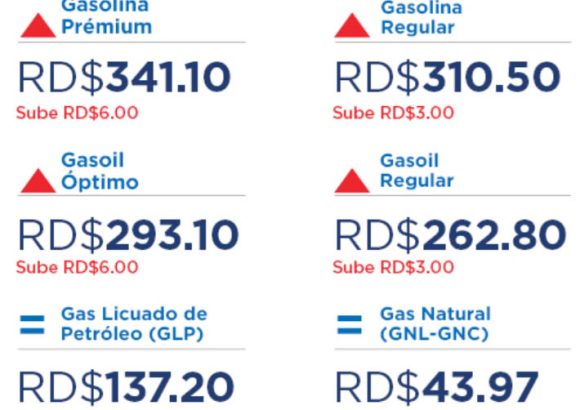
    On Friday, authorities in the Dominican Republic implemented a new round of fuel price adjustments that will take effect across the country from June 13 through June 19, official data from the nation’s Ministry of Industry, Commerce and MSMEs (MICM) confirms. The regulatory body confirmed modest to moderate price increases for the country’s most widely used transportation and industrial fuels, with hikes ranging between 3 Dominican pesos (RD$3.00) and RD$6.00 per gallon, depending on the fuel grade.

    For the country’s most popular gasoline categories, premium-grade gasoline will see the largest adjustment, jumping RD$6.00 per gallon to reach a new retail price of RD$341.10. Standard regular gasoline will see a smaller RD$3.00 increase, bringing the new weekly price to RD$313.50 per gallon.

    Diesel, a critical fuel for the Dominican Republic’s freight, logistics and agricultural sectors, will follow a similar pattern to gasoline. Higher-grade premium diesel will match the premium gasoline increase of RD$6.00 per gallon, settling at a new retail rate of RD$293.10, while regular diesel will see a RD$3.00 uptick to RD$262.80 per gallon.

    In a move that will provide relief to household budgets, the government opted to leave the prices of two commonly used residential energy sources unchanged. Liquefied petroleum gas (LPG), a primary fuel for cooking and home heating across much of the country, will remain stable at RD$137.20 per gallon. Natural gas, used for both residential and commercial energy needs, will also hold steady at RD$43.97 per cubic meter for the upcoming week.

    Weekly fuel price adjustments are a standard regulatory practice in the Dominican Republic, allowing the government to align domestic retail prices with shifting global crude oil markets and transportation costs.

  • Main Event loss widens as revenue falls across key business lines

    Main Event loss widens as revenue falls across key business lines

    KINGSTON, Jamaica — Main Event Entertainment Group Limited (MEEG), a leading Jamaican entertainment and promotions firm, has reported a deepening net loss for its second fiscal quarter, as broad-based revenue declines driven by extreme weather, shifting consumer behavior and competitive market shifts outpaced the company’s aggressive cost-cutting initiatives.

    Newly released financial results for the quarter ending April 30, 2026 reveal that the company’s net loss ballooned to $45.5 million, a nearly five-fold increase from the $9.3 million loss recorded in the same quarter last year. Revenue across the business dropped 15% year-over-year, falling from $306.4 million to $261.3 million, while gross profit contracted 19% to $134 million.

    When extended to the first half of the 2026 fiscal year, the financial downturn is even more pronounced. Half-year revenue plummeted 47% from $891.4 million last year to just $472.8 million this cycle, reversing a $64.3 million net profit from the prior period into a $111.1 million net loss. This poor performance reflects challenges across nearly all of the company’s core business segments: declines were recorded in entertainment and promotions, audio production, film, multimedia, and its M Style division. The only outlier was the company’s digital signage segment, which posted a robust 22% year-over-year revenue growth amid rising demand for digital out-of-home advertising.

    Company officials outlined a confluence of headwinds that have pressured operations in recent months. The Jamaican entertainment and events sector has become far more competitive, with many large event and production contracts being redirected to other players. Meanwhile, consumers pulling back on discretionary spending has led to a sharp rise in event postponements and cancellations, creating further revenue volatility.

    Broader macroeconomic and environmental shocks have compounded these sector-specific challenges. Jamaica’s national economy continues to absorb aftershocks from Hurricane Melissa, while elevated global energy costs and ongoing uncertainty tied to geopolitical tensions and volatile commodity prices have further squeezed business margins.

    In response to mounting losses, Main Event has implemented a series of cost-control measures, including terminating underperforming property leases, restructuring its workforce, and tightening spending on utilities and general overhead. Despite these efforts, quarterly operating expenses still rose 5% year-over-year to $196.9 million, widening the quarterly operating loss to $59.3 million from just $8.3 million a year earlier. For the first half of the fiscal year, operating expenses remained broadly flat at $406.6 million, but the sharp revenue drop pushed the company from a $79.2 million operating profit last year to a $136.2 million operating loss this cycle.

    One positive note in the report is that the company fully repaid its outstanding long-term loan during the second quarter, eliminating all associated recurring interest costs moving forward. However, overall balance sheet metrics still declined: total assets fell 14% year-over-year to $1.05 billion as of April 30, 2026, down from $1.22 billion a year prior. Shareholders’ equity dropped 19% to $766.2 million from $946.8 million, a change driven primarily by accumulated losses reflected in retained earnings.

    Filings with the Jamaica Central Securities Depository (JCSD) confirm that MEEG Holdings Limited remains the company’s majority controlling shareholder, holding 205.5 million shares equal to a 68.5% ownership stake. Mayberry Jamaican Equities Limited holds an 11.24% stake, while Supreme Ventures Limited controls 10% of issued shares. Combined, the top 10 shareholders hold 94.5% of all outstanding issued shares, reflecting concentrated ownership of the Jamaican entertainment firm.

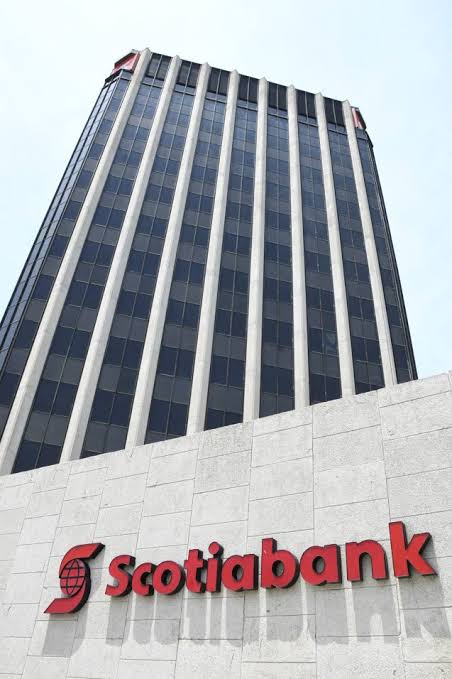
  • Scotiabank moves to take Scotia Group Jamaica private

    Scotiabank moves to take Scotia Group Jamaica private

    KINGSTON, Jamaica — Scotiabank Caribbean Holdings Limited, the majority stakeholder of Scotia Group Jamaica Limited (SGJL), has unveiled a definitive plan to take the Jamaican financial group private via a full cash buyout of all outstanding minority shares, marking one of the most notable regional financial transactions in recent years.

    As confirmed in SGJL’s official announcement released Friday, the parent firm already holds a controlling 71.78 per cent stake in the Jamaican subsidiary. Under the terms of the binding arrangement agreement, Scotiabank Caribbean will acquire every remaining SGJL share that it does not currently own at a price of $61.50 per share in cash. The proposed deal carries a 13 per cent premium to the 30-day volume-weighted average trading price of SGJL shares on the Jamaica Stock Exchange, calculated up to June 11 — the final trading session ahead of the public announcement.

    Several regulatory and procedural hurdles must be cleared before the transaction can be completed. These include formal approval from the Supreme Court of Jamaica, a majority vote in favor from minority shareholders who attend and cast ballots at planned shareholder meetings, and support from at least 75 per cent of voting minority shareholders by share value. The transaction will proceed through a court-sanctioned Scheme of Arrangement under Jamaica’s Companies Act, a standard structure for public-to-private conversions in the jurisdiction.

    Leadership across the Scotiabank group emphasized that the move aligns with the bank’s long-term strategic priorities for the Caribbean region. “With a legacy of nearly 137 years in Jamaica, this transaction reflects our ongoing commitment to our operations in the country,” stated Francisco Aristeguieta, group head of international and global transaction banking at Scotiabania. Jabar Singh, Scotiabank’s president for the Dominican Republic and the Caribbean, added that Jamaica and the broader Caribbean region remain core to Scotiabank’s global growth strategy.

    SGJL President and Chief Executive Officer Audrey Tugwell Henry noted that taking the firm private will unlock operational and strategic benefits for the business. The transaction is designed to boost both capital and operational efficiency, allowing the bank’s leadership to adapt more rapidly to emerging market opportunities while sharpening focus on long-term value creation and expansion of core banking services. SGJL also confirmed that completion of the deal will not result in material changes to the group’s ongoing day-to-day operations.

    The deal has already secured formal backing from SGJL’s board of directors, following a review by an independent committee of disinterested directors, with all board members facing conflicts of interest recusing themselves from the process. Independent financial adviser Ernst & Young Services Limited was engaged to conduct a third-party valuation of the offer and issued a formal opinion confirming the deal’s fairness to minority shareholders.

    Shareholder meetings to vote on the proposal are scheduled to take place in the coming months. If all approvals are secured, the transaction is on track to close in the fourth quarter of 2026. To accommodate diverse shareholder needs, minority investors will have the choice to receive their payout in either Jamaican dollars or U.S. dollars, with the U.S. dollar conversion calculated based on the Bank of Jamaica’s weighted average selling rate three working days prior to final settlement.

    As of the most recent reporting date of October 31, 2025, SGJL reported total assets of $774 billion. Scotiabank’s presence in Jamaica dates back to 1889, and the bank currently employs approximately 1,800 people across 28 local branches, making it one of the largest established financial institutions operating in the country.

  • From Deed to Key’ makes successful South Florida debut

    From Deed to Key’ makes successful South Florida debut

    South Florida recently played host to the first-ever From Deed to Key Investment and Housing Conference, a gathering centered on unlocking property and wealth opportunities in Jamaica that has been declared an unqualified success by its leadership.

    Built around the rallying theme “Invest in Your Piece of Di Rock”, the one-day event pulled together a cross-section of stakeholders: seasoned industry specialists, active investors, local professionals, and a large contingent of members of the Jamaican diaspora based in the United States. Attendees packed the venue, participating actively in panel discussions and breakout sessions that covered everything from navigating land purchase processes to developing long-term wealth through Jamaican real estate.

    Event founder and lead organizer Maxine Miller shared that the level of turnout and audience engagement far outpaced the team’s pre-event projections. “We intentionally curated the right group of stakeholders in the room,” Miller explained in a post-event statement. “We brought together a delegation of accomplished entrepreneurs and industry leaders who share our core vision for this conference, each with hands-on experience in their sectors relevant to Jamaican property investment.”

    The speaker lineup featured a diverse range of subject-matter experts, including real estate attorneys, land surveyors, civil engineers, renewable energy consultants, and financing specialists, alongside key diplomatic and local government figures such as Jamaica’s Consul General Oliver Mair and Miramar Vice Mayor and Commissioner Carson Edwards. Speaking during the event, experts emphasized that post-Hurricane Melissa recovery has created a unique window for transformative investment, framing the current moment as an opportunity to reset development frameworks, rebuild resilient communities, and drive renewed investment across Jamaica’s property sector.

    From its inception, the conference set clear core goals: to deliver actionable, practical guidance for Jamaicans both on the island and in the diaspora looking to navigate the full journey from acquiring land to securing homeownership. The event addressed a long-unmet need for diaspora communities, providing a structured platform for open dialogue on the most pressing barriers they face. These included regularizing title for long-held family lands, resolving disputes over inherited property, unlocking value from underused or idle real estate assets, and demystifying the regulatory and financial processes for investing in and developing property in Jamaica.

    The overwhelming success of the South Florida debut has already generated significant momentum for future editions, with inquiries flooding in from other major diaspora hubs across the United States. Miller confirmed that Jamaican community groups in Atlanta and New York have formally requested to host upcoming iterations of the conference, signaling strong unmet demand across the diaspora.

    “The level of interest we’ve received from Atlanta and New York has been incredibly encouraging,” Miller noted. “This response confirms what our team suspected: there is a clear, widespread appetite within the global Jamaican diaspora for credible, accurate information, practical solutions to common barriers, and meaningful conversation about building generational wealth through investment in Jamaica.”

    Organizers expect to confirm the location and date for the next conference staging by mid-July, with plans to expand the event’s reach to serve more diaspora communities in the coming months.

  • Musk becomes world’s first trillionaire as SpaceX shares jump

    Musk becomes world’s first trillionaire as SpaceX shares jump

    On a historic Friday for global capital markets, shares of Elon Musk’s aerospace and technology conglomerate SpaceX surged more than 20% in their Nasdaq trading debut, capping the largest initial public offering in history and catapulting the polarizing entrepreneur to a new milestone: the world’s first trillionaire. The blockbuster offering raised more than $75 billion in its primary tranche, and industry analysts expect the successful launch to open the floodgates for a wave of high-profile public listings from leading artificial intelligence firms over the coming months. Weeks of frenzied investor enthusiasm around the company— which evolved from a niche rocket startup to a diversified conglomerate spanning satellite technology, aerospace, and artificial intelligence—built up to the landmark debut on the New York-based exchange. At a celebratory event held at SpaceX’s Starbase facility in Texas, surrounded by employees who were set to earn life-changing windfalls from the public listing, Musk doubled down on the company’s ambitious interplanetary mission. “SpaceX wants to be able to take you to the Moon, take you to Mars, and ultimately beyond,” Musk told the crowd. “I’m confident at this point that with the incredible team that we have here at SpaceX, that we will do that for you.” Hundreds of SpaceX employees and supporters gathered in New York to mark the occasion, with the company installing a glowing neon sign in iconic Times Square to celebrate the listing. Sarin Sio, a representative from financial firm Dovetail who attended the Nasdaq headquarters event, noted that Musk’s unapologetic pursuit of far-reaching, futuristic goals that no other major firm has dared to prioritize has captured widespread public and investor imagination. The night before trading opened, SpaceX filed with U.S. market regulators to price 555 million primary shares at $135 apiece, setting an opening valuation of just under $1.8 trillion for the company. But less than 60 minutes after trading kicked off, share prices jumped 23% to hit $166, pushing SpaceX’s total market capitalization to roughly $2 trillion. That valuation places the new public firm among the 10 most valuable companies in the United States, outranking established giants including Musk’s own electric vehicle firm Tesla, social media and tech conglomerate Meta, and retail behemoth Walmart. If underwriters exercise options to sell an additional 83 million shares, the total capital raised from the offering could climb above $86 billion. Founded by Musk alongside business partners in 2002 as a private rocket development startup, SpaceX has expanded dramatically over its 23-year history: it is now the world’s largest commercial satellite operator, and it recently absorbed Musk’s standalone artificial intelligence firm xAI, which also controls the social media platform X. Trading under the ticker symbol “SPCX,” the company’s public performance is being closely monitored by Wall Street observers, as its reception will set a benchmark for other major AI firms planning to go public before the end of the year. Two of SpaceX’s top AI rivals, OpenAI and Anthropic, have already submitted initial regulatory filings to prepare for their own public listings. Friday’s IPO comes a little more than 12 months after Musk stepped away from his role in former President Donald Trump’s administration, where he led the controversial “DOGE” initiative focused on cutting federal government spending. Even as he led that initiative, Musk continued to hold his CEO roles at both Tesla and SpaceX. In recent years, Musk has become one of the most divisive figures in global business: his open support for Trump and right-wing populist movements across Europe, paired with a long track record of incendiary commentary posted to his social platform X, has turned him from a widely celebrated tech innovator into a deeply polarizing public figure. Despite that controversy, the record-breaking IPO demonstrates that Musk retains overwhelming support from institutional and retail investors. Bloomberg reporting confirms the offering was more than four times oversubscribed, with particularly strong demand from individual retail investors, who were allocated 20% of the issued shares. The IPO is projected to create thousands of new millionaires and multiple new billionaires, with current and former SpaceX employees and early private investors poised to cash out portions of their long-held stakes after decades of private ownership. The company’s $2 trillion valuation relies heavily on Musk delivering on a slate of science fiction-level promises, including establishing human colonies on Mars, deploying orbiting data centers, and scaling its Starlink satellite internet service into a global mass-market offering—many of which rely on unproven technology that is still in early development. Much of SpaceX’s long-term valuation also hinges on the future success of xAI, the developer of the Grok AI chatbot that remains a distant third behind market leader OpenAI in user adoption and market share. To shore up its balance sheet and generate near-term revenue from its massive AI computing infrastructure, SpaceX has signed short-term deals worth billions of dollars to rent excess computing capacity to rivals Anthropic and Google. While SpaceX has experienced rapid revenue growth, hitting $18.7 billion in annual revenue in 2025, the firm still posted a net loss of $4.9 billion last year, driven largely by heavy capital spending on AI infrastructure and rocket development. In a bold forecast included in its IPO filing, SpaceX projects that its total annual revenue across all business lines could eventually exceed $28.5 trillion. The milestone of Musk becoming the world’s first trillionaire has drawn sharp criticism from progressive political leaders in the U.S. “The world will get its first trillionaire while Americans across the country are scraping together every dollar to save for retirement,” said Democratic Senator Elizabeth Warren in a statement reacting to the listing.

  • FOSRICH RACES TO FIX CASH CRUNCH AFTER DEEPER LOSS

    FOSRICH RACES TO FIX CASH CRUNCH AFTER DEEPER LOSS

    Jamaican electrical and lighting specialist FosRich Limited has launched an aggressive five-point turnaround strategy after posting a widened net loss in the opening quarter of its 2026 fiscal year, as the firm moves to rebuild profitability, shore up cash reserves, and lay the groundwork for long-term, sustainable growth.

    For the three-month period ending March 31, 2026, the company reported a net loss of $178.8 million, a sharp deterioration from the $68.6 million loss recorded in the same quarter a year earlier. Revenue also contracted dramatically, falling to $415.2 million from $852.9 million year-over-year. The decline has been tied to two key headwinds: underperformance in the company’s solar business segment and tight cash flow that restricted the firm’s ability to build and maintain adequate inventory levels.

    In an exclusive interview with Jamaica Observer this week, Managing Director Cecil Foster shared that the company has already made consistent, measurable progress on the initiatives laid out in its quarterly shareholder report, with the most critical components of the plan on track to be finalized by the end of July.

    The cornerstone of the recovery strategy is a sale-and-leaseback deal for a portfolio of the company’s owned real estate assets. While Foster declined to share specific details about which properties are included in the transaction, he confirmed that all proceeds from the sale will be allocated to paying off outstanding corporate debt and boosting the company’s working capital pool. “We hold assets that we can convert into liquidity to eliminate our entire debt load,” Foster explained. “By the end of next month, we expect to be completely debt-free and hold surplus cash to fund daily operations.” The company has confirmed it is partnering with financial stakeholders to execute the transaction, with funds explicitly earmarked for settling existing loans and restocking inventory.

    A second core pillar of the plan is the completion and launch of FosRich’s new commercial superstore, a project that has drawn widespread industry attention. Though an official grand opening is not scheduled until later in 2026, multiple commercial tenants have already signed binding lease agreements for space in the complex. The facility will operate as a multi-purpose commercial hub, generating steady passive rental income for FosRich while driving increased foot traffic to the company’s core retail operations.

    The third strategy focuses on overhauling inventory management, with leadership shifting the company’s focus exclusively to high-performing SKUs that deliver faster inventory turnover. “Our goal is to only stock products that move quickly off our shelves,” Foster noted.

    Fourth, the company is conducting a full review of administrative overhead to identify efficiency gains and cut unnecessary costs across the organization. “Every business can find redundant spending in administrative functions, and we’re examining every area of operations to keep costs tightly controlled,” Foster said. Key targets for cost reduction include energy use, supplier contract terms, transportation spending, and workforce optimization.

    The fifth and final pillar of the turnaround plan centers on vertical integration, achieved through expanded strategic partnerships with local property developers. The initiative aims to increase adoption of FosRich’s full product line across new residential and commercial construction projects nationwide, positioning the company as the preferred supplier for large-scale developments that require electrical goods, lighting systems, solar equipment, and related infrastructure. “Jamaica is seeing a massive wave of new development across the country, and we’re partnering with builders to supply nearly all the electrical and energy products these projects need,” Foster said. “We’ve already launched this push and have secured strong commitments from developers already.”

    Foster expressed steady confidence in the turnaround plan, noting that implementation is already well underway across multiple key priority areas. “We take every commitment we’ve made publicly very seriously, and we’re advancing work on every initiative we’ve outlined. We’re optimistic that we’re close to completing the most substantial parts of the plan,” he added.

    While the company’s high-growth solar division saw steep sales declines in the first quarter, Foster noted that shifting market conditions and more flexible credit terms from international suppliers have started to ease the challenges the segment faced earlier. “The situation is improving. Previously, our cash flow constraints prevented us from getting inventory to market on schedule, but that pressure is lifting now,” he said.

    Despite the rocky first quarter results, Foster remains bullish on FosRich’s long-term growth outlook, pointing to sustained strong demand across the company’s core markets and the expected liquidity improvements from the turnaround plan as key drivers of future performance. “Our immediate priority is stabilizing our cash position, and that’s exactly what we’re focused on delivering,” he said. “The overall market is larger today than it was one or two years ago, so once we have adequate inventory in stock, we’re confident we can get our products to waiting customers.”

    With cash flow projected to improve over the next six to eight weeks, Foster said the company will be able to rebuild inventory levels and better meet customer demand through its nationwide network of retail locations. Though he declined to give a specific timeline for when FosRich will return to profitability, he noted that management’s immediate focus remains on full execution of the turnaround plan to build a foundation for consistent, long-term earnings growth. “All of our initiatives are designed to return the company to surplus profitability over the next few quarters. We’re working hard to deliver that outcome,” he said.

  • Collado announces 15 additional cruise ships for June and July

    Collado announces 15 additional cruise ships for June and July

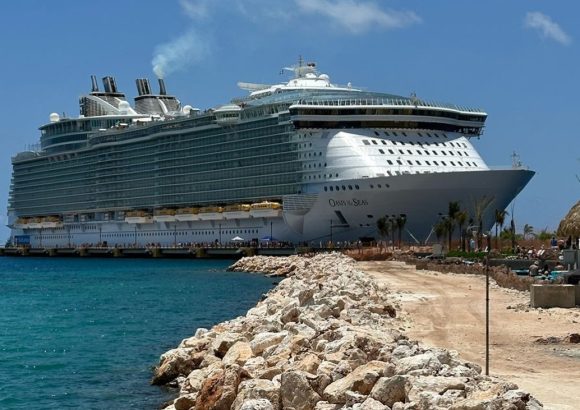
    The Caribbean tourism landscape has shifted noticeably following the launch of a new cruise terminal in the Bahamas, prompting major cruise lines to reallocate a portion of their regional vessel capacity to the new destination. Against this backdrop, the Dominican Republic has proactively responded to secure additional summer sailings, locking in 15 extra cruise ship arrivals for June and July to keep its booming tourism sector on a growth trajectory, Tourism Minister David Collado has announced.

    When the new Bahamian terminal opened, many major cruise operators opted to shift some of their existing Caribbean routes to the new facility, creating unanticipated headwinds for other regional destinations that rely heavily on cruise tourism revenue. Through targeted negotiations with one of the world’s largest cruise groups, Royal Caribbean, the Dominican Republic successfully mitigated this competitive impact. The agreement brings an estimated 48,000 additional cruise passengers to the country over the two-month period, guaranteeing solid positive results for the Dominican cruise sector this summer.

    A large proportion of these newly added cruise arrivals scheduled between June and August will dock at the Port of Cabo Rojo, located in the southwestern province of Pedernales. This arrangement directly advances the Dominican government’s long-term tourism development strategy, which prioritizes cultivating lesser-known emerging destinations and spreading the economic benefits of cruise tourism beyond the country’s crowded traditional tourism hubs. By directing more cruise traffic to underdeveloped ports, the government aims to drive local job creation, small business growth, and infrastructure investment in previously overlooked regions.

    Collado emphasized that the successful negotiation of additional sailings is a direct outcome of the government’s sustained efforts to preserve the Dominican Republic’s competitive edge in the crowded Caribbean cruise market. Over the past several years, the country has prioritized active global promotion and direct, ongoing engagement with leading international cruise operators as core pillars of its tourism policy. This international outreach strategy has not only attracted extra passenger volume but also drawn significant foreign tourism investment and unlocked new air and sea routes connecting the Dominican Republic to global source markets.

    Looking ahead, the Dominican Republic continues to post robust year-over-year growth in overall tourist arrivals and cruise passenger volumes, cementing its status as one of the top most popular cruise and leisure destinations across the Caribbean. Collado reaffirmed the government’s commitment to maintaining close collaboration with global cruise lines and industry partners to sustain consistent long-term growth, enhance visitor experiences, and further strengthen the country’s appeal in competitive international tourism markets.

  • US clears Paramount’s $111 bn Warner Bros takeover — reports

    US clears Paramount’s $111 bn Warner Bros takeover — reports

    LOS ANGELES – In a pivotal development for the global media and entertainment landscape, the U.S. Department of Justice has granted antitrust approval to Paramount Skydance’s $111 billion acquisition of Warner Bros. Discovery, multiple U.S. media outlets reported Friday.

    According to reporting from Politico and Bloomberg, federal antitrust regulators signed off on the transformative combination without requiring mandatory asset divestitures or other policy concessions, after concluding the merger would not substantially undermine market competition across the media and streaming sectors. The Department of Justice had not issued an immediate formal response to requests for comment as of Friday, but the outlets confirmed a public announcement from the agency was expected later the same day.

    If finalized, the deal will bring together Paramount’s global media portfolio with Warner Bros. Discovery’s lineup of flagship properties, including the 24-hour news network CNN, award-winning film studio Warner Bros. Pictures, and the major streaming platform HBO Max.

    Politico’s reporting notes that Paramount CEO David Ellison held at least two closed-door meetings with senior antitrust officials to advocate for the merger, framing the combination as a strategic move to boost competitive pressure against far larger rivals in the streaming and big tech spaces. Ellison’s argument centered on the idea that a merged entity would be better positioned to challenge the market dominance of leading global streaming platforms.

    Even with federal regulatory approval secured, the proposed merger still faces significant outstanding legal and regulatory headwinds on multiple fronts. Bloomberg reports that a coalition of roughly 10 U.S. states, led by California, is preparing to file an antitrust lawsuit challenging the deal as early as this month. This week, California Attorney General Rob Bonta’s office confirmed that the acquisition “remains an active investigation” for state regulators, leaving the path to finalization uncertain.

    Beyond U.S. domestic scrutiny, the European Commission has also launched its own independent review of the merger to assess compliance with European Union antitrust rules, adding another layer of regulatory uncertainty to the transaction.

    The race to acquire Warner Bros. Discovery and its decades-spanning, highly valuable content back catalog began last year, when a bidding war broke out between Paramount Skydance and global streaming giant Netflix. Industry observers note that many Hollywood insiders initially leaned toward a Netflix takeover, viewing it as the less disruptive of the two options. However, Paramount’s willingness to repeatedly raise its offer price eventually pushed Netflix to withdraw from the bidding process.

    The takeover has been largely financed by David Ellison’s father, Larry Ellison, co-founder of tech giant Oracle and a prominent political ally of former President Donald Trump. One of the wealthiest people in the world, Larry Ellison provided a substantial financial guarantee that ultimately convinced the Warner Bros. Discovery board of directors to accept Paramount’s offer over competing bids.

    Despite the progress toward closing, the merger has drawn fierce pushback from within the entertainment industry. Hundreds of working actors and directors have signed an open letter opposing the combination, arguing that the merger will reduce the number of independent content buyers, squeeze production budgets, and further strain an already challenging operating environment for creators in the sector.