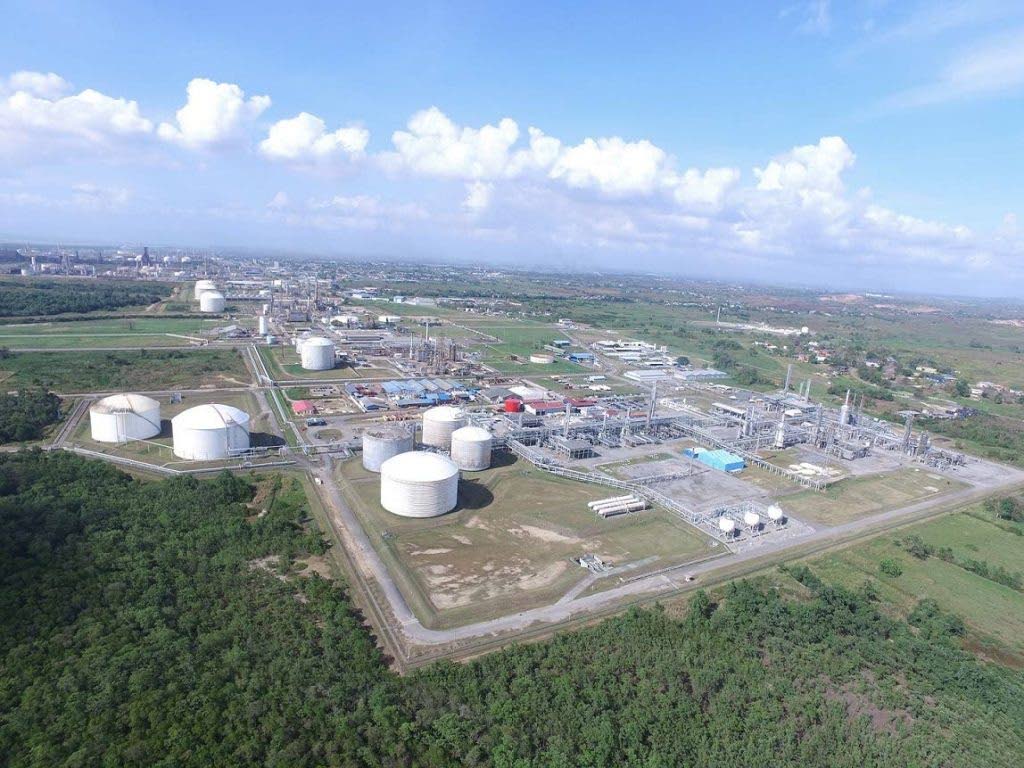
Suriname has officially unveiled its Open-Door Offering, a groundbreaking initiative designed to provide international oil and gas companies with flexible access to a significant portion of its offshore territory. Launched by Staatsolie on Monday, this strategic move aims to bolster Suriname’s standing in the Guiana Basin and attract investors to explore both shallow and deep-water blocks. Approximately 60% of the nation’s offshore area is now available for exploration, offering companies the opportunity to select their preferred blocks and submit tailored work programs. The initiative features attractive fiscal terms, low surface risks, and a stable, investment-friendly environment to enhance global interest. Companies can opt for Production Sharing Contracts or Joint Study Agreements for collaborative analysis. Selected areas will be publicly listed on the Open-Door Offering webpage, allowing competitors to submit rival proposals within a 90-day window. Concurrently, Staatsolie introduced the GeoPortal, an interactive platform providing comprehensive geological and geophysical data, available for lease at favorable rates. Additionally, the company released the GeoAtlas of Suriname, a detailed resource based on decades of data collection and analysis, offering a complete overview of the Guiana Basin’s geology and potential. The GeoAtlas is freely downloadable from Staatsolie’s website, further supporting exploration efforts.
分类: business
-

‘Passport can’t eat’
The Citizenship by Investment (CBI) programme, a transformative model of foreign direct investment, has become a cornerstone of economic growth across most Organisation of Eastern Caribbean States (OECS) nations. However, in St. Vincent and the Grenadines (SVG), this proven initiative is often overshadowed by political rhetoric, leaving citizens misinformed about its potential benefits. While neighbouring countries like St. Kitts and Nevis, Antigua and Barbuda, Grenada, Dominica, and St. Lucia have harnessed CBI to fuel their economies, SVG lags behind, missing out on decades of prosperity. CBI, also known as economic citizenship, allows individuals to obtain citizenship by investing significantly in the host country. Despite having a passport ranked similarly to its neighbours in global visa-free access, SVG continues to dismiss the programme entirely. The Eastern Caribbean Central Bank, through Governor Timothy Antoine’s proposed regulatory framework, has emphasized the importance of CBI to the region’s economic stability and advancement. Neighbouring islands have reaped tangible benefits from CBI, including modern infrastructure, luxury developments, and higher GDP per capita. For instance, St. Kitts and Nevis boasts well-maintained highways, double salary bonuses for public servants, and upscale hotels, all funded by CBI revenues. Similarly, Dominica is constructing a new international airport with CBI funding. These outcomes highlight the programme’s potential to uplift entire nations. As SVG reflects on its leadership and policy direction, it is crucial to move beyond outdated rhetoric and embrace innovative economic strategies. The nation deserves policies that elevate all citizens, ensuring a rising tide lifts every ship.
-

Sunrise Airways suspends all flights to Port-au-Prince
Sunrise Airways has announced the immediate suspension of all flights to and from Port-au-Prince, Haiti, due to escalating security concerns. The airline emphasized that this decision was made to ensure the safety of passengers, crew members, and operational staff. Flights will only resume once the security situation stabilizes and is deemed safe for operations. The company is actively monitoring the developments in collaboration with relevant authorities, reiterating that safety remains its utmost priority. Affected passengers will be contacted directly to discuss rebooking options, travel credits, or refunds in accordance with the airline’s policies. Sunrise Airways expressed gratitude for travelers’ patience and encouraged them to contact customer service for further assistance.
-

GDF acquires new helicopters
The Guyana Defence Force (GDF) has significantly bolstered its aviation capabilities with the acquisition of two state-of-the-art Bell helicopters, the Bell 429 Global Ranger and the Bell 407. Announced by Chief-of-Defence Staff Brigadier Omar Khan on Sunday, November 23, 2025, these helicopters are set to arrive in Guyana by mid-next week. Manufactured in 2025 by Bell Textron Inc., these aircraft represent a substantial investment, with the Bell 429 costing up to US$10.2 million and the Bell 407 priced at a maximum of US$3.2 million, according to online publications. The helicopters, currently bearing US registration markings, will soon be re-registered under the Guyana Civil Aviation Authority (GCAA). The Bell 429, a nine-seater with dual engines, is versatile, serving executive transport, air ambulance, and rapid public safety response roles. Similarly, the Bell 407 is equipped for public safety missions, including fire safety, crew transport, and emergency services. This acquisition follows a tragic incident in December 2023, when a Bell 412Epi helicopter crashed during a military mission, resulting in the loss of five lives, including veteran pilot Michael Charles. The government has yet to release the crash report, underscoring the importance of this new investment in enhancing the GDF’s operational safety and efficiency.
-

A showcase of opportunities offered by the Cuban economy
The 41st Havana International Fair (Fihav 2025), the premier trade event in the region, commenced today with a focus on advancing strategic sectors of Cuba’s economy and positioning the nation as a dependable hub for international business. This year’s edition transcends conventional trade discussions by emphasizing high-potential areas such as renewable energy, artificial intelligence (AI), and integration into global blocs like BRICS. Deputy Prime Minister and Minister of Foreign Trade and Investment, Oscar Pérez-Oliva Fraga, highlighted the fair’s broader mission at a recent press conference, stating, ‘Fihav 2025 is not just a platform for trade; it’s a showcase of Cuba’s economic opportunities, rooted in innovation, sustainability, and global collaboration.’ The event features five thematic exhibition zones, including the ‘Made in Cuba’ pavilion, which spotlights the export potential of local products, particularly from micro, small, and medium enterprises (MSMEs) and production hubs. Another key area, ‘Renewable Energy in Cuba,’ promotes the island’s energy transition through panels on sustainable investments. Additionally, the ‘Digital Transformation and AI’ section explores the application of cutting-edge technologies in management and production. A dedicated segment on ‘BRICS and Integration Mechanisms’ highlights cooperative projects within frameworks such as ALBA-TCP, the EAEU, and ALADI. The ‘Unique Cuba’ sector underscores tourism’s role in driving economic growth through service exports and productive chains. Despite challenges posed by the U.S. blockade and the aftermath of Hurricane Melissa, Fihav 2025 has drawn participation from 47 countries and the European Union, including strategic partners like Russia, China, Spain, Italy, Mexico, Venezuela, and Saudi Arabia. Key sectors represented include agribusiness, biotechnology, medical services, tourism, energy, and logistics. The fair also hosts the 8th Investment Forum, featuring updates on Cuba’s Portfolio of Opportunities, and the Caribbean Banking Forum.
-

Dominican Republic gains key insights from ACI-LAC visits to Singapore and Malaysia airports
The Dominican Republic’s Airport Department has garnered significant recognition for its active participation in the Airports Council International for Latin America and the Caribbean (ACI-LAC) annual study tour. The event, hosted at Singapore’s Changi Airport and Kuala Lumpur International Airport in Malaysia, provided a platform for global airport leaders to exchange strategic insights and foster collaboration. Rafael Echevarne, ACI-LAC director, underscored the tour’s importance, noting that it offers invaluable exposure to global trends, cutting-edge technologies, and operational best practices that can be adapted to the Latin American and Caribbean region. Víctor Pichardo, director of the Dominican Republic’s Airport Department, highlighted that the knowledge acquired is already being implemented to drive innovation and enhance efficiency across the country’s international and domestic terminals. This fourth edition of the study tour brought together airport representatives from various Latin American and Caribbean nations, enabling them to observe the advanced infrastructure, operational models, and management strategies of two of the world’s leading airports. The event not only strengthened regional cooperation but also contributed to ongoing modernization efforts in the aviation sector.
-

Suriname, Guyana in energy cooperation says outgoing Ambassador
Suriname and Guyana are deepening their collaboration across multiple sectors, particularly in energy, as highlighted by Suriname’s outgoing Ambassador to Guyana, Liselle Blankendal. Speaking at a reception marking Suriname’s 50th independence anniversary and 50 years of diplomatic relations with Guyana, Ambassador Blankendal emphasized the progress in joint efforts spanning oil and gas, renewable energy, and electricity interconnection. These initiatives aim to foster sustainable growth and resilience in both nations. The two countries are also exploring shared benefits from a natural gas field straddling their border, though differing production-sharing agreements remain a challenge. Looking ahead, Blankendal underscored the potential for leveraging natural and renewable resources to drive green innovation and inclusive prosperity. Beyond energy, bilateral trade has seen significant growth, and tourism cooperation has advanced with a memorandum of understanding signed in July 2025. This agreement paves the way for joint promotion, sustainable travel, and cultural exchanges, positioning Guyana and Suriname as a unique and unspoiled tourism destination. Guyana’s Prime Minister, Mark Phillips, praised the partnership as a model for regional integration, highlighting achievements in energy, infrastructure, trade, and security. As Blankendal concluded her diplomatic tenure, she expressed deep affection for Guyana, vowing to return and continue fostering ties. Her legacy includes co-founding the Suriname-Guyana Chamber of Commerce and her long-standing commitment to Rotary initiatives.
-

Bigger grants, bigger impact? UWP proposes $25 000 youth business grants
In Saint Lucia, a young entrepreneur’s journey from braiding hair at 15 to owning her own salon exemplifies the transformative power of small-scale grants. With a $5,000 grant from the Youth Economy Agency (YEA), she invested in essential equipment like a hydraulic chair and salon sink, expanding her services and renting out stations for additional income. Her story highlights the YEA’s mission to empower young entrepreneurs through financial support, training, and mentorship. Since its inception, the YEA has disbursed over 1,505 grants, trained 880 individuals, and injected an estimated $9.6 million into the economy. However, with a general election approaching, the United Workers Party (UWP) has pledged to increase start-up grants to $25,000, sparking a debate on the viability and impact of larger funding. UWP leader Allen Chastanet argues that smaller grants, like the YEA’s $3,000 to $5,000 offerings, are insufficient for meaningful business growth. He cites the party’s proposed “Youth SOS Plan” as a more impactful solution for youth-led ventures in agriculture, digital economy, hospitality, and creative sectors. Youth advocates, however, emphasize that the effectiveness of grants depends on alignment with the needs of the target demographic. Franz George, a youth development advocate and business consultant, notes that smaller grants can suffice for micro-enterprises with limited scaling ambitions, while larger grants may be necessary for ventures requiring significant capital. He stresses the importance of monitoring and evaluation to assess the long-term sustainability of grant programmes. As the YEA continues to support young entrepreneurs with its holistic approach, the upcoming election raises questions about the future of youth economic empowerment in Saint Lucia. Will larger grants drive greater impact, or is the key to success a tailored, needs-based approach? The answer may shape the island’s entrepreneurial landscape for years to come.