分类: business

  • Airlines warn new tax on air tickets will affect the country’s competitiveness

    Airlines warn new tax on air tickets will affect the country’s competitiveness

    As the Dominican government rolls out new policy measures to counteract global economic shocks driven by skyrocketing oil prices, strained supply chains and rising cargo transport costs, the nation’s leading airline industry body has publicly voiced significant concern over one key proposal: an extra $10 levy on all commercial airline tickets.

    The Dominican Association of Airlines (ADLA), which represents the country’s commercial aviation sector, has pushed for careful re-evaluation of the surcharge, warning that the additional cost could create far-reaching ripple effects that undermine three pillars of the Dominican economy: air connectivity, tourism and national competitiveness. In a formal statement shared by ADLA President Omar Chahín, the association acknowledged the government’s urgent need to stabilize macroeconomic conditions amid a turbulent global economic landscape, but stressed that raising air travel costs demands rigorous, targeted analysis of its potential downsides.

    “While we recognize the government’s work to shield the Dominican economy from this challenging international context, we cannot overlook that an additional tax on airfare would harm key growth sectors for our nation, most notably tourism, connectivity and commercial aviation itself,” Chahín explained.

    Chahín outlined that the Dominican Republic operates in a highly competitive regional market, going head-to-head with other Caribbean and Central American destinations to attract tourist arrivals, foreign direct investment and new commercial air routes. Even a modest $10 increase in ticket prices, he argued, could erode the country’s competitive edge in this crowded market.

    He emphasized that the burden of the new charge would not fall solely on airlines: when travel to the Dominican Republic becomes more costly, the negative impact ripples through the entire connected value chain, affecting passengers, hotels, local businesses, and every industry that relies on air access to the country.

    ADLA also noted that commercial airfare already carries a heavy load of existing taxes, fees and operational charges. Adding another levy, the association argued, would likely dampen consumer demand for air travel, slowing growth in the sector and derailing the Dominican Republic’s ongoing efforts to establish itself as the leading regional aviation hub.

    Despite its opposition to the current proposal, ADLA has reaffirmed its commitment to working alongside government authorities to identify alternative solutions that meet the state’s fiscal goals without weakening the aviation sector’s competitiveness. Chahín highlighted that the industry is open to constructive dialogue and joint problem-solving, proposing the creation of a cross-stakeholder technical working group that includes government representatives, aeronautical regulators, tourism industry leaders and airport operators. This working group would explore alternative policies that support national economic stability without holding back the growth of Dominican aviation.

    Two core proposals from ADLA are already on the table: a full, comprehensive review of the entire cost structure that impacts commercial air activity, including aviation fuel pricing, airport user fees and other operational charges, alongside targeted reforms to strengthen frameworks that boost the competitiveness of domestic airlines.

    The association stressed that commercial aviation is far more than a transportation service—it functions as a strategic economic infrastructure that drives growth, draws in foreign investment, fuels the tourism and trade sectors, and maintains critical connections between the Dominican diaspora and their home country.

    Concluding his statement, Chahín reinforced ADLA’s alignment with the government’s goal of preserving the Dominican Republic’s macroeconomic stability and social peace. “It is precisely because we share this priority that we believe any measure affecting air connectivity must undergo broad, technical, consensus-driven evaluation that protects both public finances and the country’s long-term competitiveness,” he said.


  • Audrey Marks reacquires Digicel’s 80 per cent stake in Paymaster parent

    Audrey Marks reacquires Digicel’s 80 per cent stake in Paymaster parent

    KINGSTON, Jamaica — In a landmark deal reshaping Jamaica’s fintech landscape, Audrey Marks, founder of leading Jamaican payment services provider Paymaster, has bought back Digicel’s 80 percent controlling stake in APM Holdings Limited, the parent company of Paymaster. The transaction hands full ownership control back to the firm’s original founder nearly three decades after Marks first launched the business.

    Specific financial details of the acquisition have not been made public per the terms of the deal.

    Company representatives confirmed the transaction concludes negotiations that first kicked off in 2024, preceding Marks’ appointment to her current dual roles as Jamaica’s Minister of Efficiency, Innovation and Digital Transformation, and Member of Parliament for Manchester North Eastern.

    Marks first founded Paymaster back in 1997, building the business from its early days to become a cornerstone of Jamaica’s transaction services ecosystem. Today, the company delivers a wide range of services including bill payment processing and general transaction solutions for individual consumers, private businesses and government agencies across the island, operating via a sprawling network of physical locations spanning every major region of Jamaica.

    In an official statement following the deal’s closure, Marks noted that the acquisition puts the company in a position to leverage its decades-long market presence as it pursues new expansion opportunities in the fast-evolving, technology-first global payments industry. “This transaction allows the company to build on its strong foundation while positioning for future growth opportunities in an increasingly technology-driven environment,” Marks said.

    To accommodate Marks’ ongoing public sector responsibilities, Paymaster announced it will onboard dedicated strategic management support to oversee company operations. This new governance framework is designed to deliver robust operational oversight, strengthen corporate governance standards, and guide the company’s upcoming modernization initiative.

    The firm has moved to reassure stakeholders that day-to-day business operations will continue without any disruption throughout the ownership transition. Customers, billing partners, agent networks and other third-party partners can expect no changes to existing service offerings in the coming months.

    Paymaster also issued a public note of gratitude to Digicel for its years of collaboration and partnership during its time as majority shareholder. As of the latest announcement, the company has not released further details regarding planned capital investments, updated long-term management structure, or a concrete timeline for the proposed modernization process.

  • Dreams Dominicus: “La Romana is experiencing a historic level of occupancy”

    Dreams Dominicus: “La Romana is experiencing a historic level of occupancy”

    The Caribbean tourism hub of La Romana-Bayahibe is enjoying an unprecedented boom in its hospitality sector, with industry leaders reporting some of the strongest performance in the destination’s modern history. Amando Pozo, general manager of the prominent Dreams Dominicus La Romana resort, says the region’s hotel industry is reaping the benefits of shifting global travel patterns paired with unique natural advantages that set it apart from competing Caribbean getaways.

    According to Pozo, post-pandemic traveler mindsets have reshaped international vacation demand, driving the impressive surge in occupancy. “Since the pandemic passed it seems that worldwide everyone has reflected that they have to enjoy themselves, travel, have a good time and not be stingy on their vacations,” he explained in an interview with areca.com. This shift in consumer priorities has delivered widespread economic gains to the Dominican Republic’s tourism sector, amplified by external socio-political and environmental developments impacting neighboring destination rivals.

    Unusual environmental challenges in parts of coastal Mexico, which has struggled with widespread sargassum blooms on popular beaches, along with ongoing socio-political uncertainty in Cuba, have redirected growing volumes of international travelers to the Dominican Republic’s La Romana region. Pozo emphasized that these external factors, combined with the area’s pristine natural offerings, have pushed occupancy to all-time highs that outperform every pre-pandemic season on record.

    At Pozo’s own property, a 488-room resort belonging to Inclusive Collection, part of World Hyatt, current occupancy sits at a robust 92%. That strong figure comes in large part from the destination’s biggest selling point: untouched, sargassum-free shorelines. “La Romana is indeed very popular because we are grateful to have clean beaches, there is no sargassum, no seaweed and this benefits us greatly,” Pozo noted.

    Beyond its natural advantages, the resort offers convenient access to key travel infrastructure, located just 20 minutes from La Romana International Airport. It also features a purpose-built pier that can host private events ranging from weddings to birthday gatherings, accommodating up to 50 guests for standing events or 30 guests for seated occasions. With occupancy rates holding steadily above 90% and demand continuing to climb, La Romana-Bayahibe is cementing its status as one of the most sought-after tourist destinations in the entire Caribbean, with the hospitality sector positioned for sustained growth into coming travel seasons.

  • BiMPay praised as credit unions call for further reform

    BiMPay praised as credit unions call for further reform

    Barbados has entered a new era of digital finance with the official launch of BiMPay, the nation’s first domestic instant payment system, an initiative celebrated by financial leaders across the country even as key sector representatives highlight unresolved structural barriers holding back cooperative and small business growth. The launch event, hosted Friday evening at the Central Bank of Barbados, brought together major stakeholders from commercial banking and the credit union movement to mark the milestone. Glendon Belle, chief executive officer of City of Bridgetown Co-operative Credit Union Limited—one of the largest credit unions in Barbados—opened his remarks by framing BiMPay as a transformative step forward for the island’s financial inclusion goals. For credit unions, which center their mission on serving community members rather than just maximizing shareholder profits, innovation is defined not by raw financial returns, but by expanding access to financial tools and delivering measurable improvements to members’ daily lives, Belle explained. Against that backdrop, he called BiMPay a major win for the entire sector. Even with the progress represented by the new payment platform, Belle emphasized that long-standing structural challenges continue to stifle the growth of Barbados’ credit union movement. The most persistent issue, he noted, is the widespread reluctance among many Barbadian employers to route employees’ salary deposits directly into credit union-held accounts. This practice artificially restricts membership growth, blocks efforts to expand financial inclusion across the country, and holds back the expansion of credit unions, which focus heavily on serving working people and small community businesses. To address this gap, Belle argued that BiMPay offers a workable workaround: its secure, real-time transaction infrastructure creates clearer, more connected links between employers, workers, and all types of authorized financial institutions, reducing friction that has kept credit unions sidelined for years. Turning to the critical role of micro and small enterprises (MSEs) in Barbados’ economy, Belle noted that more than half of the island’s MSEs generate less than $100,000 in annual revenue, with many operating on thin profit margins or sustaining consistent losses. Far from being peripheral players, these small businesses are the backbone of the national economy, representing every local community and driving grassroots employment, he said. This reality makes clear that access to capital alone is not enough to support small business growth; MSEs also need efficient, low-cost, fast financial infrastructure that enables them to improve their bottom lines and scale over time. To unlock further growth, Belle called on policymakers to grant credit unions formal access to Barbados’ Credit Guarantee Fund. He explained that this access would allow credit unions to expand responsible lending to viable small businesses, while lowering the financing barriers that currently prevent many promising MSEs from growing. Belle also praised ongoing efforts to integrate foreign exchange transaction capabilities into the evolving BiMPay framework, noting that this feature will let small Barbadian businesses engage more easily and effectively in regional and international trade. When paired together, these policy and infrastructure advances will position credit unions as full-service, comprehensive financial partners for all segments of the Barbadian economy, Belle said. Beyond benefits for businesses, he added that instant payments through BiMPay will cut transaction costs for merchants, speed up cash flow via immediate transaction settlement, simplify routine financial operations for small operators, and give individual consumers real-time control over their personal finances. Shimon McIntosh, president of the Barbados Bankers Association, joined Belle in celebrating the launch, calling the new system a landmark achievement for the entire Barbadian financial sector. “Today we celebrate a watershed moment in Barbados’ financial journey,” McIntosh said, crediting months of cross-sector collaboration between the Central Bank of Barbados, licensed commercial banks, and participating credit unions for turning the BiMPay project from a concept into a fully functional platform. Delivering a nationwide instant payment system was no small feat, McIntosh emphasized: teams across sectors worked countless long hours and overnight shifts to integrate disparate existing banking and credit union platforms, complete rigorous third-party and user testing, and ensure BiMPay meets the most stringent global security and performance standards. McIntosh stressed that BiMPay is far more than a routine technological upgrade for the island’s financial system. Instead, it acts as a catalyst for expanded economic opportunity, greater financial empowerment for all Barbadians, and broad-based national progress. Drawing a comparison to globally recognized, high-impact instant payment systems including Brazil’s Pix and India’s Unified Payments Interface (UPI), McIntosh noted that Barbados is now part of a fast-growing global movement of nations leveraging real-time digital payments to drive economic transformation. The Barbadian banking sector views BiMPay as a pivotal leap forward for the country, he added, and it reflects the entire financial industry’s shared commitment to innovation, cross-sector collaboration, and keeping Barbados’ financial system competitive in an increasingly digital global economy.

  • Antigua and Barbuda Strengthens MICE Presence at FIEXPO Latin America 2026

    Antigua and Barbuda Strengthens MICE Presence at FIEXPO Latin America 2026

    Against a backdrop of growing global competition in business tourism, Antigua and Barbuda is making a strategic push to expand its share of the international meetings, incentives, conferences, and exhibitions (MICE) market, with its participation in FIEXPO marking a key milestone in this effort. The industry gathering serves as a critical networking hub, bringing together international meeting organizers, professional association leaders, and top decision-makers from the global business events sector. For the Caribbean nation, this platform opens new doors to forge mutually beneficial partnerships and draw an increased stream of high-value business events to its shores.

    Addressing attendees and stakeholders, Minister of Tourism Hon. H. Charles Fernandez formally welcomed all participants to the country’s exhibition space, and emphasized the outsized role the MICE segment plays in the nation’s long-term tourism development roadmap. Unlike traditional leisure travel, business events drive consistent off-season visitation, higher per-visitor spending, and cross-sector economic spillovers that align with the government’s goals for sustainable, diversified tourism growth, Fernandez noted.

    Antigua and Barbuda’s participation in FIEXPO comes on the heels of a prestigious industry accolade that underscores its rising standing in the global MICE space: the country was recently named Caribbean’s Leading Meetings & Conference Destination 2025 by the World Travel Awards, one of the most respected recognition programs in the global travel and tourism industry. This award not only validates the nation’s ongoing investments in modern event infrastructure and high-quality hospitality services but also cements its reputation as a top-tier destination capable of hosting world-class business gatherings of all sizes.

  • Warning against ‘attacks without proof’

    Warning against ‘attacks without proof’

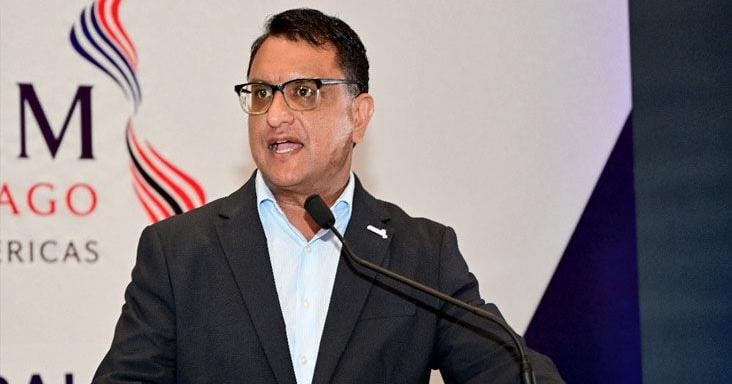
    In the wake of controversial parliamentary remarks from Trinidad and Tobago’s Attorney General John Jeremie, top leaders from the American Chamber of Commerce of Trinidad and Tobago (AMCHAM T&T) have publicly pushed back against unsubstantiated attacks on societal groups, while renewing longstanding calls for systemic accountability to address white-collar crime and rebuild public trust in national institutions.

    Jeremie drew widespread attention Wednesday during a parliamentary address when he revealed that the U.S. government had revoked visas for multiple individuals linked to what he labeled the “1%” group in the country. Citing the nation’s Anti-Gang Act, which defines a gang as any grouping of two or more people, Jeremie explicitly framed the so-called 1% as a criminal gang.

    Speaking to reporters Tuesday following AMCHAM T&T’s 33rd annual general meeting and business forum held at Port of Spain’s Hilton Trinidad and Conference Centre, AMCHAM T&T CEO Nirad Tewarie pushed back against the claims, warning that baseless attacks on any organized group create unnecessary division that undermines collective progress toward a stronger Trinidad and Tobago.

    “Every group, no matter how it is defined, will always have a small number of outliers who act outside shared norms,” Tewarie said. “But by and large, the Trinidad and Tobago business community is deeply invested in this country’s success, and we remain committed to working toward shared prosperity for all residents now and in the years ahead.”

    Beyond its response to Jeremie’s comments, the chamber used its annual forum to amplify urgent calls for decisive action against white-collar crime, arguing that consistent, high-profile prosecutions and greater institutional accountability are the only paths to restoring eroded public confidence in the nation’s justice system and government bodies.

    AMCHAM T&T President Anna Henderson noted that a small number of successful, public convictions of prominent white-collar offenders would make an outsize difference in rebuilding trust, at a moment when large swathes of the public already doubt whether core national institutions are functioning properly. Over recent years, the organization has put forward multiple policy proposals to strengthen the country’s Financial Intelligence Unit, implement robust public procurement regulations, and overhaul the criminal justice system to improve outcomes.

    Henderson’s call echoes previous demands from former AMCHAM T&T president Stuart Franco, who made tackling white-collar crime a core priority during his tenure in early 2024. Franco repeatedly emphasized that transparency and accountability are non-negotiable foundations for boosting investor confidence and repairing public trust in national leadership.

    A key urgent priority the chamber highlighted is addressing crippling staffing shortages in the Office of the Director of Public Prosecutions (DPP). Henderson referenced recent public comments from DPP Roger Gaspard, SC, confirming the office continues to grapple with severe understaffing that delays cases and undermines the delivery of timely, fair justice.

    “We again urge the government to prioritize fully staffing the DPP’s Office, as this is a critical, non-negotiable step toward building a properly functioning criminal justice system that delivers fair, timely justice for all,” Henderson said.

    Henderson explained that the push for accountability stems from broader, growing societal concerns: plummeting public confidence in institutions and rising frustration across all segments of the population.
    “Families are buckling under the pressure of skyrocketing living costs, young people can see few clear pathways to economic opportunity, and communities across the country remain gripped by fear of violent crime,” she said. “Beyond the daily headlines and economic data, there is a deeper, widespread sense that meaningful progress is slipping out of reach for too many people.”

    She stressed that crime, economic insecurity, public distrust, and social frustration are deeply interconnected challenges that demand coordinated, collaborative solutions from both the public and private sectors. At their core, these issues stem from a simple public desire: to know that national systems work as intended, that leadership is credible, and that hard work still creates opportunities for upward mobility.

    “Trust cannot exist without transparency, and confidence cannot grow without accountability,” Henderson emphasized. “If we want citizens to believe in their institutions again, institutions must prove they are worthy of that belief. If we want businesses to invest confidently in our future, we need a policy environment that is stable, transparent, and efficient.”

    Turning to the country’s economic outlook, Henderson noted that Trinidad and Tobago is entering a make-or-break period, with new projections pointing to expanded natural gas supplies over the next three years. While economic diversification remains a key long-term goal, the energy sector will continue to anchor the nation’s economy for the foreseeable future, and this emerging opportunity cannot be wasted.

    “This is a critical window of opportunity for our country, but opportunity alone is not enough,” she said. “We must act immediately now to turn possibility into tangible, lasting success. That means building the stable conditions that make long-term investment viable, securing reliable markets for our natural gas, and working collaboratively across borders when needed to ensure upstream producers, LNG operators, domestic downstream industries, and all participating partner countries share in the benefits of this growth.”

  • BiMPay goes live: Barbados launches instant digital payments system

    BiMPay goes live: Barbados launches instant digital payments system

    Barbados has marked a major milestone in its digital economic evolution with the official launch of BiMPay, the country’s first national instant payment infrastructure, which now enables round-the-clock, real-time money transfers for individuals, private businesses and public sector agencies across the island nation.

    The launch ceremony, held as an informal “Go-Live Pyjama Party” on Friday evening, saw Prime Minister Mia Mottley complete the system’s first public live transaction: purchasing a burger from a local small business owner. In her remarks shortly after the transaction, Mottley emphasized that in an always-connected global economy, a country that restricts financial transactions to standard business hours cedes critical economic opportunity.

    Calling the launch a source of national pride, the Prime Minister noted that BiMPay is just the latest in a string of new digital public and private services rolled out across Barbados in recent weeks, with more initiatives planned to fully integrate the island into a comprehensive digital national framework in the coming months.

    Mottley pointed to other ongoing digital transformation projects already delivering results for Barbados, including telemedicine partnerships that have cut through a critical backlog of diagnostic reads at the Queen Elizabeth Hospital. Through a collaboration with medical specialists in India, the country has leveraged cross-border digital connectivity to significantly reduce wait times for X-ray and CT scan reviews, addressing gaps created by a persistent domestic skills shortage.

    “Addressing our national skills deficit is my top ongoing priority,” Mottley explained. “We do not have enough skilled workers locally to meet all our needs, so we are turning to technology to augment our capacity and keep our economy moving. Beyond closing skills gaps, digital infrastructure like BiMPay makes it possible to do business at any time, breaking down the old barriers of clock and calendar.”

    The Prime Minister also outlined two key public benefits of the new instant payment system: it will reduce opportunities for financial-related crime by cutting reliance on unrecorded cash transactions, and it will build a formal digital transaction history for micro-enterprises and informal workers who have historically struggled to access formal credit from financial institutions. From neighborhood shopkeepers and auto mechanics to itinerant coconut vendors, Mottley emphasized that BiMPay was designed to serve marginalized groups that have long been excluded from formal financial infrastructure.

    Dr. Kevin Greenidge, Governor of the Central Bank of Barbados, added that BiMPay has been two years in development, with plans for ongoing expansion to eventually fully integrate all government agencies into the system. Currently, six commercial banks, three credit unions, the Barbados Stock Exchange and the Accountant General’s Office have already connected to the new infrastructure.

    Greenidge noted that a modern, competitive economy cannot thrive on outdated payment infrastructure. “Whether it is a family sending funds to a child studying abroad, a small vendor waiting for payment to restock inventory, or a business needing immediate access to working capital, people and enterprises can no longer afford to wait days for transactions to clear,” he said. “Beyond improving daily financial activity, BiMPay creates the foundational infrastructure we need to grow a dynamic, competitive fintech sector that will drive future economic growth for Barbados.”

  • Chamber Says Business Community Been Preparing For OSH

    Chamber Says Business Community Been Preparing For OSH

    Nearly a month of gridlock in the Belizean Senate has left the landmark Occupational Safety and Health (OSH) Bill in limbo, but government officials and private sector leaders are aligning on a path forward for the landmark worker protection legislation. As the bill advances through committee review, Attorney General Anthony Sylvestre has confirmed that the administration is proceeding with deliberate caution, noting that outstanding technical details — particularly provisions tailored to the domestic worker sector — still require final negotiation and refinement.

    While legislative negotiations wrap up, Belize’s business community has already invested substantial time and capital to align with the bill’s new requirements, according to top leaders of the Belize Chamber of Commerce and Industry (BCCI). William Usher, BCCI Vice President, told reporters that the private sector has been deeply involved in the drafting and consultation process from its earliest stages, meaning the business community is far from unprepared for the law’s rollout.

    “This legislation isn’t coming as a surprise to any of us,” Usher explained. “It has gone through years of extensive stakeholder consultation, with heavy input from the private sector at every turn. The BCCI has conducted deep, line-by-line reviews of the full text of the bill, and we recognize that any comprehensive regulatory framework of this scale will require ongoing adjustments and open dialogue between government and industry.”

    Throughout the multi-year consultation process, the BCCI has prioritized connecting with its member network to collect on-the-ground feedback, flag implementation challenges, and ensure small and medium business perspectives are included in final negotiations. While Usher acknowledged that preparation levels vary across sectors and business sizes — with smaller operations facing a steeper climb to meet new standards — he emphasized that a majority of business owners recognize the long-term value of upgrading national workplace safety standards, and have begun adapting their policies accordingly.

    Notably, many of Belize’s largest established firms have already adopted safety protocols that go beyond the minimum requirements laid out in the current version of the bill. “Companies like BEL, Santander, and BSI have already invested in robust safety frameworks that exceed what this legislation mandates,” Usher noted. “These leading firms show that higher safety standards are not just achievable, but beneficial for businesses across the country.”

    The BCCI is not only tracking the bill’s passage through the Senate, but also pushing for clear, phased implementation guidance to help businesses adjust. All provisions of the OSH Bill will not take effect simultaneously once passed, a structure that the Chamber has supported to give businesses time to adapt to new requirements.

  • BYD Launches SUV Promising Relief at Pump

    BYD Launches SUV Promising Relief at Pump

    As Belizean consumers grapple with steeply rising fuel prices and growing uncertainty over long-term fuel supply, Chinese automotive giant BYD has officially launched its latest plug-in hybrid midsize SUV in the Central American nation, positioning the new model as a accessible, cost-cutting solution for everyday drivers.

    The launch, held on June 12, 2026, comes at a critical juncture for Belize, where sudden fuel price hikes have put unprecedented financial strain on household transportation budgets. BYD Belize, the official authorized distributor for the BYD brand in the country, introduced the BYD Song Plus—a plug-in hybrid electric SUV designed to combine the emissions and cost benefits of electric driving with the flexibility of a traditional gasoline engine for longer trips.

    In an interview following the launch, BYD Belize Managing Director Ryan Marin, a 14-year veteran of the new vehicle industry, emphasized that the timing of the brand’s market expansion could not be better matched to Belize’s current energy challenges. “Not only is fuel prices an issue, but the availability of fuel down the road,” Marin noted. “BYD is actually inventing a product that solves a serious problem. And the solution is to have electrified mobility that customers can have a charger installed at their home or use the public network and basically be free of having to go the gas station or depend on the high gas prices plaguing us right now.”

    Marin highlighted a key gap the brand aims to fill in Belize’s auto market: for years, affordable, reliable new vehicles with strong after-sales support have remained out of reach for many consumers. BYD’s core goal, he explained, is to expand accessible options for local buyers, delivering safer vehicles backed by a dedicated local support team. Unlike fully electric vehicles that may cause range anxiety in smaller markets with uneven charging infrastructure, the BYD Song Plus is engineered as an electric-first vehicle with a backup gasoline engine, allowing drivers to travel across any region of Belize—from coastal Placencia to northern Corozal and southern Punta Gorda—without worrying about charging access or range. The gasoline engine only activates when needed, delivering exceptional fuel efficiency for daily and long-distance use.

    As the official authorized distributor, BYD Belize customers are eligible for a manufacturer-backed 8-year or 150,000-kilometer warranty, providing long-term peace of mind for buyers making the switch to electrified mobility. Industry observers note that the launch marks a growing shift toward alternative energy vehicles in small Caribbean and Central American markets, where volatile global fuel prices have made electrified transportation an increasingly attractive option for cost-conscious consumers.

  • Grassalco heeft voor het eerst meerkoppige directie

    Grassalco heeft voor het eerst meerkoppige directie

    State-owned mining company Staatsmijnbouwbedrijf N.V. Grassalco of Suriname has marked a major milestone in its corporate restructuring, establishing its first multi-member executive board following key leadership appointments approved at an Extraordinary General Meeting of Shareholders held Friday. The expansion of the executive team is a government-backed initiative designed to strengthen the firm’s operational governance and secure long-term operational continuity, according to official announcements.

    Johan Seymor has been named President-Director of the firm, succeeding Natascha Kalo, who stepped into the interim role after former President-Director Wesley Rozenhout was placed on inactive leave. Two additional executive roles were filled in the new leadership structure: Berto Sampi, who previously served as President Commissioner, will take up the post of Operational Director, while Jerney Noordzee joins as Financial Director. These appointments formalize the first distributed leadership structure in Grassalco’s history.

    The company’s Supervisory Board has also undergone a comprehensive refresh. Marlon Cotino was appointed President Commissioner, filling the vacancy left by Sampi’s move to the executive team, with Lindsey Sanné joining the board as an additional commissioner. All appointments were confirmed during the meeting hosted at the Ministry of Natural Resources, chaired by Minister David Abiamofo, who represented the Suriname government — the majority shareholder of the state-owned enterprise.

    Minister Abiamofo expressed full confidence in the new leadership team, local outlet NH reports. The minister noted that the revised governance structure is better aligned with Grassalco’s long-term growth ambitions and planned future development in Suriname’s resources sector.

    Each new executive brings deep, sector-relevant experience to their roles: Seymor boasts more than 17 years of professional experience in the mining industry; Sampi has been a dedicated member of the Grassalco organization since 2006, giving him intimate institutional knowledge of the firm’s operations; and Noordzee, a trained business economist, brings over two decades of financial leadership experience gained at SURPOST.

    This round of leadership appointments represents the next critical phase of Grassalco’s ongoing corporate restructuring, at a time when the firm remains a cornerstone of Suriname’s domestic mining and natural resources industry. The restructuring effort aims to position the state-owned enterprise to better support the country’s economic growth and resource development goals in coming years.