分类: business

  • Pizza Hut set for new global owner in US$2.7-billion deal

    Pizza Hut set for new global owner in US$2.7-billion deal

    KINGSTON, Jamaica — A major shift is underway in the global fast-food industry, as Yum Brands has finalized a $2.7 billion deal to divest its underperforming Pizza Hut brand, splitting ownership between two separate buyers and triggering questions about how the transition will impact local operations in markets like Jamaica.

    Under the terms of the agreement announced by Yum, private equity firm LongRange Capital will take control of all Pizza Hut operations outside of mainland China for a purchase price of $1.5 billion. This acquisition includes the entire international brand framework and franchise network that governs Pizza Hut Jamaica, which currently operates as a local franchise under Restaurants of Jamaica (ROJ) — the same entity that runs KFC’s Jamaican locations. In a separate, concurrent transaction, Yum China Holdings will acquire Pizza Hut’s mainland China business for roughly $1.2 billion. Both deals are on track to close during the third quarter of 2026, with no immediate changes to daily operations set to take place before that date.

    For Jamaican consumers and local stakeholders, the immediate question is whether the ownership transfer will bring changes to the island’s 15 existing Pizza Hut locations, which are actively expanding right now. Under standard franchise models, local operators retain independent ownership and management of their outlets under licensing agreements with the global brand owner. That means the sale does not automatically force a change in local ownership, nor does it mean any Jamaican locations will shut down.

    Still, industry analysts note that new global ownership gives LongRange Capital wide latitude to adjust core brand policies across all international markets. Those adjustments could eventually touch everything from existing franchise agreement terms and overarching brand strategy to menu offerings, restaurant layout and design, digital and in-store technology requirements, and regional expansion targets.

    Notably, the sale comes at a time when ROJ is pouring hundreds of millions of Jamaican dollars into growing Pizza Hut’s footprint across the island. Earlier this year, the local franchisee announced a $180 million investment to open a new Pizza Hut location in Cumberland, Portmore. Once completed, the outlet will mark the chain’s 16th location in Jamaica, and its 11th outside the Kingston and St Andrew region. That single investment is part of a broader $500 million capital push by ROJ to open new KFC and Pizza Hut locations across the country over the coming months.

    This aggressive local expansion stands in sharp contrast to Pizza Hut’s lackluster performance across many of its largest global markets, which ultimately prompted Yum Brands to put the chain up for sale. Yum first launched a strategic review of Pizza Hut’s future in November 2025, after the brand consistently lagged behind the company’s faster-growing KFC and Taco Bell divisions.

    For years, Pizza Hut has faced mounting headwinds across global markets: intense competition from both other large fast-food chains and local independent pizzerias, stretched consumer spending that has cut into discretionary dining, and outdated restaurant formats that have failed to draw in younger customers. Most recently, the brand announced plans to shutter roughly 250 underperforming locations across the United States in the first half of 2026 as part of a pre-sale restructuring effort.

    After the two sales are completed, Yum Brands expects to net approximately $2.3 billion in proceeds from the transactions. In conjunction with the divestment, the company’s board has also approved a new $4 billion share repurchase program to return capital to shareholders.

    Yum Brands leadership has framed the sale as a win-win for all parties: the company will be able to refocus its resources, strategic attention, and capital on scaling its stronger-performing KFC and Taco Bell brands, while Pizza Hut gets new ownership with a singular focus on revitalizing the struggling pizza chain. That focused leadership, Yum argues, is something the brand has not had under the current multi-brand corporate structure.

    For Jamaica, the months leading up to the 2026 closing will bring ongoing uncertainty about the future of the local franchise. No official announcements have yet been made about whether LongRange Capital will keep ROJ’s existing franchise agreements in place, support the company’s ongoing local expansion plans, or implement sweeping changes after the transaction is finalized. As of press time, there is no indication that the ownership transfer will disrupt day-to-day service at any of Pizza Hut’s Jamaican locations.


  • Dominican rum producers back government tax measures to strengthen fair competition

    Dominican rum producers back government tax measures to strengthen fair competition

    In Santo Domingo, the Dominican Association of Rum Producers (Adopron) has publicly thrown its weight behind core components of the Dominican government’s recent anti-crisis economic plan, saying the proposed policies will advance four critical goals for the country’s regulated industrial sectors: tax fairness, consistent legal frameworks, greater operational transparency, and a level playing field for all competing businesses.

    One of the key policies the industry group has endorsed is a clarification to the calculation rules for the Ad Valorem Selective Consumption Tax applied to alcoholic beverages. Under the government’s draft proposal, this consumption tax would be calculated based on the full final price consumers pay for a product, encompassing all costs associated with the product’s packaging, branding, and go-to-market distribution that factor into the end retail cost.

    Adopron has pushed back against any claims that the rule change amounts to a new tax on the industry. Instead, the association emphasizes that the reform simply sets a single, clear standard that every actor in the alcoholic beverage space must follow. The group notes that uniform application of tax regulations is critical to stopping unfair market manipulation, safeguarding government tax revenue, and guaranteeing that every competitor operates under the same rules.

    Beyond tax clarification, Adopron has also praised the government’s move to strengthen product traceability systems for three key regulated goods: alcoholic beverages, cigarettes, and fuel. The association explains that robust end-to-end traceability mechanisms are a powerful tool to crack down on illegal cross-border and domestic trade, shield consumers from counterfeit or unsafe products, cut down on widespread tax evasion, and improve regulatory oversight across all regulated economic sectors.

    Adopron has stressed that these new traceability requirements must be applied uniformly to all market participants, with no distinction between locally manufactured products and imported goods. The group has also called for strict regulatory enforcement, widespread public education to help consumers identify legitimate products, and sustained institutional support to ensure the traceability system delivers on its intended goals.

    The industry organization is now urging the Dominican National Congress to move quickly to approve the proposed provisions. Adopron argues that the reforms will resolve longstanding problems of unequal regulatory treatment in the alcoholic beverage market and address long-held concerns about unfair competitive practices that have hurt legitimate formal producers.

    In closing, Adopron reaffirmed its commitment to collaborating with government agencies and national legislators on policies that strengthen transparency, grow the formal economy, attract new private investment, and drive long-term sustainable economic growth across the Dominican Republic. The association concluded that a clear, consistently applied tax framework ultimately delivers mutual benefits for three key stakeholders: the national government, ordinary consumers, and legitimate formal production sectors across the country.

  • Tax reform and the future of Dominican venture capital formation

    Tax reform and the future of Dominican venture capital formation

    As policymakers in the Dominican Republic navigate heated debates over a controversial proposed tax reform, one crucial conversation remains largely absent from the national discourse, according to regional innovation leader Jonathan Joel Mentor. The reform’s most talked-about provision centers on re-evaluating long-standing, sector-specific tax incentives that have guided decades of investment decisions, with government officials pushing for all existing tax breaks to prove their worth through measurable economic contributions. Mentor calls this scrutiny healthy and long overdue, noting that every public incentive should be held accountable to the simple standard of delivering more economic opportunity than it costs taxpayers. Yet in his view, while the government is asking the right questions about legacy incentives, it is missing a far more consequential piece of the puzzle: building the policy and structural foundation to finance the country’s next generation of economic growth.

    The current public debate has been almost entirely focused on fiscal sustainability, revenue targets, and the fate of existing industry exemptions. What is missing, Mentor argues, is a serious national discussion about venture capital formation, startup enabling infrastructure, innovation investment, intellectual property protections, and the systemic changes needed to turn the Dominican Republic into a global magnet for high-growth scalable companies. This gap is not a trivial oversight, he emphasizes: governments do not generate lasting wealth on their own; they create the conditions that allow private entrepreneurs and investors to build wealth. The companies that will expand the country’s tax base 20 years from now have not even been founded yet, so policy must prioritize building the ecosystem that will nurture them today. If policymakers are willing to audit the engines of past growth, they should be equally committed to examining the engines that will drive future prosperity, he adds.

    After a decade working with hundreds of entrepreneurs across the Dominican Republic, Latin America, and the Caribbean, Mentor highlights a core challenge that often goes unrecognized in policy circles. It is not a lack of entrepreneurial ambition across the country – he has met countless founders building companies across software, logistics, fintech, education, healthcare, and artificial intelligence who possess the creativity and resilience global investors seek. Instead, the gap lies in a shortage of investable companies: institutional venture funds, family offices, and development finance institutions do not invest based on raw ambition alone. They evaluate governance frameworks, scalability potential, market size, management maturity, and the likelihood of delivering venture-scale returns. The true bottleneck for Dominican innovation is not a shortage of entrepreneurs, it is a shortage of an enabling ecosystem that supports capital formation.

    Mentor notes that this gap also represents a unique, underappreciated opportunity for the Dominican Republic. Comparisons to established innovation hubs like Silicon Valley or Austin are unhelpful for strategic planning, he argues; the country does not need to become a smaller copy of these regions. Instead, it has the chance to claim a position no Caribbean nation currently holds: the region’s first recognized hub for venture capital formation and innovation-driven investment. The absence of a dominant regional venture hub is not a weakness, it is an open invitation.

    The Dominican Republic already holds several underutilized advantages that appeal to global investors and mobile talent, Mentor points out. It offers far greater capital efficiency than major North American startup ecosystems, sits at a strategic crossroads between North America, Latin America, and the Caribbean, and boasts a growing bilingual workforce that aligns with North American business hours. It also combines strong digital connectivity, high quality of life, and easy accessibility that is increasingly attractive in an era where top talent can live and work anywhere. Today, talent chooses where to live before choosing where to build companies, and investment follows that talent. Already, growing initiatives like the Digital Nomad Summit Santo Domingo have drawn a wave of global founders, investors, and skilled professionals to the country – talent is already arriving, even before policy has adapted to welcome it, and history shows capital rarely lags far behind, he notes.

    Mentor stresses that his argument is not a rejection of tax reform, nor a defense of every legacy incentive currently under review. Instead, he calls on policymakers and national stakeholders to broaden the scope of the conversation. Fiscal policy, sustainable public finances, and tax revenues are all critically important, but they are outcomes of a growing economy, not substitutes for growing the economy. The tax reform debate will eventually wrap up, new rules will take effect, and headlines will move on, but the question of how to build the foundation for future growth will remain. In a decade, will the Dominican Republic be known as a country that optimized its tax code to incrementally boost government revenue, or as a country that built the Caribbean’s leading venture capital hub that spawned entirely new industries? One outcome manages existing economic activity; the other generates new, transformative growth. That difference will shape where the next generation of Caribbean wealth is created, and the question of how to pursue that future is far too important to leave out of the national conversation.

  • Jamaica investment-ready — Seiveright

    Jamaica investment-ready — Seiveright

    MONTEGO BAY, St James — At the opening plenary of the 11th Biennial Jamaica Diaspora Conference held Monday at the Montego Bay Convention Centre, Delano Seiveright, State Minister for Jamaica’s Ministry of Industry, Investment and Commerce, made a direct appeal to members of the global Jamaican diaspora to bring new investment opportunities to the island nation.

    Underpinned by years of intentional, strict fiscal policy and sustained macroeconomic and political consistency, Seiveright argued that modern Jamaica has never been more prepared to welcome and support outside investment than it is today. The conference, convened around the central theme “Diaspora Partnerships: Rebuilding a More Resilient Jamaica,” provided the ideal platform for the government to showcase the country’s proven ability to withstand ongoing global economic turbulence.

    Seiveright outlined a series of key positive economic indicators that set Jamaica apart from many other small developing economies. These include large-scale ongoing infrastructure expansion across the island, consistent declines in national crime rates, and stable exchange rate performance that eases risk for foreign investors. Most notably, he highlighted the country’s current international reserve holdings, which sit at approximately US$6.5 billion. This reserve buffer covers more than 34 weeks of import costs, a figure nearly three times the 12-week international benchmark for healthy reserve levels. Seiveright emphasized that this strong reserve position is particularly remarkable for a small island developing state still working to recover from the catastrophic damage of a recent Category 5 hurricane.

    According to Seiveright, these solid core economic fundamentals, paired with Jamaica’s long track record of peaceful political stability, make the country an attractive destination for a wide range of global stakeholders, from individual investors to major multinational banks, credit rating agencies, and global capital markets. He noted that both international investors and diaspora community members have already taken note of Jamaica’s progress, framing the nation’s path to long-term prosperity as rooted in three core pillars: institutional stability, strategic cross-border partnerships, and a shared commitment to building a more resilient national economy.

    The opening plenary centered the critical role of diaspora collaboration, highlighting that leveraging the diaspora’s professional expertise, investment capital, and existing trade connections is central to advancing Jamaica’s post-disaster recovery and sustained long-term growth. Against the backdrop of an increasingly fragmented and uncertain global economy, the 11th Biennial Jamaica Diaspora Conference works to cement the country’s reputation as a regional leader in economic resilience and a premier destination for transformative foreign investment.

  • Stop watching from the sidelines!

    Stop watching from the sidelines!

    The 11th Biennial Jamaica Diaspora Conference kicked off on Monday at the Montego Bay Convention Centre in St James, bringing together key economic leaders and diaspora delegates to unlock the country’s growing investment potential. Under the overarching theme of “Diaspora Partnerships: Re-Building a More Climate-Resilient Jamaica”, senior industry officials delivered a clear, urgent call to action: Jamaicans at home and abroad must step up to claim a stake in the island nation’s rapidly improving economic outlook, even as billions in international capital flows into the country.

    Delano Seiveright, Minister of State in Jamaica’s Ministry of Industry, Investment and Commerce, opened his address by framing a core concern for the country’s long-term inclusive growth. While he affirmed that Jamaica’s economic trajectory is undeniably positive, he warned that too many local and diaspora Jamaicans are remaining on the sidelines as foreign investors snap up emerging opportunities.

    “My concern is not whether Jamaica’s future is bright — the evidence is already there. My concern is whether Jamaicans themselves will own enough of that future,” Seiveright told conference delegates. “Because while international investors are lining up around the block and investing billions of dollars across Jamaica, too many Jamaicans are still watching from the sidelines — too many!”

    Seiveright challenged diaspora members to move quickly to capitalize on emerging opportunities, urging them not to delay entry into the market. “Do not wait until everybody else tells you Jamaica is a place to invest. By then you may be too late. Come home, invest, partner, build, own,” he said.

    To back up his call, Seiveright outlined a series of dramatic improvements to Jamaica’s investment landscape that have captured global attention. Most notably, he highlighted a steep decline in national crime rates, a longstanding barrier to economic growth. The country recorded roughly 673 murders in 2025, a sharp drop from 1,100 in 2024 and less than half of the 1,400 murders recorded in 2023. Seiveright attributed this progress to $90 billion in sustained national security investments, intelligence-led policing strategies, and strengthened institutional capacity, labeling crime reduction one of the government’s most significant recent successes.

    He also pointed to major public infrastructure projects that are improving connectivity across the island, including the newly completed Montego Bay Perimeter Road and the planned Long Hill Bypass, which will cut travel times and boost economic activity across western Jamaica. Alongside these tangible improvements, Seiveright emphasized that Jamaica boasts unmatched stability for a developing economy: exchange rates have held steady, political institutions remain strong and democratic, and core economic fundamentals have consistently outperformed expectations amid global volatility. “Jamaica is stronger, more stable, more investment ready than at any point in our modern history,” he concluded.

    Following Seiveright’s address, Shullette Cox, President of Jamaica Promotions Corporation (Jampro), expanded on the country’s investment advantages, outlining key high-growth sectors open to new investors and breaking down the incentive programs available to both local and diaspora participants.

    Cox noted that even in the wake of Hurricane Melissa, one of the most powerful storms to impact the Caribbean in recent decades, all three major global credit rating agencies reaffirmed Jamaica’s stable economic outlook — a testament to the country’s strong economic governance and disaster resilience that has bolstered international investor confidence.

    She highlighted Jamaica’s world-class maritime infrastructure as a major logistical advantage, noting that the Kingston Container Terminal boasts a total capacity of 3.2 million twenty-foot equivalent units, positioning the island as a regional logistics and trade hub. For qualifying investors, Cox explained that incentives under the Fiscal Incentives Act offer a graduated corporate income tax structure: while banking institutions pay a 33 1/3 percent rate, most other sectors face a 25 percent rate, and these benefits are available to both foreign investors and Jamaican diaspora members.

    Cox went on to spotlight specific emerging sectors primed for new investment, aligned with the government’s strategic economic priorities. The fast-growing local film industry is seeking new investment to build much-needed studio infrastructure, and the government is actively supporting co-production partnerships to grow the segment. Additionally, as part of the country’s push to reduce dependence on costly imported fossil fuels, a new request for proposal (RFP) for renewable energy projects will launch in August. The RFP will seek 220 megawatts of additional renewable energy generation capacity and 110 megawatts of battery energy storage systems, opening significant new opportunities for investors in the clean energy space.

    The three-day conference, which opened on Monday, is scheduled to conclude on Wednesday, with additional sessions focused on advancing diaspora engagement and climate-resilient development across the country.

  • Blackout bite

    Blackout bite

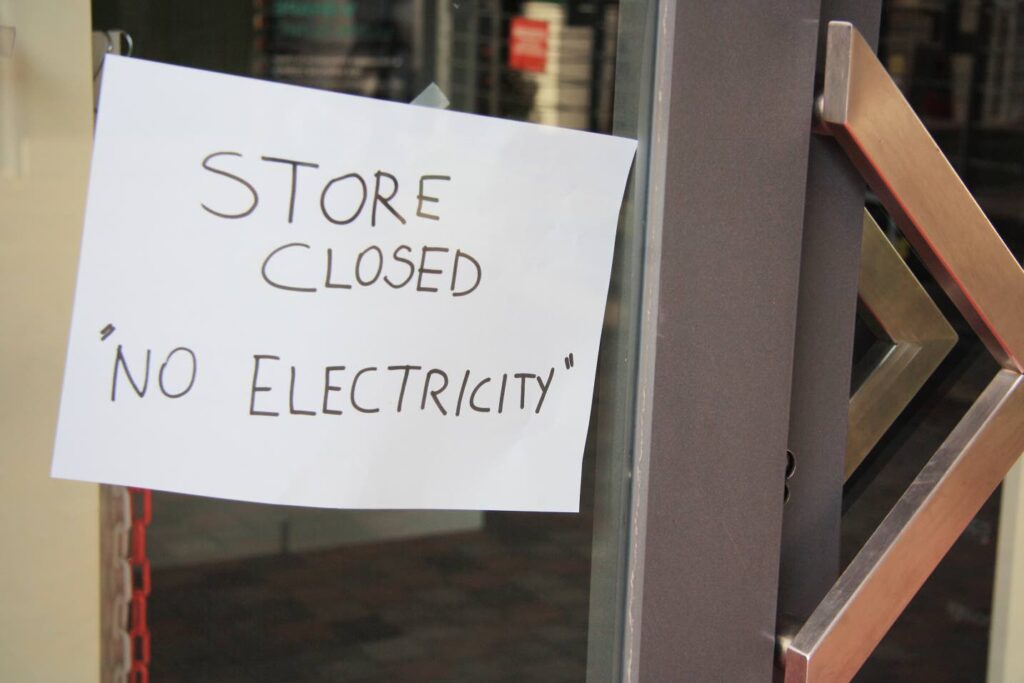
    A widespread, island-wide power outage that struck Jamaica on June 5 has left hundreds of small businesses across the nation still tallying steep financial losses, more than a week after grid operations were partially restored. The crisis has reignited long-simmering calls for accountability from the national utility provider, 13 years after an official regulatory recommendation for stronger penalties against major system failures was never enacted.

    Energy Minister Daryl Vaz confirmed last week during a parliamentary sitting that the Jamaican government will move forward with adding mandatory compensation clauses to all future electricity operating licenses, noting that a simple public apology from the Jamaica Public Service Company (JPS) — the nation’s primary power provider — is insufficient for customers and enterprises that have sustained measurable financial damage. Vaz emphasized that small and medium-sized businesses across the country have already proven tangible losses from the unprecedented outage, making formal compensation and penalty structures non-negotiable moving forward.

    “An apology is not enough for people who lost real income and inventory because of this outage,” Vaz stated. “The commitment I am making today is that all new electricity licenses, and the accompanying revised legislation governing the sector, will explicitly require mandatory compensation for customers affected by large-scale outages, with formal sanctions for non-compliance.”

    This policy shift comes 13 years after a technical committee convened by Jamaica’s Office of Utilities Regulation (OUR) delivered the exact same recommendation following an island-wide grid collapse in 2012. The committee’s 2012 report specifically flagged the severe economic risk of total system outages that disrupt all commercial and residential activity across the country, arguing that the regulator needed formal authority to impose penalties when utility providers violate operating standards or fail to comply with regulatory directives. Despite the 2012 recommendation, the policy was never implemented by successive administrations.

    For small business owners still reeling from the June 5 outage, the promise of future regulatory reform comes too late to recoup their current losses. Howard Nelson, owner of Northside Barbers in the Liguanea neighborhood, told reporters the sudden blackout forced him to shut his shop mid-day and turn away already seated customers, dragging down his daily revenue far below normal levels.

    “It hit us really hard out of nowhere,” Nelson said. “We had customers in the chair already, and we had to send them home. The whole day’s income was wiped out.”

    Althea Morgan, general manager of Shoppers Delight Supermarket in downtown Kingston’s Chancery Street, added that even with a backup generator on-site, the rolling outages that continued into the following day forced early closures and repeated operational disruptions that tanked weekly sales. “We had to close for 20 minutes just to refuel the generator, and even with power, sales were way down. It was incredibly frustrating, we definitely took a loss,” Morgan explained.

    In the Seaview Gardens community, Susan Barrett, who runs Mizzy Wholesale and Retail, reported that many local customers chose to stay home rather than travel through the blackout, leading to a double-digit drop in sales and lost regular patronage. “This is a neighborhood where people don’t want to walk around in darkness, so they just stayed home. We lost customers and sales straight out,” Barrett said.

    A small number of businesses fared better: Family Pride Supermarket in Havendale reported minimal disruption thanks to a fully operational backup generator, though a staff representative noted that even with backup power, internet connectivity failures blocked card payment processing, leading to some lost sales.

    Garnett Reid, president of the Small Business Association of Jamaica (SBAJ), called the blackout a major step backward for Jamaica’s small business sector, which is still recovering from the impacts of Hurricane Melissa. Reid noted that more than 425,000 small businesses operate across Jamaica, most of which rely entirely on consistent grid power to operate, with the weekend timing of the outage hitting particularly hard — when small retailers, food vendors, barbershops, and bars earn the majority of their weekly revenue.

    Beyond lost sales, Reid highlighted the additional losses from spoiled refrigerated and frozen goods for businesses without backup power, a cost that many small operators cannot absorb. He also criticized JPS for failing to release a full public explanation of the outage’s cause and concrete plans to prevent future collapses, calling for full transparency from the utility provider.

    “To date, we have not received an official, detailed report on what happened, why it happened, and what will be done to make sure this never happens again,” Reid said. “Small business owners are still digging out from Hurricane Melissa, and this is just another major blow they don’t deserve.”

    The JPS has attributed the June 5 islandwide outage to system damage on the Hunt’s Bay-Rockfort transmission line caused by severe weather, with a second partial outage affecting multiple parishes just four days later on June 9.

  • June 17 deadline for TEF Tourism innovation incubator applications

    June 17 deadline for TEF Tourism innovation incubator applications

    KINGSTON, Jamaica — Aspiring Jamaican entrepreneurs holding creative business concepts that can strengthen and expand the country’s critical tourism industry now have a major opportunity to turn their ideas into reality, as the Tourism Enhancement Fund (TEF) has officially launched applications for its flagship Tourism Innovation Incubator programme. Budding innovators have until June 17 to submit their proposals through the official TEF online portal. To complete the application process, candidates are required to upload a fully filled-out application form alongside a one-minute video pitch that clearly lays out the core of their proposed business venture.

  • IDAC certifies new Aircraft Maintenance Center in Punta Cana

    IDAC certifies new Aircraft Maintenance Center in Punta Cana

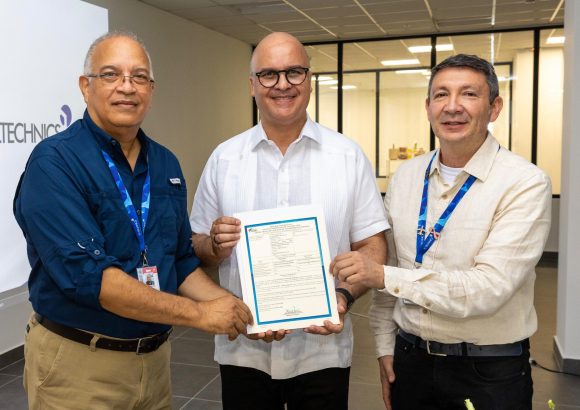
    In a landmark development for the Dominican Republic’s aviation sector, the Dominican Institute of Civil Aviation (IDAC) has formally awarded official certification to a cutting-edge Aircraft Maintenance, Repair and Overhaul (MRO) Center in Punta Cana, a move set to reshape the regional aviation services landscape. This project, developed as a joint venture between local conglomerate Puntacana Group and global aviation services provider FL Technics, received its certification paperwork from IDAC Director General Igor Rodríguez during an official ceremony with facility leadership.

    The newly certified facility is unlike any other in the Dominican Republic or the wider Caribbean region. Situated inside the Punta Cana Free Trade Zone, it is the first full-service heavy aircraft maintenance center ever established in the area. The center already holds regulatory approval to deliver advanced maintenance work for two of the world’s most popular narrow-body aircraft families: the Airbus A320 and Boeing 737. Beyond that, its purpose-built infrastructure and trained technical team also have the capability to service large wide-body aircraft, including the Airbus A330, A340, and Boeing 747 and 777 lines.

    Spread across a total development footprint of more than 71,000 square meters, the complex centers on a modern, 13,300-square-meter hangar built to the latest global aviation industry standards. In its current initial operational phase, the facility houses five dedicated maintenance bays, which allow technicians to work on multiple narrow-body jets at the same time. To accommodate growing regional demand, organizers have already laid out expansion plans that will increase the center’s capacity to 12 maintenance positions over the coming years.

    Industry regulators and project leaders alike have framed the launch as a transformative step for the Dominican Republic’s aviation economy. Rodríguez emphasized that the new MRO center does more than just add a critical service to the country’s aviation portfolio; it strengthens domestic technical capabilities, boosts the Dominican Republic’s competitiveness in the global aviation market, and unlocks new pathways for foreign investment and long-term industry growth.

    Beyond infrastructure, the project is already delivering tangible social and economic benefits for local communities. Officials project the center will generate substantial economic ripple effects, starting with the creation of dozens of high-skilled specialized jobs. To build a sustainable local talent pool, the initiative includes structured recruitment and ongoing technical training programs that open up long-term aviation career pathways for both seasoned industry professionals and new entry-level aircraft mechanics looking to start their careers in the field.

  • Hydro-Comp Enterprises Ltd. vacancy: Systems/Support Engineer

    Hydro-Comp Enterprises Ltd. vacancy: Systems/Support Engineer

    Hydro-Comp Enterprises Ltd., a prominent global provider of specialized consulting services and enterprise software solutions tailored for the water utility sector, has announced an opening for a full-time on-site Systems/Support Engineer in Grenada as part of a planned expansion of its Product Services Division, fueled by continued international growth.

    The successful candidate will take on a critical role supporting the implementation and ongoing operation of EDAMS, Hydro-Comp’s flagship enterprise platform built exclusively for water and sanitation utility providers. This integrated platform covers a full suite of core utility operations, including customer billing and customer relationship management, network asset tracking, and end-to-end operations and maintenance workflows.

    Working in direct collaboration with local and international utility clients, the hired engineer will be responsible for ensuring uninterrupted performance of EDAMS installations, guiding new system deployments, and providing day-to-day guidance for end-users navigating the platform.

    To be considered for the position, applicants must hold a bachelor’s degree in Computer Science or a closely related technical field, along with hands-on experience working with Microsoft Windows Server environments. Proficiency in MS SQL Server and a strong working knowledge of structured query language (SQL) is also required. Additional core qualifications include exceptional analytical and problem-solving abilities, proficient written and verbal communication skills in English, and the capacity to work independently in fast-paced, evolving technical settings. Prior experience working with geographic information systems (GIS), Crystal Reports or business dashboards is considered a distinct advantage, and the company prefers candidates with 1 to 3 years of relevant professional experience.

    Key responsibilities outlined for the role include delivering multi-channel technical support to end-users via on-site assistance, phone consultations, and remote access tools; installing, configuring, and performing routine maintenance on EDAMS platform installations; managing and supporting underlying infrastructure including MS SQL Server databases and Crystal Reports tools; assisting clients with resolving operational issues and troubleshooting technical errors; delivering customized training for all tiers of end-users, from operational staff to senior managers and system administrators; and developing and maintaining custom reports and SQL scripts to meet client-specific needs.

    Hydro-Comp offers a competitive remuneration package tied to the successful candidate’s relevant experience, with a 1-year renewable contract structure and clear pathways for long-term career advancement within the organization. The role also provides unique opportunities to gain hands-on experience with cutting-edge international projects and leading industry technologies, alongside access to ongoing professional training and skills development.

    Interested applicants are required to submit their application materials via email to [email protected] no later than June 30, 2026. All submissions must include the subject line: “Grenada – Systems/Support Engineer – [Your Full Name]” to be considered. This job posting is hosted by NOW Grenada, which notes that it is not responsible for the content, opinions or statements shared by contributing organizations. Users may report any abusive content related to the posting directly through the platform’s reporting channel.

  • Executors, administrators and AML risk in estate administration

    Executors, administrators and AML risk in estate administration

    For decades, estate administration has been widely understood as a straightforward legal process centered on three core tasks: cataloging a deceased person’s assets, settling any outstanding debts, and distributing remaining property to designated heirs. But according to industry expert Kevon K K Charles, Managing Partner at Trinidad-based KC Legal Consultancy, this traditional description no longer captures the full complexity of modern estate practice, particularly across the Caribbean, where shifting regulatory expectations have redefined the role of executors and administrators.

    Charles notes that the work of estate professionals extends far beyond simply identifying which assets fall into a deceased’s estate. Beyond basic asset collection, practitioners are now routinely required to verify formal ownership of property, confirm asset valuations, cross-verify beneficiary identities, and meet strict institutional requirements before any assets can be accessed or transferred. While this process follows predictable, routine steps for many estates, it can quickly become complicated for assets with non-traditional holding structures.

    Common scenarios that trigger extended due diligence include when a deceased held bank accounts across multiple international jurisdictions, owned property through a corporate entity, or held assets through informal, unrecorded arrangements that persisted for decades. In these cases, executors are forced to answer a series of probing questions that go far beyond basic asset gathering: Who holds the ultimate beneficial ownership of the asset? Can the original source of funds be fully documented? Are all beneficiaries clearly identifiable with official paperwork? Do existing records meet the strict requirements set by banks and regulatory bodies?

    Charles emphasizes that these complications rarely point to intentional wrongdoing. Across the Caribbean, many long-standing family and property arrangements were established generations before modern anti-money laundering, transparency, and compliance standards became embedded in global legal and financial practice. What was once accepted as a common informal arrangement now must fit into a formal regulatory framework, creating unforeseen hurdles for estates.

    One of the most common points of friction in modern estate administration comes from interactions with financial institutions. Many executors and beneficiaries grow frustrated when faced with extensive documentation requests, especially when family relationships and entitlement claims are undisputed and well-known. But from the perspective of financial institutions, these requirements are not arbitrary: global regulatory rules now mandate that banks verify all parties to asset transfers and confirm the legitimacy of fund sources to mitigate financial crime risk.

    As a result, institutions now routinely request a broad suite of materials that were not required in past decades, including government-issued identification for all beneficiaries, proof of residential address, full documentation of the source of funds used to acquire estate assets, corporate records for assets held through business entities, and formal legal verification of each beneficiary’s entitlement. What was once handled as a private family matter is now processed through a highly structured, regulated compliance environment.

    Even the basic task of identifying beneficiaries can become far more complex than many families anticipate. In some cases, beneficiaries live abroad, lack standard official identification, or hold entitlement through informal family arrangements that were never formally documented with legal records. The challenge is rarely a question of legal entitlement itself, Charles explains; the obstacle is proving that entitlement in the formal format required by financial institutions and regulators.

    For estate practitioners across the region, these shifting requirements reflect a fundamental redefinition of the estate administrator’s role. No longer confined to just collecting and distributing assets, modern executors must also navigate overlapping due diligence mandates, institutional compliance protocols, and broad new transparency and verification requirements. This shift does not inherently make estate administration an adversarial process, Charles notes, but it does require a level of advance planning and procedural structure that was not necessary for past generations of practitioners.

    In closing, Charles reflects that while estate administration has always depended on responsibility and public trust, verification has become an increasingly central core of the work. While this added layer of process can create delays and frustration, it is an unavoidable new reality for modern estate practice across the Caribbean. This commentary is part of an ongoing series examining the evolving intersection of wealth, property rights, and regulatory compliance across the Caribbean region.