分类: business

  • Barbados hosts high-level food systems investment forum

    Barbados hosts high-level food systems investment forum

    BRIDGETOWN, Barbados — High-level agriculture ministers from across the Caribbean have gathered to advance a groundbreaking capital-first strategy for overhauling the region’s food systems, repositioning the agricultural sector as a strategic, high-potential asset class for global and local investors.

    Hosted by the United Nations Barbados and the Eastern Caribbean office, the one-day Food Systems Investment Forum held Tuesday brought together senior regional government representatives, leaders from international financial institutions, private sector investors, and global development partners under the central theme “Mobilising Equity Capital for Resilient Food Systems in the Caribbean.”

    Following the conclusion of the forum, officials announced the official launch of a new UN-curated Deal Book, which showcases 320 million U.S. dollars worth of fully vetted, investment-ready opportunities spanning every segment of the Caribbean’s food systems. The curated resource is designed to sustain the deal-making momentum built during the event and create structured connections between institutional investors and regional food and agriculture enterprises.

    In his opening address titled “From Policy to Capital Deployment,” Simon Springett, UN Resident Coordinator for Barbados and the Eastern Caribbean, emphasized the critical urgency of closing the persistent financing gap holding back Caribbean food systems and unlocking new streams of private equity. Springett outlined long-standing structural challenges facing the sector: overall capital flows remain misaligned with development needs, most financing is limited to concessional loans or donor grants, and long-term patient equity capital is largely absent from the market. Compounding this issue, he noted that most private regional capital is currently diverted to non-productive sectors such as real estate, rather than flowing into the food economy that supports local livelihoods and food security.

    Springett called on Caribbean national governments to strengthen regulatory and policy environments to attract investment, while urging private investors to recognize the growing pipeline of viable opportunities across agriculture, fisheries, food processing, and cold chain logistics. “The opportunity is here. Capital exists. But they are not connected in a structured and meaningful way,” he explained. “This forum is designed to change that…through a different kind of conversation — one that starts with capital: how investors assess risk, what makes a project bankable and what actually unlocks deals.”

    John Morris, Chairman of International Asset Management and Managing Partner of the regional CaribGROW Fund, echoed the call for expanded equity participation, noting that well-managed Caribbean food businesses with proven revenue streams and defensible market positions are fully capable of delivering competitive financial returns. Drawing an analogy to the U.S. New York Knicks basketball team, Morris framed the challenge as a structural one, not a lack of viable opportunity: “The challenge is not the opportunity, the challenge is capital.”

    Morris compared regional capital markets to a team sport, where sustained success depends on diverse stakeholders collaborating to build a robust ecosystem. He acknowledged that multilateral institutions, development finance bodies, regional banks, and national governments have already laid critical groundwork for investment, but emphasized that equity remains the missing core component. “Equity is where ownership, wealth creation and wealth retention live,” he said, warning that without access to equity capital, local businesses cannot scale and remain permanently vulnerable to foreign acquisition. By contrast, he explained, his fund’s model of taking minority stakes allows local families and stakeholders to retain control of their businesses, keeping generated wealth within the Caribbean region.

    Barbados’ Minister of Agriculture, Food and Nutritional Security Dr. Shantal Munro-Knight highlighted the widespread shared commitment to action among all participants, noting that the conversation around Caribbean food systems has evolved far beyond a narrow focus on production alone. “This is an acknowledgement that we have come here to do something big and that is important. I also see in the room, people of like minds who I do not have to convince of the importance of the conversation,” she said.

    Framing food systems as one of the most consequential economic and development opportunities for the entire Caribbean, Munro-Knight urged both public sector leaders and private investors to recognize the sector’s transformative potential. “If you want an equation that answers one of the most fundamental challenges facing this region, our food security, while also enabling social and structural economic transformation, then you’re in the right place at the right time,” she stated.

    Drawing a parallel to the groundbreaking Bridgetown Initiative for climate finance, she stressed that “meeting the moment” requires innovative, equitable partnerships that center Caribbean voices as equal stakeholders and reimagine how investment capital is structured and delivered. She pointed to large-scale, investable projects across the sector including logistics infrastructure, agro-processing facilities, cold chain networks, digital agricultural transformation, and agritech innovation. “These are investable opportunities, big investable opportunities,” she said, issuing an open invitation to private sector partners to collaborate with regional governments. “We’ve come to the table, meet us with your capital.”

    Unlike traditional industry conferences that focus only on policy dialogue, the 2024 Food Systems Investment Forum was designed to drive tangible action, facilitating direct one-on-one engagement between investors and government leaders, showcasing pre-vetted investment opportunities, and advancing active transaction negotiations and cross-sector partnerships. Attendees took part in investor-focused roundtables, thematic breakout sessions, and bilateral deal meetings all aimed at accelerating capital deployment and scaling initiatives to build more climate and food-resilient regional food systems. By centering equity capital, blended finance structures, and market-driven solutions, the forum seeks to unlock the full economic and resilience potential of Caribbean food systems while advancing the United Nations’ Sustainable Development Goals across the region.
  • U.S. Ambassador tours Grupo SID facilities, highlights bilateral trade opportunities

    U.S. Ambassador tours Grupo SID facilities, highlights bilateral trade opportunities

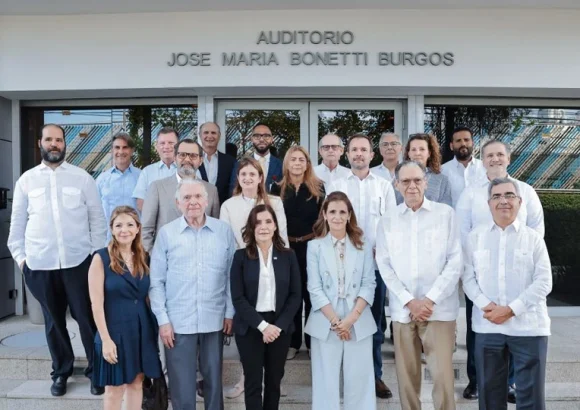
    In a recent diplomatic and business engagement in Santo Domingo, United States Ambassador Leah Francis Campos toured the operational facilities of leading Dominican conglomerate Grupo SID, aiming to gain first-hand insight into the group’s rapid expansion, advanced industrial capabilities, and far-reaching contributions to the Dominican Republic’s national economic growth.

    During the site visit, senior Grupo SID executives walked Ambassador Campos through the conglomerate’s cutting-edge production and logistics infrastructure, which underpins the company’s cross-border operations spanning 22 nations across the globe. As one of the Dominican Republic’s most established and diversified business groups, Grupo SID brings nearly nine decades of operational history to its varied portfolio, which spans consumer goods, food production, and even professional sports. The group owns well-known local brands including MercaSID, Induveca, and Induspalma, alongside the popular Dominican Winter League baseball franchise Leones del Escogido. To date, it supports more than 5,400 direct employment positions across the country, while managing a network of 20 dedicated manufacturing plants and 11 strategically located distribution centers.

    In her remarks during the visit, Grupo SID Chief Executive Officer Ligia Bonetti emphasized the critical role of the United States as a core strategic partner that has enabled the conglomerate’s sustained global expansion. She reaffirmed Grupo SID’s longstanding dedication to driving innovation, maintaining operational excellence, and nurturing reciprocal, mutually beneficial commercial partnerships between the two nations.

    The meeting also brought the group’s deep-rooted commercial connections to the U.S. market into sharp focus. Currently, Grupo SID’s products are stocked at more than 1,200 retail outlets across 14 U.S. states and territories, including over 200 locations within major retail chain Walmart. Beyond retail access, Grupo SID has established long-term collaborative partnerships with a roster of major U.S.-based global brands, including consumer goods giant Kimberly-Clark, food conglomerates Kraft Heinz and General Mills, confectionery leader Hershey’s, e-commerce and tech trailblazers Amazon and Microsoft, and supply chain technology firm Blue Yonder. These partnerships have been a key driver of the group’s ongoing innovation and enhanced competitiveness in global markets.

    Beyond showcasing Grupo SID’s operations, the visit provided a valuable high-level platform for open discussions on expanding trade, attracting additional cross-border investment, and deepening overall commercial cooperation between the Dominican Republic and the United States.

  • Dominican Republic welcomes 5.6 million visitors in first five months of 2026

    Dominican Republic welcomes 5.6 million visitors in first five months of 2026

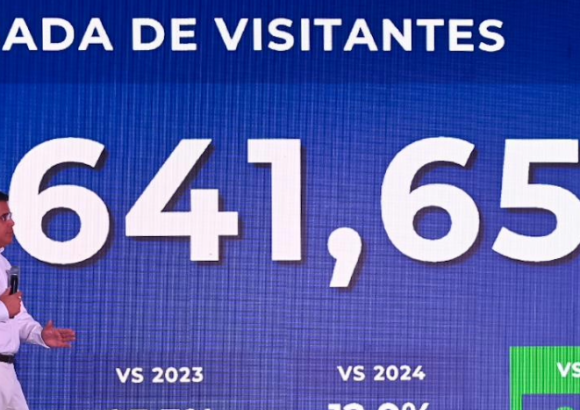
    The Dominican Republic’s tourism sector has sustained its positive upward trajectory through the first five months of 2026, official data from the nation’s top tourism official confirms. Tourism Minister David Collado announced that the Caribbean destination welcomed a total of 5.64 million international visitors between January and May 2026, marking an 8% year-over-year increase compared to the same period in 2025.

    Breaking down the visitor figures, air travel accounted for the largest share of arrivals, with 4.15 million travelers entering the country via commercial and private flights — a 10.8% jump from 2025’s first five months. Cruise tourism remained a steady secondary stream, contributing nearly 1.5 million additional visitors to the annual total.

    The robust growth trend held strong into the final month of the reporting period: Collado confirmed that May 2026 alone saw 744,045 air arrivals, a 10.4% increase compared to May 2025 that outpaces growth rates recorded in pre-2025 years as well.

    When looking at source markets, the United States retains its position as the Dominican Republic’s largest supplier of tourists, accounting for 41% of all international visitors to the country in the 2026 period. Canada follows as the second-largest source market at 21%, with South American nations Argentina and Colombia rounding out the top four at 7% and 5% respectively.

    In terms of airport infrastructure distribution, Punta Cana International Airport — the primary gateway for leisure travelers to the Dominican Republic’s eastern beach resorts — handled the vast majority of air arrivals, processing 66% of all air travelers between January and May. Las Américas International Airport, Cibao International Airport, and Puerto Plata’s Gregorio Luperón International Airport followed in volume, respectively.

    Beyond raw arrival numbers, Collado highlighted strong performance across key industry indicators. Average hotel occupancy across the country hit more than 79% between January and April 2026, while overall visitor satisfaction scored 4.5 out of 5 in official surveys. Strikingly, 93% of surveyed tourists stated they would plan a return trip to the Dominican Republic, and 60% confirmed they would actively recommend the Caribbean destination to friends, family, and social media contacts.

  • IICA highlights support for agriculture and food security at annual accountability seminar in Dominica

    IICA highlights support for agriculture and food security at annual accountability seminar in Dominica

    On June 3, 2026, the Inter-American Institute for Cooperation on Agriculture (IICA) convened its Annual Accountability Seminar in Dominica, bringing together a diverse cohort of cross-sector stakeholders to reflect on the institution’s 2025 work in the country and lay out a roadmap for expanded support to local farmers, agribusiness operators, and rural communities. Carried out under the central theme “From Local Fields to Regional Markets: Strengthening Food Security through Trade, MSMEs and Accountability”, the event served as a critical platform for reviewing past achievements, aligning on upcoming technical cooperation priorities, and centering the growing impact of agricultural micro, small, and medium-sized enterprises (MSMEs) on reinforcing Dominica’s food systems and national economy.

    Stakeholders in attendance spanned government agencies, financial institutions, international development bodies, farmer associations, agro-processing firms, and independent primary producers. Collaborative partnership and coordinated collective action to advance Dominica’s agricultural sector emerged as core themes running through all seminar discussions.

    In his opening address to participants, Gregg Rawlins, IICA’s Representative for the Eastern Caribbean States, underscored the institute’s ongoing work to help local agricultural MSMEs expand their operational footprint and secure improved access to regional consumer markets. Rawlins spotlighted the AgriMSE Business Development and Intra-Regional Market Integration Project, a joint initiative delivered in partnership with the Caribbean Development Bank (CDB) that forms a core part of IICA’s long-term development strategy for the sector.

    “This project forms part of IICA’s ongoing commitment to embedding the AgriMSE sector more deeply into national economies, and helping producers position their goods effectively within mainstream domestic marketing and distribution channels, as well as cross-border intra-regional trade,” Rawlins explained.

    The initiative is structured around three core strategic goals: removing barriers to intra-regional marketing and export activity, boosting the production and operational efficiency of small agricultural enterprises, and expanding their access to formal financing and new investment opportunities.

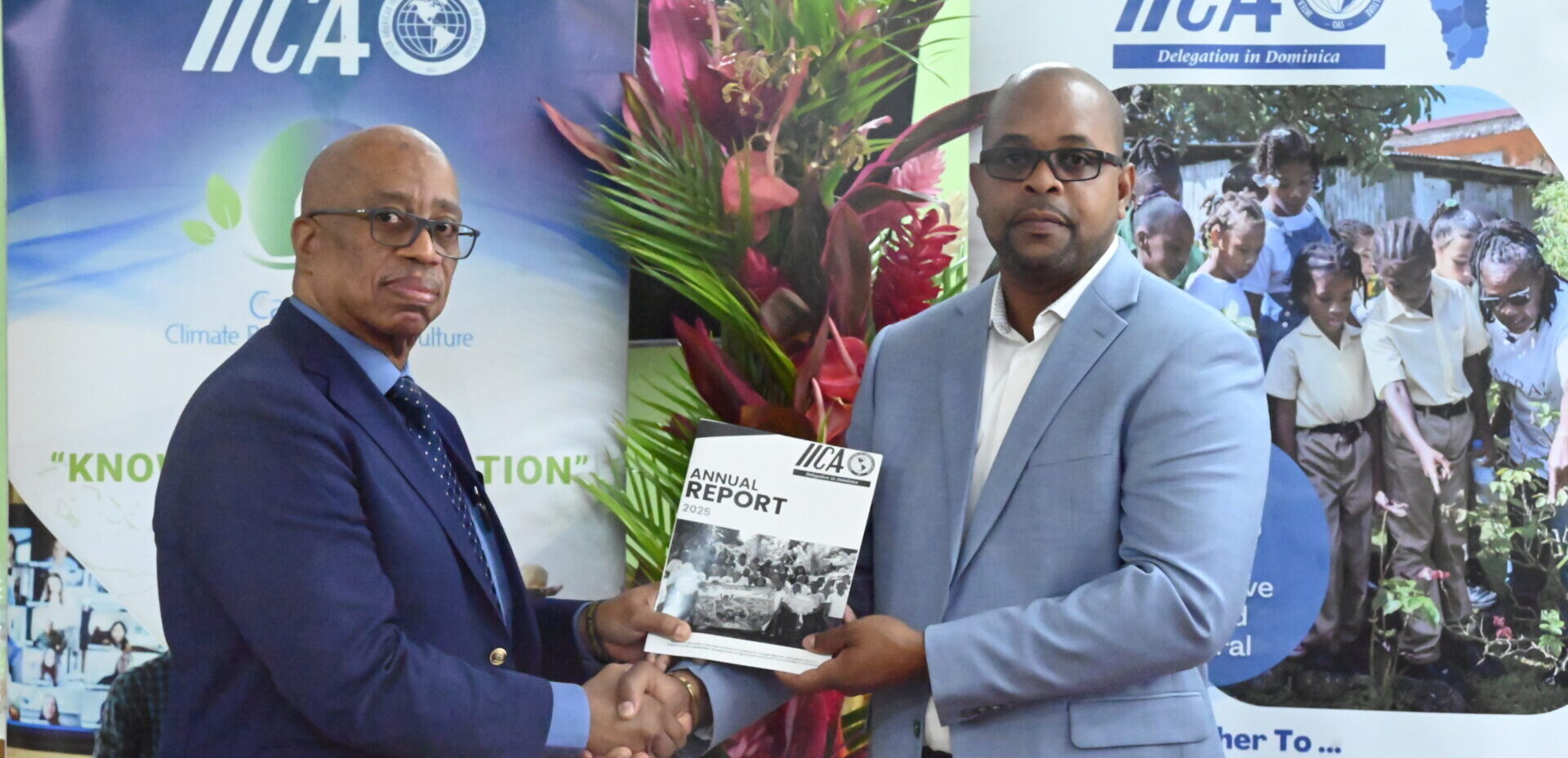
    Technical Specialist Anthony Cyrille led a comprehensive review of IICA’s 2025 programming in Dominica, walking attendees through key milestones achieved over the past 12 months and detailing proposed technical cooperation agendas for the coming year. A highlight of the formal proceedings was the official handover of IICA’s full 2025 Annual Report to Honourable Roland Royer, Minister for Agriculture, Fisheries, Blue and Green Economy of Dominica.

    Minister Royer framed the annual report as more than a record of completed activities, noting that “today, as we receive the 2025 Annual Report, we do not merely see a document of activities completed, but a testament to the enduring partnership between IICA and the Government of Dominica, a partnership that continues to generate tangible benefits for our farmers, fishers, agro-processors, rural communities, women and youth.”

    Royer also recognized IICA’s contributions to a range of foundational agricultural initiatives across the country, including sustainable livestock development programs, the regional white potato development project, high-quality seed production schemes, and specialized training in seed management and climate disaster preparedness. He particularly praised the institute’s consistent focus on supporting women and young people working in the agricultural sector, adding that “the future of agriculture belongs to innovation, technology and youth.”

    The seminar closed with a stakeholder panel discussion that unpacked the most pressing opportunities and persistent challenges facing agricultural MSMEs across Dominica. Representatives from the domestic banking sector, government agencies, and producer groups collaborated to identify actionable, practical strategies to strengthen the sector’s contributions to national food security, inclusive job creation, and equitable rural development. Panellists included Terri Henry-Lovell, Vice President of the Dominica Herbal Business Association; Narrin Murphy, Senior Relationship Officer for Corporate Banking at National Bank of Dominica Ltd; and Micah Walter, Coordinator for Private Sector Relations, Industry, Commerce and Innovation in the Ministry of Labour, Public Service Reform, Social Partnership, Entrepreneurship and Small Business Development.

    In a post-seminar press statement, IICA reaffirmed its long-term commitment to partnering with the Government of Dominica and local stakeholders to build a more resilient, innovative, and globally competitive agricultural sector. The institute noted that its ongoing work will remain focused on advancing programs that support small business entrepreneurship, expanded market access, climate resilience, and inclusive sustainable growth across rural Dominica.

  • MP sees beauty industry as part of broader growth strategy

    MP sees beauty industry as part of broader growth strategy

    Ahead of Barbados’ 60th anniversary of independence, a senior government official is pushing to unlock the massive economic potential of the local beauty industry, framing it as an underutilized engine for inclusive entrepreneurship, job creation, and broad-based national growth. Marsha Caddle, who serves as both Member of Parliament for St Michael South Central and Minister of Economic Affairs and Planning, made the case for expanded beauty sector investment following the conclusion of the inaugural *Art of Her: The Beauty of South Central* contest, an event she organized at Solidarity House Saturday night.

    Caddle explained that the local competition was designed first to spotlight untapped creative talent across her constituency, but also to draw national attention to a global industry that generates more than $700 billion in annual economic activity worldwide. She argued that the beauty sector holds particular promise for expanding economic opportunity for Barbadians, especially women seeking to build their own businesses. “As we head toward our 60th anniversary of independence, I feel like it’s time for us to start exploring other drivers of growth and drivers of growth that are ripe for investment and ownership by many more people so that more people can be a part of the prosperity of Barbados,” Caddle told Barbados TODAY in an interview after the event.

    Beyond direct job and business creation, Caddle highlighted the outsized social impact of supporting women-led entrepreneurship in the sector. When women control their own income, she noted, those earnings consistently flow back into improving child health, family education, and broader community well-being, creating ripple effects that extend far beyond individual businesses. “We have to continue to invest in women’s capacities. We have to make sure that women are always controlling income because income controlled by women helps to contribute to the health and education of children and families,” she said.

    Caddle’s long-term vision extends far beyond a single constituency contest: she hopes initiatives like *Art of Her* will lay the groundwork for the founding and expansion of hundreds of new women-owned beauty businesses across the country. To support that growth, the Mia Mottley administration is already rolling out broader reforms to improve Barbados’ overall business climate, as part of a national strategy to identify 25 to 50 high-growth companies that can drive more inclusive economic expansion. Caddle confirmed that beauty sector businesses are eligible to be among that targeted group of high-potential enterprises.

    What makes the beauty sector particularly compelling, Caddle added, is its deep interconnectedness with other fast-growing creative industries in Barbados, opening up cross-sector growth opportunities that many other sectors cannot match. The industry already has natural synergies with Barbados’ expanding carnival sector, and can provide critical specialized skills to support the country’s emerging film and entertainment sectors.

    Caddle pointed to the government’s ongoing plan to launch a national Barbados film festival, part of a broader push to grow the local film industry by attracting both local content creators and international production companies to film on the island. Local beauty professionals with specialized skills in makeup artistry, hairstyling, and other creative services would be positioned to support these productions, creating an entirely new stream of employment opportunities for local workers. “This is a sector that runs deep. It has potential for tremendous linkages to carnivals all over the world, to the film industry, to all the other parts of the creative sector. So I think that it is one that is worthwhile to invest in,” she said.

    While identifying high-potential growth sectors like beauty is a key priority for the government, Caddle stressed that ongoing business environment reform is equally critical to unlocking long-term economic expansion. The current administration’s top priorities for reform include cutting red tape and reducing wait times for planning approvals, expanding access to affordable financial services for small and medium enterprises, and cultivating a more competitive national business landscape.

    “Both government and the private sector have some work to do on strengthening and modernising what we do, and that is going to be a big focus of mine in the next months and years going forward,” Caddle said. She added that the government’s strategy balances targeted support for emerging high-potential sectors with broad economic reform, noting that intentional investment in sectors with clear existing demand and growth capacity is a core part of the country’s path to shared prosperity. “I think that part of it is to be able to invest in sectors where there’s clearly an interest and there’s clearly capacity for growth, which is what we’re doing with the beauty industry,” she said.

  • NEVLEC announces Reintroduction of Fuel Surcharge

    NEVLEC announces Reintroduction of Fuel Surcharge

    NIA CHARLESTOWN, Nevis – June 16, 2026 – The Nevis Electricity Company Limited (NEVLEC) has announced it will reintroduce a fuel surcharge for residential electricity customers and adjust existing surcharge rates for commercial clients, a policy change driven by relentless upward pressure and volatility in global fuel markets that has outstripped existing cost mitigation measures.

    The utility first adjusted domestic energy tariffs back in May 2024 in a deliberate effort to avoid bringing back a separate fuel surcharge for residential customers. At that time, the restructured tariff was designed to spread fuel costs into the adjusted baseline energy charge, shielding consumers from the full, abrupt impact of fluctuating fuel prices on their monthly utility bills. But persistent, sharp increases in global fuel costs have created unsustainable financial pressure on NEVLEC’s electricity generation operations.

    Internal data from the utility shows its actual fuel cost per kilowatt-hour (kWh) has surged dramatically in recent months: rising from $0.53/kWh in April 2026 to $0.76/kWh in May, and climbing again to $0.79/kWh as of June 2026. This steep upward trajectory has left the current tariff structure unable to absorb the full cost of fuel required to keep the island’s electricity service reliable and operational.

    In response to the market shifts, NEVLEC’s new surcharge policy will go into effect for the June 2026 billing cycle. While the full calculated surcharge based on current fuel costs stands at $0.79/kWh, the utility has approved a discounted rate of $0.69/kWh for domestic customers to soften the immediate financial impact on households. Commercial customers will be billed at the full, market-aligned calculated surcharge rate.

    NEVLEC emphasized that the reintroduced surcharge is not a permanent fixed fee. Rates will adjust dynamically alongside changes in global fuel prices, and the policy is classified as a temporary measure that will be re-evaluated once fuel markets stabilize. The utility says it will continue closely monitoring global fuel cost trends and adjust surcharge rates accordingly as market conditions shift.

    Acknowledging that higher utility costs create financial strain for all customer groups, NEVLEC framed the adjustment as a necessary step to protect the long-term reliability of Nevis’ electricity supply. The change allows the company to recover a portion of its increased fuel expenditures while continuing to deliver consistent power service across the island.

    To help customers offset higher monthly bills, NEVLEC has released a set of practical energy conservation tips for households and businesses. The guidance includes turning off lights, fans, televisions and unused appliances when not in use; unplugging device chargers and idle electronics; limiting air conditioning use and setting thermostats to an energy-efficient 24°C (75°F); keeping doors and windows closed when running air conditioning; switching to energy-efficient LED lightbulbs; running washing machines with full loads; avoiding leaving refrigerator doors open for extended periods; and ironing clothing in single batches to reduce repeated iron heating.

    NEVLEC reaffirmed its ongoing commitment to delivering consistent, reliable electricity service to all customers across Nevis as it navigates ongoing global energy market volatility.

  • Saint Lucia prepares for tourism growth as new projects begin

    Saint Lucia prepares for tourism growth as new projects begin

    The Caribbean island nation of Saint Lucia is on track to record its most rapid tourism expansion in recent years over the coming 18 months, according to the top official of the country’s national tourism governing body.

    Louis Lewis, Chief Executive Officer of the Saint Lucia Tourism Authority (SLTA), outlined this upbeat growth projection during an address delivered at the annual Global Piton Awards on Saturday, June 13. The core driver of this upcoming expansion, Lewis explained, will be a wave of newly completed hospitality infrastructure and purpose-built tourism developments set to enter operation across the island.

    “It’s the quickest growth period that we are going to have in the next eighteen months,” Lewis stated during the event. “There are some new things that are coming to market. We are having additional rooms.”

    Industry analysts note that the planned increase in accommodation capacity will address a long-standing limit on Saint Lucia’s ability to host higher volumes of international travelers. Lewis confirmed that the total inventory of hotel rooms across the island is set to jump by roughly 20%, a substantial upgrade that will directly boost the country’s visitor hosting capacity. “We have been looking at somewhere in the range of about 20% increase in our number of rooms, so that we have the capacity to be able to host more of our visitors,” he added.

    Beyond expanding accommodation capacity, Saint Lucia is also strategically diversifying its tourism product to align with shifting global traveler preferences that have emerged in the post-pandemic era. Long renowned as a premier global destination for romantic getaways, honeymoons and destination weddings, the island is now carving out a growing niche in the fast-expanding wellness tourism segment to attract new audience groups.

    Lewis emphasized that the country has no plans to step back from its core romantic tourism offerings, which have long been a cornerstone of its tourism brand. Instead, wellness travel is being positioned as a complementary addition to Saint Lucia’s portfolio of visitor experiences, with early data already showing measurable growth in this segment. “We’re not going to lose it, but we are adding wellness as well, and we are seeing some growth in that direction,” he explained.

    The shift toward wellness tourism comes as global travel patterns have changed substantially following the COVID-19 pandemic. Lewis noted that post-pandemic travelers increasingly prioritize experiences that center on personal health, holistic well-being and genuine engagement with local culture, a trend that Saint Lucia is well-equipped to accommodate.

    “People are looking for more immersive, integrative, authentic experiences and coming out of COVID we have heightened awareness of our own wellness; people are travelling to immerse themselves in destinations, and we are providing that product,” Lewis said.

    Another key strategic priority for the island is expanding community-based tourism, an approach that aims to distribute the economic benefits of travel more broadly across local populations rather than concentrating them in large, isolated resort properties. The government of Saint Lucia has rolled out targeted initiatives to develop new community-led experiences that encourage visitors to venture beyond resort grounds and connect directly with local communities and ways of life.

    One of the most anticipated new tourism projects breaking new ground for Saint Lucia is the development of three underwater sculpture parks, a unique attraction that combines art, cultural storytelling and environmental stewardship. Set to feature approximately 300 original sculptures — many of which will be built at larger-than-life scales — the underwater parks are designed to showcase the island’s cultural narrative while advancing global sustainability and marine conservation goals.

    Lewis explained that the one-of-a-kind attraction does more than just offer visitors a unique recreational experience: it uses public art to share the full story of Saint Lucia, from its historical origins to its current work leading climate action and environmental protection among small island developing nations. “That is where you get to see Saint Lucia’s story, not just the history of how we’ve come to where we are but what we are doing with regard to sustainability and environmental preservation,” he said.

    Despite being a small island nation with limited global economic influence, Saint Lucia is positioning itself as a leader in innovative, sustainable tourism development, Lewis added. The underwater sculpture park project is just one example of how the country is leveraging creative tourism experiences to advance global environmental protection efforts, demonstrating that small nations can deliver outsized impact in climate and conservation action.

  • Trinidad and Tobago company selected for operation and maintenance of Wales Natural Gas Liquids plant

    Trinidad and Tobago company selected for operation and maintenance of Wales Natural Gas Liquids plant

    On Tuesday, June 16, 2026, Guyana’s Office of the Prime Minister made a landmark announcement for the country’s transforming energy sector: a consortium led by Trinidad and Tobago’s Phoenix Park Gas Processors Limited (PPGPL), in partnership with local private firm GuyGas Inc., has secured the top ranking in competitive bidding for the Operations and Maintenance (O&M) contract of Phase 1 of the Gas-to-Energy (GTE) project’s Natural Gas Liquids (NGL) Plant. Cabinet has already issued formal no-objection to open exclusive negotiations with the joint venture, marking a major milestone toward the project’s targeted 2027 launch.

    The selection of the PPGPL-GuyGas consortium followed a rigorous, transparent competitive procurement process overseen by Guyana’s National Procurement and Tender Administration Board. The request for proposals was publicly advertised in January 2025 across four major local Guyanese publications: the Guyana Chronicle, Guyana Times, Kaieteur News, and Stabroek News. In total, five qualified proposals were submitted, which an independent Evaluation Committee assessed against strict administrative, technical, and financial criteria. The PPGPL-led bid emerged as the clear front-runner, earning the highest marks for technical competence while presenting the most cost-beneficial commercial terms for the government of Guyana.

    Officials clarified that the negotiated O&M arrangement will exclusively cover core operations and long-term maintenance planning for the Phase 1 NGL facility. Separate procurement processes are already underway for other associated project components, including LPG supply and bottling, sales and marketing of residual NGL products, and the development of additional NGL storage and offloading infrastructure.

    The announcement comes one week after Trinidad and Tobago’s Energy Minister Dr. Moonilal confirmed ongoing bilateral discussions between the two Caribbean nations regarding the Wales, Guyana-based NGL plant. During a parliamentary address, Dr. Moonilal noted that high-level talks between Guyana’s President and Trinidad and Tobago’s Prime Minister had deepened cooperation on the project, paving the way for the current selection process. PPGPL, the lead operator in the consortium, is majority-owned by Trinidad and Tobago’s state-run National Gas Company and brings decades of regional experience in natural gas liquids processing and operations. Local partner GuyGas is a fully privately owned Guyanese company, selected to anchor local participation in the project.

    A core priority of the O&M contract, government officials emphasized, is advancing local content development and skills transfer to Guyanese workers. The structure of the partnership is designed to maximize local employment from the project’s outset, with a phased transition plan that will gradually hand over greater operational and maintenance responsibility to Guyanese personnel. The arrangement includes structured training programs, ongoing mentorship from PPGPL’s experienced industry teams, and intentional capacity building to grow domestic expertise in the energy sector.

    As part of the broader integrated GTE project located near Georgetown, the NGL plant will play a critical dual role in Guyana’s energy future. It will process associated natural gas brought ashore from the Stabroek Block, feeding the project’s power generation facility to produce lower-cost, cleaner electricity for Guyanese households and businesses. At the same time, the plant will recover high-value propane, butane, and pentanes-plus products for both domestic use and export to global markets. Industry observers note that engaging an experienced regional operator like PPGPL is intended to ensure the facility launches and operates safely, reliably, and efficiently from its targeted start-up in the first quarter of 2027.

    In a separate confirmation, the Prime Minister’s Office announced that Siemens Energy has been selected as the O&M operator for the GTE project’s 300-megawatt combined-cycle power plant, as well as the project’s balance of plant and auxiliary facilities. Siemens Energy will take on overall coordination responsibility for operations and maintenance across the entire integrated GTE facility, with the NGL plant’s operations integrated into this overarching framework.

    Before any contract can be finalized and signed, the proposed O&M arrangement will undergo additional technical and legal due diligence reviews. These checks, to be conducted by the Ministry of Legal Affairs and the Attorney General’s Chambers, will verify that all commercial terms, performance benchmarks, and structural arrangements align with international industry best practices and comparable sector agreements.

    For the government of Guyana, the GTE project remains a cornerstone of national economic and energy strategy. The initiative is designed to deliver reliable, affordable, lower-carbon energy to the Guyanese population while simultaneously building domestic energy capacity and unlocking new economic opportunities across the entire natural gas value chain.

  • Tancoo: Budget 2027  for union settlements

    Tancoo: Budget 2027 for union settlements

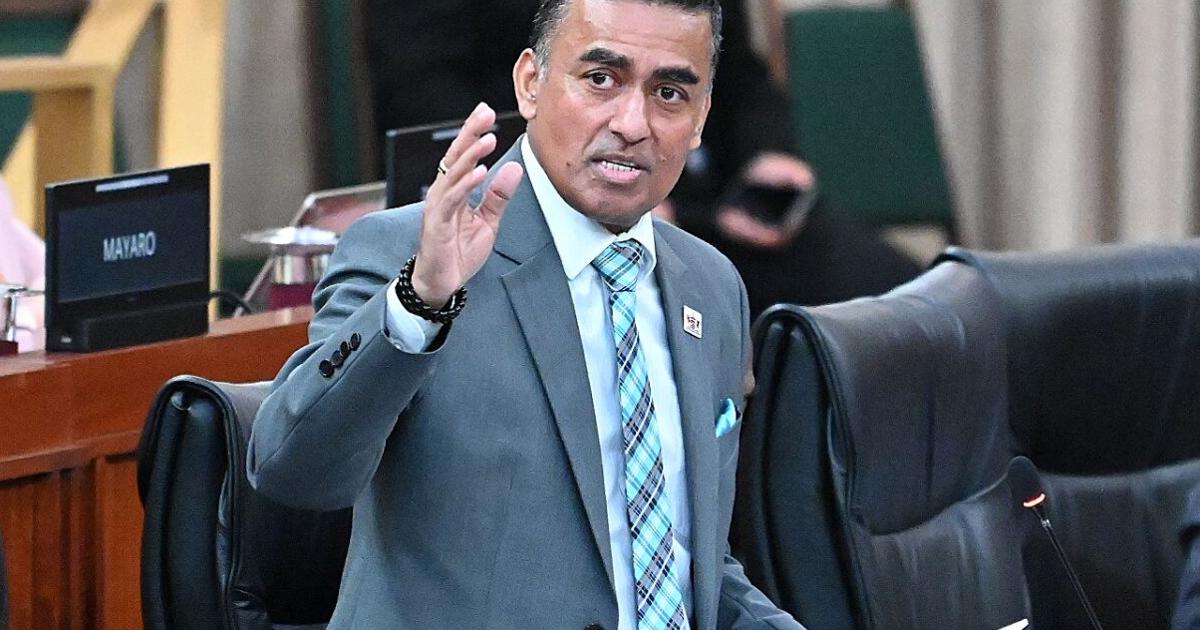
    During a parliamentary sitting in Port of Spain focused on approving the Standing Finance Committee’s report, Trinidad and Tobago’s Finance Minister Davendranath Tancoo made two key fiscal announcements that shape the country’s near-term economic and public policy trajectory. First, he confirmed that dedicated budget line items will be included in the 2027 national fiscal budget to cover all obligations finalized through ongoing collective bargaining negotiations with public sector worker unions, including those representing nurses and teachers. Addressing growing anxiety among union members waiting for negotiation outcomes, Tancoo noted that the full tabulation and quantification of outstanding settlement costs will take several more weeks to complete, assuring workers that promised relief will be formalized once the 2027 budget is introduced later this year. “Relief is coming, the documentation is being provided now and in fiscal 2027 the relevant appropriations will be made,” he stated to Parliament. Beyond the union negotiation announcement, Tancoo used the debate to defend the current administration’s request for an additional $2.9 billion in supplementary government funding, explaining the allocation is needed to cover urgent recurrent and capital expenditure obligations through September 30, 2026. He clarified that until a full new Appropriation Bill is tabled at the end of the current financial year, the supplementary funding will be allocated under existing expenditure heads, with administrative safeguards in place to keep all government operations running without disruption. Tancoo also used the parliamentary session to outline the current UNC administration’s economic progress over its first year in office, contrasting its performance with the former PNM government led by previous Finance Minister Colm Imbert. He emphasized that the current government has reversed years of sustained national economic decline within 12 months, acknowledging that global external shocks continue to shape domestic economic outlooks, impact investment conditions, drive cost-of-living changes and affect citizen livelihoods. “Governments are not judged by whether economic storms arise, but by how they respond,” Tancoo told the chamber. A core point of criticism directed at the previous administration was the 2010s closure of the Petrotrin state-owned refinery, which Tancoo labeled a critical strategic national asset. He argued its closure eroded the country’s energy security and forced increased reliance on more expensive imported refined fuel. Looking forward, he confirmed the current government will continue supporting the domestic energy sector, but will not rely on energy as the country’s sole long-term economic growth strategy. Tancoo also highlighted responsible management of the country’s Heritage and Stabilisation Fund (HSF), reporting that as of June 4, 2026, the sovereign wealth fund held US$6.6 billion in assets – a roughly US$620 million increase from the US$5.98 billion valuation recorded on April 30, 2025. Defending the $2.9 billion supplementary funding request, Tancoo emphasized the allocation is tied to active government programs, ongoing infrastructure projects and core public services currently being delivered to citizens. “The machinery of Government has accelerated, projects are being executed, and the nation’s development agenda is gaining momentum,” he said, noting the funding supports school repairs, critical infrastructure upgrades, public servant payrolls and institutional restoration. “Public servants are being paid. Obligations are being honoured. We are supplementing because we are delivering.” To counter opposition criticism of the supplementary request, Tancoo compared the current ask to supplementary funding approved under the previous PNM administration, noting that between 2016 and 2024, former Finance Minister Colm Imbert greenlit a total of $20.7 billion in expenditure increases, including $17.7 billion in additional draws from the national Consolidated Fund. He accused Imbert of hypocrisy, noting that what the previous government labeled standard fiscal practice is now being framed as irresponsible by the opposition. “The financial crises that this country has been placed in, must be bolted to his chest. He and the PNM are responsible,” he said. Tancoo then laid out key fiscal improvements delivered in the administration’s first year: when the UNC took office, the national fiscal deficit stood at $10.07 billion, equal to 5.8% of GDP; that figure has now been cut to $7.01 billion, or 4% of GDP – a nearly two percentage point reduction in just 12 months. Interest payments on national debt have also fallen from $7.13 billion under the PNM to $6.91 billion, freeing up additional resources for public investment rather than debt servicing. Most notably, the country’s primary fiscal balance has shifted from a $2.93 billion deficit under the previous government to a near-balanced position of a $101 million surplus, bringing Trinidad and Tobago to the threshold of a primary surplus after years of consecutive primary deficits. On the revenue front, Tancoo highlighted new revenue reforms introduced in the 2026 national budget designed to boost collection and strengthen long-term fiscal sustainability. Three new measures – the Commercial Bank Asset Levy, Electricity Surcharge, and Landlord Registration Fee and Business Surcharge – have generated approximately $224 million in new revenue since they launched in January 2026. Broader administrative and digital reforms are also underway, including modernization of the Inland Revenue and Customs and Excise Divisions and their information technology systems, the creation of a Real Estate Investment Trust (REIT) to monetize high-value state-owned assets, and preparation for the launch of NIF Bond 3 in September 2026. Work is also progressing on a new transfer pricing regulatory regime to improve tax compliance, boost foreign exchange earnings and strengthen the country’s external position. For the first seven months of the 2026 fiscal year (October 1, 2025, to April 30, 2026), total national revenue hit $30.1 billion, exceeding the original projection of $28 billion. Total expenditure came in at $31.8 billion, below the projected $34.5 billion, resulting in a deficit of approximately $1.7 billion for the period. Oil prices averaged US$62.09 per barrel in the first quarter of 2026 and US$77.64 in the second quarter, compared to the full-year budget assumption of US$73.25 per barrel, while natural gas prices averaged US$4.20 per MMBtu, matching initial projections. Tancoo acknowledged that first-half expenditure was inflated by long-outstanding liabilities, legacy debt and structural weaknesses inherited from the previous administration, including unpaid VAT bond obligations, delayed VAT refunds owed to local businesses, accumulated subsidy liabilities, and ongoing operational and financial challenges at state-owned enterprises. The minister also highlighted the administration’s progress in resolving long-stalled public sector wage negotiations, including a finalized settlement with the Public Services Association that delivered a 10% base salary increase for public servants. To ease immediate cost-of-living pressures, tens of thousands of public workers received one-time cash advances of between $10,000 and $20,000 against their retroactive back pay, with roughly $224.8 million disbursed across multiple sectors to date. Between October 1, 2025, and May 30, 2026, the government also spent $395 million on fuel subsidies to shield domestic consumers from volatile global energy price increases. Updated projections for the remainder of the 2026 fiscal year forecast average oil prices of US$85 per barrel and natural gas prices of US$4.50 per MMBtu, up from the original budget assumptions. Combined with other adjustments, these higher commodity prices are expected to boost total annual revenue by $381.7 million, resulting in a projected full-year fiscal deficit of $7.0 billion. Tancoo confirmed the $2.9 billion in supplementary expenditure will be financed through a mix of domestic and external borrowing, including partnerships with major multilateral development institutions.

  • Antigua and Barbuda strengthens global MICE positioning

    Antigua and Barbuda strengthens global MICE positioning

    The twin-island Caribbean nation of Antigua and Barbuda has launched a targeted, multi-pronged strategic initiative to strengthen its position as a premier global destination for Meetings, Incentives, Conferences, and Exhibitions (MICE), a high-growth segment of the international tourism and business travel landscape.

    Against a backdrop of post-pandemic recovery in global business events, where destinations worldwide are competing aggressively to capture corporate and organizational travel spending, Antigua and Barbuda is leaning into its unique combination of geographic appeal, modern infrastructure upgrades, and personalized service offerings to carve out a distinct niche. Government tourism officials and private sector stakeholders have partnered to roll out a series of improvements, including expanded venue capacity at major conference centers, upgraded digital connectivity for hybrid events, and new incentive packages designed to attract small to mid-sized corporate retreats, regional industry summits, and international non-profit gatherings.

    Unlike large, crowded MICE hubs in major metropolitan areas, the nation’s selling point lies in its combination of business productivity and post-event leisure opportunities, with white-sand beaches, luxury resort accommodations, and a stable, welcoming political environment that appeals to event organizers seeking a distraction-free yet memorable setting for their gatherings. Officials note that growing the MICE segment delivers outsized economic benefits compared to traditional leisure travel, as MICE attendees typically spend 2-3 times more per visit than regular tourists, generate off-peak occupancy for hotels, and create high-quality local jobs in hospitality, event management, and transportation.

    The push also includes targeted marketing campaigns at major global MICE trade shows, including ITB Berlin and IMEX America, where the destination is highlighting its new incentives such as tax breaks for international event organizers, streamlined visa processing for attendees, and dedicated event planning support teams to reduce logistical burdens. Industry analysts point out that this strategic move aligns with broader global trends in the MICE sector, where more organizations are seeking unique, less crowded destinations that offer both value and a high quality of experience for attendees.