分类: business

  • JAPEX 2026 moves to Ocho Rios

    JAPEX 2026 moves to Ocho Rios

    MONTEGO BAY, St James — Jamaica’s leading annual tourism industry gathering, the Jamaica Product Exchange (JAPEX), organized by the Jamaica Hotel and Tourist Association (JHTA), will break with decades of tradition this year, hosting the flagship marketing event in Ocho Rios rather than its long-time home of Montego Bay. The sudden venue change is a direct response to ongoing room shortages across western Jamaica, as the region continues its slow recovery from the devastating impact of Category 5 Hurricane Melissa that struck last October.

    Christopher Jarrett, president of the JHTA, confirmed the relocation in an interview with Jamaica Observer on Monday, noting that insufficient available accommodation in the Montego Bay area left industry leaders with no other viable option. For years, JAPEX has been held at the Montego Bay Convention Centre, drawing thousands of global tourism stakeholders, travel buyers and hospitality operators each year while generating significant revenue for local hotels, restaurants and attractions across western Jamaica.

    While Jarrett has not yet released details of the exact Ocho Rios venue set to host the 2026 edition of the event, he emphasized that the move is part of a broader, industry-wide adaptive strategy that will remain in place until western Jamaica’s tourism infrastructure fully rebounds from the hurricane damage.

    “We intend to continue to pivot as best we can to ensure that the events are still in Jamaica — whether it’s in Ocho Rios, Montego Bay or Kingston,” Jarrett said, underscoring the association’s commitment to keeping the iconic industry event on Jamaican soil despite current challenges.

    Industry insiders report that the Meetings, Incentives, Conferences, and Exhibitions (MICE) tourism segment has been hit particularly hard by post-hurricane disruptions across western Jamaica, a reality Jarrett openly acknowledged. “We are seeing some of that but we have been pivoting and moving it across the island,” he conceded.

    Compounding the post-storm recovery challenges is ongoing geopolitical instability in the Middle East, which has driven a measurable drop in visitor arrivals from several of Jamaica’s traditional source markets. But Jarrett pointed to pre-emptive diversification efforts that the JHTA launched years before the current conflict, which are already beginning to offset losses in established markets.

    “Over the last few years, there’s been a build-up in focus on the Latin America market and we’re seeing some of those results now. We remain optimistic because we expect that the Latin American market, which has been more vibrant in recent times, will take up some of the slack that we’ll lose from the United States,” Jarrett explained.

    The veteran hospitality leader stressed that pro-active mitigation work carried out by the JHTA and its public and private sector partners has put Jamaica in a strong position to navigate the overlapping economic and infrastructure shocks. “We are concerned, we are definitely concerned but I’m just saying that whatever we should have been doing to mitigate this situation that exists now, we were already doing,” he said.

    He highlighted expanded air access as a key driver of growth in new source markets, noting that Copa Airlines has increased flight capacity to Jamaica from Latin American hubs. “we are hopeful and optimistic that notwithstanding the fallout in the US market that we’ll see some pick-up,” he added.

    While Jarrett admitted that Jamaica’s tourism sector has not yet returned to the pre-storm, pre-conflict level of activity that stakeholders hope for, he said the industry is doubling down on promoting the island’s core competitive advantages: safety, security and a seamless travel experience for international visitors, in partnership with the state-run Jamaica Tourist Board.

    Beyond attracting international visitors, the industry is also turning to domestic consumers to fill empty room inventories, ramping up promotion of domestic staycations. Jarrett noted that while national campaign coordination has been left to individual property operators, many hotels have already launched targeted promotions and discounted rates for Jamaican residents.

    “if you talk to the hoteliers individually, they will tell you that they’ve been encouraging staycations. You may have seen a few ads out for special rates for locals and so on,” he added.

    That call for domestic support was echoed by Kerry Ann Quallo-Casserly, chair of the JHTA’s Montego Bay chapter, who urged Jamaicans who typically travel abroad for vacation to choose domestic getaways to support the recovering industry. “Locals who would normally go to places like Dubai, USA should choose staycations,” she urged.

  • Oil rises, stocks mixed as US-Iran peace talk hopes dim

    Oil rises, stocks mixed as US-Iran peace talk hopes dim

    Global financial markets kicked off a high-stakes trading week with mixed trading across equities and rising crude oil prices on Monday, as diplomatic efforts to de-escalate tensions between Iran and the United States hit an unexpected standstill. What began as a surge of optimism over potential new negotiations between Washington and Tehran over the weekend quickly fizzled out, after former US President Donald Trump called off a planned meeting between negotiating envoys this past Saturday.

    The breakthrough in hopes came after Iranian Foreign Minister Abbas Araghchi’s diplomatic visit to Islamabad over the weekend, which spurred early speculation that both sides could return to the bargaining table to resolve ongoing conflict. However, on Monday, Araghchi publicly placed blame for the collapsed talks squarely on Washington, citing what he called “excessive demands” from US negotiators during the first and only planned round of negotiations in Pakistan. He also reaffirmed that unobstructed safe passage through the Strait of Hormuz, the critical global chokepoint for energy shipments that remains largely closed amid the ongoing standoff, is a non-negotiable priority for the international community.

    Speaking to Fox News, Trump downplayed tensions following the cancellation, noting that Iran could reach out to initiate new talks at any time if it is willing to negotiate, and added that the scrapped meeting does not mean a return to open military hostilities. According to anonymous sources familiar with the proposal cited by US news outlet Axios over the weekend, Iran had tabled a new peace proposal that would prioritize reopening the Strait of Hormuz and ending the US naval blockade of the waterway, while pushing controversial nuclear negotiations back to a future date. That proposal had been enough to temper sharp gains in crude oil markets, as traders held out some residual hope that a diplomatic agreement could still be reached eventually.

    Against this geopolitical backdrop, both benchmark global crude oil contracts climbed higher on Monday. Brent crude, the global benchmark for two-thirds of the world’s oil trade, pushed above $108 per barrel, lifted by persistent concerns over disrupted energy supplies through the Strait of Hormuz, which carries roughly a fifth of all global oil shipments. Gains were held in check however by lingering hopes that the new Iranian proposal could open a path to a diplomatic resolution.

    Global stock markets traded unevenly through the session, as investors shifted to a cautious wait-and-see approach ahead of a packed week of monetary policy decisions from major central banks and a wave of high-profile corporate earnings reports. On Wall Street, both the S&P 500 and the Nasdaq composite posted small incremental gains to close the day at new all-time record closing highs, bucking the broader cautious trend. In contrast, the Dow Jones Industrial Average pulled back from recent highs, joining leading indices across Europe and Asia that finished the trading session in negative territory.

    Derren Nathan, head of equity research at leading UK financial services firm Hargreaves Lansdown, noted that investor optimism for a quick diplomatic breakthrough on Iran was always muted from the start. “It may be that hopes of a diplomatic breakthrough were pretty faint to start with, and markets are now in wait-and-see territory ahead of a heavy week of earnings and economic touchpoints,” Nathan explained.

    With energy prices remaining elevated and persistent inflationary pressures still being felt across major advanced economies, market analysts broadly expect the US Federal Reserve will hold interest rates steady at its policy meeting on Wednesday. The Federal Reserve’s decision will be followed by similar policy announcements from the European Central Bank and the Bank of England later in the week, with all three central banks widely projected to keep borrowing costs unchanged as they assess incoming economic data.

  • Spotify reaches 761 million active users

    Spotify reaches 761 million active users

    Leading global music streaming platform Spotify has announced strong first-quarter financial and user growth results, with key metrics hitting or exceeding the company’s earlier projections, the firm confirmed in a statement out of its Stockholm headquarters Tuesday.

    By the end of the first three months of the year, Spotify’s total monthly active users (MAUs) climbed to 761 million, edging past the company’s own guidance of 759 million. Its base of paid premium subscribers also hit 293 million, landing exactly in line with internal forecasts.

    “We surpassed 760 million MAU, delivered on the subscriber growth we aimed to achieve, and saw healthy engagement from existing users, reactivations and new users alike,” said Alex Norstrom, one of Spotify’s current co-chief executives, in the official release.

    The leadership structure at Spotify has shifted recently: founder Daniel Ek stepped down from the chief executive role at the start of 2026, passing day-to-day leadership to co-CEOs Norstrom and Gustav Soderstrom. Ek remains closely involved with the company, however, staying on as active executive chairman to guide long-term strategy.

    On the financial side, first-quarter total revenue hit 4.5 billion euros, equal to roughly $5.3 billion U.S. dollars. That marks an 8% year-over-year increase from the same period last year. Operating income saw even steeper growth, jumping 40% annually to 715 million euros for the quarter.

    Looking ahead to the near term, Spotify has laid out new near-term targets. The firm projects that by the end of the second quarter in June, it will grow its MAU base to 778 million and expand its paid subscriber count to 299 million.

  • GGPAJ welcomes US cannabis reclassification

    GGPAJ welcomes US cannabis reclassification

    KINGSTON, Jamaica — In a development reshaping the global cannabis landscape, the Ganja Growers and Producers Association of Jamaica (GGPAJ) has publicly hailed the United States’ decision to reclassify cannabis from a strict Schedule I controlled substance to a less restrictive Schedule III, framing the policy shift as both a landmark opening and a critical wake-up call for Jamaica’s homegrown cannabis sector. The GGPAJ outlined its stance in an official press statement released Tuesday, breaking down the far-reaching implications of the U.S. policy change for Jamaican producers.

  • Panka: Succesvolle carrièrebeurs 2026 met focus op diaspora en talent

    Panka: Succesvolle carrièrebeurs 2026 met focus op diaspora en talent

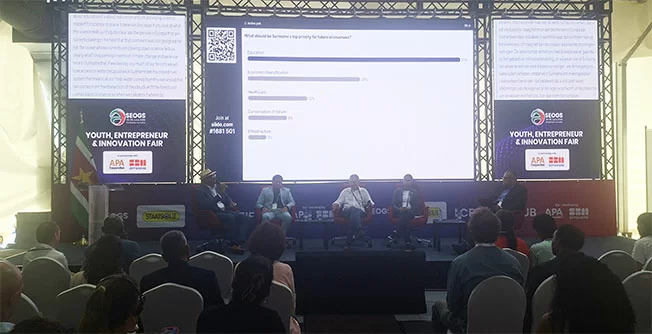
    Suriname has wrapped up a highly successful participation in the 2026 Nationale Carrièrebeurs (National Career Fair) held in the Netherlands, with government representatives and local industry leaders praising the outcomes of the two-day event. The South American nation’s embassy in the Netherlands brought a delegation of 14 Surinamese companies to the exhibition, where the mission centered on three core priorities: nurturing new talent, expanding career pathways for prospective workers, and strengthening ties between Suriname and its global diaspora community based in the Netherlands.

    The fair ran across April 24 and 25, and during that time embassy staff held hundreds of one-on-one interactions with attendees, with a particular focus on engaging members of the Surinamese diaspora. According to Surinamese Ambassador Ricardo Panka, visitor interest in the delegation was robust, with many attendees eager to learn about recent economic and social developments back in Suriname. Many also came with practical questions covering consular services, from the PSA scheme and passport renewal processes to other related administrative procedures.

    Among student attendees, the most common inquiries focused on available work and career opportunities upon graduation, as well as guidance on how young skilled Surinamese professionals can contribute to their home country’s ongoing economic expansion. Panka noted that the direct, personalized conversations and targeted information provision offered by the Surinamese delegation were widely well-received by fair guests.

    The 14 participating companies showcased a wide range of open roles and career pathways across multiple key sectors of Suriname’s economy. A particular highlight of the delegation’s presentation was addressing the growing demand for technically skilled and highly educated workers, a need that has expanded rapidly in anticipation of major new developments in Suriname’s oil and gas industry, which is set to drive significant economic growth in the coming years.

    In advance of the main career fair, the Surinamese embassy partnered with event organizers to host a dedicated pre-fair information session on April 22 for Surinamese student organizations across the Netherlands. The session saw strong turnout from the student community, and gave early access for attendees to connect directly with business leaders from the Surinamese delegation.

    Suriname’s leading financial institutions also had a presence at the fair, where they shared information not only on open employment opportunities in the country’s banking and financial services sector but also on specialized services tailored to the needs of the Surinamese diaspora. These included details on digital account opening, savings products, lending options, insurance coverage and other core banking facilities for community members living abroad.

    Event organizers from the Surinamese side say the active participation of the embassy, consular team and national private sector has laid a solid foundation for future collaboration, ongoing talent development programming, and deeper, more productive engagement with the diaspora community. The Nationale Carrièrebeurs is widely recognized as the largest career event in the Netherlands and the Dutch Caribbean, catering specifically to mid-level vocational, higher professional and university students, as well as early-career young professionals.

  • Voedselzekerheid en -veiligheid centraal tijdens agrarische beurs

    Voedselzekerheid en -veiligheid centraal tijdens agrarische beurs

    As the global agricultural community continues to grapple with pressing challenges from climate volatility to shifting supply chains, Suriname’s Ministry of Agriculture, Livestock and Fisheries (LVV) is preparing to host a landmark three-day agricultural fair, scheduled to run from May 1 to May 3. With nearly 200 registered exhibitors already signed on to participate, the event centers three core pillars that have become defining priorities for the future of the country’s agrarian sector: long-term food security, rigorous food safety, and climate-aligned sustainable development.

    Exhibitors who have secured booth space at the fair have expressed widespread enthusiasm for the upcoming gathering, which they frame as a rare opportunity to connect directly with consumers, industry peers, and potential investors. Their core goal is to introduce visitors to cutting-edge sustainable agricultural practices, innovative locally developed products, and new, accessible pathways to enter and thrive in the farming sector. Across the board, participating entrepreneurs have emphasized that the fair creates unique openings for cross-sector collaboration, business expansion, and open knowledge sharing — benefits that extend equally to early-stage startup ventures and well-established, long-standing agribusinesses.
    Beyond commercial opportunities, exhibitors have highlighted the fair’s broader social and economic impact priorities. These include expanding economic empowerment for young and senior farmers alike, boosting domestic local agricultural production, strengthening the national agrarian sector by reducing reliance on imported food goods, and delivering targeted support to small-scale and independent Surinamese producers. For participants, the gathering is far more than a trade show: it is a critical public platform to share ideas, spread technical knowledge, and drive tangible, inclusive development across Suriname as a whole.

    Quintis Ristie, a member of the fair’s organizing working group, noted that the event brings together all key stakeholders in Suriname’s agricultural ecosystem to advance shared goals around food security and sustainable production. Ahead of the fair’s launch, organizers held a preliminary teach-in session to provide participating exhibitors with detailed updates on event logistics, on-site rules, and available facilities — a step taken to ensure the gathering runs smoothly and remains well-organized for all attendees and participants. Even with this pre-event briefing, some exhibitors have called on the LVV event organizers to provide additional, more detailed clarity on official rules and participation terms to help them finalize their preparations.

    The fair is designed to serve as a centralized meeting point where producers, business owners, agricultural students, and local and international investors can gather to exchange innovative ideas and capitalize on emerging market opportunities. For general visitors, the event offers a hands-on chance to explore the full scope of new developments and opportunities across Suriname’s agricultural sector. Exhibits will cover a wide spectrum of practices and technologies, ranging from large-scale modern innovations such as smart irrigation systems and advanced farm mechanization to small-scale, accessible production methods suited for home-based food growing.

  • Mining sector leads Dominican economic growth with 7.7% expansion

    Mining sector leads Dominican economic growth with 7.7% expansion

    SANTO DOMINGO — The Dominican Republic’s mining industry emerged as the fastest-growing segment of the national economy in the first quarter of 2026, posting a 7.7% year-over-year expansion that outpaced broader economic gains, according to Energy and Mines Minister Joel Santos. Preliminary figures released by the Central Bank of the Dominican Republic put the country’s overall first-quarter economic growth at 4.1%, marking the mining sector’s outperformance by more than 3.5 percentage points. Minister Santos attributed the sector’s robust growth to elevated extraction volumes of key commodities including gold, silver, and construction-grade materials, a trend that has cemented mining’s standing as one of the nation’s leading export-driven industries. The sector closed 2025 on a strong note, with total export values exceeding $2.5 billion, and total tax contributions to the national government hitting roughly 45 billion Dominican pesos, providing substantial support to public coffers. Alongside the strong performance of mining, the minister also reported solid 3.4% growth for the broader energy sector across the first three months of 2026. This expansion has been fueled by rising domestic and commercial demand for electricity, paired with ongoing large-scale upgrades to the Dominican Republic’s national power infrastructure. Since 2020, the country’s total installed power generation capacity has jumped significantly, climbing from just 4,921 megawatts to more than 7,100 megawatts by the end of 2025. Renewable energy projects account for a large portion of this new capacity buildout, advancing the country’s goal of energy market diversification. Minister Santos highlighted ongoing strategic projects that are shaping the future of the nation’s energy sector, including the Manzanillo Power Land initiative and the rollout of expanded battery energy storage systems. These investments are designed to boost grid reliability, reduce dependence on single energy sources, and create a more resilient national power network. Looking ahead, Santos emphasized that both the mining and energy sectors will remain core pillars of the Dominican Republic’s economic strategy, continuing to draw foreign and domestic investment, shore up public finances, and support long-term, sustained economic growth across the country.

  • The Santiago de Cuba refinery also produced naphtha, fuel oil, and diesel from domestic crude oil

    The Santiago de Cuba refinery also produced naphtha, fuel oil, and diesel from domestic crude oil

    Amid decades of escalating economic and energy blockades that have squeezed the Caribbean nation’s energy sector, Cuban oil industry specialists have achieved a landmark technological breakthrough, unlocking the value of the country’s untapped domestic heavy crude reserves that were long written off as unrefinable.

  • Dominican Republic maintains global leadership in premium cigar production and exports, says Intabaco Director

    Dominican Republic maintains global leadership in premium cigar production and exports, says Intabaco Director

    At the 26th annual Premium Cigar Association (PCA) convention, held recently in New Orleans under the banner “PCA 26: Back in the Big Easy”, a top Dominican industry official has reaffirmed the Caribbean nation’s unrivaled standing in the global premium cigar market. Speaking to industry stakeholders from around the world, Iván Hernández Guzmán, director of the Dominican Republic’s Tobacco Institute, outlined the robust production and export metrics that underpin the country’s decades-long leading position.

    Hernández Guzmán revealed that the Dominican craft cigar sector churns out more than 196 million handmade premium cigars each year. The vast majority of these luxury products are shipped to international markets, reaching consumers across 148 different countries. Among these global destinations, the United States continues to dominate as the single largest importer and consumer of Dominican premium cigars, remaining the country’s core trading partner for the high-value product.

    The official went on to highlight the key competitive advantages that set Dominican premium cigars apart from competitors around the globe. Unlike mass-produced machine-made alternatives, Dominican premium cigars have earned international acclaim for their time-honored artisanal production methods, carefully controlled aging processes, complex balanced flavors, distinctive aromatic profiles, and wide range of tobacco options.

    This reputation for quality is rooted in the country’s unique agricultural ecosystem, which supports the cultivation of several world-renowned premium tobacco cultivars. These include the iconic Olor Dominicano, Piloto Cubano, and San Vicente varieties, which form the backbone of the country’s thriving cigar manufacturing ecosystem. The sector is home to a diverse roster of established, globally recognized brands, including pioneering Dominican manufacturer La Aurora, industry giant General Cigar Dominicana, and boutique luxury producer La Flor Dominicana.

    Beyond sharing industry data, the convention served as a critical platform for Dominican cigar producers to showcase their latest releases, connect with global distributors and retailers, and expand their footprint in existing and emerging international markets. Industry observers note that the country’s continued output growth and market reach confirm its status as the undisputed global hub for premium handmade cigar production.

  • Haiti : Access work underway at the Mont Fleury solar power plant site

    Haiti : Access work underway at the Mont Fleury solar power plant site

    Haiti’s landmark renewable energy transition is moving one step closer to reality, as access improvement works get underway at the Mont Fleury site earmarked for the new Jacmel photovoltaic solar power plant. This progress comes on the heels of the recent construction contract signing for the project, which stands as one of the Caribbean nation’s most ambitious renewable energy investments in recent years.

    Joseph Almathe Pierre Louis, Haiti’s Minister of Public Works, Transport and Communications (MTPTC), has formally directed engineering teams to accelerate upgrades to key road sections leading to the project site. The Southeast Departmental Directorate (DDSE-Jacmel) is providing technical oversight and support for the infrastructure works, which serve a dual purpose: clearing the way for smooth construction of the solar facility and delivering long-awaited connectivity improvements for local residents in Mont Fleury, the sixth communal section of Jacmel.

    As the official project owner, MTPTC is overseeing strict quality controls and regular progress monitoring for the entire initiative. The project is backed by more than $17 million in financing from the World Bank, disbursed through Haiti’s flagship *Renewable Energy for All* (SREP) program, an initiative designed to expand affordable, reliable access to electricity across the country.

    The construction contract was awarded to ESD Engineering Service S.R.L., a Dominican-based international engineering firm with extensive experience in large-scale energy infrastructure. The company is tasked with delivering a fully completed, turnkey facility equipped with cutting-edge clean energy technology. Key components of the finished plant will include a 4 megawatt solar generation capacity (with a guaranteed minimum output of 3.35 megawatts), a 6 megawatt-hour lithium-ion battery energy storage system (BESS) to store excess power for low-sun periods, and comprehensive grid expansion works. These upgrades include the installation of roughly 4 kilometers of new low-voltage power lines and 7 kilometers of 23 kV medium-voltage lines to connect the facility to the national grid.

    A standout feature of the project is its advanced grid-forming technology, a system engineered to maintain consistent voltage and frequency stability across Haiti’s electrical grid. This capability means the plant will continue to deliver reliable power even if the nation’s existing thermal power facilities shut down unexpectedly, or during extended periods of low sunlight. The technology addresses one of the biggest longstanding challenges facing Haiti’s fragile energy sector: persistent grid instability and widespread outages.

    Construction of the solar power plant is scheduled to take 13 months, with work kicking off in February 2026 and commercial operations on track to launch by March 2027. Beyond boosting generation capacity, the project is expected to set a precedent for future renewable energy investment in Haiti, helping the nation reduce its dependence on expensive imported fossil fuels and expand access to electricity for underserved communities across the southeast region.