
From June 22 to 26, 2026, the Kingdom of Morocco will play host to a landmark Economic Promotion Week, where the spotlight will fall on forging stronger, more impactful economic development partnerships between Morocco and member states of the Organisation of Eastern Caribbean States (OECS). The entire initiative was conceptualized and executed by the Moroccan Agency for International Cooperation (AMCI), bringing together official delegations from six OECS member states, represented through the collective Eastern Caribbean Embassies based in Morocco. The OECS Commission stepped in as a core partner for the event, tasked with aggregating the key development priorities of participating nations and backing collective regional projects designed to deliver measurable, tangible benefits to communities across the OECS bloc. Six Eastern Caribbean nations participated in the week-long program: Antigua and Barbuda, the Commonwealth of Dominica, Grenada, St Kitts and Nevis, St Lucia, and St Vincent and the Grenadines. Delegations were composed of senior officials and stakeholders from across public and private sectors, including leadership from national investment promotion agencies, trade and economic development ministries, and national chambers of commerce. Notable participating entities included the Antigua and Barbuda Investment Authority, Invest Dominica Authority, Grenada Investment Development Corporation, Nevis Investment Promotion Agency, Invest St Lucia, Invest SVG, the Ministry of International Trade and Ministry of Economic Development and Investment of St Kitts and Nevis, the Private Sector Unit of St Vincent and the Grenadines, the Grenada Chamber of Industry and Commerce, and the St Lucia Chamber of Commerce. Delegations were further reinforced by representatives from the OECS Commission, the OECS Business Council, and diplomatic staff from the Eastern Caribbean Embassies accredited to Morocco. His Excellency Ian Queeley, Ambassador and Head of Mission of the Eastern Caribbean Embassies to Morocco, emphasized that the week of engagement has reinforced the foundational nature of the OECS-Morocco relationship, noting it is rooted in both long-standing diplomatic friendship and aligned ambitions for sustainable economic growth, innovative development, expanded investment, and strengthened South-South cooperation. “Through productive dialogue and meaningful exchanges, we have showcased the immense opportunities that exist between our regions and laid the foundation for stronger commercial partnerships,” Queeley stated. He added that the OECS remains fully committed to deepening economic diplomacy by connecting Eastern Caribbean entrepreneurs, investors, and institutional stakeholders with strategic Moroccan partners, and expressed optimism that the momentum built during the event will translate into concrete results that create new employment, expand bilateral and cross-regional trade, and drive inclusive prosperity for people across both the Eastern Caribbean and Morocco. Throughout the five-day program, participating OECS delegates held a full schedule of engagements with a broad cross-section of Moroccan public sector agencies and private sector institutions. Conversations centered on unlocking new opportunities for investment, expanded trade, and collaborative joint projects across a range of sectors identified as mutually beneficial, including agriculture and agro-processing, food security, renewable energy development, fisheries management, the blue economy, international financial services, port infrastructure development, maritime trade, improved air connectivity, and tourism. Three priority areas received particular focus during discussions: strengthening climate and economic resilience in the agricultural sector, advancing development of geothermal and solar energy projects, and improving tourism and economic connectivity between the Caribbean region and the African continent. Engagements with Moroccan private sector groups and financial institutions also explored pathways to deepen bilateral banking ties, expand direct business-to-business collaboration, and assess the feasibility of establishing a permanent OECS-Morocco Business Council to sustain long-term engagement. Delegates also reviewed investment opportunities available through Casablanca Finance City and explored avenues for Moroccan investors to enter priority sectors across OECS member states. The delegation held formal meetings with a host of leading Moroccan institutions, including AMCI itself, the National Office of Hydrocarbons and Mines (ONHYM), the Moroccan Agency for Sustainable Energy (MASEN), the Ministry of Industry and Trade, the Moroccan Agency for the Development of Investments and Exports (AMDIE), Casablanca Finance City, the Professional Group of Banks of Morocco (GPBM), OCP Africa (Nutri Crops), the General Confederation of Moroccan Enterprises (CGEM), the Regional Council of Dakhla-Oued Ed-Dahab, the Regional Investment Centre, and the Port of Dakhla. A site visit to the southern Moroccan city of Dakhla gave delegates unique, first-hand insight into Morocco’s ambitious regional development strategy, as well as the transformative potential of the Dakhla Atlantic Port to expand and support growing transatlantic trade routes. During discussions related to the port, participants also highlighted the strategic geographic positioning of OECS member states in the Caribbean and identified opportunities to advance joint port development and expanded maritime cooperation between the two regions. The Eastern Caribbean Embassies in Morocco welcomed the high level of engagement from Moroccan institutional partners and the active participation of OECS delegates across all scheduled activities. Following the conclusion of the program, participants departed with enhanced knowledge of market opportunities in Morocco, renewed energy to advance follow-up engagements with relevant Moroccan agencies, and clear plans to move forward with the practical collaborative initiatives identified during the week’s discussions.
作者: admin
-

Advocacy groups welcome high court ruling on Dominica’s abortion law, say more reform is needed
After a four-year legal battle, three grassroots reproductive rights organizations in Dominica have secured a landmark High Court ruling that strikes down key parts of the country’s long-restrictive abortion law, a decision activists call a critical step forward for gender equity and bodily autonomy — even as they caution that systemic barriers to safe care remain unaddressed.
The July 23, 2026 judgment, which upholds the constitutional challenge brought by Women’s Choice, MiRiDom and ASPIRE, mandates that abortion must be legally accessible in four specific, high-need circumstances: cases of rape and incest, pregnancies involving severe fetal abnormalities, and procedures needed to protect the life or long-term health of the pregnant person. The three groups, which released a joint statement outlining their position following the ruling, celebrated the outcome as a long-overdue win for reproductive justice, while thanking their pro bono legal team — barristers Rishi Dass, Anika Gray, Sasha Sukram and Dawn Yearwood — for their years of unpaid work to advance the case.
Despite the historic legal victory, the organizations have highlighted unresolved gaps and risks in the ruling that could still leave many women and girls without meaningful access to care. Their primary concern centers on the evidentiary burden that will likely be placed on survivors of sexual violence to prove they were raped or abused before accessing a legal abortion, a barrier that the World Health Organization explicitly flagged as problematic in its 2022 global Abortion Care Guideline. Survivors of sexual violence often face steep psychological and logistical hurdles in documenting abuse through formal legal channels, meaning these requirements could effectively block access for many who qualify for legal abortion under the new ruling.
The High Court has given the Dominican government six months to revise existing laws and update administrative policies to bring the country’s regulatory framework into compliance with the judgment. While the government has not yet formally announced its next steps, the organizations acknowledge that an appeal of the ruling remains a possibility. Regardless of the government’s decision, the groups say they will continue their advocacy to expand access and reduce barriers to safe abortion care across the country.
Looking back at the years-long campaign to challenge the restrictive law, the organizations outlined the incremental steps that led to this week’s ruling. The effort first launched in March 2022, when the groups requested formal clarification from the Dominican Attorney General on whether the existing abortion law aligned with the country’s constitution. When that request was denied three months later, the groups moved forward with planning a formal constitutional challenge, assembling their pro bono legal team and commissioning on-the-ground research from ASPIRE to document the real-world impacts of Dominica’s existing abortion ban. The formal constitutional claim was finally filed with the High Court in April 2024, but multiple delays pushed back the hearing for more than a year, with arguments ultimately heard in October 2025 ahead of this month’s ruling.
Each of the three partnering groups played distinct roles in advancing the challenge: MiRiDom took lead on identifying and supporting the young woman who served as the principal claimant in the case, while ASPIRE’s original research provided critical social context and evidence to the court about how the restrictive law impacted women across Dominica. Women’s Choice, meanwhile, led public engagement and outreach throughout the multi-year process, much of it conducted behind the scenes. The groups also noted that they faced significant pushback when seeking participation from local healthcare providers: no practicing physicians based in Dominica were willing to join the case, and they ultimately relied on the support of a Dominican medical specialist based in Barbados. No local pharmacists agreed to participate either, highlighting the deep stigma still surrounding abortion in the country.
In their closing remarks, the organizations emphasized that the court ruling is a milestone, not an endpoint. Meaningful, lasting change will require more than just updates to national legislation, they said: it will require broad societal action to challenge the deep stigma that prevents many women from accessing care even where it is legal, and to ensure all people can access reproductive health services with dignity and respect. The groups called on a broad coalition of stakeholders — women’s organizations, youth groups, social justice advocates, faith leaders, healthcare workers, educators and artists — to carry the work forward, turning this legal victory into tangible, on-the-ground change for women and girls across Dominica.
-
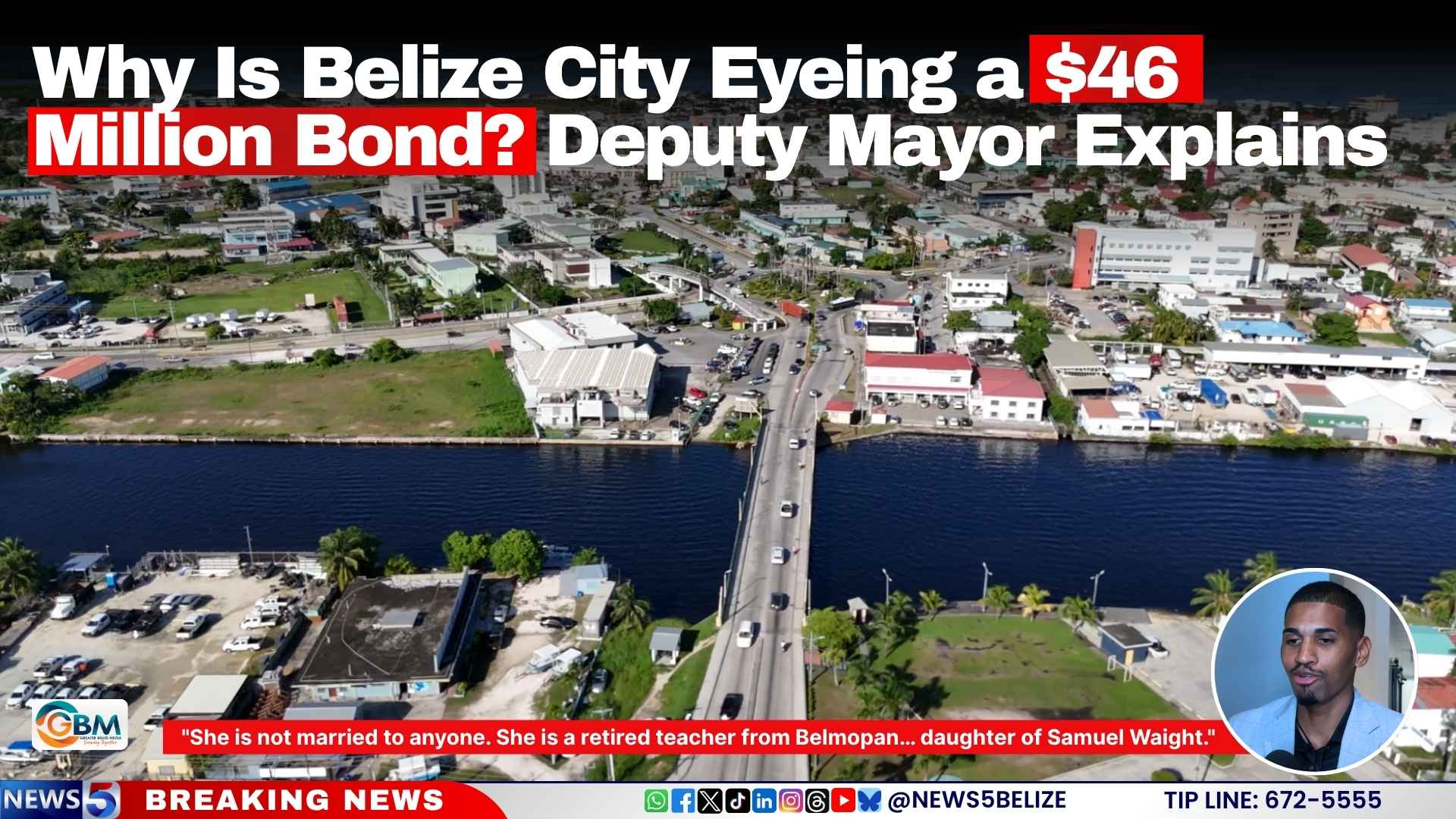
Why Is Belize City Eyeing a $46 Million Bond? Deputy Mayor Explains
On July 24, 2026, Belize City Deputy Mayor Eluidge Miller has moved to clear up widespread public confusion surrounding the municipal government’s planned $46 million bond offering, pushing back against misinformation that frames the entire sum as brand new borrowing for the city.
In a public address addressing growing community questions, Miller clarified that the total bond value combines two key financial components: the refinancing of existing short-term municipal obligations, and targeted new capital for upcoming city projects. He explained that more than $20 million of the total $46 million is tied to reprofiling existing debt, shifting what were originally 12 to 24-month short-term financial commitments into 5 to 10-year long-term instruments to ease near-term budget pressure on the city.
“I would not want for anybody to get the idea that we’re taking on $46 million in new investment,” Miller emphasized, noting that only the portion above the existing refinanced obligations counts as new capital for development.
The deputy mayor also moved to reassure investors and residents alike of the council’s strong fiscal track record, even through a series of recent external shocks that have strained local government budgets across the Caribbean. He highlighted that both the COVID-19 pandemic and 2022’s Hurricane Lisa dealt significant blows to Belize City’s economy and revenue streams, yet the council has never once defaulted on an interest or principal payment for its existing municipal debt. “We have been able to meet every single payment,” Miller said. “I am proud to say that we have never defaulted on an interest or principal payment.”
Miller also addressed a second common question from the public: why the council relies on bond offerings rather than funding large projects through its regular annual operating budget. He explained that major capital infrastructure projects carry price tags far too large to be covered by day-to-day tax revenue and operational income, making municipal bonds the most practical and accessible financing tool available to local leadership.
Beyond easing budget strain, Miller noted that bond offerings also open up opportunities for external investors to contribute to Belize City’s long-term growth. The city has relied on this financing model for years, he pointed out: over the past six to seven years, municipal bonds have enabled critical upgrades to more than 300 of the city’s more than 700 public streets, work that would not have been possible through annual budget allocations alone.
Looking ahead, if the bond offering moves forward as planned, the new capital portion will fund two key priority initiatives for the city: an expansion of Belize City’s e-mobility bus fleet to reduce carbon emissions and improve public transit access, and a new round of critical infrastructure upgrades across the city to address longstanding maintenance backlogs.
-

What Did PM Briceño Discuss With a Top U.S. Official?
On a Thursday diplomatic meeting in Washington D.C., Belizean Prime Minister John Briceño sat down with top U.S. official Christopher Landau, U.S. Deputy Secretary of State, to reinforce longstanding bilateral relations between the two nations and map out future collaboration across key priority areas. The high-level discussion, which unfolded July 24, 2026, centered on three core pillars: cross-border security, inclusive economic development, and sustained regional stability, according to official statements from both the U.S. Department of State and the Government of Belize.
A major focal point of the conversation was the ongoing progress of the Millennium Challenge Corporation (MCC) Compact, a U.S. foreign assistance initiative designed to support economic growth and poverty reduction in partner countries. Prime Minister Briceño expressed his approval of the forward momentum the compact has achieved to date, and reaffirmed Belize’s formal commitment to maintaining close coordination with U.S. stakeholders to advance shared strategic goals through the program.
Beyond infrastructure and development work under the MCC Compact, the two leaders dedicated substantial time to addressing pressing security challenges facing Central America. Per the U.S. State Department readout, the pair explored new opportunities to deepen security cooperation focused on disrupting transnational narco-trafficking networks and curbing patterns of unauthorized irregular migration across the region. These collaborative efforts, officials noted, are designed to address root causes of instability that impact both Belize and broader North American security dynamics.
The talks also turned to expanding economic connectivity between the two nations. A official statement from the Government of Belize highlighted that Briceño and Landau discussed avenues to deepen bilateral trade and commercial linkages, with the ultimate goal of unlocking new investment opportunities that drive shared prosperity for residents of both Belize and the United States. Both sides reaffirmed that the longstanding partnership between Belize and the U.S. remains a cornerstone of regional stability and economic progress, with plans to continue regular high-level engagement in the months ahead.
-

Police release more details on fatal drowning incident in Calibishie
The Commonwealth of Dominica Police Force (CDPF) has issued an updated statement detailing the tragic death of 35-year-old John Fabien, a former cricketer and local coach from Calibishie, whose body was recovered from coastal waters off the island on the evening of July 23, 2026.
According to official police details, Fabien’s remains were located in the sea near Ti-Baptiste at approximately 9:30 PM that same Thursday. Preliminary investigative findings outline that the Calibishie resident had been spearfishing alongside a group of companions when he encountered unexpected trouble, ultimately slipping beneath the water’s surface and vanishing.
Immediately after the incident, officers from the local Calibishie Police Station mobilized a search operation, with critical support from volunteer community members. The search team successfully recovered Fabien’s body close to the Ti-Baptiste shoreline not long after the disappearance. A responding medical professional officially pronounced him dead at the recovery site, and his body has since been transferred to a local funeral home to await a scheduled post-mortem examination that will clarify the exact cause of death.
The loss of Fabien has resonated deeply across Dominica’s sporting community. In an official statement released after news of his death broke, the Dominica Cricket Association mourned the passing of the former player and coach, calling the event “a sad day for the cricketing family.” The association emphasized that Fabien leaves behind an extraordinary legacy: he made invaluable contributions to growing the sport across the island, and his leadership, unwavering dedication, patient mentorship, and infectious passion for cricket touched and shaped the lives of hundreds of young athletes throughout his career.
As of the latest update, CDPF investigators are continuing to piece together the full circumstances of the incident that led to Fabien’s death. Alongside sharing details of the ongoing investigation, the police force has extended its deepest and most sincere condolences to Fabien’s family, friends, and teammates as they navigate this devastating loss.
-

Salvation Army, Wellness Waves Foundation Train More Than 20 Young Leaders
Over 20 young people hailing from every corner of Antigua and Barbuda have successfully crossed the finish line of a three-day immersive Youth Leadership Camp, a targeted initiative crafted to bolster their self-confidence, communication capabilities, and personal resilience. Held between July 20 and 22, the camp was brought to life through a collaborative effort between the Wellness Waves Foundation and The Salvation Army, anchored in the powerful central theme “Lead Yourself. Lead Others.”
Unlike generic youth events, this program centered its curriculum on nurturing foundational leadership aptitude while equipping attendees with practical, everyday life skills that extend far beyond the camp gates. Key skill areas included constructive conflict resolution, healthy stress management, and intentional decision-making – tools that young people can leverage in school, work, and personal interactions for years to come.
Throughout the three-day gathering, participants engaged in a dynamic mix of interactive workshops, open group dialogues, and hands-on practical exercises. The curriculum spanned a diverse range of critical topics, from core leadership development and emotional intelligence to public speaking, effective communication, building healthy relationships, mindfulness practice, personal resilience, goal-setting, and clarifying personal purpose. In a proactive addition addressing a pressing community concern, the camp also incorporated specialized training on human trafficking awareness, educating young attendees on the risks and impacts of this crime against youth.
Koren Norton, founder of the Wellness Waves Foundation, emphasized that the camp embodies the organization’s long-standing mission to prepare the next generation to step into leadership roles across Antigua and Barbuda. “This camp was all about helping our young people build actionable leadership skills, learn to navigate conflict and stress in healthy ways, and walk away with greater confidence in their own abilities,” Norton shared. “We are incredibly proud of every participant who joined this journey, and we urge every sector of our society to make intentional investments in our young people – they are our future.”
The event was coordinated by Captain Osner Lubin of The Salvation Army and Deon Grannum, Vice President of the Wellness Waves Foundation. A diverse team of facilitators contributed their expertise to the camp, including Grannum himself, Farida Isaac-Carr, representatives from the youth organization Youth Arise, Ransford Simms, Callisha Spencer, Dwayne Simon, Alverna Inniss from the national Human Trafficking Department, representatives from the Hopeful Heart Foundation, Kyle Preston, Amelia Williams, and Christal Percival.
The impactful initiative would not have been possible without broad cross-sector support from local community and corporate partners, including ACB Caribbean, the Halo Foundation, the Sandals Foundation, Turning Point Inc., Big Banana, Christos, CMC, KFC Antigua Ltd., and the Medical Benefits Scheme.
The Wellness Waves Foundation, the lead organizer of the camp, is a community-focused organization dedicated to advancing education, expanding access to mental wellness resources, and driving empowerment for women and young people. It delivers on this mission through targeted programming and strategic cross-organizational partnerships, all with the end goal of building stronger, more resilient communities across Antigua and Barbuda.
-

Movido Foundation urges firm measures to address road accidents
In the wake of a scathing assessment from a top United Nations road safety official that labeled the Dominican Republic’s traffic system a full-blown disaster and a major public health threat, a leading local mobility advocacy organization has drawn back the curtain on the deep, systemic roots of the crisis.
Speaking from Santo Domingo, the Dominican Road Mobility Foundation (commonly known as Movido) emphasized that the chronic gridlock, rampant rule-breaking and rising fatalities plaguing the nation’s roads are not accidental. Instead, the group argued, they are the predictable outcome of years of systematic disregard for existing public road safety policies and a persistent failure to enforce current national legislation.
In a formal press statement, Movido pushed back against the patchwork, short-term measures that have defined the government’s response to the crisis for years. Road safety, the organization stressed, cannot continue to rely on sporadic, one-off enforcement operations or empty media announcements meant to appease public concern rather than solve the problem. The core issue, Movido explained, is structural stagnation stemming from consistent failures to fully enforce Law 63-17, the country’s landmark legislation governing mobility, land transportation, traffic management and road safety.
Movido outlined three key failures that have created a culture of impunity on Dominican roads. First, the controversial halting of the national automated photo-fine project, which was designed to penalize repeat speeding and rule-breaking offenders, eliminated a core tool for consistent enforcement. Second, the nation’s Vehicle Technical Inspection program, meant to remove unsafe, accident-prone vehicles from roads, has never been rolled out comprehensively across the country. Third, government agencies have consistently failed to efficiently collect fines and penalties from traffic offenders, meaning rule-breakers face no real consequences for dangerous behavior.
Beyond enforcement failures, the organization also denounced that national authorities have repeatedly caved to political and economic pressure from powerful transport industry lobbies, deliberately weakening already inadequate road control measures. In the preventive education space, Movido expressed deep regret that a plan to integrate mandatory road safety education into the national K-12 school curriculum has remained stuck in the announcement phase for more than two years, with no actual implementation to date.
Similarly, the foundation raised pointed questions about the flawed design of existing road safety awareness campaigns, noting that they consistently exclude young people living in low-income, vulnerable communities – a demographic that accounts for the largest share of traffic accident fatalities across the country.
Against this backdrop, Movido issued a formal, urgent call to action for all branches of the Dominican government: the central executive branch, the National Congress, the National Institute of Transit and Land Transportation (Intrant), and the General Directorate of Transit and Land Transportation Safety (Digesett) must work together to elevate road safety to the status of a binding national state policy, backed by consistent funding and enforcement.
“Every death on the roads is preventable,” the group emphasized in its statement. “The Dominican Republic no longer needs more diagnoses of what is wrong with our road system. We need decisive political decisions, consistent full implementation of existing laws, and tangible results that save lives.”
-

American Airlines launches new digital tools to make bookings easier
In a major push to modernize air travel through digital innovation, American Airlines has rolled out a series of new customer-focused digital features aimed at removing friction from every stage of a passenger’s journey, from initial booking to post-disruption rebooking and airport security processing.
One of the most immediately available updates expands the airline’s digital payment ecosystem: travelers can now settle flight payments via Venmo directly on American Airlines’ official website, joining existing contactless payment options like Apple Pay to give customers more flexible checkout choices. The carrier has also confirmed that Venmo payment functionality will be extended to its native mobile app in the coming months, bringing the same convenience to on-the-go bookings.
Beyond payment upgrades, American Airlines has enhanced how it communicates service disruptions to passengers. The airline now provides far more transparent, granular real-time updates about flight delays and cancellations across multiple channels: its mobile app, email, SMS alerts, and official website, ensuring passengers receive timely information no matter how they choose to connect. Complementing this update is a newly launched self-service digital platform that empowers travelers to manage modified bookings independently, while also automatically accessing eligible vouchers for covered expenses including hotel accommodations, meals, and ground transportation when disruptions occur. For passengers who have had their itineraries adjusted after a service issue, American has also added automatic re-check-in, eliminating an extra step for already inconvenienced travelers.
The airline is also simplifying enrollment in the TSA PreCheck Touchless ID program, a security initiative that replaces traditional boarding pass and physical ID scanning with facial recognition to let PreCheck members use expedited security lanes. Starting in August, eligible travelers will be able to opt into this contactless identification process directly during online check-in on American’s website, making it easier than ever to access faster security screening.
These digital investments are part of a broader company-wide strategy to leverage technology to improve customer experiences, particularly at the airline’s major hub airports, including its flagship Dallas/Fort Worth (DFW) International Airport hub. At DFW, American is rolling out additional infrastructure upgrades like new electronic boarding gates that will further speed up departure processing and cut down on boarding delays.
“Technology should simplify travel, not complicate it,” noted Heather Garboden, American Airlines’ director of customer service. Garboden emphasized that the carrier’s core objective for these updates is to build intuitive digital tools that cut down on unnecessary steps and give passengers greater peace of mind at every stage of their trip, saying: “Our goal is to create digital experiences that simplify travel and give customers greater confidence at every stage of the process.”
-

A peaceful demonstration has been called in Sosúa to protest alleged police abuses.
SOSÚA, Puerto Plata – A local activist and citizen, Jeremy Domínguez, has issued a public call for a peaceful gathering to address growing public outrage over alleged unlawful conduct by police forces. The demonstration is scheduled to take place this Monday, July 27, beginning at 5:00 p.m. local time, outside the Plaza de la Playa Charamicos in the coastal municipality of Sosúa.
Details of the planned protest have been widely circulated across social media platforms, where organizing representatives have repeatedly stressed that the event will be conducted in a strictly peaceful and orderly fashion. Organizers have made clear that participants will uphold respect for all national patriotic symbols, most prominently the Dominican national flag, as a core principle of the demonstration.
The movement centers on three key demands put forward by organizers: first, that the fundamental physical and personal integrity of all Dominican citizens be formally respected by law enforcement; second, that ongoing patterns of mistreatment and claimed abuses of authority by police officers be immediately halted; and third, that the National Police fulfill its constitutionally mandated role of protecting the Dominican population, rather than acting against the public interest.
In their public appeal, organizers have urged broad civilian participation while reinforcing that the gathering’s sole purpose is to give voice to widespread community concerns about recent police actions. They have explicitly rejected any form of violence as a means of expression, framing the protest as a peaceful exercise of democratic rights.
As of press time, the Dominican National Police has not released any official comment or response to the call for demonstration.
-

Edenorte will suspend electrical service this Saturday in large sectors of Puerto Plata
PUERTO PLATA — The Northern Electricity Distribution Company, widely known locally as Edenorte, has announced a planned eight-hour power interruption across multiple electrical circuits in this northern Dominican province. The temporary service suspension is set to kick off at 8:00 a.m. this Saturday, July 25, and run through 4:00 p.m. local time, with the work focused on preventative grid maintenance and system upgrades.
The affected infrastructure spans six key distribution circuits: PPLA105, TUBA501, YASI701, PPLA102, PPLA101 and PPTA103. The outage will reach dozens of different customer segments across the province, ranging from private residential homes and small local businesses to popular tourist destinations and public government institutions. A full list of impacted areas includes El Arenazo, Ensanche Luperón, Bayardo, Padre Granero, Bello Costero, Torre Alta, Long Beach, Marapicá, Urbanización Atlántica, Jardines del Atlántico, Costa Atlántica, Malecón, the Provincial Government complex, the Palace of Justice, the Puerto Plata regional headquarters, Tubagua, Gran Parada, Pueblo de Yásica, La Cruz de Yásica, La Unión, Northern Air Command FARD, Puerto Chiquito, Cangrejo, Villa Progreso, Cristo Rey, Los Sufridos, El Teleférico, Universidad Tecnológica de Santiago (UTESA), Barrio Haití, Las Mercedes, El Clinker, Conani, El Hoyo de Chavón and Aguas Negras, among other smaller adjacent communities.
In a public statement released ahead of the work, Edenorte has called on all residential and commercial customers located within the affected service zones to take advance precautions to minimize disruption to their daily plans. The utility also noted that the published start and end times for the outage are subject to adjustment, depending on how quickly maintenance crews complete the scheduled work. Unforeseen on-site complications or faster than expected progress could shift the timeline of the service interruption.
Company representatives emphasized that the planned work is a core component of the utility’s ongoing initiative to modernize and reinforce the regional electrical grid. The long-term goal of the project is to deliver more consistent, higher-quality electrical service to all customers across the province of Puerto Plata, reducing the risk of unplanned outages in the coming months.