作者: admin

  • EMPRO businesswomen drive economic growth and job creation in Dominican Republic

    EMPRO businesswomen drive economic growth and job creation in Dominican Republic

    Six months after its completion, an independent assessment has confirmed that the Empresarias Progresando (EMPRO) initiative, a women-focused business development program run by INCAE Business School in the Dominican Republic, has driven remarkable, measurable growth for female-led small and medium enterprises across the country.

    The highly competitive program selected just 49 participants out of more than 500 total applicants. Its structured curriculum combines multi-phase targeted business training with a full week of immersive in-person instruction hosted at INCAE’s campus in Costa Rica, equipping participating entrepreneurs with the skills, networks, and strategies needed to scale their operations. Early impact data collected after six months shows these investments have translated to extraordinary improvements across four core pillars of business success: revenue growth, job creation, digital transformation, and expanded access to capital.

    Economic outcomes for participants far outpace baseline expectations for typical small business development programs. Average monthly sales for participating women-owned businesses nearly tripled compared to pre-program levels, while total employment across the cohort jumped by 80 percent. In total, the program has supported the creation of approximately 450 new full and part-time jobs across the Dominican Republic, expanding local livelihoods beyond the 49 participating entrepreneurs themselves. Beyond revenue and headcount gains, 82 percent of program graduates launched new business opportunities, most through the development of original products and services that opened untapped customer markets.

    A key focus of the EMPRO initiative is closing gaps in digital and financial inclusion for women entrepreneurs, and results in these areas are equally compelling. At the start of the program, 22 percent of participants did not integrate any digital tools into their daily business operations; by the program’s conclusion, every entrepreneur had adopted digital tools for tasks ranging from sales tracking to customer outreach, positioning their businesses for long-term competitiveness in an increasingly digital economy. On the financing side, 69 percent of participants secured new capital to scale their operations, with nearly half of those loans coming through traditional banking channels, most from program partner Banco BHD. A large majority of participants also overhauled their internal financial management practices, a shift that program organizers say signals stronger operational capacity and sustainable long-term growth potential for the cohort.

    The EMPRO program is a collaborative public-private initiative, backed by funding and strategic support from three partner organizations: the Mastercard Center for Inclusive Growth, the PriceSmart Foundation, and Banco BHD. Program leaders say the strong results of the six-month evaluation make a clear case for scaling targeted investments in female entrepreneurship as a core driver of national economic competitiveness and inclusive, sustainable development across emerging markets.

  • Morocco signs an agreement with Haiti in the field of air transport

    Morocco signs an agreement with Haiti in the field of air transport

    In a diplomatic move set to reshape regional and international air connectivity, Morocco sealed three bilateral air transport agreements with the Cooperative Republic of Guyana, the Republic of Haiti, and the Republic of Mauritius on April 16, 2026. The signing ceremony took place in Marrakech, on the sidelines of the ongoing Global Symposium on Implementation Support (GISS 2026), with Morocco’s Minister of Transport and Logistics Abdessamad Kayouh leading the kingdom’s delegation for the negotiations and formal signing.

    Each of the three new agreements is centered on expanding bilateral air service operations between Morocco and its respective partner nation. The core goal of the pacts is to put in place a modern, fair regulatory framework that aligns fully with global civil aviation standards set by international aviation bodies. Key provisions laid out in the agreements cover multiple critical areas of air transport operations: rules for the designation of multiple airlines to operate routes between the signatory countries, guidelines for setting weekly flight frequencies, and stringent protocols to uphold civil aviation safety and security across all operations.

    Beyond regulatory alignment, the agreements open new doors for deepened collaboration between the national and private airlines of all participating countries. In particular, they create clear pathways for the development of joint commercial partnerships and technical knowledge-sharing initiatives. Industry analysts expect these new linkages will drive tangible improvements in cross-regional air connectivity, streamlining the movement of both passenger traffic and cargo shipments between Morocco, the Caribbean nations of Guyana and Haiti, and the Indian Ocean island nation of Mauritius.

    This round of agreement signings is not an isolated diplomatic step, but rather a direct implementation of the broader connectivity strategy laid out under the policy of His Majesty King Mohammed VI. The strategy prioritizes strengthening Morocco’s air transport links with partners across the globe, with a long-term vision of cementing the kingdom’s position as a leading regional aviation hub that connects the African continent to Europe, the Americas, Asia, and Oceania.

  • Abinader inaugurates Renacer Plant, Caribbean’s first food-grade recycled PET facility

    Abinader inaugurates Renacer Plant, Caribbean’s first food-grade recycled PET facility

    SAN PEDRO DE MACORÍS — Dominican Republic President Luis Abinader has formally opened the Renacer Plant, a ground-breaking industrial facility that claims the title of the first food-grade recycled PET resin production plant in the entire Caribbean region.

    Nested within the Quisqueya Free Zone in San Pedro de Macorís, the landmark project is the product of a strategic partnership between two local firms, Diesco and Invema. Designed to convert millions of post-consumer plastic bottles into food-safe reusable raw material, the launch marks a transformative leap forward for the Dominican Republic’s transition to a circular economy.

    Backed by a total investment of more than 3 billion Dominican pesos, the facility boasts an annual processing capacity of over 124 million plastic bottles. Beyond its industrial output, the plant is projected to create more than 500 direct job positions and support up to 5,000 indirect employment opportunities across the country’s recycling and supply chains.

    Government officials have outlined multiple economic and environmental benefits tied to the initiative. By strengthening the entire domestic recycling value chain, the plant cuts the Dominican Republic’s reliance on imported virgin PET resin, while unlocking new export opportunities for the high-quality recycled output it produces. Environmental gains are equally significant: the facility will prevent thousands of tons of carbon dioxide emissions annually by keeping plastic waste out of landfills and ecosystems, and reducing the carbon footprint associated with producing new plastic.

    Both public officials and private sector leaders point to the Renacer Plant as a powerful testament to rising investor confidence in the Dominican Republic’s economic and regulatory landscape. The project also stands as a model of successful public-private collaboration, blending government support for sustainable industrial development with private sector innovation and investment.

    In addition to its core industrial and economic impacts, the facility is designed to drive long-term community development in the San Pedro de Macorís region. It will host vocational training programs for local workers, operate an on-site medical dispensary for community use, and open an educational recycling museum to raise public awareness about circular economy practices. These complementary initiatives are expected to cement San Pedro de Macorís’ position as a regional hub for sustainable industrial innovation across the Caribbean.

  • Abinader announces fuel prices will remain unchanged this week

    Abinader announces fuel prices will remain unchanged this week

    In the Dominican Republic’s capital of Santo Domingo, President Luis Abinader has unveiled a series of coordinated government measures designed to shield consumers from the ripple effects of global economic turbulence, with a particular focus on stabilizing costs for hydrocarbon-linked essential goods.

    As an immediate, tangible step to ease household financial strain, Abinader confirmed that retail fuel prices will hold steady at their current levels for the coming week. To build long-term, collaborative solutions, the administration has already convened initial roundtable discussions with leaders from the country’s core productive sectors, and plans to continue these negotiations on a regular basis going forward. The next scheduled negotiating session is set to take place in approximately two weeks.

    The overarching objective of these multi-stakeholder talks is to avoid passing the full weight of spiking international commodity costs onto end consumers, with a deliberate policy priority on protecting low-income and vulnerable communities that are most sensitive to price swings. Beyond the general working groups, Dominican officials are also preparing targeted one-on-one consultations with individual sectors that have already recorded unplanned price increases, with the aim of co-developing customized price control mechanisms that work for both businesses and consumers.

    The opening round of talks brought together leadership from all of the country’s most influential private sector and business organizations, including the National Council of Private Enterprise (CONEP), the Association of Industries of the Dominican Republic (AIRD), the National Organization of Commercial Entrepreneurs (ONEC), the National Union of Economic Supermarkets (UNASE), and the Agricultural Business Board (JAD). The ongoing collaboration between government and private enterprise comes amid persistent upward pressure on global oil markets, which has created cascading challenges for maintaining stable prices across food, consumer goods, and essential services in small open economies like the Dominican Republic.

  • Experts ‘deeply worried’ as four in ten children now overweight or obese

    Experts ‘deeply worried’ as four in ten children now overweight or obese

    Barbados is grappling with a fast-growing public health emergency that experts warn demands immediate, coordinated action across every sector of society: more than 40 percent of the nation’s children now qualify as overweight or living with obesity, according to newly released research from local public health advocates.

    New analysis of World Health Organization (WHO) global observatory data reveals a stark 9 percentage point jump in childhood overweight and obesity rates over a decade, climbing from 33 percent of 5 to 19-year-olds in 2012 to 42 percent in 2022. Dr. Madhuvanti Murphy, a senior lecturer at the George Alleyne Chronic Disease Research Centre, unveiled these worrying statistics during a press conference hosted Thursday by the Barbados Childhood Obesity Prevention Coalition (BCOPC) at the 3Ws Oval on the University of the West Indies Cave Hill campus.

    Murphy emphasized that the upward trajectory shows no signs of slowing, a trend that has persisted consistently since the 1990s. This long-term, systemic increase makes clear the crisis is not rooted in individual choices or personal failure, she explained, but in deep-seated structural gaps that require coordinated systemic intervention. Critically, Barbados’ current rate of childhood overweight and obesity is more than double the 2022 global average of 20 percent, placing the small island nation far above international norms.

    “Two in five of our children are carrying excess weight, and that number is more than double what we see across the rest of the world,” Murphy noted. To reverse this trend, she argued, a whole-of-society response is non-negotiable, one that targets the root systemic drivers of unhealthy weight gain in children. Key contributing factors include unregulated commercial influences on unhealthy food access, inconsistent access to affordable nutritious options for family households, and unregulated food environments in school settings, all of which create conditions that make unhealthy choices the default for young people.

    Murphy pointed to ongoing collaborative work between the BCOPC and the Heart and Stroke Foundation of Barbados that has identified critical leverage points for intervention, with school environments at the top of the list. “This is not a failure of individuals, it is a failure of the systems that surround children. To change outcomes, we have to change the environment to make the healthy choice the easy choice,” she said.

    For current school nutrition guidelines to deliver meaningful impact, however, Murphy stressed they must be made mandatory rather than advisory. Global evidence from similar public health initiatives confirms that voluntary recommendations deliver far weaker results than policies that are enforced, audited, and held accountable by law. This mandatory legal enshrinement is the core demand of the coalition’s advocacy.

    Nicole Foster, chair of the BCOPC and head of the UWI Cave Hill Law and Health Research Unit, echoed Murphy’s concern, acknowledging that the government has made incremental progress in prioritizing lifestyle disease and nutritional health over recent years, but warning that the rising childhood obesity trend remains deeply alarming.

    “Too many of our children develop unhealthy weight at very young ages, which puts them on track for dramatically higher risks of diabetes, hypertension, and other life-altering non-communicable diseases later in life,” Foster explained. “The numbers are moving in the wrong direction, and we cannot afford to delay action.”

    While the coalition emphasizes that no single policy can solve the crisis on its own, it identifies mandatory, enforceable school nutrition policy as a foundational pillar of any effective national response. Drawing on global case studies, the BCOPC notes that school nutrition policies only deliver on their promised public health benefits when they are sustained, fully operational, and backed by legal enforcement.

    To meet this standard, the coalition is calling for new regulatory frameworks under the nation’s Education Act that will formalize implementation and enforcement mechanisms for the policy. “Legislation will guarantee consistent implementation, hold stakeholders accountable, protect children from unhealthy food environments in schools, and create a fair, level playing field for all food and beverage suppliers operating in school settings,” Foster explained.

    The coalition also addressed the government’s recently launched school breakfast programme, noting that a well-designed, properly executed breakfast initiative can complement existing nutrition policy. However, it stressed that the programme must be fully aligned with the national school nutrition standards and must be structured to avoid conflicts of interest that could allow promotion of unhealthy products.

    Additionally, successful rollout of the breakfast programme depends on significant upgrades to Barbados’ existing school meals service infrastructure, with targeted retrofitting needed at many under-resourced facilities. Foster confirmed that the coalition recently met with the Minister of Educational Transformation to discuss these requirements, and has received positive assurances from the minister that infrastructure investment will be a core component of the programme’s rollout going forward. The coalition says it remains encouraged by this commitment and will continue pushing for urgent systemic change to address the growing childhood obesity crisis.

  • Georgette Garcia-Elias begint diplomatieke missie in Venezuela

    Georgette Garcia-Elias begint diplomatieke missie in Venezuela

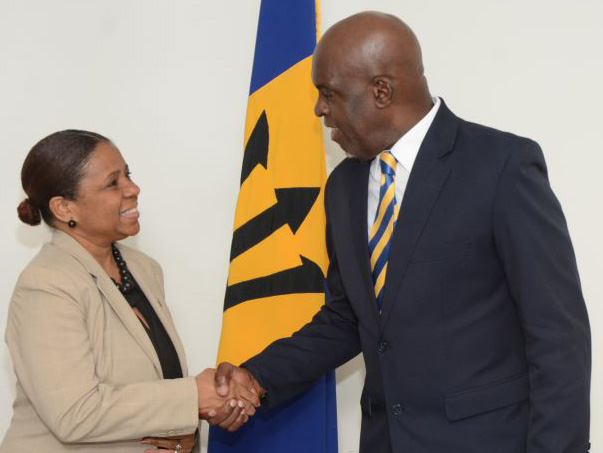
    In a key diplomatic milestone for bilateral ties between the two South American and Caribbean nations, Georgette Garcia-Elias, the newly appointed Surinamese ambassador to Venezuela, has formally presented her copy of credentials to Venezuela’s Minister of Foreign Affairs, marking a critical step forward in strengthening diplomatic and economic partnership between the two countries.
    Garcia-Elias, who was officially sworn in to the post of Suriname’s ambassador to Caracas back in March 2026, completed this formal procedure that clears the way for her to fully carry out her diplomatic duties across the Bolivarian Republic of Venezuela. During the closed-door meeting following the credential presentation, the new ambassador emphasized Suriname’s firm commitment to deepening the long-standing bilateral relationship between the two neighbors.
    She specifically highlighted the shared strategic vision that both nations hold: to preserve the Caribbean region as a zone defined by lasting peace and cross-border collaborative development. Beyond overarching diplomatic goals, Garcia-Elias also put forward a concrete proposal to establish a joint bilateral commission focused on advancing cooperation across a range of high-priority strategic sectors. These sectors include agriculture, fisheries, commercial air connectivity, higher education, public health care, and energy.
    According to the ambassador, each of these areas presents tangible, actionable opportunities to expand mutual collaboration and drive inclusive socio-economic development for both nations. Responding to Garcia-Elias’s remarks, Venezuela’s Foreign Minister Yván Gil Pinto extended his formal congratulations to the Surinamese diplomat on her recent appointment. He reaffirmed Venezuela’s full readiness to create all necessary enabling conditions for Garcia-Elias to carry out her diplomatic work effectively and efficiently, while also underlining Venezuela’s commitment to advancing deeper cooperation across diplomatic, economic, and cultural domains.

  • LUCELEC unable to shield consumers from full impact of oil price surge

    LUCELEC unable to shield consumers from full impact of oil price surge

    Escalating geopolitical instability across global markets has sent international oil prices soaring, and that upward pressure is now rippling through to household electricity bills in the Caribbean island nation of Saint Lucia. State-owned electricity provider LUCELEC has publicly warned that its capacity to absorb the shock of rising fuel costs for consumers is constrained, despite existing risk-mitigation measures in place.

    In a recent video address to the public, LUCELEC Managing Director Gilroy Pultie broke down how the global oil spike is hitting the utility’s operations. The company has long relied on a fuel hedging program designed to smooth out volatile cost swings, a common risk management tool that allows energy providers to lock in advance pricing for a portion of their fuel inventory. This strategy works well to protect consumers from sudden, sharp price jumps in international oil markets — but it only covers a share of the company’s total fuel needs, Pultie explained. The remaining volume of fuel must be purchased at current, inflated international market rates, leaving customers on the hook for any unexpected price increases.

    “When global oil prices rise sharply, as we are now seeing, it affects the fuel surcharge and what customers pay on a month-to-month basis,” Pultie said, identifying ongoing conflicts, most notably in the Middle East, as the primary catalyst for the current market volatility driving up costs. The impact of these increases is already tangible for Saint Lucian households: this month, the fuel surcharge added to every unit of electricity has jumped to EC$0.255, a dramatic surge from just EC$0.007 per unit recorded back in March.

    Pultie noted that market conditions before the latest round of geopolitical escalation did not align with LUCELEC’s internal criteria for expanding hedging coverage, leaving the utility unable to lock in lower prices for a larger share of its fuel stock ahead of the current surge. This missed opportunity has directly limited the company’s ability to offset the skyrocketing oil prices hitting the open market today.

    Recognizing electricity as a foundational essential service for all residents, Pultie acknowledged that the sudden spike in monthly bills places significant financial strain on households, particularly those already operating on tight budgets. While he emphasized that global oil market dynamics are completely outside of LUCELEC’s control, he confirmed that the utility is prioritizing operational efficiency to keep unnecessary costs down, while maintaining transparent, ongoing communication with consumers about price changes.

    “We understand the pressure that higher prices can place on customers,” Pultie said, reiterating the company’s commitment to transparency throughout this period of market volatility. Looking forward, LUCELEC is already conducting a full review of its current hedging strategy, with the explicit goal of increasing the share of fuel purchased at locked-in, stable prices to better shield consumers from future market shocks, even amid the ongoing challenges posed by today’s tense geopolitical and economic landscape.

  • Truck Crash Brings Five Islands to a Standstill, Power Lines Down and Motorists Trapped

    Truck Crash Brings Five Islands to a Standstill, Power Lines Down and Motorists Trapped

    A severe truck crash has thrown the daily operations of five regional islands into complete disarray, leaving critical infrastructure damaged and dozens of road users stranded in an unexpected emergency. The incident, which unfolded on a key inter-island arterial roadway, caused the heavy-duty commercial vehicle to collide with and bring down a major overhead high-voltage power line, triggering cascading disruptions that rippled across multiple island communities. Emergency response teams were dispatched to the scene immediately after the first emergency calls were placed in the early hours of the incident. First responders confirmed that the downed power lines not only cut electricity service to residential and commercial areas across all five islands but also completely blocked the only paved roadway connecting the island communities to the mainland. The road blockage left hundreds of motorists who were traveling between the islands trapped in their vehicles, with many stuck for several hours before emergency access routes could be cleared to extract them. Local power utility crews have been working around the clock to repair the damaged transmission infrastructure, restore service to affected households, and clear the debris from the roadway. As of the latest update, partial power has been restored to the most populated islands, though full service is not expected to resume for at least 24 more hours while crews work to replace broken transmission towers and restring power lines. Local transportation authorities have implemented temporary ferry services to move stranded motorists off the affected islands and have advised all non-essential travel to the area to be postponed until the roadway is fully reopened. Investigators have launched a probe into the root cause of the crash, with initial reports suggesting that driver fatigue and wet road conditions may have been contributing factors.

  • Bus Strike Averted?

    Bus Strike Averted?

    A threatened total shutdown of bus services across Belize scheduled for this coming Monday will not go ahead as planned, at least temporarily, following a negotiating session held earlier this morning between leaders of the Belize Bus Association (BBA) and senior officials from the country’s Ministry of Transport. The last-minute negotiations have averted immediate disruption to commuters, freight services and daily economic activity across the nation, but the fundamental disagreement that pushed private bus operators to plan industrial action remains unresolved, pending a final decision from Belize’s Cabinet and Transport Minister Dr Luis Zabaneh.

    In an exclusive interview with News 5 immediately after the meeting concluded, BBA President Phillip Jones confirmed that while hours of discussion were held between the two sides, no agreement was reached. The core sticking point centers on a longstanding demand from private bus operators for a rate adjustment that would align their pricing with that of the state-run National Bus Company. Currently, private operators face a five-cent-per-mile gap in allowed rates that they argue has created an unsustainable financial strain, threatening the long-term survival of many small, independent private bus operations across the country.

    Prior to this week’s negotiations, Belize’s government had publicly stated that the operators’ demand for rate alignment was “off the table”, a position that left private operators with no option but to threaten a full service shutdown. Despite the lack of a final resolution, Jones confirmed that private bus operators have agreed to continue running all scheduled services on Monday and Tuesday in a show of good faith, while Cabinet deliberates on the request. Operators are now waiting in expectation of an official response from the government body following its upcoming scheduled meeting, with the threat of a strike still looming if their demands are rejected.

  • SSB Consults Public on Proposed Contribution Changes

    SSB Consults Public on Proposed Contribution Changes

    Nearly four and a half decades after Belize’s social security system was first established, the Social Security Board (SSB) is moving forward with sweeping proposed updates to the program’s contribution structure, and is gathering public input through a months-long series of national consultations. The most recent consultation session was hosted on the afternoon of April 16, 2026 at the Grand Resort and Residences in Belize City, marking one stop on a 12-meeting tour that has already brought discussions from the northern district of Corozal all the way south to Dangriga. The full consultation process is scheduled to conclude at the end of April, with three remaining public sessions planned for San Pedro on April 21, Punta Gorda on April 28, and Placencia on April 30.

    At the core of the discussions are three key proposed revisions to the current contribution framework: updating the methodology used to calculate worker and employer contributions, adjusting the division of contribution responsibilities between employees and employers, and revisiting the minimum and maximum wage thresholds that determine how much contributors pay into the system. SSB Chief Executive Officer Jerome Palma emphasized that the reform effort comes as the 1981-originated framework has become outdated to match 2026’s economic and labor landscape. “A scheme that was developed in 1981, for a time and a condition that was appropriate in 1981, may need some reform in 2026 and moving forward,” Palma stated during the meeting. “In 1981, there were no call centres. The investment market was distinctly different. Technology has moved forward.”

    One of the most pressing indicators of the current system’s obsolescence is the existing maximum weekly contribution cap of BZ$520, which Palma confirmed 25 to 30 percent of all contributors already reach annually. This figure signals that the cap has not been adjusted to keep pace with wage growth across Belize, leaving the system with uncollected revenue that could support long-term program stability.

    Throughout the Belize City consultation, participants raised a range of targeted concerns and feedback to inform the board’s final policy decision. One attendee pushed back against the current practice of calculating contributions based on gross rather than net salary, pointing out that mandatory income taxes and other pre-paycheck deductions often reduce take-home pay by as much as 50 percent. “We don’t live on our gross salary,” the participant said. “By the time I actually get money in my pocket, it’s half of what it says on the payslip… When you are considering the split, please consider how heavily taxed we are.”

    Another participant focused on equity for low-wage workers, highlighting disproportionate gaps between contribution bands across different income levels and calling for transparent, fair adjustments that do not place undue burden on lower-income contributors while neglecting higher earnings brackets. “That’s a big jump for workers at the lower end,” the participant said. “You have to be fair and transparent. You can’t look at the lower bands and not look at the higher bands.”

    Palma responded directly to these concerns, reassuring attendees that the board has prioritized protecting the roughly 6,000 contributors currently in the lowest income band. He confirmed that the board intends to retain the existing split of contribution responsibilities, which requires employers to cover a higher share of contributions than employees, with this structure remaining especially intact for lower-wage bands. “It’s very important for us to have this split very similar to what it is at the moment, where the employer actually pays and contributes at a higher rate than the employee, especially at the lower bands,” he explained.