作者: admin

  • Senator Lamin Newton Represents Antigua and Barbuda at Morocco-OECS Economic Forum

    Senator Lamin Newton Represents Antigua and Barbuda at Morocco-OECS Economic Forum

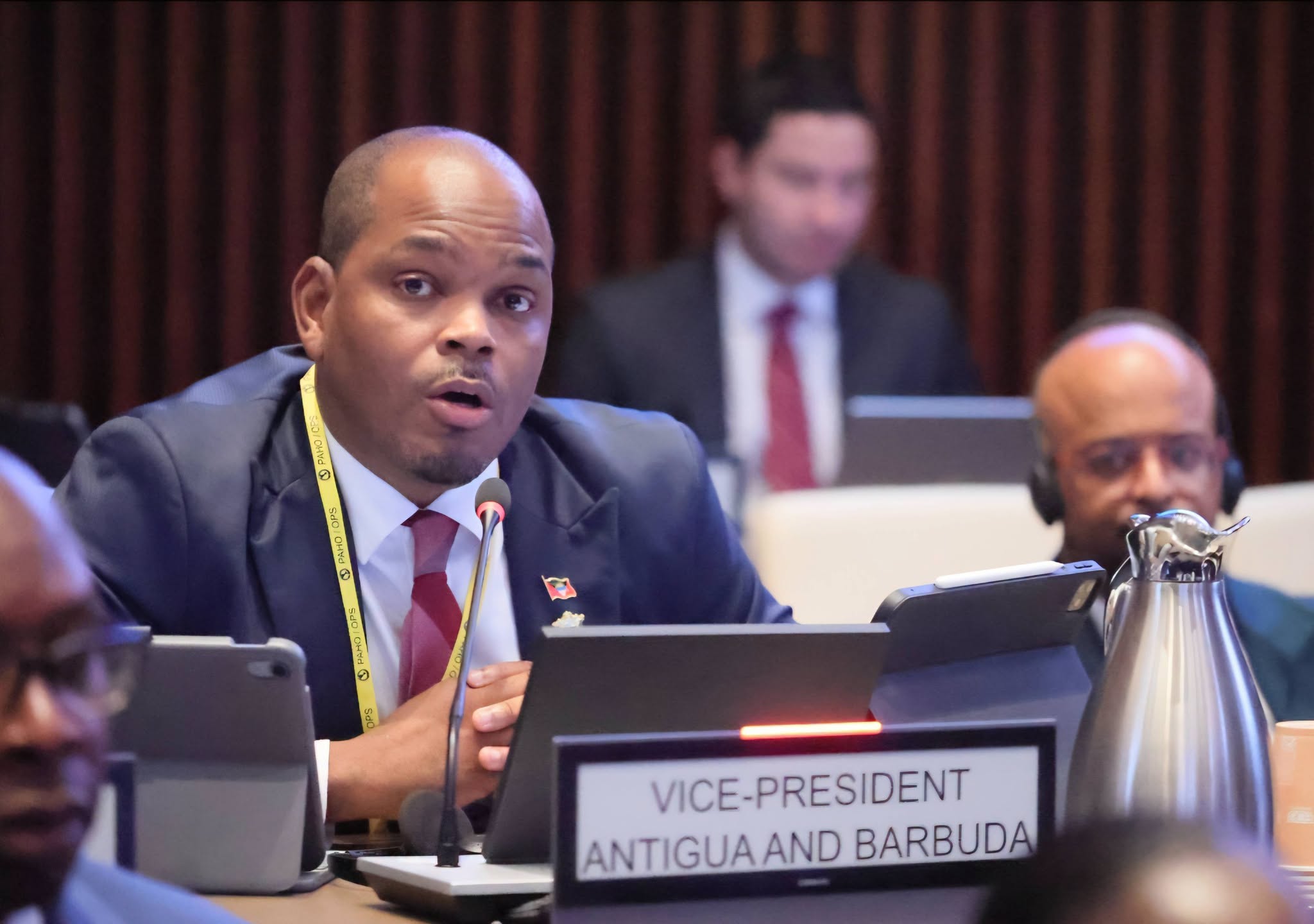
    Amid growing global momentum for expanding South-South economic collaboration, Senator Lamin Newton has stepped forward to lead Antigua and Barbuda’s official delegation at the high-profile Morocco-OECS Economic Forum, a landmark gathering designed to bridge North African and Caribbean economic interests.

    The Organization of Eastern Caribbean States (OECS), which brings together 11 small island developing states across the Eastern Caribbean, has partnered with Moroccan authorities to organize the forum, with a core focus on unlocking new mutually beneficial partnerships across key sectors including tourism, renewable energy, agricultural innovation, blue economy development, and trade facilitation. For small island nations like Antigua and Barbuda, which face persistent economic vulnerabilities from climate change and global market volatility, building new diversified economic alliances is a strategic priority to drive sustainable growth and build resilience.

    As the official representative of Antigua and Barbuda, Senator Newton is expected to outline the country’s key investment priorities, particularly in climate adaptation technology, sustainable tourism infrastructure, and offshore services development, while engaging in bilateral talks with Moroccan government officials and private sector delegates. The forum creates a rare structured platform for OECS member states to connect directly with North African economic stakeholders, opening pathways for knowledge sharing, technology transfer, and increased market access for Caribbean export products.

    Diplomatic observers note that the forum marks a deepening of engagement between Morocco and the Caribbean region, aligning with both sides’ goals of reducing overreliance on traditional trading partners and expanding economic cooperation across the Global South. For Antigua and Barbuda specifically, participation in this dialogue offers an opportunity to advance its national development agenda while contributing to collective OECS efforts to strengthen regional integration and global economic influence.

  • Derde helft WK 2026: Spanning tot het einde; 3-3 Thriller in Groep J

    Derde helft WK 2026: Spanning tot het einde; 3-3 Thriller in Groep J

    Kansas City hosted one of the most thrilling group stage matches in recent tournament memory on June 28, as Algeria and Austria battled to a chaotic 3-3 draw that secured both nations a spot in the knockout round, eliminating Iran in heartbreaking fashion.

    The entire contest carried high stakes from kickoff: the two sides went into the final group fixture locked in a direct battle for second place, where a loss for either would end their tournament run. A draw, however, would see both advance – Austria as group runners-up courtesy of a superior goal difference, and Algeria locking in third place.

    Austria controlled possession in the opening exchanges, pressing high and probing Algeria’s defensive block for early gaps, though clear-cut chances remained elusive. In the 9th minute, Xaver Schlager tried his luck from long range, but his effort lacked both power and placement to trouble Algerian goalkeeper Abderrahmane Benbot. Two minutes later, veteran striker Marko Arnautovic picked up an early yellow card that kept him on thin ice for the rest of the match.

    For the opening 15 minutes, Austria maintained sustained ball control, but Algeria’s backline held firm to block every attempted breakthrough, forcing a mid-quarter hydration break amid the intense Kansas City conditions with the score still locked at 0-0.

    The deadlock finally broke in the 28th minute, when Arnautovic ran onto a perfectly weighted through ball, kept his cool under pressure, and slid the ball calmly under Benbot to put Austria 1-0 up. At that point in the virtual table, Austria looked set to advance, while Algeria sat on the brink of elimination.

    Algeria responded quickly to going behind. After Rafik Belghali wasted an early equalizing chance, the North African side found the net just before halftime. A clever passing sequence down the right flank sent the ball bouncing off the corner flag back into play, and Belghali cut inside before unleashing a powerful left-footed strike into the near corner to level the score at 1-1.

    After four minutes of stoppage time, Austria pushed one last time for a halftime lead, but Algeria held firm, and the two sides went into the break level – a result that all but guaranteed both would move on to the knockout stage.

    Austria made three substitutions to start the second half, while Algeria opted to keep its starting XI on the pitch. The pace of the match slowed considerably, as a draw remained a mutually acceptable result for both camps.

    That lull was broken in the 56th minute, when Konrad Laimer delivered a pinpoint cross to Marcel Sabitzer, who struck a controlled, firm finish past the goalkeeper to put Austria back in front 2-1. Once again, Algeria slipped into a virtual elimination spot.

    Just as they did in the first half, Algeria fought back immediately. Five minutes after falling behind, Riyad Mahrez – the team’s star playmaker – scored a clinical equalizer after a clever build-up from Houssem Aouar, firing an unstoppable shot into the near corner to make the score 2-2.

    Play settled back into a steady rhythm after the second equalizer, though Algerian substitute Rayan Ait-Nouri created several dangerous moments down the left flank. A second hydration break was called halfway through the second half to let players recover from the heat.

    As the match entered its final minutes, both sides began pushing for a winning goal that would secure a higher knockout stage seeding, and it looked like the game would end with the score level – until Mahrez struck in the third minute of stoppage time. Combining once again with Aouar, Mahrez slotted home his second goal of the game to put Algeria ahead 3-2. The late strike sent Algeria’s fans into delirium, as the result would have eliminated Austria and sent Iran through to the knockout round in their place.

    Algeria’s joy lasted less than three minutes. In the 96th and final minute of stoppage time, Austrian substitute Saša Kalajdžic rose above the defense to power a header into the back of the net, leveling the score at 3-3 and capping off one of the most dramatic finishes in tournament history. The late equalizer secured advancement for both Algeria and Austria, sending Iran home.

    Mahrez was named Man of the Match for his two-goal performance that dominated the entire contest. Following the result, Austria will face Spain in their upcoming knockout round fixture, while Algeria will take on Switzerland.

  • Derde helft WK 2026: Argentinië met volle winst naar eliminatiefase

    Derde helft WK 2026: Argentinië met volle winst naar eliminatiefase

    DALLAS — World Cup debutant Jordan faced off against defending champion Argentina in a packed Dallas stadium on matchday three of Group J play. Heading into the fixture, Argentina had already secured back-to-back wins in their first two group matches, sitting comfortably atop the group standings with six full points. For Jordan, the encounter offered little at stake: the side had failed to pick up any points across their earlier two outings, and were playing just to fulfill their final group stage obligation.

    Looking ahead to the knockout round, Argentine manager Lionel Scaloni opted to field a completely changed starting lineup, giving his star core much-needed rest after two intense opening matches. With talisman Lionel Messi having been responsible for almost all of Argentina’s goals in the tournament to date, many pundits and fans questioned whether the rotated side would still find the back of the net. Another storyline heading into kickoff was Argentina’s unbroken defensive record: the defending champions had not conceded a single goal through the first two matches, and Jordan was determined to become the first side to breach that line. Romanian referee Istvan Kovacs took charge of the contest.

    The opening half got off to a fast start, with Giovani Lo Celso seeing an early goal ruled out for offside. The Tottenham midfielder did not let the setback slow him down, and in the 19th minute, he converted a perfectly placed free kick to put Argentina ahead 1-0, earning a nod of approval from Messi watching from the bench. In the 28th minute, Julian Alvarez was struck in the face after looping a header over Jordan’s goalkeeper, and a VAR review awarded Argentina a penalty. Inter striker Lautaro Martínez stepped up and buried the spot kick to double Argentina’s lead to 2-0 heading into halftime. Controversy struck before the break, however: VAR failed to award Jordan a penalty for a handball by Lo Celso inside his own penalty area, leaving Jordan trailing at the break without the chance to pull a goal back.

    After halftime, Jordan emerged reinvigorated, carving out several clear scoring chances that failed to find the mark in the final third. In the 55th minute, Musa Al-Taamari became the first player at the 2026 World Cup to beat Argentine goalkeeper Emiliano Martínez, slotting home a consolation goal to cut the deficit to 2-1. Just over five minutes later, with the game still in the balance, Messi was brought off the bench to steady the ship and bring control back to Argentina’s play. In the 80th minute, after being fouled just outside Jordan’s penalty area, Messi stepped up to take the resulting free kick. He curled a clinical effort past goalkeeper Yazeed Abulaila to restore Argentina’s two-goal lead, extending his historic record by becoming the first player in men’s World Cup history to score in seven consecutive tournament matches.

    The full-time whistle left Argentina with a 3-1 win and a perfect three wins from three group stage matches, securing their place in the knockout round where they will face World Cup underdog Cape Verde. The result confirms that even without Messi starting every match, Argentina has enough depth in attack to pick up results, with other talented players stepping up to contribute goals in the star’s rested absence. For Jordan, Al-Taamari’s goal proved that Argentina’s previously unbeatable defense is not unbreachable, giving the debut nation a historic milestone to take home from their first ever World Cup campaign.

  • Deputy Commissioner Sonia Boyce to be appointed Commissioner of Police

    Deputy Commissioner Sonia Boyce to be appointed Commissioner of Police

    A generational leadership transition is set to take place at the top of Barbados’ national law enforcement agency, with veteran officer Sonia Boyce formally tapped to succeed outgoing Commissioner Richard Boyce as the new head of the Barbados Police Service (TBPS). Her five-year appointment will officially go into effect on July 3, 2026, timed to align with Richard Boyce’s upcoming retirement that will open the agency’s top leadership post.

  • Zapping Haiti of June 28, 2026

    Zapping Haiti of June 28, 2026

    On June 28, 2026, multiple developments across Haiti and related international policy drew public attention, spanning law enforcement action, public sector infrastructure investment, aviation progress, judicial training, and fierce criticism of a recent U.S. Supreme Court decision affecting Haitian migrants.

    In a significant victory for local community safety, Haitian law enforcement completed a targeted major operation in the Pèlerin 5 district of Pétion-ville, successfully dismantling a criminal gang that had long targeted local residents through systematic kidnappings and home burglaries. Seven members of the criminal network are now in police custody following the operation.

    In a push to modernize the country’s public education system, Haiti’s Minister of National Education Déméro announced sweeping infrastructure upgrades set to launch in October 2026. The initiative will deliver broadband internet connectivity to all public primary schools, secondary high schools, and public universities across the nation. Complementing the digital rollout, all participating public education institutions will also receive the necessary electrical infrastructure to support new educational technologies, with the project backed by both technical expertise and funding from international partner organizations.

    For Haiti’s growing aviation sector, private carrier Zed Airlines S.A. provided an update on its upcoming Montreal route launch. The airline confirmed that the start of passenger operations to and from the Canadian city remains on hold pending final completion of synchronization protocols between the carrier and the Canada Border Services Agency (CBSA). Once this final regulatory step is finalized, the airline will immediately publish its full official flight schedule for the new route.

    The most contentious development of the day came in response to a recent U.S. Supreme Court ruling that greenlit the Trump administration’s plan to revoke Temporary Protected Status (TPS) for hundreds of thousands of Haitian residents living in the United States, opening the door to mass deportations. U.S. Catholic bishops have emerged as prominent critics of the decision, warning of severe humanitarian harm that will impact both Haiti and the United States.

    Mgr. Brendan Cahill, Bishop of Victoria, Texas and Chair of the U.S. Conference of Catholic Bishops’ Committee on Migration, framed the policy shift as a fundamental moral failure. “Revoking the legal status of hundreds of thousands of people residing in our country creates a moral crisis,” he stated, “as returning them to their country of origin is neither safe nor reasonable.” Archbishop Thomas Wenski of Miami, whose archdiocese serves one of the largest concentrations of Haitian and Haitian-American communities in the U.S., called the planned deportations an act of unconscionable cruelty. “It would be an act of unspeakable cruelty for the United States to send families back to Haiti, where dangerous and unsanitary conditions prevail,” he told Miami Archdiocese Radio, urging Congress to extend TPS and grant Haitian migrants at least a three-year reprieve from deportation.

    Haiti’s own Fusion Party of Haitian Social Democrats (FUSION/PFSDH) has echoed this outcry, expressing deep concern over the ruling that puts nearly 350,000 Haitian TPS beneficiaries at risk of deportation. The party has issued a formal call on the Haitian national government to formally request a temporary moratorium on all mass deportations of Haitian TPS holders from the U.S. government. FUSION argues the moratorium should remain in place until the Haitian government’s newly formed Gang Suppression Force (GSF) is fully deployed across the country and delivers measurable improvements to national security.

    In domestic judicial news, Haiti’s Superior Council of the Judiciary (CSPJ) announced the deployment of a new cohort of judicial trainees on June 26, 2026. Forty-nine trainee magistrates from the 8th graduating class of Haiti’s National School for the Judiciary (EMA) have been assigned to 11 different courts of first instance to complete a mandatory six-month practical internship, which is required before they can be formally inducted into the Haitian national judiciary. The Port-au-Prince Court of First Instance will host the largest share of trainees at 21, followed by the Les Cayes court with 15. The remaining 13 trainees are distributed across smaller regional courts: 3 to Miragoâne, 2 to Jérémie, 2 to Gonaïves, and one each to Cap-Haïtien, Ouanaminthe, Petit-Goâve, Saint-Marc, Hinche, and Croix-des-Bouquets. The cohort of 49 trainees includes 13 women, all of whom took their formal oath of office the week prior before the dean of the Port-au-Prince Court of First Instance.

    In public health development, Haiti’s Ministry of Public Health, working in partnership with the Prime Minister’s Office and external stakeholders, is continuing ongoing work to acquire a new hospital facility on the grounds of the former Haitian Community Hospital. Health Minister Bertrand Sinal moved to clarify a point of public concern, confirming that the new hospital project will not require the relocation of Haiti’s largest public medical facility, the State University Hospital of Haiti (HUEH).

  • Aanpak Van ’t Hogerhuysstraat begint; weg wekenlang deels afgesloten

    Aanpak Van ’t Hogerhuysstraat begint; weg wekenlang deels afgesloten

    After months of drawn-out legal battles and mounting public frustration over a crumbling key thoroughfare, infrastructure rehabilitation work on Paramaribo’s busy Van ’t Hogerhuysstraat is finally set to get underway Sunday, June 28, following the recent signing of a contract between the Surinamese government and selected contractor Kuldipsingh Infra.

    The project, one of the most high-priority infrastructure upgrades in the Surinamese capital, has been stalled for months due to a procurement dispute launched by losing bidder Baitali, which challenged its disqualification from the tender process through the courts. In a recent ruling, the canton judge rejected all of Baitali’s claims, further suspended the enforcement of an earlier partial ruling and concluded that the company had abused its right of legal execution to block the project.

    While Baitali has publicly stated it will accept the court’s ruling and drop immediate barriers to construction, the firm confirmed it will pursue separate legal proceedings to continue contesting what it frames as an unfair disqualification from the original bidding process. The resolution of the immediate impasse cleared the way for the government to sign off on the contract with Kuldipsingh Infra earlier this week, ending months of uncertainty over the critical upgrade.

    Kuldipsingh Infra will launch with preliminary preparatory work on Sunday, scheduled to run from 8 a.m. to 5 p.m. Following this initial phase, all construction will shift to overnight shifts through July 15, running nightly from 8 p.m. to 5 a.m. to minimize disruption to peak commuter traffic on this vital artery. The work zone covers the stretch between Leningenweg and Molenpad, including three major intersections at Molenpad, Nieuwe Haven (Willem Campagnestraat/Havenlaan), and Surmac (Slangenhoutstraat).

    During construction, portions of the route will be fully closed to destination traffic. Road users will be guided through detours marked by signage, barriers, and on-site direction from local police. The Ministry of Public Works and Spatial Planning (OWRO), which is overseeing the project, issued an urgent appeal to all drivers and other road users to plan alternate routes, adjust travel schedules, and strictly follow instructions from on-site construction staff and police to avoid unnecessary delays.

    Van ’t Hogerhuysstraat serves as a critical connection between southern neighborhoods of Paramaribo, the city’s port districts, and the central business district. For years, the poor condition of its road surface has caused persistent traffic congestion and costly damage to private and commercial vehicles, making the rehabilitation a long-awaited project for both commuters and local businesses. Once completed, the upgrade is expected to improve traffic flow, reduce vehicle damage, and support continued economic activity connected to Paramaribo’s busy port areas.

  • Derde helft WK 2026: Colombia neemt groepswinst, Portugal treft Kroatië

    Derde helft WK 2026: Colombia neemt groepswinst, Portugal treft Kroatië

    A tense, tightly-contested Group K World Cup clash between Colombia and Portugal at Miami Stadium ended in a scoreless 0-0 draw on June 27, locking in both teams’ knockout stage positions: Colombia finished the group stage undefeated to claim the top spot, while Portugal settled for second place and will face Croatia in their upcoming round of 16 matchup.

    The match kicked off with immediate attacking pressure from Colombia, who produced the first dangerous chance of the game just two minutes in, firing a shot over Portugal’s goal. Portugal responded quickly, with Ruben Neves testing the Colombia defense with a long-range attempt that went off target. João Félix played a cross toward Pedro Neto at the far post, but the ball rolled past the byline before Neto could connect. After a frantic opening 10 minutes, the pace of the game settled slightly as both teams adjusted to the intense heat and physicality of the contest.

    Colombia remained a constant offensive threat, with striker Jhon Córdoba and winger Luis Díaz stretching Portugal’s backline with repeated runs into dangerous areas. In the 17th minute, Portugal goalkeeper Diogo Costa pulled off a spectacular save to deny a powerful close-range effort from Córdoba, keeping the game scoreless. Midway through the first half, Portugal earned a well-placed free kick just outside the 18-yard box, but Cristiano Ronaldo’s strike was comfortably caught by Colombia goalkeeper Camilo Vargas.

    A mandatory hydration break brought a pause to the action halfway through the first half, and it was during this stoppage that a notable milestone was highlighted: Colombia captain James Rodríguez was playing his 11th World Cup match, a remarkable achievement for the veteran playmaker. The atmosphere inside the packed stadium was heavily influenced by a raucous crowd of Colombian supporters, who brought loud, vibrant South American energy to every attacking moment.

    In the 32nd minute, Ronaldo was played through on goal by a long pass, but the offside flag went up – marking the 22nd time the Portuguese star had been caught offside in World Cup matches, an unusual record for any player at the tournament. The two sides remained deadlocked through the remainder of the half: just before halftime, Bruno Fernandes saw his close-range effort saved by Vargas, while Ronaldo missed the target with an acrobatic bicycle kick attempt. Ruben Neves launched another long-range shot in stoppage time, but it sailed over the crossbar to keep the score 0-0 at the break.

    Portugal made two attacking adjustments at halftime, bringing on João Neves and Diogo Dalot to replace Ruben Neves and João Cancelo, while Colombia opted to keep their entire starting lineup on the pitch, content with how their first-half performance had shaped up. Portugal immediately pushed for an opening goal after the restart, but Ronaldo struggled for early rhythm, giving away possession in a promising attacking position. Dalot delivered a pinpoint cross to João Félix minutes later, but the winger’s header went just over the crossbar.

    Colombia continued to create chances of their own, with Jefferson Lerma and Jhon Arias both testing Costa from outside the box, but the Portugal goalkeeper held firm to keep the clean sheet intact. Portugal had a golden opportunity to break the deadlock when Ronaldo found himself one-on-one with Vargas, but the five-time Ballon d’Or winner pushed his shot just wide of the far post, and a later attacking run from the forward was ruled out for offside.

    Colombia made their first two substitutions just past the hour mark, bringing on Richard Rios and Luis Suárez to replace Lerma and Córdoba. Suárez made an immediate impact, getting a shot off in the penalty area that was blocked by the Portugal defense before it could reach the goal. Portugal responded with two substitutions of their own, bringing on Samu Costa and Rafael Leão to freshen up their midfield and attack. Later in the half, Colombia appealed for a penalty after Suárez went down under a challenge from Nuno Mendes inside the box, but the referee correctly waved away the calls after a quick on-pitch check.

    In the final 10 minutes of regulation, Diogo Dalot fired a long-range effort that went just inches wide of Vargas’ goal, leaving the packed crowd roaring as they waited for a late winner. Tension built steadily through the five minutes of stoppage time, with both teams throwing players forward in search of a late goal that would earn them the group’s top spot.

    Colombia came closest to a dramatic late winning goal in stoppage time, with Suárez forcing two outstanding saves from Diogo Costa in quick succession. A late header from defender Davinson Sánchez appeared to give Colombia the win, but after a lengthy VAR review, the goal was disallowed by the narrowest of offside calls, keeping the scoreline intact.

    When the final whistle blew, the 0-0 result confirmed Colombia’s undefeated run in the group stage to finish top of Group K, while Portugal will advance to the knockout stage as group runners-up, set to face Group J winners Croatia in the first knockout round.

  • Day of discussions with Catholic leaders on the accreditation of Haiti’s educational institutions

    Day of discussions with Catholic leaders on the accreditation of Haiti’s educational institutions

    Following a June 10 stakeholder consultation with Protestant education leaders, Haiti’s Ministry of National Education and Professional Training (MENFP) gathered Catholic education representatives for a full day of focused dialogue on June 24 in Pétion-ville. The meeting centered on advancing the National Policy for the Accreditation of Private Schools, Technical Training Centers, and Private Universities, bringing together senior officials from the national education system and leadership from the Episcopal Commission for Catholic Education (CEEC).

    Opening the summit, Education Minister Dr. Vijonet Déméro framed the gathering as both a privilege and a core democratic responsibility, emphasizing the outsized role Catholic institutions play in Haiti’s education landscape. “The Catholic Church has built a vast, essential portion of our national education infrastructure, establishing centers of academic excellence even in the most isolated rural communities across our country,” Déméro stated, extending sincere gratitude to the church for its decades-long commitment to expanding knowledge access across Haiti. The minister went on to frame the Catholic education sector as a linchpin for national educational progress: successful modernization of Catholic schools would drive systemic transformation across all Haitian education, he argued, and full sector commitment to reform would propel the entire nation forward.

    Déméro also used the opportunity to outline his administration’s sweeping portfolio of planned education reforms, ranging from foundational curriculum overhauls and the rollout of a standardized single textbook to expanded digital learning initiatives, updated civic education curricula, and new programs focused on financial literacy and student mental health and well-being. Beyond curriculum changes, the administration is advancing infrastructure and access goals, including opening dozens of new public schools, constructing new campus facilities, and expanding the reach of the National School Canteen Program (PNCS), which provides critical meals to vulnerable students.

    CEEC President Bishop Pierre André Dumas echoed the minister’s emphasis on education as a catalyst for national change, noting that education remains one of the most powerful tools for social transformation and collective liberation in Haiti. “Education cultivates the critical awareness that communities need to make thoughtful choices and advance equitable social action,” Dumas explained, adding that formal accreditation of educational institutions is a foundational step to strengthening system-wide quality and accountability. “This process isn’t just regulatory—it directly lifts the standard of learning for every student across the country,” he said.

    After opening remarks, the meeting moved into technical working sessions, where senior agency leaders walked attendees through accreditation procedures and available support programs. Walex Pierre, Director of the Directorate for Support to Private Education and Partnerships (DAEPP), opened the technical portion with a detailed presentation of the core provisions of the National Policy for the Accreditation of Private Schools (PONAEP). Next, Franck Lauture, Director General of the National Institute for Vocational Training (INFP), outlined the formal recognition process for private vocational training centers, while Jean Judson Joseph of the National Agency for Higher Education and Scientific Research (ANESRS) covered equivalent protocols for private universities.

    Elysé Colagène, Director General of the National Education Fund (FNE), followed with a breakdown of the application process for institutional school subsidies, addressing a key financial concern for many private Haitian schools. Ulrick Edouard, Director of Programming and Monitoring at the National School Canteen Program, then walked attendees through the steps required for institutions to join the national meal program, which supports food security for thousands of students.

    To close the day-long consultation, MENFP Director General Osny Jean Marie presided over a ceremonial presentation, awarding formal operating and management permits to a cohort of school leaders from the West Departmental Directorate of Education, marking a tangible first outcome of the national accreditation policy rollout.

  • Derde helft WK 2026: Congo verslaat Oezbekistan, 3-1 en mag hopen op plek als beste derde

    Derde helft WK 2026: Congo verslaat Oezbekistan, 3-1 en mag hopen op plek als beste derde

    In a dramatic Group K World Cup clash on June 27, the Democratic Republic of Congo pulled off a spectacular second-half comeback to defeat Uzbekistan 3-1, keeping their knockout stage qualification dreams alive while eliminating their Central Asian opponent.

    Uzbekistan got off to a flying start in the first half, capitalizing on DR Congo’s lack of attacking sharpness to take a 1-0 lead into the halftime break. At that point, the Asian side looked on course to pull off a major upset against their Central African opponent, with their first-half performance putting them in a strong position to claim their first points of the group stage.

    But DR Congo emerged from the locker room a transformed side after the break. upping their pressing intensity, showing greater attacking courage, and introducing more dynamic movement up front that gradually pushed Uzbekistan deeper and deeper onto the back foot. The turnaround was fully deserved: where the Congolese side had wasted their few first-half openings, they converted their chances clinically in the second 45 minutes, turning a one-goal deficit into a comfortable 3-1 win. Uzbekistan could not cope with the sustained pressure, watching their halftime advantage slip away to a defeat that ended their tournament.

    The final Group K standings confirm Colombia as group winners with seven points, followed by Portugal in second place on five points. DR Congo finishes third with four points, while Uzbekistan closes out the group winless and point less, bowing out of the competition.

    For DR Congo, the third-place finish puts them firmly in the race to advance as one of the best third-placed teams across all group stages. With four points and a positive goal difference, the Leopards hold a strong position ahead of final group results from other pools, as many other third-placed sides currently sit below DR Congo on points or goal difference.

    Uzbekistan’s World Cup campaign ends in disappointment, with the side falling to three defeats from three group matches despite entering the final fixture with a chance to pick up points. Still, their participation at this World Cup marks a key milestone for the development of football in Central Asia. The country has invested heavily in youth development and gaining international experience for its players over recent years, though this tournament has shown that the squad still needs further improvement to compete consistently at the highest global level.

    DR Congo’s comeback, by contrast, reaffirms the strength and resilience that modern African football has become known for. The Leopards boast a mix of physical power, pace, and experience gained from players plying their trade across top European leagues. After an opening defeat to Colombia and a hard-fought draw with Portugal, their knockout stage hopes looked hanging by a thread heading into the final group match – but they delivered when it mattered most.

    This 3-1 victory is far more than just three points for DR Congo. It is a lifeline in one of the tournament’s toughest groups, drawn alongside two European and South American heavyweights. While DR Congo is not yet guaranteed a spot in the knockout round, their current standing puts them in pole position to advance as one of the best third-placed teams.

  • Football : Coach Migné clarifies his intentions regarding his future

    Football : Coach Migné clarifies his intentions regarding his future

    Following Haiti’s landmark appearance at the 2026 FIFA World Cup, French head coach Sébastien Migné has broken his silence on widespread speculation about his future, confirming he is eager to remain at the helm of the Caribbean nation’s men’s national team and honor his existing contract with the Haitian Football Federation (FHF).

    Migné took over the Grenadiers, Haiti’s senior national side, in March 2024. In just over two years on the job, he led the program to one of its most historic achievements: qualification for the 2026 World Cup, only the second time the country has ever earned a spot at the global tournament. Haiti’s first and only previous appearance at the World Cup dated all the way back to 1974, making Migné’s qualification run a milestone moment for Haitian football.

    Despite the historic success, uncertainty around Migné’s future grew quickly after Haiti exited the tournament in the group stage. Ranked 83rd in the FIFA global rankings, Haiti was drawn into one of the competition’s toughest groups, facing three elite opponents: 42nd-ranked Scotland, sixth-ranked Brazil, and seventh-ranked Morocco. Haiti dropped narrow-to-moderate losses in all three matches, falling 1-0 to Scotland, 3-0 to Brazil, and 4-2 to Morocco, ending their tournament run early and fueling questions about whether the FHF would opt to make a leadership change.

    In a press briefing addressing the speculation, Migné made his position clear. The French coach said he remains fully committed to his professional duties with the FHF and intends to see out his current contract. He acknowledged the significant resource gaps his program faces when competing against top-tier football nations, noting that while his squad was able to create pressure against their World Cup opponents, small individual errors at the highest level of the sport lead directly to costly outcomes.

    Migné added that while he wants to stay on, any final decision about his position rests exclusively with the FHF. For his part, he said his full focus remains on advancing the development of Haitian football and building on the momentum and experience the squad gained during their 2026 World Cup run.

    International football analysts widely back Migné remaining in the role, noting that retaining his leadership would provide the program with much-needed stability as the team prepares for upcoming regional qualifying tournaments. Consistent leadership is widely seen as critical to building on the progress Haiti has made under Migné’s tenure.

    To date, the FHF has not released any official statement on the future of the Grenadiers’ coaching staff. Federation leadership has indicated it will conduct a full, comprehensive review of the team’s 2026 World Cup performance before announcing any final decisions. While Migné has made clear he is prepared to continue leading the Haitian national side into its next chapter of international competition, the final call will be made by federation leadership.