作者: admin

  • Chairmen of parliamentary standing and sectoral committees elected

    Chairmen of parliamentary standing and sectoral committees elected

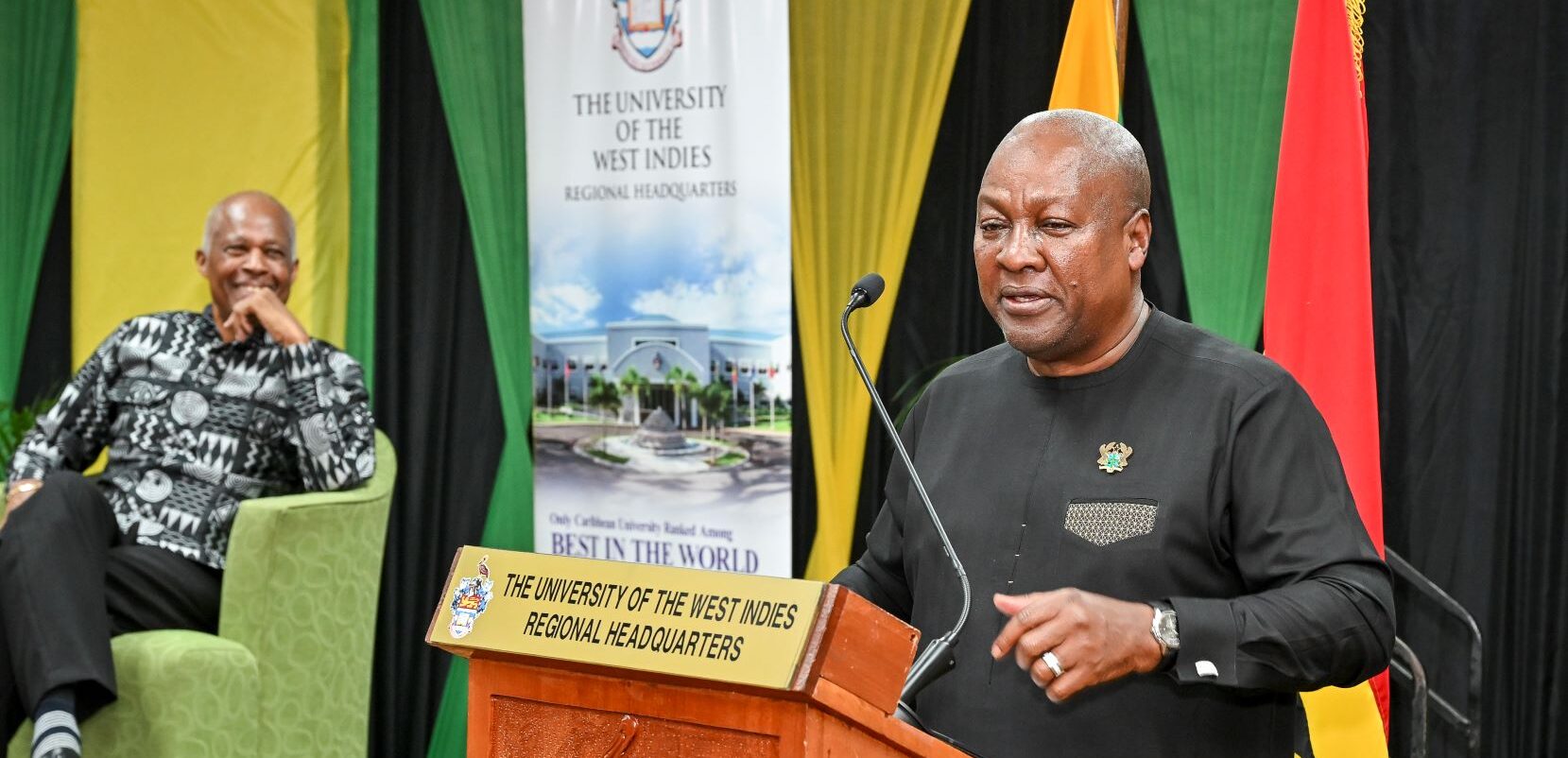
    Guyana’s National Assembly moved one step forward in solidifying its 13th parliamentary governance structure this Monday, as Speaker Manzoor Nadir convened and chaired a plenary meeting to elect chairmen for all standing and sectoral parliamentary committees. The cross-party appointments, which include representation from both the ruling coalition and opposition blocs, lay the groundwork for parliamentary oversight and policy review across all sectors of national governance.

    Following the voting process, the Parliament Office released the full list of confirmed chair appointments. Key leadership positions include Vishnu Panday from the opposition bloc We Invest in Nationhood (WIN) tapped to lead the high-profile Public Accounts Committee (PAC); Attorney General and Minister of Legal Affairs Anil Nandlall will take the helm of the Constitutional Reform Committee; Retired Brigadier Mark Phillips will chair the Oversight Committee on the Security Sector; and Minister of Parliamentary Affairs and Governance Gail Teixeira will lead the Committee of Appointments.

    For sectoral parliamentary committees, the leadership lineup is as follows: WIN’s Duarte Hetsberger will chair the Economic Services Committee; Dr. Vindhya Persaud will lead the Social Services Committee; WIN’s Odessa Primus will head the Foreign Relations Committee; and Minister Vickram Bharrat will chair the Natural Resources Committee. In accordance with the National Assembly’s Standing Orders, Speaker Manzoor Nadir will automatically serve as chair of four internal committees: the Standing Orders Committee, the Assembly Committee, the Committee of Privileges, and the Statutory Instrument Committee.

    In an official statement, the Parliament Office emphasized that the completion of these committee appointments represents a critical milestone for the 13th Parliament. The establishment of these cross-party bodies will allow elected members to immediately begin their core oversight responsibilities: reviewing all sector-specific policies and government administrative actions, and verifying that government policy implementation aligns with principles of good governance and serves the best interests of all Guyanese citizens, the statement added.

    All committees feature bipartisan representation from the three major parliamentary blocs: the ruling People’s Progressive Party Civic (PPPC), opposition WIN, and opposition A Partnership for National Unity (APNU). For the Public Accounts Committee, the PPPC-led government holds five seats filled by Minister Teixeira, Public Works Minister Juan Edghill, Deputy Speaker Vishwa Mahadeo, and parliamentarians Suresh Singh and Sanjeev Datadin, while WIN holds two seats (Panday and Nandranie Singh) and APNU holds two seats (Ganesh Mahipaul and Juretha Fernandes).

    Other key committees also follow this inclusive power-sharing structure. The Security Sector Oversight Committee counts government ministers Anil Nandlall, Ashni Singh, Hugh Todd, and Oneidge Walrall as members alongside two WIN representatives (Toshana Femey-Corlette and Duarte Hetsberger) and two APNU representatives (Sherod Duncan and Saiku Andrews). The Constitutional Reform Committee includes five government members led by Nandlall, two WIN members, and two APNU members.

    Across all sectoral committees, the inclusive arrangement remains consistent. The Economic Services Committee includes five government members, two WIN members, and two APNU members; the Human Services (Social Services) Committee holds four government seats, three WIN seats, and one APNU seat; the Natural Resources Committee has five government representatives, three WIN representatives, and one APNU representative; and the Foreign Relations Committee includes five government members, two opposition members from WIN, and two opposition members from APNU.

  • Column: Wie bestuurt de Van ‘t Hogerhuysstraat?

    Column: Wie bestuurt de Van ‘t Hogerhuysstraat?

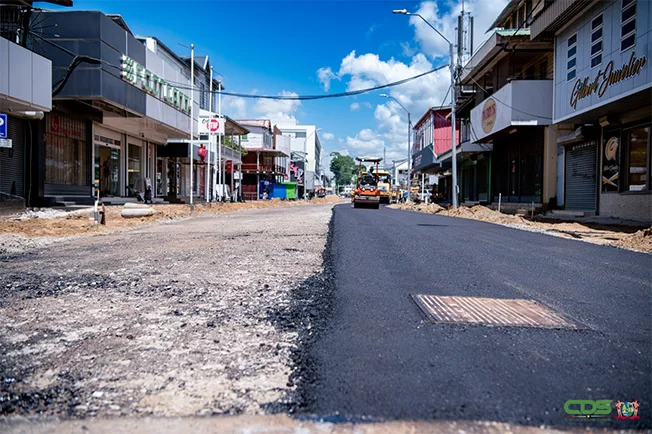
    For years, the Van ‘t Hogerhuysstraat infrastructure project in Suriname has devolved from a simple public works plan into a messy standoff that lays bare deep, structural tensions between national legal sovereignty, international financing rules, and the most basic public interest. What should be a straightforward effort to rebuild a critical roadway has instead become a distorted mirror held up to Suriname’s governance system, bringing together competing claims from the judiciary, the executive branch, the Inter-American Development Bank (IDB), private contractors, and civil society. In the end, every side can make a legally defensible claim for their position — yet every stakeholder loses, and worst of all, the Surinamese public bears the cost of the gridlock.

    The conflict began when an independent Surinamese court ruled that the project’s tender process must be reopened and re-evaluated. This is not a non-binding policy recommendation; it is a binding ruling from a judicial body. In a functioning democratic constitutional state, court orders are meant to be implemented without exception. From this perspective, the claimant Baitali has an unassailable point: a government cannot pick and choose which court rulings to enforce, because selective compliance directly erodes the foundation of the rule of law itself.

    But here the dilemma begins. Standing opposite the Surinamese court’s ruling is the IDB, the multilateral institution providing the financing for the $20 million-plus infrastructure project. The IDB’s position is also legally grounded: the tender process is bound not only by Suriname’s domestic laws, but also by the contractual terms the bank set out as a condition for releasing the funding. According to the IDB, the existing award of the contract to selected contractor Kuldipsingh Infra meets all of the bank’s tender requirements. If Suriname deviates from that award to comply with the domestic court ruling, the IDB has stated it will pull the entire financing package.

    This creates an intractable, uncomfortable deadlock: a domestic court has issued a binding order, but the international funder says following that order will kill the project entirely. The standoff forces a fundamental question that goes far beyond this single roadway: who ultimately gets to decide the fate of public projects in Suriname? The nation’s independent judiciary? The elected domestic government? Or the international financial institutions that provide critical capital for public investment?

    Suriname’s Public Works Minister Stephen Tsang has been forced to navigate this unenviable trade-off, weighing the legal obligation to comply with the court against the severe financial consequences of losing funding. If the IDB follows through on its threat, Suriname stands to lose an investment of more than $20 million at a time when public infrastructure investment is badly needed. Furthermore, if the government cancels the already-awarded contract to comply with the court ruling, Kuldipsinghh Infra has a valid claim to seek significant damages for breach of contract, adding another unexpected financial burden to the state.

    Lost in the tangled legal and financial wrangling between all the institutional stakeholders is the group that matters most: the ordinary Surinamese public. While government officials, lawyers, contractors, financiers, and politicians debate procedural technicalities, tender rules, and legal rights, Surinamese residents continue to drive on a Van ‘t Hogerhuysstraat that deteriorates more every day. Local businesses suffer economic losses from the poor road conditions, motorists face higher vehicle maintenance costs, and even ambulance services responding to medical emergencies lose critical minutes navigating the crumbling pavement.

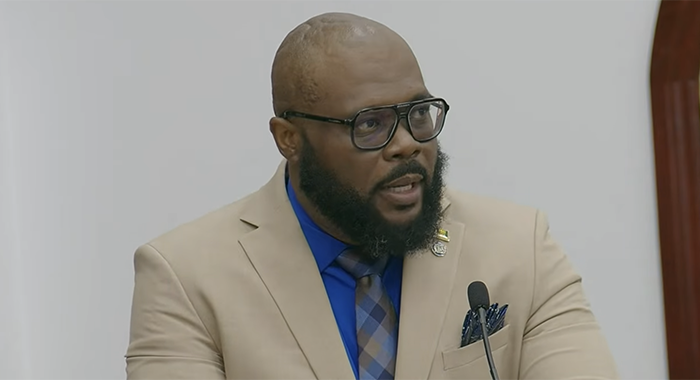
    Average citizens gain nothing from multiple sides claiming they are legally in the right. All they want is a safe, functional roadway. Against this backdrop, the statement from Member of Parliament Ebu Jones — who argues that society should not be taken hostage by this ongoing deadlock — is a politically understandable one. But it also avoids a harder question: can blame for this impasse even be pinned on a single party? Is Baitali at fault for exercising the legal rights to challenge the tender that Suriname’s own laws guarantee? Is the government to blame for running a tender process that ended up being challenged in court? Or is the IDB at fault for insisting on adhering to its own international tender requirements?

    In reality, the core of the problem runs far deeper than this single dispute. This case is not just about one bad roadway; it is a warning sign of a new reality that Suriname will have to learn to navigate more and more frequently in the coming years. That new reality is one where domestic legal rules, international financing conditions, and domestic public interests do not always align seamlessly. This kind of conflict will not be limited to road construction projects. As Suriname moves forward with planned oil, gas, and large-scale infrastructure developments, international financiers, multilateral institutions, and foreign investors will continue to set binding contractual conditions for their capital.

    That is why this small infrastructure dispute deserves far broader public discussion, not focused on which side is legally in the right, but on how Suriname can restructure its governance to prevent these kinds of deadlocks from happening again. It is time to stop asking “who is right?” and start asking a different, more important question: how can we reorganize our governance systems so that society never again ends up the loser when rules, procedures, and interests collide?

    At the end of the day, the Van ‘t Hogerhuysstraat does not belong to Baitali, or Kuldipsingh Infra, or the IDB, or the Surinamese government. It belongs to the Surinamese people, and they are the only party that has gotten the short end of this dispute for far too long. To date, while no construction has even begun on the road, the state of Suriname has already paid out 918,450 Surinamese dollars in penalty fines for failing to comply with the court order — money that could have gone toward actual public works.

  • Derde helft WK 2026: Iran-Nieuw-Zeeland 2-2, buiten speelde zich een groter verhaal af

    Derde helft WK 2026: Iran-Nieuw-Zeeland 2-2, buiten speelde zich een groter verhaal af

    On a Monday evening at Los Angeles’ iconic SoFi Stadium, Group G of the 2026 FIFA World Cup opened with a 90-minute thriller that delivered everything fans could ask for from an opening group stage fixture. Iran and New Zealand produced an open, end-to-end contest marked by scoring chances at both ends of the pitch. New Zealand twice took the lead through winger Elijah Just, but Iran fought back on both occasions to salvage a share of the points. Right-back Ramin Rezaeian leveled the score before halftime, and midfielder Mohammad Mohebbi struck the equalizer midway through the second half to lock in a final 2-2 scoreline. The result means both nations kick off their World Cup campaigns with one point apiece.

    Yet this contest is unlikely to be remembered solely for its on-pitch drama. Long before the first kickoff, a political narrative unfolding around the stadium overshadowed the 90 minutes of sport, drawing global attention far beyond the footballing world.

    Hundreds of protesters gathered in the streets surrounding SoFi Stadium hours before kickoff. Their demands were clear: they called on FIFA to ban Iran from international competition and voiced widespread opposition to the current Iranian regime. Many demonstrators carried the red, white and green flag featuring the lion and sun emblem – the historic national symbol of Iran used before the 1979 Islamic Revolution. Despite FIFA’s longstanding policy to restrict political displays during tournament matches, protest symbols including the alternative flag were visible both outside the stadium concourses and inside the stands during the game.

    Local law enforcement responded by closing multiple arterial roads around the venue and rolling out a large-scale security operation, preparing for potential confrontations between protesters and supporters of the Iranian national team. Ultimately, the protests concluded without any major violent incidents, but the demonstration underscored the extreme sensitivity of Iran’s participation in a World Cup match hosted on United States soil.

    The choice of Los Angeles as the host venue amplified the symbolic weight of the moment. Southern California is home to the largest Iranian diaspora community outside of Iran itself, with the Westwood neighborhood earning the nickname “Tehrangeles” for decades. Hundreds of thousands of Iranian Americans call the region their second home, creating a deeply divided backdrop for the fixture.

    Opinion within the local Iranian community is sharply split on the national team. Some view the squad as a unifying source of national pride separate from the country’s current political leadership, while others argue the team unavoidably serves as a representative of the incumbent regime regardless of its own stance. This divide transformed a routine group stage match into a stark reflection of the deeper rifts splitting the Iranian people both at home and abroad.

    Existing political tensions were further heightened by the timing of the fixture: the match took place just weeks after a military standoff between the United States and Iran sent global diplomatic relations into crisis. While diplomatic talks ultimately secured a ceasefire, lingering political tension remained palpable throughout the build-up to the game.

    The impact of geopolitics was even visible in the basic logistics of Iran’s tournament preparation. Unlike nearly all other participating nations, the Iranian squad chose not to base itself inside the United States, instead setting up their training camp in Tijuana, Mexico. The team was required to cross the international border before every group stage match. Additionally, multiple senior Iranian Football Federation officials were denied entry visas to the United States, a clear demonstration of how global political disputes can disrupt even the most well-planned World Cup logistics.

    Amid all the surrounding political friction, the Iranian players and coaching staff made a deliberate effort to refocus attention on football. Head coach Amir Ghalenoei and team captain Mehdi Taremi emphasized ahead of kickoff that the national team plays for all Iranians, regardless of their political beliefs. They called on fans to avoid dragging the sport into the longstanding divisions that have shaped modern Iranian life.

    The Iran-New Zealand fixture serves as a fresh reminder that the modern World Cup is far more than just a collection of football matches. When FIFA brings 48 nations together on a single global stage, it also brings along the unresolved conflicts, layered historical tensions and societal divides that define those nations. Where a neutral observer saw an entertaining 2-2 draw, thousands of attendees and viewers around the world saw a stage where questions of national identity, exile, geopolitical conflict, diplomacy and free expression all collided.

    It has been decades since the World Cup was solely a competition about football, and this match in Los Angeles drove that point home. The ball rolled for 90 minutes on Monday night, but the story surrounding the match began hours before kickoff – and it will continue to reverberate long after the final whistle blows.

  • Parmessar: Begroting 2026 is brug tussen crisis en economisch herstel

    Parmessar: Begroting 2026 is brug tussen crisis en economisch herstel

    Suriname’s National Assembly kicked off one of the most critical legislative debates of the year on Monday, launching deliberations over the amended 2026 national budget. Committee chair Rabin Parmessar, who leads the body of rapporteurs reviewing the proposal, opened proceedings by outlining a grim near-term fiscal outlook, framing the adjusted spending plan as a targeted “bridge budget” designed to steer the country through a turbulent economic transition period.

    Parmessar explained that ongoing severe financial challenges faced by the Surinamese government over recent months forced officials to revise the originally submitted budget via an official amendment note. The revised proposal projects a national budget deficit equal to 5.1% of the country’s gross domestic product, leaving almost no room for additional government spending and requiring tough, targeted political trade-offs, he noted.

    The budget must receive final legislative approval by July 13 at the latest, Parmessar emphasized. Delays in the start of deliberations, triggered by prolonged disputes over government formation, already pushed the process back, forcing the opening of debate more than two hours behind the original schedule. Vice President Gregory Rusland acknowledged the procedural disruptions, noting that government representatives often waited for hours for quorum to be met before sessions could begin. With only months left for implementation after approval, Parmessar added, not every policy priority can be advanced simultaneously.

    Parmessar stressed that the 2026 budget should not be interpreted as a budget of abundance, but rather a necessary intermediate step for the economy. “This is no luxury budget. This is a bridge between crisis and recovery, between debt pressure and future earning capacity, and between today’s social need and tomorrow’s production,” he told the full Assembly. Outlining three core goals for the plan, he said it must protect households through the ongoing economic downturn, continue stabilizing public finances, and lay the groundwork for expanded production, job creation, and long-term economic growth.

    The committee chair argued that macroeconomic stability alone means little if ordinary citizens continue to bear the full brunt of the ongoing crisis. To address this, roughly 30% of the total budget is allocated to social sectors, including social welfare and housing, education, and public health. At the same time, he called for more targeted social spending and stricter action to curb misuse of social support programs, with digitalization and improved oversight playing key roles in these reforms. While social safety nets keep vulnerable households afloat in the short term, Parmessar noted, expanded domestic economic production is required to drive long-term structural progress for the nation.

    To boost productive capacity, he called for increased focus on key strategic sectors: agriculture, small and medium entrepreneurship, infrastructure, tourism, and oil and gas. He also repeated calls for the swift adoption of a Local Content law, which would ensure that domestic Surinamese businesses can meaningfully benefit from upcoming oil and gas development projects. He also urged renewed attention to the position of Surinamese entrepreneurs doing business with mining firm Zijin.

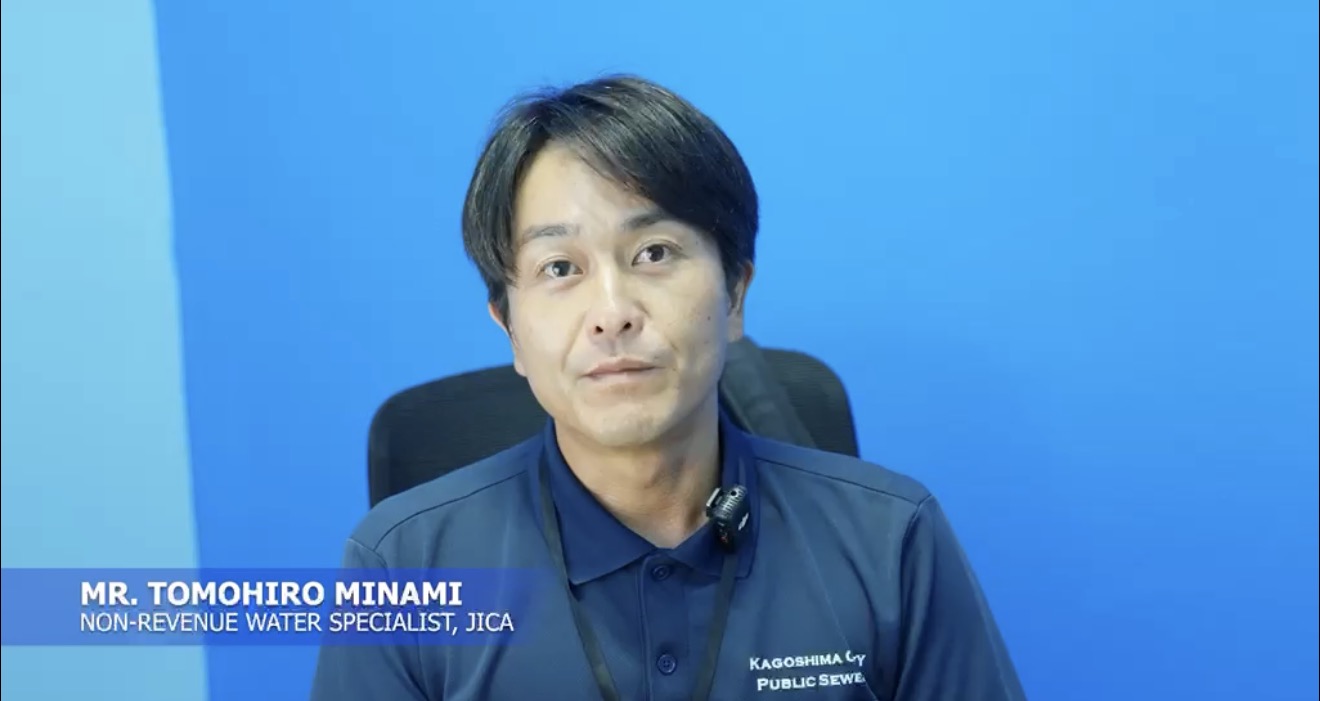
    Debt management took a central spot in Parmessar’s presentation. He acknowledged that the country’s debt burden remains very high, but pushed back against common criticism of new borrowing by drawing a clear line between new lending and refinancing of existing obligations. Critics often only highlight the total size of newly issued bond loans, he explained, but fail to note that a large share of these funds are used to pay down older, higher-interest debt and reduce overall repayment pressure. “Anyone who only says we borrowed $1.575 billion is only telling half the story,” he stated. Parmessar added that every new loan must be transparently accounted for, with full public disclosure of its purpose, interest rate, term, risks, and social return on investment.

    Parmessar also called for a more efficient and accountable public sector. He was careful to note that thousands of public servants carry out their duties properly, but abuses can no longer be ignored. He referenced recent statements from the Minister of Internal Affairs confirming that more than 2,000 public employees collect full salaries despite being absent from work entirely or showing up inconsistently. He also called for additional scrutiny of so-called inactive “available for assignment” public service postings. “Every SRD in salary must be tied to public value,” he said, pushing for a headcount audit across every ministry and concrete action to crack down on prolonged unauthorized absences.

    Even as Suriname stands on the cusp of major new oil revenue streams, Parmessar warned against premature overreliance on those future gains. “Oil must not become a sleeping pill,” he cautioned. He argued that now is the critical moment to strengthen public finances, state institutions, transparency, and budget discipline, so that future oil revenues can be managed responsibly for the benefit of all Surinamese people.

    Closing his opening presentation, Parmessar reaffirmed the role of the amended 2026 budget as a temporary transition plan to carry the nation through its current difficult period. “Social support keeps people upright. Production moves the country forward. And good governance ensures every SRD works visibly for the people,” he concluded.

  • Politic : Amending Public Investment Program 2025-2026

    Politic : Amending Public Investment Program 2025-2026

    As Haiti enters the final quarter of its 2025-2026 fiscal cycle, national planning officials have brought together cross-agency stakeholders to update the country’s core public investment framework, aligning ongoing and planned projects with the government’s top priorities for stability and institutional recovery.

    On June 12, 2026, Haiti’s Ministry of Planning and External Cooperation (MPCE) hosted a dedicated working session focused on amendments to the 2025-2026 Public Investment Program (PIP). The gathering drew leadership from the nation’s Planning and Programming Units (UEPs), senior representatives from all sectoral ministries, and executives from Haiti’s autonomous public agencies, uniting key decision-makers across the public planning ecosystem.

    Opening the workshop, Planning Minister Sandra Paulemon reaffirmed her ministry’s central mandate: steering national development planning, aligning public investment flows, and ensuring all state-backed projects advance the government’s stated strategic goals. She highlighted the foundational role UEPs play across the full project lifecycle, from initial identification and programming to ongoing monitoring and final impact evaluation.

    Paulemon stressed that every project included in the revised PIP must directly advance priorities laid out in the government’s National Pact for Stability and the Organization of Elections, as well as established sectoral development roadmaps. Priority focus areas include public governance reform, expanded infrastructure, improved access to basic social services, broad economic recovery, and long-term institutional strengthening—all core to addressing Haiti’s ongoing systemic challenges.

    With just three months remaining in the current fiscal year, the minister issued a clear call for adhering to strict monitoring and reporting protocols set by the MPCE. She urged all participating institutions to submit required project data within mandated deadlines, a step critical to maintaining transparent and effective management of the country’s entire national investment portfolio.

    A key topic of discussion among attendees was updating PIP performance metrics to be finalized by September 30, 2026. Participants prioritized developing indicators that are measurable, realistic, and objectively verifiable, creating a clear framework to assess exactly how public investments are delivering tangible benefits to Haitian communities.

    In her closing remarks, Paulemon called for deeper collaboration across all branches of the national planning system, urging strengthened inter-institutional coordination, more open information sharing, and a sustained shift toward a results-oriented institutional culture. The ultimate goal, she emphasized, is to amplify the positive impact of all public interventions for the Haitian people.

    MPCE Director General Guy Roméro Latry echoed this call, urging stakeholders to increase their efforts to strengthen project delivery. Latry noted that the success of the revised PIP will hinge on the collective ability of all participating bodies to turn allocated resources into concrete, measurable, and sustainable outcomes that improve daily life across the country.

    Frantz Bastien, Director of Public Investment at the MPCE, framed the workshop as a critical mobilization effort for the national public investment system, designed to accelerate implementation over the remaining fiscal quarter. Bastien emphasized that the revised PIP is far more than a routine administrative adjustment: it is a strategic management tool that allows officials to update existing projects to reflect Haiti’s evolving national context, revise project costs, timelines and delivery strategies, and integrate newly adopted government priorities into active planning.

    Following opening remarks, the workshop moved into a hands-on working phase, where participants conducted a line-by-line review of all projects included in the amended 2025-2026 PIP, assessed current implementation progress, and mapped out next steps for project completion in the coming months.

  • Gunman Opens Deadly Fire on Kiffer McKenzie with Children Inside Vehicle

    Gunman Opens Deadly Fire on Kiffer McKenzie with Children Inside Vehicle

    On a busy Saturday morning in downtown Belize City’s central commercial district, a brazen daylight shooting has claimed the life of 29-year-old Kiffer McKenzie, leaving the local community reeling and reigniting long-simmering debates about systemic cycles of violence and harmful community stigma. The incident marked the fourth fatal killing across the country over that single weekend, capping a period of escalating violence that has shaken public confidence in safety.

    According to initial law enforcement accounts, McKenzie was seated in his parked vehicle near the Belize Bank on Albert Street, accompanied by his two young children aged 3 and 6, when an unidentified gunman approached and opened fire. In a desperate attempt to protect his children and escape the attack, McKenzie accelerated his vehicle up Albert Street, but lost control and crashed into a stationary car only moments later. He succumbed to his gunshot wounds at the scene; miraculously, his children emerged from the attack unharmed.

    Investigators believe the shooter arrived and fled the scene on a motorcycle. In a promising early development, Belize police have detained one suspect in connection with the killing, thanks in part to advances in investigative technology. Stacy Smith, a staff officer with the department, explained that the crime fusion center’s digital tools allowed investigators to quickly locate the abandoned motorcycle and shooter’s helmet used in the attack. Forensic technicians have already lifted usable fingerprints from both items, and the helmet is currently undergoing additional DNA testing to build a solid case against the responsible party.

    McKenzie’s killing is far more than an isolated violent incident: it lays bare the devastating intergenerational cycle of violence that has haunted his family for decades. A lifelong resident of Belize City’s Majestic Alley neighborhood, McKenzie was the son of George “Junie Balls” McKenzie, a former gang figure who was murdered in 2007. The pattern of loss continued nine years later, when McKenzie’s older brother George McKenzie Junior was also gunned down in 2016. Years before his brother’s killing, as early as 2015, McKenzie’s mother Melissa Major had made a desperate public plea for police protection after her son received explicit death threats while attending Wesley Junior College.

    In that 2015 appeal, Major told authorities that her son had avoided criminal activity and was not causing trouble, begging law enforcement to intervene to protect his life. Now, nine years after that plea, Major has lost her last child to gun violence.

    Close family members, speaking to local outlet News Five on condition of anonymity, say McKenzie was unfairly stigmatized from birth because of his family’s past. “If you watch the news and all, you’d never see he had any murder charges or anything like that,” the relative explained. “I feel like because his dad was who he was, they just painted him bad from the start. Nine years after they killed his father, they killed his brother, and nine years later they got him. It’s just about where you come from—they label you. You come out of Majestic Alley, you come from the hood, that’s how people see you, even when you’re not doing bad things, even when you’re trying to do right.”

    Community and youth leaders who worked closely with McKenzie confirm that account, painting a portrait of a man who dedicated himself to breaking his family’s cycle of violence and building a stable, positive life for his two young children. Douglas Hyde, National Youth Program Coordinator with the Belize Police Department, has known the McKenzie family for more than 30 years, dating back to his work with Kiffer’s father in the 1990s. In recent years, he worked directly with Kiffer through the William Dawson community sports programs, which use athletics to steer young people away from violence.

    “When I got to know him as a young adult, he’d finished high school and sixth form, and he was looking for work,” Hyde recalled. “I remember Kiffer telling me over the past year that he didn’t just want any ordinary job. He wanted something he could be proud of, something his kids could look up to him for. When he got the opportunity to work at the Immigration Department, that was one of his proudest achievements.”

    McKenzie had worked for the Immigration Department for four years at the time of his death, and the department released a statement acknowledging his positive contributions to the agency. Andrew Dawson, Acting Director of the Leadership Intervention Unit, a program that supports people leaving high-risk lifestyles to build productive lives, added that the organization was just weeks away from hiring McKenzie as a program coordinator.

    “Kiffer was one of the first people we talked about bringing onboard as a coordinator, because we all saw he had successfully transitioned into a stable, productive life,” Dawson said. “He worked in immigration, and he was incredibly instrumental in our work using sports to promote peace in the community.”

    As investigators continue to process evidence and build their case against the detained suspect, McKenzie’s death adds another tragic chapter to a family story defined by generational loss. For his loved ones and community supporters, his killing stands as a stark reminder of the harm caused by systemic stigma and persistent cycles of violence—even for those who work every day to escape them. This report was compiled from original on-the-ground reporting by Paul Lopez of News Five.

  • Grief at Sadie Vernon as 17-Year-Old Slain in Suspected Bicycle Dispute

    Grief at Sadie Vernon as 17-Year-Old Slain in Suspected Bicycle Dispute

    The hallways of Sadie Vernon High School are heavy with unspoken grief this week, as a third-form student who should be wrapping up his end-of-year exams is gone, killed in a fatal shooting that has shocked the small community. Seventeen-year-old Derrick Morris was shot dead outside his Brown Street residence late Sunday, just moments after he answered a knock at the front door, law enforcement officials confirmed.

    Initial investigative findings point to a senseless escalation of what began as a minor disagreement over a bicycle, a trivial conflict that ended with a teenager’s life cut short. Stacy Smith, a staff officer with local law enforcement, outlined the basics of the case to reporters: Two unidentified individuals arrived at the Morris family home, where one called for a resident of the property. When Morris stepped to the door to respond, he was immediately met with gunfire.

    Investigators have linked the killing to a pre-existing dispute over a bicycle between Morris and the prime suspect, an 18-year-old male who has already been taken into custody. The suspect was identified after authorities reviewed surveillance footage at the department’s Crime Fusion Center, leading to his detention in connection with Morris’s murder. He is expected to face formal murder charges in the coming days.

    On campus, the void left by Morris’s sudden death is impossible to miss. His usual classroom desk sits empty, with a single flickering candle placed beside a framed photo of the teen. A black memorial bow hangs at the school’s main entrance, a quiet symbol of the loss shared by students and staff alike.

    Sadie Vernon High School principal Deborah Martin remembered Morris as a young man with a larger-than-life personality, despite his small stature, who was well-known across the school campus. Like many teenagers, Morris occasionally challenged classroom rules and had faced past academic setbacks linked to behavioral issues, but he had made marked progress in recent months. Martin recalled recognizing Morris just one week before his killing for turning in all his required coursework on time, noting the bright smile he gave when he was commended for working toward promotion to fourth form. An avid football fan, Morris could almost always be found on the school field playing with friends during break and lunch periods, Martin added. Teachers had remained dedicated to supporting Morris as he worked to get back on track toward graduation, making his sudden passing all the more devastating.

    Community members are now grappling with the devastating reality that a minor disagreement between two young people ended in lethal violence, leaving a family shattered and a school community mourning a life with so much potential left unfulfilled.

  • Eric Nelson Killed Near Lakeview Police Checkpoint

    Eric Nelson Killed Near Lakeview Police Checkpoint

    On a Saturday night in Belize’s Ghost Town neighborhood, just 24 hours after marking a hard-earned career promotion that promised a bright future, 29-year-old Eric Nelson was shot and killed in an ambush that has left his community reeling and raised urgent questions about persistent gun violence in the area.

    The shooting unfolded around 7 p.m. at the intersection of Banak and Lakeview Streets, in shocking proximity to local law enforcement infrastructure: a police surveillance camera sits less than 10 yards from the attack site, and a permanent police checkpoint is located just 100 yards away. Initial investigation details released by Assistant Superintendent of Police Stacy Smith confirm that Nelson was walking with a companion when an unidentified male attacker emerged from behind a nearby fence and fired a single shot that killed him instantly.

    To date, law enforcement has not confirmed a clear motive for the killing, and investigators have stressed that Nelson had no prior negative interactions or known connections to criminal activity that would make him a target. Smith outlined the leading line of inquiry, however, linking the attack to ongoing gang tensions following the recent death of a man named McKenzie. According to Smith, the Lakeview Street area is aligned with the Majestic Alley faction, and the shooter may have incorrectly identified Nelson—who was not from the neighborhood—as a rival gang member who posed a threat to the territory.

    The tragedy comes at what was supposed to be a moment of celebration for Nelson and his colleagues at Protel BPO, where he had just earned a promotion to team leader just one day before the shooting. Monday, June 16, would have been his first day in the new role. Victoria Tun, director of Protel BPO, shared that Nelson had only been with the company for roughly seven months before his promotion, a rapid advance that spoke to his work ethic and dedication.

    Tun recalled Nelson’s joy after the promotion, quoting his promise to staff in Belize Kriol: “I’m not going to disappoint. I’m going to do my utmost best in this position. I won’t let you down. I will do what I have to do to prove that I earned this position.” The entire office has been left shaken by the sudden loss, Tun said, describing the news as devastating after the collective pride the team felt in Nelson’s achievement.

    Those who knew Nelson remember him as a hardworking, respectful young man who was focused on building a better life for himself. Now, as investigators continue to piece together what happened and search for the attacker, Nelson’s family and loved ones are left to grieve a life cut cruelly short. They have made a public request that graphic videos of the attack circulating on social media be removed, and have asked for privacy as they process their loss.

    The killing comes amid ongoing concerns about gun violence in Belize City, where young residents with bright prospects are increasingly falling victim to gang-related attacks and mistaken identity. As the investigation progresses, police have not announced any suspects in custody, and are asking anyone with information about the attack to come forward to help bring answers to Nelson’s family.

  • Man Fatally Struck with Shovel During Land Dispute in Caye Caulker

    Man Fatally Struck with Shovel During Land Dispute in Caye Caulker

    The tranquil, close-knit residential neighborhood on the northern end of Caye Caulker, a popular Belizean island that draws tourists from across the globe, has been thrown into mourning and chaos after a routine weekend social gathering devolved into fatal violence that left a 45-year-old construction worker dead. The incident, which occurred on the evening of Saturday June 13, 2026, has sent ripples of shock through the tight community and reignited long-simmering concerns about public safety on the island, marking one of four homicides recorded across Belize that same violent weekend.

    Local law enforcement officials confirmed that the victim, Oscar Flota, a native of Orange Walk who had built a life for himself and his son on Caye Caulker working in construction, was killed after a dispute broke out during a group drinking session. According to Assistant Superintendent Stacy Smith, the lead on the investigation, what began as a casual argument quickly escalated into a physical altercation, during which Flota was struck in the head with a shovel. He was rushed to local medical facilities for emergency treatment, but succumbed to his injuries shortly after arrival.

    Smith explained that the incident is currently classified as a death investigation, rather than an official murder charge, because investigators have not yet confirmed intent to kill or ruled out potential claims of self-defense. Early witness statements confirm that a physical confrontation did occur between Flota and the primary suspect, who remains at large as of Monday. If the investigation ultimately finds that the force used was excessive or that the attack was premeditated, the case will be upgraded to a murder charge, Smith noted. Authorities have already detained several individuals who were present at the gathering for questioning, and say they have identified the primary suspect, who is expected to be taken into custody imminently.

    “All these persons were familiar with each other. They worked together, so it was some drinking and socialization gone wrong, and as I stated, we know who we’re looking for and we are of the view that he will be apprehended shortly,” Smith told reporters.

    Family members of the victim have described Flota as a hardworking, gentle person who dedicated his life to providing for his loved ones. His niece, Mariel Moh, told local outlet News Five that Flota was never an aggressive man, even when drinking, and that no dispute could ever justify his killing.

    “He was a very good person, he always likes to provide for his family. He would never turn his back on his family. He was always smiling, a funny person,” Moh said in a phone interview. “When he’s drunk, I would say he’s not an aggressive person. When he feel drunk he always find his way home to go to sleep. Sometimes people judge because of alcohol this person die but we don’t know the reason why this person did what they did. We just want justice. For police to do their job and find the persons who did it.”

    Local residents have raised unconfirmed claims that the attack stems from a long-running land dispute, alleging that the primary suspect is a local squatter who had previous conflicts with Flota over property. Law enforcement has not yet verified these allegations, and is currently reviewing local security camera footage to build their case and move forward with formal arrests. For the small island community, the killing has broken the quiet peace residents rely on, leaving neighbors on edge and a family grieving a life cut tragically short.

  • Two in Custody After Targeted Police Sweep in Ambergris Caye

    Two in Custody After Targeted Police Sweep in Ambergris Caye

    On June 15, 2026, law enforcement in San Pedro, Belize, announced an early breakthrough in its coordinated national campaign to remove unlicensed firearms from communities across the country. Two local residents are now in custody following a court-authorized search of a private residence on Ambergris Caye, carried out by specialized police intelligence and operations teams.

    According to Assistant Superintendent Stacy Smith, Staff Officer for the San Pedro Police Department, acting on verified intelligence reports, officers served the search warrant at the pair’s home on Wednesday of this week. The operation yielded a Ruger 9mm pistol loaded with six live 9mm rounds of ammunition. Balbina Camara and Melissa Mendez, both residents of San Pedro Town, have since been formally arrested and jointly charged with two offenses: possession of an unlicensed firearm and possession of unlicensed ammunition.

    This latest seizure is part of a broader, sustained national crackdown launched by Belizean police to reduce the prevalence of illegal guns and curb rising gun-related violence across the nation. It also follows just two weeks after two separate anti-gun operations in Punta Gorda and Unitedville earlier this month that delivered their own successful results: six additional arrests, the seizure of two more unlicensed pistols, and the confiscation of dozens of rounds of unregistered ammunition.

    This report is adapted from a transcript of an evening television newscast focused on local crime and public safety in Belize.