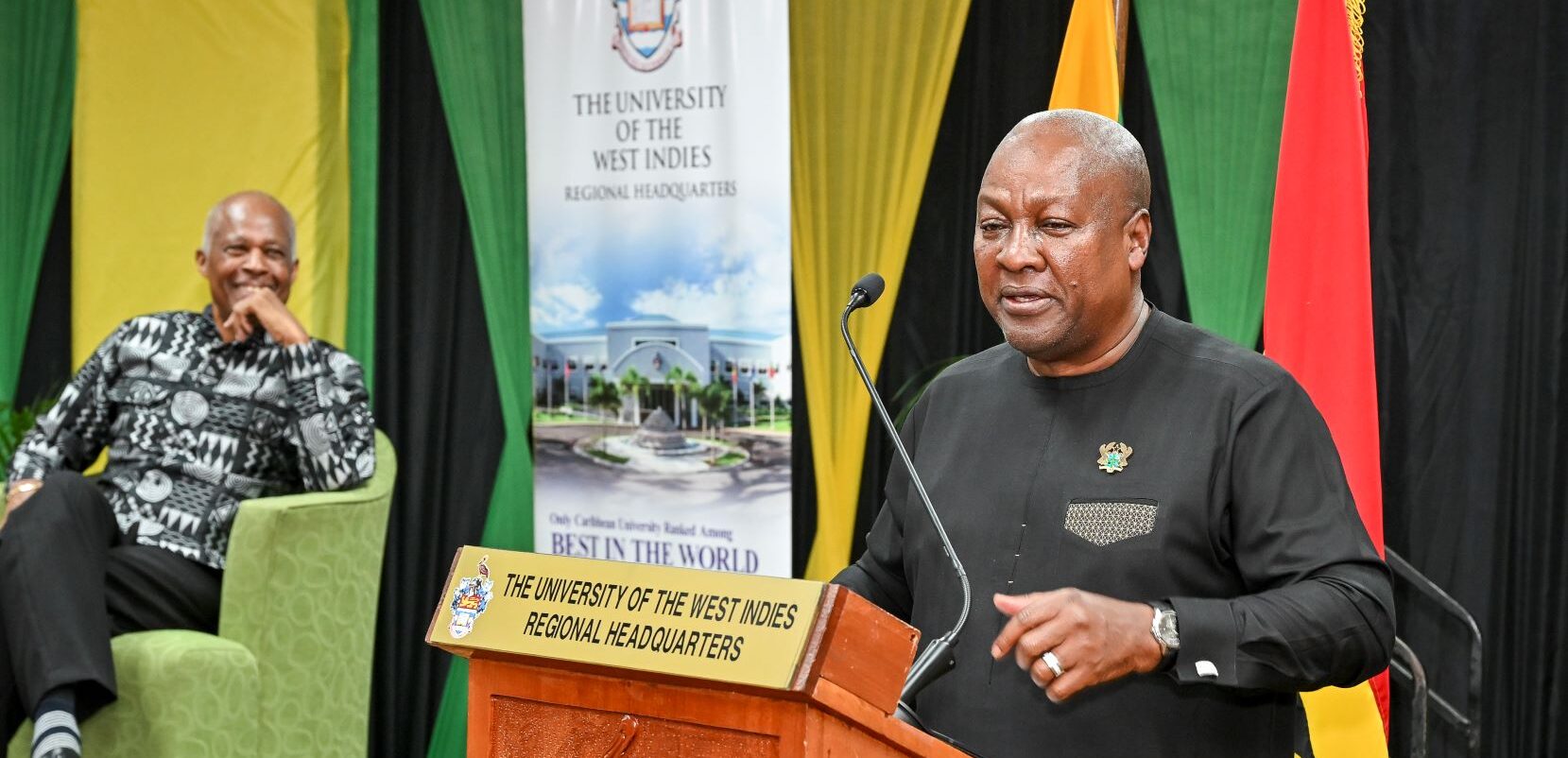
On August 3, the University of the West Indies (The UWI) opened its doors to Ghanaian President John Dramani Mahama for a landmark visit that cements the deepening ties between African and Caribbean nations in the global fight for reparatory justice for the crimes of chattel slavery and native colonial genocide. The trip coincided with Jamaica’s 64th celebration of its independence from colonial rule, creating a powerful symbolic moment to highlight The UWI’s decades-long legacy of leading reparations advocacy, academic inquiry, and Pan-African development progress.
Per an official press statement from the university, The UWI hosted the Ghanaian head of state at its Regional Headquarters to honor the collective work of the global reparations movement and broader Pan-African organizing initiatives. For more than half a century, the regional higher education institution has stood at the forefront of shaping the modern reparations campaign, driving progress through rigorous academic research, public outreach and education, grassroots advocacy, and evidence-based policy design. It has been widely credited by global stakeholders with transforming reparatory justice from a once-marginalized cause into a central topic of regional and international diplomatic discourse.
During his address on campus, President Mahama delivered high praise for The UWI’s unwavering leadership in the global movement, singling out the university’s Centre for Reparation Research. The center has grown into a preeminent global hub that coordinates cutting-edge research, develops global policy frameworks, and leads public education efforts around the demand for reparatory justice. Mahama also spotlighted the critical work of The UWI Vice-Chancellor Professor Sir Hilary Beckles, who has guided the Caribbean Community (CARICOM)’s unified reparations strategy, noting that the global community is increasingly turning its attention to the need for formal recognition, legal accountability, and tangible redress for the historical atrocities of transatlantic chattel slavery and the genocide of Indigenous peoples under colonial rule.
The visit carried unique personal and institutional meaning, beyond the diplomatic agenda. President Mahama is an alumnus of the University of Ghana, a sister institution that shares deep historic roots with The UWI. Both universities were established in 1948, and for 75 years have aligned around a shared mission of expanding educational access, fostering intellectual growth, and advancing self-determination for populations emerging from centuries of colonial domination.
Welcoming President Mahama to the regional headquarters, Vice-Chancellor Beckles commended the Ghanaian leader’s outstanding work advancing the reparations cause on the global stage, particularly through his advocacy at the United Nations. “President Mahama has provided courageous and visionary leadership in elevating the cause of reparatory justice within the global community,” Beckles said in his remarks. “His efforts have helped secure unprecedented levels of international support for recognising chattel slavery as the gravest crime against humanity and have strengthened cooperation among nations committed to justice, development and human dignity.”
Beckles added that recent diplomatic progress at the United Nations signals a critical shift in global public awareness and political commitment to the cause. He noted this shift reflects growing solidarity among CARICOM member states, the African Union, and aligned nations across Latin America and Asia that share a commitment to redressing historical colonial harm. Describing Mahama as “a presidential leader of the movement,” Beckles emphasized that coordinated collaboration between African and Caribbean political leaders is foundational to advancing the shared global agenda for reparatory justice. He also recognized the critical work of Barbados Prime Minister Mia Amor Mottley, who chairs CARICOM’s Prime Ministerial Sub-Committee on Reparations, for her ongoing efforts to build broad international support for the movement.
University officials noted that the visit further solidifies The UWI’s unique role as a living intellectual and institutional bridge connecting Africa and the Caribbean, positioning the institution as a leading contributor to global conversations on historical justice, human rights, and equitable sustainable development. As international attention on reparatory justice continues to rise at an unprecedented pace, The UWI reaffirmed its longstanding commitment to advancing the movement through independent research, inclusive global dialogue, and evidence-based policy that centers the needs of Caribbean communities and the broader African diaspora.