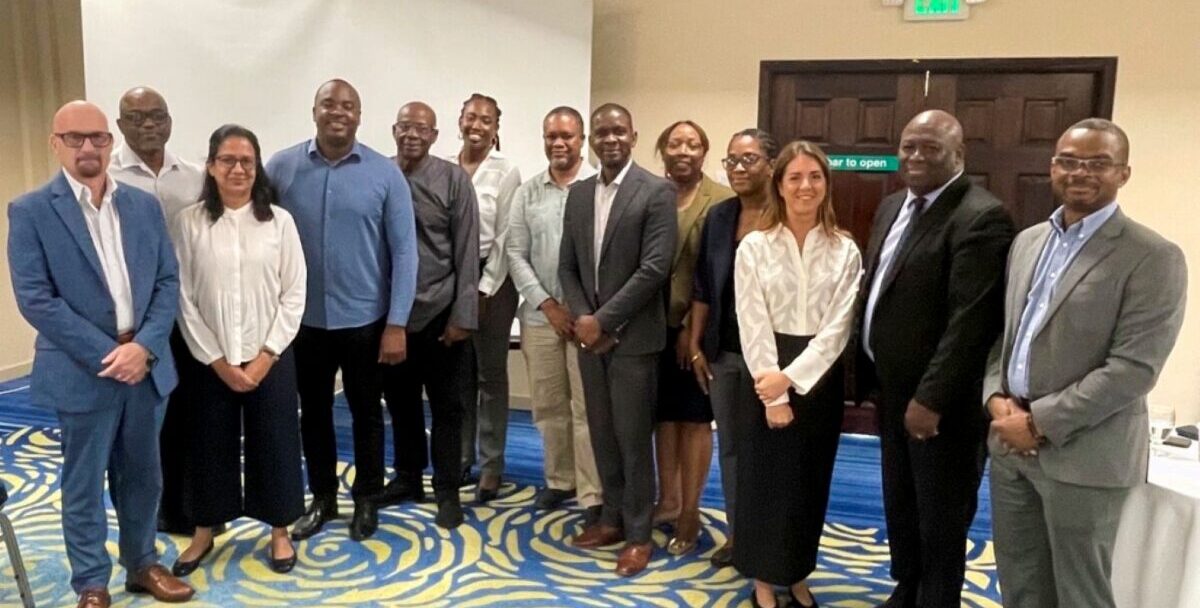
Two leading global development institutions, the Caribbean Development Bank (CDB) and the World Bank Group, have successfully concluded a collaborative portfolio review of active development projects in Grenada, reaching a consensus on a targeted set of reforms designed to accelerate project delivery and amplify the impact of investments across the island nation.
Per an official press statement released by the CDB, the week-long Portfolio Review Mission brought together senior technical officials from both funding bodies alongside senior representatives from multiple Grenadian government agencies, including the Ministry of Economic Development, Planning, and Cooperatives, the Ministry of Finance, and the Ministry of Mobilisation, Implementation and Transformation. Local line ministries and implementing agencies that directly manage on-the-ground project activities also participated, and the review process concluded with high-level talks with Grenada’s cabinet ministers.
The joint assessment covered 11 ongoing capital infrastructure and technical assistance projects financed through CDB funding, spanning a wide range of priority sectors critical to Grenada’s long-term sustainable development: coastal erosion protection, potable water access, public healthcare infrastructure, primary and secondary education, sustainable agricultural production, renewable energy expansion, and national development monitoring and evaluation frameworks.
Notable projects included in the review were Grenada’s high-profile Geothermal Drilling Project, a key initiative that underpins the country’s national transition away from fossil fuels to low-carbon renewable energy; the Southern St. George Water Supply Expansion Project, which aims to address chronic water access gaps and expand reliable service for communities in the region; and Phase 2 of the national Grenada Education Enhancement Project, which is delivering infrastructure upgrades and learning resources to schools across the country’s islands.
Additional key projects reviewed included Climate Smart Agriculture Phase 2, an initiative that supports smallholder farmers to adopt climate-resilient growing practices, strengthen rural household incomes, and improve national food security, as well as the Health Sector Strengthening Project, which focuses on modernizing public healthcare facilities and upgrading service delivery for Grenadian citizens.
During the review, participating working groups addressed common operational bottlenecks that often slow project delivery, covering challenges related to public procurement processes, compliance with environmental and social safeguard standards, progress monitoring frameworks, and proactive risk management strategies. The joint review ran concurrently with a separate routine World Bank Country Portfolio Performance Review, allowing for coordinated alignment of assessment findings.
L. O’Reilly Lewis, Director of the CDB’s Projects Department, highlighted the high level of collaboration between Grenada’s government and the two development institutions throughout the review process. “There was strong engagement from the project teams and line ministries in Grenada during the portfolio review,” Lewis noted. “Together with the World Bank, we believe this collaborative effort will translate into tangible development results and stronger resilience for all Grenadians.”
As part of the assessment, the joint mission delegation conducted site visits to four priority projects to observe progress firsthand. In Concord, officials reviewed construction and implementation work on the Southern St. Georges Water Supply Expansion Project, which is engineered to reduce the island’s vulnerability to recurring drought and water shortages in the southern region. The delegation also traveled to project sites for Climate Smart Agriculture Phase 2 to assess how earlier investments in climate-resilient farming practices are being scaled to benefit more rural communities.
Gail Richardson, World Bank Operations Manager for the Caribbean, explained that the joint review model was intentionally designed to cut through bureaucratic delays, speed up implementation, and maximize the impact of development investments in Grenada. “The World Bank has worked closely with the CDB through this joint review in order to expedite program implementation and the achievement of development results that advance Grenada’s resilience and growth agenda, while expanding opportunities for jobs and livelihoods,” Richardson said.
Mike Sylvester, Permanent Secretary in Grenada’s Ministry of Finance, welcomed the findings of the review and reaffirmed the Grenadian government’s commitment to its long-standing partnership with both the CDB and World Bank. “The Government of Grenada values this comprehensive review and its partnership with CDB and the World Bank,” Sylvester stated. “The mission has reinforced our shared commitment to delivering meaningful development outcomes and strengthening the implementation of projects that are critical to Grenada’s sustainable growth and resilience.”
At the conclusion of the mission, all parties reached formal agreement on a clear set of actionable steps: these include targeted reforms to improve project implementation speed and increase fund disbursement rates, the identification of new avenues for deeper collaboration between the CDB and World Bank on future initiatives, and an updated pipeline of planned CDB-funded projects for Grenada over the coming years.
The CDB confirmed that a formal joint management letter, which will detail the review’s full findings and outline the agreed-upon implementation actions, will be transmitted to the Government of Grenada in the coming weeks.
This joint review forms part of the two institutions’ ongoing long-term development engagement with Grenada, and aligns directly with the CDB’s newly launched Strategic Plan 2026–2035, which centers its work on strengthening regional public institutions, expanding multi-stakeholder partnerships, and ensuring development investments build lasting climate and economic resilience and expand opportunity across all Caribbean nations.