作者: admin

  • Ensuring internal order: A strategic objective in times of threat

    Ensuring internal order: A strategic objective in times of threat

    Cuba has officially launched its fifth nationwide exercise focused on the prevention and counteraction of transnational and domestic societal threats, including organized crime, systemic corruption, illicit drug trafficking, unauthorized activities, and widespread social indiscipline. The nationwide initiative comes with an explicit core mandate: to ramp up coordinated action against harmful behaviors that directly undermine the island nation’s most critical strategic priorities.

    This year’s exercise unfolds against an extraordinarily complex geopolitical and economic backdrop, shaped by decades of escalating pressure from the United States government. A decades-long economic, commercial, and financial blockade has been tightened in recent years, compounded by a strict oil embargo, expanding unilateral sanctions, sustained diplomatic hostility, coordinated psychological warfare campaigns, and persistent threats of direct military action against the Cuban government and people.

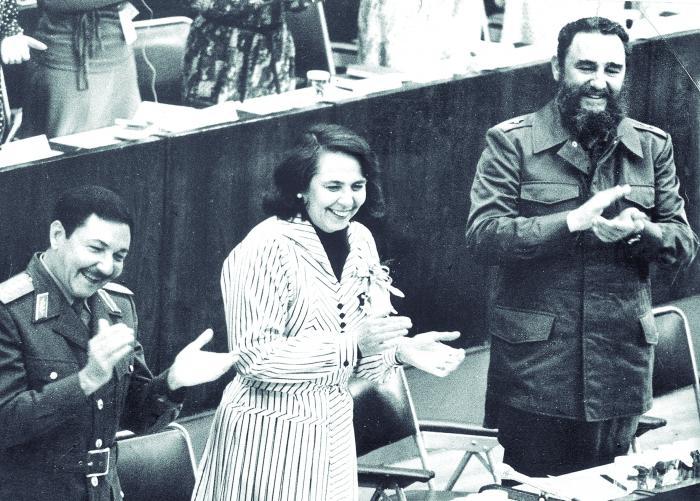
    2026 marks the centennial celebration of Fidel Castro Ruz, the historic Commander-in-Chief of the Cuban Revolution, and this year’s exercise is rooted firmly in Castro’s enduring ideological and practical legacy. It aligns directly with his longstanding guidance that “special attention must be paid to upholding internal order, because resource scarcity can create conditions for a rise in criminal activity, particularly actions targeting the national economy. This task must be understood as a shared responsibility of all public institutions, and every political and administrative leader.”

    Organizers frame the initiative as a collective battle that demands elevated, coordinated action from all sectors of Cuban society to eliminate any space for impunity for harmful actors. Stakeholders emphasize the urgent need to recognize the full scale of current threats, both internal and external, and the non-negotiable responsibility to protect citizen security — a core, cherished achievement of the Cuban Revolution. These challenges have been further exacerbated by widespread, persistent power outages that disrupt daily family life, erode public well-being, and strain access to essential resources for the population.

    Under the initiative, priority efforts will be directed at strengthening security and protective measures for Cuba’s national energy grid and national fuel supply chains, alongside the country’s critical food production and distribution systems. Simultaneously, preventing and combating illicit drug activity, public sector corruption, predatory price gouging, and open market speculation top the exercise’s priority list.

    In the current heightened political climate, resolute action against vandalism and social indiscipline carries particular strategic importance. Cuban authorities note that these disruptive acts are frequently instigated by foreign actors as part of deliberate subversive efforts to destabilize the government. Beyond the direct material damage these acts cause, they are often connected to violent actions that threaten the lives and physical safety of ordinary citizens, all with the end goal of fostering public discontent and widespread social unrest. This context requires strict adherence to national law, widespread public support for law enforcement and regulatory authorities carrying out their official duties, and collective action to protect the nation’s critical strategic assets.

    As Miguel Díaz-Canel Bermúdez, First Secretary of the Central Committee of the Communist Party of Cuba and President of the Republic, noted during the previous iteration of the national exercise, these coordinated initiatives represent a critical opportunity to strengthen collective defensive capacity and guarantee public calm, respect for internal order, national stability, and social discipline — all while advancing broad public participation in the country’s core national priorities. This is especially critical amid the complex challenges the nation currently faces.

    Cuba’s revolutionary leadership has made clear that this collective campaign for public order, social discipline, and national tranquility is built on the unified strength of revolutionary forces led by the Communist Party, with active coordinated participation from state organs, national government bodies, the Union of Young Communists, and a wide network of mass and grassroots social organizations.

    In this national effort, achieving high levels of grassroots popular participation and community oversight is a core requirement. It stands as a tangible expression of the Cuban people’s political maturity and ideological commitment to defending the socialist project the nation has built over decades. Ultimately, upholding internal order is framed as a non-negotiable strategic objective for Cuba in an era of persistent external threat.

  • CTO to Launch Scholarship Fund for Caribbean Women in Tourism

    CTO to Launch Scholarship Fund for Caribbean Women in Tourism

    The Caribbean Tourism Organization (CTO) is set to launch a targeted scholarship initiative designed to uplift emerging female leaders in the region’s critical tourism sector, with the formal unveiling scheduled for the upcoming Caribbean Women in Tourism Leadership Dinner & Awards on June 1. Named “From Her to Her: From Today’s Female Leaders to Tomorrow’s Tourism Stars”, the annual program will deliver financial support to high-potential female Caribbean students enrolled in tourism-focused academic programs, helping them transition into long-term careers in the industry. All revenue generated from ticket sales for the June 1 event will be channeled directly into the scholarship fund via the CTO Foundation, the organization’s philanthropic arm.

    The celebratory dinner and awards ceremony, which will be hosted at the InterContinental New York Times Square as a centerpiece event of this year’s Caribbean Week in New York, will also recognize trailblazing women who have shaped Caribbean tourism. This year’s honorees span senior tourism officials including regional tourism ministers and directors, recipients of the CTO Secretary-General’s Distinguished Service Awards, and the first cohort of inductees into a newly created Hall of Fame, which honors individuals with decades of outstanding leadership in the sector.

    For Dona Regis-Prosper, the first woman to hold the position of CTO Secretary-General, the initiative is both a core organizational priority and a deeply personal commitment. “As the first female secretary-general of CTO, fostering opportunities for women in tourism is both a professional priority and a personal passion,” Regis-Prosper shared. “This scholarship embodies the spirit of mentorship, legacy and opportunity. We are investing in the talent that will shape the future of our region’s most vital industry.”

    Jacqueline Johnson, Chairman of the CTO Foundation, echoed this sentiment, emphasizing the long-term impact of the intergenerational mentorship model at the heart of the program. “This initiative effectively captures the spirit of mentorship and the legacy we aim to build,” Johnson said. “The CTO Foundation team looks forward to a successful launch and to supporting the next generation of Caribbean women leaders in tourism.”

    The scholarship initiative has already secured backing from several key industry partners, including Virgin Voyages, Diamonds International, and TRÈFLE, while the Antigua and Barbuda Tourism Authority has signed on as the official sponsor of the June 1 dinner. The program marks a deliberate expansion of the Caribbean tourism sector’s broader ongoing commitments to advancing gender equity and expanding leadership pathways for women across the region.

    As part of 2026 Caribbean Week in New York, the dinner is open to public attendance with individual tickets priced at $199. With limited capacity available, registration for the event will close on Friday, May 22. More details about the dinner and scholarship program can be found via the official CTO registration portal, while full information about the full schedule of Caribbean Week 2026 events is available on the official Caribbean Week website.

  • Official launch in Haiti of the rehabilitation works on the RD205

    Official launch in Haiti of the rehabilitation works on the RD205

    On May 16, 2026, Haitian officials gathered to mark the official kickoff of a major infrastructure overhaul for departmental road RD205, a critical transport artery linking the southern coastal city of Les Cayes to the commune of Torbeck. The launch ceremony was led by Joseph Almathe Pierre Louis, Haiti’s Minister of Public Works, and attended by the country’s tourism minister, agriculture minister, and senior local leaders from both Les Cayes and Torbeck.

    For communities across Haiti’s Greater South region, this launch represents the long-awaited start of a project that promises to transform regional connectivity. Stretching far beyond the initial Les Cayes-Torbeck segment, RD205 functions as a primary strategic corridor that connects 12 separate communities along the southern coast, including Chantal, Arniquet, Saint-Jean-du-Sud, Port-Salut, Coteaux, Chardonnières, Roche-à-Bateau, Port-à-Piment, Les Anglais, and Les Irois.

    For years, the existing roadway has fallen into severe disrepair, creating daily crises for everyone who relies on it. The degraded surface generates thick, suffocating dust that plagues nearby residents and creates hazardous driving conditions, while constant potholes and uneven pavement cause persistent travel disruptions for daily commuters, commercial transporters, and small-scale agricultural producers who depend on the road to get their goods to market. Government planners have framed the rehabilitation project as a urgent intervention to unlock economic opportunity and improve access to services for the entire isolated southern region. In a complementary announcement aligned with the government’s broader connectivity goals, the Ministry of Public Works also revealed that feasibility and planning studies are already underway to extend the full rehabilitation work all the way to Port-Salut.

    The entire project is backed by funding from the World Bank, with engineering plans specifically adapted to address the unique challenges of the region’s wetland terrain and variable tropical climate. After assessing local hydrogeological constraints, technical project teams selected hydraulic concrete as the primary construction material, a choice that delivers long-term durability and resilience against frequent heavy rain and flooding. The completed modern roadway will feature two 3.5-meter-wide travel lanes, graded shoulders ranging from 1 to 1.5 meters along both edges, and a fully upgraded longitudinal drainage system reinforced with dedicated hydraulic crossing structures to improve water runoff and reduce flood-related damage.

    On-site construction is scheduled to begin this week, with an estimated total timeline of 10 months to complete the initial segment. Recognizing that construction activity will inevitably cause temporary travel disruptions for local residents and through traffic, the Ministry of Public Works has issued a public call for patience and understanding from the community. The ministry is also coordinating with the Haitian National Police (PNH) to provide on-site security and manage traffic rerouting during the construction period.

  • The Silent Metamorphosis of Haiti (report)

    The Silent Metamorphosis of Haiti (report)

    Against the backdrop of one of the most severe crises Haiti has faced in modern memory, a quiet but powerful wave of change led by the nation’s young people is unfolding across the country, according to a new report published this week. Titled *The Silent Metamorphosis: How Haitian Youth Are Reinventing a Nation’s Future*, the report was officially launched on May 14, 2026 at Port-au-Prince’s Quisqueya University, produced as a collaboration between the United Nations Development Programme (UNDP), Haitian development firm Group Croissance, and local policy organization CEDEL Haiti.

    Co-written by Xavier Michon, UNDP’s Resident Representative in Haiti, and Kesner Pharel, noted economist and chief executive of Group Croissance, the report pushes back against the pervasive global narrative that frames Haiti only through the lens of chaos, instability, and widespread vulnerability. Instead, it outlines a series of tangible economic, social, technological, and civic shifts already underway across the nation, all driven by Haitian youth who are operating far outside the scope of mainstream media and international policy attention.

    The core argument of the report rejects the common debate of whether Haiti’s young generation has the capacity to reshape their nation. “The question is not whether these young people are capable of transforming Haiti. They are already doing so,” the authors emphasize. The real pressing question, they argue, is whether Haitian national leaders and their international partners will choose to proactively back this grassroots movement, or continue to overlook its potential to drive long-term recovery and progress.

    To address this gap, the report puts forward a clear three-stage strategic roadmap that is designed to operate effectively even amid Haiti’s current weakened institutional landscape. The plan outlines immediate, quick-action interventions for the first two years, followed by targeted structural investments to scale momentum between years two and five, and large-scale transformative development projects for the longer term, five years and beyond.

    Ultimately, the report frames this quiet youth-led transformation not as a distant, hypothetical hope for Haiti’s future, but as a tangible, already-existing opportunity that only requires recognition, intentional investment, and intentional amplification to deliver widespread, lasting change for the Caribbean nation. The full 68-page report, published in French, is available for public download via HaitiLibre’s official website.

  • Launch of a national training program to strengthen electoral security…

    Launch of a national training program to strengthen electoral security…

    In a landmark step to lay the groundwork for 2026 inclusive national elections, Haitian Prime Minister Alix Didier Fils-Aimé has formally inaugurated a countrywide training program designed to reinforce electoral security and guarantee the credibility of upcoming votes for key judicial and public authority posts. The initiative, conducted under the official oversight of Haiti’s Ministry of Justice and Public Security (MJSP), aligns directly with the three core policy priorities the prime minister outlined for his administration: eliminating the threat of armed gang activity to restore national security, revitalizing Haiti’s struggling economy, and delivering free, fair, transparent, and inclusive elections by the end of the year. The first phase of the training program focuses on equipping three key stakeholder groups with the tools to uphold electoral integrity: government commissioners, justices of the peace, and uniformed personnel from both the Armed Forces of Haiti (FAd’H) and the Haitian National Police (PNH). Initial training sessions are being rolled out in three strategic municipalities: Port-au-Prince, the nation’s capital, Petit-Goâve, and Croix-des-Bouquets, with plans for a phased expansion that will reach all 146 of Haiti’s municipalities in the coming months. Alongside the training initiative, the Haitian government has also earmarked more than 3 billion gourdes in public funding to support participating political parties and electoral coalitions, a move designed to level the playing field for all candidates. During the launch ceremony, Prime Minister Fils-Aimé delivered a firm, uncompromising rebuke to gang activity, stressing that the Haitian state would never retreat from its duty to protect national territory and would never cede control of any region to armed criminal groups. “We will combat money laundering systematically, and we will not allow dirty money to infiltrate our electoral process and corrupt our ballot boxes,” the prime minister stated. To deliver on this promise, his administration will establish a dedicated specialized judicial unit focused on investigating and prosecuting financial crimes, with a specific mandate to block illicit financing from influencing election outcomes. The prime minister also paid public tribute to the courage and sacrifice of police and military personnel currently deployed to retake residential neighborhoods held by armed gangs, urging security forces to apply the highest level of rigor to pursuing and penalizing any violations of electoral law. Reaffirming the government’s commitment to collaborative governance throughout the electoral process, Fils-Aimé noted that all planning is being carried out in close consultation with Haiti’s Provisional Electoral Council (CEP), civil society organizations, and registered political parties. He closed with a solemn reminder to all electoral stakeholders of their core obligation: “You have only one leader: the Haitian people. It is to them alone that you owe loyalty, discipline, and impartiality.”

  • SVG lagging behind despite increased visitor arrivals

    SVG lagging behind despite increased visitor arrivals

    In a public press briefing held in Villa on May 14, 2026, senior tourism officials from St. Vincent and the Grenadines (SVG) shared encouraging new data on the country’s post-crisis tourism recovery, while openly acknowledging the Caribbean nation still lags behind many of its regional competitors in total visitor volumes. The announcement coincided with the official launch of SVG’s new national tourism branding initiative, the “Love SVG” campaign, which aims to boost the destination’s global profile.

    Shawn Sutherland, Chief Operating Officer of the St. Vincent and the Grenadines Tourism Authority (SVGTA), confirmed that 2025 marked an all-time historic high for overnight stay-over tourism to the island chain. For the full calendar year 2025, total stay-over arrivals surpassed the 120,000 mark, shattering previous records for the destination. This positive momentum has carried over consistently into the opening months of 2026, with each month of the first quarter posting double-digit year-over-year gains. Sutherland noted that monthly growth rates fell between 10% and 12% for January, February and March, bringing the quarterly average to roughly 10% growth. He projected that this steady upward trajectory will remain consistent through the remainder of 2026, building on the multi-year recovery that began after the twin shocks of the COVID-19 pandemic and the 2021 La Soufrière volcanic eruptions devastated the local tourism sector.

    Cruise tourism, another core revenue stream for SVG’s travel industry, has also maintained solid high volumes in recent years, according to Tourism Minister Kishore Shallow. The minister reported that SVG currently welcomes an average of around 350,000 cruise passengers annually, paired with the 120,000 annual stay-over arrivals set in 2025. However, Shallow emphasized that when compared to peer nations across the Caribbean, SVG’s performance still leaves significant room for expansion. He pointed to key regional competitors to contextualize the gap: neighboring Grenada records more than 180,000 annual stay-over arrivals, while St. Lucia draws nearly 426,000 overnight visitors each year. For cruise traffic, the gap is even wider, with major regional destinations like Antigua and St. Kitts welcoming more than one million cruise passengers annually. Shallow framed the 2025 record and 2026 early growth as clear evidence of progress, but stressed that targeted, strategic action is required to close the gap and unlock the full potential of SVG’s tourism sector. “It means that there are opportunities for improvement. We could do a lot better,” Shallow said, noting that intentional, strategic planning will be critical to reaching the country’s growth targets.

    Sutherland outlined three core drivers behind the recent positive growth trend that SVG has recorded: expanded air connectivity, rising private sector investment, and increased global visibility through modern digital marketing. He explained that the SVGTA has prioritized improving air access over recent years, forging new strategic partnerships with both regional and international air carriers to expand route networks and increase flight frequency to the destination. “Enhanced connectivity remains essential to tourism, investment, business travel and visitor arrivals,” Sutherland noted. He added that the authority is also seeing growing confidence from private sector investors, with a pipeline of new and expanding hotel and tourism infrastructure projects underway across the country. These developments will eventually increase total room capacity, boost average occupancy rates, generate new local employment opportunities, and expand overall economic activity across all of SVG’s islands, he said.

    Most notably, the SVGTA has shifted its marketing strategy to leverage digital platforms and influencer partnerships to reach younger global travelers, a move that has already paid dividends in increased international visibility. Sutherland highlighted recent exposure from major global streaming and digital platforms, including content from popular creator IShowSpeed, the reality series *Below Deck*, and the David Hoffman YouTube channel, all of which have featured SVG in recent months. “The visibility generated through IShowSpeed’s Caribbean content demonstrated the growing influence of digital creators and online streaming platforms in shaping travel interests among younger global audiences,” Sutherland explained. Moving forward, the SVGTA plans to build on these early wins by doubling down on digital storytelling, influencer engagement, and modern data-driven marketing strategies that align with evolving global travel trends, to position SVG as a top Caribbean destination for international visitors.

  • Long-delayed Grenadines desalination projects to be fast-tracked

    Long-delayed Grenadines desalination projects to be fast-tracked

    St. Vincent and the Grenadines is currently grappling with an unprecedented severe water shortage that has pushed the country’s smaller Grenadines islands into a state of emergency, prompting the newly sworn-in administration to fast-track a seven-year-stalled desalination initiative that was originally gifted by the Italian government.

    Health Minister Daniel Cummings, who holds oversight over the country’s potable water portfolio, launched sharp criticism at the former Unity Labour Party (ULP) government for the years-long delay of the Bequia desalination plant project. In an interview with NBC Radio this Wednesday, Cummings — who assumed his post in December following the New Democratic Party (NDP)’s victory in the November 25 general election — expressed deep frustration over the stagnant initiative. “It is extremely puzzling that for over seven years, a desalination plant donated by the Italian government for the people of Bequia has never moved past the planning stage. For whatever reason the project never got off the ground, and this is nothing short of a tragedy,” he stated.

    The planned facility, which will include dedicated storage infrastructure and distribution pipelines, is designed to convert treated seawater into safe drinking water for Bequia’s residential community. According to Cummings, the country’s Central Water and Sewerage Authority (CWSA) is now prioritizing the project to advance desalination access across most Grenadine islands, a long-term solution that will help ease chronic water scarcity across the region.

    Right now, the entire archipelago is reeling from a severe extended drought that has forced widespread water rationing even on mainland St. Vincent, which is naturally endowed with rivers, springs, and streams to support its municipal water network. The situation is far grimmer across the Grenadines chain, where rainwater harvesting remains the primary source of drinking and household water for most communities. Cummings labeled the current conditions across the Grenadines a “super critical” crisis, emphasizing that Bequia — the largest Grenadine island located just nine miles from the capital Kingstown — is no exception, despite its proximity to the mainland. The island is currently facing extreme water shortages that have disrupted daily life for residents.

    In the short term, authorities are pulling every lever to stabilize water supplies across the affected islands, leveraging a patchwork of existing and soon-to-be-activated private and resort-owned desalination facilities to fill gaps. On Union Island, a private desalination plant developed by a local investor has already been completed but has not yet entered operation. Cummings confirmed that ongoing conversations with the developer have put the facility on track to be commissioned in the very near future. Once operational, water from the plant will be transported by tanker to different parts of the island, as no permanent distribution mains have been constructed for the facility. On Canouan, residents have historically depended on excess water from the island’s resort-owned desalination plant, but the facility is currently struggling to meet its own operational demands, meaning it can no longer supply the same volume of water to local communities it once did. The small island of Mayreau has seen a modest reprieve recently after the Mustique Company installed a small-scale desalination plant in the island’s bay, though additional water still needs to be delivered by boat to meet full community demand.

    Looking toward long-term sustainable solutions, Cummings highlighted modern advances in desalination technology paired with solar energy that have transformed the feasibility of these projects compared to a decade ago. New solar-powered desalination systems cut reliance on expensive fossil fuels dramatically, harnessing renewable energy to treat water and pump it into elevated storage facilities. “The technology has improved dramatically on both fronts: modern desalination requires far less energy than it did 10 to 15 years ago, while solar power systems have become cheaper and far more accessible,” Cummings explained. The elevated storage design also guarantees consistent supply: when sunlight is unavailable after dark, gravity feeds stored water to residents, ensuring a continuous supply of high-quality drinking water across all Grenadine islands.

    Cummings reaffirmed that the new administration is prioritizing long-neglected water infrastructure projects across the Grenadines to address both the immediate crisis and future water security risks, with the Bequia desalination project at the top of the government’s implementation list.

  • Fuel prices increase

    Fuel prices increase

    Starting this Sunday, drivers and businesses across the region will face higher costs for key petroleum products, after official announcements confirmed steep retail price increases for gasoline, diesel, and kerosene.

    The most dramatic jump is seen in kerosene, a fuel widely used for heating and cooking in many residential and small commercial settings, which will rise by $1.03 per liter to hit a new retail rate of $2.56 per liter. Gasoline, the primary fuel for passenger vehicles and light freight, will see a 28-cent per liter increase, pushing its retail price to $4.01 per liter. Diesel, the dominant fuel for heavy transport, logistics, and construction equipment, will see a more modest six-cent per liter rise, bringing its new retail price to $3.21 per liter.

    The price adjustments, which were confirmed in an official press release, are set to ripple through multiple sectors of the economy. Higher gasoline prices will directly increase household transportation costs for daily commutes and personal travel, while elevated diesel prices will likely put gradual upward pressure on goods delivery costs, which may eventually be passed through to consumers at retail outlets. For households reliant on kerosene for off-grid heating, the sharp jump in prices is expected to create added financial strain heading into the coming months.

    The new pricing structure will go into full effect at all licensed retail fuel outlets starting Sunday, with no transition period for existing stock.

  • Gonsalves says police force ‘now entirely politicised’

    Gonsalves says police force ‘now entirely politicised’

    A controversial fast-track promotion of a former partisan political official to a senior leadership role in the Royal St. Vincent and the Grenadines Police Force is at the center of growing political tension, with opposition leader Ralph Gonsalves labeling the plan entirely unacceptable and warning it will deepen what he calls systemic partisan infiltration of the national constabulary.

    National Security Minister St. Clair Leacock first made public Brenton Smith’s planned promotion as part of a broader reshuffle of the police force’s top command on Wednesday. Smith’s path to this anticipated senior appointment traces back to 2021, when he was one of hundreds of public sector workers terminated under Gonsalves’ Unity Labour Party (ULP) government, which enforced a COVID-19 vaccine mandate that removed unvaccinated public employees from their posts.

    After his dismissal, Smith stepped into a top partisan role, serving as general secretary of the then-opposition New Democratic Party (NDP). Following the NDP’s landslide general election victory on November 27, the new administration fulfilled a campaign pledge to reinstate all workers dismissed under the previous government’s vaccine mandate, restoring their full employment benefits. Smith returned to his role in the police force as part of this policy.

    What makes Smith’s planned promotion extraordinary is the size of the rank jump: instead of advancing sequentially through the traditional hierarchy of assistant superintendent and superintendent, he will move directly from his current rank of inspector to the senior position of assistant commissioner of police (ACP), skipping three intermediate ranks entirely. On Wednesday, Gonsalves addressed the plan during a caller segment on his popular weekly radio show *Morning Comrade*, broadcast on Star FM, after a listener cited Leacock’s announcement that Smith would also be tapped to lead critical human resources operations within the force.

    Gonsalves stressed that his criticism centers on institutional principle, not a personal attack on Smith. He emphasized that the proposed leap would be an unprecedented break from longstanding police protocol and fundamentally unfair to veteran officers who remained in service and climbed the ranks gradually while Smith left to pursue full-time partisan political activity.

    “I have no objection to him returning to his post — other workers dismissed under the mandate were reinstated, and that is the policy the new government put in place, that is their right,” Gonsalves said. “But there is no justification for moving him straight from inspector over multiple intermediate ranks directly to the ACP. You simply cannot skip assistant superintendent, superintendent, and all the intervening steps to land at a senior command post. I do not believe the public of this country will accept this unfair outcome lightly.”

    The opposition leader warned that if the promotion moves forward, it will trigger significant unrest both among the general public and within the rank-and-file of the police force. “Vincentians have a deeply held belief in fairness in public service,” he noted. “When the public sees an unfair appointment, they will speak up. And serving officers who have spent decades working their way up the ranks will also object to this. This decision will carry major repercussions, far-reaching repercussions.”

    Gonsalves called on the independent Police Service Commission (PSC), which holds formal authority to approve senior police appointments, to reject the plan, saying he would be gravely disappointed if the body endorsed the accelerated promotion. “I know the chairman and all members of the PSC personally, and I cannot imagine that, with proper legal and procedural advice, they would endorse such an irregular decision. This is fundamentally a question of merit and seniority. There are only four ACP posts in the force, and when vacancies open, appointments should go to officers who have worked their way up through the system, not to former political officials who just returned to the force.”

    Gonsalves drew a clear distinction between Smith’s proposed promotion and the planned elevation of two other senior officers, Trevor “Buju” Bailey and Dwayne Bailey, who are set to be promoted to deputy commissioner of police. He stated he holds the Bailey brothers in high professional regard, noting that their promotions follow traditional hierarchical advancement: Dwayne Bailey was promoted to superintendent by the PSC during the ULP administration, and Trevor Bailey already holds the ACP post, so his elevation to deputy falls well within normal procedural bounds.

    “The promotions for the Bailey brothers are completely reasonable and aligned with constitutional and regulatory frameworks, which outline the prime minister’s role in appointing commissioner and deputy commissioner posts,” Gonsalves explained. “Smith’s jump is on an entirely different footing — it combines an unprecedented accelerated promotion with recent full-time partisan political activity with the ruling party.”

    Gonsalves also questioned the procedural decision to have the sitting national security minister announce individual senior promotions, rather than releasing the announcement through the PSC, the body legally responsible for police personnel decisions. “I held the national security portfolio and oversaw the police force for years under the ULP government, and I have never seen a sitting minister personally announce individual promotions of this sort. This makes clear that the entire police force is now being politicized from the top down, after the NDP took office in November,” he added.

  • Bouva bespreekt economische samenwerking met Venezolaanse leiding

    Bouva bespreekt economische samenwerking met Venezolaanse leiding

    On a working visit to Venezuela, Melvin Bouva, Suriname’s Minister of Foreign Affairs, International Trade and Cooperation, held high-level talks with interim Venezuelan President Delcy Rodríguez focused on expanding and deepening diplomatic and economic ties between the two Caribbean-South American nations. The meeting, held in the Venezuelan capital of Caracas, centered on boosting collaborative projects across a suite of strategic priority sectors, including energy, agriculture, fisheries, tourism, education, and capacity building for the oil and gas industry.

    Bouva’s visit was arranged at the invitation of his Venezuelan counterpart, and aligned with broader regional integration goals and the advancement of South-South cooperation, a framework that fosters knowledge and resource sharing among developing nations. Both delegations framed the Caracas meeting as a pivotal milestone in the ongoing development of bilateral relations between Suriname and Venezuela, with both sides confirming their commitment to expanding existing partnership frameworks and advancing joint projects that deliver mutual benefits to their populations and economies.

    Dialogue during the talks also addressed core regional priorities: the delegates emphasized the critical role of inclusive economic growth, expanded cross-border trade, and sustained regional stability for long-term development across the broader area. Both sides further underlined the urgent need for long-term sustainable cooperation across both the Caribbean region and the Amazon basin, two ecologically and economically vital areas shared by the two nations.

    During the discussions, Bouva reaffirmed Suriname’s commitment to deepening its partnership with Venezuela, noting that the two sides will work to turn diplomatic understandings into concrete agreements that drive shared economic growth, advance regional integration, and strengthen long-term sustainable diplomatic ties. Both Suriname and Venezuela concluded the meeting by reaffirming that open, constructive dialogue, mutual respect for national sovereignty, and strategic cross-border collaboration remain foundational to advancing shared interests across the South American region.