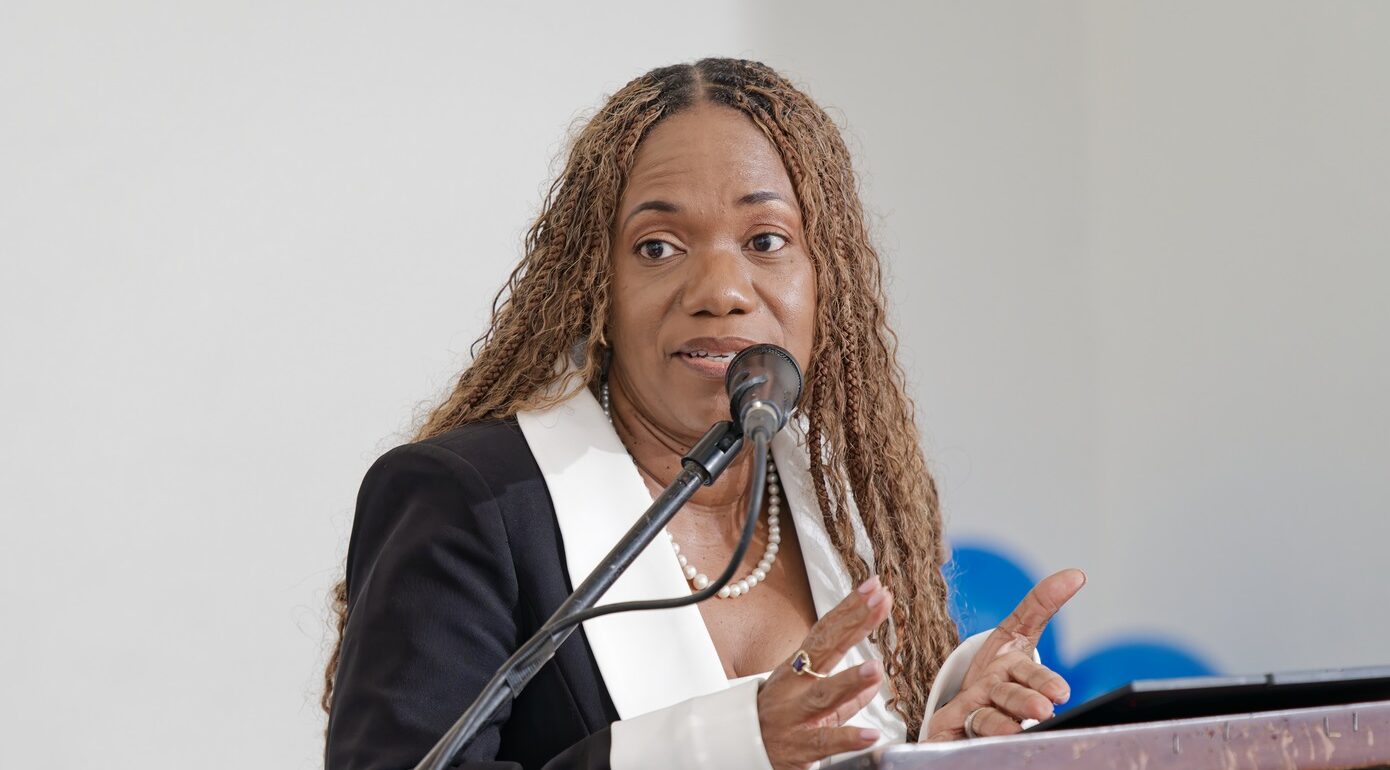
At the latest Jamaica Employers’ Federation (JEF) Convention, the Caribbean Examinations Council (CXC) took the spotlight to share its award-worthy approach to disaster contingency planning, presented by CXC Director of Corporate Services Sheree Deslandes. Delivering a talk titled “Hardwired to Recover: HR, Disruption, and the Architecture of a Modern Caribbean Workforce,” Deslandes walked attendees through how the organization’s pre-built Regional Disaster and Business Recovery Protocol allowed for a rapid, coordinated response when Hurricane Melissa made landfall in Jamaica in October 2025.
The 2025 hurricane left a devastating trail of disruption across the country, damaging more than 800 educational facilities and disrupting the academic trajectories of over 250,000 students. What set CXC’s response apart, Deslandes emphasized, was that it was not an ad-hoc plan cobbled together in the middle of the crisis. Instead, the framework had been refined over years of real-world testing, forged during prior regional disruptions including the global COVID-19 pandemic, the 2021 eruption of La Soufrière volcano in St. Vincent and the Grenadines, and 2024’s Hurricane Beryl.
Thanks to this pre-existing, tested protocol, CXC moved quickly to protect students’ access to the 2026 January and May-June sessions of the Caribbean Advanced Proficiency Examination (CAPE) and Caribbean Secondary Education Certificate (CSEC). Partnering closely with Jamaica’s Ministry of Education, Skills, Youth and Information, the organization rolled out a suite of flexible, student-centered adjustments: full fee refunds for candidates who did not feel prepared to sit their scheduled exams, penalty-free late registration for those affected by displacement, and revised requirements and extended deadlines for School-Based Assessments (SBAs).
This practical, proactive approach struck a chord with convention attendees, who widely praised CXC’s framework as a gold standard for organizational resilience in the face of climate-driven disasters. Tishauna Mullings, a training consultant with NexxStep, called the CXC response a powerful blueprint for other regional institutions, noting “The agile resilience demonstrated by CXC for our children is inspiring.”
During question-and-answer sessions, convention participants pressed for deeper insight into the structural choices that made CXC’s response so effective. Deslandes highlighted the often-overlooked strategic role of the Human Resources department, positioning it as the backbone of the organization’s preparedness and recovery capacity. She challenged attending employers and organizational leaders to reconsider their own HR frameworks, asking: “Is your HR function built for the storm you haven’t seen yet?”
At CXC, Deslandes explained, resilience has been baked into HR strategy through intentional structural change: the organization has restructured roles and reporting lines, updated outdated HR systems and core workflows, and deliberately cultivated an organizational culture focused on results and rapid recovery. She argued that investments in HR transformation extend far beyond boosting internal operational efficiency, delivering tangible benefits to students, education ministries, and regional employers that rely on a steady, well-prepared pipeline of new workforce entrants.
“By design, HR-led transformational work is unfinished. It is a process of purposeful building and rebuilding, and a continuous discipline, where the HR function must be treated as not just support services, but as a strategic edge for productivity and resilience in our multigenerational Caribbean workforces,” Deslandes told attendees.
Deslandes’ presentation comes at a critical juncture for organizations across Jamaica and the broader Caribbean. In the wake of Hurricane Melissa, public and private institutions across the region are actively re-evaluating their own disaster preparedness strategies to mitigate risk from future climate and public health disruptions. For many JEF Convention attendees, CXC’s experience drove home a key lesson: meaningful, effective disaster recovery planning does not start when a crisis begins—it is built through consistent, intentional investment long before disaster strikes.