
A violent head-on traffic crash unfolded on Jonas Road during the late evening hours of Wednesday, leaving several individuals with severe, life-threatening injuries, local first responders confirmed. Emergency service teams were dispatched to the scene immediately after receiving reports of the collision, arriving quickly to extract trapped passengers from the wrecked vehicles involved. Once extracted, all injured occupants were rushed by ambulance to nearby medical facilities to receive urgent care for their traumatic injuries. As of Thursday morning, investigating authorities have not yet released additional details about the crash, including the exact number of people hurt, the identities of those involved, potential contributing factors such as inclement weather or impaired driving, or the current condition of the injured patients. Local law enforcement has indicated that a full investigation into the incident is ongoing, and updated information will be released to the public as soon as it becomes available.
作者: admin
-
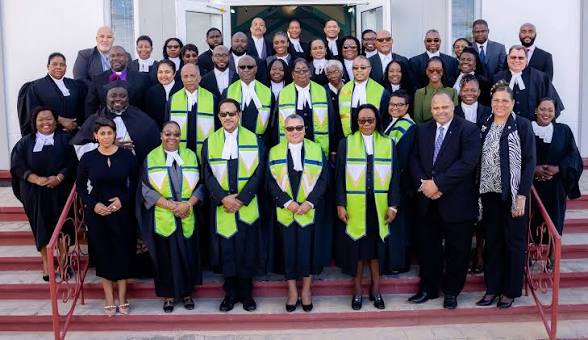
Antigua and Barbuda Government Reaffirms Judicial Independence, Calls for Complete Record to be Considered
A fresh standoff over judicial accountability and institutional independence has emerged in the Eastern Caribbean, with the Government of Antigua and Barbuda pushing back against regional judicial bodies’ criticism of Prime Minister Gaston Browne, while formally reaffirming its longstanding commitment to an independent judiciary and the separation of powers.
The controversy ignited in early August, when Browne delivered public remarks about sentencing practices during a National Security Council meeting. The comments came against a backdrop of mounting public anxiety across Antigua and Barbuda over persistent firearm-related violence and widespread public frustration that sentencing for serious criminal offenses has been disproportionately lenient. In response to these public concerns, the national parliament had already passed legislation in 2024 strengthening penalties for a range of firearms offenses, including introducing a maximum 15-year prison sentence for anyone convicted of unlawful firearm possession on indictment.
After Browne’s initial comments, the Commonwealth Magistrates’ and Judges’ Association (CMJA) issued a critical statement on August 14, and the Caribbean Heads of Judiciary followed with a joint statement expressing alarm that the Prime Minister’s remarks threatened core principles of judicial independence and separation of powers. Now, in an official letter addressed to CMJA Secretary General Dr. Karen Brewer, Antigua and Barbuda’s Minister for Foreign Affairs, Trade and Immigration, E.P. Chet Greene, has responded to that criticism, pushing the CMJA to review the full context of the incident rather than relying on partial information.
Greene emphasized in the correspondence that the Antigua and Barbuda government fully recognizes the CMJA’s legitimate mandate to protect judicial independence across the Commonwealth, and remains unwaveringly committed to the core tenets of separation of powers, security of tenure for judicial officers, the Commonwealth Charter, and the Latimer House Principles that govern relations between branches of government across Commonwealth nations.
Greene argued that the CMJA’s original August 14 statement failed to account for key subsequent developments that clarify the government’s position. These include Browne’s own public clarification of his remarks, formal correspondence between the Prime Minister and the Chief Justice of the Eastern Caribbean Supreme Court, and a formal response to the statement issued by the Caribbean Heads of Judiciary.
The government draws a clear legal and institutional distinction between legitimate public criticism of sentencing outcomes and improper executive interference with ongoing judicial decision-making. Officials stress that Browne’s remarks never sought to dictate the outcome of any specific pending case, reopen any matter that the courts have already concluded, or encourage any individual to disregard a formal court order. To date, the government adds, it has never defied a judicial ruling or court order of any kind.
A key point of clarification from Browne addresses fears of executive overreach against judicial officers: the Prime Minister explicitly confirmed that no judge would be removed, reassigned, deported, or targeted through unauthorized executive action. The government confirmed that all matters related to judicial tenure, assignment, and disciplinary action will be handled exclusively through processes outlined in the national constitution and existing law, and no extra-legal executive actions have been taken or are being planned against any judicial officer.
Browne has stood by his criticism of lenient sentencing practices, rejecting claims that this public criticism on its own amounts to an attack on judicial independence. The government notes that the Prime Minister’s clarification does not retreat from his concerns about sentencing outcomes, but rather sets clear constitutional boundaries for how those concerns will be pursued, aligning with the rule of law.
In his letter, Greene has formally requested that the CMJA publish the government’s full correspondence alongside the association’s original August 14 statement. This would allow CMJA members and the broader Commonwealth public access to what Antigua and Barbuda describes as the complete, unredacted record of events surrounding the controversy.
In closing, Greene reaffirmed that Antigua and Barbuda remains committed to upholding judicial independence, constitutional governance, public safety, and constructive collaboration between the three branches of state. He emphasized that these core principles are mutually reinforcing, and all deserve equal protection under the law.
-
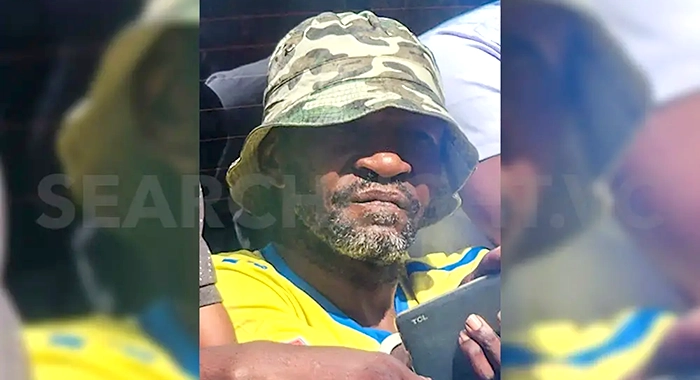
Man shot, killed in abandoned building near prison in Kingstown
A fatal shooting early Tuesday morning has left one man dead in Kingstown, St. Vincent and the Grenadines, marking the latest in a string of violent incidents that have pushed the country’s annual homicide toll to a new high. The incident unfolded around 1 a.m. at the derelict former Cinerama building located on White Chapel Road, just a short distance from His Majesty’s Prison.
Local law enforcement and news sources have identified the victim as 54-year-old Mark Shallow, who maintained ties to both Georgetown and Kingstown. Shallow was among a group of unhoused people, many struggling with substance abuse, that had been occupying the long-abandoned property.
Shallow was no stranger to the country’s justice system: court records show he accumulated more than 30 criminal convictions over the years, with most of his charges tied to cocaine trafficking and violent offenses. Most recently, in January 2025, Shallow was handed a prison sentence after authorities apprehended him in possession of 127 individual cocaine wrappings totaling 22 grams, found near Kingstown’s Central Police Station. That arrest marked just one in a long line of run-ins with the law: in October 2024, he received a two-year suspended prison sentence with a one-year probation period on a wounding charge. Two years prior, in August 2023, he was charged with two separate counts of unlawful wounding. Prosecutors claimed Shallow attacked a 41-year-old female vendor from Campden Park with a knife during an altercation on White Chapel Road, slicing her forehead and inflicting a wound above her right eye.
According to reliable sources close to the investigation, the attacker remains unidentified. The assailant gained entry to the abandoned building before opening fire, striking Shallow in the head while he slept on a makeshift bed positioned some distance from the building’s entrance. Shallow died at the scene from his injury, and the shooter fled the area in the direction of McKies Hill, leaving few immediate clues for responding officers.
Shallow’s killing comes on the heels of three separate shooting incidents across Kingstown that left two people wounded just over the previous weekend. Nationwide, the death pushes St. Vincent and the Grenadines 2025 homicide count to 32, and this slaying marks the fourth fatal gun-related killing in the capital in just 30 days. The most recent prior shooting deaths occurred on July 17, when three men — Claude John of Redemption Sharpes, 35-year-old Karon “Twin” Bowens, and 24-year-old Giovannie Grant, both residents of Ottley Hall — were gunned down in Kingstown’s Chinatown district. That commercial area, situated directly across from Central Police Station between the Solidarity Carpark and the city’s fish market, is a busy hub for local retailers and businesses.
Notably, Tuesday’s killing is the first homicide to occur under the new leadership of the Royal St. Vincent and the Grenadines Police Force. It comes just after Trevor “Buju” Bailey and Junior Simmons assumed their new roles as acting commissioner of police and acting deputy commissioner of police, respectively, placing new attention on the force’s ongoing efforts to curb rising violent crime across the islands.
-
Groei Chinese economie onder druk door zwakke consumptie en investeringen
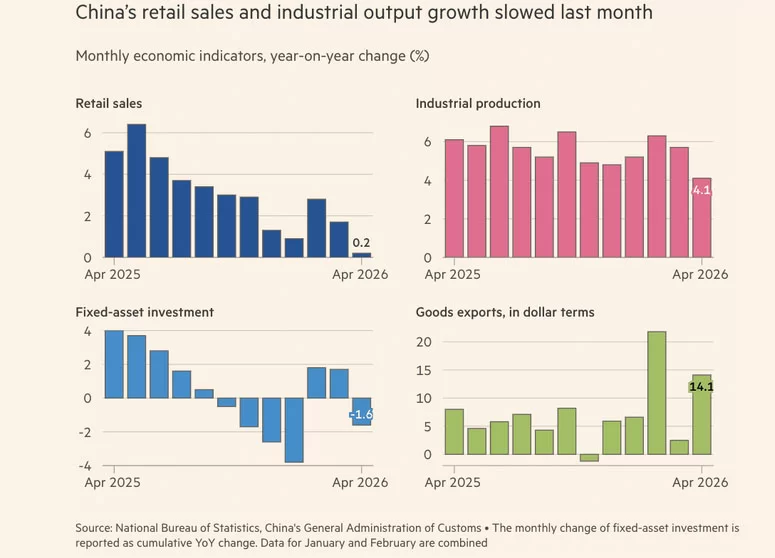
Fresh July economic indicators released by China confirm a broad-based weakening across key domestic segments, intensifying calls on Chinese policymakers to roll out targeted support measures to flagging domestic demand. Data published by China’s National Bureau of Statistics (NBS) shows industrial output expanded 4.5% year-on-year in July, down from 5.3% growth in June and falling short of the 4.8% growth forecast by a poll of economists surveyed by Reuters.
Consumer spending, one of the core pillars of domestic economic activity, also underperformed expectations. Retail sales, a key benchmark for household consumption, rose just 0.6% year-on-year in July, far below the 1.5% growth analysts had projected, indicating Chinese households continue to tighten spending amid broad economic uncertainty.
Fixed asset investment, another major driver of Chinese economic growth, also extended its downward trend. Official figures released on Monday show fixed asset investment dropped 6.7% year-on-year in the first seven months of 2026, accelerating from a 5.7% decline recorded in the first half of the year.
The persistent slump in China’s real estate sector remains one of the most pressing headwinds dragging on broader growth. New home prices edged down another 0.1% month-on-month in July, and are 3.2% lower than the same period last year. The ongoing weakness in the housing market has eroded household wealth and consumer confidence, creating a ripple effect that suppresses both private consumption and broader business investment across the economy.
China’s annual economic growth already slowed to 4.3% in the second quarter of 2026, and the July data has reinforced growing concerns that the post-pandemic economic recovery lacks solid, broad-based support from domestic activity. On the bright side, export performance has remained relatively resilient. As Reuters reports, Chinese exporters are benefiting from surging global demand for technology products and infrastructure goods tied to the global expansion of artificial intelligence capacity, helping to offset some of the drag from weak domestic demand.
However, this reliance on external demand carries significant long-term risks. Major trade partners have grown increasingly critical of China’s large trade surpluses and low-cost export goods, while ongoing international trade disputes and rising geopolitical tensions add layers of uncertainty to future export performance.
In response to the slowdown, Chinese Premier Li Qiang has outlined a policy priority of stabilizing external demand while boosting domestic consumption and investment. According to Reuters, the Chinese government is planning targeted measures to support employment and household incomes, as well as to incentivize greater private sector investment.
As the world’s second-largest economy and a top global importer of crude oil, metals and other core commodities, shifts in China’s economic trajectory are closely watched by policymakers and market participants around the world. A prolonged slowdown in Chinese industrial activity and consumer spending would dampen global aggregate demand, with ripple effects that impact global commodity prices and growth in other major economies.
The July data underscores the significant policy challenge facing Beijing: while exports and select industrial segments still provide some support for growth, the domestic foundation of the Chinese economy remains vulnerable without a robust recovery in consumption, fixed investment and the troubled real estate sector.
-

PSA calls off WASA protests after talks
Workers at Trinidad and Tobago’s Water and Sewerage Authority (WASA) have ended industrial protest action after the country’s Public Utilities Minister Barry Padarath issued a formal guarantee that the current government would uphold all pre-election commitments made to employees represented by the Public Services Association (PSA).
The breakthrough came following a face-to-face meeting between Padarath, PSA president Felisha Thomas, and union leadership held at WASA’s St Joseph head office on Tuesday. The meeting was organized specifically to address long-stalled wage negotiation rounds covering the 2014–2016 and 2017–2019 periods, alongside long-running grievances over internal HR processes that had delayed progress on the claims.
Images of the minister walking hand-in-hand with Thomas into the WASA compound signaled a new spirit of cooperation between the government, the union, and the utility provider. Speaking to assembled workers after the meeting concluded, Thomas confirmed that the minister had met all core demands put forward by the union to break the negotiation deadlock. Under the agreement struck, WASA’s HR leadership will review the union’s formal proposals this week, with full documentation of the proposals set to be submitted to the Ministry of Public Utilities by Friday.
Padarath also committed to convening a follow-up meeting between the PSA, himself, and Finance Minister Davendranath Tancoo to move toward a final settlement. Addressing the gathered workers, Padarath emphasized the current administration has not broken any pre-election agreements made with public sector workers, noting that stalled negotiations stemmed from procedural bottlenecks rather than a lack of commitment.
“A breakdown in communication is always a recipe for industrial disaster,” Padarath told the crowd, explaining his intervention to speed up the process. To cut through internal red tape, the minister appointed WASA’s acting chief executive Dain Maharaj to serve as a dedicated intermediary between the union and the utility’s HR department, ordering Maharaj to ensure all required paperwork reaches the ministry by the end of the week.
Padarath acknowledged the validity of Thomas’ concerns over inefficient internal HR management at WASA, and committed to reviewing those systemic issues with the utility’s board chair and executive leadership. He clarified that as a cabinet minister he cannot directly intervene in HR operational matters, but pledged that the ministry would provide regular updates to the PSA executive as the review and negotiation processes move forward.
In his remarks, Padarath also struck a note of caution, acknowledging that the current government has inherited significant fiscal and operational challenges from the previous administration. He warned that a failure to resolve outstanding issues through dialogue could put WASA jobs at risk if administrative structures are destabilized. To address the fiscal constraints, he noted the government has pursued strategic local and international partnership investments to strengthen public finances and allow the state to meet its commitments to workers.
Reiterating the administration’s commitment to a collaborative resolution, Padarath called on both the union and WASA management to maintain open lines of communication moving forward to prevent future disruptions to service and industrial relations.
-
Who called for our US visas to be revoked?
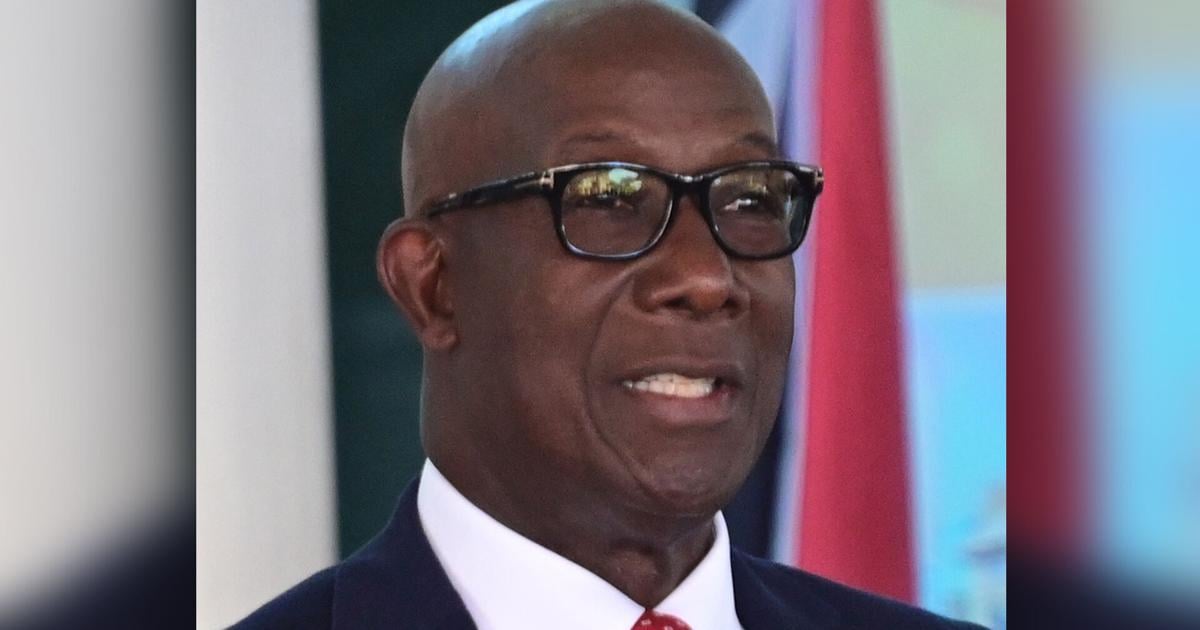
A sharp political conflict has erupted in Trinidad and Tobago over reported United States visa revocations, pitting former Prime Minister Dr. Keith Rowley against sitting Prime Minister Kamla Persad-Bissessar. Rowley has publicly alleged that the U.S. has revoked visas held by both himself and another former Prime Minister, Stuart Young, and he is pressing the current administration to answer for the actions that led to this outcome.
In a public Facebook post published over the weekend, Rowley issued a series of direct questions to Persad-Bissessar. He challenged the prime minister to publicly specify which of the officially listed U.S. visa violation grounds apply to himself and Young, noting that political figures aligned with Persad-Bissessar’s United National Congress (UNC) had previously written to the U.S. government formally requesting the visa cancellations.
Beyond his own case, Rowley raised additional questions about broader visa revocation activity. He called on the prime minister to reveal details about a prior visa cancellation involving a close personal associate of hers, which occurred before Persad-Bissessar’s administration took office. He also demanded transparency around how many additional Trinidad and Tobago citizens the current prime minister and her government have referred to U.S. authorities with recommendations for visa revocation.
Rowley further accused UNC leadership and their affiliated allies of weaponizing visa policy, claiming they have issued repeated threats to ordinary Trinidadian citizens warning that they could lose their U.S. travel privileges for political reasons. In his post, the former prime minister referenced an August 10, 2026 official statement from the U.S. Department of State, thanking U.S. authorities for publicly disclosing the official grounds for visa revocation to what he described as a traumatized local public.
That U.S. State Department release outlines that the U.S. government revokes visas for foreign nationals found to have violated visa terms, committed criminal acts, incited violence against U.S. citizens, defrauded U.S. residents, abused the U.S. immigration system, or threatened U.S. national security. It noted that during the Trump administration, the State Department revoked more than 175,000 visas of foreign nationals matching these criteria. Most revocations stemmed from confirmed criminal activity, with offenses including assault, drunk driving, theft, and drug offenses topping the list, followed by reckless driving, sexual assault, child abuse, fraud, embezzlement, and other serious crimes. The release emphasizes that U.S. visa access is a privilege, not an inherent right, and that ongoing continuous vetting is conducted to protect U.S. communities from individuals who may pose a risk.
When reached for comment by local outlet the Express immediately after Rowley’s post, Prime Minister Persad-Bissessar dismissed his allegations, simply stating that the U.S. State Department’s public release is self-explanatory. As of press time, repeated attempts to contact both Rowley and Young for additional comment have been unsuccessful.
This controversy builds on earlier disclosures from current Attorney General John Jeremie, who told Parliament in June that the U.S. government had revoked visas held by a number of members of what he described as the “1%” elite group in Trinidad and Tobago. Jeremie explained that he initially ignored a journalist’s question about the revoked visas, but later was approached in his parliamentary office by multiple local figures who confirmed their U.S. travel documents had been canceled. He noted that U.S. authorities maintain advanced intelligence gathering capabilities to support these decisions, and stressed that the Trinidad and Tobago government has no involvement in the U.S. government’s independent visa decisions.
-
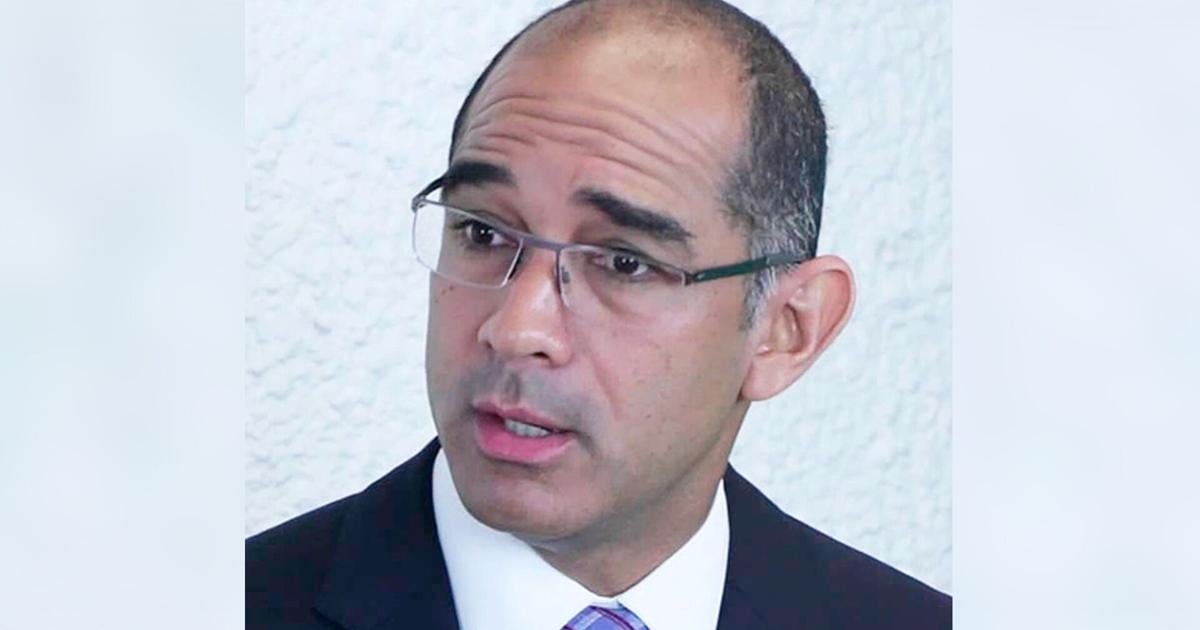
PCA refers 4 police misconduct cases
An independent police oversight agency has moved forward with formal disciplinary referrals for four separate allegations of police misconduct, most tied to allegations of gross neglect of duty during ongoing and high-stakes criminal investigations. The Police Complaints Authority (PCA), which oversees allegations of wrongdoing among law enforcement officers, announced the referrals alongside the public release of its quarterly disciplinary referral summary covering the first part of the April–June 2026 reporting period, published across the agency’s official social media channels.
PCA Director David West confirmed in an interview with local outlet Express that the bulk of the latest batch of referrals center on claims that officers failed to fulfill their core law enforcement duties. Following the authority’s investigative recommendations, West noted, senior police leadership typically follows through on review, and disciplinary action is delivered against officers in found in violation of department rules in a subset of cases.
To protect the privacy of parties involved while cases remain pending outside of court proceedings, all complainants and responding officers are referenced only by pseudonyms in the public summary.
The first case under referral stems from a 2024 reported assault where a complainant, identified only as Mr X, alleges he was attacked by an individual wielding a cutlass, sustaining three chop wounds to the head and significant damage to his personal vehicle. Mr X told investigators he visited the local police station more than 10 times to push for progress on his case, but no official action was ever taken. A log entry in the station’s official diary confirms two officers responded to the initial report, and a specific assigned officer (named only as Officer A) was appointed to lead the investigation. The PCA reached out multiple times to the local Senior Superintendent’s office to request updates on the case, but received no reply, even after escalating the inquiry directly to the Office of the Commissioner of Police. When the PCA sent formal correspondence to Officer A directly in October 2025, the officer also failed to respond. A search of the Trinidad and Tobago Police Service’s Versadex database returned no records related to the incident, prompting the authority to refer the matter for disciplinary review.
The second referral involves mishandling of another assault with wounding reported at the Chaguanas Police Station in March 2024. Complainant Ms A told investigators she was chased by an individual identified as Mr B, who threw a bucket of water at her before striking her in the face with the bucket. Ms A followed officer instructions to obtain a medical evaluation, which confirmed she had suffered a soft tissue injury from the attack. Corporal C told the PCA he had assigned Constable D to conduct the investigation and submit a formal progress report. But when questioned by the oversight body, Constable D denied ever receiving the assignment. The PCA found no documentary evidence to back up Corporal C’s claim of an assignment – no records of when the task was assigned, what specific instructions were delivered, or any confirmation the task was accepted. This lack of progress and documentation led the authority to conclude neglect of duty may have occurred, resulting in a disciplinary referral.
The third and most serious of the four cases involves the stalled investigation of a sexual offense against a 14-year-old minor. The girl’s mother first reported the abuse in March 2020, after finding incriminating messages on her daughter’s tablet. Weeks later, she discovered her daughter was pregnant, and the minor identified a man named Mr Z as the father, alleging he had given the teen money and threatened her to stay silent about the abuse. Statements were collected from the victim, her mother, and other witnesses, and Sergeant A was assigned as the lead investigator on the case. A progress report filed by Sergeant A in September 2024 claimed the investigation was still active. But repeated follow-ups by the PCA found no evidence of any meaningful investigative work having been completed over the multi-year period of the probe. When Sergeant A was questioned under formal caution in November 2025 and ordered to turn over his complete investigative file, he failed to produce the document. The authority said the lack of a complete case file and years of apparent inaction in a child sexual abuse case raised severe red flags about the handling of the investigation, leading to a neglect of duty referral for Sergeant A.
The final referral involves an incident of unlawful trespass and search, where officers executed a search warrant at the wrong address. The complainant reported that in March 2024, officers arrived at her home shortly after midnight, claiming they were searching for an individual named “Stevie” and demanded entry. The officers said they held a valid search warrant before forcing their way onto her property. The PCA’s investigation confirmed the warrant officers held only authorized a search of address No. 5925 for firearms and ammunition – the complainant lived at the adjacent address, No. 5924, which was never named or described in the warrant, and there was no evidence connecting the complainant or her home to the investigation that prompted the search.
-

DROUGHT ALERTS
The twin-island nation of Trinidad and Tobago is bracing for a sustained period of below-average rainfall, with national meteorological authorities issuing tiered drought alerts that signal growing water security risks stretching into early 2027.
According to the latest Dryness/Drought Monitor and Outlook from the Trinidad and Tobago Meteorological Service (TTMS), Trinidad has been placed under an official drought watch for September 2026, while neighboring Tobago will move to a higher-level drought warning starting in October. The forecast warns that far drier than normal conditions through the second half of 2026 are likely to persist into the 2027 annual dry season, prompting urgent calls for widespread water conservation across the country.
Current conditions, measured between May and July 2026, already show significant dryness across wide swathes of both islands. The southwestern Tobago community of Crown Point and the Trinidad town of Valencia logged fully dry conditions over the three-month period, while central Trinidad, northeastern Tobago and northeastern Trinidad registered slightly drier than average precipitation. Southwestern Trinidad faces the most acute pre-alert dryness, with conditions ranging from moderately dry dry spells to extremely dry budding drought, the TTMS data shows.
Looking ahead through the end of 2026, the TTMS short-term forecast outlines a escalating risk profile. By the end of October, all of Tobago and northeastern Trinidad are expected to be under a drought warning, with moderate dry spell conditions impacting the upper Caroni River basin and a drought watch in effect from Piarco westward across the lower Caroni basin into northwestern Trinidad. By the end of November, the drought warning will remain in place for all of Tobago, with the drought watch extended to cover the entire Caroni River basin and northwestern Trinidad. Overall, short-term drought conditions are projected to impact Tobago, northeastern Trinidad and the lower Caroni River basin through October and November 2026.
The prolonged dry forecast carries significant risks for multiple critical sectors of the national economy, meteorological officials warned. For agriculture, elevated risks to both crop production and livestock are driven by erratic rainfall patterns, an increased number of extreme heat days, and declining soil moisture. “Agricultural interests should ensure regular weeding to reduce competition for water and cut crop water stress, and step up monitoring for pests that thrive in drier-than-usual conditions,” the TTMS advised, adding that stakeholders should also maintain robust on-farm water storage and irrigation infrastructure to offset low precipitation.
For water infrastructure, reduced rainfall translates to slower recharge rates for the nation’s dams, underground aquifers and natural stream flows. This will likely lead to declining available surface water for public distribution systems, putting pressure on national and local water authorities.
In response to the forecast, the TTMS has issued targeted guidance for all key sectors to prepare. Water and energy authorities are urged to implement ongoing mandatory and voluntary water conservation measures, and deliver clear public guidance on safe household water storage and efficient usage. Disaster risk management agencies are directed to educate communities on the impending drought conditions, put preparedness and response plans in place well ahead of the 2027 dry season, and review and strengthen early warning information distribution channels.
The health sector has also been placed on alert: officials are instructed to clear vegetation, unblock drainage networks, and conduct targeted fumigation around residential areas, and update contingency plans to handle potential spikes in vector-borne diseases and other climate-linked infections. Long-term, the TTMS warned that a budding drought is likely to develop across the lower Caroni River basin west of Piarco by September, and a national long-term drought watch may need to be activated as early as December 2026 to January 2027 if current dry trends continue.
-

Lula noemt nieuwe olievondst ‘paspoort naar de toekomst’ ondanks milieutegenstand
On a recent visit to a state-controlled energy firm’s operations base, Brazilian President Luiz Inacio Lula da Silva has hailed a major new crude oil discovery off the Amazon coast as a transformative “passport to the future” for the South American nation, setting off a heated debate between economic development advocates and environmental protection groups over the future of the ecologically sensitive region.
The find was announced last week by Petrobras, the Brazilian federal government-controlled oil and gas giant, which confirmed it had detected hydrocarbon deposits off the coast of Amapá, a northern Brazilian state. The discovery comes nearly 12 months after drilling commenced at the site, and five years after the company launched its lengthy application process to secure an environmental exploration permit.
During his on-site appearance, Lula donned an orange Petrobras work coverall and held up a small vial of the extracted crude, joking that the oil smelled so pleasant he wanted to keep it for himself. The president acknowledged the ongoing global push for decarbonization, emphasizing he remains committed to a gradual phase-out of fossil fuels to combat global climate change. Even so, he framed the new reserve as a critical, necessary step forward for Brazil.
Lula argues that revenue generated from exploiting the new oil reserve will be essential to funding Brazil’s transition to renewable energy and helping the country achieve full energy independence. The deposit is located in the Equatorial Margin, a maritime zone roughly 175 kilometers off the coast of the Amazon basin, the world’s largest contiguous rainforest. According to Magda Chambriard, CEO of Petrobras, crews will need another 15 to 20 days of additional drilling to complete a full assessment of the reserve’s total size.
For years, environmental experts and activists have warned that expanding fossil fuel extraction is the single largest driver of anthropogenic global warming. Beyond climate concerns, they highlight the severe risk the drilling poses to the unparalleled biodiversity of the Amazon region, which already faces widespread pressure from deforestation and unsustainable development.
The discovery has already deepened political divides across Brazil. Lula’s political opponents have seized on the project to criticize the administration, pointing to severe environmental risks and arguing that new fossil fuel development undermines the urgency of a global clean energy transition. They are calling for stricter environmental regulatory frameworks and accelerated public and private investment in renewable energy sources.
By contrast, Lula’s political allies have underscored the major economic opportunities the reserve unlocks, as well as the strategic value of greater energy independence at a time of ongoing global energy market volatility. They contend that oil revenue is necessary to fund Brazil’s expansive social welfare programs and provide support to the country’s most vulnerable low-income communities.
The strongest opposition to the project has come from environmental advocacy organizations and Indigenous communities that have deep ties to the Amazon region. Both groups warn that oil exploration and future extraction could cause irreversible damage to the Amazon’s fragile land and adjacent marine ecosystems, with permanent consequences for global biodiversity and climate stability. Multiple environmental activist groups have already announced plans to organize public protests and pursue legal action to halt further exploration activities. For opponents, the new oil project directly contradicts Brazil’s international climate commitments and the global effort to protect the Amazon, which plays an irreplaceable role in regulating global carbon emissions.
Now, the 80-year-old president, who is set to run for his fourth non-consecutive presidential term in October’s upcoming election, finds himself navigating a precarious balance between competing political and environmental priorities: leveraging the economic benefits of a major new resource discovery while upholding promises to protect the Amazon and advance global climate goals.
-
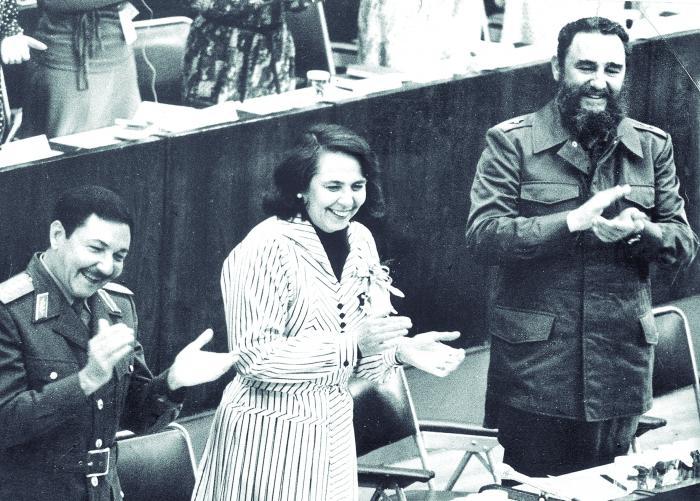
At the heart of our Resistance: Women
Against the backdrop of persistent economic strain caused by the decades-long imperial blockade that touches every corner of Cuban life, women across the nation have emerged as unshakable pillars of stability, holding together households, driving production, and keeping essential services running amid widespread adaptation to challenging conditions.
In the western province of Pinar del Río alone, more than 220,000 women organized under the Federation of Cuban Women (FMC) have proven indispensable to the country’s collective effort to withstand external pressure. Their contributions stretch across every sector of provincial life: from tending to the region’s iconic tobacco fields, the backbone of Cuba’s signature export industry, to supporting the construction of solar photovoltaic parks that expand the nation’s renewable energy capacity, even crafting handmade “comfort blankets” for vulnerable infants receiving neonatal intensive care across the country’s hospitals.
This widespread, tireless commitment did not go unrecognized. Pinar del Río’s FMC chapter has been honored with the title of National Vanguard, granting the province the right to host the main national activities marking the organization’s 66th founding anniversary, which falls on August 23.
“In the midst of economic hardship, our women have transformed resistance into creativity and adversity into drive,” said Danivia Borges Machuat, FMC secretary for the Vueltabajo region. She went on to note that following the legacy of pioneering Cuban women’s rights advocate Adela Azcuy, female organizers and workers today are represented across every sphere of Cuban society: they serve on the front lines of healthcare saving lives daily, lead classrooms in education, advance breakthroughs in science, enrich public life through arts and sports, power factory production, sustain agricultural output, and manage household needs, overcoming every structural limitation with relentless willpower and quick-witted ingenuity.
Borges Machuat also outlined the core ongoing priorities for the FMC moving forward, which mirror challenges faced by many nations globally. These priorities include expanding female representation in formal and productive workforces, reducing rates of teenage pregnancy, strengthening support systems for elderly community members, and confronting and eliminating all forms of gender-based violence across the country.
In the lead-up to the August 23 anniversary, Pinar del Río has launched a full slate of activities aligned with these core priorities. Events include community volunteer workdays, collaborative knowledge exchanges between women in different professional sectors, public sociocultural projects, targeted outreach to marginalized local communities, and an awards ceremony honoring long-serving members who have made exceptional contributions to the organization’s work over decades. For the FMC’s members, the anniversary celebration is not just a moment of reflection, but a reaffirmation of their commitment to the Cuban revolution, honoring the trust placed in them by former leaders Fidel Castro and Raúl Castro as they build the nation’s future from the ground up.