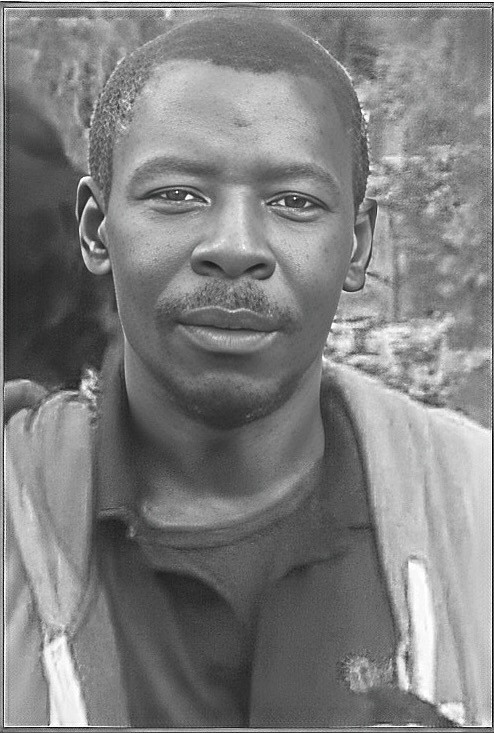
For more than 30 days, the family of a 45-year-old Andros resident who vanished without a trace has held out hope, even as dread has begun to settle over their search. Antonio \”Doe Doe\” Bastian, who was last spotted on July 13 walking along Queen’s Highway between the communities of Love Hill and Fresh Creek, has yet to be found, prompting his loved ones to put forward a $2,000 reward for any tip that leads to his location.
作者: admin
-
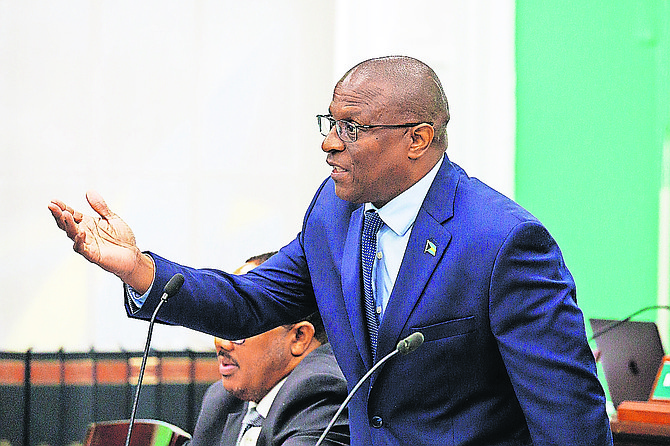
FNM leader blames government for $600k BPL overtime payouts
A deep political rift has erupted in The Bahamas over the country’s worsening electricity crisis, with Opposition Leader Michael Pintard launching a scathing attack on Prime Minister Philip Davis this week, accusing the ruling administration of using a controversial $20 million annual overtime scandal at state-owned Bahamas Power and Light (BPL) to deflect public anger from years of unreliable power service.
The clash followed a national address delivered Monday by Davis, who drew public attention to exorbitant overtime payouts at BPL to frame the issue as a long-unaddressed failure he was now moving to fix. During his speech, the prime minister highlighted staggering irregularities in a single BPL department, where three employees collected a combined $600,000 in overtime pay over one year. Records show one employee logged 18 hours of work on Christmas Day, followed by 24-hour shifts across the next three consecutive days – a set of claims that has raised widespread questions about payroll oversight.
In response to the revelations, Davis announced new strict oversight measures: going forward, overtime for technical staff will face heightened scrutiny if it exceeds 30% of an employee’s base salary. The prime minister also used the address to defend his administration’s broader energy reform agenda, laying out a roadmap for grid upgrades and generation capacity improvements. He acknowledged that the BPL system was inherited in severe financial and physical disrepair, warned that persistent outages would not be resolved overnight as aging infrastructure is gradually replaced, and outlined long-term plans to cut reliance on costly rented power generation, introduce liquefied natural gas to the national energy mix, and strengthen financial controls over BPL spending. In a striking moment that underscored the ongoing crisis, however, a national blackout interrupted Davis’s address before he could finish his remarks on energy reform.
But Pintard rejected the prime minister’s framing outright, dismissing the focus on BPL overtime as a “despicable distraction” designed to draw attention away from the ruling party’s failure to resolve power outages after almost five years in office. The Opposition leader argued that all ultimate responsibility for approving the excessive overtime rests with BPL’s management, board, and executives, all of which were appointed by the current Davis administration.
Pintard pressed for clear accountability, asking: “The question is: if there are problems with scheduling, whose responsibility is it, and what penalties are going to be put in place to make sure that they do their job? Who will be held accountable?” He added that the government’s framing of the overtime issue as a standalone crisis is a deliberate tactic to shift focus away from broader unaddressed problems, including sky-high cost of living, stagnant wages, and the persistent power instability that has disrupted daily life across the archipelago.
The Opposition leader pointed to widespread outages that have plagued major islands including Grand Cay, Abaco, Eleuthera, and New Providence, noting that the disruptions go far beyond mere inconvenience. For residents who rely on electric refrigeration for critical medication or power-dependent medical equipment, persistent blackouts pose direct risks to health and safety. Pintard also questioned the results of more than $430 million in infrastructure spending allocated to BPL over the past three years, asking “Where has the money gone, and why are the results worse, not better?”
Seizing on Davis’s own statement that “the buck stops with me” as prime minister, Pintard argued that the line also requires Davis to accept full responsibility for BPL’s current dysfunction. He noted that Davis has held direct oversight of BPL as either prime minister or deputy prime minister for nearly 14 years across different tenures, saying “If the buck truly stops with him, so does the responsibility for the mess that BPL is in.”
Pintard also highlighted the ironic blackout that interrupted Davis’s national address, saying the moment perfectly encapsulates the daily frustration felt by millions of Bahamians. “That moment captures what so many Bahamians feel every single day,” he said, “the frustration, the helplessness, and the loss of confidence across our country.” While Davis has framed his reform agenda as the most ambitious infrastructure challenge The Bahamas has faced since gaining independence 50 years ago, with the goal of building a more affordable, reliable power system to support long-term economic growth, Pintard dismissed the administration’s promises and issued a blunt call for action: “You are in the chair. Fix it.”
-

Scotiabank promises new ATMs amid Exuma cash access crisis
A growing crisis over restricted banking and cash access on the Bahamian island of Exuma has spurred Scotiabank to take emergency action, after a popular resort cut off public entry to its on-site ATM, worsening months of service failures for local residents and businesses.
The trouble began long before the latest restriction, with two other Scotiabank ATMs across Exuma already out of commission for an extended period, leaving locals dependent on the machine located within the Sandals Emerald Bay resort. When the resort implemented new rules barring non-guest public access to the ATM, the already limited cash access options on the island collapsed entirely, triggering urgent pushback from local political leaders and community members.
Days after Exuma and Ragged Island Member of Parliament Chester Cooper raised the alarm over the steady decline of banking services across the Bahamas’ Family Islands, and held direct talks with Scotiabank Chief Executive Roger Archer over the persistent ATM failures, the bank has released an official update on its response.
Scotiabank confirmed this week that it has partnered with an undisclosed local telecommunications provider to deploy alternative ATM units across Exuma, to restore basic cash access for clients. In addition to rolling out new machines, the bank stated that it is actively negotiating with its partner at Sandals Emerald Bay to reach a mutually acceptable solution that would reopen access to the existing on-site ATM. The institution declined to share further details, including the identity of the telecom partner, the locations of the new alternative machines, or a timeline for when the new units will be operational for public use.
Cooper’s intervention comes against a backdrop of growing regional concern over the gradual withdrawal of full-service commercial banking from smaller, outlying Family Islands, leaving local communities and small business owners reliant on just a handful of working cash machines to meet daily transaction needs. Local residents have reported significant disruptions to commerce and personal finance as the cash shortage has dragged on for months, with the latest resort restriction pushing the situation to a breaking point.
In its statement, Scotiabank reaffirmed its commitment to maintaining convenient, reliable banking services across its national ATM network. “We regret any inconvenience caused to our clients in Exuma, and will continue to keep the public updated as progress is made on resolving this situation,” the bank said.
-

Family mourns slain teacher as attackers remain free
On Friday, hundreds of grieving family members, friends, colleagues and community members gathered to lay Jillian Pinder, a 56-year-old primary school teacher, to rest, celebrating a life defined by devotion to education, deep faith, and radical love for her inner circle — even as unresolved questions about her brutal killing continue to hang over the mourning community.
Pinder’s life was cut short on July 13, more than six weeks after she was attacked by two unidentified assailants on June 4. According to initial reports, the men confronted Pinder at knifepoint, claiming a close associate of hers owed them an unpaid debt before forcing her to an undisclosed location. There, they stabbed her in the throat and left her for dead. In a remarkable display of resilience, Pinder managed to escape and drove her vehicle to a public area, where she collided with another car; the occupants of that vehicle immediately called for emergency help and got her to care.
Pinder was first admitted to a hospital’s intensive care unit, and after an initial recovery that led to her discharge, she was readmitted for ongoing complications before ultimately succumbing to her injuries. To date, no suspects have been arrested or charged in connection with the attack, leaving the Pinder family without the answers they have long begged for.
At Friday’s funeral service, loved ones pushed past the agony of her unresolved death to share warm, vivid memories of the woman they knew and adored. Anna Capron, Pinder’s niece, told the crowd that even in her final days in the hospital, Pinder’s thoughts never strayed from her family. “Towards the end, even while she was in the hospital, she was thinking about family,” Capron shared. “She was so grateful for everyone that showed up for her. She said to me specifically, ‘Tell the family thanks.’” Capron remembered her aunt as a fun-loving, ever-present relative who dedicated herself to building lasting, joyful memories with every generation of the family, adding: “if Auntie Jill never got the chance to tell you herself how grateful she was, know that she was grateful for each and every one of us.”
The family has repeatedly pushed for answers and justice in the months since the attack, with Pinder’s older sister Judith Rahming launching a public appeal last month for any information that could lead to arrests. In a viral Facebook post, Rahming wrote: “Lord, we are asking You for justice. We pray that You would reveal everything hidden in darkness. Give investigators, our family, or someone out there a sign – something that leads to the truth and to the person responsible.”
Charliese Bevans, Pinder’s best friend of nearly 50 years, delivered a tearful tribute to their decades-long bond, recalling silly childhood adventures and quiet moments of support that shaped their friendship. Bevans described Pinder as a fiercely strong, protective, and unshakably loyal person who only let a small handful of people into her inner circle. “I am humbled and I am grateful to have been one of them,” Bevans said, noting that Pinder found more joy in quiet gestures of love and thoughtful, personal gifts than in expensive, flashy possessions.
Beyond her family and friendships, mourners highlighted Pinder’s decades of devotion to her students at TG Glover Primary School, and her active, meaningful role in her local church community. Keisha Taylor, director of the Bahamas Harvest Small Group Sisters, said Pinder grew from a regular group member to a beloved spiritual sister whose gentle presence transformed the community. “She brought something different to our small group,” Taylor said. “She brought quietness, gentleness. She brought a different perspective.” Taylor remembered Pinder as an intentional, empathetic listener who always showed up for the people around her whenever they needed support.
-

Relatives reject false reports of mom’s death
As search operations enter their second week for missing Eleuthera resident Katrina Kelly, her family has issued a urgent public plea demanding an end to the spread of baseless, harmful false rumors circulating across social media platforms, while reaffirming their persistent hope that Kelly will be found alive.
Keith Kelly, the missing woman’s uncle, spoke publicly to dismantle a string of unsubstantiated claims that have gone viral in local communities. Among the most damaging false reports were assertions that Kelly’s bullet-ridden, badly burned body had been recovered, and that her remains had been located at Preachers Cave. Kelly confirmed that law enforcement officials have explicitly refuted all of these claims, telling reporters that lead investigators confirmed no evidence has been found to back up any of the viral rumors.
“When the first rumor broke yesterday, our whole family was gathered at my sister’s home waiting for updates,” Keith Kelly recalled in an interview. “Out of nowhere, someone got a text message claiming they’d found a body shot in the head and burned. It was all a complete lie. Later that same day, another fake story popped up saying she’d been found at Preachers Cave — that was another lie, too.”
The family says the steady stream of misinformation has added unnecessary emotional strain at a time when they are already grappling with fear and uncertainty over Kelly’s disappearance. “If any credible discovery had been made, we would be the first to know — most of our family was on site with search teams yesterday,” Kelly said. “We can’t understand why anyone would choose to spread these cruel lies when we’re just trying to find our loved one. Whoever is behind these rumors needs to stop, immediately.”
Kelly, a 34-year-old assistant manager at the popular Pink Sands Hotel who also runs a local car rental small business, vanished from her Bluff home on the night of last Tuesday. Her 11-year-old daughter, who was with her before she left, has told investigators that Kelly stepped out between 9 p.m. and 10 p.m. to drop off friends and pick up takeout food. The child told police she witnessed three unknown men dressed in dark clothing exit a vehicle, speak with Kelly, and that she left with the group. No contact from Kelly has been reported since that night.
Family members previously told reporters that they did not immediately raise a full alarm, noting that Kelly often steps away from home around the anniversary and birthday of her late brother, Ashantio Clevorn Johnson, a 23-year-old trainee correctional officer who was fatally stabbed at a local restaurant and bar last year. Johnson’s birthday would have fallen on the Wednesday immediately after Kelly’s disappearance. What made family members grow deeply concerned, however, is that Kelly never reached out to confirm her safety — a routine she always follows when she steps away. Alarms were raised after she failed to pick her mother up from the airport following her mother’s return from a trip to the United States, and stopped responding to all text and call attempts.
To incentivize public tips that could help locate Kelly, a combined reward of $52,500 is currently on offer, with $50,000 of that total contributed by the Fox Foundation. Search operations continued on yesterday, focused heavily on the Current Island region, with dive teams scheduled to survey the waters surrounding the search zone for any clues. Loretta Cash-Pierre, Kelly’s cousin, best friend and godsister, said she has turned over all of Kelly’s electronic devices to investigators, as well as information on renters of a white Nissan Cube linked to her car rental business.
Authorities issued an official missing person bulletin for Kelly on Friday, and community members have been sharing missing person appeals across local networks. While relatives have previously acknowledged they fear Kelly may have been the victim of foul play or is being held against her will, they have not given up hope that she will be brought home safely.
“If you’re seeing this, Kat, we’re out here looking for you,” Keith Kelly said. “We want you home, we want to see you alive, we just need to know you’re safe. Her mother is already grieving the loss of my nephew, and this is almost more than she can bear — but even she says ‘I know she’s alive.’”
As search teams continue their work, the family is renewing two requests: anyone with any information that could assist the investigation is urged to contact the Royal Bahamas Police Force immediately, and anyone sharing or considering sharing unconfirmed reports about the case is asked to stop to avoid inflicting further harm on the already strained family.
-

Govt vows ‘firm response ’to tackle stray dog crisis
A growing public safety crisis centered on unregulated stray dogs across the Bahamas has pushed national agricultural officials to roll out an aggressive, multi-pronged intervention in the coming week, targeting everything from dangerous free-roaming packs to illegal unregistered breeding operations. Minister of Agriculture and Marine Resources Jomo Campbell confirmed that authorities have spent weeks coordinating with animal welfare groups, law enforcement, and other key stakeholders to craft a tangible response to what he has labeled a full-blown “plague of stray dogs”, following a string of high-profile, devastating attacks that have left one child severely injured and an elderly man hospitalized.
Campbell noted that cross-stakeholder planning predates the most recent high-profile attack, with the national Animal Control Board holding strategy sessions as recently as this week to finalize the framework of the new initiative. Speaking to reporters, he declined to preview specific policy details ahead of the official unveiling, but promised that the upcoming announcement will deliver far more than rhetoric: next week, the ministry will host press representatives to showcase concrete, actionable steps already underway to address the crisis.
The intervention will not only target loose stray dog populations, Campbell said. It will also crack down on the root causes of the crisis: unregulated backyard breeding, unlicensed pet ownership, and irresponsible pet stewardship that allows dangerous animals to enter public spaces. The minister added that the entire animal control sector is undergoing a comprehensive modernization and overhaul to ensure the new framework can deliver on its promises, emphasizing that the coordinated cross-agency response “actually has teeth”. Going forward, he said, pet owners will face tangible legal accountability for irresponsible handling of animals that contributes to the stray dog public safety threat.
The announcement comes on the heels of two horrific attacks that have drawn national outrage over the lack of consistent animal control regulation across the country. Most recently, nine-year-old American tourist Beau Brattain suffered more than 100 separate bite wounds when he was mauled by a pack of dogs while vacationing on Bimini. In the wake of the attack, Brattain’s family launched a public crowdfunding campaign on GoFundMe to cover the staggering costs of emergency medical care, long-term rehabilitation, travel, and reconstructive surgery, with projected total expenses ranging from $2 million to $4 million, depending on the extent of ongoing treatment the boy will require.
Harrington Rolle, the 34-year-old dog owner linked to the Bimini attack, has already pleaded guilty to three criminal charges: negligently causing grievous harm, allowing a dangerous dog to roam at large, and owning an out-of-control dangerous animal that caused harm to a member of the public. He was sentenced to 12 months in prison by Acting Chief Magistrate Ancella Evans during his arraignment in New Providence.
Just one month before the Bimini attack, 66-year-old Kemp Road resident Don Smith was hospitalized after being mauled by a pack of roughly 10 dogs – including four pit bulls, according to his daughter Carmetta Butler – while crossing a local road. The consecutive high-profile attacks amplified public pressure on the Bahamas government to implement decisive action to address the long-unresolved stray dog crisis that has threatened local communities and tourist safety alike.
Campbell thanked the Animal Control Unit staff, the Royal Bahamas Police Force, and leading local animal welfare organizations including the Bahamas Humane Society and the Bahamas Alliance for Animal Rights and Kindness (BAARK) for their collaboration in developing the new intervention strategy, noting that coordinated input from all parties has been critical to building a response that balances public safety with humane animal welfare standards.
-

Selecta RD 2026 celebrates Dominican crafts and Taíno heritage
The fourth iteration of Selecta RD 2026 wrapped up its three-day run in Santo Domingo’s historic Colonial City, closing with a moving awards ceremony that celebrated the diverse group of innovators and caretakers keeping Dominican traditional craftsmanship alive.
Hosted at the Hodelpa Casa Real Events Center, this year’s gathering centered on the evocative theme “Taíno Footprints in Dominican Crafts”, weaving together public exhibitions, peer-to-peer academic discussions, interactive cultural programming, and formal recognitions to highlight the deep Indigenous roots that shape modern Dominican creative work. Organizers chose to dedicate the 2026 edition to Fernando S. Lemoine, a beloved master potter and visual artist whose decades-long career has spanned creation, education, and advocacy for Dominican craft traditions.
A cross-section of leaders across fields earned recognition for their contributions to the Dominican craft ecosystem this year. Renowned archaeologist and researcher Manuel García Arévalo took home honors for his decades of work documenting and preserving Taíno cultural history, while Lourdes Camilo de Cuello was recognized for her sustained advocacy supporting working artisans and growing the country’s creative industries. Rodolfo Espinal was acknowledged for his work tying Dominican craft promotion to the country’s thriving tourism sector, and energy firm Seaboard Clean Energy earned a special distinction from the Dominican Republic Chamber of Commerce and Handicraft Production Foundation for its consistent backing of local cultural initiatives.
The event’s programming went far beyond awards, offering deep dives into Taíno heritage for attendees and participants alike. A dedicated gathering for wood carvers and sculptors kicked off with a lecture from historian José Guerrero, who shared new and existing research tracing the ongoing legacy of Taíno creative traditions across modern Dominican craft. A community-focused “Taíno Gathering” led by Manawa Kuya Ni featured traditional-inspired ceremonial rituals, live folk music, and cultural dance, while Maguá Museum director Ilonka Vásquez offered a rare live demonstration of the mayohuacán, a traditional Taíno ceremonial drum rarely seen in public programming.
The event’s closing Taíno Night ceremony added another slate of recognitions, honoring a new group of craft leaders including José de Ferrari, Ramona Heureaux, Miguel Ángel Camilo, and Soraya Medina. Three prominent Dominican jewelry creators also took home awards: Gisselle Mancebo, widely known as “the queen of larimar” for her distinctive work with the local blue gemstone, alongside Fátima Polanco and Emelinda Pérez.
The core public exhibition at Selecta RD 2026 showcased hundreds of works from master artisans hailing from every region of the Dominican Republic, spanning wood and stone carving, sculpture, leatherworking, ceramics, and jewelry. A unifying thread across nearly all displayed pieces was the intentional integration of Taíno-inspired symbols, geometric shapes, and cultural motifs, tying contemporary creative practice directly to the country’s Indigenous ancestral roots.
Selecta RD 2026 was created and curated by Valentín Guerrero, and produced in official partnership with the Coopera Banreservas Program. The gathering brought together a broad cross-section of stakeholders, from working independent artisans and fine artists to academic researchers, cultural managers, small business entrepreneurs, tourism industry leaders, and members of the international diplomatic corps based in the Dominican Republic. In addition to core partners, the event received major backing from a network of supporting institutions including Fundación Refidomsa, Seaboard Energía Limpia, Banco Popular Dominicano, Centro Cultural Banreservas, JCDecaux, Asociación Cibao de Ahorros y Préstamos, and Plan International.
-
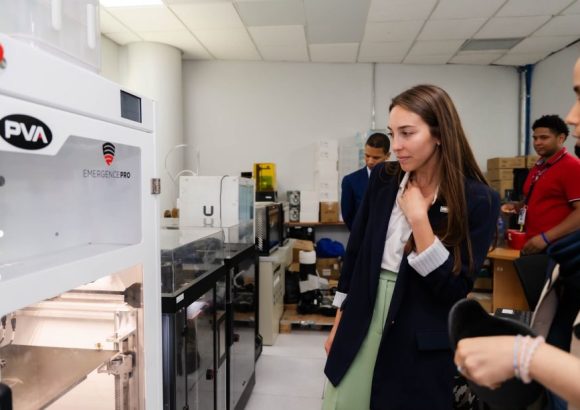
ITLA and SpaceX explore expanded internet connectivity and AI training in Dominican Republic
A groundbreaking collaboration aimed at closing the digital divide and advancing next-generation tech education is taking shape in the Dominican Republic, as the country’s leading technical higher education institution, the Technological Institute of the Americas (ITLA), has entered exploratory talks with three of Elon Musk’s global technology ventures: SpaceX, its satellite internet division Starlink, and artificial intelligence firm xAI. The partnership discussions center on two core goals: expanding high-speed internet access to underserved regions across the country, and building world-class AI training programs to prepare Dominican students for a rapidly shifting global workforce.
Leading the negotiations on ITLA’s side is institute rector Jimmy Rosario Bernard, who has held multiple working sessions with Katerina Álvarez, Starlink’s Strategic Connectivity Manager, alongside senior leadership from xAI. The most recent round of talks included Wilfredo Fernández, xAI’s Director for the Americas of Global Government Affairs, and Gabriela Castillo Madrid, xAI’s Senior Manager for the Americas. During the meeting, stakeholders centered their discussions on how cutting-edge emerging technologies can break down barriers to educational access and equip young Dominicans with the skills demanded by modern employers around the world.
Several high-impact initiatives are currently under active consideration. One key proposal is the development of large-scale open online AI courses that would be accessible to learners across the Dominican Republic. The partnership could leverage xAI’s large language model Grok as a supporting educational tool for both traditional classroom instruction and adult continuing education programs, making advanced AI training more interactive and accessible to a broader audience.
A second priority initiative focuses on expanding internet connectivity to the country’s rural communities, where limited digital infrastructure has long locked residents out of educational and economic opportunities. By rolling out Starlink’s low-latency satellite internet service in these underserved areas, the partners aim to extend formal technology training programs to regions that have historically been excluded from digital advancement.
In a statement following the latest round of discussions, Rosario Bernard emphasized the transformative potential of the collaboration. “Through the democratization of knowledge, we are transforming technology into an accessible bridge for Dominican youth to lead the future,” he said.
During their visits and talks, representatives from SpaceX and its affiliated companies gained a comprehensive overview of ITLA’s innovative educational model, its existing community-focused digital inclusion programs, and its impressive track record of graduate employability. The institute reports that over 90% of its graduates secure employment in their field shortly after completing their programs. ITLA also shared details of its current academic portfolio, which is intentionally aligned with the fastest-growing needs of the global labor market, including programs in cybersecurity, mechatronics, artificial intelligence, and bioinformatics.
-
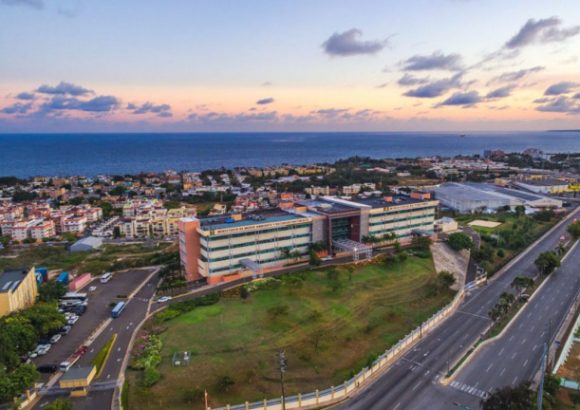
Dominican Republic launches national tourist road signage plan
In a major push to elevate its tourism infrastructure and solidify its position as a top Caribbean travel destination, the Dominican Republic has officially kicked off a nationwide tourist road signage modernization initiative. Designed to address longstanding navigation challenges for international and domestic travelers alike, the project targets key improvements to wayfinding, road safety, and overall visitor experience across the country’s most popular tourism hubs.
Tourism Minister David Collado formally launched the scheme, outlining its core goals: to standardize inconsistent existing signage, modernize outdated markers, and optimize the entire road guidance network for leisure travelers. Under the new framework, visitors will be able to quickly and confidently identify key routes, hidden scenic spots, and major tourist attractions as they move across the country, eliminating common stress points associated with unfamiliar road networks.
The rollout will proceed in structured phases to minimize travel disruption, with the first stage focused on seven high-traffic tourism regions: La Altagracia, El Seibo, Samaná, Puerto Plata, Pedernales, María Trinidad Sánchez, and Santiago. These areas were selected for their high concentration of beaches, eco-tourism sites, cultural landmarks, and accommodation that draw millions of international visitors annually.
Hostos Rizik Lugo, director of RD-Vial, the country’s road infrastructure agency, explained that the standardized new signage is crafted to help visitors acclimate to the Dominican Republic’s road system more quickly. Beyond just navigation, the initiative is engineered to cut down on travel confusion, reduce the risk of traffic accidents caused by unclear signage, and make inter-destination travel both smoother and more secure for all road users.
Officials project that the completed initiative will deliver long-term benefits beyond improved navigation, including stronger connectivity between dispersed tourist zones, more reliable information for travelers, and enhanced road guidance that works equally well for international holidaymakers and local residents commuting or traveling for leisure across the country.
-
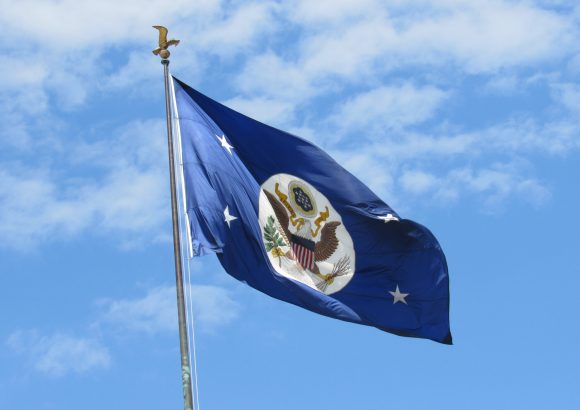
U.S. report on Cuba mentions two activists of Dominican origin
On July 20, 2026, the U.S. State Department published a controversial 100-plus-page report that levels sweeping accusations against the Cuban government, alleging a sustained, decades-long campaign of espionage, political infiltration, and ideological outreach designed to expand Havana’s influence within U.S. borders. Titled *Cuba: The Capital of Communism in the 21st Century*, the document spans more than six decades of Cuban international activity, tracing the country’s strategic engagement from the 1959 revolution through its modern connections to domestic U.S. political and activist groups.
At the core of the report’s espionage allegations are several high-profile, previously adjudicated cases of individuals convicted of sharing classified U.S. information with Cuban authorities. These include Ana Belén Montes, a former Defense Intelligence Agency analyst, married couple Walter Kendall Myers and Gwendolyn Myers, and the members of the Wasp Network, a Cuban spy ring dismantled by U.S. law enforcement in 1998. Unlike traditional great power competition that relies on military posturing, the report argues Cuba has prioritized a softer, asymmetric approach: leveraging intelligence operations, grassroots organizational partnerships, and activist exchange programs to advance its policy goals in the U.S. rather than pursuing conventional military confrontation.
A central focus of the report’s criticism centers on two activists linked to the Dominican community in the U.S. who are key leaders of a prominent New York-based progressive organization. Manolo De Los Santos, a Dominican-born co-founder and executive director of The People’s Forum, first traveled to Cuba in 2006 via the Pastors for Peace program and resided on the island for several years, where the report claims he built close ties with senior Cuban government officials. De Los Santos has since led multiple delegations back to Cuba and appeared at public events alongside current Cuban President Miguel Díaz-Canel. His co-founder Claudia de la Cruz, a U.S.-born citizen of Dominican immigrant parents who spent part of her childhood in the Dominican Republic, has also been active with the Interfaith Foundation for Community Organizing (IFCO). In 2024, de la Cruz ran for U.S. president on the Party for Socialism and Liberation ticket, running on a platform that included cutting U.S. military spending and fully lifting the decades-long U.S. trade embargo on Cuba.
The report names a broad array of U.S. organizations that it says hold varying degrees of connection to the Cuban government, ranging from formal operational ties to shared ideological alignment. The groups explicitly cited include The People’s Forum, IFCO, Pastors for Peace, the Venceremos Brigade, Code Pink, the National Lawyers Guild, the National Network on Cuba, and the Democratic Socialists of America. The document also references Black Lives Matter, pro-Palestinian advocacy groups, and organizations opposing U.S. Immigration and Customs Enforcement operations. Importantly, the report stops short of claiming all these groups are directly controlled by Havana; it acknowledges that connections range from formal organizational or financial partnerships to shared policy positions such as support for ending the U.S. embargo, or ideological alignment with Cuba’s anti-U.S. foreign policy rhetoric.
The State Department also devotes significant attention to the financial structure of The People’s Forum, tracing its rapid revenue growth over the past five years. According to the report’s analysis of tax filings, the organization reported roughly $486,926 in total revenue in 2021, which surged to approximately $4.4 million just one year later in 2022. Between 2018 and 2025, the document claims The People’s Forum received a cumulative $28 million in funding, around $22.4 million of which came from entities linked to technology entrepreneur Neville Roy Singham. The State Department frames these financial and organizational ties as key nodes in what it characterizes as a far-reaching, coordinated network that Cuba uses to quietly advance its political agenda and shape public discourse inside the United States.