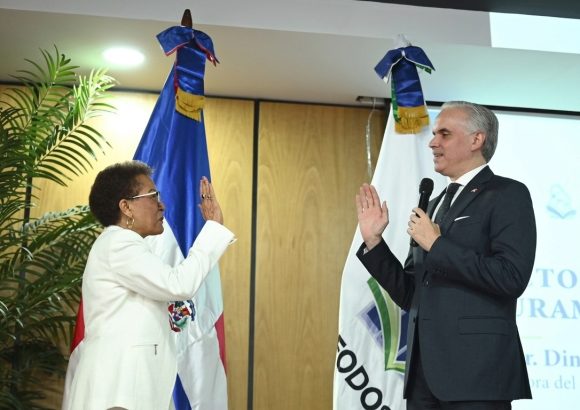
A new era has begun for the Salomé Ureña Higher Teacher Training Institute (Isfodosu) in the Dominican Republic, as Dr. Dinorah García Romero officially took office as rector during a public inauguration ceremony centered on advancing quality teacher preparation and systemic educational transformation across the nation.
García Romero’s ascent to the institution’s top leadership followed a rigorous, transparent competitive selection process that drew 91 initial candidates, with independent external observers monitoring every stage to ensure fairness. After the selection committee narrowed the field to a final shortlist submitted to the Dominican Executive Branch, her appointment was formalized via presidential decree.
Bringing more than 40 years of extensive experience across education practice, academic administration, research, and curriculum design, García Romero succeeds outgoing rector Dr. Nurys del Carmen González. Speaking at the inauguration, Dominican Education Minister Luis Miguel De Camps, who also serves as president of Isfodosu’s Board of Directors, praised the new rector’s decades-long professional trajectory and underscored the weight of the responsibility she assumes.
De Camps emphasized that high-quality teacher preparation is the backbone of any successful national education transformation, noting that no policy reform, technological upgrade, or infrastructure investment can replace the impact of a well-prepared educator standing in front of students. He called for teacher training programs to stay rooted in the real-world realities of Dominican classrooms, centered on evidence-based learning outcomes and the core competencies students must develop to thrive. De Camps also urged Isfodosu to deepen collaborative ties with local K-12 schools, expand educational research, and scale innovative practices to help the national system identify what works in classrooms and what requires targeted improvement.
In her first keynote address as rector, García Romero laid out a transformative vision for teacher education rooted in what she calls a “pedagogy of meaning” that centers the whole person of the teacher, moving beyond outdated, purely instrumental training models.
“The pedagogy of meaning pays special attention to the person of the teacher, to their learning, their values, and their problems,” García Romero explained. This approach, she noted, strengthens teacher professional identity, helps teacher candidates clarify their vocational calling, and deepens their sense of ethical mission as educators. Unlike traditional training frameworks that focus exclusively on technical skills to replicate in the classroom — ignoring the personal, social and institutional contexts that shape teaching practice — García Romero’s model calls for preparing educators who see themselves as whole people, skilled professionals, and engaged social citizens.
To deliver on this vision, the new rector outlined key structural changes, including more rigorous admissions standards, enhanced personalized support throughout the teacher training journey, integration of critical context analysis, expanded interdisciplinary collaboration, systematic research investment, and intentional development of teachers’ intellectual capacities. She also stressed the importance of equipping future educators with strong foundational skills in science, cultural competence, ethics, and instructional methodology, while granting greater institutional autonomy to educators to pursue creative and innovative teaching practices.
Boosting Isfodosu’s scientific research output is another central priority for García Romero’s administration. She proposed building collaborative research teams that bring together experienced teacher educators and final-year students, fostering shared learning, intellectual diversity, and cross-generational knowledge exchange. The new administration will also prioritize expanding democratic participation within the institution, ensuring all members of the Isfodosu community receive timely access to information to contribute to reflective decision-making and institutional projects.
To build a more inclusive collaborative governance model, García Romero announced plans to deepen strategic partnerships with the Dominican ministries of Education, Higher Education, Science and Technology, and Public Administration, as well as with local and international higher education institutions. She highlighted the value of peer learning and called for stronger mutually beneficial connections between K-12 school systems and Isfodosu’s academic community. The administration will also work to build closer ties with academic associations, civil society organizations, and local communities where Isfodosu operates, while rolling out new collaborative models for institutional operations and engagement.
One flagship initiative of the new administration is the creation of a regional sociopolitical observatory tasked with providing ongoing critical analysis and monitoring of socioeducational trends across the Dominican Republic and the broader Caribbean region. The observatory will expand Isfodosu’s impact beyond its own campus walls, strengthening the institution’s social, scientific, and technological leadership in the education space. García Romero framed this initiative as part of a broader commitment to sustained engagement with local, national and global social, political, economic and cultural contexts, helping the institution avoid short-term thinking and develop long-term, context-aware solutions for educational improvement.
García Romero also addressed the growing impact of digital transformation and artificial intelligence on education, framing these shifts as both significant challenges and unique opportunities. She confirmed that Isfodosu will deepen its integration of digital tools and AI into training programs, while equipping students and faculty with the guidance to use these technologies with maturity, ethical awareness, responsibility, and critical thinking.
Institutional strengthening and ethical governance will be defining priorities for her term, García Romero pledged. She committed to reinforcing institutional structures across all of Isfodosu’s operations, maintaining an uncompromising culture of ethics and transparency, and embedding accountability into all administrative and academic processes. Her policy agenda also includes targeted investment in faculty professional development, mission-aligned institutional initiatives, graduate outcome tracking, and internal community cohesion. The new rector stated her goal to strengthen Isfodosu’s collective intelligence, drive comprehensive institutional development, improve academic quality, diversify program offerings, and expand the institution’s capacity for innovation.
The core principles guiding García Romero’s administration are: meaning-centered, humanizing teacher education; institutional integrity and ethics; public accountability; open scientific production focused on continuous improvement; and a critical, proactive perspective on national and global educational, social, political, economic and cultural realities.
Closing her address, García Romero paid tribute to her predecessor, Dr. Nurys González, thanking her for her leadership, professionalism, and enduring commitment to teacher education in the Dominican Republic. She also expressed gratitude to the Teresian Association, an international educational organization of which she is a member that has worked to advance quality transformative education in the Dominican Republic since 1954. Citing Pedro Poveda, the inspiration behind the Teresian Association’s work, García Romero noted that the triad of “virtue, science, and justice” will remain central to her leadership. She concluded by affirming her commitment to delivering on the public trust placed in her administration, working alongside her team to advance Isfodosu’s mission, declaring: “Thank you, and not one step backward.”