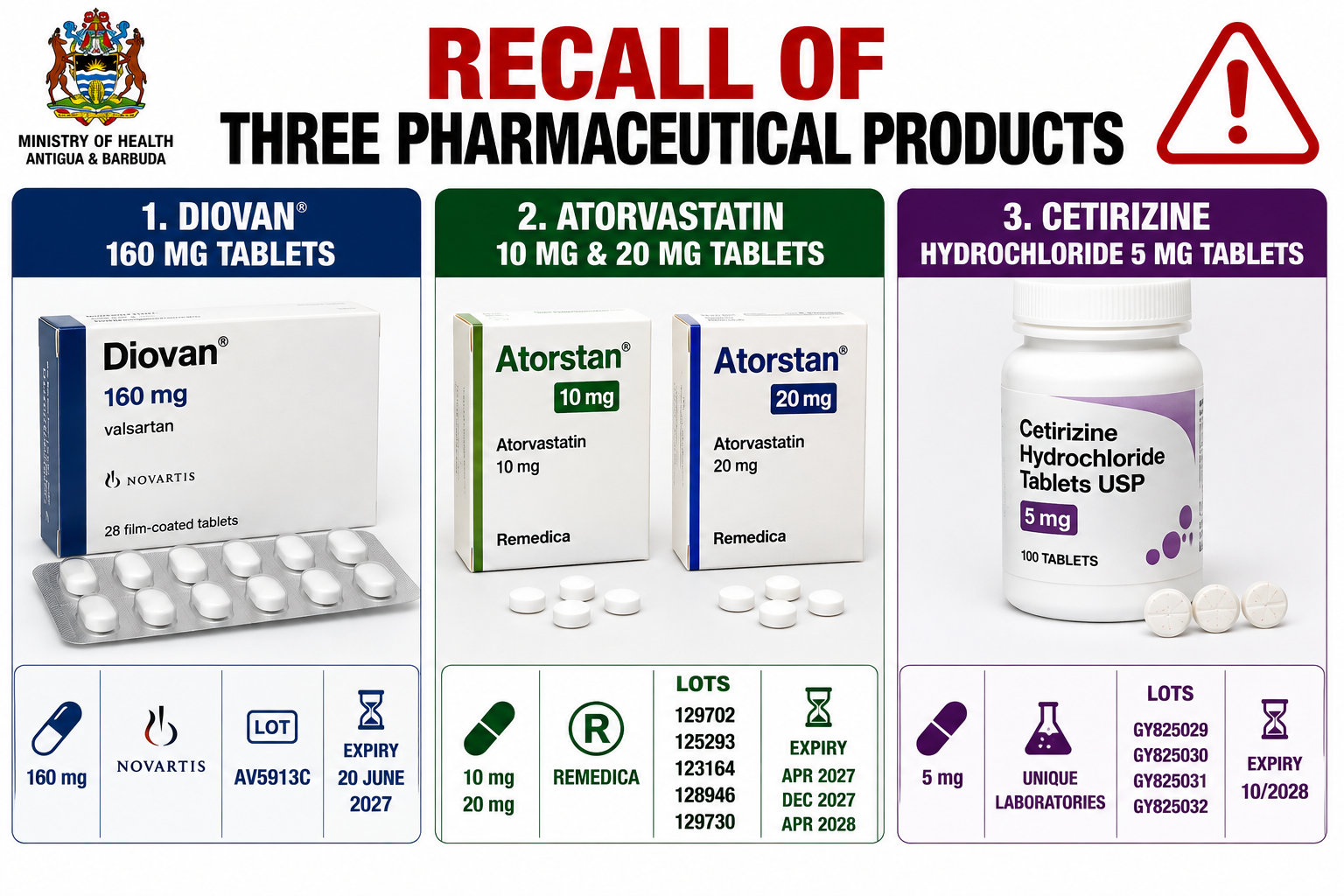
The pharmaceutical regulatory arm of Antigua and Barbuda’s Ministry of Health, Wellness, the Environment and Civil Service Affairs has issued an official alert to the public, medical providers, pharmacies, and supply chain stakeholders, announcing the voluntary and precautionary recall of three categories of widely used medications distributed across the island nation. The three affected product lines include specific batches of Novartis’ Diovan 160 mg tablets, Remedica’s Atorstan atorvastatin 10 mg and 20 mg tablets, and Unique Pharmaceutical Laboratories’ Cetirizine Hydrochloride 5 mg tablets.
The first recall, formally announced by the U.S. Food and Drug Administration on August 4, 2026, is a voluntary withdrawal initiated by global pharmaceutical manufacturer Novartis for one specific lot of Diovan 160 mg tablets, a leading valsartan-based medication. Diovan, an angiotensin II receptor blocker, is commonly prescribed to manage high blood pressure and treat chronic heart failure. The recall was triggered after quality testing revealed the product failed to meet mandatory dissolution specifications – a quality standard that measures how quickly and completely a tablet breaks down in the body to be absorbed into the bloodstream. The FDA has categorized this recall as Class II, a designation meaning that while use of the affected product could lead to temporary or medically reversible adverse health outcomes, the risk of severe, long-term harm is extremely low. The only affected lot is Diovan 160 mg with lot number AV5913C, which has an expiration date of June 20, 2027. For patients holding this specific lot, regulators advise against disposing of the medication in regular household trash; instead, unused doses must be returned to the original dispensing pharmacy or the wholesale distributor that supplied the product. Critically, patients currently using Diovan are warned against abruptly stopping their medication without consulting a healthcare provider, as sudden discontinuation of blood pressure or heart failure treatment can create serious avoidable health risks.
In a second separate recall, the Department of Pharmaceutical Services has announced a Category II Level 2 withdrawal for multiple batches of Atorstan (atorvastatin) 10 mg and 20 mg tablets manufactured by Cyprus-based drugmaker Remedica. All affected batches remain within their approved shelf life and have already entered the local supply chain. The recall was launched after routine stability testing at the manufacturing facility identified certain out-of-specification results that failed to meet regulatory quality standards. Regulators emphasize that based on current data, there is no elevated risk to patient safety from these batches, but the recall was ordered as a proactive precautionary measure to uphold patient safety standards and maintain regulatory compliance. The affected batches are: Atorstan 10 mg (lot 129702, exp April 17, 2028; lot 125293, exp July 23, 2027), and Atorstan 20 mg (lot 123164, exp April 3, 2027; lot 128946, exp December 18, 2027; lot 129730, exp April 17, 2028). Patients holding any of these batches are instructed to return the product to the original point of purchase no later than September 4, 2026. As with the Diovan recall, patients currently taking atorvastatin (a common cholesterol-lowering medication) should not stop treatment without first consulting their doctor or pharmacist, who can provide alternative supplies or adjust treatment plans as needed.
The third recall is a voluntary withdrawal of four lots of Cetirizine Hydrochloride 5 mg tablets, a widely used over-the-counter and prescription antihistamine for managing allergy symptoms, initiated by Unique Pharmaceutical Laboratories, a division of India-based J.B. Chemicals & Pharmaceuticals Ltd. The recall was launched after a consumer product complaint reported visible red dots and discoloration on tablets from the affected lots, prompting an internal manufacturer investigation that revealed potential cross-contamination with ranitidine, another common medication. Each affected product is packaged in 100-tablet bottles distributed by Rising Pharma Holdings Inc., with lot numbers GY825029, GY825030, GY825031, and GY825032, all expiring in October 2028. The manufacturer notes that for patients with a known hypersensitivity to ranitidine, exposure to contaminated tablets could trigger severe allergic reactions including life-threatening anaphylaxis. To date, no adverse events linked to these contaminated lots have been reported by the manufacturer. Regulators advise patients to immediately stop using any affected lots, return the product to the point of purchase, and contact a healthcare provider if they have experienced any unexplained adverse health effects after using the medication. For specific inquiries about the cetirizine recall, consumers can contact Rising Pharma Holdings Inc. between 8:00 a.m. and 5:00 p.m. EST Monday through Friday.
In closing its public alert, the Department of Pharmaceutical Services has urged Antigua and Barbuda residents not to panic over the recalls, but to take the necessary precautions seriously. All holders of the medications listed are encouraged to carefully check product labels to confirm name, dosage strength, and lot number, and return any affected products to the appropriate dispensing or supply entity. The department also called on all pharmacies, wholesalers, distributors, and healthcare providers across the country to immediately conduct full inventory reviews, identify any recalled products, and remove them from circulation immediately to prevent further distribution. The Ministry of Health reaffirmed its ongoing commitment to protecting the health and well-being of all Antigua and Barbuda residents, noting that it will continue to closely monitor the recall process and release updated information to the public as new details become available.