作者: admin

  • DOMLEC explains cause of May 26 load shedding

    DOMLEC explains cause of May 26 load shedding

    Residents of Dominica faced unexpected rolling power cuts on Tuesday, May 26, 2026, and local electricity provider Dominica Electricity Services Ltd. (DOMLEC) has now pinpointed the root cause of the disruption: a generation deficit tied to mechanical issues at the utility’s Fond Cole Power Plant.

    In an official public statement released after the outages, DOMLEC explained that inspectors detected a critical fault in one of the power station’s operational generating units. Faced with a choice between taking the unit offline and worsening the existing capacity gap, company officials made the call to keep the damaged unit running temporarily, prioritizing avoiding a total collapse of available generation over immediate repairs.

    According to the scheduled maintenance timeline laid out by DOMLEC, technical teams will not begin full repair work on the faulty unit until after peak electricity demand hours on the evening of Tuesday May 26. The repair works are expected to extend through the night and wrap up on the morning of Wednesday May 27.

    The utility has issued a precautionary notice to customers, warning that additional rolling outages may be unavoidable on Wednesday if repair efforts do not resolve the fault, and if overall consumer demand continues to outstrip the company’s current available generation capacity. Should extended load shedding be required, DOMLEC has committed to pushing out timely public updates, including specific information on which communities will face scheduled power interruptions, to help residents plan ahead.

    DOMLEC opened its statement with an apology for the disruption and inconvenience that Tuesday’s outages brought to residential, commercial and industrial customers across the island. The company also extended gratitude to the public for their patience and cooperation amid the unplanned disruption.

    In a reassuring update for residents, DOMLEC confirmed that the island’s geothermal generation capacity is on track to resume operation on Thursday, May 28. Once geothermal comes back online, the company’s total generation capacity will receive a significant boost, which is expected to drastically lower the probability of additional load shedding in the coming days.

    Looking ahead, DOMLEC reaffirmed its long-term commitment to building a more stable, reliable, and environmentally sustainable electricity grid for the people of Dominica, as the country continues to progress toward its national energy transition goals.

  • Government Links Global Wars to Rising Fuel, Shipping and Consumer Costs in Antigua and Barbuda

    Government Links Global Wars to Rising Fuel, Shipping and Consumer Costs in Antigua and Barbuda

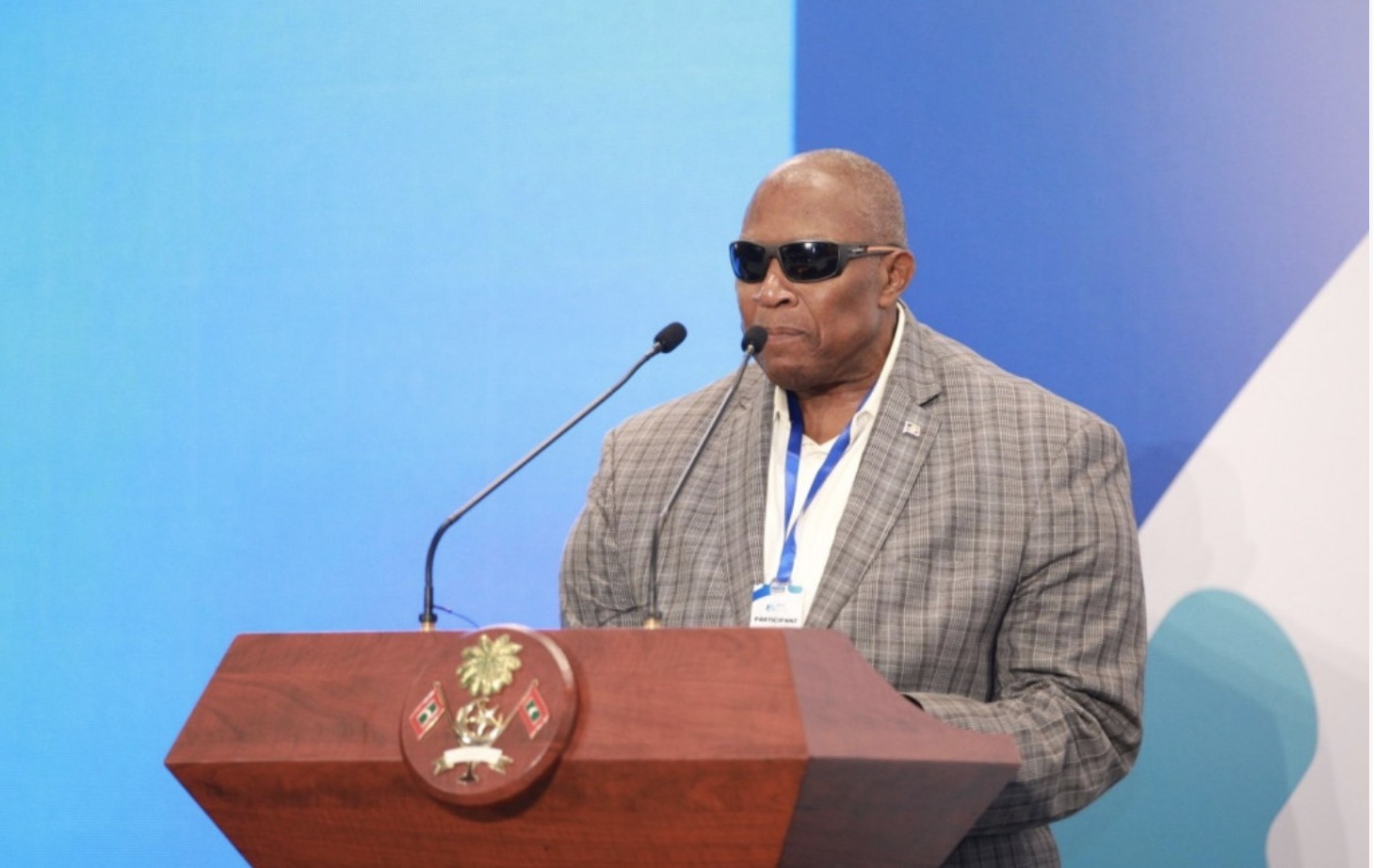
    In the ceremonial opening of the country’s Parliament on Tuesday, Governor-General Sir Rodney Williams used the annual Throne Speech to shine a stark spotlight on a growing inequity in the global geopolitical landscape: small developing island nations like Antigua and Barbuda are being forced to shoulder crippling economic costs from international conflicts they had no part in starting or shaping.

    Sir Rodney outlined how multiple ongoing flashpoints across the globe, from the Russia-Ukraine war to rising tensions between Iran, Israel and the United States, have sent shockwaves through global supply chains and energy markets that hit vulnerable small economies the hardest. “There are two wars being waged by the strongest nations on earth, resulting in deaths in those affected countries and significant burdens being borne by small countries like ours,” he told assembled parliamentarians.

    Breaking down the specific pathways of economic spillover, the Throne Speech linked the Russia-Ukraine conflict directly to soaring global fossil fuel prices. Sanctions imposed on the Russian Federation, one of the world’s top energy exporters, have cut its global energy sales, creating a supply shortage that has pushed up oil and gas costs worldwide. That impact ripples across every sector of small island economies, from transportation to consumer goods.

    Beyond energy markets, escalating tensions involving Iran and Israel have disrupted critical global shipping infrastructure, Sir Rodney noted. When recent strikes by the U.S. and Iran prompted closures to a key Persian Gulf sea lane that carries roughly 20% of the world’s global oil supply, the disruption triggered simultaneous spikes in shipping rates, maritime insurance premiums, and end-consumer costs across every continent.

    This pattern, the Antigua and Barbuda government emphasized, is an injustice that repeatedly targets small developing states. “Small states have played no role in starting these conflicts that have generated tough economic choices for the people of Antigua and Barbuda, the Caribbean, and the people of these two large states,” Sir Rodney said.

    In addition to highlighting this unfair burden, the speech laid out the government’s long-standing foreign policy priorities, reaffirming its unwavering support for multilateral cooperation and coordinated regional action through the Caribbean Community (CARICOM). The Governor-General also extended formal praise to Foreign Affairs Minister E.P. Chet Greene, crediting him with deft and skillful navigation of the country’s foreign relations amid a period of unprecedented global geopolitical instability.

  • President tells Half Moon Fort students to dream big despite small size

    President tells Half Moon Fort students to dream big despite small size

    On a Tuesday visit to Half Moon Fort Primary School, a tiny educational institution tucked away in Clinketts Gardens, Barbados, President Jeffrey Bostic delivered a stirring message to the school’s 38 students, urging them never to let their school’s small stature cap their ambitions.

    Opening the day’s events, students led the gathering in the school’s traditional morning prayer, before Principal Orlaine Benn extended an official welcome to the president and visiting guests. Benn framed the school’s identity perfectly: “Our school quietly nestled in Clinketts Gardens is very small, but within these walls live big dreams, bright minds, and limitless potential.” This year’s institutional theme, “Dream big, aim high”, aligns tightly with the school’s motto “Beyond the moon to the stars”, which emphasizes that no achievement is out of reach for driven students. Benn explained that the core ethos taught at Half Moon Fort is that with determination, discipline, faith, and consistent hard work, students can overcome any barrier and reach goals they once saw as impossible.

    For Bostic, the visit was a deeply personal one. Drawing on his own childhood growing up in a small rural community and attending a small primary school himself, he shared how those formative experiences shaped his entire career and trajectory. He described his upbringing in a close-knit neighborhood where neighbors knew each other by name and showed up for one another like family, a contrast to many disconnected modern communities where residents rarely know the people living next door.

    President Bostic extended this idea of small origins creating massive success to the entire nation of Barbados, reminding students that the country’s small geographic size has never limited its global impact. “Barbados is a small country maybe compared to others. But we don’t think small, we think big,” he told the assembled crowd. He repeated this refrain to students directly, emphasizing that a small school’s scale never has to limit what they can achieve: “Being a small school does not stop you from thinking and dreaming big. Being a small school does not stop you from learning well. Being a small school does not stop you from reaching high heights when you get older.”

    Beyond encouraging big aspirations, Bostic pushed students to take ownership of their own paths, leading the crowd in repeating his core mantra: “If it is to be, it is up to me.” He broke down the simple, powerful phrase, noting it is just ten short two-letter words that carry a lifetime of meaning. “At the end of the day, it’s not up to anybody else where you go from here but you yourselves. It’s up to you,” he said. He lightheartedly called out students who let parents complete their homework for them, joking that this habit only wastes their own potential, drawing laughter from the audience.

    The president also offered reassurance to any students disappointed by their performance on the Common Entrance Examination, framing the test as just one single moment in a long lifetime of opportunities. “That’s a one-time examination,” he said. “There are people who have not done well at common entrance, not gone to what they call the better secondary schools, but who have done exceedingly well.”

    After his address, students treated guests to a series of vibrant cross-lingual performances. The junior section recited an original poem, while the infant department delivered a bilingual Spanish-English rendition of the classic hymn “This Little Light of Mine”. The school also staged an original dramatic production titled “The Sound We Carry”. Bostic specifically praised the clear Spanish recitation from a young Cuban student, noting the student’s impressive skill even after moving to the school with no prior English language skills. Principal Benn expanded on this progress, sharing that when the two Cuban students first enrolled, neither could speak English, and staff worked tirelessly, as a close school family, to support their integration. Today, the younger of the two students speaks fluent, confident English, a testament to the staff’s dedication and the school’s supportive environment.

    Benn emphasized that Bostic’s visit held unique meaning for the school’s small student body. “Having the opportunity to meet someone who serves with purpose and leadership helps them to see that success is not something distant or unreachable. It becomes real, attainable, and inspiring,” she said. After the performances, Bostic answered questions from students and faculty, covering everything from his favorite Bajan dish to his pre-presidency career and the best part of serving as head of state – a question one student posed entirely in Spanish.

    The visit wrapped up with Bostic joining students to plant a strawberry sapling in the school’s existing community garden, which already grows a range of fresh herbs and vegetables including chives, broad leaf thyme, and rosemary. As he prepared to depart the campus, dozens of excited students crowded around to hug the president and thank him for his visit. Benn summed up the day’s mood in a post-event statement, echoing Bostic’s core message: “We might be small, but we are mighty.”

  • Air Peace Says It Does Not Fly to Ebola-Affected Countries Amid Caribbean Health Concerns

    Air Peace Says It Does Not Fly to Ebola-Affected Countries Amid Caribbean Health Concerns

    As global health authorities ramp up monitoring of a renewed Ebola outbreak that has sparked alarm across the Caribbean region, Nigerian commercial airline Air Peace has moved quickly to reassure the public and travelers that it currently maintains no flight routes to any countries grappling with active Ebola transmission. This public clarification comes at a time when international health organizations have issued updated alerts, urging cross-border travel and transportation operators to strengthen screening protocols and communicate transparently about their route networks to prevent the accidental importation of the virus into new regions.

    Air Peace’s statement addresses growing public anxiety that has emerged in recent weeks, as scattered Ebola cases in several West and Central African countries have rippled out to stoke concerns among Caribbean communities and travel industry stakeholders, who still remember the devastating 2014-2016 Ebola epidemic that claimed thousands of lives and disrupted global travel across the African continent and beyond. The carrier emphasized that it has proactively reviewed its entire international route map to confirm that no scheduled or charter services connect its operational network to Ebola-affected jurisdictions, and it noted that it is working closely with global and local public health agencies to maintain strict health screening protocols for all incoming and outgoing passengers, even for routes that do not pass through outbreak zones.

    Travel industry analysts note that this kind of proactive communication is critical for maintaining public confidence in air travel, particularly amid emerging infectious disease outbreaks, where misinformation can spread quickly and cause unnecessary disruption to airline operations and regional tourism. Caribbean public health officials have already stepped up entry screening at major international airports across the region, and have urged all air carriers to provide clear, up-to-date information about their route networks to help authorities coordinate effective outbreak response measures.

  • 17 Nigerians refused entry into St. Kitts and Nevis amid Ebola concerns – WIC News

    17 Nigerians refused entry into St. Kitts and Nevis amid Ebola concerns – WIC News

    In a proactive emergency move to safeguard its domestic population, the federation of St. Kitts and Nevis has barred 17 Nigerian travelers from entering the country, a decision rooted in rising global concerns over ongoing Ebola virus transmission across parts of Africa.

    The group of travelers arrived Tuesday at Robert L. Bradshaw International Airport on St. Kitts via a regional commercial flight, and was immediately turned away under new public health protocols. The country’s Ministry of National Security issued an official statement confirming the decision, stressing that the restrictive measure was not reached hastily. Instead, it was implemented on the formal recommendation of the nation’s top public health experts, aligned with the government’s core mandate to protect community health amid growing international alarm over the expanding Ebola outbreak.

    Officials noted that the Nigeria Centre for Disease Control and Prevention (NCDC) has already publicly designated Nigeria as a high-risk location for Ebola importation. That classification followed a dynamic, data-driven risk assessment that accounted for ongoing Ebola transmission in multiple West and Central African regions, as well as frequent cross-border and international travel through Nigeria’s major transport hubs. Crucially, the statement acknowledged that Nigeria has not yet recorded any confirmed locally acquired or imported Ebola cases tied to the current outbreak — a fact that underscores the proactive, precautionary nature of St. Kitts and Nevis’ policy.

    The Ministry of National Security emphasized that the entry ban does not reflect a breakdown in the longstanding warm and respectful relations between St. Kitts and Nevis and the people of Nigeria. “We remain a welcoming nation and we deeply regret any inconvenience or distress caused to our Nigerian brothers and sisters who have been affected by this necessary public health measure,” the statement read.

    Officials added that their immediate priority is to act with deliberate caution, full accountability, and strict adherence to international public health guidance, while upholding the dignity and respect of all travelers affected by border protocols. The federal government also called on all visitors and residents to comply fully with St. Kitts and Nevis’ public health regulations to ensure the policy is implemented smoothly and without disruption, and expressed gratitude to the local public for their ongoing cooperation and understanding as the situation evolves.

  • Cement Shortage Nearing End, Government Says

    Cement Shortage Nearing End, Government Says

    In the ceremonial opening of Antigua and Barbuda’s Parliament for the 2026 legislative session, Governor-General Sir Rodney Williams delivered a widely anticipated Throne Speech on Tuesday that addressed one of the country’s most pressing construction sector headaches: persistent cement shortages that have slowed public and private building work across the twin-island nation. Sir Rodney confirmed that the ongoing supply crunches, which have hampered the government’s flagship infrastructure expansion and road rehabilitation agenda, are on track to be resolved imminently as dredging work on the navigation channel leading to the national cement silos at Crabbes enters its final phase.

    “A shortage of cement has been a challenge; however, as the dredging of the channel leading to the silos at Crabbes nears completion, that scarcity of cement will be of the past,” Sir Rodney told assembled lawmakers and guests. The update comes after months of regional supply chain disruptions and shipping delays that have driven cement shortages across multiple Caribbean nations, grinding construction projects to a halt in several territories. For Antigua and Barbuda, the bottleneck has been compounded by limited access to the Crabbes silos, which prevents large delivery vessels from offloading sufficient cement stock to meet growing demand from large-scale public works.

    The Throne Speech dedicated a significant segment to outlining the current state of the country’s multi-year infrastructure overhaul, revealing that work is advancing across dozens of primary and secondary road corridors. Several major arterial routes have already wrapped up rehabilitation work, including the Sir George Walter Highway, Friars Hill Road, and Sir Sidney Walling Highway. Upgrades are also actively progressing on the Valley Road connecting Golden Grove to Old Road, the Parham to Willikies Highway, and the heavily trafficked All Saints Road. In tandem with work on major highways, paving crews have been deployed to resurface secondary local roads across rural villages and urban communities island-wide.

    To sustain this ambitious infrastructure push, the government announced a landmark financing agreement: a consortium of local financial institutions has committed EC$150 million in funding for ongoing road rehabilitation, to be repaid through a structured vehicle user-fee mechanism. The arrangement clears the way for continued investment in transportation infrastructure, which the government has identified as a core driver of long-term economic growth and tourism competitiveness.

    Sir Rodney also used the speech to recognize the leadership of Works Minister Maria Browne and the entire team at the Ministry of Works for their handling of the expansive infrastructure program amid ongoing supply headwinds. “My Government expresses its sincerest thanks to the Minister of Works, the Honourable Maria Browne, for her management of a workforce that has performed admirably,” he said. Moving forward, officials expect the completion of the Crabbes dredging project to streamline cement delivery and storage operations, eliminating the supply bottleneck that has slowed progress for months.

  • Governor-General Says CARICOM Remains Essential to Antigua and Barbuda’s Stability and Prosperity

    Governor-General Says CARICOM Remains Essential to Antigua and Barbuda’s Stability and Prosperity

    Against a backdrop of mounting global geopolitical tension, Antigua and Barbuda has used its annual ceremonial opening of Parliament to underscore its long-standing dedication to Caribbean regional unity, framing the Caribbean Community (CARICOM) as an indispensable pillar of the nation’s ongoing stability and future prosperity. In his traditional Throne Speech delivered Tuesday, Governor-General Sir Rodney Williams tied the country’s modern regional identity to nearly 80 years of incremental political and economic collaboration across the Caribbean, tracing the evolution of integration through key historical milestones that laid the groundwork for today’s collective framework.

    Williams outlined the clear position of the Antigua and Barbuda government, stating, “My Government views the CARICOM as essential to our island-nation’s stability and prosperity.” In a walk through regional history, he tracked integration’s earliest local roots back to the 1946 manifesto released by the Antigua Trades and Labour Union Political Committee, before moving to the 1958 formation of the West Indies Federation, an initiative Williams noted “embodied the hopes and aspirations of a single Caribbean State.” He went on to highlight the 1965 launch of the Caribbean Free Trade Association and the 1973 establishment of CARICOM itself as defining turning points that advanced the region’s shared push for collective progress and cross-border cooperation.

    Beyond historical context, Williams emphasized that CARICOM’s multilateral institutions remain a critical lifeline for small island developing states navigating overlapping economic and geopolitical headwinds. “The several multilateral institutions created to meet the collective and individual needs of the CARICOM member-States, form a protective blanket that allows for collaboration and far-ranging security building measures,” he explained.

    The remarks on regional integration came as part of a broader section of the speech focused on foreign policy and growing global instability. Williams drew explicit attention to the cascading economic costs that distant conflicts impose on small, developing Caribbean nations, pointing specifically to the ongoing Russia-Ukraine war and escalating tensions between Iran, Israel, and the United States. Even though the Caribbean region bears no responsibility for these crises, Williams said the resulting spikes in fuel, shipping, and insurance costs have created significant, unfair economic burdens that ripple through local economies across the bloc.

    To close his remarks on foreign affairs, Williams offered high praise for Antigua and Barbuda’s Foreign Affairs Minister E.P. Chet Greene, lauding him as a “very skillful Minister” whose adept stewardship of the nation’s foreign portfolio has helped the country navigate the increasingly choppy geopolitical conditions defining the current global landscape.

  • St. Joseph’s Academy Retains CUB Inter-secondary Debate Championship Over Sir Novelle Richards Academy

    St. Joseph’s Academy Retains CUB Inter-secondary Debate Championship Over Sir Novelle Richards Academy

    On Tuesday, the Caribbean Union Bank Inter-secondary School Debate Championship concluded at the University of the West Indies Five Islands Campus, with St. Joseph’s Academy making history by retaining its coveted championship title. The year’s final showdown, organized by the Education Broadcasting Unit under Antigua and Barbuda’s Ministry of Education, drew widespread attention as two top-tier secondary school teams went head-to-head for the regional crown. St. Joseph’s Academy edged out runner-up Sir Novelle Richards Academy in a tightly contested exchange of arguments centered on a timely regional policy question.

    This year’s final debate centered on a provocative moot tailored to spark critical engagement with Caribbean regional integration: “CARICOM offers the best option for Member States to maintain their sovereignty.” Sir Novelle Richards Academy took the stage first to advocate for the proposition, making the case that collective governance and economic coordination through the Caribbean Community provide small island nations with the collective bargaining power and institutional stability to protect their sovereign autonomy in an increasingly polarized global landscape. Opposing the motion, St. Joseph’s Academy put forward a nuanced argument highlighting structural limitations of the current CARICOM framework that can constrain national policy flexibility, ultimately convincing the panel of adjudicators of their position to secure the win.

    In an official statement released shortly after the final results were announced, competition organizers extended formal congratulations to St. Joseph’s Academy for its successful title defense, a rare achievement that underscores the school’s consistent investment in debate and critical thinking education. Organizers also made a point to commend Sir Novelle Richards Academy for what they described as “outstanding performance throughout the season and in today’s finals,” noting that the team’s preparation and rhetorical skill made the final one of the most competitive in recent years. The Ministry of Education echoed this praise, highlighting that both finalist teams displayed the core values of the competition: “excellence, discipline, and the true spirit of debate.”

    Now in its annual cycle, the Inter-secondary School Debate Championship fills a unique niche in Caribbean secondary education. Beyond the thrill of competition, the event was designed to foster core transferable skills that benefit students long after they leave the debate stage: rigorous critical thinking, structured research, confident public speaking, and the ability to engage respectfully with opposing viewpoints. Equally importantly, the competition intentionally centers topical regional and civic issues in its moot selection, encouraging a new generation of young Caribbean people to think deeply about the policy choices that will shape the future of their region.

    This repeat win cements St. Joseph’s Academy’s reputation as a dominant force in regional secondary school debate, and organizers have already signaled that next year’s competition will expand participation to include more schools across the Caribbean, continuing the event’s mission of building capacity for civic engagement among young people.

  • Pringle says he attended Parliament because the president summoned him to do so

    Pringle says he attended Parliament because the president summoned him to do so

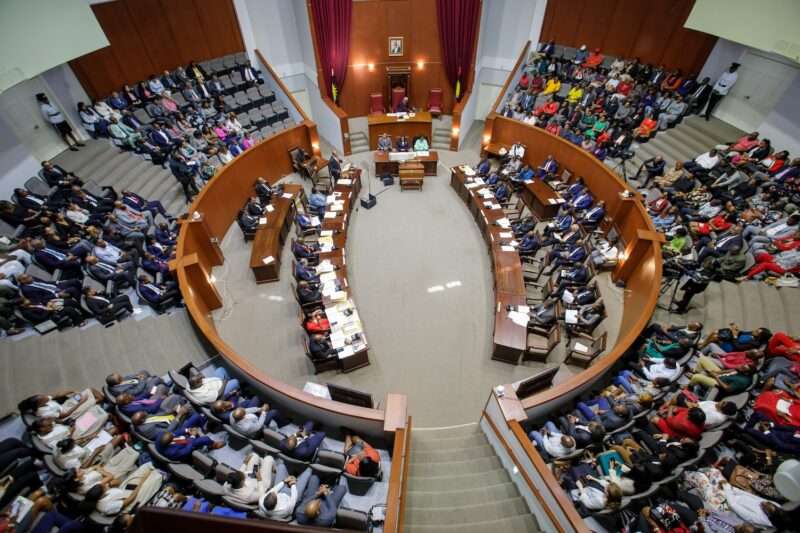
    A political controversy has erupted in Antigua and Barbuda after opposition leader Jamale Pringle was ordered to leave Parliament just hours before the opening of a new legislative session, despite receiving a formal summons to attend and be sworn in. The incident triggered an immediate walkout by all opposition members of parliament and senators, who left the chamber in protest of the unexpected snub to their leader.

    In an interview with Observer Radio just hours after the chaotic scenes, Pringle laid out the sequence of events that led to the confrontation, calling for transparency over why parliamentary authorities blocked him from taking his oath of allegiance. He stressed that his aim is not to stoke unnecessary division among opposition lawmakers, but to unpack the confusing sequence of events that left him locked out of the official sitting.

    Pringle explained that his absence from an earlier planned swearing-in session was entirely justified: he traveled out of the country with his daughter to receive urgent medical care, and submitted formal advance notification of his absence to parliamentary officials. After returning, he received a second official summons dated May 14, ordering him to attend the opening of Parliament’s first session on May 26 at 9 a.m., with an instruction to arrive 15 minutes early “for the dispatch of such business as may be necessary.”

    Based on the wording of this correspondence, Pringle said he reasonably assumed the pre-session gathering would be used to administer his oath of allegiance, bringing him into formal membership of the new Parliament. He arrived at the legislative chamber at 8:25 a.m., almost 20 minutes ahead of the scheduled pre-session meeting, and took a seat that had already been set up with his name displayed. He waited in the chamber for nearly an hour before the Sergeant-at-Arms approached him and requested he leave to meet with Senate President Alincia Williams-Grant.

    During that private meeting, Pringle said the Senate President informed him he could not take a seat in the chamber because he had not completed the required oath of allegiance. In response, Pringle proposed that the oath be administered publicly on the floor of Parliament, a procedural step he argued would have been quick, transparent, and fully in line with parliamentary rules. He emphasized that he holds the institution of Parliament in high regard and makes every effort to attend all scheduled sittings, noting that the oath is an extremely brief procedure that could easily have been completed before the formal Throne Speech got underway.

    When asked if he believed the oversight was a deliberate attempt to embarrass the opposition and disrupt the opening of the first parliamentary session, Pringle said he believed that was likely. Adding to his confusion, he noted that parliamentary staff had already prepared a name-plated seat for him in the chamber, confirming that organizers expected his attendance. Pringle has yet to receive a clear explanation from parliamentary officials for why he was summoned if he was not going to be allowed to complete the required swearing-in process, leaving key questions about the incident unresolved.

  • Antigua and Barbuda To Enact Laws Targeting Food Safety, Nursing Homes, Mental Health and Medical Labs

    Antigua and Barbuda To Enact Laws Targeting Food Safety, Nursing Homes, Mental Health and Medical Labs

    At the formal opening of the new parliamentary session on Tuesday, the government of Antigua and Barbuda unveiled a sweeping legislative package that places healthcare system improvement at the core of its 2026–2031 policy agenda, with a slate of new laws and regulatory reforms targeting five critical health-related sectors: food safety, mental health services, pharmacy operations, medical laboratories, and nursing homes.

    The full set of proposals was laid out by Governor-General Sir Rodney Williams during the annual Throne Speech, which outlines the incoming administration’s policy priorities following the April 30 general election. Sir Rodney emphasized that the upcoming regulatory updates are designed to reinforce oversight across the healthcare landscape and raise public safety standards for all residents of the twin-island nation.

    “Other laws that impact food safety, mental health, pharmacy regulation, and the operation of medical laboratories and nursing homes, will come before this Parliament in the interest of ensuring better treatment of the sick, and improved safety standards for all,” Sir Rodney told assembled lawmakers during the ceremonial address.

    While the government confirmed the broad scope of the healthcare-focused legislative package, it has not yet released specific timelines for parliamentary review or granular details of the proposed regulatory changes. The proposal marks just one component of a broader, five-year legislative reform agenda that also encompasses overhauls of electronic crime legislation, new protections for workers against workplace harassment, updates to border security protocols, and structural changes to police and forensic services.

    In a nod to continuity in health governance, the speech opened with formal recognition of former Health Minister Sir Molwyn Joseph, honoring his decades of cross-sector service in health, wellness, environmental policy, and civil administration. The administration also formally welcomed newly appointed Health Minister Michael Joseph, who will lead the rollout of the government’s health policy priorities.

    “The health and well-being of the people of Antigua and Barbuda continue to remain a priority for my Government, for we believe that a healthy nation is a wealthy nation,” the Governor-General affirmed, cementing the administration’s commitment to centering public health in its term. Addressing growing global concerns about transboundary disease spread, the speech also expressed full confidence in the Ministry of Health and the nation’s medical professionals to maintain robust protections for the population and mitigate emerging public health risks.