作者: admin

  • Fisheries Minister announces conch hatchery amidst declining catch

    Fisheries Minister announces conch hatchery amidst declining catch

    On May 25, 2026, Fisheries Minister Conroy Huggins used the platform of the country’s 49th Fisherman’s Day celebrations, held in Little Tokyo, Kingstown, to lay out an ambitious new agenda for the nation’s fisheries sector and blue economy, while sounding an alarm over accelerating declines in two of the region’s most valuable marine species: queen conch and lobster.

    Huggins outlined positive recovery trends for the broader fishing industry in the wake of 2024’s Hurricane Beryl, noting that 2025 total fish landings bounced back to roughly 1.93 million pounds, with an estimated market value exceeding EC$16.3 million. This marks a clear uptick from 2024’s post-hurricane totals of 1.7 million pounds and EC$14.7 million. However, the improvement across the sector masks troubling declines for high-value commercial species: conch landings dropped 17.6% year-over-year, translating to more than EC$0.2 million in lost revenue, while lobster earnings fell 27% for an estimated loss of EC$0.3 million.

    “These realities… remind us that the sea is generous, but its resources are not unlimited,” Huggins told attendees, stressing that the new policy framework will center on science-backed, sustainable resource management to reverse current declines. This marks the second consecutive year that a senior fisheries official has flagged the downward trend in conch populations: last year, then-minister Saboto Caesar announced plans to implement a mandatory closed conch season starting in 2026, alongside broader revisions to the country’s Fisheries Act to establish protected marine replenishment zones. Caesar had already secured government approval for the closed season before Hurricane Beryl made landfall in July 2024, framing the move as an intergenerational responsibility to preserve marine resources for future Vincentian communities.

    To address the conch decline head-on, Huggins announced a new queen conch recovery initiative that will include the construction of a purpose-built conch hatchery and nursery unit on Union Island, with construction set to break ground before the end of 2026. Complementing this project, ongoing coral reef restoration work is underway across all of St. Vincent and the Grenadines through regional and international collaborative partnerships, designed to rebuild critical marine habitats, boost wild fish populations, and strengthen the country’s overall climate resilience. “Where science tells us resources are declining, we must act responsibly. Conservation today is production and sustainability for tomorrow,” Huggins said.

    Funding for the new slate of initiatives comes from the 2026 national budget, which allocates approximately EC$14.3 million to the Ministry of Fisheries, Marine and Land Conservation and Climate Resilience. More than EC$8.4 million of that allocation is earmarked for capital expenditure, targeted at upgrading fisheries infrastructure, expanding marine conservation work, boosting climate resilience, and scaling up emerging blue economy projects. As an island nation with a marine exclusive economic zone 90 times larger than its total landmass, Huggins emphasized that St. Vincent and the Grenadines is well-positioned to unlock the vast untapped economic potential of ocean-based industries.

    A holistic, long-term sector strategy to guide all future policy, infrastructure development, resource management, climate adaptation, investment planning, and institutional strengthening is currently in development, with many of the upcoming initiatives tied to the World Bank-supported Unleashing the Blue Economy of the Caribbean (UBEC) programme. Key projects outlined by Huggins include retrofitting existing fishing vessels to improve catch quality and on-board safety, strengthening monitoring and enforcement systems to crack down on unreported and illegal fishing, building out national food safety and seafood inspection frameworks, and supporting aquaculture development for high-value species including sea moss, conch, and lobster. Additional plans cover the refurbishment of fisheries facilities, jetties, and boat ramps, the construction of climate-resilient storage infrastructure to protect fishers’ assets, investment in vessel monitoring systems and cold storage networks, and expanded access to affordable financing for small-scale fishing operations.

    Beyond infrastructure and conservation, the ministry is rolling out targeted training and capacity-building programmes for both working fishers and fisheries sector staff, covering critical topics including open sea safety, seafood quality control, best practices for fish handling and processing, boatmaster certification, and adoption of modern fishing technologies. New inclusive initiatives will specifically open up opportunities for youth and women through fisheries skills training and seafood product development, pushing back against narratives that the fishing industry is in decline. “Fisheries is not a dying industry. Fisheries is a sector of innovation, entrepreneurship, science, technology, and opportunity,” Huggins said. Closing his address, the minister called for shared collective responsibility across all sectors of society: he urged fishers to comply with sustainable harvesting regulations, and called on local communities to participate in protecting critical coastal ecosystems including reefs, mangroves, beaches, and seagrass beds that underpin long-term fisheries health.

  • HEBERSaVax: The story of a Cuban product, unique in the world, with great potential in the fight against cancer

    HEBERSaVax: The story of a Cuban product, unique in the world, with great potential in the fight against cancer

    On the afternoon of May 27, 2026, Cuban President Miguel Díaz-Canel Bermúdez, who also serves as First Secretary of the Central Committee of the Communist Party of Cuba, chaired a regular meeting of health sector experts and scientists at Havana’s Palace of the Revolution. The gathering’s most anticipated highlight was an update on HEBERSaVax, a groundbreaking Cuban-developed therapeutic vaccine candidate for treating multiple types of malignant tumors, a development that has already sparked early optimism for global cancer care.

    During the session, Díaz-Canel extended formal congratulations to HEBERSaVax lead scientist Yanelys Morera Díaz, a full member of the Cuban Academy of Sciences, and her entire research team. Following the conclusion of the meeting, Morera spoke to state press about the vaccine’s mechanism and developmental progress, outlining how the innovative candidate works to stop cancer progression.

    Morera explained that HEBERSaVax functions as a form of active immunotherapy, targeting two critical aspects of tumor growth. First, it prompts the body to produce specific antibodies that block the blood supply tumors need to access nutrients and oxygen for expansion. Second, it reactivates the patient’s own immune system to recognize and attack cancer cells, creating a multi-functional approach to treatment.

    After completing all preclinical testing, including early trials in laboratory animal models, the candidate has advanced to Phase II clinical trials focused on specific tumor types. Morera emphasized that early safety data shows the therapy has a strong tolerability profile, with only mild, manageable adverse effects. This low toxicity profile allows HEBERSaVax to be combined with conventional cancer treatments without increasing harmful side effects, opening the door for broad clinical applications. While the candidate remains in active research, Morera noted that many trial participants have already reported meaningful improvements to their quality of life, with some patients with advanced-stage cancer achieving complete responses to treatment. Moving forward, the research team must continue compiling clinical evidence to meet Cuba’s rigorous national regulatory standards before advancing to later trial phases. Morera expressed confidence that the candidate will successfully complete all required testing and eventually become a core tool in global cancer treatment, with long-term plans to integrate the therapy into primary care settings.

    Other members of the research team echoed Morera’s cautious optimism. Julio César Hernández Perera, an internal medicine specialist, full member of the Cuban Academy of Sciences and clinical researcher on the project, described HEBERSaVax as a one-of-a-kind achievement of Cuba’s robust biotechnology sector, built on decades of targeted research. He noted that the candidate could eventually be used to treat a wide range of solid tumors, which often rely on the specific protein targeted by the vaccine to grow and spread. Its low toxicity makes it a viable option even for patients living with multiple chronic conditions, a major advantage over many conventional aggressive treatments. Like Morera, Hernández Perera called for continued research investment, but stressed that the candidate already opens new, previously unreachable frontiers in cancer care.

    Young clinical researcher Adriana Felinciano Pozo, another internal medicine specialist on the team, added that HEBERSaVax’s simple subcutaneous administration makes it easy to deploy in a wide range of care settings. Early trial results across multiple hard-to-treat solid tumor types — including colorectal cancer, hepatocellular carcinoma, ovarian cancer, and kidney cancer, all in advanced patient populations — have delivered consistent positive responses. Felinciano Pozo emphasized that cancer remains one of the leading global causes of death and long-term disability, making accessible, low-toxicity new therapies a critical global public health need.

    The report frames HEBERSaVax’s development as a testament to Cuba’s enduring commitment to protecting the fundamental human right to health and life, even amid long-standing external economic pressure that has strained the country’s resources. The work of the HEBERSaVax research team exemplifies how Cuban biotechnology continues to advance life-saving innovation despite significant challenges.

  • ‘Number Seven’ returns to stage in SVG before NY debut

    ‘Number Seven’ returns to stage in SVG before NY debut

    A decades-long dream of sharing authentic Vincentian storytelling with the world is finally coming to fruition, as Ask Enterprise Ltd. has officially announced upcoming new productions of *Number Seven*, the acclaimed original work from revered Vincentian playwright Kevin Roderiques.

    The production will kick off with two local performances at Kingstown’s Peace Memorial Hall in St. Vincent and the Grenadines (SVG) on May 30 and 31. Following these domestic shows, the production will make history this October, when it becomes the first full-length Vincentian play written, directed, and performed entirely by Vincentian creatives to hit an Off-Broadway stage in New York City. The New York opening is scheduled for October 24, timed to coincide with SVG’s 47th Independence Day celebrations on October 27, turning the performance into a global celebration of Vincentian identity and culture.

    For nearly 30 years, Roderiques has been a foundational figure in shaping modern Vincentian theatre. His work consistently uses the performing arts as a platform to educate audiences, confront pressing local social issues, and center lived community experiences that are rarely shared on global stages. *Number Seven*, a tight, suspense-filled action drama, has already built a loyal following across the Caribbean: the play has earned rave critical reviews and won over audiences during prior runs in SVG, Grenada, and St. Lucia. Roderiques describes the work as a showcase of core Vincentian values, saying “*Number Seven* represents the very best of who we are as a people, our creativity, our resilience, and our ability to tell stories that matter.”

    “To finally bring this work to an Off-Broadway stage is a dream thirty years in the making. However, more importantly, it is a dream shared by every Vincentian who has ever believed that our stories deserve to be heard by the world,” the playwright added. All 12 cast members, all Vincentian actors, will appear in both the local and New York productions, serving as official cultural ambassadors for their small island nation throughout the project.

    Beyond the stage, the production carries a deep commitment to lifting up the next generation of Vincentians and strengthening ties with the global Vincentian diaspora. All proceeds from the May local performances will go toward two key initiatives. First, the funds will cover the international travel, accommodation, and on-ground logistics for the 12-person cast’s trip to New York, removing financial barriers that would otherwise prevent the all-Vincentian production from happening. Second, remaining proceeds will support the ongoing Agent Mentorship Programme, a free after-school initiative that works with boys aged 8 to 12 across SVG. The program uses theatre training to build critical life skills including self-esteem, self-discipline, and creative thinking, guiding at-risk young participants toward positive, productive futures.

    In reflecting on the full scope of the project, Roderiques emphasized that *Number Seven* is far more than a simple theatre production. “It is about showing our young people that dreams are valid. It is about connecting with Vincentians overseas and reminding them that home is always with them. And it is about proving that from our small nation, greatness can emerge,” he said.

  • Leisure : Did you know ? #27

    Leisure : Did you know ? #27

    The Haiti-based general knowledge platform HaitiLibre Quiz has rolled out its latest monthly content update, adding 30 brand new knowledge games to its free, no-registration gaming library as of May 4, 2026. This expansion brings the platform’s total collection of interactive quizzes up to 119, covering a wide range of topics from local Haitian current affairs and culture to global historical, military and social themes.

    In the 27th installment of the platform’s popular “Did You Know?” educational series, the quiz team shares a key insight into modern Western military strategy: that mastering asymmetric conflict has become a central focus of contemporary military doctrine today. To contextualize this concept, the feature contrasts asymmetric conflict with traditional conventional warfare. In a standard conventional conflict, two standing national armies from sovereign states face off on a clearly defined battlefield, typically using comparable equipment and tactical approaches. Asymmetric warfare, by contrast, is defined by a massive power gap between opposing sides: a militarily advanced, well-resourced state often finds itself pitted against non-state groups such as insurgencies, terrorist organizations or guerrilla movements.

    For the weaker, outgunned side in these conflicts, direct head-on confrontation is rarely a viable strategy. Instead, these groups rely on unconventional tactics to offset their material disadvantages: hit-and-run harassment, improvised explosive devices, and psychological warfare designed to erode the stronger side’s morale and public support. One of the biggest challenges for powerful modern militaries in these conflicts is achieving a clear, traditional military victory: opposing non-state fighters often embed themselves within civilian populations, making it difficult to separate combatants from non-combatants and eliminate the adversary’s ability to operate. Recent high-profile conflicts in Afghanistan and the Sahel region serve as stark illustrations of this dynamic, showing that even overwhelming technological superiority does not guarantee a swift or decisive win for the stronger military power.

    Built to serve knowledge seekers of all ages and skill levels, the HaitiLibre Quiz platform offers all its exclusive content completely free of charge, with no account registration required for access. Every quiz is available in both French and English, and is structured with three distinct difficulty tiers: easy, intermediate and hard, to accommodate casual learners and expert knowledge enthusiasts alike. Users can browse general knowledge topics across a wide range of categories, or head to the dedicated expert menu for more advanced, challenging question sets. With new games added every month to keep content fresh and engaging, the platform invites visitors to explore its full collection, share the resource with friends and family, and submit feedback to help improve future updates.

  • DNA zoekt werkbaar compromis met regering over Comptabiliteitswet

    DNA zoekt werkbaar compromis met regering over Comptabiliteitswet

    Parliamentary proceedings to amend Suriname’s 2024 Comptabiliteitswet (Accountability Act) were paused on Tuesday, with the debate rescheduled for this Thursday. The extension grants Finance and Planning Minister Adelien Wijnerman additional time to refine proposals submitted by both governing coalition and opposition lawmakers, as cross-party consensus grows around retaining core provisions of the new law while building a feasible implementation framework.

    The administration has proposed pushing full implementation of the 2024 Accountability Act to the 2029 national budget, arguing that critical administrative infrastructure, regulatory frameworks, and oversight mechanisms remain insufficiently prepared to roll out the full reform package. The scheduled Tuesday session, originally set to begin at 10 a.m., was delayed until 1:45 p.m. due to a lack of quorum. Once underway, multiple assembly members pushed back against the idea of pausing all provisions of the law, instead advocating for a phased rollout that would keep already actionable provisions in effect immediately.

    Lawmakers also clashed over the length of the proposed delay, with many arguing a two-year postponement is sufficient rather than the administration’s requested three-year delay. The debate repeatedly centered on 2028, the year Suriname expects to begin collecting revenues from offshore oil production. Multiple parliamentarians emphasized that by 2028, the country’s financial oversight mechanisms, procurement rules, and accountability structures must be fully operational and aligned with the new law’s standards.

    Following a procedural suspension, closed-door negotiations were held between faction leaders, National Assembly Speaker Ashwin Adhin, and Minister Wijnerman. After the talks, Rabin Parmessar, leader of the opposition NDP faction, stated that participants had collaborated to develop workable implementation models. “We reviewed every proposal put forward in this chamber, and I believe we have developed shared frameworks that we have presented to the minister,” Parmessar said, noting that negotiators had drawn a clear distinction between budget drafting processes and post-implementation accountability requirements. “Especially on the accountability side, the minister’s responsibilities have now been clearly outlined,” he added, confirming that the minister will now refine the proposals and return an adjusted plan to the full assembly for consideration.

    Asis Gajadien, leader of the governing VHP faction, echoed the call for shared parliamentary responsibility, noting that the reform is far more than a technical technical adjustment to legislation – it shapes the long-term financial and governance trajectory of Suriname. “This is about who we are and where we as Surinamese want to go,” Gajadien said. He reiterated that parliament must identify which components of the law can enter into force immediately, and which can be rolled out in stages. “At the end of the day, all of us want a system that can deliver accurate accountability both to the public and to this parliament,” he added.

    Rossellie Cotino, an NDP lawmaker who chairs the assembly’s rapporteur committee, framed the current delay as a consequence of inadequate preparatory work when the 2024 Accountability Act was originally passed. She noted that the bill was originally approved without the required supporting legislation and institutional preparations in place, but emphasized: “This is not a cancellation of the 2024 Accountability Act, it is merely a postponement.” Cotino added that stakeholders have now mapped out all the supplemental reforms needed to make the law fully implementable.

    She also confirmed that the Ministry of Finance has received technical support from an International Monetary Fund macroeconomic expert to assist line ministries in developing a multi-year financial framework and five-year strategic plan aligned with the act. Minister Wijnerman has already submitted an adjusted action plan and revised draft amendment, which includes a requirement for semi-annual progress evaluations of the act’s implementation.

    Assembly member Jeffrey Lau of the opposition NPS has emerged with broad cross-party support for his proposal to implement already ready provisions of the act on a phased basis, rather than delaying the entire legislation for years. Lau stressed that as Suriname prepares to receive 2028 offshore oil revenues, the country urgently needs strong oversight mechanisms, transparent procurement procedures, and a robust financial accountability system. He argued that policymakers must avoid pushing needed, long-awaited reforms off for additional years, at a time when the public is demanding greater transparency and improved public financial governance.

  • SVG’s H20 Lions gain swimming experience in Barbados

    SVG’s H20 Lions gain swimming experience in Barbados

    A small but talented delegation from the Caribbean nation of St. Vincent and the Grenadines recently made its mark at one of the region’s top youth swimming competitions, turning in impressive performances against talented international opponents. H20 Lions Swim Academy, based in Questelles, was the official representative of the country at the 2024 Sonia O’Neal Memorial Invitational Swimming Competition, which ran from May 21 to 24 on the neighboring island of Barbados.

    Three rising young swimming stars carried the academy’s banner at the four-day event: Tezza Sutherland, who competed in the girls’ 9-10 age group, and Ezron Quashie and Tyler Forde, who raced in the boys’ 11-12 division. Leading the team through the competition were head coach Josel Williams and assistant coach Elise Quashie, who guided the young athletes through every step of the multi-day event.

    Hosted by the Barbados Aquatic Sports Association, the annual invitational draws skilled young swimmers from across the Caribbean. The competition is designed not just to crown top finishers, but also to foster friendly competition and good sportsmanship between emerging athletes from different regional nations.

    According to an official press release from H20 Lions Swim Academy, the team overcame unexpected hurdles to post strong results across their races. “Despite encountering a few challenges along the way, the young swimmers demonstrated remarkable determination, courage, and resilience in the pool,” the statement noted.

    For many of the St. Vincent and the Grenadines athletes, several of the race events they entered marked entirely new competitive experiences. Yet every competitor rose to meet the challenge, approaching new races with confidence and excitement. The countless hours of training and commitment the three swimmers put in ahead of the meet paid off in full: all three athletes achieved personal best times across their events, a milestone many young competitors spend months working toward.

    The value of the trip extended beyond just the on-pool results for the team’s coaching staff as well. The competition offered a unique chance for the academy’s coaches to observe racing strategies and training approaches from other regional programs, letting them expand their own professional knowledge and refine their coaching skills to better support future athletes at the academy.

    For community members who are interested in learning more about H20 Lions Swim Academy, enrolling a new swimmer, or connecting with the program, head coach Josel Williams can be reached directly at 432-8701. To follow more local sports and community news from St. Vincent and the Grenadines, readers can subscribe to the iWitness News WhatsApp Channel.

  • ‘Labour of love’ — calypsonians still last in line for Vincymas earnings

    ‘Labour of love’ — calypsonians still last in line for Vincymas earnings

    In a press briefing held Tuesday, May 19, 2026 in Kingstown for the upcoming 2026 iteration of Vincymas, the annual carnival celebration of St. Vincent and the Grenadines, Earl “Cabba” Bennett, president of the St. Vincent and the Grenadines Calypsonians Association, called attention to a longstanding inequity plaguing the island nation’s iconic cultural art form: calypsonians are the only major core stakeholders of Vincymas who receive no guaranteed payment for their work, even as every other participating group walks away with assured compensation.

    Bennett framed calypso performance as a practice sustained almost entirely by artists’ passion rather than financial reward, noting that most creators spend untold hours honing their work with no promise of payment. “For the most part, calypso is a labour of love,” Bennett told attendees. “You are like Billy Button … you work for nothing.”

    He drew a sharp contrast between the uncertain financial standing of calypsonians and other contributors to the festival, including musical bands, venue operators and assorted third-party service providers, all of whom receive guaranteed payment regardless of competition outcomes. Unlike these groups, calypsonians who fail to advance to the competition’s semi-final round walk away with no compensation at all. Only a tiny subset of performers see meaningful financial gains: artists who go on to win the coveted Calypso Monarch title or other top awards can earn a windfall, but this success is reserved for just a few, Bennett explained.

    Even amid this systemic lack of compensation, Bennett emphasized that calypsonians remain deeply committed to nurturing the art form and sustaining St. Vincent and the Grenadines’ national cultural identity. “Because if you don’t have a cultural foundation as an island, as a nation, you could be lost,” he said, highlighting the irreplaceable role that calypso plays in the social fabric of the small island nation.

    Bennett used the press conference to issue a public call for greater recognition of calypsonians’ contributions, urging local residents and business leaders to acknowledge the art form’s central place in the country’s heritage. “So understand the importance of calypsonians in the fabric of St. Vincent and the Grenadines, not underestimating their importance,” he said.

    The payment inequity is part of a broader need for increased sponsorship and community support across all sectors of Vincymas, Bennett added. He called on local entities to step up with donations when carnival groups including calypso organizations reach out for backing, noting that the festival delivers massive economic benefits to the entire country. “It brings in millions, millions of dollars in our economy… and we must recognise that the carnival plays an important role, an integral role, in buoying the economy,” he said.

  • Calls grow for Saint Lucia to enforce death penalty following killing of young mother

    Calls grow for Saint Lucia to enforce death penalty following killing of young mother

    A brutal fatal shooting that claimed the life of a 24-year-old mother in Saint Lucia has sent shockwaves through the Caribbean nation, reopening long-simmering public divisions over the reinstatement and active use of capital punishment for violent crime.

    The victim, identified by authorities as Joy St. Omer, was discovered dead early this week slumped in the driver’s seat of her vehicle, left with multiple gunshot wounds. Investigators and local reports confirm that the prime suspect in the killing is Omer’s estranged husband, Primus Toussaint, who later turned himself in to officers at the Royal Saint Lucia Police Force’s Criminal Investigations Department following Wednesday night’s emergency response to the shooting.

    Court and police records reveal a troubling pattern of escalating abuse prior to the killing: at the time of the shooting, a formal protection order was already in effect barring Toussaint from contacting Omer. The suspect had been arrested just three days before the fatal incident at the Anse La Raye Police Station on allegations of assault, and was formally charged with assault causing harm, making criminal threats, and violating the existing protection order. Though bail was initially denied during his first appearance at the First District Court, he was subsequently released on bail by the High Court – a detail that has added to public outrage over the case.

    In the wake of Omer’s killing, an online petition launched on Change.org calling for the full reinstatement and active enforcement of capital punishment has rapidly gained public support, amassing more than 5,000 signatures in just days. The petition notes that while capital punishment remains technically encoded in Saint Lucia’s Criminal Code, it has not been applied for decades, a shift driven by successive judicial rulings and sustained international pressure. Supporters argue that actively enforcing the death penalty for convicted murderers and other violent offenders would act as a meaningful deterrent against the island’s growing tide of violent crime, including widespread gang-related killings, while delivering tangible closure and justice for grieving families affected by such violence. “We do not make this request lightly. We make it out of love for Saint Lucia and a desire to see our communities thrive in peace once again. By signing this petition, we declare that enough is enough,” the petition reads.

    Top political leaders across Saint Lucia have formally condemned the brutal killing, while offering differing perspectives on the broader systemic issues it exposes. Prime Minister Philip J. Pierre expressed deep sorrow and distress over Omer’s senseless death in an official public statement, noting that far too many interpersonal conflicts end in brutal violence when they should be resolved through dialogue, mutual understanding and peaceful intervention. “No disagreement should ever end in violence. We must learn to talk to each other, seek help, walk away when necessary, and resolve conflict without violence,” Pierre said. He also urged public commentators and social media influencers to avoid leaning into sensationalism and inflammatory emotional rhetoric around the case. Reaffirming the government’s commitment to public safety, Pierre emphasized that “Every woman, every person deserves to feel safe in their country. Every family deserves peace. Acts of violence must be met with accountability and justice, because no family should have to endure this kind of pain.” While the government respects the independence of the judiciary, Pierre added, officials hope judicial decision-makers remain attuned to growing public concerns over rising violent crime, and the government will continue to strengthen its frameworks for violence prevention, criminal justice and offender rehabilitation.

    Opposition Leader Allen Chastanet also joined in condemning the killing, highlighting that a widely circulated voice note predating the shooting contained explicit death threats against Omer. “We cannot continue to dismiss threats, intimidation, and emotional abuse as ‘relationship problems’ or private matters. Too often, the warning signs are there, and too often, we wait until it is too late,” Chastanet said in a social media statement. Directing his message to young men across the island, he pushed back against harmful cultural narratives that tie masculinity to control and violence: “strength is not found in control, anger, or violence. Real strength is found in discipline, respect, patience and the ability to walk away when emotions become dangerous. No woman belongs to you. No disagreement, heartbreak, or rejection justifies violence.”

    As the nation mourns Omer’s death and grapples with calls for systemic change, the debate over capital punishment continues to gain momentum, with residents divided over whether resuming executions will address the root causes of violent crime or simply mark a retreat from the human rights progress the island has made in recent decades.

  • Magnitude 4.3 Earthquake Recorded Northeast of Antigua

    Magnitude 4.3 Earthquake Recorded Northeast of Antigua

    A moderate 4.3-magnitude earthquake has been detected in waters northeast of the Caribbean nation Antigua and Barbuda, according to an initial automatic alert released by the University of the West Indies Seismic Research Centre.

    The seismic event unfolded around 9:41 p.m. local time Tuesday, which translates to 01:41 UTC on Wednesday, per the center’s preliminary assessment. Geospatial data pins the earthquake’s coordinates at 17.44 degrees north latitude and 61.18 degrees west longitude, with the hypocenter sitting roughly 39 kilometers below the ocean floor.

    Calculations place the epicenter approximately 82 kilometers northeast of St. John’s, Antigua and Barbuda’s capital, 135 kilometers northeast of Brades, the administrative center of Montserrat, and 138 kilometers north-northeast of Point-à-Pitre, the largest city on the French Caribbean island of Guadeloupe.

    In the immediate hours after the tremor was recorded, no reports of structural damage or human harm have emerged across the region. The Seismic Research Centre has emphasized that the current geographic and magnitude data is fully automated, generated by computer processing algorithms. Officials noted that final parameters will be updated after manual review and further analysis by the center’s team of professional seismologists.

  • Haiti at the High-Level International Conference on Water and Development

    Haiti at the High-Level International Conference on Water and Development

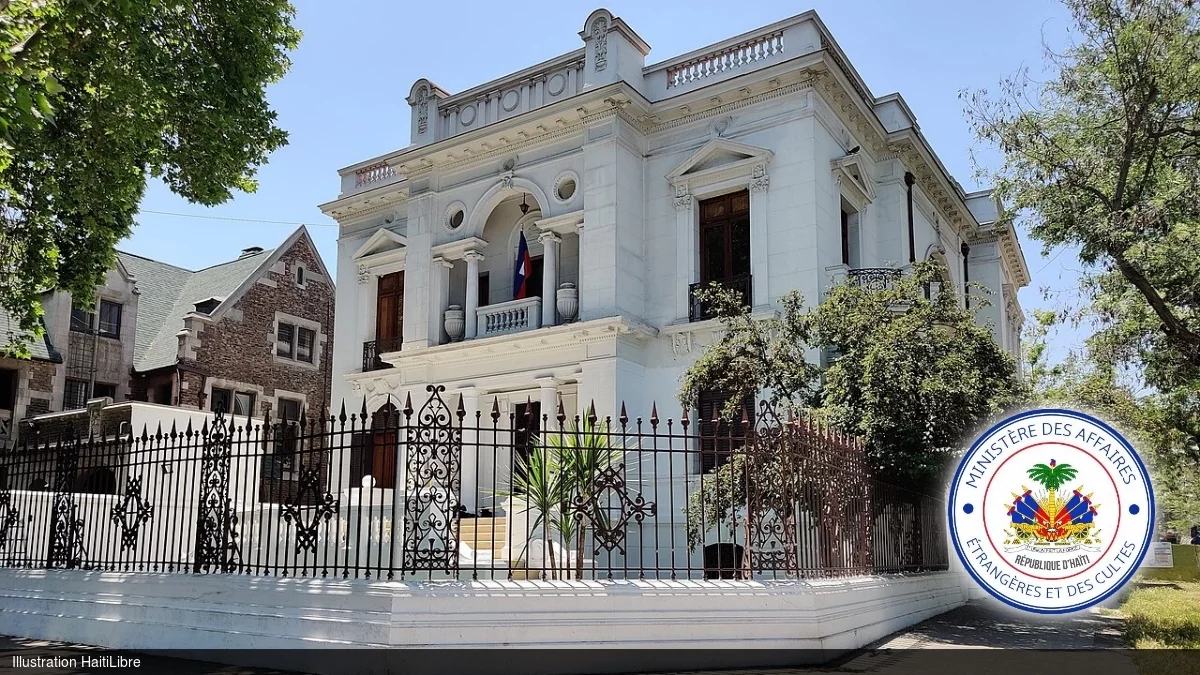
    From May 25 to 28, 2026, the capital city of Tajikistan, Dushanbe, is hosting the 4th High-Level International Conference focused on the 2018-2028 Decade of Action for Water and Sustainable Development. Representing Haiti at the invitation of the conference, Environment Minister Valéry Fils-Aimé is participating in the gathering under instructions from Haiti’s Prime Minister, aligning his delegation’s participation with the Haitian government’s core strategic priorities: integrated water resources management, enhanced climate resilience, and strengthened national environmental governance.

    This landmark global conference convenes senior delegation leaders, national government representatives, leaders of multilateral international institutions, and development partners from across every continent. The core agenda centers on pressing, shared challenges: advancing inclusive water governance, building systemic climate resilience, and embedding water security into long-term sustainable development strategies. For Haiti, the conference represents a critical opportunity to expand technical collaboration and open new cooperation channels for two key national projects: the revitalization of the National Institute of Hydraulic Resources (INARHY) and broader efforts to improve sustainable water resource management across the Caribbean nation.

    On May 26, Minister Fils-Aimé delivered an address to the plenary assembly that outlined major progress Haiti has achieved in its water sector over the 2005-2015 decade. Key milestones he highlighted included the establishment and institutional strengthening of the National Directorate for Drinking Water and Sanitation (DINEPA), which consolidated a national governance framework for water access. He also noted the completion of targeted water infrastructure projects across dozens of rural and urban municipalities, the rollout of community-led hygiene and sanitation public awareness campaigns, and the development of durable technical and financial partnerships with the global community to address long-standing structural vulnerabilities in Haiti’s water system.

    Central to Fils-Aimé’s address was the argument that no climate-vulnerable nation can tackle the interconnected crises of water insecurity and accelerating climate change in isolation. He called for a new era of strengthened global solidarity rooted in equitable knowledge sharing, open technology transfer, and expanded access to climate finance for the world’s most vulnerable countries.

    Outlining Haiti’s specific policy asks, Fils-Aimé emphasized four core priorities: expanded access to climate finance and dedicated support mechanisms for low-income and vulnerable nations; accelerated technology transfer and capacity building in sustainable water management, national hydrological monitoring, and climate resilience infrastructure; cross-border collaborative action to protect critical water ecosystems and transboundary watersheds; and increased international backing for local community initiatives that boost adaptive capacity for marginalized populations facing environmental crises.

    As part of the global 2018-2028 Decade of Action framework, Fils-Aimé also presented Haiti’s upcoming domestic initiatives to strengthen water governance and climate resilience. Key national priorities set out by the minister include the finalization and rollout of the National Water and Sanitation Plan (PHAN), the formal establishment of the revitalized National Institute of Hydraulic Resources (INARHY), the mainstreaming of water security concerns into national climate adaptation policy, and the validation of the National Integrated Water Resources Management Plan (IWRM 2025–2050), which is currently in the final approval stage.

    In closing his remarks, Fils-Aimé highlighted the critical importance of inclusive, community-centered water management projects that center the participation of women, youth, and Indigenous local stakeholders in long-term sustainable water resource governance, echoing the conference’s core focus on leaving no community behind in the global push for water security.