作者: admin

  • US immigrant visa halt leaves Barbadians in limbo, says DLP

    US immigrant visa halt leaves Barbadians in limbo, says DLP

    The Democratic Labour Party (DLP) of Barbados has issued a forceful appeal to the government, demanding immediate intervention regarding the United States’ suspension of immigrant visa processing for Barbadian nationals. The party characterized the development as a severe disruption with profound consequences for citizens’ personal and professional lives.

    Dr. Dawn-Marie Armstrong, the DLP candidate for St Michael North, articulated the party’s position in a formal statement, expressing “profound concern” over what she labeled a sudden and impactful shift in policy. The suspension is reportedly causing significant distress by separating families and indefinitely postponing critical educational and career advancement plans for numerous citizens.

    Drawing attention to the precarious timing, the DLP highlighted that the suspension coincides with ongoing public debates concerning potential asylum-seeker arrangements, a context that has further amplified public anxiety. While carefully avoiding direct accusations, the opposition party insisted the situation warrants the “full and immediate attention of the Government of Barbados.”

    The party’s demands center on governmental transparency and decisive action. Key questions posed to authorities include the specific diplomatic steps being undertaken to engage with US officials, the rationale behind Barbados being singled out for this suspension, and whether resolving this issue is being treated as an utmost national priority.

    Emphasizing the socio-emotional impact, the DLP statement described family reunification and access to international opportunities as fundamental aspirations within Barbadian society. The party urged the government to maintain a clear and consistent channel of communication with the public throughout the diplomatic process, working diligently to restore this “vital pathway for Barbadian citizens.”

  • Marina Jno. Baptiste receives $5000 cheque from sponsors Triple Kay Band

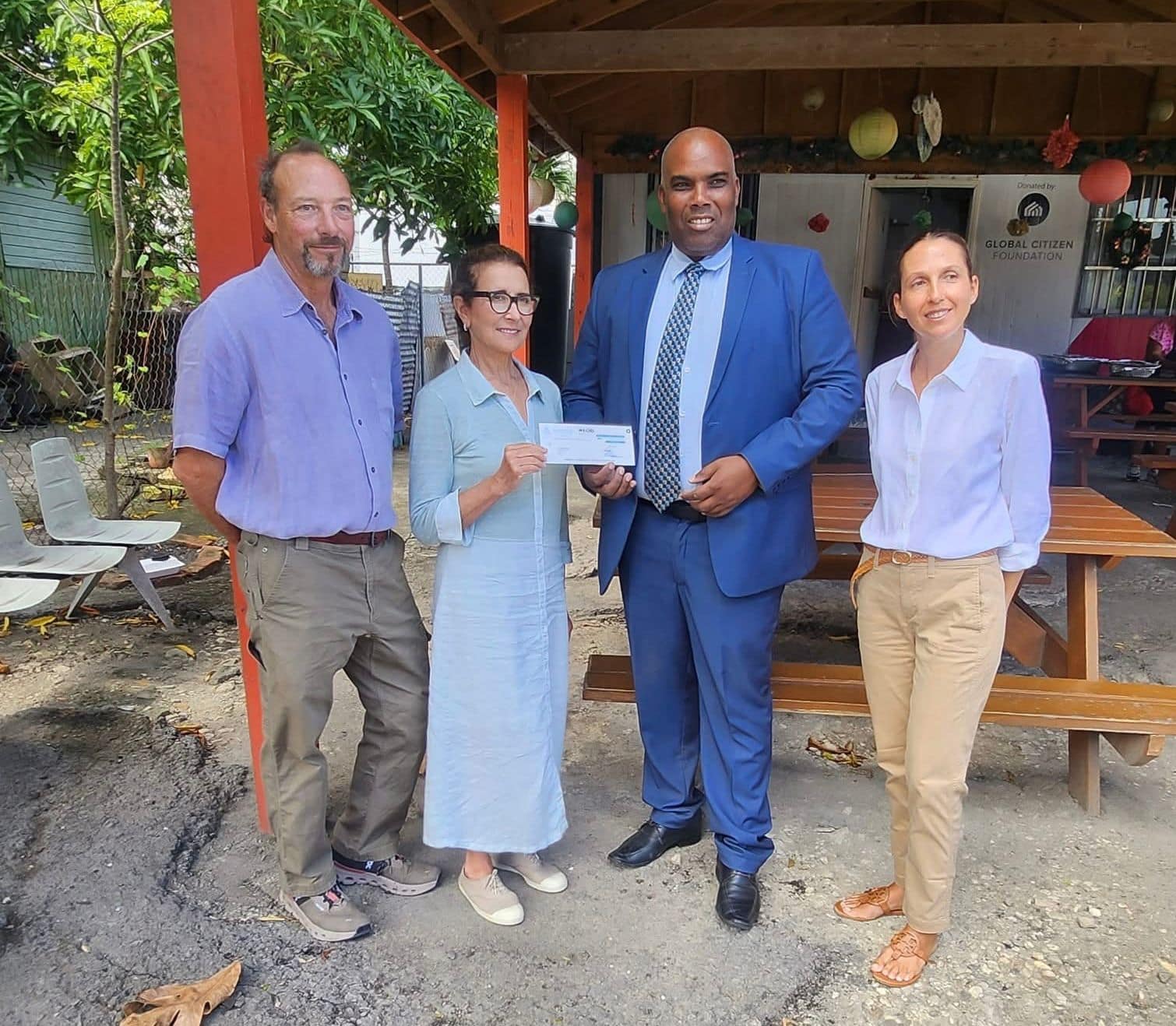
    Marina Jno. Baptiste receives $5000 cheque from sponsors Triple Kay Band

    In a significant departure from their established practices, the Triple Kay International Band has publicly endorsed Marina Jno. Baptiste, a contestant in the upcoming Miss Teen Dominica pageant, with a $5,000 sponsorship. The ceremonial presentation occurred on Thursday, marking a notable shift in the band’s philanthropic approach after years of maintaining private charitable contributions.

    Marina Jno. Baptiste, representing Operation Youth Quake, is one of five finalists competing for the coveted title. The highly anticipated pageant is scheduled for February 8, 2026, at 5:00 PM local time.

    Band member Jeoffrey Joseph explained the organization’s historic reluctance toward public sponsorships: “This is a process we have actually shied away from for many years. In our earlier periods, we engaged in numerous charitable presentations, but eventually decided to keep our contributions private as a collective decision.” Joseph emphasized that Marina’s compelling personal journey motivated the band to break with tradition and publicly demonstrate their support.

    The sponsorship represents more than financial backing, serving as a symbolic gesture of hope. Joseph elaborated: “This is an opportunity to show people facing challenges that there’s always a future and light at the end of the tunnel. We believe Marina has demonstrated remarkable preparation and determination throughout her journey.”

    Regardless of the competition’s outcome, Triple Kay International has committed to celebrating Marina’s achievements on February 8. In a separate development, the National Cooperative Credit Union (NCCU) Limited has officially designated Jno. Baptiste as ‘Miss Young Savers’, further recognizing her community engagement and financial literacy advocacy.

  • Cuban authorities paid tribute to 32 soldiers killed in Venezuela

    Cuban authorities paid tribute to 32 soldiers killed in Venezuela

    In a solemn ceremony at the Ministry of the Revolutionary Armed Forces (FAR) headquarters, Cuban leadership paid homage to 32 military personnel who perished during a recent US military operation. The incident occurred on January 3rd when American forces conducted an operation targeting Venezuelan President Nicolás Maduro and his wife Cilia Flores for arrest.

    Raúl Castro, alongside President Miguel Díaz-Canel, led the memorial service with participation from Interior Minister Lázaro Álvarez Casas and FAR Minister Álvaro López Miera. The ceremony marked the return of the soldiers’ remains to Havana, where citizens gathered to pay their respects at the FAR compound.

    The Cuban government announced posthumous military promotions for all 32 casualties, recognizing their exceptional heroism and sacrifice. The official statement described these honors as “a fitting and well-deserved tribute to their heroism.”

    Simultaneous public demonstrations unfolded across the nation, with Havana residents convening at the Anti-Imperialist Tribune facing the US diplomatic mission. This gathering culminated in a “March of the Combatant People” expressing national solidarity and homage. Parallel ceremonies occurred in all provincial capitals, with the fallen soldiers scheduled for burial in pantheons dedicated to those who perished in defense of the nation.

  • Speeding driver on cell phone jailed for killing teen cyclist

    Speeding driver on cell phone jailed for killing teen cyclist

    In a landmark ruling at the Kingstown High Court, Justice Rickie Burnett has sentenced 41-year-old Kashaka Holder to 19 months imprisonment for causing the death of 13-year-old cyclist Dezy Lavia through dangerous driving. The fatal incident occurred on May 14, 2023, beneath the Orange Hill bridge, where Holder—simultaneously operating his vehicle and using a mobile phone—struck the teenage victim.

    Holder, a construction worker and former taxi driver from Byera, pleaded guilty to charges of dangerous driving resulting in death. Court proceedings revealed that he was driving at excessive speed on the wrong side of the road when his vehicle, HV-112, collided with Lavia’s orange BMX bicycle around 6 p.m. The impact inflicted catastrophic injuries that proved fatal at Milton Cato Memorial Hospital later that evening.

    An eyewitness testified to observing Holder both speeding and engaged with his mobile phone immediately before the collision. Police investigations confirmed the absence of lighting on the bicycles and noted the particularly dark conditions of the area where the tragedy unfolded.

    Despite Holder’s emotional appeals to avoid incarceration—including reports of his profound grief and sleepless nights—Justice Burnett emphasized the irreversible void left in the Lavia family. The court also imposed a two-year driving prohibition following Holder’s prison release, noting his already-suspended license at the time of the incident.

    The sentencing process incorporated both aggravating factors (including Holder’s phone use and wrong-side driving) and mitigating considerations (his guilty plea and cooperation with authorities). From a starting point of 2 years and 5 months (35% of the maximum 7-year sentence), the final 19-month term reflected these balanced deliberations.

    Dezroy Lavia, the victim’s father, expressed forgiveness toward Holder while criticizing systemic judicial delays that prolonged the family’s anguish. He noted particular emotional struggles during family-oriented occasions like Mother’s Day and acknowledged temptations toward vigilante justice during the extended pretrial period.

    Legal representation included Grant Connell for the defense and Crown Counsel Devon Bute prosecuting the case.

  • UWP seeks clarity on govt deportation MOU with US

    UWP seeks clarity on govt deportation MOU with US

    Political tensions have escalated in Saint Lucia as the opposition United Workers Party (UWP) has launched a rigorous challenge against the government’s recently signed memorandum of understanding (MOU) with the United States concerning potential deportation of third-country nationals to the Caribbean nation.

    Prime Minister Philip J. Pierre defended the non-binding agreement during a Sunday address, emphasizing that the MOU creates no legal obligations for Saint Lucia. The Prime Minister outlined stringent safeguards, including provisions that would bar entry to individuals with criminal records and ensure local authorities receive comprehensive health information about any potential deportees before consideration.

    However, the UWP has issued a formal statement demanding extensive clarification on multiple aspects of the agreement. The opposition party questioned the necessity of Cabinet approval and a prime ministerial address for an agreement described as non-binding. They raised substantive concerns about the definition of ‘third-country nationals,’ the timeline of negotiations with US officials, and whether these discussions preceded the December 2025 general election.

    The opposition’s inquiry extends to practical implementation matters, including background screening protocols, information sharing mechanisms with local security agencies, projected financial burdens on Saint Lucia, coordination procedures, agreement duration, and exit conditions should the arrangement prove contrary to national interests.

    While expressing support for strengthened international cooperation, the UWP criticized the government’s disclosure approach and the absence of public consultation. The party specifically highlighted concerns about potential security risks, unclear legal status for non-national deportees, and insufficient details regarding the economic implications of hosting deportees.

    Prime Minister Pierre, during a Monday Cabinet press briefing, stated that full MOU details would not be publicly disclosed, citing standard international practice. The controversy emerges amid broader regional discussions about migration policies and the diplomatic dynamics between Caribbean nations and larger global powers.

  • President Simons: economische stabiliteit voorwaarde voor rechtvaardige welvaartsverdeling

    President Simons: economische stabiliteit voorwaarde voor rechtvaardige welvaartsverdeling

    In a pivotal address to the Suriname Economists Association (VES), President Jennifer Simons unveiled the foundational framework for the nation’s economic and governance strategy extending to 2030. Speaking at the New Year’s reception, the president articulated a vision moving beyond macroeconomic stability as an end goal, positioning it instead as the essential foundation for sustainable growth and equitable wealth distribution.

    Simons characterized Suriname’s current juncture as a decisive crossroads, emphasizing that with the IMF program concluded and the 2025 political transition completed, the nation must now assume full responsibility for coherent fiscal, monetary, and structural policies. “We commenced our term amidst scarcity, a fragile economic recovery, and limited public trust,” Simons noted. “This reality demands not grand rhetoric but clear direction, disciplined execution, and institutional strength.”

    The administration declared 2026 as both a new budgetary cycle and the launch of a comprehensive Multi-Year Development Plan (MOP) targeting 2030 objectives. This strategic framework will integrate policy priorities, investment decisions, and implementation agreements within a macro-fiscal structure featuring scenario analyses for growth trajectories, inflation control, exchange rate management, and future petroleum revenues.

    Central to the government’s approach is the “one government, one course” principle, organized around five national priorities: enhancing revenue generation capabilities, strengthening education and healthcare systems, improving public security, revitalizing the housing sector, and ensuring policy coherence and execution. The economic direction rests on three fundamental pillars: macroeconomic stability, economic diversification, and investments in human capital and institutions.

    President Simons issued stern warnings regarding inflation risks and budgetary deviations, highlighting Suriname’s import dependency which rapidly transmits exchange rate pressures to consumer prices, thereby eroding purchasing power and undermining business and household confidence. Fiscal policy must consistently support monetary measures, with no room for broad wage adjustments that could fuel inflationary spirals. Protection mechanisms, she stressed, should specifically target low-income households and vulnerable populations.

    The address extensively addressed foreign exchange challenges, emphasizing that currency earnings must actively circulate within the domestic economy rather than accumulate stagnant reserves. Economic leakages including gold smuggling, underreporting, and informal exports exacerbate exchange rate pressures and constrain budgetary flexibility. The government is collaborating with the Central Bank to establish a stable and transparent foreign exchange market, supported by analytical work from a dedicated currency commission.

    Regarding public finances, while government revenues reached approximately SRD 45.6 billion in 2025, expenditures grew more significantly due to election costs, salary adjustments, and subsidies. For 2026 onward, the administration aims to implement expenditure controls without obstructing productive investments. Education and healthcare budgets will receive explicit protection, while inefficient programs face phase-out and state-owned enterprises will undergo enhanced oversight.

    Looking toward anticipated oil revenues, Simons cautioned that additional resources cannot justify unfettered spending. The savings and stabilization fund requires strengthened legal and operational frameworks with transparent rules for deposits, withdrawals, and public accountability. International experience demonstrates that nations typically fail not from resource scarcity but from weak management and transparency deficits, she observed.

    Concluding her address, President Simons invited VES and professional associations to actively contribute to policy formulation and public knowledge sharing. Effective policy demands not only technical excellence but also societal understanding and support, she remarked, adding that “economic choices are fundamentally moral choices—they determine whether families can prosper and whether youth can envision futures.”

  • ‘Bricks and mortar infrastructure … second place to people’s dev’t’ – Leacock

    ‘Bricks and mortar infrastructure … second place to people’s dev’t’ – Leacock

    In his first major policy address since taking office, St. Vincent and the Grenadines’ Deputy Prime Minister St. Clair Leacock has articulated the New Democratic Party’s governing philosophy, placing human development above physical infrastructure projects. Speaking at a ceremonial donation event where Taiwan provided 198 tons of rice and humanitarian supplies to the Caribbean nation, Leacock emphasized that his administration would focus on elevating citizens rather than merely constructing buildings.

    The Deputy Prime Minister, who also serves as Minister of National Security, Disaster Management and Immigration, characterized the relationship with Taiwan as more than just receiving handouts, describing it as “a hand up” that helps the nation progress toward first-world status. He stressed that intangible human factors would take precedence over tangible infrastructure projects in the government’s priorities.

    Leacock outlined several key areas of focus, including raising basic wages, improving workplace conditions, enhancing health and safety standards, and maintaining education as a dominant pursuit. Perhaps most significantly, he emphasized the government’s commitment to fostering self-belief, integrity, and a sense of worth among all citizens, describing this as particularly crucial at this juncture in the nation’s political history.

    The administration plans to create what Leacock termed “a society of second chance and opportunity,” with government assistance consistently available to those in need. This people-centric approach, as characterized by Social Welfare Minister Shevern John, represents the core philosophy of Prime Minister Dr. Godwin Friday’s administration.

    Addressing concerns about the pace of change, Leacock acknowledged some public impatience given the widespread deprivation that has accumulated during the NDP’s 25 years in opposition. However, he assured citizens that the government would methodically address needs while maintaining its commitment to Taiwan relations, which have endured through previous NDP governance periods and will continue under the current administration.

  • Bulgaria vs. Saint Kitts and Nevis in March 2026

    Bulgaria vs. Saint Kitts and Nevis in March 2026

    The Bulgarian national football team is preparing for an extraordinary international encounter as part of the upcoming FIFA Series friendly tournament in March 2026. According to exclusive reports from Sportal, the Bulgarian Lions will travel to Southeast Asia for a unique football showcase that promises global diversity and competitive excitement.

    This marks Bulgaria’s second consecutive participation in the FIFA Series initiative, following their previous engagement in Azerbaijan. The 2026 edition will see the team venture to Indonesia, where they will face an intriguing lineup of international opponents representing four distinct continental confederations.

    Tournament hosts Indonesia (AFC), alongside CONCACAF representatives Saint Kitts and Nevis and CONMEBOL’s Peru, complete the four-team competition group. This configuration creates a rare football spectacle featuring teams from Europe, North/Central America, South America, and Asia competing on neutral territory.

    Current FIFA rankings reveal significant disparities among participants: Peru leads as the highest-ranked team at position 51, followed by Bulgaria, while Indonesia occupies 122nd place. Saint Kitts and Nevis, making their tournament debut, enter as the lowest-ranked squad at 153rd globally.

    The tournament revives historical memories for Bulgarian football enthusiasts, particularly regarding the team’s encounter with Peru during the 1970 World Cup in Mexico. In that memorable match, Bulgaria squandered a 2-0 advantage to ultimately lose 3-2, missing a crucial opportunity to secure their first-ever victory at football’s premier global event.

    This international gathering represents more than just friendly matches—it offers Bulgaria valuable preparation against diverse playing styles while promoting global football development through FIFA’s innovative cross-confederation competition format.

  • Caribbean politics: Visa restrictions and the cost of Caribbean disunity

    Caribbean politics: Visa restrictions and the cost of Caribbean disunity

    A recent decision by the United States to implement partial visa restrictions and pause certain immigrant visa issuances to multiple nations, including Caribbean states Antigua and Barbuda and Dominica, has revealed significant fragmentation within the Caribbean Community (CARICOM). Rather than presenting a unified front, regional responses degenerated into domestic political point-scoring and silence, exposing a critical weakness in collective diplomacy.

    The US action stems from two primary domestic concerns, not diplomatic retaliation. First, data indicating that a substantial percentage of immigrant households from these nations eventually utilize public assistance programs aligns with the Trump administration’s policy emphasizing immigrant financial self-sufficiency. Second, the issue of visa overstayers illegally influencing congressional representation and federal funding allocations is a potent political matter within a polarized America.

    Statistics underscore the policy’s actuarial basis. Among CARICOM nations, the percentage of immigrant households receiving public assistance is notably high: Dominica (45.1%), Antigua and Barbuda (41.9%), St. Lucia (41.7%), Guyana (41.7%), Belize (41.8%), Grenada (40.7%), St. Kitts and Nevis (39.1%), St. Vincent and the Grenadines (38.1%), Trinidad and Tobago (37.1%), Jamaica (36.7%), The Bahamas (34.0%), and Barbados (33.9%).

    The specific restriction on B-1/B-2 visitor visas for Antigua and Barbuda and Dominica relates to concerns over visa overstaying, unlawful residence, and unpaid use of public services, particularly healthcare. This intersects with Citizenship by Investment (CBI) programs, where US authorities seek enhanced biometric verification to mitigate identity concealment risks, not to delegitimize the programs themselves.

    The sovereign right of any nation to control its borders is undeniable, a principle every CARICOM state exercises itself. The core failure lies in the Caribbean’s reaction: a lack of coordinated position, factual clarification, or collective insistence on distinguishing lawful travelers from illegal overstayers. This fragmentation resulted in 11 of 14 independent CARICOM states ultimately being affected, demonstrating that unilateralism offers no protection.

    The path forward requires abandoning outrage and internal recrimination. CARICOM must develop a common framework for US engagement, separating individual public charge assessments from national reputation and addressing biometric concerns through collective, technically sound solutions. Cooperation should be transparent, voluntary, and capped. For small states, sovereignty is defended not by silence or opportunism, but by coherence, discipline, and the courage to speak with one unified voice.

  • Nieuwe raden van toezicht bij SRS en STVS

    Nieuwe raden van toezicht bij SRS en STVS

    Suriname has undertaken significant reforms in its public broadcasting sector with the installation of new supervisory boards for both Radio Suriname Foundation (SRS) and Suriname Television Foundation (STVS). Vice President Gregory Rusland presided over the installations, emphasizing the critical role these oversight bodies will play in strengthening the nation’s media landscape.

    During the installation ceremonies, Vice President Rusland confirmed that his office maintains direct administrative and financial responsibility for both broadcast entities. He committed to advocating for enhanced budgetary allocations for STVS during upcoming budget deliberations, recognizing the financial challenges facing the state broadcaster.

    The newly constituted SRS board, chaired by Kenneth Moerlie, faces the formidable challenge of restoring the broadcaster’s former prominence. Rusland urged the council to develop innovative strategies to improve competitive positioning while fulfilling public service mandates. SRS Director Earnie Eenig highlighted the board’s crucial role in upcoming challenges, particularly regarding coverage of the forthcoming World Cup football tournament. “It would be peculiar for Suriname to participate in the World Cup while we fail to broadcast it,” Eenig remarked.

    The complete SRS supervisory board comprises Moerlie alongside Roberto Banel, Raoul Swedo, Harvey Liefde, Estacio Nasa, Audrey Tjung Angie, and Newton Ali.

    At STVS, the new board chaired by Shirley Lackin will prioritize financial stabilization of the state television network. Board member Glenn Truideman raised concerns about personnel management complexities arising from varying administrative authorities, which occasionally create operational friction.

    Vice President Rusland proposed implementing project-based working arrangements to provide clearer contract duration frameworks. The STVS board includes Lackin, Truideman, Stanley Sidoel, Kenrich Cairo, and Michel Felisi. STVS Director Raoul Abisoina expressed appreciation for the government’s cooperative relationship and anticipated productive collaboration with the new oversight body.