作者: admin

  • Blue Marlins win sixth straight National Swim Championships

    Blue Marlins win sixth straight National Swim Championships

    St. Vincent and the Grenadines’ dominant aquatic powerhouse, the Blue Marlins Swim Club, has extended its unbroken winning streak to six years after a commanding performance at the 2024 National Swim Championships, held from August 27 to 30. The team secured a decisive overall victory with a staggering total score of 1,345 points, outperforming all competing local clubs to retain the national crown.

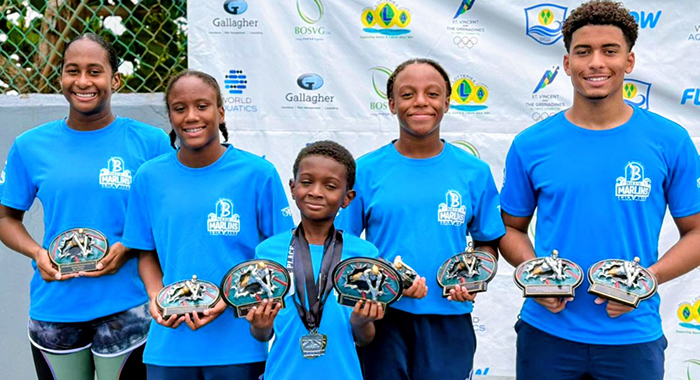
    Across the four-day competition, Blue Marlins swimmers claimed top honors in half of the 10 age-group individual championship divisions, and took home three of the six available sprint challenge awards. Multiple standout athletes delivered double award-winning performances, headlined by Hazen Da Briel, who not only won the boys 15-and-over individual championship and the boys 13-and-over sprint challenge, but also etched his name into the national record books. Da Briel broke three long-standing national records in the male 15-16 age category: he clocked 1 minute 59.95 seconds in the 200m freestyle, 4 minutes 15.96 seconds in the 400m freestyle, and 26.01 seconds in the 50m butterfly.

    Other individual champions from the club included Jayce Thomas, who earned both the boys 8-and-under individual title and the age-group sprint challenge crown. Skylar Byron claimed two awards as well: the girls 11-12 individual championship and the girls 9-12 sprint challenge. Rounding out Blue Marlins’ individual title winners were Belle Adams, who took gold in the girls 13-14 division, and Tayeah St. Hilaire, who secured the girls 15-and-over individual championship.

    The club’s depth of talent was on full display beyond the top podium spots. In the boys 8-and-under division, Blue Marlins claimed the entire podium, with Thomas in first, Zane Da Briel in second, and Rui Gordon in third. Additional top-three finishes across divisions included Raya Adams (second, girls 8-and-under), Saige Jobe (second, girls 9-10), Zoey May (third, girls 11-12), Saj Caesar (second, boys 11-12) and Taj Henry (third, boys 11-12).

    Fielding a roster of just 27 swimmers at the national meet, Blue Marlins amassed an impressive total of 148 medals: 40 gold, 50 silver, and 53 bronze, a testament to the team’s consistent performance across all event and age categories.

    Speaking after the competition, head coach Tamarah St. Hilaire expressed overwhelming excitement about the team’s historic sixth straight win. She emphasized that the victory came as the direct result of months of dedicated training, even through the summer break when many young athletes take time off. St. Hilaire shared that she could not be prouder of her swimmers’ full effort across the championships, noting that the team delivered beyond her expectations.

    She also extended congratulations to all other competing local clubs, praising them for pushing Blue Marlins to higher standards with strong, competitive performances. Looking ahead, St. Hilaire noted that the depth of talent on display across the meet confirms that competitive swimming has a strong and growing future in St. Vincent and the Grenadines. The team was prepared for the national championships with support from assistant coaches Alyssa Davis, Henrietha Davis and Rickydene Alexander.
  • SVG Sailing delivers unforgettable Youth Championships

    SVG Sailing delivers unforgettable Youth Championships

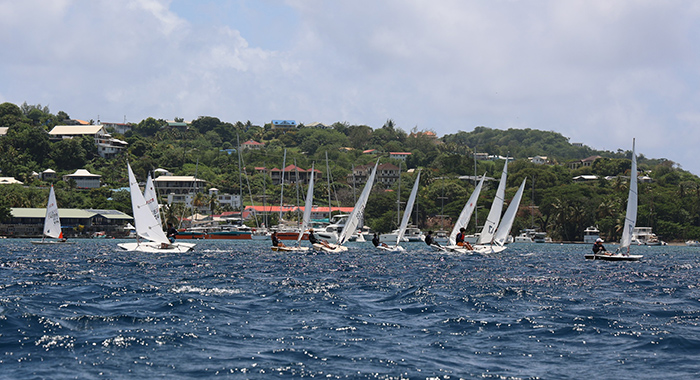
    Calliaqua Bay played host to a landmark event for Caribbean youth sailing this week, as the Saint Vincent and the Grenadines Sailing Association (SVGSA) successfully delivered the 2026 KGroup National Youth Championships. Bringing together the country’s most promising young sailing talent across three competitive classes, the regatta delivered seven days of high-stakes racing that kept audiences and competitors enthralled from the first start to the final finish line. Held under near-ideal weather and sea conditions, the event turned into a showcase of emerging skill and mental toughness for the nation’s next generation of competitive sailors.Competitors raced across three divisions tailored to different age and experience levels: the Optimist class for younger entry-level sailors, and the ILCA 4 and ILCA 6 classes for more experienced teen competitors. What made this year’s championship stand out from previous editions was how tightly contested every division was, with final results decided by mere seconds and narrow points margins that meant no winner was confirmed until the last boat crossed the line in the final race. No competitor held a large enough lead to secure victory early, turning the championship into a test of both physical stamina and mental resilience across all seven races.In the Optimist class, 12-year-old Nigel Tash pulled off a stunning victory by holding his composure through the tense final race. Tash’s consistent, precise boat handling across every leg of the course let him edge out a field of more experienced rivals to claim the top spot on the podium. For the ILCA 4 division, 14-year-old Jordi Lewis delivered a masterclass in tactical racing, climbing from a mid-fleet standing in the early rounds of the regatta to overtake the competition and seal the national championship title. The most dramatic finish came in the ILCA 6 class, where 15-year-old Kai Marks Dasent crossed the finish line of the deciding final race just seconds ahead of his closest competitor to lock in his win. Beyond the results, the close tactical duels and close finishes throughout the regatta created an electric, energetic atmosphere that highlighted the depth of young sailing talent developing across Saint Vincent and the Grenadines.A key factor that elevated this year’s championship was the pre-event support from World Sailing, which held an official Judge Seminar just days before the regatta got underway. Led by internationally accredited trainer Chris Watts, the two-day intensive course provided participating sailors and local event officials with advanced, up-to-date training on the Racing Rules of Sailing (RRS) and formal protest procedures. The training not only ensured that the entire championship was run with full fairness and transparency aligned with international standards, it also gave young competitors the confidence to focus on their racing rather than worrying about rule uncertainties.Interviewed after claiming their titles, all three champions highlighted how the pre-event seminar boosted their performance. “Winning the Optimist class feels amazing. The races were so close, and the seminar helped me stay calm and focused when it mattered most,” Tash said. Lewis echoed that sentiment, noting: “The competition was tough, but I enjoyed every moment. Understanding the protest process gave me confidence to race fairly and push harder.” For Dasent, who clinched his win in the final seconds of the regatta, the training opened new doors for his future sailing career: “It came down to the last race, and I’m proud to come out on top. The seminar showed us how international racing works, and now I feel ready to take my sailing further.”SVGSA President Jenny Trumble praised the event and the preparation that made it a success, emphasizing the long-term impact of the combined championship and training program. “The National Championships were a thrilling display of skill and determination,” Trumble said. “With the support of the World Sailing Judge Seminar, our sailors and officials are now better prepared for the challenges of international competition,” she added, signaling the organization’s goal to support more young Vincentian sailors to compete on the global stage in coming years.

  • Warme en overwegend droge dag verwacht; El Niño versterkt

    Warme en overwegend droge dag verwacht; El Niño versterkt

    As Suriname continues to grapple with an extended dry spell, new weather forecasts point to another stretch of unseasonably warm, largely rain-free conditions for the country in the coming days. Meteorological projections put maximum daily temperatures between 33 and 34 degrees Celsius, while overnight lows will hover between 24 and 26 degrees Celsius. Global weather models predict a mix of abundant sunshine and scattered cloud cover, with only moderate wind speeds expected across the region. This warm, arid pattern aligns with the extended dry period the nation has been experiencing this season.

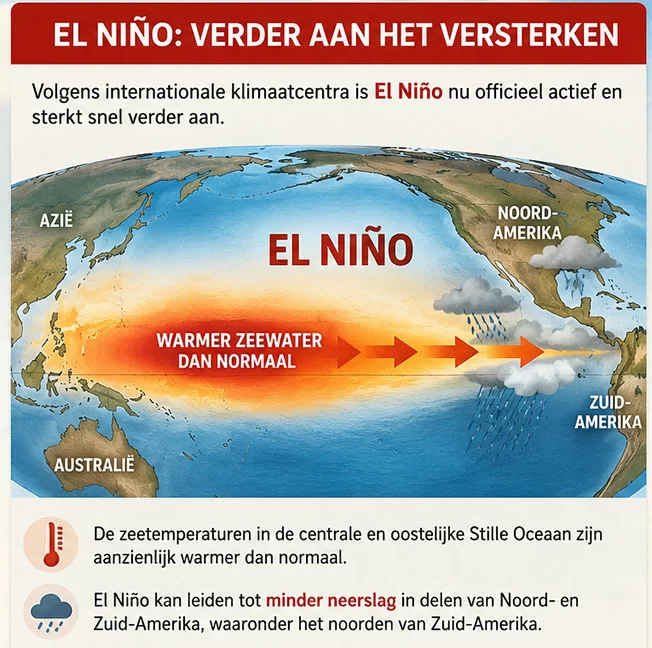
    Beyond immediate local forecasts, climate researchers confirm that the current El Niño event is strengthening at a rapid pace, with major climate institutions warning it will remain strong through the end of 2026 and persist into early 2027. The U.S. National Oceanic and Atmospheric Administration (NOAA) has officially issued an El Niño Advisory, following consistent data showing the climate pattern has gained intensity in recent weeks. The International Research Institute for Climate and Society also notes the event is on track to become an exceptionally strong El Niño.

    Ocean temperature data underscores this rapid strengthening: in the key Niño 3.4 monitoring region of the central Pacific, the temperature anomaly rose steadily through July, reaching a weekly average anomaly of +2.7 degrees Celsius by mid-August. Nearly all climate models surveyed agree the event will hold its strength for the remainder of this year and extend into the first quarter of 2027.

    This strengthening trend carries notable implications for northern South America, including Suriname. Historically, El Niño events correlate with significant shifts in rainfall patterns across tropical regions of the globe. NOAA confirms that reduced precipitation across northern South America is one of the most well-documented potential impacts of a strong El Niño. However, climate scientists emphasize that the El Niño pattern does not allow for precise predictions of daily or even monthly rainfall totals for specific locations like Suriname, only broad shifts in overall precipitation trends.

  • SCO veroordeelt aanvallen en sancties tegen Iran

    SCO veroordeelt aanvallen en sancties tegen Iran

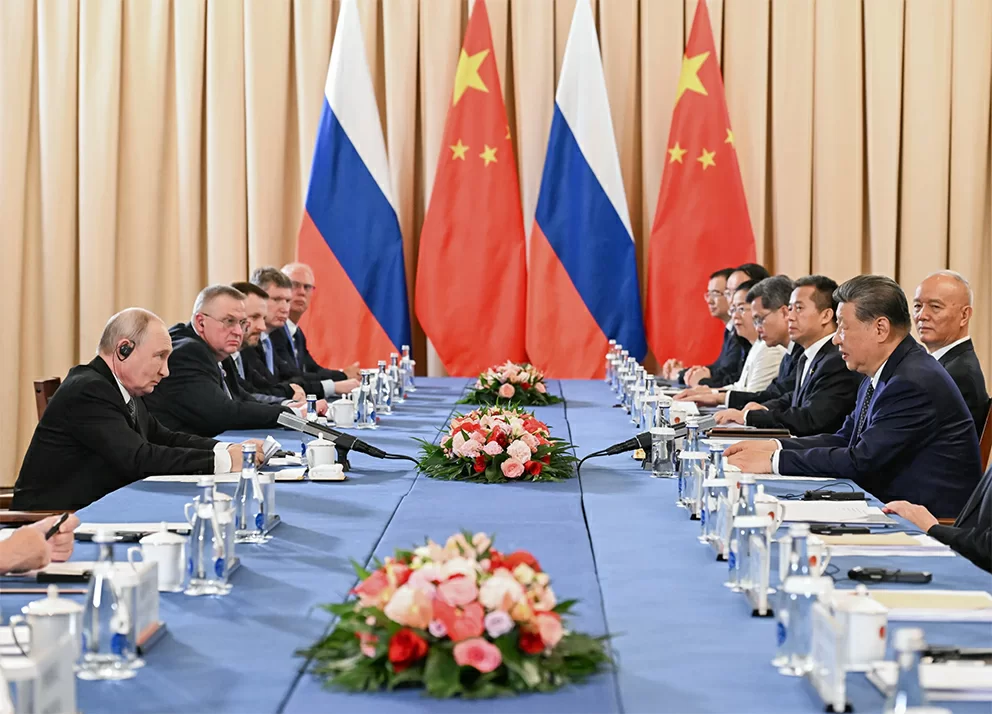
    In a two-day summit hosted in Bishkek, the capital of Kyrgyzstan, leaders of the Shanghai Cooperation Organisation (SCO) have united to sign a landmark joint declaration that takes a firm stance on escalating geopolitical tensions in the Middle East and challenges to the global multilateral order. Held on September 2026, the gathering brought together heads of state and government from all SCO member states, including Chinese President Xi Jinping, Russian President Vladimir Putin, Indian Prime Minister Narendra Modi, and Pakistani Prime Minister Shehbaz Sharif, marking a key display of coordination among the bloc that represents nearly half of the global population.

    Founded in 1996, the SCO has expanded to 10 full members: Russia, China, India, Pakistan, Iran, Belarus, Uzbekistan, Kazakhstan, Tajikistan, and Kyrgyzstan. Collectively, the bloc accounts for 43% of the world’s total population and 23% of global economic output, giving its joint positions significant weight in global affairs.

    The centerpiece of the 2026 Bishkek Declaration is an explicit condemnation of military attacks carried out by the United States and Israel on Iranian territory. The declaration stresses that these strikes have caused mass civilian casualties and widespread economic damage, directly violating core principles of international law and the United Nations Charter, while creating severe, immediate risks to global peace, security, and regional stability. Member states also extended sincere condolences to the government and people of Iran following the passing of Supreme Leader Seyyed Ali Khamenei, and expressed sympathy to the families of all attack victims. The bloc reaffirmed its unwavering support for Iran’s sovereignty and territorial integrity, and called for all disputes to be resolved exclusively through peaceful political and diplomatic channels.

    On the long-running Israeli-Palestinian conflict, the declaration underlined that ongoing Israeli attacks on Palestinian territory are eroding stability across West Asia. It emphasized that a comprehensive, just two-state solution to the Palestinian question remains the only viable path to lasting peace and stability across the entire Middle East region.

    A second core focus of the declaration is opposition to unilateral coercive measures imposed by Western powers, widely understood to refer to sweeping sanctions targeting Iran and Russia. While the text does not name specific sanctioning countries, it makes clear that such measures contravene rules set by the UN and World Trade Organization, and generate broad negative spillover effects that destabilize the entire global economy.

    On Iran’s nuclear program, the SCO reaffirmed its full support for Iran’s legitimate rights as a signatory to the Treaty on the Non-Proliferation of Nuclear Weapons (NPT), including the right to develop a peaceful nuclear program for civilian energy and research purposes. Despite long-standing unsubstantiated accusations from the United States claiming Iran pursues covert nuclear weapons development, Iran has consistently maintained its program is entirely for peaceful ends. The declaration stresses that any restrictions on these legally recognized rights of NPT members constitute a violation of international law.

    Against a backdrop of escalating conflict disrupting key global trade chokepoints, particularly the Strait of Hormuz, which has thrown global supply chains, energy markets, and financial systems into chaos, the SCO placed heavy emphasis on deepening intra-bloc economic and energy cooperation. The declaration commits members to building an open, transparent, fair, inclusive, and non-discriminatory multilateral trading system that prioritizes special accommodations for developing economies. The bloc also formally announced it will implement the SCO Economic Development Strategy through 2030, a framework designed to deepen cross-border economic integration and strengthen institutional financial dialogue between members. For energy cooperation, leaders agreed to expand mutually beneficial, inclusive collaboration and adopt the SCO Energy Cooperation Strategy through 2030 to coordinate shared energy security and development goals.

    As is common in multilateral SCO gatherings, the summit exposed long-standing tensions between two key members, India and Pakistan, on counter-terrorism issues. Indian Prime Minister Modi framed terrorism as a “grave existential challenge to humanity” and called for the complete dismantling of global terrorist ecosystems, rejecting ambiguity and double standards in counter-terrorism efforts. His remarks were widely interpreted by observers as an implicit rebuke of Pakistan, which India has long accused of supporting armed militant groups operating in Indian territory. In response, Pakistani Prime Minister Sharif countered that Pakistan is itself a major victim of cross-border terrorism, condemned all forms of terrorist activity regardless of motivation, and levelled reciprocal accusations that India supports anti-Pakistan militant groups.

    Despite this bilateral friction, the Bishkek Declaration reaffirmed the SCO’s collective commitment to eradicating terrorism, separatism, and extremism in all their forms. It explicitly rejects the use of double standards in counter-terrorism policy, and calls on the broader international community to step up coordinated action to disrupt transnational terrorist movements.

  • CDB launches Caribbean evaluation space to strengthen regional decision-making

    CDB launches Caribbean evaluation space to strengthen regional decision-making

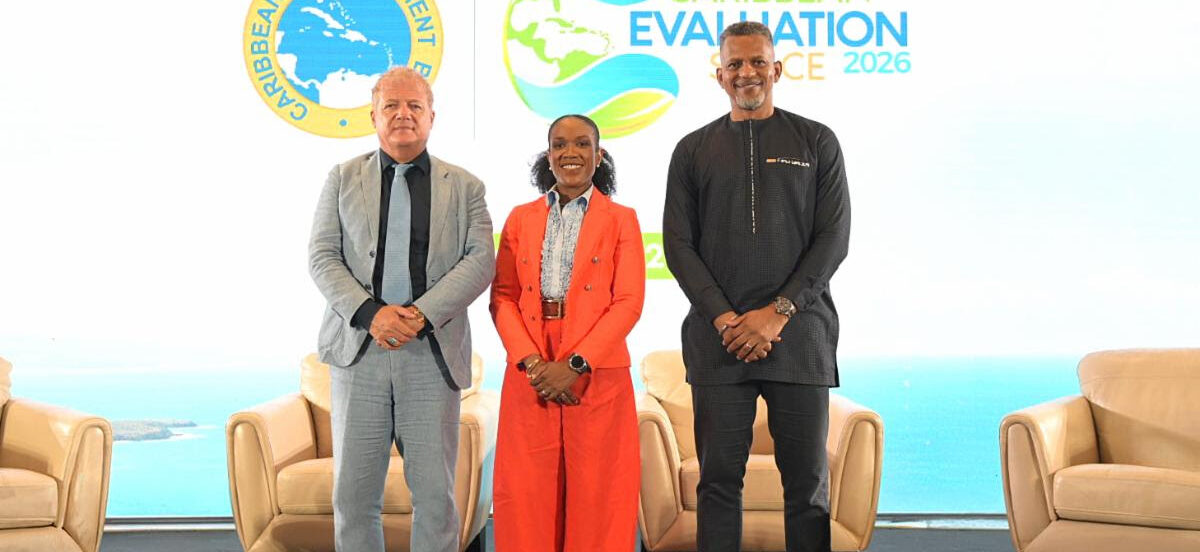
    Against a backdrop of pressing regional challenges ranging from accelerating climate impacts to strained public finances and rapid digital transition, the Caribbean Development Bank (CDB) has inaugurated a landmark first-of-its-kind regional platform, the Caribbean Evaluation Space (CEvalSpace), to transform evidence-based governance across the Caribbean. The three-day inaugural event, which kicked off on September 1 and runs through September 3 at the Wyndham Grand Barbados, brings together more than 150 stakeholders from over 15 Caribbean nations, marking a major step forward in the CDB’s 10-year 2026–2035 Strategic Plan focused on institutional resilience and development impact.

    The opening ceremony drew high-level participation from regional and development leaders, including Barbados’ Minister of Economic Affairs and Planning Marsha Caddle, CDB President Daniel M. Best, and Head of CDB’s Office of Independent Evaluation Dr. Roberto La Rovere. Unlike conventional one-off conferences, CEvalSpace is designed as a permanent collaborative hub that centers Caribbean-led priorities, local knowledge systems, and cross-sector learning. The initiative is delivered in partnership with the Inter-American Development Bank’s Office of Evaluation and Oversight, Caribbean Evaluators International, the University of the West Indies, and CLEAR-LAC, with all public plenary sessions streamed globally via CDB’s official website, LinkedIn, and YouTube to expand access beyond in-person attendees.

    Attendees span a diverse cross-section of regional actors, from senior government policymakers and public sector leaders to development practitioners, academic researchers, private sector and civil society representatives, independent evaluators, and early-career emerging professionals. Over the course of the event, 45 expert speakers will lead 20 targeted sessions exploring critical themes that shape Caribbean development, including democratic governance, public accountability, public sector institutional performance, innovative evaluation practices, the role of artificial intelligence and data in policy design, and measuring long-term development outcomes.

    In his opening address, CDB President Daniel M. Best framed evaluation as a core strategic function rather than a post-project technical check, a shift that comes as Caribbean nations navigate overlapping systemic challenges. “Today, evaluation is no longer a technical exercise conducted at the end of a project. It has become a strategic function of leadership and learning institutions,” Best stated. He emphasized that independent evaluation is foundational to holding public institutions accountable for the public resources they manage and the development outcomes they guarantee to regional communities.

    Against a context of constant economic and social change, Best argued that traditional approaches to decision-making are no longer sufficient. “In such an environment, intuition alone is not enough. Experience alone is not enough. Good intentions are certainly not enough. We need evidence that helps us invest wisely, learn continuously, and adapt quickly,” he explained. “Strong organisations are not those that never make mistakes. They are those that learn the fastest.”

    Dr. Roberto La Rovere expanded on the long-term vision for the initiative, noting that CEvalSpace is far more than a three-day gathering. The platform aims to address longstanding gaps in regional evaluation capacity by creating a sustained space for knowledge exchange and capacity building that elevates Caribbean perspectives. “What we are building is not limited to these few days together. We are creating a space where policymakers, practitioners, researchers, and emerging leaders can learn from one another, strengthen a culture of evaluation and evidence, translate knowledge into action,” La Rovere said. “The Caribbean needs leaders who can ask hard questions, generate the evidence, and use it to strengthen accountability, improve performance, and build stronger institutions.”

    Regional stakeholders have framed the launch of CEvalSpace as a critical investment in the Caribbean’s ability to tackle its most intractable challenges, from climate adaptation to inclusive economic growth, by building a culture of continuous learning and transparent governance across public and private institutions.

  • Team of Union Island players win Bequia basketball tourney

    Team of Union Island players win Bequia basketball tourney

    The 24th edition of the Annual Bequia Basketball Tournament wrapped up over the weekend with two dramatic championship matches that showcased the rising talent of grassroots basketball across St. Vincent and the Grenadines. In the tournament’s headline 1st Division final, first-time contender Smokin Aces — a roster built mostly around players from Union Island — pulled off an impressive upset against 2024 defending champions East Blazers, securing a 59-48 victory to claim the top title.

    East Blazers entered the final as favorites, led by Men’s Senior National Team standout Jermaine John, who anchored the team’s aggressive offense and defense through every quarter of the tight contest. Though John’s squad ultimately fell short of repeating their 2024 win, his individual performance across the entire tournament earned him a haul of personal accolades: he took home honors for Most Points, Most Steals, Team MVP, and the tournament’s Overall MVP.

    Smokin Aces brought its own elite national talent to the court, brothers Elton Joseph and Elroy Joseph. Elton Joseph holds a spot on the Men’s Senior National Team, while Elroy Joseph represents St. Vincent and the Grenadines on the U23 3×3 National Team. It was Elroy who emerged as the undisputed star of the championship game, turning in a dominant all-around performance that earned him both Smokin Aces’ Team MVP and the tournament’s Finals MVP honors. For the newly formed team, the title win is more than a trophy — it marks a landmark milestone that underscores the growing impact of Union Island players on the regional basketball scene in the Grenadines.

    The evening’s second championship match, the 2nd Division final between Golden Knights and Apex Elite, delivered what attendees and fans universally called the most exhilarating matchup of the entire 24th tournament. The contest was a back-and-forth battle from tipoff, with Golden Knights trailing for the vast majority of regulation play. As the clock wound down and the championship hung in the balance, Golden Knights guard Cassius Joseph stepped into the spotlight: sinking two consecutive game-tying free throws in the final seconds to force overtime.

    After two extra periods and multiple players from both squads fouling out, Golden Knights seized momentum late in the second overtime, pulling away to secure an 80-71 win. Joseph’s clutch late-game free throws proved the difference-maker, reinforcing the long-held basketball adage that consistent free throw shooting wins championships. Like John, Joseph’s standout performance across the tournament earned him multiple individual honors, including Team MVP, Overall MVP, and Most Rebounds. The win also saw Golden Knights successfully defend their 2nd Division title, retaining the crown for a second consecutive year.

    The championship doubleheader drew high-profile attendance that highlighted the growing national importance of the regional tournament. Godwin Friday, Prime Minister of St. Vincent and the Grenadines and MP for the Northern Grenadines, joined Renitta Peters-Morris, vice president of the St. Vincent and the Grenadines Basketball Federation, for the final games. In a post-tournament press release, the Bequia Basketball Association (BBA) noted that their presence underscored the growing recognition of basketball development and the critical role of community programs in nurturing emerging young Vincentian athletes.

    BBA President Sabrina Mitchell opened her closing remarks by extending gratitude to every group that contributed to the 24th tournament’s success, thanking sponsors, donors, community supporters, player families, participating athletes, volunteers, executive committee members, referees, and table officials for their consistent commitment throughout the competition.

    Looking ahead, the BBA has already laid out plans to build on the momentum generated by this year’s tournament. Mitchell announced the launch of a new Elite Athletes Programme, with 12 young athletes between the ages of 15 and 24 already selected to participate, with more detailed information set to be released in the coming weeks. The association will also host a new Grenadines 3×3 Tournament this coming October, and will continue running its popular youth basketball development camps through the coming months.

    “As the 24th Annual Tournament comes to a close, the BBA Executive remains committed to building on the momentum created this summer and investing in the future of basketball across Bequia and the wider Grenadines,” the BBA’s press release concluded.

  • Minister Huur wil DC’s Sipaliwini terug in eigen bestuursgebieden

    Minister Huur wil DC’s Sipaliwini terug in eigen bestuursgebieden

    Suriname’s top official for regional development has announced a major policy shift to bring local governance closer to remote interior communities, calling for Sipaliwini district commissioners to end their current operation out of the capital Paramaribo and return to full-time work within their own administrative jurisdictions. Minister Miquella Huur of the Ministry of Regional Development (RO) is advancing plans to invest in upgraded housing and infrastructure for the seven administrative departments located across the vast interior district, covering the regions of Boven-Coppename, Boven-Saramacca, Boven-Suriname, Coeroenie, Kabalebo, Paramacca and Tapanahony.

    Huur brought the proposal to the table during a strategic policy meeting held Monday with representatives from the Inter-American Development Bank (IDB), where she and her senior leadership team laid out the ministry’s core priorities for the coming term. As the largest district in Suriname by land area, Sipaliwini faces unique governance challenges rooted in its enormous size and rugged tropical geography, which have long strained efforts to deliver consistent public services to scattered local populations. The district is currently divided into the seven aforementioned administrative resorts, each overseen by a dedicated district commissioner.

    Under Huur’s plan, each commissioner will resume full operational duties directly within the region they are tasked to govern – a departure from the current arrangement that sees all Sipaliwini commissioners based permanently in Paramaribo, hundreds of kilometers from many of the communities they serve. Before the transition can move forward, however, critical upgrades to commissioner housing and on-site facilities across the interior districts must be completed. Ministry officials note that functional, reliable infrastructure is a non-negotiable prerequisite to enable commissioners to carry out their work efficiently from inside the district, rather than managing affairs remotely from the capital.

    The overarching goal of the relocation is to bring public administration and services closer to the rural and indigenous communities that call Sipaliwini home, reducing residents’ reliance on travel to Paramaribo to access basic government services. The housing and infrastructure upgrade project forms one key part of a broader portfolio of governance priorities Huur and her team discussed with IDB representatives, as the ministry explores potential development bank support for initiatives designed to strengthen administrative and institutional capacity across Suriname’s interior districts.

    Adriana La Valley, IDB’s Country Representative for Suriname, clarified that any formal request for development bank support must first be submitted through Suriname’s Ministry of Finance and Planning, which had a representative in attendance at Monday’s meeting. To date, no formal funding commitment from IDB for the infrastructure upgrade has been secured. All proposed projects must first undergo further detailed design and planning before being submitted through official institutional channels for review and approval.

  • SPBS Dr. Stewart O. Williams Annual Awards Gala Set for September 5, 2026

    SPBS Dr. Stewart O. Williams Annual Awards Gala Set for September 5, 2026

    BRONX, N.Y. – Just days from now, the St. Kitts and Nevis diaspora community will gather for one of its most anticipated annual events, as the Society of People from Sandy Point (SPBS) hosts its 2026 Dr. Stewart O. Williams Annual Awards Gala on Saturday, September 5. Taking place at the iconic Maestro’s Catering Hall in the Bronx, this year’s gala centers on the powerful theme “Rooted in Service, Grounded in Giving Back” – a mission that aligns perfectly with the legacy of the event’s namesake, SPBS’s late founder and president Dr. Stewart Williams.

    The event will operate under the distinguished patronage of two respected community leaders: Dr. Irvin Sweeney and Mrs. Vernice “Debbie” Williams, widow of Dr. Stewart Williams. Renowned family physician and healthcare executive Dr. Maurice Duggins will deliver the evening’s keynote address, drawing from his own decades-long journey of service to share insights with attendees.

    For Dr. Sweeney, the role of gala patron is a fitting recognition of a lifetime spent lifting up communities across St. Kitts and Nevis and the United States. Born and raised in the De Village community of St. Kitts, Sweeney overcame profound hardship early in life – losing his mother at age 12 and facing significant financial barriers – to build a legacy of impact across education, public service, sports, and culture. A trailblazer in youth development, he has held senior roles including National Youth Skills Director, Special Assistant to St. Kitts and Nevis’ Minister of Education and Youth Affairs, and a diplomatic posting at St. Kitts and Nevis’ Embassy in Washington, D.C., where he served as Minister Counselor and Chargé d’Affaires between 1994 and 1995, with accreditation to the U.S., World Bank, United Nations, and Organization of American States. Today, he serves as Associate Dean of Campus Operations and Retention at Camden County College in New Jersey.

    His contributions extend far beyond public service and education. A talented athlete, Sweeney represented St. Kitts in national football, claimed five consecutive national table tennis championships, captained the Santos Football Club, and held executive roles on both the St. Kitts Cricket Association and St. Kitts Table Tennis Association. In the cultural sphere, he made indelible marks on calypso: he won the St. Kitts Calypso Monarch title at just 18 years old in 1970, reclaimed the crown in 1975, placed in the top three of 12 out of 14 consecutive national finals, and worked to expand opportunities for young artists by founding the Basseterre Junior High School Calypso Competition and the country’s first National Youth Calypso Competition.

    Headlining the evening’s program as keynote speaker is Dr. Maurice L. Duggins, another St. Kitts-born leader who has built a distinguished career in healthcare and medical education. Raised in Sandy Point, Duggins relocated with his family to the U.S. Virgin Islands in 1978, before completing his undergraduate education at Sterling College in Kansas and earning his medical degree from the University of Kansas School of Medicine in 1993. After finishing his family medicine residency in Wichita, he dedicated his career to serving underserved populations, taking on a role as Medical Director of a community safety-net clinic before joining the Ascension Via Christi Health Family Medicine Residency Program as faculty in 2002.

    For more than 20 years, Duggins has trained the next generation of physicians as a Clinical Associate Professor at the University of Kansas School of Medicine, with research focusing on pressing public health challenges including childhood obesity, chronic disease management, and systemic health disparities. He has held a series of senior leadership roles across the region’s healthcare sector, including President of the Via Christi Medical Staff in 2009 and 2010, President of the Medical Society of Sedgwick County starting in 2023, and currently serves as Chief Medical Officer of Ascension Via Christi St. Joseph, where he leads initiatives to improve patient care, physician engagement, and clinical quality. In his keynote, he will trace his journey from his childhood in Sandy Point to his current role as a top healthcare leader, highlighting the values of perseverance, service, and community that have shaped his career.

    Founded to honor the legacy of the Sandy Point community, SPBS’s core mission centers on strengthening connections across the global St. Kitts and Nevis diaspora, nurturing service-driven leadership, expanding access to education, celebrating cultural heritage, and advancing community development. Through the annual Dr. Stewart O. Williams Awards Gala, the organization recognizes outstanding contributions from community members, elevates emerging talent, and celebrates the enduring spirit of giving back that Dr. Williams championed throughout his lifetime. This year’s event continues that tradition, bringing together community members to celebrate decades of collective impact and inspire the next generation of leaders.

  • Dr. The Hon. Shawn Richards Elected New Political Leader of PAM

    Dr. The Hon. Shawn Richards Elected New Political Leader of PAM

    BASSETERRE, St. Kitts – In a decisive vote at a special party caucus held on September 1, 2026, longtime sitting Member of Parliament Dr. the Hon. Shawn Richards has secured the position of Political Leader of the People’s Action Movement (PAM), one of the major political parties in the Federation of St. Kitts and Nevis.

    The special leadership caucus, convened at PAM’s headquarters to fill a vacancy created by a recent resignation, delivered a landslide result for Dr. Richards. Of the 83 total ballots cast, he earned 72 votes, while his opponent Lincoln David-Pelle won just 9 votes. Two ballots were deemed invalid and not counted toward the final tally. Dr. Richards’ nomination, put forward by Deputy Political Leader Azard Gumbs, received formal seconding from Acting Chairperson Carlene Henry-Morton, clearing the way for his candidacy ahead of the vote.

    With this victory, Dr. Richards becomes the sixth person to hold the role of Political Leader in PAM’s decades-long history. He takes over the post following the resignation of Natasha Grey-Brookes, the immediate former leader, whom he publicly thanked for her years of dedicated service to the organization across multiple roles, including her tenure as leader and as an election candidate.

    In his first address to party delegates after the results were announced, Dr. Richards issued a unifying call to all PAM members, urging collective action and a recommitment to the party’s core mission. He acknowledged that the organization stands at a pivotal, critical turning point in its history, but framed this moment as a unique opening for organizational renewal rather than a period of challenge alone.

    “The People’s Action Movement is ready for renewed energy, bold and innovative ideas, and a relentless commitment to delivering something extraordinary for St. Kitts and Nevis,” Dr. Richards told delegates. “We must build on our proud legacy while embracing new possibilities, inspiring a new generation and positioning the Movement to lead with purpose, vision and conviction.”

    In addition to the leadership election, the special caucus addressed two remaining vacant executive positions left open after the party’s regular July caucus. Shermel Drew won the race for Assistant General Secretary, earning 66 votes to defeat challenger Joevarny Flemming, who garnered 17 votes. Laverne Caines was reappointed to the role of Public Relations Officer without opposition, as no other candidates stood for the position.

    Tuesday’s voting completes PAM’s full slate of executive leadership. All newly appointed officers will undergo formal ratification at the party’s 60th National Convention, scheduled for September 27, 2026. In an official statement following the caucus, PAM extended formal congratulations to Dr. Richards and all newly elected officials, noting that the organization looks ahead to continued growth and progress for the movement. This report is based on an official press release from PAM originally published by SKNVibes.com.

  • Abiamofo: US$ 500 miljoen nodig om stroomtekort structureel op te lossen

    Abiamofo: US$ 500 miljoen nodig om stroomtekort structureel op te lossen

    Suriname is grappling with a severe structural electricity deficit that has forced state power utility Energie Bedrijven Suriname (EBS) to implement rolling scheduled blackouts, or loadshedding, in the country’s most populated coastal region, Natural Resources Minister David Abiamofo has confirmed. Addressing questions from members of the National Assembly (DNA) on Tuesday, the minister laid out the full scope of the energy crisis, its causes, and the long-term investments needed to resolve the persistent power shortages.

    The current gap in generation capacity has been exacerbated by the annual dry season, creating a dual strain on the country’s energy system, Abiamofo explained. On the demand side, rising temperatures have pushed up electricity consumption, driven largely by increased use of air conditioning. On the supply side, dropping water levels in the country’s main hydroelectric reservoir have forced authorities to limit hydropower output to avoid a far worse crisis later this year.

    While Minister Abiamofo confirmed that it would be technically possible to increase hydropower production from the Afobaka dam immediately to eliminate or reduce current loadshedding, the government has deliberately rejected this short-term fix. “It would be unwise to generate more hydroelectric power now only to face far larger problems by the end of this year or early next,” he noted. Uncertainty over rainfall levels during the upcoming short wet season leaves the country at risk of total reservoir depletion if water use is increased too quickly. The government’s policy is to maintain a minimum 110 megawatts (MW) of reserve hydropower capacity to guard against a worst-case scenario if rains fail to arrive as expected.

    Across the EPAR region – which covers the capital Paramaribo, Wanica, Para, Commewijne and extends into Saramacca, home to the majority of Suriname’s population – peak electricity demand has grown by roughly 10% compared to 2025, hitting around 280 MW. Current available generation only totals 254 MW, leaving a 26 MW deficit during peak usage hours, with no extra reserve capacity to accommodate unexpected equipment outages. This lack of buffer makes the entire grid extremely vulnerable: if a single generation unit goes offline unexpectedly, the deficit immediately grows, forcing more widespread blackouts than planned.

    Rolling blackouts are currently limited to the EPAR region, with power supplies holding steady in other districts, after two new Caterpillar generators were recently installed to meet demand in Nickerie. When implementing loadshedding, EBS prioritizes sparing critical public infrastructure, including hospitals and water treatment facilities operated by the Suriname Water Company (SWM) that lack their own backup generators. Publishing a fixed, long-term rolling blackout schedule for residents has proven unworkable, Abiamofo added, because the absence of reserve capacity means unexpected outages can immediately upend daily planning.

    The tight generation capacity has also forced utility operators to delay routine maintenance work wherever possible, in a bid to keep as much capacity online as possible to limit blackouts. The intentional rolling outages are not a sign of mismanagement, Abiamofo stressed: they are a deliberate precaution to prevent widespread total grid collapse caused by overloading the system.

    The minister renewed a public appeal to households, businesses and government agencies to cut back on unnecessary electricity use, noting that a similar appeal last year successfully reduced demand and limited the scope of loadshedding. So far this year, consumption has not dropped enough to ease the strain on the grid, with particularly sharp growth recorded near EBS’s main generation facilities. All government ministries and public offices have been ordered to reduce their power use as part of the effort.

    To resolve the crisis on a permanent basis, the minister estimates Suriname needs $500 million in investment over the next two to three years to expand generation capacity and lock in long-term reliable power supply. Planned investments include new solar energy projects, emergency backup generation facilities, and expanded thermal power generation from both EBS and state oil company Staatsolie. A tender for new solar capacity is expected to be launched by EBS in the near future, but Minister Abiamofo cautioned that no new capacity will come online immediately: procuring, transporting, installing and connecting new generation equipment to the grid takes time.

    Abiamofo also highlighted a deeper, decades-long structural issue that created the current crisis: for years, successive governments have not allowed EBS and SWM to operate at market-aligned, cost-covering rates. This has left the state utilities with insufficient internal capital to fund large-scale infrastructure upgrades, forcing them to rely entirely on central government funding for major investments. “When investment capital is not made available, pressure on existing capacity, existing infrastructure and the existing grid only grows,” he warned. The current administration is now reviewing national subsidy policy for the sector, updating the national electricity sector plan, and revising supporting regulations to address the root of the problem.

    For the immediate future, however, the government has very little room to maneuver, Abiamofo confirmed. Available generation capacity cannot be expanded overnight, and as long as peak demand exceeds the safe supply limit of the current grid, loadshedding will remain a necessary tool for EBS to manage the system.