作者: admin

  • BEL Owes CFE More Than Thirty Million Dollars

    BEL Owes CFE More Than Thirty Million Dollars

    As of September 2, 2026, Belize’s primary electricity provider, Belize Electricity Limited (BEL), is confronting mounting financial and operational challenges that have put the nation’s power supply in the national spotlight. In a recent disclosure, BEL Executive Chairman Lynn Young confirmed that the state-owned utility owes more than $30 million to Mexico’s Comisión Federal de Electricidad (CFE), its cross-border energy supplier, and has already drawn on multiple government-backed interventions to cover partial payment obligations.

    Local reporters have since pressed Prime Minister John Briceño to disclose the full cumulative amount of taxpayer funds that his administration has injected into BEL to keep the grid operational. However, Briceño declined to share a specific total, framing government support not as a bailout, but as a strategic investment in a critical public asset.

    In his remarks, Briceño drew a parallel between supporting BEL and repairing a broken taxi engine: rather than abandoning the vehicle, owners invest to fix it to keep it running. He explained that global energy price hikes have driven up procurement costs significantly, and the government has chosen to absorb these increased costs instead of passing them directly onto residential and commercial consumers across Belize. Looking ahead, the Prime Minister noted that the investment will lay the groundwork for a transition to cheaper solar energy, with several private renewable energy firms already in negotiations with BEL to bring new solar capacity online within six to 12 months at rates far below current imported power costs.

    Beyond its mounting debt, BEL is also warning of an imminent power supply gap that could destabilize the national grid within the next 12 months. The utility reports that growing domestic electricity demand is now approaching the country’s total available generation capacity, creating a urgent need to secure additional emergency power supplies. To speed up this procurement process, BEL has formally requested that the government declare a national energy emergency.

    The request is still working its way through official regulatory channels. Dr. Leroy Almendarez, CEO of Belize’s Ministry of Public Utilities, outlined the structured approval process required before any emergency procurement can move forward. Before Cabinet can issue an emergency declaration, the Public Utilities Commission (PUC), the nation’s independent energy regulator, must first complete a full review of BEL’s request. If Cabinet approves the declaration, the PUC will then issue a formal order authorizing BEL to launch emergency power procurement, with full regulatory oversight to ensure transparency and accountability throughout supplier selection and negotiation. Almendarez emphasized that BEL cannot unilaterally select suppliers or enter into contracts without regulatory approval, addressing concerns about lack of oversight in emergency processes. For any projected power shortfall that extends beyond the initial emergency period, Almendarez added that additional stakeholder consultations will be held at the appropriate time.

    This report is a transcribed version of an evening television newscast focused on Belize’s current energy landscape.


  • Can Government Understand Struggling Belizean Families?

    Can Government Understand Struggling Belizean Families?

    A heated public debate over the growing cost-of-living crisis in Belize has erupted between a union-aligned senator and the nation’s prime minister, turning a discussion of household financial strain into a clash over whether elected officials remain connected to the struggles of ordinary families. The exchange, which took place during a press question-and-answer session on September 2, 2026, has placed renewed focus on the government’s response to skyrocketing everyday expenses as Belizean households struggle to balance rising fuel, energy and grocery costs against stagnant salaries.

    Union Senator Glenfield Dennison opened the criticism, arguing that government officials who receive taxpayer-funded fuel allowances cannot possibly grasp the daily challenges working Belizean families face when trying to stretch limited incomes to cover basic needs. “Officials insulated from these direct costs simply cannot understand what it means to choose between refilling your gas tank to get to work or paying for your child’s school supplies,” Dennison’s argument implied, framing the affordability gap as one that disconnected public officials fail to address because they do not experience it themselves.

    Prime Minister John Briceño pushed back forcefully against the claims, rejecting the assertion that he and his administration are out of touch with the financial pressure weighing on Belizean households. In a tense exchange with reporter Paul Lopez, Briceño defended his deep connection to communities across the country, noting that he has traveled more extensively across Belize than most other political figures, interacting directly with residents in their homes and neighborhoods to see their challenges firsthand.

    Briceño also pushed back on the narrative that his personal financial success means he has forgotten his humble origins. Recalling an interaction he had as opposition leader with a student at Galen University, he shared that the student once made a similar claim that he could not understand what it meant to rely on public transit. Briceño responded by recounting his early career, when he hitchhiked to work and ran errands before building financial stability through decades of public service. He emphasized that politicians who fail to understand the needs of constituents will eventually be voted out of office, giving leaders a direct incentive to stay connected to public struggles.

    Beyond defending his connection to working families, Briceño also unveiled a concrete policy proposal to ease household financial strain: his administration will submit a cabinet proposal to eliminate the Goods and Services Tax (GST) on residential electricity bills up to $200. The measure is projected to benefit roughly 100,000 consumer accounts, delivering immediate relief to families grappling with soaring energy costs. Briceño emphasized that the government is acting as aggressively as it can with limited public resources to address the crisis.

    The prime minister then issued a direct challenge to Dennison, urging the senator to spend time walking through struggling rural and urban communities, speaking with residents who lack reliable access to basic services like electricity, clean water, and passable roads. “When he can walk in our shoes, then he can talk,” Briceño said, arguing that until Dennison engages directly with the full scope of challenges facing Belizean communities, he has no standing to accuse the government of being disconnected.

    When reached for comment following the prime minister’s remarks, Dennison responded via text message, acknowledging the high pressure of the prime minister’s role and noting that the emotional response was understandable. “Regrettably, he and I will have to agree to disagree, and the Belizean people will decide if he understands,” Dennison said, leaving the final judgment up to the voting public.

    This report is a transcript of an evening television broadcast, with all Kriol-language statements transcribed using a standardized spelling system for accuracy.

  • PM Briceño Weighs in on Oscar Mira’s Cabinet Future

    PM Briceño Weighs in on Oscar Mira’s Cabinet Future

    Speculation is swirling around Belizean politics this week following a series of high-profile public appearances by Oscar Mira, the sitting area representative for Belmopan, who has been absent from senior government roles for an extended period. Mira’s renewed visibility at multiple official and public events has fueled widespread rumors that he is laying the groundwork to rejoin the national Cabinet, prompting political reporters to press Prime Minister John Briceño for clarity on the matter during a public appearance on September 2, 2026.

    When asked directly whether Mira was preparing for a political comeback to the Cabinet, Briceño pushed back on the timeline of speculation, noting that discussions of a return are moving faster than current circumstances warrant. The prime minister reaffirmed Mira’s standing as the duly elected representative for Belmopan, emphasizing that Mira continues to carry out his core duties serving constituents in the district and contributes to the work of the incumbent government. Briceño welcomed Mira’s ongoing work on behalf of both Belmopan residents and the administration, stopping short of confirming any imminent plans to reappoint him to a Cabinet post.

    In response to a follow-up question about the scope of Mira’s role at the current event Briceño was attending, the prime minister clarified that Mira was present in his official capacity as an area representative, noting that all sitting district representatives had been extended an invitation to attend the gathering. Briceño cut the press interaction short, noting he was already running more than an hour late for a scheduled Cabinet meeting in Belmopan, joking that the Cabinet secretary would be alarmed by his extended absence while his ministerial colleagues waited for the session to begin.

    Parallel to the political speculation over Mira’s future, the Office of the Auditor General of Belize is moving forward with a formal investigation into the financial operations of the country’s Ministry of Defense. Auditors have now entered the interview phase of the probe, engaging with relevant stakeholders and current and former ministry officials to gather information about the fiscal practices under review.

    This report is adapted from a transcript of an evening television news broadcast, with all translated statements from Kriol language speakers rendered using a standardized spelling system for accuracy.

  • Cabinet’s Decision Could Send NTUCB Marching

    Cabinet’s Decision Could Send NTUCB Marching

    As of September 2, 2026, the government of Belize is navigating a mounting standoff with the nation’s largest labor organization, as the National Trade Union Congress of Belize (NTUCB) and its allied social partners have delivered 11 core demands to the Cabinet, with a nationwide mass protest hanging in the balance depending on the administration’s reply.

    Prime Minister John Briceño formally brought the full list of union demands to Wednesday’s Cabinet meeting, confirming that the government will issue an official, formal response to the NTUCB through written correspondence once internal deliberations conclude. Rejecting calls for an immediate rushed answer within 24 hours, Briceño acknowledged longstanding friction in the relationship between his administration and the labor body, taking public responsibility for the fractured ties and pledging concrete steps to rebuild trust and collaboration moving forward.

    “I recognize that we have work to do to build a stronger, more productive relationship with NTUCB,” the prime Minister stated during the meeting. “I take responsibility for where we stand today. We already have designated four officials, including the DMP and three Cabinet ministers, to serve as direct liaisons between the government and the union. To address their request for quarterly meetings, I am committed to restructuring our engagement framework to accommodate more regular, substantive dialogue moving forward.”

    While labor leaders wait for the official government response, low-level grassroots mobilization is already underway across Belize. The NTUCB has organized a series of small, spontaneous demonstrations outside multiple government ministries and statutory bodies across the country, signaling the organization’s readiness to escalate to a full national shutdown and mass march if the Cabinet fails to meet their core demands.

    This report is adapted from a transcript of a televised evening newscast, with language rendered consistent for clarity in this format.

  • Cabinet Meeting Holds Key to Looming Bus Crisis

    Cabinet Meeting Holds Key to Looming Bus Crisis

    A potential disruptive shutdown of Belize’s public bus system has been pushed back from the brink after the nation’s Cabinet greenlit a long-requested fuel subsidy for bus operators, in a last-minute development that brings relief to thousands of daily commuters across the country.

    The standoff began when the Belize Bus Association (BBA) threatened industrial action over skyrocketing diesel costs, which have crossed $15 per gallon and placed severe financial strain on service providers. The association agreed to postpone its planned protest earlier this week only after the government committed to bringing its subsidy request to a full Cabinet vote on September 2, 2026.

    In comments ahead of the meeting, Prime Minister John Briceño acknowledged the legitimacy of the bus operators’ demands, while affirming that any group in the country retains the right to industrial action as long as it does not disproportionately harm fellow citizens. Briceño noted that the government had already taken steps to reduce tax burdens on diesel to lower operating costs, and expressed cautious optimism that a mutually acceptable agreement could be reached to avoid a repeat of this year’s earlier public transport shutdown.

    “We recognize they are struggling, and we do not want them to pass that burden on to our consumers,” Briceño said in his address ahead of the vote. “I believe we will find common ground where there will be no need for them to strike, and they can continue to operate and provide essential services for citizens.”

    Shortly after the Cabinet concluded its session, senior media outlets confirmed with both BBA President Phillip Jones and the Director of Transport at the Ministry of Transport that the subsidy request had received full approval. Full details of the subsidy package, including funding allocations and implementation timelines, will be released in a comprehensive special report during Thursday’s national newscast.

  • EBS verhoogt tarieven voor kookgas per 1 september

    EBS verhoogt tarieven voor kookgas per 1 september

    On September 1, 2026, N.V. Energiebedrijven Suriname (EBS), Suriname’s national energy utility, rolled out the latest quarterly scheduled adjustment to domestic propane cooking gas tariffs, implementing targeted price increases that exclusively affect two common cylinder formats, the company confirmed in an official announcement.

    Under the new pricing structure, the cost of a 28-pound propane cylinder will rise from 508 Surinamese dollars (SRD) to SRD 535. Per the current ministerial decree governing the tariff adjustment program, this marks the final scheduled price increase for this cylinder size. For the 14-kilogram composite cylinder, the tariff will climb from SRD 530 to SRD 556.50, with one additional incremental adjustment set to take effect on December 1, 2026 before pricing reaches its final level.

    These incremental price hikes are a core component of a national policy launched in 2023 to phase out long-standing government subsidies on cooking gas. The framework for the gradual subsidy drawdown was jointly agreed and formalized in August 2023 by Suriname’s Ministry of Economic Affairs, Entrepreneurship and Technological Innovation (EZOTI) and the Ministry of Natural Resources (NH), and was codified in Ministerial Decree No. 1099/23 dated August 31, 2023.

    The Surinamese government designed the phased tariff adjustment approach to gradually align domestic cooking gas prices with the actual market-based cost of production and distribution, rather than relying on large one-off price shocks that would disproportionately impact household budgets. According to EBS, this transition is a critical step toward securing a long-term sustainable, uninterrupted, and reliable supply of cooking gas for consumers across the country.

    Not all propane products will see further price increases under the current regulatory scheme, EBS emphasized. All other gas products have already reached their final tariff levels under the subsidy phase-out program, and no additional hikes are planned for these SKUs for the remainder of the current regulatory framework. The products with locked-in final pricing are: 20-pound cylinders at SRD 369.24, 40-pound cylinders at SRD 699.98, bulk gas at SRD 18.90 per liter, 10-kilogram composite cylinders at SRD 400, and 22-kilogram composite cylinders at SRD 880.

  • Aaron Gamboa Out as Special Patrol Unit Commander

    Aaron Gamboa Out as Special Patrol Unit Commander

    In a sudden leadership shake-up of the Belize Police Department that has drawn public attention, Assistant Superintendent Aaron Gamboa, who led the Special Patrol Unit for nearly 10 years, has been removed from his post with immediate effect. This personnel change is part of a broader restructuring of the department’s senior leadership pushed forward by Home Affairs Minister Julius Espat.

    Following Gamboa’s removal, official reports confirm he has been reassigned to a new role at the National Operations Office, and an interim commander has already been appointed to take over leadership of the elite Special Patrol Unit. As the restructuring unfolded, questions quickly emerged regarding the level of involvement Prime Minister John Briceño had in the decision to replace Gamboa, and how much advance knowledge he held of the specific personnel changes.
    When pressed by reporters on these points, the prime minister acknowledged that Espat had previously informed him of planned restructuring across the police department, but said he had not been given details on which specific officers would be reassigned. “Minister Espat has been carrying out a number of changes, shaking up the Belize Police Department, and we need that. We can’t keep doing business as usual,” Briceño told reporters. “I will need to speak with him for more details, but I am confident he has solid reasoning behind this personnel change.”
    Reporters also brought up a widespread circulating rumor that claimed Briceño had ordered Espat to avoid making changes connected to the high-profile Budna case. Briceño flatly denied the claim, telling reporters to disregard unsubstantiated gossip. “Don’t listen to rumors. You can ask me the question directly. Did I tell him? No, I did not tell him,” he stated.
    This report is adapted from a transcribed broadcast evening newscast, edited for clarity and context for online readers.

  • $2,000 Reward Offered as Search Intensifies for Camron Wade

    $2,000 Reward Offered as Search Intensifies for Camron Wade

    It has been nearly three weeks since 20-year-old Camron Wade disappeared from the Port Loyola neighborhood of Belize City, and his anxious family is now calling on the public for urgent assistance to bring him home safely. Wade was last observed at his residence, dressed in a plain white undershirt and black three-quarter length pants, but his relatives did not discover he was missing until last Saturday, when a cross-family check-in revealed no one had had contact with him for multiple weeks.

    Local law enforcement has been brought into the case, but intensive search efforts carried out so far have failed to turn up any solid leads about Wade’s whereabouts. In a recent phone interview with local media, Nicolie Flores, Wade’s aunt, opened up about the family’s growing concern and their ongoing push for information.

    “After we realized he was gone last Saturday, we went around asking every family member if they’d seen him, and no one had any idea where he could be,” Flores shared. “I got more and more worried, so I posted about his disappearance online, hoping someone would see it and reach out with a tip. Even other family members shared the post far and wide, but we haven’t gotten any response at all yet.”

    When asked if the family had any reason to suspect Wade was facing harm or threats before he vanished, Flores confirmed that they do believe he may be in danger. The family has officially filed a missing person report and is collaborating with Belizean police to investigate the case, though Flores noted that investigators have not yet shared any updated developments with the family.

    “Right now, we’re holding out hope for the best, even though we know we have to prepare for the worst outcome,” Flores said. “Our nephew is a part of our family, just like anyone else, and we won’t stop looking for him until we bring him home.”

    In a bid to incentivize people with any knowledge to come forward, Wade’s family has put forward a $2,000 reward for credible information that helps investigators locate Wade. Tipsters can choose to share their information completely anonymously, eliminating barriers for people who may have details but fear public exposure.

    This report is a transcribed version of an evening television newscast, with Kriol language statements from the interview rendered using a standardized spelling system for accessibility.

  • Severe Teacher Shortage Threatens More Tomorrow Primary School

    Severe Teacher Shortage Threatens More Tomorrow Primary School

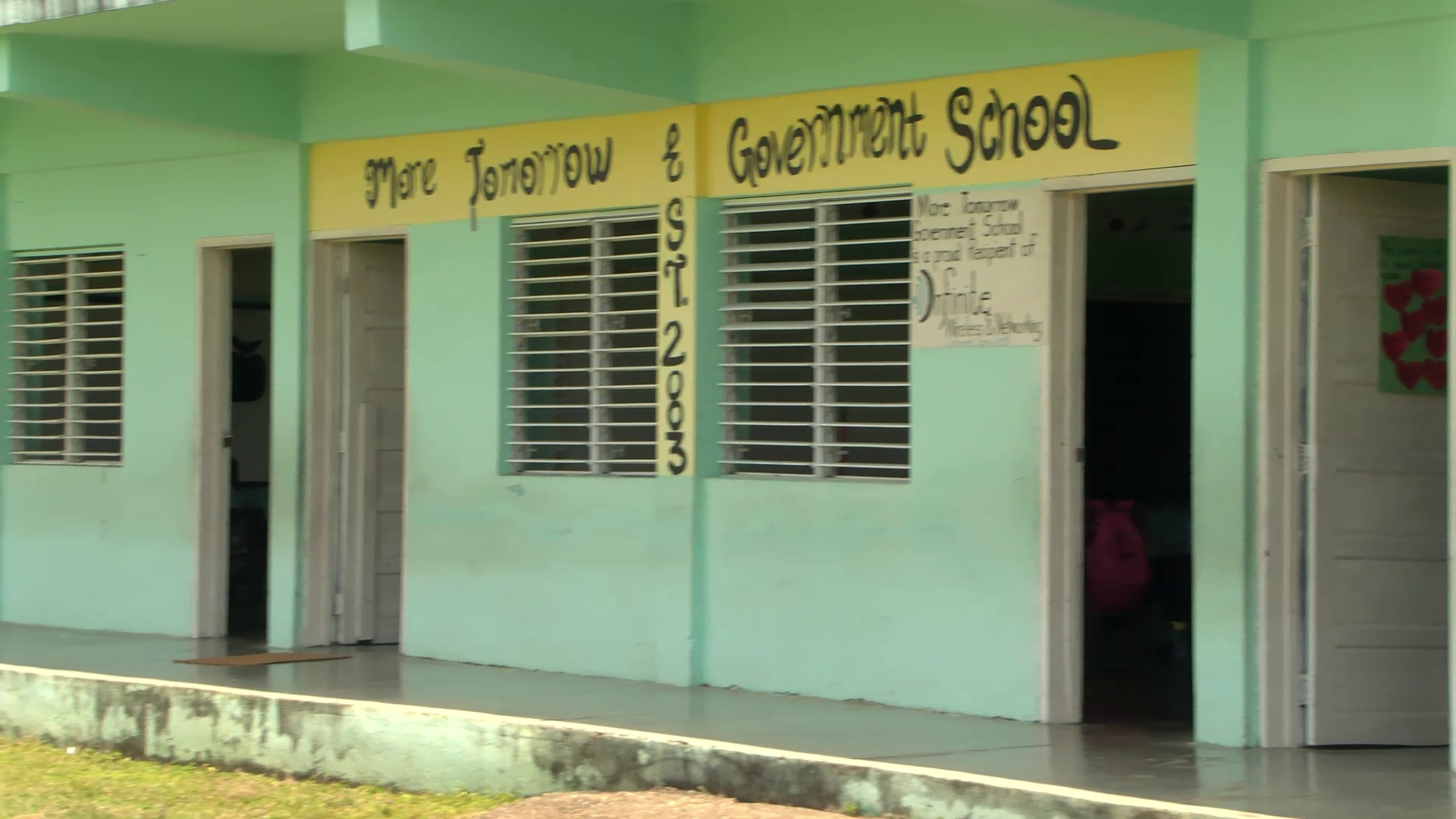
    As the 2026 academic year enters just its third day, a small rural primary school in Belize’s Cayo District is grappling with an escalating staffing crisis that has left its long-term future hanging in the balance. More Tomorrow Primary School, which serves students from early infancy education through to Standard Six, currently operates with just two fully active educators for more than 30 enrolled children – a gap that has left parents and community members bracing for the possibility of permanent closure.

    The crisis is far from sudden: the school has struggled with persistent staffing shortages for years, despite repeated promises of government intervention. Today, one of the school’s only two teachers is Principal Dominina Pop, who is already scheduled to retire next year. The second, Elizabeth Tush, voluntarily relocated from the capital city of Belmopan to prevent the school from grinding to a halt this term. Tush, who has stepped in to keep classes running, says she chose to stay because of the clear unmet need she saw among the student body, particularly in foundational literacy and writing skills.

    With only two staff members, the school’s 30+ students have been condensed into three grouped grade levels: lower, middle, and upper. Tush currently oversees three separate grade groups, while Pop manages the remaining two – an unmanageable workload that makes personalized, effective instruction nearly impossible to deliver. Tush shared that even with both educators working to their absolute limits, adapting lessons to meet the diverse learning needs across multiple age groups remains a monumental, often unachievable challenge.

    For local families, the potential closure of More Tomorrow Primary is more than an inconvenience – it is an existential threat to their children’s access to affordable, accessible education. Many households in the village lack the financial resources to send their children to alternative schools further afield. Parent Jose Giron, whose own children all attend the local school, emphasized that the community relies on the campus to keep education within reach for local working families. “All my children study right here, and that’s a great opportunity for the children because we can see them go to school and come back, and they can come eat and get a little rest in the break time,” Giron explained, noting that families have already invested in school uniforms and fees for the new term, with no contingency for a sudden closure.

    After circulating rumors that the Ministry of Education planned to shutter the school permanently, top education officials have pushed back to clarify the government’s position. Education Minister Francis Fonseca confirmed that no final decision to close More Tomorrow Primary has been made, and that ministry officials will convene with parents, educators, and community stakeholders tomorrow to explore sustainable solutions to put the school on stable footing.

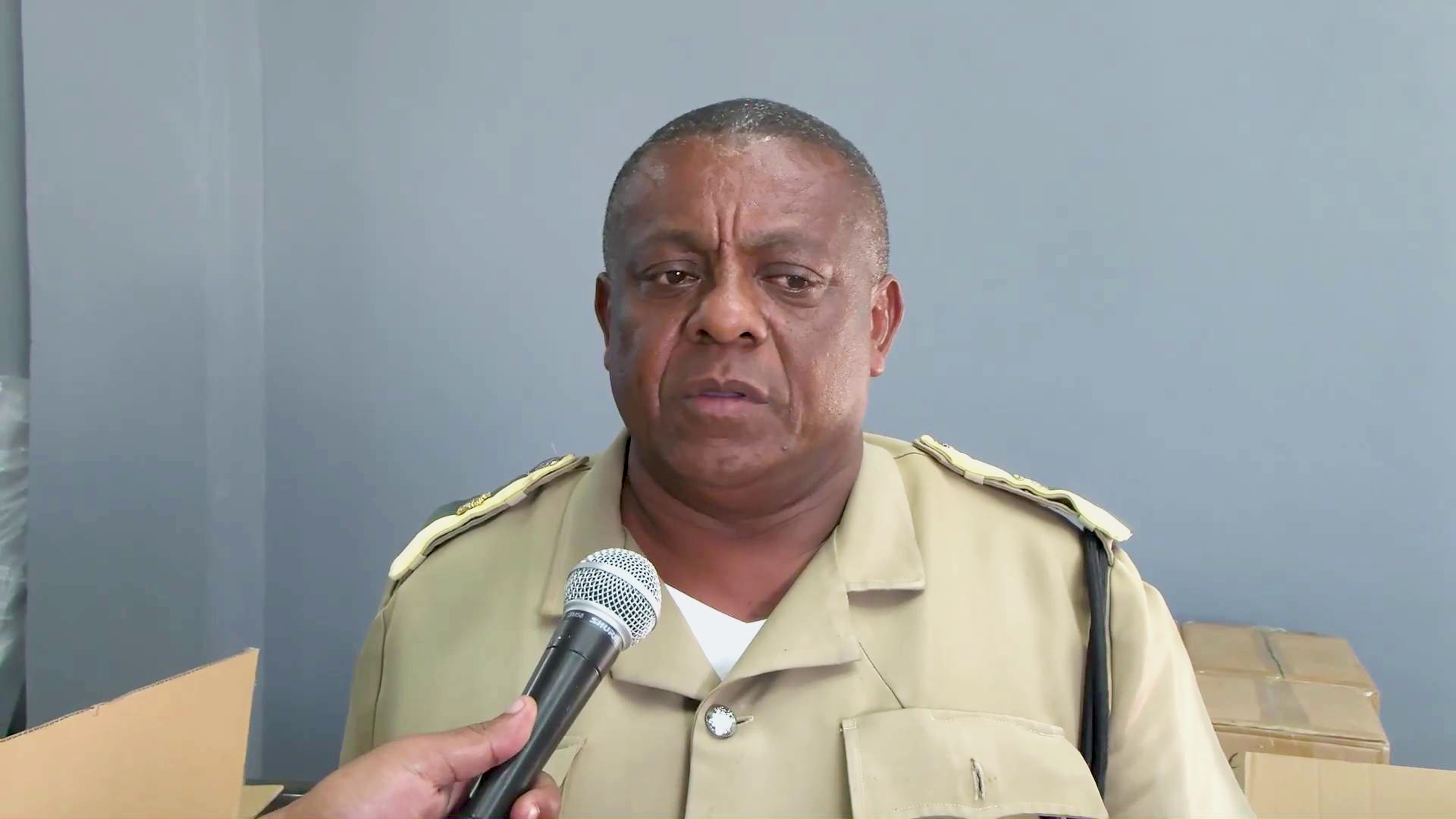
    Minister Fonseca acknowledged the deep structural challenges that have left the school chronically understaffed, noting that few educators are willing to take up posts at the rural campus. “Nobody wants to go to teach there. They say the conditions are too harsh,” he said, adding that the ministry has already tested multiple interventions to address the gap, including last year’s accommodations to recruit a mother-daughter teaching pair that ultimately left the post out of frustration. The ministry has floated one potential alternative: providing transportation to move students to other nearby schools, but that proposal remains under discussion with the community.

    Local leaders say the core barrier to attracting and retaining teachers is the lack of on-community housing, paired with rising costs for transportation, rent, and basic living expenses. Compounding the issue, many teachers assigned to rural posts are also forced to cover the cost of classroom supplies out of their own pockets, making low-resource rural campuses even less appealing. Difficult local infrastructure also adds to the challenges: during periods of bad weather, the village’s roads regularly flood, cutting off access for anyone not living in the community.

    Village Chairman Michael Myvette says the village council is fully prepared to support efforts to keep the school open, and community members have united around a single policy ask: the government should fund purpose-built teacher housing within the village. Having educators live on-site would not only resolve the flood-related access issues but also create the stable conditions needed to recruit teachers who are willing to put down roots and support the school long-term.

    As the community waits for tomorrow’s meeting with education officials, parents and staff remain urgent in their call for intervention to save the only local primary school that serves More Tomorrow Village’s children.

  • Education Minister Says Struggle to Find Sign Language Interpreters

    Education Minister Says Struggle to Find Sign Language Interpreters

    As the 2026 academic year kicks off across Belize, a gap in accessible education has come to the forefront, with multiple deaf students returning to in-person classes without the critical support of a qualified sign language interpreter. The ongoing shortage has left parents of deaf learners and disability rights advocates sounding the alarm, warning that the lack of accommodation undermines the fundamental right to equal educational opportunity for deaf and hard-of-hearing students across the country.

    In a recent public address addressing the growing concern, Belize’s Minister of Education Francis Fonseca acknowledged the severity of the crisis, confirming that the nation’s total pool of certified, professionally trained sign language interpreters numbers fewer than 12 people. This extremely limited workforce is far outstripped by demand across the country’s K-12 and higher education institutions, leaving many students without the communication access they need to fully participate in classroom learning.

    Fonseca explained that while the Ministry of Education has recognized the shortage for years and has implemented incremental strategies to expand the workforce, systemic barriers have slowed progress. For nearly a decade, the ministry has offered targeted scholarship programs to encourage Belizeans to pursue interpreter training and national certification, and has ramped up these outreach efforts in recent months. The government has also run repeated public job advertisements to fill both full-time interpreter roles and para-professional support positions for special needs students, many of whom require full-time in-class assistance to access their lessons.

    Even with these active efforts, Fonseca was frank about the challenges the ministry continues to face, pointing to low compensation as a core structural barrier attracting new professionals to the field. “These jobs don’t pay much, that’s the reality,” he noted, adding that officials are now exploring adjustments to compensation packages to make careers in sign language interpretation more financially attractive for new trainees.

    The minister emphasized that his office remains committed to addressing the needs of affected families, stating that every available resource is being directed to mitigate the shortage and resolve access gaps as quickly as possible. Disability advocacy groups have echoed the call for faster action, noting that delayed access to interpretation puts deaf students at a permanent disadvantage in academic progress and long-term educational outcomes.