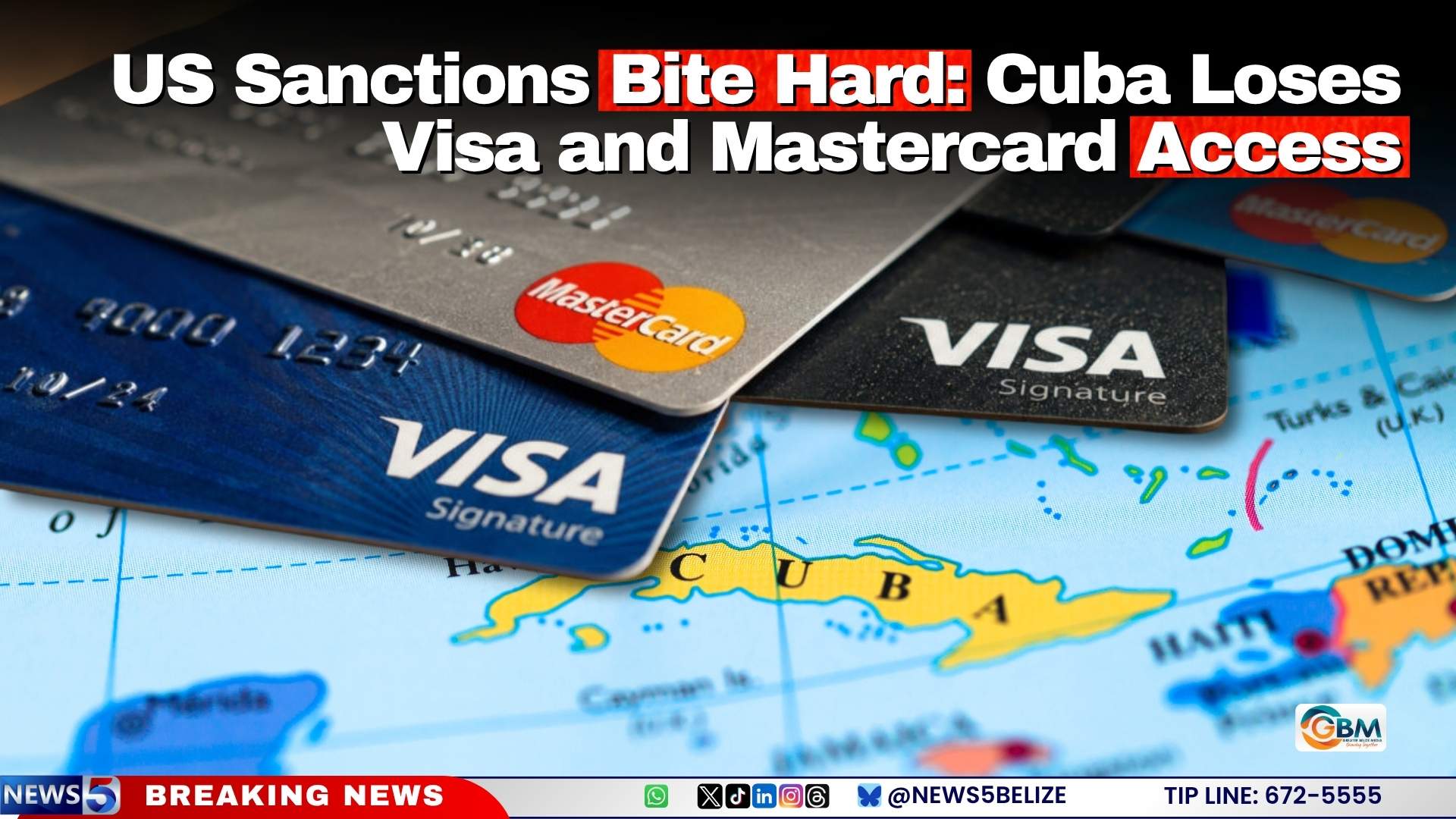
On Wednesday, Cuba’s Central Bank made a formal announcement confirming that the island nation will lose all access to Visa and Mastercard payment processing starting June 6, 2026. This disruption comes as a direct consequence of expanded United States sanctions that pressured a key foreign financial partner to cut all operational ties with Cuban financial institutions.
The policy trigger for this latest economic restriction traces back to an executive order signed by former US President Donald Trump on May 1 that dramatically widened the scope of US economic sanctions on commercial activity with Cuba. The executive order specifically targeted Fincimex, the financial division of GAESA – a Cuban military-administered conglomerate that dominates the country’s most lucrative economic sectors, including international tourism, cross-border remittance processing, and domestic logistics.
The Trump administration has long claimed that GAESA redirects its corporate profits to fund the Cuban military and the country’s ruling political elite, an allegation that Cuban authorities have repeatedly and categorically denied.
In its official statement, the Central Bank confirmed that the suspension will cut off all revenue streams for Cuban businesses that come from sales of goods and services processed through the widely recognized global card networks Visa and Mastercard. This development marks the most recent in a steady series of economic setbacks for the island nation. Over the past several weeks, a growing number of major foreign stakeholders – including multinational hotel chains, international airlines, and global shipping companies – have wound down their operations in Cuba to avoid penalties for violating US sanctions regimes.
For everyday Cuban citizens and international tourists currently on the island, the elimination of Visa and Mastercard access leaves only a limited set of payment alternatives: physical cash, locally issued prepaid domestic cards, and cards tied to two non-Western international networks – Russia’s Mir and China’s UnionPay.