作者: admin

  • Council of Captains calls for NTSB to lead La Romana plane crash investigation

    Council of Captains calls for NTSB to lead La Romana plane crash investigation

    In the wake of a deadly private plane crash near the Dominican Republic’s La Romana International Airport, the country’s Council of Captains is pushing for a radical shift in how the incident is investigated: the union is formally requesting that the U.S. National Transportation Safety Board (NTSB) take the lead on the probe, arguing that only an independent international process can deliver transparent, trusted results for victims’ families and the aviation community at large.

    The Sunday crash claimed the lives of two pilots flying a Gulfstream G200 business jet registered as N318JF. In an official statement released this week, the Council of Captains first extended its deepest condolences to the families and loved ones of the deceased pilots, before laying out its formal request for international oversight of the investigation.
    Union leaders say their demand is grounded in existing international aviation regulations: recent updates to Annex 13 of the International Civil Aviation Organization (ICAO) framework explicitly permit the transfer of accident investigation authority to another nation or independent body when specific conditions are met. Those conditions are satisfied in this case, the union argues, not only because of longstanding local credibility issues but also because the crashed jet carries United States registration.

    The core of the union’s concern stems from a years-long unresolved aviation disaster in the Dominican Republic. In December 2021, a fatal crash involving a Helidosa aircraft claimed lives, and more than four years later, no final public investigative report has been released. That lack of closure, the Council of Captains says, has sown widespread doubt across the country’s aviation sector and left victims’ relatives without answers, eroding trust in local investigative capacity.
    This case is not an isolated exception either, the union notes. It would mark the second fatal aviation accident involving U.S. citizens in the Dominican Republic that remains under active investigation, making independent oversight even more critical to upholding global standards.

    The Council of Captains has made clear that it will maintain close, ongoing monitoring of the crash investigation process, and will continue pressing for a probe that adheres to the core principles of full transparency, complete independence, and public accountability. The union’s call has put a spotlight on longstanding concerns over investigative accountability in Dominican aviation, and sets up a potential decision for Dominican authorities on whether to cede lead investigation authority to the U.S. NTSB.

  • Brooky Danger spreads positivity with new single ‘Joy Within My Soul’

    Brooky Danger spreads positivity with new single ‘Joy Within My Soul’

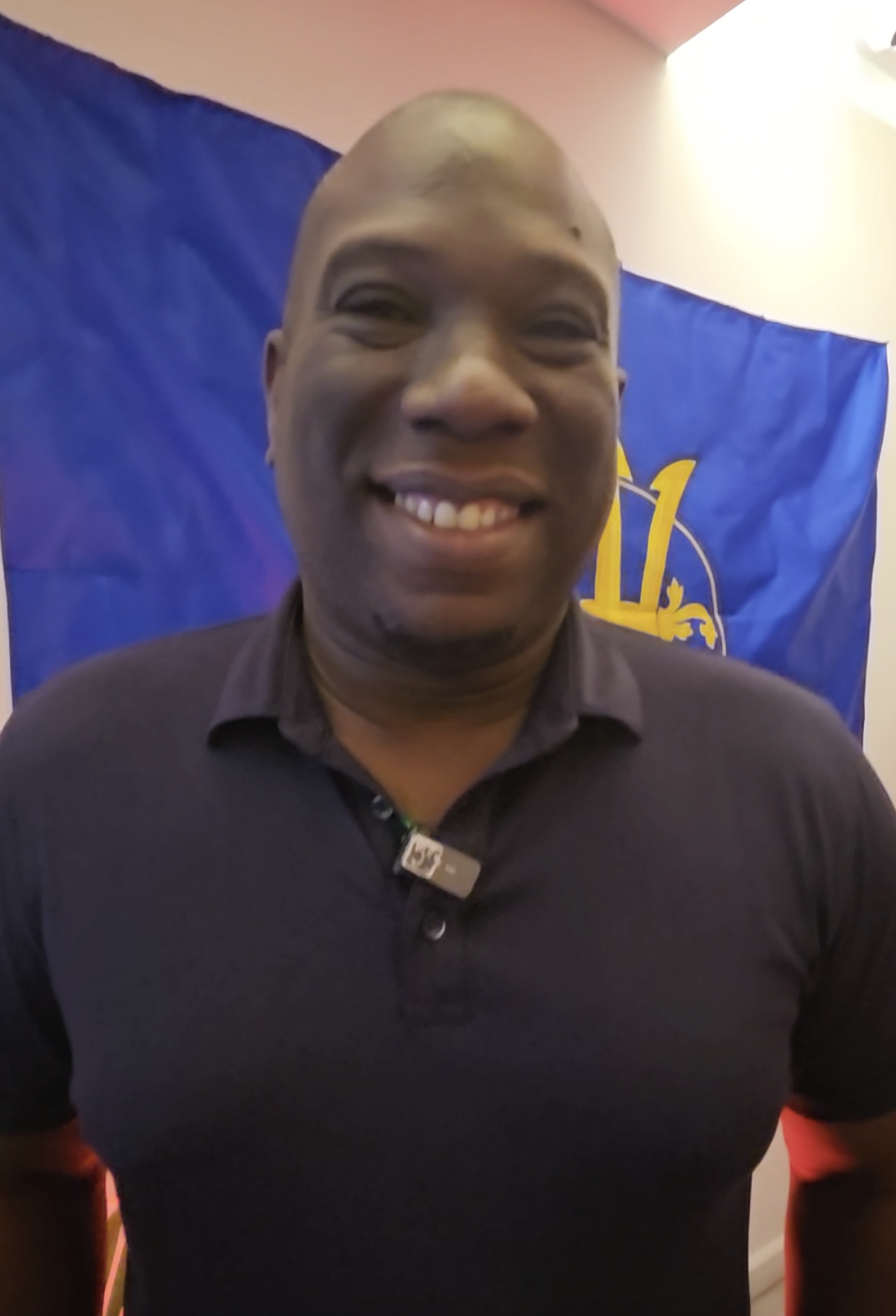
    KINGSTON, Jamaica — A Jamaica-born, New York-based reggae performer Brooky Danger is spreading a message of resilience and hope through his latest uplifting release, the single *Joy Within My Soul*. The track was crafted to push listeners to hold onto motivation and optimism even amid the chaos and hardship that defines much of modern daily life. In a recent interview, the conscious entertainer opened up about the personal and global inspirations behind the project, revealing that the idea for the song took root after watching widespread struggles unfolding across international communities. He noticed that many people were feeling burnt out and adrift, and recognized a growing need for audiences to learn how to draw strength from their own inner resilience.

    “The daily events unfolding all over the world are what pushed me to create this track,” Brooky Danger explained. With this new release, he aims to encourage fans to adopt a positive perspective even when confronting unexpected barriers and long-term challenges. “My biggest goal with this song is to give people the motivation to keep moving forward through their everyday lives,” he said.

    For the artist, the message at the core of *Joy Within My Soul* is far more than a marketing hook — it is a deeply personal belief that shapes how he lives his own life. While he does not dismiss the very real difficulties that people face every day, he remains firm in his conviction that intentional optimism is one of the most powerful tools people can hold. “This message is very personal to me. As someone who sees himself as a leader, I have always chosen to stay optimistic,” he shared. When asked about his own greatest source of joy, Brooky Danger pointed to the simple gift of life and good health. “Just the fact that I am alive and well — that is what brings me the most joy,” he stressed.

    Having grown up in Jamaica before relocating to New York to build his career, Brooky credits his life in the United States with expanding his world view and giving him a richer pool of experiences to draw from when writing new music. “Living here has broadened my knowledge base dramatically. I get to see more of the world, which means I always have more stories and ideas to write about,” he explained.

    Though *Joy Within My Soul* centers heavily on themes of hope and encouragement, Brooky Danger is quick to note that this positive tone is no departure from his usual artistic style. “This isn’t something new for me — I have always been a positive person,” he said. He also shared that choosing to release an intentionally uplifting, message-driven track at this moment in history was a fully deliberate choice. “Given everything that the world has been going through recently, releasing this song now was always the plan,” he noted.

    So far, the response to the single from fans in Jamaica and across the global Jamaican diaspora has far outpaced Brooky Danger’s initial expectations. “The response has been absolutely overwhelming, and that has kept me very busy putting new projects and next steps together,” he said.

    Beyond his own music, Brooky Danger advocates for greater support and visibility for culturally rooted, positive reggae music within the broader industry. “I believe this incredible, culture-driven music that we create deserves far more promotion and platform space than it currently gets,” he said. At the same time, he openly acknowledges one of the biggest struggles that message-driven, conscious artists face in today’s streaming era. “It’s sad to say, but right now more audiences are drawn to negative content than positive,” he stated.

    Brooky Danger repeatedly emphasized the critical role that New York’s diverse music scene has played in shaping his growth as an artist. He counts two of Jamaica’s most iconic reggae and dancehall acts — dancehall legend Bounty Killer and reggae superstar Buju Banton — as his biggest artistic influences.

    Describing himself as a highly versatile reggae artist, Brooky Danger says the recording process for *Joy Within My Soul* was an entirely enjoyable experience, and he confirmed that multiple new releases are already in the works and will be dropping in the near future. Looking ahead, he aims to grow his global audience while continuing to use his music as a force for good in people’s lives. “My long-term goals are to tour all over the world and use my platform to help as many people as I can,” he said. For fans and anyone else navigating tough circumstances, he leaves a simple but profound reminder: to cherish life and hold close to what matters most.

  • 6.1 magnitude earthquake rattles Cuban capital Havana—reports

    6.1 magnitude earthquake rattles Cuban capital Havana—reports

    On a regular Monday, a powerful seismic event disrupted daily life across western Cuba, hitting offshore of the island nation’s western coastline. The sudden tremor, measured at a magnitude of 6.1 by the United States Geological Survey, originated roughly 100 kilometers (62 miles) from Cuba’s westernmost point, sending shockwaves that rippled across the region and even into neighboring parts of the United States.

    Reporters from Agence France-Presse based in Havana, Cuba’s capital, confirmed the shaking persisted for approximately 20 seconds. The prolonged movement of buildings prompted widespread evacuations, as residents and workers streamed out of structures to gather on open city streets. Cuban national authorities confirmed the tremor was detectable across the entire western half of the country, leaving many first-time quake observers startled by the experience.

    For 47-year-old Havana economist Carmel Delgado, the initial sensation was disorienting rather than immediately recognizable. “At first I just felt dizzy — it didn’t occur to me it was an earthquake, I’d never experienced that before,” Delgado shared in an interview with AFP. “But once we realized what it could be, we got out quickly.”

    In Havana’s historic central district, 41-year-old actor Francis Ruiz was mid-recording for a radio drama on the fifth floor of a studio building when the quake hit. “We were recording in an office and all of a sudden the table moved and we all looked at each other,” Ruiz recalled. “The building shook, and right then chaos broke out, everyone running down the stairs.”

    In the hours after the tremor, crowds of residents lingered in central Havana, gathering in small groups and checking their mobile devices for updates on the event. Even hundreds of kilometers away in southern Florida, AFP correspondents also reported feeling faint shaking from the quake.

    In the wake of the seismic event, the U.S. Tsunami Warning Center quickly assessed potential hazards. Officials ruled out any risk of a large destructive tsunami, but noted there remained a “very small possibility” of minor, localized sea level changes along coastlines closest to the quake’s epicenter. As of Tuesday morning, Cuban emergency management officials have not received any reports of casualties or major structural damage from the tremor.

  • Mexico promises peaceful World Cup opening despite protests

    Mexico promises peaceful World Cup opening despite protests

    MEXICO CITY, Mexico – As Mexico prepares to host the opening match of an upcoming World Cup this week, President Claudia Sheinbaum has moved to reassure the public and visitors that the opening ceremony and first game will proceed without disruption, despite rising tensions over threatened protests from a major teachers union.

    The union has issued an explicit warning that demonstrations will break out at the capital’s opening match between Mexico and South Africa this Thursday if the federal government fails to meet their longstanding demands for substantial salary increases and sweeping changes to the national pension system. During her routine daily press briefing held Monday, Sheinbaum struck a firm, confident tone on security for the tournament’s kickoff. “We are going to guarantee that the celebration of the World Cup is well-executed, in peace and tranquility,” the president stated.

    Tensions have been building in the Mexican capital for more than a week. On June 1, law enforcement authorities used tear gas and rubber bullets to disperse a crowd of protesting teachers gathered outside the iconic Zocalo, the city’s historic central square. Officials have installed a giant public viewing screen on the Zocalo to create a fan zone for World Cup spectators, a project that has put the space at the center of the ongoing standoff. Today, metal barricades line all streets surrounding the square, a security measure Sheinbaum says is necessary to prevent planned provocations from disrupting the event.

    Protesters have already taken visible action to push their demands: just last week, demonstrating teachers pulled down and toppled commemorative statues of famous soccer players in downtown Mexico City, a deliberate act of disruption that drew widespread attention. Large tent encampments set up by the striking teachers now occupy large swathes of the city center, creating significant disruptions for local businesses and commuters.

    Many downtown business owners and employees say the protests are already harming their bottom line, warning that the unrest will drive away tourists during what should be one of the busiest tourist events in the country’s recent history. “The access to our restaurant is closed off, the people aren’t coming, the tourists are freaked out,” Jonathan Herrera, a 31-year-old waiter who has joined local pushback against the encampments, told reporters. At one barricaded checkpoint where dozens of people waited for police clearance to cross, one local restaurant attached a large poster to the barricade reading “we’re still open,” a sign of how desperate local businesses are to hold onto customers during the tournament.

    Reactions to the protests have been mixed among both locals and visitors. A 64-year-old American tourist, Heather Lutz, expressed public support for the teachers, arguing that large international events give marginalized groups a rare platform to push for change. “No government likes their city to look real during big events like the World Cup,” Lutz noted. For the protesting teachers themselves, the timing of the World Cup is a strategic advantage. Dinora Diaz, a 42-year-old teacher speaking from the main street encampment, told reporters the high-profile tournament is the perfect moment to “generate pressure” to win policy concessions from the federal government.

    Negotiations between the Sheinbaum administration and the union have failed to produce a breakthrough so far. On Monday, government officials presented their latest proposal to union leaders, which includes a plan to create a new state-owned enterprise tasked with administering teacher pensions. However, the administration has flatly rejected the union’s core demand to roll back existing pension reform laws, noting that undoing the changes would cost the federal government roughly $400 million, a price tag officials say is unaffordable.

    The union has already rejected the government’s latest offer, while top administration official Rosa Icela Rodriguez, Secretary of Governance, has called on striking teachers to remove their blockades and encampments. Rodriguez emphasized that the right to peaceful protest does not override the rights of other city residents and visitors. “It’s fundamental that the legitimate exercise of the right to protest can coexist with the rights of those who live in and move through this great city,” the secretary said.

  • 37 y-o Brazilian woman accused of posing as 12-y-o child to be adopted

    37 y-o Brazilian woman accused of posing as 12-y-o child to be adopted

    A shocking case of elaborate identity fraud has emerged in Brazil, where a 37-year-old woman stands accused of deceiving an entire community by pretending to be a pre-teen to gain adoption. Law enforcement officials have confirmed that Amanda Maria Souza de Oliveira constructed a false persona as ‘Gabriela’, a 12-year-old child fleeing a violent, abusive home. According to investigative details first reported by Yahoo News, Oliveira first approached a local church pastor with her fabricated story, winning the sympathy of the congregation. Moved by her supposed plight, church members pooled financial support for the young-looking imposter and facilitated an introduction to a local couple open to welcoming a child into their home.

    After moving in with the prospective adoptive family, Oliveira maintained her 12-year-old facade consistently: she participated in age-appropriate family activities, took the weight-loss drug Mounjaro to maintain a smaller physique, and even marked a staged 12th birthday with the household. The family proceeded with formal adoption paperwork, and the ruse might have continued indefinitely if a family relative had not grown suspicious of inconsistencies in her behavior and physical appearance. When confronted about her noticeably mature features, Oliveira spun a convincing explanation, claiming that childhood hormone therapy and prolonged abuse at the hands of her biological father had caused her to age prematurely.

    The relative’s distrust prompted an independent online search, which uncovered multiple public records connecting Oliveira to a string of nearly identical impersonation schemes across Brazil. Armed with this evidence, the relative contacted law enforcement, whose investigation confirmed that Oliveira had carried out this con in at least seven different Brazilian states. Following her arrest, Oliveira reportedly confessed to the deception during police interrogation. She is currently being held in preventive custody at the Joinville Women’s Prison as the legal process moves forward.

    At the request of Oliveira’s defense team, a judge has granted approval for a full psychiatric evaluation to be conducted. Her legal counsel has argued that undiagnosed, underlying psychological conditions may have driven her actions, a factor that could potentially mitigate any criminal responsibility she faces for the alleged fraud.

  • Superintendency of Banks warns public about fake ‘Pro Renta’ investment platform

    Superintendency of Banks warns public about fake ‘Pro Renta’ investment platform

    In the Dominican Republic’s capital Santo Domingo, the country’s top banking oversight body has issued an urgent public alert over a brazen fraudulent investment scam that is misleading social media users by impersonating the regulator. The scheme, which operates under the brand name “Pro Renta”, illegally co-opts the official branding and public credibility of the Superintendency of Banks (SB) to sell unvetted, non-existent financial management and investment services to unsuspecting consumers.

    In an official public statement released Wednesday, the regulator confirmed that the scammers have replicated the agency’s official visual identity down to precise details, and have even falsely used the likeness of current Superintendent Alejandro Fernández W. to lend the scheme an air of legitimacy. The watchdog characterized the fraudulent social media campaign as deliberately misleading, false, and malicious in its intent to defraud consumers.

    The Superintendency of Banks emphasized that all of its official statements, regulatory updates, and public communications are only distributed through verified, pre-authorized institutional channels and its official government website. No unapproved third-party offers bearing the agency’s branding should be treated as legitimate, the regulator added.

    To protect consumers from financial harm, the agency has urged all Dominican citizens to practice due diligence by cross-checking the authenticity of any online investment offer before sharing it across social platforms or committing any personal funds to the opportunity. The regulator also reaffirmed its ongoing commitment to safeguarding all participants in the Dominican Republic’s financial system, rooting out financial fraud, and holding bad actors accountable for deceptive practices.

    In closing, the Superintendency called on the public to maintain heightened vigilance against any fraudulent operation that leverages the public trust in government regulatory institutions to carry out scams, reminding consumers that legitimate financial regulators do not endorse private investment schemes through unsolicited social media content.

  • UN rights chief urges US to lift tough Cuba sanctions

    UN rights chief urges US to lift tough Cuba sanctions

    On a Monday in the US capital Washington, the United Nations’ top human rights official issued an urgent call for the Biden administration to roll back harsh new sanctions imposed on Cuba this year, issuing a stark warning that the restrictive measures have already triggered widespread public suffering and put countless civilian lives at direct risk.

    Cuba has operated under a sweeping US trade embargo for more than six decades, dating back to 1962, but the Trump administration has dramatically escalated economic and political pressure on the island nation in recent months. The ramped-up actions have included crippling cuts to the country’s critical fuel supplies, alongside open rhetoric suggesting the US is prepared to take control of the island.

    In an official public statement, UN High Commissioner for Human Rights Volker Turk laid out the cumulative human cost of the new policy: “The fuel restrictions implemented from early 2025, paired with the recent tightening of extraterritorial sanctions, are directly harming ordinary Cubans, above all the most vulnerable groups in the population.”

    Turk emphasized the deadly consequences of the current restrictions, noting, “Children are dying because doctors lack access to essential medical supplies and life-saving medicines. This situation is unacceptable. These sanctions must be lifted immediately.”

    Washington has justified its sustained pressure campaign against Cuba by claiming the island’s communist government poses a direct national security threat to the United States. Trump has repeatedly suggested Cuba could be the next regime to fall, following the January ouster of Venezuela’s socialist leader Nicolas Maduro and the ongoing US pressure campaign against Iran.

    Adding to escalating tensions, US prosecutors recently unsealed an indictment against Cuba’s former president Raul Castro connected to a 1996 incident, a move that fueled widespread speculation that the Trump administration was laying groundwork to attempt to topple the Cuban government.

    Turk’s statement detailed the tangible disruptions caused by the new measures. The oil blockade, he confirmed, has left the island coping with daily blackouts that regularly stretch beyond 20 hours. Additional sanctions rolled out last month, many of which carry extraterritorial penalties that impact private third-party entities including commodity traders, insurance firms and shipping companies, have only deepened the crisis for ordinary Cubans.

    “Taken together, these coercive measures are significantly undermining the Cuban population’s ability to exercise basic human rights,” the statement read. It underlined that life-sustaining medical services are already operating under extreme strain, with stockpiles of essential medications facing what it called “critical short supply.”

    Citing recent public health data collected on the island, the statement confirmed that infant mortality rates have doubled since the fuel restrictions took effect, and survival rates for children diagnosed with cancer have dropped sharply. Beyond the health crisis, the statement noted a reported 60 percent decline in domestic food production alongside dramatic spikes in the price of basic staple goods, pushing more low-income Cuban households into food insecurity.

    Turk closed by challenging the legality of the US policy under international norms: “Such severe, broad-based sanctions packages that target entire sectors of a national economy and create widespread, indiscriminate, devastating harm to civilian populations are incompatible with the core principles of international human rights law.”

  • Convicted FTX founder Sam Bankman-Fried seeking Trump pardon

    Convicted FTX founder Sam Bankman-Fried seeking Trump pardon

    Convicted cryptocurrency fraudster and disgraced FTX founder Sam Bankman-Fried has formally submitted a pardon petition to U.S. President Donald Trump, official government records confirm. The 34-year-old, who is currently serving a 25-year federal prison sentence after being found guilty on multiple corruption and fraud charges, has his request listed as pending in the public database of the Department of Justice’s Office of the Pardon Attorney.

    The development comes months after Trump made his position clear in a January interview with *The New York Times*, where he stated he had no intention of granting a pardon to Bankman-Fried. Despite this early refusal hint, the convicted founder moved forward with the formal clemency application, marking the latest chapter in a high-profile financial scandal that shook the global crypto industry.

    Since his inauguration for his second term last year, the Republican president has exercised his clemency power repeatedly in favor of white-collar offenders, drawing ongoing public and media attention. Most recently, he pardoned a former Republican U.S. representative from Indiana who had been convicted of insider trading, a decision that fueled speculation about what cases he may prioritize for clemency going forward.

    Once hailed as a wunderkind of the digital finance space, Bankman-Fried built his empire at a staggering pace. After co-founding FTX as a small startup crypto trading platform in 2019, he grew the exchange into the world’s second-largest player in the sector, amassing a multi-billion dollar personal fortune before he turned 30. That meteoric ascent collapsed spectacularly in November 2022, when a massive bank run of customer withdrawals exposed that roughly $8 billion in client funds had been secretly and illegally diverted from FTX to Bankman-Fried’s private hedge fund, Alameda Research.

    A federal jury in New York convicted him on seven counts of fraud, embezzlement, and criminal conspiracy in November 2023. In addition to his pardon petition, Bankman-Fried has also filed an appeal challenging the guilty verdict, marking the next step in his ongoing legal battle.

  • National Gallery, Scotia collaborate on new exhibition

    National Gallery, Scotia collaborate on new exhibition

    KINGSTON, Jamaica — A one-of-a-kind collaborative art experience is set to launch in downtown Kingston next week, as the National Gallery of Jamaica (NGJ) and Scotiabank Jamaica join forces to unveil a brand-new exhibition titled *Of Wood and Water: The Scotiabank Collection*. The opening event is scheduled for Sunday, June 14, starting at 1:30 p.m. at the gallery’s downtown location at 12 Ocean Boulevard, with free entry open to all members of the public.

    The exhibition draws its evocative name from Jamaica’s ancestral Taino root, which is widely translated to the “land of wood and water” — a nod to the island’s deep indigenous history that serves as the thematic backbone of the entire showcase. Curators have pulled together more than 40 striking pieces from Scotiabank’s extensive corporate art collection, and paired these works with complementary pieces selected from the National Gallery of Jamaica’s own permanent holdings to create a layered, holistic narrative.

    Organized around core geological concepts that mirror the island’s physical and cultural evolution, the exhibition is divided into three distinct thematic sections: superposition, metamorphism, and rupture. Through this structured curation, the collection invites guests to explore how Jamaica’s landscape has been shaped over centuries by shifting, restless natural forces, and to examine the interconnected relationship between the island’s dynamic terrain and the communities that call it home. Attendees will have the opportunity to engage with works that reflect both the geographic and the social evolution of Jamaica, rooted in the indigenous identity that has defined the island for millennia.

  • Full water restoration by Tuesday, says Samuda

    Full water restoration by Tuesday, says Samuda

    Following a widespread island-wide power outage that disrupted water access for tens of thousands of Jamaican households, Water Minister Matthew Samuda has confirmed that full water service will be restored to all remaining affected customers by Tuesday.

    In an exclusive interview with Observer Online on Monday, Samuda provided the latest progress update on recovery efforts. As of 8 p.m. Sunday, just three water facilities — one distribution system in the parish of Manchester and two treatment plants in St Elizabeth — still remained offline, after the Jamaica Public Service (JPS) blackout knocked out water infrastructure across the country. Samuda explained that these remaining outages are tied to ongoing power restoration work by JPS, with joint teams from NWC and JPS continuing on-site repairs to bring the facilities back online Monday. He projected all work would be completed by Tuesday, leaving no households without water service as a lingering effect of the blackout.

    The power outage, which struck last Friday, left an estimated 65,000 households — around 12% of the National Water Commission’s (NWC) entire customer base — without running water by 2 p.m. the following Saturday. As of Monday, just 2,000 NWC customers still remained without service.

    Calling the cascading service disruption an unfortunate event, Samuda used the update to outline the Jamaican government’s ongoing work to build long-term resilience for the country’s water sector against power outages. He noted that power failures triggering water service disruptions are not unique to Jamaica, explaining that the water sector is inherently the most energy-reliant part of public infrastructure, making it the first to be affected when power grids go down.

    To address this vulnerability, the Jamaican government has invested more than $1 billion JMD in backup generator infrastructure across the water network since Hurricane Burel struck. Samuda explained that these generators automatically activate to keep water systems running during power outages, reducing widespread disruptions. The government also continues to prioritize a long-term transition to more sustainable, independent power sources for water infrastructure, a process that is already underway.

    Samuda added that the government remains fully committed to reaching its resilience goal: ensuring 70% of the country’s water distribution network can maintain service during power outages. He noted that the full rollout will take a few more years, constrained by available budget and cash flow, but that the policy commitment to improving infrastructure resilience remains firm.

    “We will continue to invest until we achieve that full resilience, certainly within 70 per cent of our distribution network. But that will take another couple of years, just based on cash flows. But the policy commitment has already been made. We cannot go ahead of what we are able to earn,” Samuda said.