作者: admin

  • Cap

    Cap

    In a formal ceremony held July 17 at Cap-Haïtien’s Versailles Complex, Haiti’s national police force (Police Nationale d’Haïti, PNH) officially kicked off the second phase of its groundbreaking outreach campaign, “PNH New Generation: Women at the heart of change.” The targeted initiative is designed to break down historical barriers to female entry in law enforcement, encouraging more professional women across the country to pursue careers with the PNH while reshaping the institution’s public image through greater gender diversity.

    The launch event drew senior police leadership, United Nations officials, and community stakeholders, including Divisional Commissioner Ernst Dorfeuille, the North Department’s PNH director; Louis Guerro Plancher, representative of the United Nations Development Programme (UNDP); Divisional Commissioner Erna Royal, UNDP Focal Point for the program’s Basket Fund; and Divisional Commissioner Étienne Salvador, PNH’s community policing coordinator.

    Speakers across all participating organizations aligned on a core message: expanding women’s representation within the PNH is a critical step toward repairing and deepening trust between law enforcement and local communities, as well as advancing ongoing institutional modernization efforts across Haiti’s national police force.

    Divisional Inspector Nativita Kerline Jean Philippe, head of gender-based violence response for the North Department, highlighted the on-the-ground practical benefits of increasing female police presence. She noted that greater gender balance within the force would allow officers to more effectively respond to Haiti’s complex social realities, particularly by delivering more culturally appropriate, trauma-informed support to survivors of gender-based violence.

    Representing the PNH’s Police Recruitment Service (SRP), Municipal Inspector Paul Smith Bonne Année walked attendees through the campaign’s next steps, outlining official admission requirements for new recruits, breaking down the multi-stage recruitment process, and detailing long-term career growth pathways available within the force. He closed his remarks by inviting all eligible attendees to bring their skills and experience to public service, serving the Haitian nation through a career in law enforcement.

    Following formal presentations, the event concluded with an interactive question-and-answer session between speakers and attending community members. Participants demonstrated significant enthusiasm and interest in the campaign, raising detailed questions about recruitment eligibility, career advancement opportunities, and institutional onboarding processes—all of which received clear, direct responses from the event’s panel.

    International partners are backing the second phase of the campaign to advance police reform in Haiti. The initiative receives core funding from the European Union, is implemented on the ground by the UNDP, and is being executed by local Haitian firm KONEKTE, as part of a broader international effort to strengthen the institutional capacity of the Haitian National Police amid ongoing governance and security challenges in the country.

  • Japan bilateral meeting

    Japan bilateral meeting

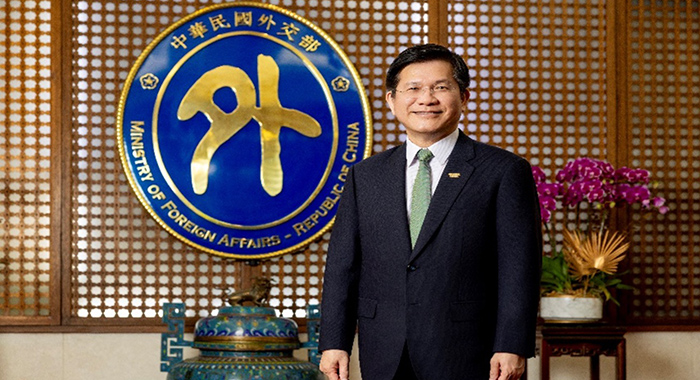
    Amid the high-level convenings of the UN Economic and Social Council (ECOSOC), top diplomatic officials from Haiti and Japan gathered this week at Haiti’s Permanent Mission to the United Nations for targeted talks focused on revitalizing long-standing bilateral development cooperation. The meeting brought together Sandra Paulemon, Haiti’s Minister of Planning and External Cooperation, and Kiyoto Tsuji, Japan’s Minister of the Environment, to align on shared priorities and outline next steps for expanded support to Haiti’s ongoing recovery efforts.

    Opening the discussion, Minister Paulemon extended Haiti’s formal and deep gratitude to the Japanese government for its unwavering support spanning more than 15 years, particularly in the aftermath of Haiti’s catastrophic 2010 earthquake. In that crisis, Japan stepped forward to mobilize more than $100 million in combined humanitarian aid, cash donations, technical expertise, and targeted reconstruction assistance, a commitment that has delivered tangible benefits to Haitian communities across multiple key sectors.

    Paulemon emphasized that Japanese-backed initiatives have directly advanced Haiti’s progress toward the UN Sustainable Development Goals, with successful projects spanning public health, education, agricultural development, critical infrastructure, and disaster risk reduction. She highlighted a roster of completed, impactful works: the full reconstruction and equipping of the Jacmel general hospital, the major rehabilitation of Léogâne’s community water supply system, the construction and upgrade of dozens of primary and secondary schools across vulnerable regions, farmer-focused agricultural extension programs, and nationwide disaster preparedness training initiatives that have strengthened local response capacity.

    During the meeting, Paulemon outlined the core priorities of Haiti’s newly drafted national framework, the Economic, Social, and Territorial Stabilization and Recovery Program (PNSREST), which the Haitian government is finalizing to guide its multi-year recovery and stabilization agenda. She formally invited Japan to contribute to the program’s centralized common financing Basket Fund, which is designed to pool international resources to advance Haiti’s top national recovery priorities. She also added a request for targeted budgetary support from Japan to back Haiti’s upcoming 2026-2027 national budget, which is currently in the final stages of preparation.

    A key request put forward by the Haitian delegation centered on resuming a long-standing humanitarian aid mechanism that has been paused since 2020. Paulemon asked Japanese officials to reactivate the country’s humanitarian aid program, which was previously implemented through Haiti’s Bureau for the Monetization of Development Assistance Programs (BMPAD). She stressed that restoring this channel would be critical to expanding support for Haiti’s most vulnerable populations and accelerating the government’s ongoing economic and social recovery work. She also requested expanded partnership in technology and innovation, noting that Japan’s global leadership in technological transformation, climate and disaster resilience, and risk management offers a valuable blueprint that Haiti can leverage to strengthen its own institutional capacity and improve the delivery of public services.

    In response, Minister Tsuji acknowledged the deep, positive diplomatic roots that tie the two nations together, recalling a striking moment of mutual solidarity following the 2011 Great East Japan Earthquake and tsunami: even in the wake of its own devastating national disaster just one year prior, the Haitian people and government extended meaningful support to Japan during its time of crisis. That reciprocal solidarity, he noted, forms the foundation of the strong bilateral relationship today.

    Tsuji confirmed that the Japanese government will give full, careful consideration to all of the requests put forward by the Haitian delegation, covering everything from technological partnership to participation in the PNSREST framework. He signaled clear positive momentum on the request to resume BMPAD-mediated humanitarian aid, noting that Japan would move forward with reviewing the proposal in close coordination with the Japanese Embassy in Port-au-Prince to identify the most effective forms of support for Haitian communities. Following the meeting, Haiti’s Ministry of Planning announced that it will continue sustained bilateral discussions with Japanese authorities to turn the outlined cooperation prospects into tangible, large-scale projects that support long-term stabilization, inclusive economic growth, social development, and recovery across Haiti.

  • Derde helft WK 2026: Spectaculaire troostfinale eindigt in 6-4-zege voor Engeland

    Derde helft WK 2026: Spectaculaire troostfinale eindigt in 6-4-zege voor Engeland

    The 2026 FIFA World Cup third-place playoff delivered a historic, high-scoring spectacle at Miami Stadium in Florida that far exceeded every fan’s expectation, capping off a thrilling tournament with a match that will be remembered for decades. What was billed as a consolation match turned into a rollercoaster of goals, comebacks, and record-breaking performances that kept spectators on the edge of their seats from the opening whistle to the final minute.

  • Mace Defends Bill Seeking Permanent Entry Ban for Nationals

    Mace Defends Bill Seeking Permanent Entry Ban for Nationals

    A new controversial immigration proposal has been put forward by Republican U.S. Representative Nancy Mace of South Carolina, seeking to impose a broad entry ban on non-citizens from more than 40 developing countries, labeled as ‘third world nations’ in the legislation. The bill, officially named the Third World Immigration Moratorium Act, targets countries that Mace’s office claims have consistently refused to cooperate with American deportation protocols, declined to share required vetting data for their citizens seeking entry, and forced local U.S. communities to absorb the associated security and social costs.

    In Mace’s framing, none of the countries included in the ban meet the threshold to grant their citizens the privilege of entering the United States. She argues that a significant number of the listed nations are either state sponsors of terrorist activity, openly hostile authoritarian regimes, or collapsed failed states that have a documented history of exporting violence and instability to U.S. territory.

    Speaking on the legislation, Mace emphasized that the era of unaddressed gaps in U.S. immigration policy has come to an end. “The American people are done playing games and so are we. For too long, Washington has looked the other way while bad actors exploited every gap in our system and American families paid the price. Those days are over,” Mace stated. She doubled down on the hardline stance in her remarks, saying, “If you import the third world, you will become the third world. This bill makes crystal clear: entry into the United States is a privilege, not a right. We make absolutely no apologies for defending it.”

    The list of countries covered by the entry ban directly aligns with the geographic scope of a controversial travel restriction proclamation first introduced by former President Donald Trump. Among the nations included are Afghanistan, Iran, Syria, Venezuela, Yemen, Cuba, Somalia, Libya, and 32 other countries, alongside non-citizens holding travel documents issued by the Palestinian Authority.

    The legislation includes narrow, targeted exceptions to the ban for specific groups. Lawful permanent residents of the U.S. are exempt, as are dual citizens who hold nationality from a non-designated country. Diplomatic staff and personnel affiliated with NATO treaty obligations are also excluded from the prohibition, alongside elite athletes competing in major international events such as the Olympic Games and FIFA World Cup. Special immigrant visa holders — including individuals who previously served alongside U.S. military forces in conflict zones — are granted exceptions, as are individuals fleeing verified ethnic and religious persecution in Iran. The U.S. Secretary of Homeland Security also retains the authority to grant discretionary waivers on a case-by-case basis when entering the country is determined to serve a critical verified national interest.

    Mace defended the proposal’s broad scope, framing it as a common-sense measure to address long-running failures in U.S. immigration policy. “We are not a dumping ground for the third world’s problems. This bill is a straightforward solution to keep dangerous aliens out and send a message to every country on this list: the free ride is over,” she added.

    Beyond the entry restrictions, the bill requires the U.S. Secretary of State, working in consultation with the Attorney General, Secretary of Homeland Security, and Director of National Intelligence, to submit a bipartisan report to Congress every 180 days. The report must assess whether the current entry prohibitions should be maintained, adjusted, or expanded to include additional countries based on changing national security conditions and foreign government cooperation.

  • Antiguan Educator Adeola Matthew Completes U.S. Leadership Programme

    Antiguan Educator Adeola Matthew Completes U.S. Leadership Programme

    Antiguan education professional Adeola Matthew has completed her participation in the prestigious International Visitor Leadership Program (IVLP) in the United States and returned home to Antigua. The U.S. Embassy based in Bridgetown, which oversees diplomatic and cultural engagement for the region, confirmed that Public Affairs Officer Bobby Adelson Jr. recently hosted a recognition event to honor Matthew’s successful completion of the initiative. This edition of the IVLP centered on three critical themes for modern higher education: expanding cross-border research collaboration, building sustainable international academic partnerships, and developing actionable strategies to foster a culture of innovation across post-secondary learning institutions.

    As one of the United States’ most prominent professional exchange initiatives, the IVLP is designed to connect rising leaders from every corner of the globe. The program creates structured opportunities for participants to engage in meaningful idea exchange, build long-lasting professional connections with peers and industry experts, and deepen collaborative ties that transcend national boundaries. For emerging education leaders like Matthew, the experience offers a unique platform to bring global best practices back to local higher education systems, supporting the growth of Antigua’s academic sector.

  • Dodental door aardbevingen in Venezuela stijgt tot boven 5.000

    Dodental door aardbevingen in Venezuela stijgt tot boven 5.000

    Nearly one month after two powerful back-to-back earthquakes shook Venezuela, local authorities announced on Friday evening that the confirmed death toll from the disaster has climbed to 5,069. The interim government led by President Delcy Rodriguez shared in an official statement that the number of injured people has remained steady at 16,740, a figure that has not changed for 11 consecutive days.

    The ongoing upward adjustment of the death toll comes as rescue teams and cleanup crews continue their work sifting through collapsed structures across affected regions. The coastal state of La Guaira, located along the Caribbean coast and the hardest-hit area by the seismic event, has been the primary focus of recovery operations. As of Friday, seismologists have recorded a total of 1,331 aftershocks following the initial two major quakes, which registered magnitudes of 7.2 and 7.5 respectively when they struck on June 24.

    Official damage assessments released by the Venezuelan government show that 856 buildings across the country have sustained damage, with 190 structures fully collapsing. In addition to residential and public buildings, hundreds of critical infrastructure assets including bridges and major roadways have also suffered extensive damage that complicates recovery and access to hard-hit communities.

    Local authorities confirm that the humanitarian situation across affected regions remains critical, and emergency response teams are continuing their full-scale efforts to locate remaining victims trapped in rubble and begin preliminary repairs to damaged infrastructure to support long-term recovery. In the hardest-hit La Guaira region, community and religious leaders have also joined recovery efforts, supporting families searching for the remains of their loved ones amid the wreckage of fallen residential buildings.

  • Professor Emeritus Sir Henry Fraser pays tribute to Sir Garfield Sobers

    Professor Emeritus Sir Henry Fraser pays tribute to Sir Garfield Sobers

    Nearly 32 years ago, I stood at The University of the West Indies’ Cave Hill campus to publicly honor the most cherished national hero of Barbados, Sir Garfield Sobers, ahead of the university conferring an honorary doctorate on him. That day, the citation I delivered moved the entire auditorium to rise for a full five minutes of unbroken, thunderous applause. That outpouring of collective adoration was repeated six years later, on April 28, 1998, at Government Headquarters, where 10 Barbadian national heroes were formally honored. As Sir Garfield was introduced, hundreds of seated guests rose in unison, and the roar of applause from the thousands gathered outside shook the venue – a testament to the immense, cross-border love and respect that surrounds the cricketing legend.

    When drafting my 1992 citation for the honorary degree, I opened with a striking claim: that no other individual in recorded history has done more to put Barbados on the global map than Sir Garfield Sobers. In a fateful coincidence that felt like magic, I realized that calculating the time between the 1627 settlement of Barbados (a typo I initially made as 1527) and 1992 landed exactly on 365 – the iconic record-breaking test score Sobers notched in a 1958 match against Pakistan. This uncanny alignment felt like a fitting reflection of the impeccable timing that defined every moment of Sobers’ storied, decades-long cricketing career. I even broke out in a cold sweat when I noticed the coincidence, so perfect was it that it felt orchestrated by fate itself.

    Renowned Caribbean intellectual and cricket writer C.L.R. James, who passed away decades ago, once called Sobers “the greatest of living batsmen”, a verdict that critics and fans across the globe have echoed for generations. It is widely accepted that he remains the greatest all-round cricketer to have ever laced up a pair of boots. Even Australian cricket legend Sir Donald Bradman, one of the most respected figures in the sport’s history, described Sobers as an unrivaled genius. Beyond cricket, Sobers came to embody the very spirit of the West Indian dream, a symbol of what small island nations can achieve on the global stage. Historians, fans, and sportswriters will continue to document his unmatched records and legendary on-field exploits for generations to come.

    More than his sporting prowess, however, Sir Garfield Sobers will be remembered for his outstanding character. He was a man of extraordinary kindness: modest, generous, and always willing to lend a hand to anyone in need, even as global fame and unwavering public adulation surrounded him for decades. Through all the acclaim, he never let the praise change him, retaining his grounded, approachable demeanor his entire life. It is no exaggeration to say that he is the most widely loved Barbadian in the nation’s history, and his popularity has never waned.

    Today, as we mourn the passing of this extraordinary icon, our deepest condolences go out to his family and all those who knew him best.

  • By-election candidate Danny Lugay proposes major tourism hub to tackle unemployment in Roseau North

    By-election candidate Danny Lugay proposes major tourism hub to tackle unemployment in Roseau North

    As the campaign for the upcoming Roseau North by-election in Dominica gains momentum, United Workers Party (UWP) candidate Danny Lugay has put forward a bold economic development proposal focused on tackling one of the island nation’s most urgent socioeconomic problems: widespread unemployment.

    Speaking at a public rally hosted by the opposition UWP on Friday evening, Lugay emphasized that the persistent lack of local employment opportunities has pushed a growing number of young Dominican citizens to emigrate in search of work, exposing them to serious risks abroad. “One of the major issues for us now is unemployment. That is why most of our young men are running away to countries where they get killed, when we should be having serious employment in our country,” he told attendees.

    Lugay’s flagship proposal centers on repurposing the disused former Public Works site in the heart of Roseau into a mixed-use tourism and commercial hub, a plan he says aligns with the broader economic vision of UWP political leader Dr. Thompson Fontaine. Unlike the previous government plan to hand the prime two-acre waterfront plot over to a private investor for a five-star hotel, Lugay’s scheme keeps the state-owned land in public hands and prioritizes broad-based benefits for local residents and small entrepreneurs.

    The planned development includes a range of community-focused amenities: a modern central tourist reception center, a covered vendors’ arcade, a collection of local food restaurants, beauty and wellness service spaces, artist studios, and dedicated work areas for local craft artisans. Lugay also proposed adding a centralized bus terminal that would serve as the starting and ending point for organized island tours, giving visitors easy access to the hub’s shopping, dining, and entertainment offerings before and after their excursions.

    To position the site as a unique cultural attraction, Lugay wants to replicate the lively open-air entertainment atmosphere of Gros Islet in neighboring St. Lucia. He plans to host scheduled live music performances from local Dominican artists and weekly festival nights every Wednesday and Friday, bringing both residents and international visitors together to celebrate local food and culture. He added that the project will be designed by local architects to create an inviting, environmentally friendly public space that highlights authentic Dominican experiences, rather than a generic private development.

    A core economic benefit of the plan, Lugay argues, is that it will keep more tourism revenue circulating within Dominica’s local economy, rather than sending profits overseas to international hotel operators. “What we want for Roseau North is to ensure that every tourism dollar that enters Dominica, we get 50 per cent of that dollar,” he explained. The hub is projected to create dozens of new jobs for young people across Roseau North and surrounding communities, while opening up new entrepreneurial opportunities for local small business owners.

    This proposal is consistent with Lugay’s long-standing position on the future of the former Public Works site. During his previous term as the constituency’s parliamentary representative, he openly opposed the government’s push to approve the private five-star hotel development. In 2022, he formalized his objections in an official letter to then Chief Physical Planner Naomi Dorival, noting that the site is zoned for light industrial and warehousing use under the existing Potterville Housing Scheme Local Area Plan, making a large hotel development incompatible with local planning rules. He also argued that the plot’s strategic location adjacent to Dominica’s main commercial seaport makes it far more valuable for public use and long-term national development than a private hospitality project.

    At that time, Lugay first proposed redeveloping the site as a public multi-purpose facility that would combine youth skills training spaces, commercial areas for local vendors, retail outlets, and community amenities. He also called for full transparency around any potential sale of the state-owned land, requiring that any disposal of the property go through an open public tender process. Lugay has confirmed his objections received a favorable response from the Chief Physical Planner, who confirmed no planning approval had been granted for the hotel project and acknowledged the public concerns he raised.

    The Roseau North parliamentary seat became vacant following the recent resignation of former representative Miriam Blanchard, and a by-election is constitutionally required to be held by September. While the Dominica Electoral Office has not yet released an official polling date, the two confirmed candidates – Lugay of the UWP and Ashma McDougall of the ruling Dominica Labour Party (DLP) – have already begun active campaigning to win over constituency voters.

  • Telesur moderniseert kernnetwerk om groei dataverkeer op te vangen

    Telesur moderniseert kernnetwerk om groei dataverkeer op te vangen

    Suriname’s leading state-owned telecommunications firm Telesur is embarking on a two-year large-scale initiative to modernize its core IP and transmission network, responding to exponential surges in domestic and international data traffic that have strained existing infrastructure over the past five years.

    The official launch of the project took place this Thursday at a Strategic Stakeholder Session and Project Kick-off Ceremony, where Telesur formalized its partnership with three global technology leaders: Openlink, Cisco, and Ciena. At the event, all parties signed a binding Statement of Commitment, cementing their shared responsibilities for delivering the network upgrade on schedule. Armando Guevara, General Manager of Openlink, and Doric Ramlakhan, Chief Executive Officer of Telesur, led the ceremonial signing.

    According to official data shared by Telesur, the urgent need for this investment stems from staggering growth in data usage across the country. Between 2020 and 2025, the company recorded a 419% jump in international data traffic on its network, soaring from roughly 35 gigabits per second (Gbps) to 172 Gbps. Domestic data traffic has also expanded rapidly, driven by the ongoing rollout of fiber-optic connections across Suriname and accelerating digital transformation across households, private enterprises, and public government services.

    The IP Core and transmission network acts as the digital backbone of all of Telesur’s operations, handling all data routing within Suriname as well as international connectivity to global networks. Completing the modernization will not only boost the network’s ability to accommodate current and future demand but also prepare the infrastructure to support emerging digital applications that are expected to enter the market in coming years.

    For end customers, the upgrade will deliver tangible long-term benefits: expanded network capacity, more consistent and stable internet connections, and a flexible infrastructure that can accommodate future technological advances. Most construction and upgrades will be carried out on backend infrastructure, meaning the project will cause minimal direct disruption to everyday user services during implementation.

    Telesur CEO Doric Ramlakhan emphasized that the investment is a proactive measure to prevent growing data demand from eroding the quality of the company’s service offerings. More broadly, Ramlakhan noted that the modernization project lays a critical foundational framework for sustained digital advancement, innovation, and inclusive economic growth across Suriname in the years ahead.

  • STATEMENT: OECS Director General ‘In tribute to Sir Garfield St Aubrun Sobers (1936–2026)’

    STATEMENT: OECS Director General ‘In tribute to Sir Garfield St Aubrun Sobers (1936–2026)’

    The global cricket community and nations across the Caribbean are in mourning this week following the passing of Sir Garfield Sobers, widely hailed as the greatest all-round cricketer in the history of the sport. In an official statement released by the Organisation of Eastern Caribbean States, Director General Dr. Didacus Jules confirmed the loss of the Barbadian icon, extending heartfelt condolences to Sir Garfield Sobers’ surviving family, the people of his home nation Barbados, and cricket lovers across every Caribbean territory that claimed the legend as their own.

    More than a star athlete, Sobers embodied the full potential of cricket as both a craft and a unifying force. As a batsman, he moved with a breathtaking, almost poetic grace that left crowds and opponents mesmerized; as a bowler, he mastered three distinct bowling styles, making him an unpredictable and unstoppable force on the pitch; and his fielding was defined by raw, innate instinct that turned routine plays into spectacular moments. His record-breaking 365 not out in an international Test match stood as the highest individual Test score for 36 years, a benchmark that defined excellence for generations of batters. Even decades later, his feat of hitting six sixes from six consecutive balls in a single over remains one of the most iconic acts of bold brilliance in all of professional cricket. Over a 20-plus-year international career, he played 93 Test matches, amassed more than 8,000 runs, and captained the West Indies cricket team with imaginative strategy and unwavering national pride.

    Yet Sir Garfield Sobers’ legacy stretches far beyond the statistics that line his career record. Born and raised in the working-class Bay Land neighborhood of Bridgetown, Barbados, he climbed to the pinnacle of a sport that, during the era of British colonial rule, had long been reserved for white elites, with Black Caribbean residents barred from competing at the highest levels. In a period marked by the gradual dissolution of empire and the fight for post-colonial identity, Sobers emerged as living proof that Caribbean talent and excellence answered to no outside power. For the first time, a Black West Indian man was universally recognized as the greatest to ever play the global game, and for the small, scattered island nations of the Caribbean, he became a mirror that reflected a new shared identity: unified, confident, and truly independent.

    He played an unheralded role in helping the newly independent Caribbean nations forge a collective sense of shared purpose. The hard-won West Indian cultural identity, rooted in mutual dignity and shared athletic triumph, owes an incalculable debt to the Barbadian batsman who forced the entire world to stop and admire the region’s talent. A designated National Hero of Barbados and the first person to be knighted on Barbadian soil after the nation gained independence, Sir Garfield Sobers never turned his back on his working-class roots, and his home nation has already pledged he will never be forgotten.

    “In this moment of grief, we stand with Lady Sobers and the entire Sobers family, we stand with the people of Barbados, and we celebrate the extraordinary legacy Sir Garfield leaves behind,” Dr. Jules added in the statement. “Thank you for the runs, for the wickets, for the collective pride you gave us, and for the sense of freedom you helped an entire region feel. Rest well, Master.”