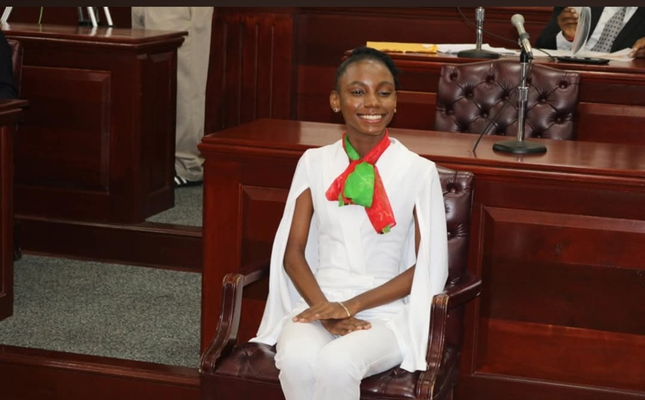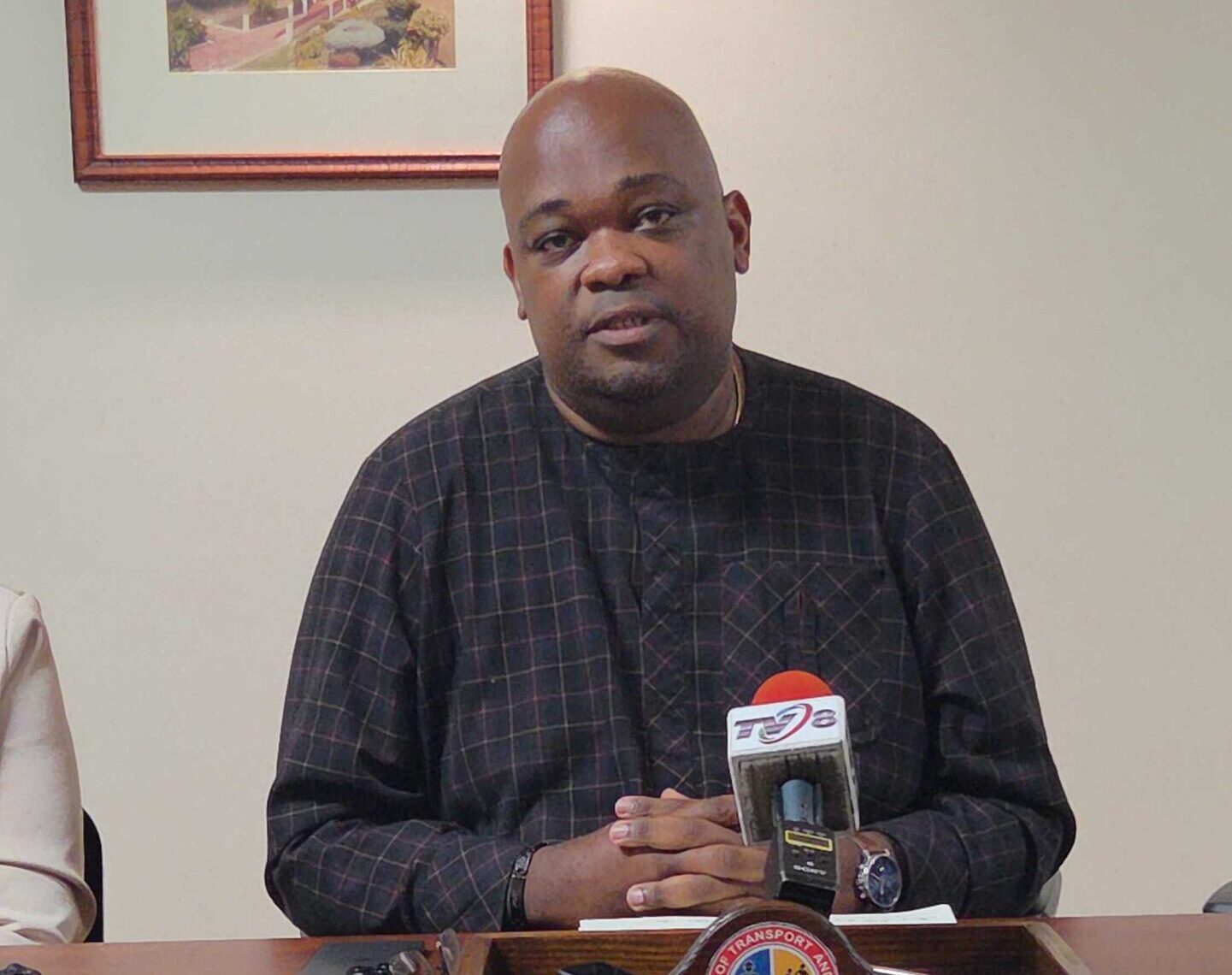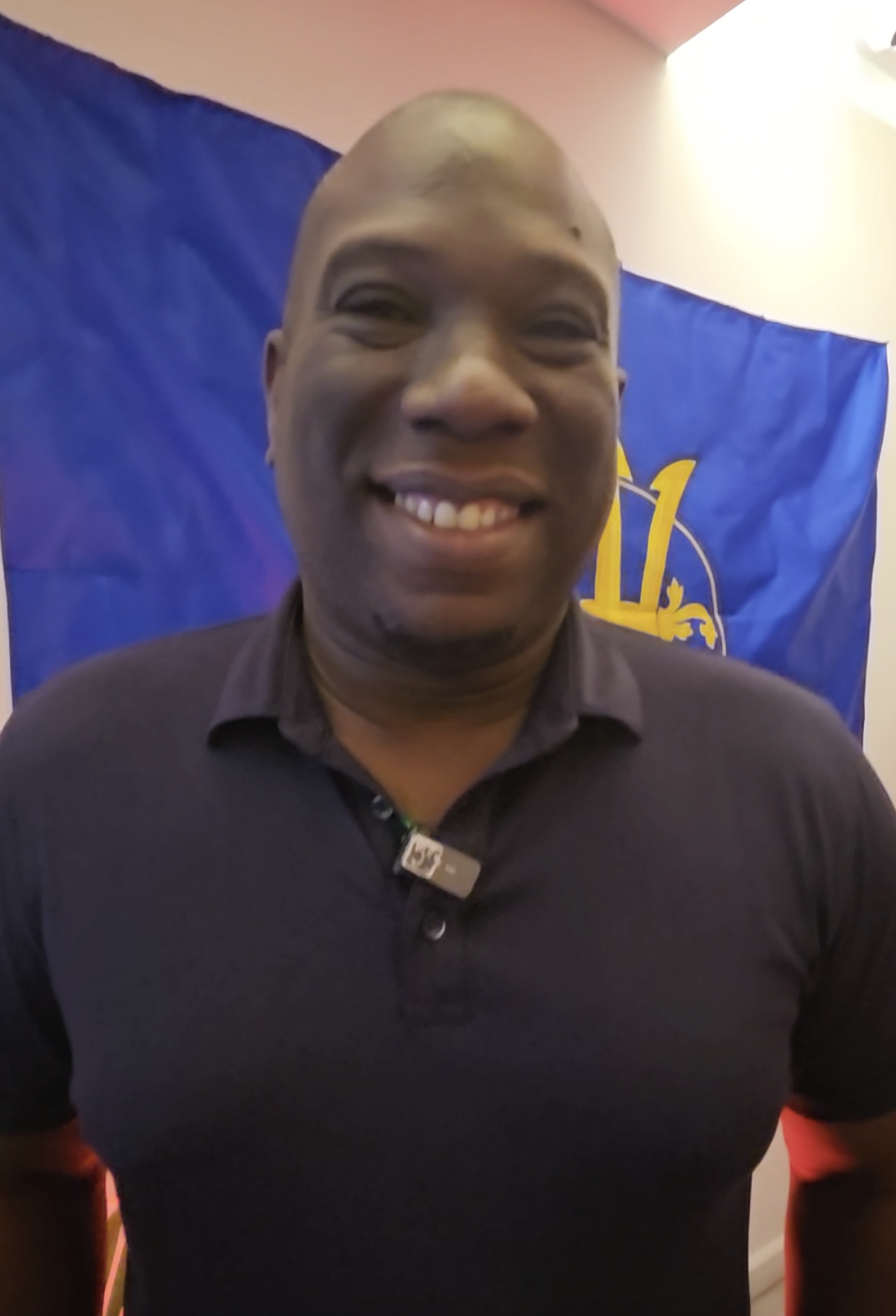
The ECAB 2026 Mr. and Miss Teenage Pageant, one of Antigua and Barbuda’s most anticipated youth-focused entertainment events, has earned high praise from the nation’s Creative Industries Minister Dwayne George, who celebrated the production as a standout tribute to the talent, self-assurance and untapped potential of the country’s younger generation. In comments following the conclusion of the pageant, George commended organizers for delivering a polished experience that balanced professional production values with broad audience appeal, noting that every segment of the event flowed seamlessly from its opening moments to the final announcement of results.
Beyond recognizing the work of production teams, George extended warm, sincere congratulations to every young contestant who took the stage, highlighting the poise and high standard of performance each participant brought to the competition. “Each of you stepped onto this stage with grace and skill, and you have made the entire nation of Antigua and Barbuda proud,” the minister stated, emphasizing that the pageant provided a meaningful platform for young people to grow and showcase their abilities.
George also took the opportunity to thank the full network of contributors that made the event possible, including the Antigua and Barbuda Festival Commission, national government bodies, corporate sponsors, community partners, volunteer organizers, competition judges, the full production crew and every other stakeholder invested in the pageant’s success. “It was clear from every small detail of the event how much hard work, dedication and passion every person involved poured into making this happen,” George said.
Looking ahead to the nation’s future, the minister framed the contestants as emerging leaders and young ambassadors for Antigua and Barbuda. Through their demonstrated talent and clear potential, he argued, these young people continue to inspire communities across the country, offering a powerful reminder that Antigua and Barbuda’s future remains bright and full of possibility.
作者: admin
-

COMMENTARY: Review of ‘Fragments of the Dawn’ by Edward Oliver LeBlanc
Literature has long held the power to divide works into two distinct camps: those crafted merely for casual diversion, and those that lift the human spirit, force collective conscience to confront uncomfortable truths, and shed light on the shared moral character of a community. Edward Oliver LeBlanc’s *Fragments of the Dawn*, a recently published posthumous poetry collection, falls unreservedly into the second transformative category. Shared with the author of this analysis by Ewart LeBlanc — the late statesman’s eldest son and a respected public figure — the collection is far more than a mere compilation of verse. It is a deep, contemplative exploration of core themes: life, national identity, systemic suffering, collective justice, intergenerational memory, the dignity of labor, and inherent human worth. As a cultural and intellectual gift, it holds profound meaning for both Dominica and the broader Caribbean region.
Reading *Fragments of the Dawn* is an intimate invitation into the mind and soul of a veteran statesman, who carried the quiet humility of a Dominican peasant alongside the sharp, trained intellect of a scholar, agricultural scientist, and apiarist. LeBlanc’s verse is irrevocably rooted in the lush, natural beauty of Dominica — its rushing rivers, ancient forests, brutal tropical storms, towering peaks, fertile valleys, and tight-knit village communities. Yet his work expands far beyond the bounds of geography to offer universal reflections on the core of humanity. The rhythm of his lines mirrors the journey of a people stepping out of the shadows of colonial rule into newfound self-awareness and collective dignity.
LeBlanc’s rise to become one of the most transformative political leaders in Dominican history mirrored the social change he spent his career championing. Born in the rural village of Vieille Case on October 3, 1923, he emerged from working-class origins to become the enduring voice of Dominica’s working people and peasant communities. Trained in agricultural science at the Imperial College of Tropical Agriculture in Trinidad, he returned to his home island with a deep, abiding respect for rural life, manual labor, and national self-sufficiency. His early work with the Dominica Trade Union and the Dominica Labour Party placed him at the forefront of anti-colonial and working-class organizing during an era when all political and economic power was hoarded by a small, colonial-aligned elite. By 1961, LeBlanc had risen to the role of Chief Minister of Dominica, and in 1967, when the island gained Associated Statehood, he became the nation’s first Premier.
Alongside Dominica Labour Party co-founder Phyllis Shand Allfrey, LeBlanc served in the West Indian Federal Parliament based in Port of Spain, Trinidad, under West Indian Federation Prime Minister Sir Grantley Adams. When the federation dissolved in 1962, after Jamaica and Trinidad chose to leave the union and pursue full independence separately, LeBlanc emerged as a key leader in organizing the “Little Eight” — a coalition of smaller Caribbean nations working to rebuild a unified regional federation. He worked tirelessly to persuade leaders of Antigua, Barbados, Grenada, St. Kitts, St. Lucia, and St. Vincent to join Dominica in forging a new regional union. Though the effort ultimately failed to unite the Little Eight, two of LeBlanc’s poems — *The Little Eight* and *Towards a West Indian National Song* — reveal his lifelong commitment to Caribbean integration and his unwavering support for African independence movements.
LeBlanc’s political impact on Dominica cannot be overstated. He reshaped the nation’s social and political landscape by centering the needs of “the little man”: laborers, smallholder farmers, fishers, domestic workers, and rural villagers who had been systematically sidelined under colonial rule. Under his administration, Dominica expanded public access to education, healthcare, road infrastructure, affordable housing, pension benefits, and local village development. At the same time, he nurtured a new wave of cultural nationalism rooted in the dignity of Dominican identity, the Kwéyòl language, and African-Caribbean cultural traditions.
His government democratized political participation in a way that had never been done before in Dominican history, making ordinary people feel seen and represented within the structures of state power. Though critics at times took issue with his populist approach and confrontational political style, LeBlanc remains widely revered as the “Father of the Dominican Nation” for the fundamental shift he created in both the material and psychological conditions of Dominican society. He replaced the culture of deference demanded by colonial rule with a new national ethos of self-confidence and collective social uplift.
Across the collection, LeBlanc reveals himself not just as a political leader, but as a philosopher-poet of liberation. His verses return again and again to the cycles of life, the moral obligations of individuals and societies, the suffering created by systemic exploitation, and the eternal conflict between material greed and spiritual integrity. In works such as *Life’s Philosophy* and *The Cycle of Life*, he grapples with questions of mortality, intergenerational legacy, and the ethical weight of human existence.
What stands out most in this body of work is its striking fusion of accessible simplicity and profound depth. LeBlanc’s language is approachable for everyday readers, while its philosophical implications are broad, resonant, and enduring.
Particularly moving are the verses that grapple with colonial oppression and the dehumanization of African-descended people under systems of racial and economic domination. In haunting lines that describe enslaved and exploited workers’ “naked” backs under the unforgiving midday sun, LeBlanc documents the violation of women, the denial of dignity to working people, and the theft of peasant labor. In doing so, he turns poetry into a living historical testimony. Yet the collection never descends into mere bitterness. Instead, it points toward renewal, reclamation, and the enduring triumph of human resilience. Readers can clearly recognize the same moral force that drove LeBlanc’s political leadership during Dominica’s most transformative decades.
LeBlanc’s professional background as an agricultural scientist and apiarist adds unique depth and texture to his poetry. His sensitivity to the rhythms of nature — changing seasons, living soil, life-giving rain, growing seeds, maturing trees, the labor of cultivation — permeates every page. In his writing, nature is not decorative; it is a teacher. His agricultural imagery becomes a powerful metaphor for nation-building: requiring patience, sacrifice, steady growth, and periodic renewal. Just as a beekeeper understands that collective effort sustains the entire hive, LeBlanc understood that national development depends on social cooperation, shared discipline, and a common purpose. His scientific understanding of cultivation deepened his philosophical understanding of humanity.
Beyond his public life, LeBlanc was a devoted family man, and the love of his home created the nurturing environment that allowed his creativity to flourish. In 1949, he married Ethel Patrick, and the couple raised five children: Ewart, Erin, Einstar, Earlsworth, and Eustace. Their loving home became a spiritual cocoon that fostered a shared commitment to community, justice, and the power of the written word. Earlsworth LeBlanc often recalls that Rudyard Kipling’s poem “IF” was posted on the family home door, a small detail that reflects LeBlanc’s lifelong immersion in literature and moral philosophy.
The collection carries a distinct, deeply rooted Caribbean sensibility: reflective, communal, spiritually awake, and historically conscious. It echoes the region’s oral traditions, village wisdom, and ancestral memory. It challenges readers to resist colonial conditioning and racial prejudice not through hatred, but through self-knowledge, dignity, creativity, curiosity, and moral independence. This is literature serving its highest purpose: the liberation of the mind.
It is no coincidence that LeBlanc’s distinguished relative, Dr. Irving W. André, has built a prominent place for himself within Dominica’s literary and intellectual landscape. Over decades of rigorous scholarship, historical preservation, and literary advocacy, Dr. André has written extensively on Dominican history, politics, identity, and culture, ensuring that the Dominican experience is documented with depth, dignity, and intellectual rigor. His work reflects the same commitment to national consciousness, social justice, and historical memory that defined LeBlanc’s public life and philosophical outlook.
This shared commitment to literary and historical preservation found institutional form in Pont Casse Press, founded in 1992 by Dr. André and Gabriel J. Christian, Esquire. The press was created with an explicit mission to advance Dominican history, literature, political thought, and cultural identity. Over the decades, it has grown into a critical intellectual repository for Dominican scholarship and creative expression, preserving stories that would otherwise have been lost to historical neglect or colonial indifference. In every sense, *Fragments of the Dawn* fits squarely within this noble mission: it is a work committed not just to artistic expression, but to the moral and intellectual liberation of a people.
The tradition of literary stewardship within the extended LeBlanc family underscores a deeper truth: the struggle for national progress is not limited to politics alone. It must also be waged in the realms of literature, education, philosophy, and historical preservation. Edward Oliver LeBlanc helped liberate the Dominican people politically and materially; today, scholars and writers like Dr. André, and institutions like Pont Casse Press, continue that liberating work in the realm of ideas, collective memory, and cultural identity.
For this reason, *Fragments of the Dawn* deserves a place on every bookshelf in every Dominican home and every Dominican school. Young people, in particular, should engage with these poems, because they offer not just literary beauty, but moral and ethical formation. In an era defined by rampant materialism, constant distraction, and widespread historical amnesia, LeBlanc’s work reminds readers of the values of decency, discipline, compassion, introspection, and national consciousness. It teaches that every ordinary laborer, farmer, mother, fisherman, or child carries inherent dignity and philosophical worth.
It was a distinct honor to participate in a recent public discussion hosted by Sheridan Gregoire on Q95 FM, alongside Ewart LeBlanc and Earlsworth LeBlanc, to explore this landmark contribution to Dominican literature. The discussion reaffirmed a core truth: Edward Oliver LeBlanc’s literary legacy is inextricably tied to the political and moral awakening of the Dominican people.
Ultimately, *Fragments of the Dawn* is far more than a collection of poetry. It is the reflective voice of a nation-builder, who understood that true independence is not just political — it is psychological and spiritual. It is the testimony of a man who believed that literature, philosophy, labor, and public service must all work together to lift up humanity. In these poems, Edward Oliver LeBlanc continues to guide Dominica — not from a political platform, but from the enduring realm of ideas, collective memory, and moral imagination. This work deserves careful study, broad circulation, and permanent recognition as a landmark contribution to Caribbean intellectual and literary history.
-

Big wave slammed MV Barima; 67 rescued- Edghill
In the early hours of Sunday, July 19, 2026, Guyana’s Public Works Minister Juan Edghill confirmed that the sinking of the MV Barima ferry late Saturday off the Essequibo Coast was caused by a massive, unexpected wave that capsized the vessel. A large-scale, multi-agency search and rescue operation is still ongoing to locate the remaining passengers and crew who are still unaccounted for after the disaster.
According to official passenger and crew manifests, 116 passengers and 17 crew members were on board the vessel when it sank. As of Sunday morning, rescue teams had pulled 67 people from the water, including 15 children and multiple crew members. Edghill shared the preliminary finding of a large wave causing the capsize during a briefing with family members of missing crew, speaking shortly after a formal press conference held at the Umana Yana.
During the briefing, the daughter of 55-year-old missing crew member Richard Moe — who had worked for Guyana’s Transport and Harbours Department since he was 14 years old — was comforted by Maritime Administration (MARAD) Legal Advisor Thandi Mc Allister, who was also present for the meeting. Edghill noted that all survivors interviewed so far have corroborated the sudden, wave-driven capsize, but a full formal investigation has already been launched to rule out other potential causes, including collision with an unmarked submerged object.
The minister also warned against spreading unconfirmed information, as spotty cellular service in the remote accident zone has made it difficult to verify early reports consistently. Government officials first received the ferry’s distress signal at 11:00 PM Saturday night. With daylight breaking on Sunday, the operation has been expanded to cover a wider search area, with assets from the Guyana Defence Force Coast Guard, MARAD, and private partners including an OMNI helicopter with specialized rescue swimmers joining the effort.
To support the response, the Ministry of Health has activated emergency operations centers in Regions Two and Three to provide immediate medical care to survivors. Officials have confirmed that the names of rescued individuals will not be released to the public immediately, in line with emergency response protocols for major maritime incidents.
The MV Barima, a ferry that served the remote riverain community of Port Kaituma, which is only accessible via ocean-going ferry service, was originally constructed in Scotland in the 1930s. Officials confirmed that the vessel has undergone repeated periodic rehabilitation and upgrades over the decades to keep it in operational service for Guyana’s remote northwest coastal communities.
-

England clinch third-place finish at World Cup
The 2026 FIFA World Cup third-place play-off delivered one of the most dramatic, high-scoring matches in the tournament’s history, as England held off a frantic second-half French comeback to claim a 6-5 victory and secure the bronze medal, with Bukayo Saka emerging as the hero of the day with a match-defining hat-trick.
Coming into the fixture, England carried the bitter disappointment of a gut-wrenching semi-final exit to defending champions Argentina, where Saka had been left an unused substitute. Many expected the hangover from that defeat to linger, but Gareth Southgate’s side brushed off their heartbreak to produce a devastating first-half display that left France reeling. Within the opening 20 minutes, Declan Rice and Ezri Konsa put England firmly in control, before Saka found the back of the net twice before the interval to push the Three Lions’ lead to an unassailable-looking 4-0 at halftime, capping a chaotic opening 45 minutes of relentless attacking football.
However, the tide of the match turned completely after the break as France roared back into contention. Kylian Mbappe was at the heart of the comeback, scoring either side of a goal from young forward Bradley Barcola to bring Les Bleus within one goal of England. The French frontline missed several clear-cut chances to draw level, but Mbappe’s performance earned him a place in the history books: his two strikes took his career World Cup goal tally to 22, moving him past Argentina’s Lionel Messi to become the tournament’s all-time leading goalscorer, and also secured his position at the top of the race for the 2026 Golden Boot.
England reclaimed their breathing room in the 87th minute when Saka completed his hat-trick from the penalty spot, after Djed Spence was fouled in the box by French defender Malo Gusto. The drama was far from over, however: Ousmane Dembele curled home a late strike in the sixth minute of stoppage time to pull the score back to 5-4, setting up a tense finish that stretched into eight minutes of added time. In the final moments of the match, Jude Bellingham produced a moment of magic, jinking past France’s tired defence to slot home the sealing goal in the 98th minute, securing the three points and the bronze medal for England.
Bellingham’s seventh goal of the tournament means he ends the 2026 World Cup as the highest-scoring England men’s player at a single edition in history. For the national team, the third-place finish marks their best men’s World Cup result since they lifted the trophy on home soil in 1966, and their highest ever ranking at a World Cup held outside of the United Kingdom. The 10-goal thriller also broke a 68-year-old record, becoming the highest-scoring third-place match in World Cup history, surpassing the 1958 fixture that saw France beat West Germany 6-3.
-

Guyana: Meer dan 50 mensen gered na noodoproep passagiersschip MV Barima
A large-scale multi-agency search and rescue operation is ongoing in Guyana’s Northwest District after the passenger ferry MV Barima issued an emergency distress signal late Saturday while en route to Port Kaituma. As of the latest update, 53 of the 116 people on board have been rescued, with teams continuing their systematic search through the coastal area near Iron Punt, off the Pomeroon River.
Public Works Minister Bishop Juan Edghill confirmed details of the incident, stating the vessel departed its starting point at approximately 3:15 p.m. local time carrying 116 passengers and crew. The Timheri Control Tower received the distress call at 11:01 p.m. local time, and emergency response protocols were activated immediately.
To date, the operation has brought together government agencies and private sector stakeholders in a coordinated effort to locate the remaining missing people. According to official safety records, the MV Barima was fully compliant with regional maritime safety requirements, equipped with 250 life jackets and six inflatable lifeboats. Air and sea units from Guyana’s Regions Two and Three have been deployed to expand search coverage, while medical teams have been stationed onboard rescue vessels, with a government aircraft converted into a floating mobile medical hub to provide urgent care for recovered survivors.
Rescue crews worked through the overnight hours to cover the search area, and top Guyanese leadership is closely monitoring the evolving situation. Acting President and Prime Minister Mark Phillips maintains constant communication with on-scene teams to track progress, with the national government placing the highest priority on the safe recovery of all passengers and crew.
President Irfaan Ali, who is currently outside of Guyana’s jurisdiction, issued a statement expressing profound concern over the vessel’s capsizing. “I am deeply affected by the capsizing of the MV Barima last night. Even though I am currently out of the country, I remain in constant contact with the prime minister, and the entire cabinet is fully engaged in the national response to this incident,” Ali said. “Our thoughts and prayers are with the passengers, crew and their families. Their safety is our number one priority right now.”
Ali also extended his appreciation to the first responders and rescue personnel leading the operation. “I deeply value and support everyone who has worked tirelessly since the incident occurred. Our entire nation stands behind you on this mission, and no effort will be spared to rescue every person on board,” he noted. The president called on all Guyanese people to keep the affected passengers, their families and the rescue teams in their thoughts and prayers, adding, “Let us remain united in hope through this difficult time.”
Authorities have not yet released details on the specific circumstances that led to the vessel’s emergency situation. Minister Edghill reaffirmed the government’s commitment to the ongoing operation, saying, “We have an active search and rescue mission ongoing, and we are praying for the safety of every person still missing. We have received broad support from multiple agencies, and we are deploying every available resource to find and rescue everyone.” Official updates will be issued to the public as more information becomes available.