作者: admin

  • Regering in lastige positie bij zoeken oplossing asfalteringsproject Van ’t Hogerhuysstraat

    Regering in lastige positie bij zoeken oplossing asfalteringsproject Van ’t Hogerhuysstraat

    A months-long legal impasse over a stalled Surinamese road asphalt project has moved into a new phase, with government representatives and contractor Baitali N.V. launching constructive negotiations to find a mutually workable solution, according to Baitali CEO Farsi Khudabaks.

    The conflict centers on the asphalt project for Van ’t Hogerhuysstraat and Slangenhoutstraat, part of a larger infrastructure initiative fully funded by the Inter-American Development Bank (IDB). After the government awarded the construction contract to rival firm Kuldipsingh N.V., Baitali launched legal action, arguing it had been wrongfully disqualified from the original tender process.

    The cantonal court ultimately ruled in Baitali’s favor, ordering the government to withdraw the existing award, re-evaluate Baitali’s bid, and re-run the tender process in line with judicial standards. The ruling did not order the contract to be automatically reissued to Baitali, but it did invalidate the unsubstantiated grounds used to exclude the firm from consideration initially. What followed, however, was an unexpected standoff: the IDB has threatened to pull all funding for the project if the government complies with the court’s order, putting the administration in an impossible bind between upholding judicial rulings and retaining critical infrastructure financing.

    To ramp up pressure on the government to enforce the original ruling, Baitali launched a new summary proceeding, asking the court to increase the daily astreinte (conditional fine) for non-compliance from SRD 5,000 to SRD 1 million. No ruling has been issued in this second case yet, but for the first time since the dispute began, both sides are now talking outside the courtroom.

    Khudabaks confirmed that while no binding resolution has been put forward yet – including no agreement to withdraw Baitali’s latest legal claim, though that remains on the table as a possible outcome of talks – the shift to negotiation is a marked improvement after years of confrontation solely through legal channels. “The government has acknowledged mistakes were made in the original tender process, and both sides are now working to identify a path that corrects the unfair outcome for Baitali without triggering the IDB’s funding withdrawal,” Khudabaks explained in a statement.

    He emphasized that the dispute is not with Kuldipsingh N.V., which secured the contract through the contested process. “We have never had any issue with Kuldipsingh. This conflict is about the integrity of the tender process and compliance with judicial orders, not any dispute with the current awarded contractor,” he said.

    Still, key questions remain unresolved, particularly the IDB’s conflicting stance on the impasse. While the IDB’s president has publicly stated the organization respects national judicial process, the threat to pull funding if the ruling is implemented remains in place, continuing to complicate government negotiations.

    Khudabaks stressed that a fast resolution is critical for the public. The project can only move forward during the upcoming dry season, so all parties need to reach a deal quickly to avoid further delays. “At the end of the day, the only people who lose from this standoff are local residents and commuters who rely on these badly upgraded roads every day,” he noted. “That’s why urgent clarity and a resolution are so important.” For now, he called the resumption of talks “an important breakthrough” after a long period of deadlock.

  • Urban security and territorial planning in Haiti

    Urban security and territorial planning in Haiti

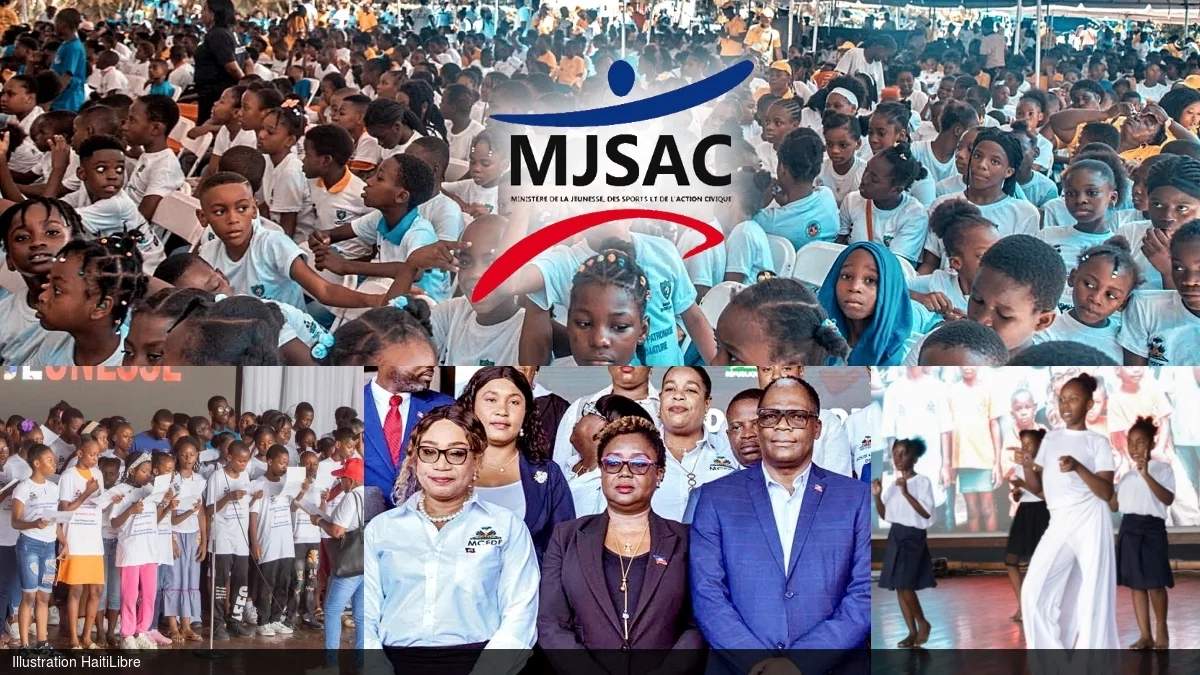
    Against a backdrop of escalating instability driven by armed criminal groups and unregulated urban expansion, Haiti’s national and local governance stakeholders gathered this week for the 10th iteration of “Territories Thursday,” a landmark forum focused on examining how strategic land-use planning can counter rising urban insecurity across the Caribbean nation.

    The event brought together a cross-sector lineup of experts, policymakers, and international partners to unpack the deep links between haphazard urban development, criminal encroachment on national territory, and systemic governance failures that have eroded public safety. Leading opening presentations were David Telcy, an agronomist who coordinates the Quality and Methodology Unit at Haiti’s National Center for Geospatial Information (CNIGS), and Wadelène Coriolan, a computer engineer and Deputy Mayor of the commune of Gressier. Additional insights were shared by Christine Stephenson, Executive Technical Secretary of the Interministerial Committee for Land-Use Planning (CIAT), and Denoil Anténor, a trained lawyer and graduate of the École Normale Supérieure who serves as President of the National Federation of Haitian Mayors (FENAMH).

    Supplementing the domestic stakeholder perspectives were technical and evidence-based contributions from two specialized experts: anthropologist and sociologist Derinx Petit Jean, and Juan Marquez, Deputy Country Director for the United Nations Office on Drugs and Crime (UNODC). The pair delivered data-backed analysis of shifting urban population dynamics and the unique security challenges that have left Haiti grappling with widespread instability.

    Leveraging geospatial maps and curated statistical datasets, panelists collectively emphasized the grave security risks that stem from unplanned, unregulated urbanization. They also drew sharp attention to how transnational criminal networks have exploited weak territorial governance to occupy and misuse Haitian land for illicit activities. According to the forum’s collective findings, these criminal encroachments do not only amplify national instability: they also undermine institutional control over territory, block inclusive local economic development, and fuel the growth of illegal markets that continue to erode quality of life for Haitian citizens.
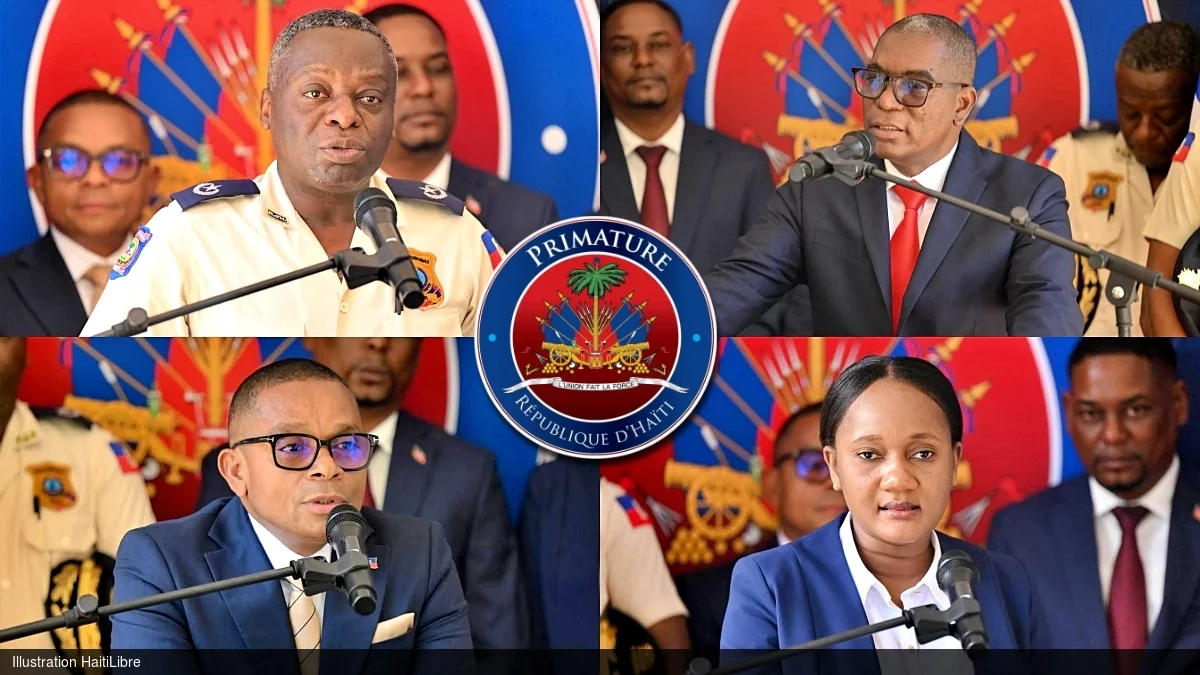
    Speaking on behalf of the Haitian government, Secretary of State for Local Government Sharina Lochard opened the event by praising the productive collaboration between Haiti’s Ministry of the Interior and Territorial Communities (MICT) and the International Council for Territorial Development that made the forum possible. She acknowledged the extraordinary complexity of the work facing local authorities in Haiti’s current crisis context, noting that municipal and communal leaders are on the front lines of efforts to control, manage, and organize national territory amid widespread violence.

    Lochard reaffirmed the Haitian government’s core strategic priorities: restoring national security, stabilizing governance, advancing economic recovery, and moving forward with long-delayed democratic elections. She stressed that strengthening decentralized local governance is a non-negotiable prerequisite to improving land management practices and building cities that are safer, more resilient, and better organized to serve residents.

    For the event’s organizing bodies, the 10th edition of “Territories Thursday” is part of an ongoing, collective effort to advance public and institutional dialogue around the policy and planning mechanisms needed to build well-governed territories and secure urban spaces across Haiti. Closing the forum, Lochard reaffirmed the central role of intentional planning in advancing national stability, noting: “Land-use planning is a key lever for strengthening local governance and sustainably improving the living conditions of our people.”

  • «D-5» 2026 World Cup : The Government calls on all Haitians

    «D-5» 2026 World Cup : The Government calls on all Haitians

    Half a century after Haiti’s last appearance on football’s most prestigious global stage, the Caribbean nation is set to make a historic return to the FIFA World Cup in 2026 — and the Haitian government is calling on every citizen, at home and abroad, to rally behind the national team as the country prepares for this momentous occasion.

    Haiti’s men’s national football team, affectionately known as the Grenadiers, secured their qualification for the 2026 tournament on November 18, 2025 — a date deliberately echoing the 1803 Battle of Vertières, the revolutionary conflict that secured Haiti’s independence and gave the team its iconic name. For the administration of Prime Minister Alix Didier Fils-Aimé, this qualification is far more than a landmark sporting achievement: it is a beacon of hope for a nation that has navigated persistent challenges, and a powerful reminder of what collective perseverance can deliver.

    In an official statement, the government praised the squad for embodying the very values that defined Haiti’s founding revolution. The historic battle cry “Grenadiers to the assault!” has carried through two centuries of Haitian history, and today it echoes in the grit and determination of the players who fought through qualifying to claim their spot at the World Cup. “This qualification represents a powerful symbol of hope, perseverance, and confidence in the future of the Haitian Nation,” the statement reads, noting that the team’s journey mirrors the resilience of Haiti’s revolutionary ancestors, who turned the aspiration for freedom into a historic victory.

    Beyond the pitch, the government frames this World Cup run as a unique opportunity to bridge societal, political and geographic divides, uniting all Haitians under a single national banner. Just as sporting success is built on cohesion, discipline and collective faith, the government argues, national progress depends on these same foundational principles. Football, in this moment, becomes a unifying force that strengthens national pride, boosts Haiti’s international standing, and reaffirms a shared sense of national community.

    The Grenadiers will compete in Group C, with all three of their group-stage matches hosted across the United States. Their campaign kicks off on June 13, 2026 at Boston’s Gillette Stadium, where they will face Scotland at 9:00 p.m. local (USA/Haiti) time. Next, they will take on five-time World Cup champions Brazil at Philadelphia’s Lincoln Financial Field on June 19, also kicking off at 9:00 p.m. Their final group-stage match will be against 2022 World Cup semi-finalists Morocco at Atlanta’s Mercedes-Benz Stadium on June 24, with kickoff scheduled for 6:00 p.m. USA/Haiti time. The group is widely regarded as a challenging draw: Morocco currently ranks as Africa’s top national team, while Scotland is known for its physical, robust style of play, and Brazil remains one of the tournament’s perennial favorites.

    The official roster of players called up to represent Haiti at the 2026 World Cup is available via the HaitiLibre portal, where fans can also access full coverage of the team’s pre-tournament preparation, including a recent 4-0 friendly win over New Zealand, a run-down of qualifying matches, and government-led initiatives to support national viewing events for the public. The government extended its call for unity to the millions of Haitians living in the diaspora as well as citizens across all 10 of Haiti’s domestic departments, urging everyone to stand behind the Grenadiers throughout the competition.

    “This success illustrates the immense potential of our youth and the ability of our people to accomplish great things when they move forward together,” the statement notes. The government’s message is clear: the 2026 World Cup is more than a sporting event — it is a chance to show the world that Haiti stands tall, resilient and unified, capable of turning collective dreams into historic reality.

  • Barbados and British Virgin Islands tourism leaders receive top regional recognition at CTO awards

    Barbados and British Virgin Islands tourism leaders receive top regional recognition at CTO awards

    The Caribbean Tourism Organization (CTO) capped the first day of New York’s 2026 Caribbean Week with its third annual Caribbean Women in Tourism Leadership Awards, a ceremony that celebrated outstanding female leadership across the region’s tourism sector and laid groundwork for the next generation of women industry leaders. Held on Monday at the InterContinental New York Times Square, the event drew tourism stakeholders, industry executives and government officials from across the Caribbean and beyond to honor women whose work has strengthened the sector, driven destination growth and inspired emerging talent.

    Two leading industry figures took home the event’s top annual awards, selected via peer voting among regional tourism professionals. Andrea Franklin, who serves dual roles as Chief Executive Officer of Barbados Tourism Marketing Inc. and Chair of the CTO Board of Directors, claimed the 2026 title of Director of Tourism of the Year. Luce Hodge-Smith, Junior Minister of Tourism and Culture for the British Virgin Islands, was named 2026 Minister/Commissioner of Tourism of the Year for her leadership in advancing the territory’s tourism profile.

    The CTO Secretary-General’s Distinguished Service Award was presented to Dr. Lisa Indar, Executive Director of the Caribbean Public Health Agency (CARPHA). Dr. Indar was recognized for her transformative work building safer, healthier tourism destinations across the Caribbean while advancing industry-wide adoption of sustainable tourism practices that balance growth with environmental and community stewardship.

    In one of the ceremony’s most anticipated segments, six pioneering women with decades of impact on Caribbean tourism were inducted into the Caribbean Women in Tourism Leadership Hall of Fame. The 2026 inductees are Valérie Damaseau, Commissioner of Tourism and Culture for Saint-Martin; Marsha Henderson, Minister of Tourism for St. Kitts and Nevis; Rosa Harris, Director of Tourism for the Cayman Islands; Beverly Nicholson Doty, CEO of Figment Design; Petra Roach, Director of Sales and Marketing at Wyndham Grand Barbados; and Karolin Troubetzkoy, Executive Director of Marketing and Operations at St. Lucia’s Anse Chastanet and Jade Mountain Resorts. Each inductee was honored for their enduring contributions that have shaped the Caribbean tourism landscape over decades of service.

    The event featured a keynote address from Christine Valls, Managing Director for Latin America and the Caribbean at United Airlines. Drawing on her decades of experience in the aviation and travel sector, Valls shared insights on what drives effective female leadership, the critical role of innovation and cross-sector collaboration in advancing tourism growth, and the urgency of creating accessible pathways for women to advance into leadership roles across the industry.

    Beyond honoring established leaders, the ceremony marked two major new initiatives designed to lift up the next generation of Caribbean women in tourism. Organizers launched the *From Her to Her: From Today’s Female Leaders to Tomorrow’s Tourism Stars* scholarship program, a scholarship fund created to support young Caribbean women pursuing tourism-focused higher education and career entry. A live auction held during the awards ceremony raised an initial US$13,000 for the fund, which will be administered by the CTO Foundation. Going forward, the fund will award annual financial grants to high-potential female Caribbean students enrolled in tourism-related academic programs.

    Attendees also got an exclusive first look at *From the Sea Suite*, a new print magazine from CTO that centers the stories, achievements and professional insights of influential women working across all segments of Caribbean tourism. The publication is scheduled for its official global print launch this October at the CTO State of the Tourism Industry Conference, which will be hosted in Georgetown, Guyana from October 5 to 9, 2026.

    In a statement shared after the event, CTO leadership emphasized that the awards program, backed by the Antigua and Barbuda Tourism Authority, fills a critical gap in recognizing the outsized contribution of women to Caribbean tourism, one of the region’s most vital economic sectors. Beyond recognition, the initiative seeks to build a legacy of mentorship and opportunity that will keep the Caribbean tourism industry growing and inclusive for decades to come.

  • Cuba and Haiti affect Latin American growth

    Cuba and Haiti affect Latin American growth

    In its latest 2026 regional economic outlook published in June, the United Nations Economic Commission for Latin America and the Caribbean (ECLAC) has revised down its projected growth rate for the region from the 2.3% forecast made in December 2025 to 2.2%, with prolonged crises in Cuba and Haiti identified as the primary factors dragging down the regional average.

    The UN agency’s analysis warns that 24 out of the 33 economies in the region are set to see an expansion slowdown in 2026, extending a stretch of four consecutive years where regional growth has hovered around 2.3% — a trend ECLAC characterizes as a persistent low-growth trap that limits job creation and poverty reduction across the bloc.

    Cuba is expected to register the sharpest contraction across the region, with ECLAC projecting a 6.5% economic shrinkage for 2026, a deterioration from the 3.8% drop the island recorded in 2025. Haiti, meanwhile, is forecast to shrink by 1.4% this year — a smaller decline than 2025’s 2.7% contraction, but still a continued drag on overall regional performance.

    The impact of these two struggling economies on the regional average is substantial: when the two crisis-hit nations are excluded from calculations, the 2026 average growth for the rest of Latin America and the Caribbean climbs to 3.9%, a modest uptick from the 3.8% expansion the region excluding Cuba and Haiti posted in 2025. This gap makes clear the outsized distorting effect of the two countries’ ongoing economic collapses on regional aggregate data.

    Cuba’s economic crisis has deteriorated dramatically in the first half of 2026, triggered by a critical loss of oil imports. Following the capture of Venezuelan leader Nicolás Maduro on January 3, Cuba lost 80% to 90% of its crude oil supplies from Venezuela, which amounted to between 25,000 and 35,000 barrels of oil per day. Shortly after, Mexico suspended all oil shipments to Cuba on January 9 under pressure from the United States, and former U.S. President Donald Trump signed Executive Order 14380 on January 29, which enforces secondary tariffs on any third country that continues to export oil to the island. This oil supply shock has gutted Cuban energy infrastructure and industrial production.

    Independent analysts have offered an even grimmer outlook for Cuba: The Economist Intelligence Unit projected in February 2026 that the Cuban economy will contract by 7.2% this year, a deeper shrinkage than ECLAC’s official estimate. In contrast to the collapse in Cuba, the region sees stark growth disparities, with Guyana leading all regional economies at a projected 16.3% expansion in 2026, driven by booming output from its fast-growing offshore oil sector. Venezuela follows with a projected 6.5% growth, while Nicaragua and Paraguay are both forecast to expand by 4.5% this year.

    External headwinds are also adding pressure to vulnerable economies across the region. In the first three weeks of April 2026, the price of West Texas Intermediate crude oil was 74% higher than the average price recorded in December 2025, creating new global inflationary pressures that hit already weakened economies like Cuba’s particularly hard.

    Cuban President Miguel Díaz-Canel’s administration has repeatedly pointed to the longstanding U.S. trade embargo as the core cause of the country’s economic collapse, and ECLAC’s data confirms that Cuba is by far the worst-performing economy in the entire Latin American and Caribbean region. Notably, the Cuban government’s official 2026 projection puts economic growth at 1% for the year, a figure that independent economists widely dismiss as completely disconnected from on-the-ground economic realities.

  • Derde helft WK 2026: Van ‘groep des doods’ tot verrassingen

    Derde helft WK 2026: Van ‘groep des doods’ tot verrassingen

    Since the inaugural men’s FIFA World Cup kicked off in 1930, only eight distinct national sides have lifted the sport’s most coveted global trophy. In just days, the 2026 edition will make history as the first expanded tournament to feature a record-breaking 48 competing nations, bringing a brand-new competition format to the world’s biggest sporting event.

    Under the restructured rules, the group stage will be split into 12 separate groups of four teams apiece. Twelve seeded teams, including three co-host nations and eight top-ranked sides, have already been distributed across the draw. The tournament’s four highest-ranked seeded teams—Spain, Argentina, France, and England—have each been placed in separate quadrants of the new tournament draw structure, a format adapted from professional tennis competition.

    FIFA confirmed that if the top four seeded sides all win their respective groups, they will not face each other until the semi-final stage of the knockout bracket. After the round-robin group play concludes, the top two teams from each group will automatically advance to the expanded 32-team knockout round. They will be joined by the eight highest-ranked third-place finishers from across all groups, creating more pathways for underdog sides to make a deep run than in previous tournaments.

    Ahead of the tournament’s opening kickoff, football analysts have ranked all 12 groups from the toughest to easiest draw, and named two early favorites expected to secure automatic knockout qualification from each pool. While pre-tournament favorites are a longstanding tradition, the unpredictable nature of football always leaves room for stunning upsets.

    ### Group I: France, Senegal, Iraq, Norway
    Widely labeled this tournament’s “Group of Death,” Group I boasts the highest average FIFA ranking across all 12 pools, making it the most competitive opening stage draw. France enters the tournament as one of the overall title favorites, aiming to reach its third consecutive World Cup final after back-to-back final appearances in 2018 and 2022. Senegal remains one of the most formidable sides on the African continent, bringing depth and experience to the group. Erling Haaland’s Norway is widely viewed as a potential dark horse capable of upsetting the top seeds, while Iraq, which navigated a longer qualification path than most sides, will prove no easy out for any opponent in this tough pool. Analysts name France and Senegal as the early favorites to claim automatic knockout spots.

    ### Group F: Netherlands, Japan, Sweden, Tunisia
    With an average global ranking of 26, this group poses a significant challenge for all sides, led by the Netherlands sitting 7th in global rankings. Japan was the first nation to secure qualification for the 2026 tournament, and recently pulled off a major friendly upset over England at Wembley Stadium. Sweden boasts an elite attacking duo of Alexander Isak and Viktor Gyökeres, who will test even the sturdiest defenses. Tunisia qualified for the tournament without conceding a single goal during its qualification campaign, and is aiming to reach the knockout round for the first time in its World Cup history. The Netherlands and Japan are picked as the most likely sides to claim automatic qualification.

    ### Group L: England, Croatia, Ghana, Panama
    Croatia has reached the final and semi-final in its last two World Cup appearances, and is gunning for another deep run in 2026. It will open its tournament with a highly anticipated clash against England, where manager Thomas Tuchel will make his first major tournament debut in charge of the English national side. Veteran manager Carlos Queiroz will lean on his extensive experience to lead Ghana past the group stage, while Panama enters the tournament as the highest-ranked side from Central America. While England and Croatia are the favorites to advance, analysts note that neither side will have an easy path to the knockout round. Analysts pick England and Croatia to take the two automatic spots.

    ### Group C: Brazil, Morocco, Haiti, Scotland
    This pool features two sides ranked in the global top 10, promising a fiercely competitive round-robin. While Brazil is no longer the dominant global force it was for decades, the side led by legendary manager Carlo Ancelotti remains the favorite to top the group. Morocco, the reigning African Cup of Nations champion, is looking to repeat its stunning 2022 World Cup semi-final run, and enters as Brazil’s biggest challenger for the top spot. Scotland and Haiti are widely expected to battle for third place, but both have the talent to pull off unexpected upsets against the higher-ranked sides. Brazil and Morocco are named as the favorites for automatic qualification.

    ### Group K: Portugal, DR Congo, Uzbekistan, Colombia
    Portugal and Colombia enter as the clear top favorites, but analysts warn against underestimating play-off winners DR Congo and first-time World Cup qualifier Uzbekistan. Legendary Italian defender Fabio Cannavaro leads Uzbekistan in its World Cup debut, with a squad that includes Manchester City rising star Abdukodir Khusanov. Colombia reached its first Copa America final in more than 20 years in 2024, and will challenge Cristiano Ronaldo-led Portugal for the group’s top spot. Portugal and Colombia are picked to claim the two automatic knockout spots.

    ### Group H: Spain, Cape Verde, Saudi Arabia, Uruguay
    Spain enters the 2026 World Cup as one of the overall title favorites, fresh off its victory at Euro 2024. The group stage’s marquee matchup will pit Spain against veteran manager Marcelo Bielsa’s Uruguay, with the two sides widely expected to battle for first place in the pool. Saudi Arabia proved its ability to pull off upsets at the 2022 Qatar World Cup, and is expected to fight Cape Verde for the third place spot that could still earn a knockout berth. Analysts name Spain and Uruguay as the favorites for automatic qualification.

    ### Group E: Germany, Curaçao, Ivory Coast, Ecuador
    While this group has the second-lowest average FIFA ranking across the entire tournament, it still promises plenty of competitive drama. Germany enters the tournament in strong form, hungry to advance past the group stage after early exits in its last two World Cup appearances. Ecuador secured second place in South American qualification and boasts Chelsea star Moises Caicedo in its squad, looking to turn heads on the global stage. Ivory Coast comes into the tournament fresh off an African Cup of Nations title and a friendly upset over France, while first-time qualifier Curaçao remains a complete wild card for opposing sides. Germany and Ecuador are named as the most likely to advance automatically.

    ### Group J: Argentina, Algeria, Austria, Jordan
    Reigning 2022 champion Argentina earned a favorable draw and enters as the overwhelming favorite to top the group. Austria and Algeria are closely matched in global FIFA rankings, and their head-to-head matchup will almost certainly decide which side claims the second automatic qualification spot. While Jordan is making its World Cup debut, it is no pushover: the side finished as 2023 Asian Cup runners-up, scored 32 goals during qualification, and finished undefeated in home matches. Argentina and Austria are picked as the favorites to advance.

    ### Group A: Mexico, South Africa, South Korea, Czech Republic
    This group is ranked as one of the easiest of the tournament, with an average FIFA ranking of 35. Co-host Mexico is looking to capitalize on home-field advantage to secure a top-two finish. South Korea finished undefeated during Asian qualification, and will battle 74-year-old manager Miroslav Koubek’s Czech side for the second automatic spot. South Africa has never advanced past the group stage in World Cup history, but can still qualify for the knockout round as one of the top eight third-place finishers. Mexico and South Korea are named as the favorites for automatic qualification.

    ### Group G: Belgium, Egypt, Iran, New Zealand
    This draw looks like a comfortable path to the knockout round for Belgium, even though its iconic “Golden Generation” of talent has passed. None of Belgium’s opponents in this group have ever advanced past the World Cup group stage, leaving manager Rudi Garcia’s side as the clear favorite to top the pool. Egypt, led by Liverpool star Mohamed Salah, has never won a World Cup match, but holds a strong chance to pick up results against Iran and New Zealand to claim second place. Iran’s pre-tournament preparation has been disrupted by geopolitical instability linked to the conflict between Israel and the United States, leaving its form unpredictable. New Zealand enters as the lowest-ranked side in the group, and faces an uphill battle for qualification. Belgium and Egypt are picked to claim the two automatic spots.

    ### Group D: United States, Paraguay, Turkey, Australia
    Despite having the third-highest average FIFA ranking across all groups, this is considered one of the easier draws, particularly for co-host the United States. The US sits 16th in global rankings, and manager Mauricio Pochettino is counting on star attacker Christian Pulisic to lead the side out of the group. There are no true elite powerhouses in this pool, but play-off qualifier Turkey holds the best chance to join the US in the knockout round. Lower-ranked Paraguay and Australia will both be fighting to claim an upset spot in the round of 32. The United States and Turkey are named as the favorites for automatic qualification.

    ### Group B: Canada, Bosnia and Herzegovina, Qatar, Switzerland
    This group has the lowest average FIFA ranking of the entire tournament at 42, but still promises a tightly contested battle for the top two spots. Switzerland is the highest-ranked side in the pool and has a proven track record of advancing to the knockout round in recent World Cups. Co-host Canada has a disappointing historic World Cup record, but is hoping home advantage under manager Jesse Marsch will deliver a first-ever knockout stage appearance. Bosnia and Herzegovina pulled off a massive play-off upset to eliminate four-time champion Italy, and is targeting an automatic qualification spot, while Asian champion Qatar is also hoping to spring an upset. Switzerland and Canada are picked as the favorites to claim the two automatic knockout spots.

  • Martinique ready to supply Guyana with radioactive drugs to fight cancers

    Martinique ready to supply Guyana with radioactive drugs to fight cancers

    On June 7, 2026, Guyana’s Minister of Health Dr. Frank Anthony made a key announcement during a cancer survivorship celebration hosted jointly by the national Ministry of Health and the non-profit Lotus Cancer Initiative Inc.: the French Caribbean overseas department of Martinique has agreed to supply Guyana’s public health system with specialized radiopharmaceutical nuclear drugs designed to treat specific forms of cancer.

    Discussions between the two jurisdictions to secure this supply have been underway for several months, Dr. Anthony confirmed. An oncology facility in Martinique that manufactures the targeted cancer isotopes has formally agreed to ship the medications directly to Guyanese clinicians, expanding the range of treatment options available to local patients living with hard-to-treat cancers.

    The event brought together dozens of cancer survivors, their families, public health leaders and advocacy supporters to celebrate recovery and highlight ongoing gaps in cancer care. Several survivors shared their personal journeys from diagnosis through treatment, with two guests highlighting the critical support provided by Guyana’s public health system.

    Alyson Chester, a breast cancer survivor currently residing in neighboring St. Lucia, praised the high-quality free care and diagnostic testing she received at the Georgetown Public Hospital (GPHC) Oncology Department, noting that such care would have been prohibitively expensive in her home country. “In St. Lucia, every blood test related to cancer treatment comes out of pocket,” Chester explained. “At GPHC, the entire team—from clinicians to nursing staff—provides compassionate, consistent care that makes patients feel supported through one of the hardest journeys of their lives. You never feel alone there.”

    Prostate cancer survivor Aubrey Knight used his platform to encourage all men over the age of 40 to get routine Prostate-Specific Antigen (PSA) screening, addressing a common fear that has kept many from early detection. Knight clarified that modern prostate screening no longer relies exclusively on uncomfortable digital rectal exams; a simple blood test can now deliver key early insights into cancer risk. “I was scared of the old procedure too, but screening today is quick and simple,” Knight said. “Don’t put off getting tested because of fear—early detection saves lives.”

    Dr. Anthony echoed Knight’s call to action, noting that systemic gender barriers have long delayed prostate cancer diagnoses in Guyana. “Too many men hold off on seeking care until they are already severely ill, when treatment is far less effective,” he said, adding that ongoing public outreach programs have already started to shift this trend, with more men coming in for routine PSA testing than ever before. He urged continued work to overcome the cultural stubbornness that keeps many men from accessing life-saving preventive care.

    Beyond the new agreement for radiopharmaceuticals, Dr. Anthony outlined a series of ongoing public health initiatives to expand cancer care access across Guyana. The government is rapidly increasing the number of mammography screening centers for breast cancer detection across all regions of the country, and has already expanded HPV vaccination coverage to 69% of the target population, with a goal of reaching 100% coverage to eliminate cervical cancer as a public health threat. The public health system also now offers free biopsy testing for patients, eliminating a US$100 out-of-pocket cost that had put the diagnostic procedure out of reach for many low-income Guyanese.

    To further strengthen local cancer care capacity, Dr. Anthony noted that Guyana is building new international partnerships with leading global cancer institutions, including the UT MD Anderson Cancer Center based in Texas, the Pan-American Health Organization (PAHO), the National Cancer Institute of India, and a leading pediatric cancer center in Colombia. “We have to keep growing our local system and access the global expertise we need to improve outcomes for our patients,” the minister explained.

    Dr. Shivani Samlall, CEO of Lotus Cancer Initiative Inc. and an adjunct professor of obstetrics and gynecology at the University of Guyana, said her community-based organization works hand-in-hand with the Ministry of Health to advance cancer care across the country. The group’s core mission is to improve cancer outcomes through public education, prevention outreach, early screening advocacy, patient navigation support, and policy work.

    “Lotus Cancer Initiative is more than an organization—it is a community of survivors, family members, clinicians, volunteers and supporters all united behind a shared vision,” Samlall explained. “We work to raise public awareness, push for more widespread screening, empower communities with life-saving health knowledge, and support patients navigating the complex cancer care system. Our goal is to build a future where fewer people suffer from preventable cancers, and every person facing a cancer diagnosis gets the compassionate, high-quality care, dignity and support they deserve.”

  • Violent offences account for almost half of probation cases

    Violent offences account for almost half of probation cases

    During a milestone celebration marking eight decades of operation, senior Barbadian officials have laid bare the pressing challenges and critical impact of the island nation’s Probation Service, revealing new 2025 statistics that show nearly half of all current probation cases are tied to violent or threatening offenses.

    The anniversary event, held Sunday at the Sanctuary Empowerment Centre in Country Road, St. Michael, featured opening remarks from Minister of Home Affairs and Information Gregory Nicholls, who framed the celebration against a backdrop of growing public safety strain. Nicholls noted the service is operating at a uniquely difficult moment for Barbados, as courts see a steady influx of young male defendants, including teenagers who have not yet reached legal adulthood.

    Citing official 2025 departmental data, Nicholls disclosed that a total of 295 people are currently under active probation supervision across the country. Of that group, 138 – or nearly 47% – were placed on probation for offenses ranging from bodily harm and sexual violence to property crimes committed with threats or intimidation. The minister emphasized that these statistics represent more than just numbers on a spreadsheet; they stand for young Barbadians whose long-term life trajectories remain uncertain.

    “These are not people already handed final conviction sentences – these are individuals diverted to probation supervision. These are our children, Barbadian children, and our collective question is not just how to punish offending behavior, but how we support them to build better futures after their mistakes,” Nicholls explained.

    He went on to outline that the Probation Service fills an irreplaceable role in the national justice system, acting as a final, evidence-based intervention point before offenders face escalating criminal involvement and harsher penalties. “This is not the end of the road for the people who come through our doors. For many, it is the last viable off-ramp to stop their lives from unraveling completely,” the minister said.

    The service delivers a range of structured interventions, including pretrial diversion programs, mandatory pre-sentence reports for courts, ongoing community supervision, targeted counseling, life skills training, and one-on-one mentorship. Nicholls pushed back against common misperceptions that probation is a lenient “soft option” for offenders, noting that properly resourced probation programs have been proven to cut rates of repeat offending.

    That impact is already visible in national data, he added: Barbados has recorded measurable progress in lowering its overall recidivism rate in recent years, a gain that did not occur by chance. It is the product of unglamorous, daily work by probation staff who walk alongside people working to rebuild their lives after conviction, Nicholls said.

    Despite these gains, the service is facing growing operational pressure, most notably a crippling understaffing crisis that has been flagged in recent national conversations about the country’s justice institutions. The Probation Service is not immune to this widespread challenge, Nicholls confirmed, even as officers continue to deliver core services against all odds.

    The 2025 annual output reflects the extreme workload staff are managing: the department completed 492 pre-sentence reports, 519 progress updates for courts, 203 community service assessments, and 117 domestic relation case reports. While these numbers prove the service is still meeting core demands, Nicholls warned that this current level of output is not sustainable long-term – even as it demonstrates the extraordinary commitment of the service’s workforce.

    Nicholls paid tribute to probation officers across the department, noting their critical contributions to public safety often go unrecognized by the general public. Unlike police officers or judges, who regularly receive public acknowledgment for their work, probation staff operate largely behind the scenes, working in courtrooms, office cubicles, family homes and community centers across the island. They manage heavy, complex caseloads and carry the emotional weight of supporting people in crisis, work that rarely draws public attention, he said.

    The minister also highlighted the steady evolution of the service over its 80 years of operation. Today, the department uses a modern digital case management system, offers specialized training in alternative dispute resolution, and runs targeted initiatives including the Community Pillars Mentorship Programme and aftercare services for people released from prison.

    To continue delivering impactful rehabilitation, Nicholls argued, the service needs sustained new national investment. “If we are serious about making rehabilitation a core national justice strategy – and we must be – we have to be equally serious about properly resourcing the institution that delivers that work. That means more frontline staffing, ongoing specialized training, and prioritizing the well-being of our officers just as much as we prioritize outcomes for the clients they support,” he said.

    Chief Probation Officer Dr. Angela Dixon echoed Nicholls’ remarks, celebrating the dedication of every generation of past and current staff that has allowed the service to reach its 80-year milestone. “This 80-year mark did not happen by accident. It was built through God’s grace, the relentless dedication of countless staff across every era, and the unwavering support of community partners and citizens across Barbados,” Dixon said.

    She acknowledged the daily struggles that come with the role, noting that the work extends far beyond what can be summarized in a standard job description. “We all know what it feels like to walk in on a Monday morning to a full caseload and a phone already ringing off the hook. We know what it means to sit across from someone in the middle of a personal crisis and find the right response when there is no official script to follow,” Dixon explained.

    “What this work demands cannot be contained in a job description. It requires us to hold onto hope for people who have already lost hope in themselves, to see the person standing in front of us not for the mistake they made, but for everything they can still become,” she added.

    As the service enters its ninth decade of operation, Dixon encouraged all current staff to carry forward the mission and commitment that has sustained the organization through 80 years of service to the people of Barbados.

  • ‘Fire Kay’ and ‘Zizi’ capture secondary schools soca and calypso crowns

    ‘Fire Kay’ and ‘Zizi’ capture secondary schools soca and calypso crowns

    On Friday, Saint Lucia’s annual National Secondary Schools Calypso and Soca Monarch Competition wrapped up to widespread acclaim, with a new generation of young Caribbean performers exceeding every expectation and wowing crowds with talent that many attendees argued could hold its own against professional senior competitors.

    Split across a full day of dynamic programming, the event opened with the hotly contested Calypso segment in the morning, before shifting to high-octane Soca performances in the afternoon. When the final judges’ scores were counted, two schools claimed top honors: Sir Ira Simmons Secondary School took home the national Calypso title, while Corinth Secondary School secured the Soca crown.

    In the individual Calypso competition, Zalaya “Zizi” Fannis of Sir Ira Simmons Secondary claimed the top spot with her original track “Zizi & I”, which earned her a total of 357 points from the panel of judges. Alex “Lexxii” Pinel of Castries Comprehensive Secondary School finished a close three points behind with his socially conscious performance “S.O.S – Save Our Society”, securing first runner-up.

    Rounding out the top four Calypso finalists were Raygena “Queen Gena” Victor of Patricia D. James Secondary School, whose emotional performance of “Dear Daddy” earned 347 points and second runner-up, and Kenyan “Ti Keno” Osman of Vieux Fort Comprehensive Secondary School, who took third runner-up with 343 points for his track “Teacher”. The additional special award for Best Stage Presence went to Anthony “Mighty Swift” Theophilus of the Saint Lucia Sports Academy, whose dynamic command of the stage captured the attention of judges and attendees alike.

    As the afternoon rolled around, the energy in the venue shifted dramatically for the Soca segment. Backed by raucous groups of school supporters who filled the stands with chants, school colors and homemade signs, every competitor brought infectious energy and commanding stage presence that kept the crowd on its feet throughout the segment.

    When scores were finalized, Kaylee “Fire Kay” Simmons of Corinth Secondary emerged as the new Soca Monarch with her performance of “A Mad Party”, which outscored all competitors. The Soca crown was far from a landslide victory, however: just five points separated Simmons from first runner-up Rickel “Baby T” Joseph of Patricia D. James Secondary, who earned 375 points for his performance of “Ah Bon Ti TayTay La”. Though Joseph narrowly missed taking the top title, his set was widely named one of the most memorable moments of the entire day, drawing some of the loudest cheers and applause from the packed audience.

    Completing the Soca top four were Khloe “Baby K” Joseph of Entrepot Secondary School, who took second runner-up with 341 points for “Put It Up”, and Akayla “Ti Pima” Lewis of Castries Comprehensive Secondary School, who earned 335 points for “Pressure” to claim third runner-up.

    Event organizers have hailed the 2026 iteration of the competition as a resounding success, noting both the exceptional quality of student performances and the event’s critical role in nurturing emerging artistic talent across the island. “This is where we get the next generation of cultural ambassadors, artistes and performers,” said Tamara Gibson, Chairperson of the Carnival Planning and Management Committee, emphasizing the long-term cultural value of investing in youth participation in calypso and soca, two foundational genres of Caribbean culture.

  • Barbadians urged to protect heritage, pass on values

    Barbadians urged to protect heritage, pass on values

    As Barbados marks its annual Heritage Month, a senior cultural official has issued a pressing call to all Barbadians, encouraging them to step into active roles in safeguarding the island nation’s rich cultural legacy and passing down foundational core values to upcoming generations.

    Senior Cultural Policy and Research Officer Sheron Johnson made this appeal during the official Heritage Month interfaith service hosted at James Street Methodist Church this past Sunday. In her address to the gathered congregation, Johnson outlined a core truth that has shaped Barbadian national identity: the country’s strength does not stem from uniform backgrounds or beliefs, but from intentional unity, mutual respect, and cross-community understanding.

    She framed Heritage Month as more than just a ceremonial observance, describing it as a purpose-built opportunity for all Barbadians to pause and reflect on the collective legacy that has forged the modern nation. “Though we may come from different backgrounds, cultures, and denominations, we are united by a common story. Our shared heritage reminds us that the strength of a country is not found in uniformity but in unity,” Johnson told attendees. “Heritage therefore lives in our traditions, our language, our music, our customs, and in the faith that has sustained generations before us.”

    First conceptualized roughly 14 years ago, Heritage Month was designed to bring greater national visibility to Barbados’ cultural assets and amplify the ongoing work of conservation across the country, Johnson explained. Beyond the annual celebration, she emphasized that heritage stewardship is a year-round responsibility: “We recognise that heritage needed to be practised and safeguarded and preserved every day. This month gives us time to pause, to reflect, to gather our thoughts, and it also serves to promote the work programmes and projects that are going on within our ministry and our stakeholders and give them greater impetus and clarity.”

    A key focus of this year’s observance is celebrating the unifying bonds that connect all Barbadians, even amid their diverse lived experiences and beliefs. Johnson specifically highlighted the underrecognized impact of religious and faith communities on Barbados’ decades of social and national development. “It also means appreciating the contributions of various faith communities that have worked to promote justice, peace, education, and service. By respecting one another’s beliefs, we strengthen the bonds that hold our community together,” she said.

    Johnson pushed back against the common misconception that heritage is a static inheritance, noting that it requires active care and intentional transmission to survive. “Heritage was not merely inherited from previous generations but must be actively protected and passed on. The values of faith, integrity, kindness, respect, and love for neighbour must be intentionally passed on to future generations,” she stressed.

    During her address, she also paid public tribute to James Street Methodist Church for its longstanding commitment to preserving the legacy of one of Barbados’ most revered National Heroes, The Right Excellent Sarah Ann Gill. She specifically commended the congregation for its recent restoration work on the historic Hurst Memorial Chapel, as well as its consistent upkeep of Gill’s original gravesite. Johnson added that one of the first official commemorative plaques linked to the Barbados National Register was installed at the site of Gill’s former home this past December, marking a key milestone in national heritage documentation.

    Repeating her urgent call to action, Johnson stressed that proactive conservation is critical to protecting cultural and historical assets before they are lost to time. “It is important that as a nation we preserve historical sites, our languages, traditions, and customs before they disappear. Most importantly, we must teach future generations that heritage is something to cherish, not something to forget,” she said.

    She also echoed earlier remarks from Trevor Prescod, Minister in the Prime Minister’s Office with oversight for Pan-African Affairs and Heritage, who opened Heritage Month last week with a call for young Barbadians to deepen their connection to their personal and national identity and heritage.

    Closing her address, Johnson encouraged every Barbadian to seize the opportunity of Heritage Month to celebrate the nation’s layered history, while contributing to the work of shaping an inclusive, connected future. “Let us honour the faith of our ancestors, cherish the heritage of our nation, and commit ourselves to building a society where every person is valued, respected, and encouraged to contribute their gifts for the common good,” she said.