作者: admin

  • Tottenham Teen Blake Philogene-Bidace Called Up to Represent Antigua and Barbuda

    Tottenham Teen Blake Philogene-Bidace Called Up to Represent Antigua and Barbuda

    A promising young talent from Tottenham Hotspur’s youth development system has earned a prestigious international opportunity, as 16-year-old forward Blake Philogene-Bidace has received a national team call-up to represent Antigua and Barbuda at the upcoming CONCACAF Under-20 Championship hosted in Mexico.

    The teenage attacker will link up with his national side fresh off a standout individual performance for Tottenham’s Under-18 squad, where he netted two goals in a lopsided 5-0 preseason friendly win against Watford held at Tottenham’s state-of-the-art Hotspur Way training complex. The strong showing comes as no surprise to those who have followed Philogene-Bidace’s progression through the North London club’s ranks.

    Though born in England, Philogene-Bidace has been integrated into Tottenham’s academy setup since he joined the Under-15 age group, working his way up through the development pipeline to catch the eye of first-team coaching staff. Most notably, he earned inclusion in the first-team squad for the club’s high-profile preseason tour of Japan in 2024, a milestone that marked him as one of the academy’s most exciting emerging prospects. He also comes from a family with deep roots in top-flight football: his older brother, Jaden Philogene-Bidace, currently competes in the English Premier League, carrying on the family’s athletic legacy.

    For Philogene-Bidace, this call-up represents far more than a single tournament appearance. It gives the young striker a chance to showcase his skills on a respected regional international stage, against some of the top young talent from across North America, Central America, and the Caribbean. Beyond that, the CONCACAF Under-20 Championship itself serves as a critical qualifying pathway for the FIFA U-20 World Cup, meaning a strong run with Antigua and Barbuda could open even more doors for the young prospect’s burgeoning career.

  • Official launch of the binational project «Blue Hispaniola»

    Official launch of the binational project «Blue Hispaniola»

    Last week marked a landmark step in cross-border environmental cooperation between Haiti and the Dominican Republic, as the Pan American Development Foundation (PADF) formally launched the three-year binational initiative *Blue Hispaniola*. The official launch ceremony, hosted at the CODEVI free zone in the Haitian border town of Ouanaminthe, drew a broad coalition of stakeholders spanning both nations, including government representatives, senior PADF officials, delegates from the British government, local political leaders, private sector actors, academic experts, artisanal fishing association representatives, civil society partners, community organizers, and prominent Haitian and Dominican figures focused on marine conservation.

    Funded entirely through a $4 million UK International Development grant via the Ocean Community Empowerment and Nature (OCEAN) program, the initiative is set to run through March 2029, with work concentrated on the ecologically critical shared north coast of Hispaniola. Designed to address the interconnected challenges of overexploited marine resources and vulnerable coastal livelihoods across the island, the project’s core goals are threefold: advance science-backed sustainable management of shared marine assets, bolster economic stability for communities that rely on coastal and ocean resources, and deepen long-term collaborative ties between the neighboring countries around the blue economy.

    A key strength of *Blue Hispaniola* lies in its cross-border, locally led approach: the project has partnered with six community-focused organizations from both countries to build out a transboundary blue economy corridor. This corridor will support sustainable fishing practices, protect threatened coastal habitats, expand market access for small-scale producers, and scale inclusive income-generating activities that benefit local communities rather than external actors.

    Four Haitian organizations anchor the project’s work on the Haitian side: Haiti Efficace, the Essence-Elle Foundation, the Peasant Movement for the Development of Paulette, and the Revolted Feminist Group of Haiti. On the Dominican side, the work is led by two respected civil society groups: the NGO AgroFrontera and Fundación Reddom. Together, the partner organizations will deliver targeted capacity-building for local fishing associations, hands-on conservation training for coastal communities, improved connections to fair local and regional markets, and targeted support to amplify women’s leadership across the entire fisheries value chain.

    The initiative targets tangible, measurable impact across the island: it is projected to directly support more than 8,350 coastal residents, with at least 50 percent of those beneficiaries being women. It will also improve sustainable management practices across 92,250 hectares of vulnerable marine and coastal ecosystems, a region that supports critical biodiversity and sustains tens of thousands of livelihoods. Project leaders have stated that the initiative is designed to serve as a replicable regional model for cross-border blue economy cooperation, centered on the principles of local governance, sustainable natural resource stewardship, and inclusive economic development that lifts up marginalized coastal communities.

    Speaking at the launch, PADF Executive Director Katie Taylor framed the project as a proof of concept for balancing conservation and economic progress. “Blue Hispaniola aims to transform shared waters into shared opportunities,” Taylor said. “When two countries share the same coastline, the wisest investment is one that benefits the communities that depend on it. This project demonstrates that ocean protection and economic development can go hand in hand.”

    For Haiti’s Ministry of the Environment, the launch of the initiative reaffirms the government’s commitment to positioning regional cooperation as a core lever for advancing marine biodiversity protection, growing the blue economy, and boosting climate and economic resilience for coastal communities. The ministry issued a call for all relevant stakeholders to join the effort to sustainably protect the shared marine heritage of Hispaniola, emphasizing that collective action today is critical to securing benefits for both current and future generations across the island.

  • COMMENTARY: Sir Garfield Sobers: The Life Innings That Made All Caribbean People Stand Tall.

    COMMENTARY: Sir Garfield Sobers: The Life Innings That Made All Caribbean People Stand Tall.

    On July 17, 2026, the Caribbean region and the global sporting community mourned the passing of The Right Excellent Sir Garfield St. Aubrun Sobers, OCC, Barbados’ National Hero and one of the most transformative figures in modern Caribbean history. While cricket fans across the world celebrate him as arguably the most complete all-round cricketer to ever step onto a pitch, his legacy stretches far beyond the boundary ropes, weaving deeply into the story of the Caribbean’s journey out of colonialism and into sovereign self-belief.

    Sir Garfield’s on-field statistical achievements remain staggering, even decades after he retired from international cricket. Across 93 Test matches played between 1954 and 1974, he accumulated 8,032 runs at an elite average of 57.78, notched 26 centuries, took 235 wickets, and held 109 catches. He set a new world record for the highest individual Test score at the time with an unbeaten 365 against Pakistan, and made history as the first first-class cricketer to hit six consecutive sixes in a single over. What made his career even more remarkable was his versatility: he excelled as a fast-medium bowler, a left-arm orthodox spinner, and a left-arm wrist spinner, all while maintaining his status as one of the game’s top batsmen. More than 50 years after hanging up his bat, he remains the global gold standard for all-round excellence in cricket.

    But to reduce Sir Garfield’s legacy to cricket statistics is to miss the profound historical role he played as the Caribbean emerged into independence. His international career grew alongside the birth of sovereign Caribbean nations: as visionary leaders from across the region drafted constitutions, raised new national flags, and built the institutions of independent governance, Sir Garfield was building something equally critical to the project of post-colonial nationhood: collective confidence.

    He was a core member of the Caribbean’s golden generation of cricketers, alongside icons including Sir Frank Worrell, Sir Everton Weekes, Sir Clyde Walcott, Conrad Hunte, Rohan Khai, Wes Hall, and Charlie Griffith. Together, they turned the West Indies cricket team into far more than a sporting side: it became a living symbol of a united Caribbean, a region of many nations bound by shared history, shared struggle, and shared ambition. When Sir Frank Worrell broke barriers as the first full-time Black captain of the West Indies, uniting players from across former colonial borders under a single common purpose, he laid a foundation that Sir Garfield would later elevate to unprecedented heights. Long before regional integration was formalized through the creation of CARICOM in 1973 and the Association of Caribbean States in 1994, West Indies cricket proved that the Caribbean could compete, think, and win as one collective people—a spirit that continues to animate regional institutions working toward economic integration, climate resilience, maritime cooperation, and a stronger global voice for the Caribbean today.

    Long before the Caribbean gained significant economic or geopolitical influence on the world stage, it claimed global respect through cultural influence, and Sir Garfield stood as one of the region’s earliest and most effective soft power ambassadors. He earned worldwide admiration not through military or economic force, but through unrivaled excellence, quiet humility, and exemplary sportsmanship. It was no accident that his rise to global fame aligned perfectly with the growth of Caribbean nationalism. When he scored runs and claimed victories against the former imperial power that had introduced cricket to the region, those achievements carried far more than sporting weight: for millions of West Indians, they became symbolic steps in a larger fight for justice, recognition, and repair for the harms of colonialism. Every century he scored restored a piece of collective dignity, every victory challenged long-held racist assumptions of colonial and racial superiority. These were not just marks on a scoreboard; they were symbols of a people reclaiming their confidence.

    Long before reparatory justice became a formal pillar of Caribbean diplomacy, West Indies cricket and Sir Garfield’s leadership helped recover something even more priceless: the self-belief, pride, and dignity of a people. Political independence transferred constitutional power from colonial rulers to local governments, but psychological decolonization required restoring faith in the potential of Caribbean people—and Sir Garfield helped lead that work. He gave generations of Caribbean children the courage to believe they could equal, and even surpass, the nations that once governed them. This is not to say Sir Garfield intentionally framed every innings as a political statement; rather, the context of history invested his performances with profound meaning. Cricket, imported by the British Empire as a tool of colonial socialization, was mastered by the descendants of enslaved and colonized people, and transformed into one of the Caribbean’s most powerful instruments of psychological liberation. As the iconic Trinidadian historian C.L.R. James once wrote, “What do they know of cricket who only cricket know?”—and Sir Garfield’s life stands as one of the clearest illustrations of that timeless truth.

    Sir Garfield’s character was forged by personal hardship long before he found international fame. His father died at sea during World War II when he was still a child, and he was raised in modest circumstances by his mother Thelma, who instilled in him resilience, humility, and perseverance from a young age. A second devastating personal loss shaped his life: in 1959, his close friend and West Indies teammate Collie Smith died in a car accident in England that Sir Garfield survived. Rather than letting grief break him, he turned that tragedy into a renewed sense of purpose, carrying himself with a quiet maturity and dignity that earned admiration across the global cricketing community.

    His life became a powerful affirmation of the Black Caribbean experience: one defined not by victimhood, but by resilience; not trapped by the traumas of history, but strengthened by them; not diminished by adversity, but elevated through relentless excellence. Just as Martin Luther King Jr. advanced the cause of human dignity through moral leadership and nonviolent resistance, Sir Garfield demonstrated on the cricket field that excellence itself could challenge long-held harmful assumptions about race, human worth, and potential. He proved that excellence could be a form of diplomacy: without ever speaking at the United Nations, negotiating treaties, or holding political office, he changed how the world saw the Caribbean, and more importantly, how Caribbean people saw themselves. His achievements became a global passport for regional respect, proving that a small archipelago of developing nations could produce a standard of excellence that the entire world would unreservedly acknowledge.

    Today, the Caribbean faces a new set of challenges: building climate resilience, advancing technological innovation, securing food and energy sovereignty, expanding maritime cooperation, empowering youth, growing the blue economy, and advancing reparatory justice top the regional agenda. These goals demand the same spirit of confidence, collective purpose, and imagination that Sir Garfield inspired throughout his lifetime. His legacy, therefore, stretches far beyond cricket: it is a blueprint for regional development, holding that individual excellence reaches its highest purpose when it lifts collective dignity, and personal achievement gains its deepest meaning when it advances the progress of an entire people.

    It was deeply fitting that Antigua and Barbuda ordered its national flags to be lowered to half-mast in his honor. Though Sir Garfield was born a citizen of Barbados, he belonged to the entire Caribbean by destiny. His achievements are part of the common inheritance of every Caribbean citizen. Future generations will rightly remember him as cricket’s greatest all-rounder. But history will remember him for something far greater: at the defining moment of the Caribbean’s journey from colonial dependency to sovereign confidence, he became one of the most powerful embodiments of the region’s emerging self-belief. His bat scored runs, but his life restored dignity. His wickets won matches, but his example inspired generations of confidence. Long after the final applause for his career fades, the Caribbean will continue to draw strength from the extraordinary innings he played on behalf of all of us.

  • ‘We mourn with you’: PM extends condolences  after deadly boat crash

    ‘We mourn with you’: PM extends condolences  after deadly boat crash

    A deadly late-night marine collision off the coast of Anse Cochon, Saint Lucia, has left two women dead, 14 others injured, and two more unaccounted for, prompting a public statement of mourning and solidarity from the nation’s top leader.

    The tragic incident unfolded at approximately 11:55 p.m. Saturday when two vessels — the larger craft Ocean Angel and the smaller pirogue Mango Tours — collided head-on along opposite travel routes. Preliminary law enforcement findings confirm Mango Tours was moving south when it struck the northbound Ocean Angel. The impact sank the smaller pirogue and left the larger vessel with significant structural damage.

    In an official statement released Sunday, Prime Minister Philip J. Pierre expressed profound sorrow over the lives lost, naming the two identified victims: 21-year-old Mhakeida Nestor from La Fargue, Choiseul, and 25-year-old Debbie Dolor from Market Road, Soufriere.

    “On behalf of the Government and people of Saint Lucia, I extend my deepest condolences to the families and loved ones of Mhakeida Nestor and Debbie Dolor,” Pierre said. “We mourn with you during this time of immense grief and pray that you find strength and comfort in the support of your families, friends and communities.”

    The prime minister called on all Saint Lucians to hold not only the victims’ families but also the injured survivors and the relatives of the still-missing individuals in their thoughts and prayers. “Our thoughts are also with those who have been injured, and we wish them a full and speedy recovery,” he noted. “We remain especially mindful of the families anxiously awaiting news of their loved ones as search and rescue operations continue.”

    Pierre also extended public praise to the first responder teams that have led the emergency response effort, including officers from the Royal Saint Lucia Police Force, members of the Saint Lucia Fire Service, Coast Guard personnel, on-site medical teams, and every other volunteer and official involved in the search and recovery work. “Their professionalism, courage and dedication under extremely difficult circumstances are deeply appreciated,” he said.

    He confirmed that the national government will continue to provide full logistical and operational support to both ongoing search efforts and the official investigation into what caused the collision. As of the latest update from police, search operations for the two missing people remain active, with investigators working systematically to piece together the full sequence of events that led to the disaster.

  • UNIDO alongside Haiti for the revival of the industrial sector

    UNIDO alongside Haiti for the revival of the industrial sector

    In a key diplomatic step to reboot Haiti’s struggling industrial economy, Haiti’s Minister of Trade and Industry James Monazard held a high-level meeting with United Nations Industrial Development Organization (UNIDO) Deputy Director General Cecilia Ugaz Estrada on July 16, 2026. The discussion took place on the margins of Monazard’s official working visit to Montevideo, Uruguay, marking another milestone in the Haitian government’s ongoing push to deepen institutional cooperation with UNIDO.

    The core goal of the bilateral talks was aligning efforts to advance the revitalization of Haiti’s industrial sector, which has faced years of political instability, infrastructure gaps and limited foreign investment. Both sides used the meeting to reaffirm their shared commitment to building a long-term strategic partnership between Haiti’s Ministry of Trade and Industry (MCI) and UNIDO, locking in two key actionable initiatives to move the recovery process forward.

    First, the partners have agreed to launch a comprehensive technical study that will lay the groundwork for the development of new industrial parks across Haiti’s Great South region. Second, UNIDO will deploy a team of international industry experts to Haiti to participate in the country’s planned Industry Week, scheduled for September 2026, where the experts will provide on-the-ground guidance and technical input.

    The targeted technical assistance from UNIDO is designed to bolster the MCI’s ongoing work to develop tangible, scalable solutions for broad-based industrial growth. Planned outcomes include attracting much-needed foreign and domestic investment, strengthening the technical and institutional capacity of Haiti’s national industrial ecosystem, and creating long-term sustainable jobs that can lift local communities out of poverty.

    The Montevideo meeting capped off a week of intensive diplomatic activity for Minister Monazard, who had just completed a high-stakes advocacy trip to Washington, D.C. ahead of the South America visit. In Washington, the minister held talks with senior U.S. administration officials to lobby for the renewal of the HOPE/HELP trade legislation, a critical framework that provides duty-free access to the U.S. market for Haitian exports and supports thousands of jobs in the country. Following that mission, Monazard continued his outreach across South America to drum up new investment, speed up industrial recovery, and build the stable economic conditions needed to deliver shared growth to all Haitian citizens.

  • ST. LUCIA: Two Killed in Anse Cochon Marine Collision

    ST. LUCIA: Two Killed in Anse Cochon Marine Collision

    A devastating late-night boat collision off the western coast of Saint Lucia has claimed the lives of two young women, left 14 others injured, and left two more unaccounted for, prompting an outpouring of grief from the country’s top leader. On Saturday night at roughly 11:55 p.m., the larger vessel Ocean Angel collided with the smaller pirogue Mango Tours in waters near Anse Cochon, a collision that proved fatal for two people onboard the smaller craft. The impact sent Mango Tours to the ocean floor, while the Ocean Angel suffered major structural damage that has not resulted in its sinking. Local law enforcement have publicly identified the two deceased victims: 21-year-old Mhakeida Nestor, who hails from La Fargue, Choiseul, and 25-year-old Debbie Dolor of Market Road, Soufrière. In the wake of the tragedy, Saint Lucia’s Prime Minister Philip J. Pierre has offered official condolences on behalf of the island nation’s government and general public. “On behalf of the Government and people of Saint Lucia, I extend my deepest condolences to the families and loved ones of Mhakeida Nestor and Debbie Dolor,” Pierre stated in remarks following the incident. “We mourn with you during this time of immense grief.” Beyond his sympathies for the families of the deceased, Pierre noted that his full attention and prayers are with the 14 injured individuals and the loved ones of the two missing people who are still waiting for word on their relatives’ fates. Early investigations led by the Royal Saint Lucia Police Force have confirmed the basic direction of both vessels at the time of impact: Mango Tours was traveling south through the coastal waters when it collided with the northbound Ocean Angel. Emergency response teams launched search efforts immediately after the collision, and continued active searching for the two missing people through Sunday. The prime minister publicly praised the fast and coordinated work of all first responders and emergency personnel who mobilized to the scene, including the Police Marine Unit, the Saint Lucia Fire Service, the national Coast Guard, local medical teams, and all other supporting agencies that joined the response effort. “The Government will continue to support the ongoing response and the investigations into the circumstances surrounding this tragic incident,” Pierre affirmed. As of the latest updates from law enforcement, both the search-and-rescue operation for the two missing people and the full official investigation into the root causes of the collision remain active and ongoing.

  • A kaleidoscope of colour as young revellers celebrate Crop Over

    A kaleidoscope of colour as young revellers celebrate Crop Over

    On a vibrant Saturday at Barbados’ National Botanical Gardens, hundreds of the island nation’s youngest carnival performers turned out for the 2026 Sandy Lane Charitable Trust and Affinity Plus Junior Kadooment Parade, turning the green public space into a kaleidoscope of color, rhythm, and unbridled youthful energy. This annual event, a beloved youth-focused staple of Barbados’ iconic Crop Over festival, put the creativity, dynamism, and deep cultural pride of the country’s next generation front and center for cheering onlookers.

    Draped in vivid, meticulously crafted costumes that ranged from elaborate feathered creations to themed designs reflecting local heritage, the young participants marched along the parade route to the beat of throbbing, infectious carnival music. Their lively performances wove together a joyous celebration of three core pillars: the centuries-old Crop Over harvest tradition, tight-knit community bonds, and the unshakable spirit of Barbadian youth.

    This year’s installment of the parade drew participation from 24 distinct performance bands, a diverse lineup that included community associations, local schools, and private cultural organizations. Each band brought a unique vision to the route, with thematic presentations spanning a rich spectrum of inspiration: some paid tribute to Barbados’ rich indigenous culture and legendary national heroes, while others explored forward-looking concepts like technological innovation, dove into the universal joy of music, or leaned into whimsical, imaginative fantasy worlds dreamed up by the young creators.

    As the parade neared its end, a brief spell of rain passed over the gardens, threatening to cut the celebration short. But the light showers did nothing to dim the contagious excitement of the young masqueraders. Undeterred by the wet conditions, the participants kept dancing, waving to the crowd, and delivering energetic performances for the hundreds of cheering family members and supporters who lined the parade route, many of whom stayed to cheer on the young performers even as the rain fell.

  • Dominican Republic : Strengthening the operational capacities of the Dominican army

    Dominican Republic : Strengthening the operational capacities of the Dominican army

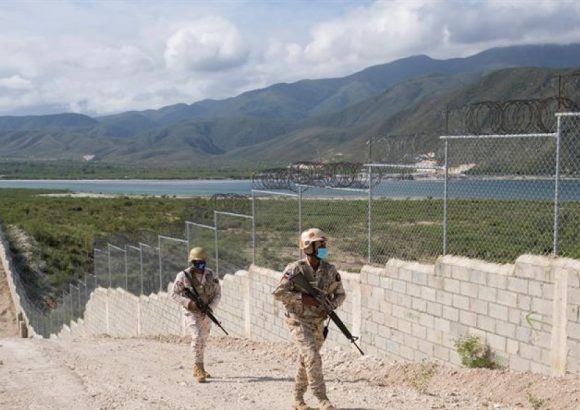
    In a major step to upgrade its military capabilities and harden border security along its shared frontier with Haiti, the Dominican Republic has formally received a large shipment of new military hardware – much of it developed and built domestically – in a ceremony held on July 17, 2026. The delivery, coordinated by the country’s Ministry of Defense, includes a diverse array of cutting-edge equipment designed to enhance surveillance, rapid response, and multi-domain defense capabilities across the nation’s border regions and strategic installations.

    Among the new assets delivered are five unmanned vertical takeoff and landing drones, a mobile unmanned surveillance unit mounted on an all-terrain vehicle, 10 indigenously developed Centauro tactical vehicles, and 179 additional ground vehicles of varying types. The acquisition package also includes a full structural renovation and re-equipping of seven key facilities at San Isidro Air Base, a major operational hub for the Dominican armed forces.

    The highlight of the ceremony was the public unveiling of the FURIA VBD-2, the latest armored fighting vehicle fully developed and assembled by the Dominican Republic’s domestic military industrial sector. Boasting military-grade ballistic protection, a full 360-degree rotating turret, and advanced battlefield operational capabilities, the first completed FURIA VBD-2 is the inaugural unit of a planned 18-vehicle production run. Once completed, these armored vehicles will be deployed to reinforce second-line defense brigades stationed along the country’s shared land border with Haiti, where security concerns have grown in recent years.

    Breaking down the full roster of new ground vehicles, Defense Minister Carlos Fernández Onofre outlined that the shipment includes 76 purpose-built patrol trucks, 25 heavy trucks for troop and supply transport, seven minibuses designed for secure personnel movement, four minivans, and 67 motorcycles for rapid patrol operations in diverse terrain.

    President Luis Abinader, who attended the official handover ceremony, used the occasion to frame the new equipment delivery as a landmark milestone for the country’s growing military industry. He emphasized that domestically developed hardware like the FURIA VBD-2 and Centauro tactical vehicles serves as tangible proof that the Dominican Republic now boasts a leading military industrial sector across Central America and the Caribbean. “Today, we have an exemplary military industry in Central America and the Caribbean, and we are at the forefront. It rivals the most advanced countries. We are on track to reach the level of the highest-performing Latin American countries,” Abinader told attendees.

    Minister Onofre echoed the president’s remarks, noting that the acquisition and domestic production of this new generation of equipment marks significant progress in the armed forces’ push for technological modernization. He added that the shift toward domestic assembly and production of key military assets – including upcoming drone production that is set to begin in the near future – will generate substantial long-term savings for the national government budget.

    “ The Armed Forces of the Dominican Republic continue to move resolutely toward technological advancement, consolidating a permanent surveillance capability, increased responsiveness, and multi-domain defense, in line with the challenges of the 21st century, all in service of the security, sovereignty, and defense of the Nation,” Onofre said.

    The upgrade comes amid ongoing regional security focus on the Haiti-Dominican Republic border, where the Dominican government has stepped up efforts to control irregular migration, counter smuggling, and protect territorial sovereignty in recent years.

  • Spain win the World Cup, beating Argentina 1-0 on Ferran Torres’ extra-time goal

    Spain win the World Cup, beating Argentina 1-0 on Ferran Torres’ extra-time goal

    EAST RUTHERFORD, N.J. – Soccer history was written on Sunday, as Spain claimed its second men’s FIFA World Cup title with a dramatic 1-0 extra-time victory over defending champion Argentina, ending Lionel Messi’s bid for a second straight crown in what he has signaled was his final World Cup appearance.

    The decisive moment came in the 106th minute, when second-half substitute Ferran Torres, netting his first goal of the entire tournament, latched onto a loose bouncing ball inside the Argentina penalty area. The forward fired a clinical left-footed strike that nestled just under the crossbar, securing what he calls the most important goal of his career.

    Reflecting on the winning strike after the final whistle, Torres framed the achievement as a collective win for his entire nation, saying: “It was a goal scored by 47 million people” — a nod to Spain’s total population. Beyond the individual moment, the result was a testament to Spain’s tournament-long defensive masterclass that held firm one last time after Torres’ go-ahead goal.

    Across eight matches on their road to the trophy, Spain’s backline conceded just a single goal, setting a new World Cup record for the fewest goals allowed by any men’s tournament champion. This title marks Spain’s second men’s World Cup crown, following its 2010 win in South Africa.

    At 65 years old, Spanish head coach Luis de la Fuente also made history, becoming the oldest manager ever to lift the World Cup trophy. Speaking after the win, he expressed overwhelming pride in his squad’s effort. “Accompanying them on this journey is an honour,” de la Fuente said.

    The men’s title completes a groundbreaking milestone for Spanish soccer: paired with Spain’s 2023 FIFA Women’s World Cup victory, the nation is now the first in history to hold both the men’s and women’s World Cup titles at the same time.

    For Argentina and Messi, the result brought heartbreak. The Argentine captain, who was visibly emotional after accepting his runner-up medal and was seen tearfully gazing at sections of the stadium packed with Argentina supporters, acknowledged his side gave everything despite the loss. “I feel sad,” Messi said. “But I am aware that we played our hearts out.”

    Alongside the trophy and championship rings, the 2024 World Cup champion will take home $51 million in prize money, per FIFA’s official prize structure. Runners-up Argentina will earn $34 million, while third-place England receives $30 million and fourth-place France takes home $28 million. Each quarter-finalist that finished between fifth and eighth place in the tournament will claim $20 million in prize money.

    Individual awards were spread across top performers after the final. France’s Kylian Mbappé claimed the Golden Boot as the tournament’s top scorer, finishing with 10 goals — one ahead of Messi, who was held scoreless in the final. Mbappé also broke the all-time World Cup career scoring record, now holding 22 total goals across his tournament appearances, one more than Messi’s 21.

    Spanish players dominated the remaining individual honours. Captain Rodri took home the Golden Ball, awarded to the tournament’s best overall player. Unai Simón claimed the Golden Glove for his standout performances in goal throughout the competition, while 19-year-old Pau Cubarsí won the Best Young Player Award, beating out his fellow 19-year-old Spanish teammate Lamine Yamal for the honor.

  • Spain edge Argentina in extra time to claim second FIFA World Cup title

    Spain edge Argentina in extra time to claim second FIFA World Cup title

    The 2026 FIFA World Cup, a historic edition marking the first tournament with an expanded 48-team field and co-hosted across the United States, Canada and Mexico, wrapped up in dramatic fashion on Sunday, as Spain secured its second ever World Cup title with a tense 1-0 extra-time victory over defending champions Argentina.

    After five weeks of high-stakes football, packed stadiums, sizzling summer heat and scattered on-field controversies, the tournament’s showpiece final delivered all the tension and drama fans expected. Played out in front of a sell-out crowd at New Jersey’s MetLife Stadium, the match stayed deadlocked through 90 minutes of regular play, with Spain controlling most of the possession and creating repeated scoring chances only to be turned away again and again by Argentina’s star goalkeeper Emiliano Martínez, who turned in a man-of-the-match performance despite his side’s eventual loss.

    The game’s turning point came late in regulation, when Argentina’s star midfielder Enzo Fernández received a second yellow card for a hard tackle, reducing the defending champions to 10 men heading into extra time. Still, Argentina held on until the 106th minute, when a well-crafted Spanish attack broke the deadlock: Nico Williams redirected Pedro Porro’s cross into the high-risk area just 12 yards from goal, setting up Ferran Torres for a clinical first-time finish that slammed into the top corner of the net, beyond the reach of Martínez.

    Despite being a man down, Lionel Scaloni’s Argentina side fought valiantly for the remainder of extra time, pushing for an equalizer that would force penalties, but could not find the breakthrough. When the final whistle blew, Spain’s players and fans erupted in celebration, capping off a nearly flawless tournament run that saw the side concede just one single goal across all their matches, an achievement unmatched by any competitor in the 2026 event.

    The New Jersey stadium played host to more than just fans on Sunday: the capacity crowd included A-list celebrities, legendary former football players, and sitting U.S. President Donald Trump, all in attendance to witness the historic final. Millions more fans watched from hundreds of public watch parties across the three host nations and in football-crazed countries across the globe, bringing the dramatic conclusion to a global audience.

    Spain’s first World Cup title came in South Africa in 2010, and Sunday’s win adds a second crown to the nation’s storied football history. The squad is expected to receive a jubilant hero’s welcome upon their return to Madrid this week, as the country celebrates one of the greatest campaigns in its modern football legacy. For Argentina, the defeat brings a disappointing end to what had been a strong title defense, but the side will quickly shift focus to upcoming international qualifiers and begin preparation for the next cycle of global tournaments, set to culminate in the 2030 FIFA World Cup.