作者: admin

  • St. Kitts-Nevis and Taiwan strengthen long-standing diplomatic ties

    St. Kitts-Nevis and Taiwan strengthen long-standing diplomatic ties

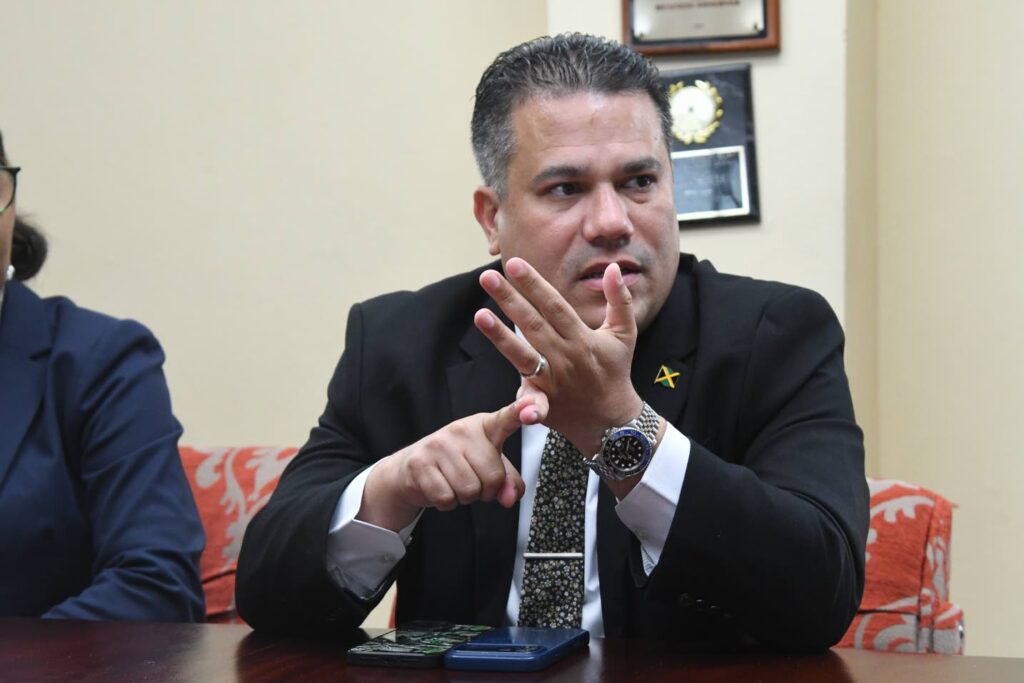
    In a significant demonstration of enduring diplomatic partnership, the Federation of St. Kitts and Nevis and the Republic of China (Taiwan) have reaffirmed their strategic alliance amid growing geopolitical competition in the Caribbean region. The strengthening of bilateral ties was emphasized by Taiwan’s newly appointed Resident Ambassador Edward Ling-Wen Tao during exclusive discussions with SKNVibes News.

    Ambassador Tao, who assumed his post several months ago, confirmed that the 42-year diplomatic relationship continues to flourish through substantial cooperation programs spanning multiple sectors. The partnership has yielded tangible benefits for national development through sustained investments in education, infrastructure, and human capacity building initiatives.

    Key collaborative projects currently underway include the chicken layer hatchery facility, a desalination plant addressing water security concerns, comprehensive education scholarship programs, environmental recycling initiatives, and digital identification systems. Ambassador Tao revealed that both nations are exploring new cooperative frontiers in ecotourism and sustainable development for future implementation.

    Addressing concerns about China’s expanding influence throughout the Caribbean basin, Ambassador Tao provided unequivocal assurance of Taiwan’s continued commitment. “I can confirm that Taiwan will remain a loyal friend of St. Kitts and Nevis for many years to come,” he stated. “Our assistance represents genuine support essential for your nation’s future development.”

    The educational exchange program stands as a cornerstone of this partnership, with over 175 students recently receiving scholarships to pursue advanced studies in Taiwan. Ambassador Tao highlighted the program’s success, noting that numerous graduates have returned to contribute their expertise across government institutions, educational establishments, and private sector organizations.

    In reciprocal support, St. Kitts and Nevis has consistently advocated for Taiwan’s inclusion in United Nations agencies, including the World Health Assembly, International Civil Aviation Organization, and climate change conventions. These efforts face persistent opposition from China, which claims sovereignty over Taiwan.

    Ambassador Tao expressed profound gratitude for this international support, emphasizing that Taiwan’s exclusion from global organizations prevents the sharing of valuable expertise with Caribbean nations and represents an injustice to both the Taiwanese people and the international community.

  • Duartian Institute leads cavalcade in Colonial City to honor Juan Pablo Duarte

    Duartian Institute leads cavalcade in Colonial City to honor Juan Pablo Duarte

    Santo Domingo witnessed a profound display of national pride this Sunday as the Duartian Institute orchestrated the ‘Cavalcade for the Homeland,’ a majestic equestrian parade through the historic Colonial City. The event served as the formal commencement of celebrations marking the 213th birth anniversary of Juan Pablo Duarte, the revered founding father of the Dominican Republic. The procession paid special homage to the instrumental role horses played in the nation’s struggle for independence and subsequent mobilizations.

    Commencing at 4:00 p.m. from the symbolic Altar of the Fatherland, the cavalcade navigated through the emblematic streets of Pina, Padre Billini, Isabel la Católica, and Mercedes. The spectacle captivated both local Dominican families and international tourists, creating a vibrant atmosphere. A particularly solemn segment of the event unfolded at Duarte Park, where the Dominican Republic Army band delivered stirring renditions of the National Anthem and the Duarte Anthem. This musical tribute was followed by the ceremonial laying of a floral wreath at the base of Duarte’s statue.

    Dr. Wilson Gómez Ramírez, presiding over the Duartian Institute, declared the activity a resounding triumph. He utilized the platform to reaffirm the nation’s unwavering commitment to the principle of eternal sovereignty. The parade’s national significance was underscored by the participation of numerous equestrian associations, distinguished military units, and horse clubs that had journeyed from various regions across the country. Concluding its journey back at the Altar of the Fatherland, the cavalcade left in its wake a powerfully renewed sense of patriotism and collective pride. The event successfully reinforced the Institute’s enduring mission to perpetuate the legacy of Duarte and the core values of independence for future generations.

  • INTRANT reaffirms ban on cargo trucks in restricted access zones

    INTRANT reaffirms ban on cargo trucks in restricted access zones

    SANTO DOMINGO – In a decisive move to enhance urban safety, the National Institute of Transit and Land Transportation (INTRANT) has reaffirmed its stringent prohibition on cargo trucks operating within Restricted Access Zones (ZAR). This policy forms a cornerstone of a broader strategy to systematize traffic flow, mitigate accident risks, and safeguard all road users in the nation’s busiest metropolitan corridors.

    The enforcement is being conducted in collaboration with the General Directorate of Traffic Safety and Land Transport (DIGESETT), concentrating on regulating heavy vehicle mobility and barring their access to non-designated routes. Addressing emerging dissent, an official INTRANT delegation recently convened with a group of demonstrating truckers. This dialogue was initiated to actively listen to their grievances and provide comprehensive elucidation on the regulation’s specifics and intent.

    INTRANT clarified that the protesting contingent is not officially associated with the National Federation of Dominican Transport (FENATRADO), an entity with which the institute sustains a continuous and formal discourse concerning freight logistics. The authority has vowed to persist in its vigilant oversight of the measure’s implementation, intensifying surveillance operations within the ZARs. This action underscores INTRANT’s unwavering dedication to preventing traffic fatalities, ensuring regulatory adherence, and prioritizing the protection of public life.

  • Global economy shows signs of modest uptick despite Trump-era challenges

    Global economy shows signs of modest uptick despite Trump-era challenges

    WASHINGTON, DC — Defying earlier expectations of economic turbulence, the global economy is demonstrating remarkable resilience with the International Monetary Fund projecting 3.3 percent growth for 2026, according to its January World Economic Outlook release. This revised forecast represents a 0.2 percentage point increase from October 2024 estimates, signaling stronger-than-anticipated performance despite persistent trade policy uncertainties.

    The IMF’s analysis, presented during a Brussels media briefing, identifies countervailing forces shaping the economic landscape. While trade disruptions continue to create headwinds, these challenges are being mitigated by robust technological investments—particularly in artificial intelligence—across North America and Asia. Supportive fiscal policies and accommodative financial conditions have further bolstered economic stability.

    Pierre-Olivier Gourinchas, Director of the IMF’s Research Department, emphasized that ‘global activity continues to show notable resilience despite significant trade disruptions and heightened uncertainty.’ The upward revision primarily reflects improved outlooks for both the United States and China, whose economies have absorbed tariff-related shocks more rapidly than initially projected.

    Inflation metrics indicate a gradual moderation, with global headline inflation expected to decline from 4.1 percent in 2025 to 3.8 percent in 2026, eventually easing to 3.4 percent in 2027. This deceleration pattern suggests a more prolonged return to target levels in the United States compared to other major economies. For import-dependent nations like St. Kitts and Nevis, this trend could alleviate pressure on domestic prices resulting from elevated import costs.

    Despite the optimistic revisions, the IMF cautions that risks remain skewed toward the downside. Economic growth is becoming increasingly concentrated within specific sectors, notably information technology and artificial intelligence. The United States has experienced particularly pronounced IT investment, reaching record-high shares of economic output.

    The report highlights potential vulnerabilities in equity markets, where US market capitalization has surged relative to overall economic output. This divergence raises concerns about consumer spending sensitivity to potential market corrections. Additionally, growing foreign exposure to US equities could amplify global spillover effects during periods of market volatility.

    Conversely, the technology boom presents significant upside potential. Should anticipated productivity gains materialize, the IMF estimates global output could increase by an additional 0.3 percent in 2026, providing further momentum to the cautiously optimistic outlook.

  • Rechtsstatelijke toetsing onder internationale aandacht

    Rechtsstatelijke toetsing onder internationale aandacht

    Suriname’s judicial system has become the focal point of intense international observation as the nation handles sensitive legal cases with significant political implications. According to National Assembly member Jennifer Vreedzaam, the global community is closely monitoring how Suriname’s legal institutions navigate the complex intersection of law, policy, and power in high-profile proceedings.

    In today’s interconnected legal landscape, cases with clear administrative and political dimensions rarely remain purely domestic matters. Foreign governments, multilateral institutions, human rights organizations, and international media are tracking Suriname’s judicial processes not to interfere with national jurisprudence, but to assess how a constitutional state functions when legal principles intersect with political power.

    International observers primarily evaluate procedural quality rather than case outcomes, focusing on fundamental rule-of-law principles: judicial independence, strict separation between policy and criminal law, individualization of liability, and proportionality in prosecution. The Court of Justice serves as the central institutional reference point for foreign observers, expected to maintain legal purity and demonstrate clear distance from political interpretations.

    Global law enforcement collaborations, including Interpol, explicitly distinguish between regular criminal prosecution and cases with potential political characteristics. This approach serves a preventive function—protecting the integrity of criminal justice instruments rather than passing judgment on guilt or innocence.

    Suriname’s international reputation as a rule-of-law state depends not on official statements or public positions, but on judicially consistent, transparent, and independently reasoned court decisions. A ruling that clearly distinguishes administrative responsibility from criminal liability, and visibly bases its reasoning on legal principles rather than contextual pressure, strengthens confidence in Suriname’s judicial system regardless of case outcomes.

    This scrutiny represents an institutional test rather than a personal one, with foreign observers seeking to understand how justice functions when stakes are high. When the legal system distinguishes itself from political framing and speaks exclusively through legal precision, it communicates in a language recognized and respected beyond Suriname’s borders.

  • Fitur 2026 events canceled following deadly train accident in Spain

    Fitur 2026 events canceled following deadly train accident in Spain

    The Spanish tourism industry has entered a period of mourning and recalibration following Sunday’s catastrophic train derailment near Adimuz, Córdoba, which resulted in 39 fatalities. While the Fitur 2026 international tourism fair maintains its scheduled opening on January 21st, the event will proceed with substantially modified programming as organizations across the sector demonstrate solidarity with victims and their families.

    Substantial alterations to the fair’s agenda include the cancellation of numerous high-profile events. The Preferente Group has indefinitely postponed its annual awards gala, which was slated to honor tourism executives from prominent organizations including Jet2, Iberia, Garden Hotels, and Puntacana Group. Similarly, Exceltur has called off its scheduled tourism forum at IFEMA, explicitly citing the need for respect during national mourning periods.

    The responsive adjustments extend beyond private organizations to public institutions. Both the Andalusian regional government and multiple provincial authorities have suspended official events and presentations originally planned for the fair. Major railway operators Iryo and Renfe have similarly canceled their scheduled programming in direct response to the transportation tragedy.

    Fitur organizers have confirmed continuous coordination with national authorities while carefully monitoring developments. Although the exhibition grounds will open as planned, the traditional celebratory atmosphere will be notably absent. Business activities will proceed with heightened sensitivity, recognizing this edition’s profoundly somber context. The tourism sector’s collective response demonstrates an industry prioritizing human compassion over commercial interests during national tragedy.

  • Cuba: a beacon of hope and inspiration

    Cuba: a beacon of hope and inspiration

    Communist and socialist organizations worldwide are amplifying their support for Cuba and Venezuela amidst escalating tensions with the United States government. The movement gained momentum during recent international gatherings, where leaders denounced American foreign policy as imperialist aggression.

    At a mass rally in Telangana, India, marking the centenary of the Communist Party of India (CPI), General Secretary D. Raja publicly reiterated solidarity with Cuba, Venezuela, and Palestine. The event, attended by Cuban Ambassador Juan Carlos Marsán and Telangana Prime Minister Revanth Reddy, served as a platform for condemning U.S. economic sanctions and political threats.

    Simultaneously, India’s Communist Party (Marxist-Leninist) of Liberation issued a formal statement through General Secretary Dipankar Bhattacharya, characterizing the U.S. embargo against Cuba as ‘illegal, inhumane, and genocidal.’ The communique paid special tribute to 32 Cuban internationalists who died in Venezuela, honoring them as martyrs in the anti-imperialist struggle.

    European political forces joined the chorus of support, with Italy’s Communist Party observing a minute of silence for Cuban combatants during celebrations of Fidel Castro’s centenary. Secretary General Angelo Lombardo extolled Cuba as ‘the greatest example of dignity and the most heroic force’ in contemporary geopolitics.

    French solidarity organization Cuba Linda echoed these sentiments, emphasizing that fallen Cuban heroes died ‘in fulfillment of their internationalist duty.’ The group called for expanded mobilization efforts and urged Latin American leaders to defend international law and national sovereignty against U.S. pressure.

    The coordinated international responses highlight growing ideological divisions as organizations frame Cuba’s resistance to U.S. sanctions as a beacon for global anti-imperialist movements.

  • Mogelijke vervalsing documenten Grassalco-dochter in Guyana

    Mogelijke vervalsing documenten Grassalco-dochter in Guyana

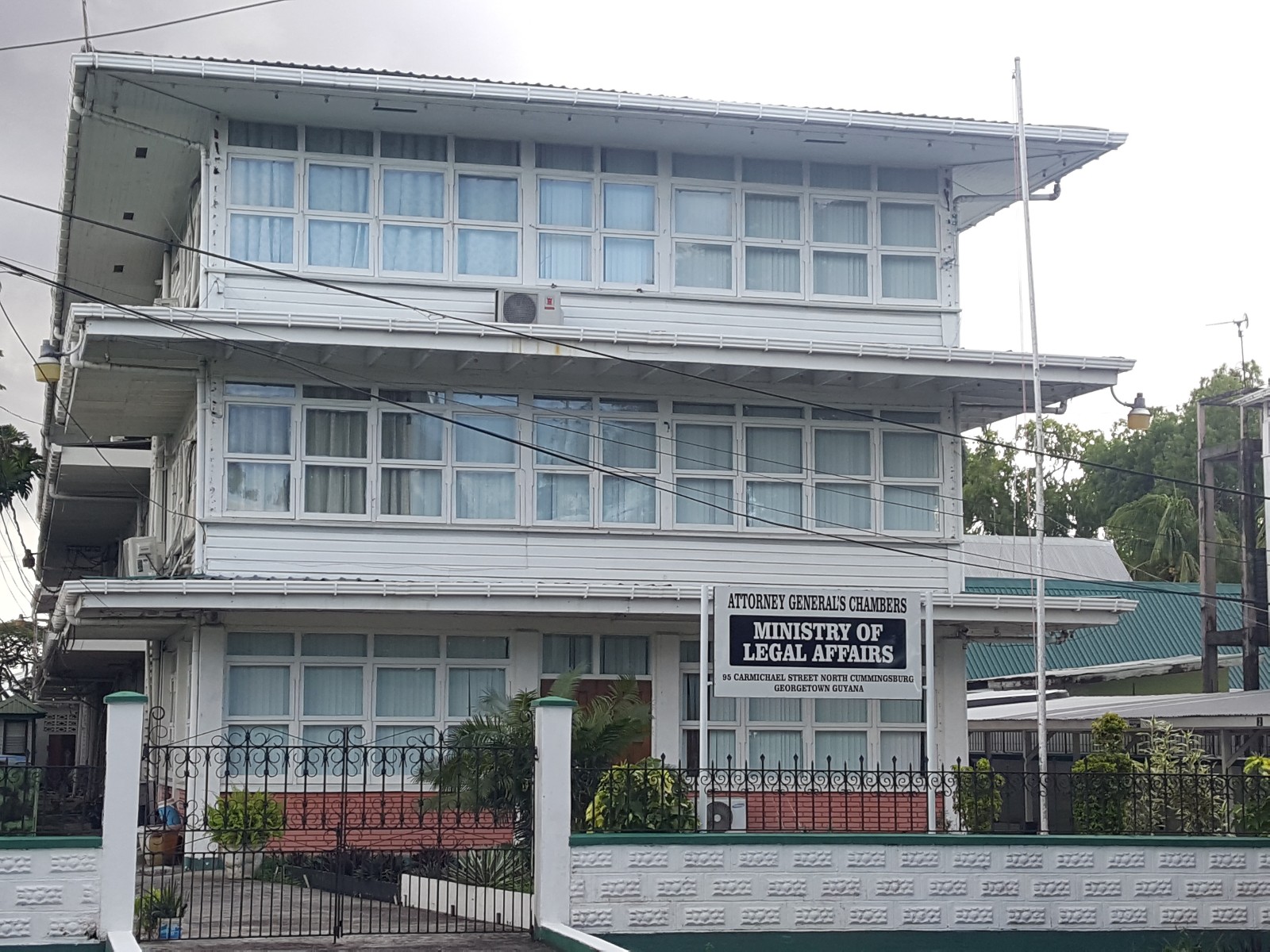
    Serious concerns have emerged regarding the establishment and registration of GuySure Aggregate and Sand Inc, a foreign subsidiary of Suriname’s state-owned mining company Grassalco. Official documents from Guyana reveal that five private individuals were registered as shareholders during the incorporation process, raising fundamental questions about the ownership structure and the legitimacy of this overseas venture.

    Internal investigations within Grassalco have uncovered irregularities in the documentation process surrounding GuySure’s formation. The audit revealed that certain critical documents were scanned and added to the internal system at a later date, without appearing in the regular document flow initially. Administrative deviations from standard procedures were also identified.

    The subsidiary’s launch in May 2025 was publicly promoted by the Surinamese government as Grassalco’s strategic international expansion. Former President Chan Santokhi traveled to Georgetown to inaugurate the company alongside now-suspended CEO Wesley Rozenhout. At the time, no mention was made of individual shareholders in the corporate structure.

    The Guyanese registration records now identify five individuals as shareholders: Wesley Rozenhout, Patrick Bel, Wendy Aminta, Ajay Surjbalising, and Negesty Winter. The relationship between these private shareholders and Grassalco’s status as a state-owned enterprise remains unclear, with no transparency regarding underlying agreements.

    These developments occur amidst broader turmoil at Grassalco. Earlier this month, Rozenhout was suspended by the Board of Commissioners pending an investigation into the disappearance of over four kilograms of gold from the state company. The board cited potential violations of corporate statutes as justification for the suspension.

    In response to the growing crisis, Natascha Kalo has been appointed as delegated commissioner with expanded oversight responsibilities until new leadership is established. The company is currently undergoing a comprehensive ‘quickscan’ assessment while daily operations continue under heightened supervision.

  • Espaillat family says 70% of Jet Set Nightclub collapse victims have been compensated

    Espaillat family says 70% of Jet Set Nightclub collapse victims have been compensated

    In a significant development following the Jet Set Nightclub collapse tragedy, the Espaillat family has revealed they have voluntarily compensated 70% of the affected victims despite awaiting a final judicial resolution. The family made this announcement through their philanthropic arm, the Raíces de Esperanza Foundation, highlighting their ongoing initiatives to support children orphaned by the catastrophic incident.

    Antonio and Maribel Espaillat, serving as family representatives, articulated their approach has been guided by principles of responsibility, respect, and solidarity since the tragedy’s immediate aftermath. They emphasized prioritizing the human dimension of the crisis over legal technicalities, acknowledging that while no compensation can reverse the profound losses endured, their efforts aim to extend support beyond mandatory legal requirements.

    The family simultaneously clarified that judicial proceedings remain ongoing, with no definitive court ruling or officially validated technical assessment yet establishing the collapse’s precise causes or assigning criminal liability. Critical expert evaluations, solicited during the investigation’s initial phases, are scheduled for judicial examination on January 30, adhering to standard legal protocols. Reiterating their stance, the Espaillats affirmed their continuous cooperation with judicial authorities, maintaining transparency throughout the process and honoring the memory of those affected by the tragedy.

  • Peaceful march in Navarrete calls for answers on missing children cases

    Peaceful march in Navarrete calls for answers on missing children cases

    NAVARRETE, Santiago Province – A community united in anguish took to the streets on Sunday as residents of Navarrete staged a peaceful march to demand answers in the disappearance of three-year-old Brianna Genao and to highlight a national crisis of missing children. The demonstration, comprising family members, neighbors, and local supporters, moved through the township with banners and unified chants calling for the child’s safe return and greater governmental transparency in ongoing investigations.

    At the heart of the protest was a public outpouring of grief from Brianna’s father, who articulated the family’s profound distress and the void of conclusive information from official channels since their daughter vanished. This personal tragedy was framed not as an isolated incident but as a symptom of broader systemic failures. Participants emphasized that the mobilization symbolized a collective community fear regarding child safety and the perceived inadequacy of protective measures.

    The rally broadened into a national plea, with attendees referencing numerous other unresolved cases of missing minors across the country. Protesters critiqued what they described as waning investigative efforts by state agencies and issued a forceful demand for sustained, intense search operations. The collective call to action urged authorities to implement more robust child protection policies and effective preventive strategies to safeguard the nation’s youth, maintaining pressure until Brianna and all missing children are located.