作者: admin

  • Piñero invites nominations for third “Los + Ecoístas” awards promoting sustainable tourism

    Piñero invites nominations for third “Los + Ecoístas” awards promoting sustainable tourism

    In a move to amplify global momentum for environmental stewardship in the tourism and private sectors, Dominican hospitality leader Piñero has opened nominations for the third iteration of its prestigious “Los + Ecoístas” awards, a recognition program celebrating entities advancing sustainability across the Caribbean nation. This year marks a notable expansion of the initiative, with new categories adding content creators, independent environmental advocates, and specialized media outlets to the traditional pool of recognized companies, institutions, and industry partners. The awards program sits at the core of Piñero’s global “We Are Ecoístas” campaign, an overarching effort to embed responsible environmental practices across regional industries and cultivate a more ecologically conscious model for tourism development in the Dominican Republic. By opening recognition to communication-focused actors, the company aims to elevate the work of changemakers who use digital platforms, journalism, and public outreach to build widespread public support for climate action and conservation. Eligible nominations cover work across four key environmental focus areas: renewable and efficient energy systems, direct climate action, circular economy innovation, and biodiversity protection. Organizations and individuals interested in consideration have until September 14 to submit their entries, with winners set to be revealed at a dedicated ceremonial event scheduled for the end of 2024. In a unique addition to this year’s program, Piñero has formed collaborative partnerships with the Dominican Republic’s National Center for Handicrafts (Cenadarte) and the national Ministry of Culture to launch a special design competition. Up-and-coming local artisans are invited to compete to create the official award statuettes, an initiative designed to center sustainable craft practices and elevate emerging Dominican creative talent. Since the awards launched, a range of the country’s leading public and private entities have been honored for their environmental work. Past recipients include major national players Grupo Universal, Banco Popular Dominicano, Aerodom, the National Botanical Garden, Cervecería Nacional Dominicana, and electric mobility provider Evergo, all recognized for their measurable contributions to advancing conservation and sustainable development across the country.

  • Fitness influencer Paymi Marte alleges US$7,900 theft at Santo Domingo hotel

    Fitness influencer Paymi Marte alleges US$7,900 theft at Santo Domingo hotel

    A prominent US-based Dominican fitness creator and influencer, Paymi Marte, has come forward with allegations that nearly $8,000 in cash was stolen from her room at the high-end InterContinental Real Santo Domingo, one day before she was set to undergo a planned medical procedure during her trip back to her home country.

    Marte, who relocated to the United States and has built a social media following of more than 325,000 Instagram subscribers where she shares fitness, wellness, motherhood and lifestyle content and works as a wellness coach, entrepreneur and mentor, documented the incident across her social channels. She explained that she traveled from the U.S. specifically to have the surgery, and booked the well-known luxury hotel to ensure her personal belongings, cash and other valuables would remain secure during her stay.

    In her video posts, Marte noted that she first reported the missing money to hotel management, but was left frustrated when she felt her complaint did not receive the urgent, serious attention she expected as a paying guest. Following that underwhelming response, she chose to file an official report with the Dominican National Police to launch a formal investigation into the theft.

    Her sister, Belisa González, who is also an influencer, further detailed the incident in her own social media posts shared with her audience. González clarified that Marte noticed her wallet had been left open inside the room, which Marte was sharing with her sister and their mother, before confirming that all $7,900 in cash she had brought with her was gone.

    As of the latest update on the case, the InterContinental Real Santo Domingo has not released any public comment or response to Marte’s allegations. Dominican law enforcement authorities have also not shared any new details regarding the progress or status of their ongoing investigation.

  • St. Kitts Grill Fest 2026 crowns regional and category winners – WIC News

    St. Kitts Grill Fest 2026 crowns regional and category winners – WIC News

    The Caribbean’s top grilling talent gathered on St. Kitts’ Frigate Bay Lawn on July 18, 2026, for the first-ever regional edition of the annual St. Kitts Grill Fest, where Team Grenada etched its name into the event’s history by taking home the top regional title.

    Held as a centerpiece celebration marking the 10th anniversary of St. Kitts and Nevis’ Restaurant Week and Culinary Month, the eight-hour competition—running from 1 p.m. to 9 p.m.—expanded beyond its traditional local roots to welcome elite grilling teams from four Caribbean nations: Anguilla, Barbados, Grenada, and host nation St. Kitts and Nevis. Building on the event’s popular legacy, 2026 also introduced an all-new competition category: baby back ribs, joining four longstanding divisions for pork, fish, chicken, and lobster.

    Beyond the high-stakes grilling matchups, the festival offered a full day of family-friendly community entertainment. Attendees could explore offerings from local food and beverage vendors, browse handcrafted goods from regional artisans, enjoy live musical performances, participate in giveaway activities, and let children play in a dedicated kids’ zone. St. Kitts Marriott Resort and The Royal Beach Casino served as the event’s official accommodation partner, while core sponsorship from Xpress Events, Kayanjet and E-Z Axcess Graphix made the expansion to a regional competition possible.

    In the individual category competitions, local grilling stars claimed top honors across all five divisions. Ricardo “Smurf” Stewart secured first place in the pork category, with Cleon “Pappy” Francis finishing as runner-up. Michael “Jangeezy” Browne took the top spot in the fish category, outperforming second-place finisher Jacqueline Rose. Kyla Huggins claimed the championship in the chicken division, with Michelle Bridgewater earning runner-up. In the lobster category, Dave “Mugsey” Martin claimed gold, followed by Cleavon Chumney in second. The newly added baby back ribs category crowned Tyrone “Granny” Browne as its first champion, with Marlene Ramsey taking runner-up.

    The marquee regional competition, which pitted national teams against one another for the inaugural title, saw Team Grenada—made up of members Andre Church, Jaylill Bernard, Wyll Smith and Shackera Ackie—outperform rival squads to claim the historic first regional crown. Organizers officially congratulated all winners, runners-up, and participating teams via public posts on the event’s social media channels following the conclusion of the competition, extending particular gratitude to competition sponsors for supporting the event’s expansion into a regional Caribbean culinary showcase.

  • What really happens after a suspicious transaction is reported?

    What really happens after a suspicious transaction is reported?

    A widespread misunderstanding about global anti-money laundering frameworks has distorted public understanding of how suspicious activity reporting works: many people assume that as soon as a suspicious transaction is logged with authorities, an immediate arrest will follow. Legal industry expert Kevon K K Charles, Managing Partner of Grenada-based KC Legal Consultancy, explains that this almost never reflects the actual process. In fact, a suspicious transaction report is rarely the end of a probe — it is almost always the very first step of a quiet, behind-the-scenes investigation that most members of the public will never observe.

    At the center of this unseen work is the Financial Intelligence Unit (FIU), a specialized government body whose core role is often misunderstood by the general public. To clear up common confusion, Charles emphasizes that an FIU is neither a law enforcement agency nor a judicial body. Instead, it acts as a dedicated hub for collecting, processing, and connecting data on potentially illicit financial activity. Its core function is to turn scattered raw information into actionable intelligence: by cross-referencing data from multiple sources, identifying hidden patterns of suspicious behavior, and sharing refined insights with law enforcement and other relevant regulatory bodies when wrongdoing is suspected.

    This distinction between raw information and processed intelligence is critical to understanding why immediate arrests do not follow every suspicious transaction report. A single report, viewed in isolation, rarely provides enough context to justify enforcement action. Only when that report is combined with other intelligence data can a complete, accurate picture of potential criminal activity emerge. While FIUs across the globe share this core mission, their specific authority and operating structures are defined by individual national legislation. Caribbean jurisdictions have all built their own FIUs tailored to their domestic legal frameworks, all united by the overarching goal of shielding regional financial systems from criminal abuse.

    Looking at two Caribbean examples illustrates this regional approach. In Trinidad and Tobago, the FIU operates under the dedicated *Financial Intelligence Unit of Trinidad and Tobago Act*, with core responsibilities that include collecting suspicious transaction reports, analyzing financial data, and sharing intelligence with relevant authorities when criminal activity is suspected. Its mandate extends beyond combating money laundering to also address terrorist financing and the funding of weapons proliferation. Grenada follows a very similar model: its national FIU is authorized to collect and analyze financial intelligence, open inquiries into potential financial crimes, and share relevant findings with law enforcement when appropriate. Though almost all of its work occurs out of public view, the Grenada FIU plays an irreplaceable role in protecting the country’s financial system and advancing regional efforts to dismantle financial crime networks.

    The work of FIUs also carries important implications for professionals across the legal and property sectors, including estate lawyers, real estate practitioners, and financial institution employees. Most of these reporting entities never see what happens to a suspicious transaction report after they submit it, but their input is critical to the entire system. A single report that seems insignificant on its own can be the missing puzzle piece that reveals a larger pattern of illicit activity when combined with data from other sources. For this reason, Charles argues that mandatory suspicious activity reporting should never be treated as a meaningless bureaucratic check box. It is a core component of a far larger national and regional intelligence network that depends entirely on accurate, timely, and thorough reporting from frontline professionals.

    Beyond the common narrative that FIUs exist solely to catch criminals, the organization’s mandate is actually far broader. By aggregating and analyzing data from hundreds of reporting entities, FIUs can identify emerging systemic financial risks, strengthen national regulatory compliance frameworks, and protect the global reputation and integrity of a country’s financial sector. In short, FIUs act as the critical bridge between raw financial data and actionable criminal intelligence that enables effective law enforcement.

    As Charles notes in closing reflections, most members of the public will never have direct interaction with an FIU, and that is by design. The unit’s work is intentionally invisible to most. But every time a legal professional asks a client for additional context, a bank requests further verification documentation, or a reporting entity completes required due diligence checks, that action feeds into the larger system that protects the integrity of the entire Caribbean financial ecosystem.

    The next time someone claims that filing a suspicious transaction report leads straight to arrest, it is important to correct that misconception: the report is only the starting line. Analysis always precedes enforcement action, and actionable intelligence always comes before prosecution. Behind that quiet, unseen process stands an institution that few people will ever notice, but one that delivers widespread public benefits to everyone who participates in the regional financial system.

    This piece is part of an ongoing series exploring the changing dynamics of wealth, property, and regulatory compliance across the Caribbean. NOW Grenada does not take responsibility for opinions or statements shared by contributing authors, and invites users to report abusive content through official platform channels.

  • Grenada to implement reformed CXC SBA Framework

    Grenada to implement reformed CXC SBA Framework

    The Caribbean Examinations Council (CXC) has given formal approval to an overhauled School-Based Assessment (SBA) framework that will roll out across Caribbean nations over the next two examination cycles, Grenada’s Ministry of Education has announced. The regulatory changes were greenlit during CXC’s 64th quarterly business meeting held on June 29, 2026, with the core goal of reinforcing the integrity, public credibility, and overall effectiveness of school-based assessment within the regional standardized examination system.

    The revised restructures how assessments are administered across different subject types, creating clear distinctions between practical and non-pacademic non-practical subjects. Moving forward, SBAs will only be mandatory for practical subjects, and the CXC has put in place substantially strengthened monitoring and moderation protocols to uphold assessment standards for these evaluated projects. For students enrolled in non-practical subjects, the traditional SBA requirement will be replaced by a new assessment component called Paper 032.

    Paper 032 is designed with greater flexibility to reduce student stress while still accurately measuring learning outcomes. Key accommodations built into the new assessment format include the release of examination topics one full month ahead of the test date, extra completion time for students who require it, and explicit permission for candidates to use approved reference notes during the assessment. Mirroring the existing SBA system, scores earned on Paper 032 will also be transferable across examination years, allowing students to carry over valid scores if they need to retake other components of their exams.

    Implementation of the full reform package will follow a staggered, phased timeline to give education systems, schools, and students sufficient time to adapt to the new structure. The new framework will first be introduced for Caribbean Advanced Proficiency Examination (CAPE) candidates ahead of the 2027 examination administration. For candidates sitting the Caribbean Secondary Education Certificate (CSEC) exams, the transition to the revised framework will begin with the 2028 examination cycle.

    Grenada’s Ministry of Education confirmed it is collaborating closely with CXC leadership and local education stakeholders—including school administrators, teacher associations, and parent groups—to prepare for a smooth transition. The ministry notes that detailed, subject-specific implementation guidance will be distributed to schools, teachers, students, and families well in advance of each group’s first examination under the new framework, to ensure all parties have adequate time to adjust their preparation strategies. The ministry has also called on all education stakeholders to monitor official updates as more details are released, and reaffirmed its ongoing commitment to delivering targeted support through the transition period to minimize disruption for learners across the country.

  • Seven-time calypso king Mighty Terra dies

    Seven-time calypso king Mighty Terra dies

    The small Caribbean island of Saint Lucia is now in national mourning following the passing of Pancruce McGriffin Theodore, the legendary trailblazing calypsonian widely known by his stage name The Mighty Terra. The influential artist died on Sunday after an extended battle with illness, closing the book on a life that redefined and shaped the trajectory of modern calypso culture across the island.

    Revered cultural institutions and fellow artists have been quick to honor his decades of contributions to the art form. The Monsignor Patrick Anthony Folk Research Centre (FRC), which preserves and promotes Saint Lucian traditional culture, issued a statement highlighting Theodore’s status as one of the nation’s most important pioneering calypsonians, noting that his creative work and advocacy were foundational to the evolution of calypso in Saint Lucia. Beyond his immense musical talent, the organization emphasized Theodore’s well-loved personal qualities: a reputation for warm generosity, quiet humility, and a lifelong willingness to lift up emerging artists and community members.

    Before he fully committed himself to calypso, Theodore built a diverse professional career that extended across education and public service. He first worked as a educator at Saint Lucia’s prominent St Mary’s College, where he recognized the need to nurture local calypso talent by organizing student and community calypso competitions. After leaving academia, he went on to hold public service posts in both his native Saint Lucia and Canada, all while continuing to perform and grow his presence in the island’s then-small but rapidly expanding calypso scene. During his early performing years, he graced stages at iconic Saint Lucian venues ranging from Picadilly and Reclamation Grounds to Havana Club, Palm Beach Club, Castries Town Hall and Clarke’s Cinema.

    Theodore’s musical career also included leadership roles in some of the island’s most popular performing groups. He got his start as a member of the renowned Big Six Orchestra before branching out to form his own ensemble, the Southern Brothers Orchestra, where he pulled double duty as lead vocalist and a multi-instrumentalist. Under his direction, the band became a staple of community life across southern Saint Lucia, headlining regular community dances in towns including Laborie, Choiseul and Vieux Fort.

    As a competitor, The Mighty Terra’s achievements remain unmatched in Saint Lucia’s calypso history for nearly six decades. Between 1957 and 1963, he claimed the island’s national calypso crown seven times – a record that stood unbroken for 54 years before it was finally surpassed by fellow calypsonian The Mighty Pep in 2017. Unlike many calypsonians of his era who focused purely on entertainment, Theodore’s songwriting consistently engaged with the most pressing social and political issues of mid-20th century Caribbean life. His work directly addressed key movements including the push for Saint Lucian self-determination and the formation of the West Indies Federation. Some of his most beloved winning titles include Rock and Roll Calypso, Jamaica and the Federation, Tribute to Van Geest, Radio Bingo and The Syrian Community, each capturing a unique snapshot of the era’s cultural and political discourse.

    Guy Ellis, former editor of two of Saint Lucia’s most prominent publications *Voice of Saint Lucia* and the *Mirror*, echoed widespread respect for Theodore’s legacy, framing him as the foundational figure who laid the groundwork for all future generations of Saint Lucian calypsonians. “The Mighty Terra was the pioneer who laid the ground, then later people like Lord Jackson and his sidekick Crusoe who had spent several seasons around the tents in Trinidad, returned home and began to cultivate the calypso plant,” Ellis wrote, capturing Theodore’s enduring role as a trailblazer for the art form.

    Today, Theodore’s life and work are formally preserved in a full-length book commissioned by the FRC: *The Reign of Terra – The Mighty Terra and the Modern Calypso Movement in Saint Lucia*, researched and written by scholar Embert Charles to ensure his contributions are not forgotten. He is survived by his three children Nadia, Alison and Alderick, their extended families, the family of his late wife (sister of prominent Saint Lucian figure Sir Calixte George), and the broader Minvielle and Theodore family networks across Vieux Fort and overseas.

  • Esports event blending sport, technology and entertainment carded for Portsmouth in August

    Esports event blending sport, technology and entertainment carded for Portsmouth in August

    Portsmouth Bombers Football Club (Bombers FC) has revealed an exciting new collaboration with NSE Night Club that marks a major step forward in blending traditional sports and digital youth culture. The partnership will deliver the Bombers FC EGame Challenge 2026, an open-air esports tournament centered on the popular EA SPORTS FC 26 game, scheduled to take place on August 22, 2026, at Portsmouth’s Benjamin Park.

    Organizers project the one-day event will draw competitive players from every corner of Dominica, framing the tournament as a deliberate strategic push by the club to expand its reach beyond the traditional pitch. By embracing the rapidly growing global esports sector, Bombers FC aims to build deeper connections with young community members, strengthen bonds with existing football supporters, and launch a new model of innovative, inclusive community gathering.

    Unlike traditional esports events held in indoor venues, the Bombers FC EGame Challenge is designed as a multi-layered community celebration that merges competitive gaming with core elements of football, live music, and general entertainment. While registered participants battle for top tournament prizes, attending spectators will have access to a full schedule of family-friendly activities, including on-site food vendors, non-stop live entertainment, and a massive LED screen broadcasting the tournament’s most anticipated matches in real time.

    “For our club, expanding access to football and connecting with the next generation of fans is always our top priority,” shared a club spokesperson. “Esports has emerged as one of the fastest-growing cultural and economic industries across the globe, and this challenge gives us a unique chance to bring gamers, football lovers, local families, and entire community groups together in an energetic, welcoming space. This event is just the latest reflection of Bombers FC’s long-standing commitment to innovation, youth development, and active community engagement.”

    To ensure the tournament accommodates players of all ages and skill levels, the competition will be split into five distinct competitive divisions: Under-13, Under-15, Under-18, Open Male, and Open Female. To keep entry barriers low for all interested participants, registration has been priced at just EC$25, a rate the club says is intentionally set to keep the event accessible to casual and competitive gamers alike, regardless of experience level.

    Attendees can expect a festival-style atmosphere throughout the day, with multiple dedicated gaming stations for competing players, a knockout bracket structure that builds to a thrilling final, and all key matches displayed live on the giant outdoor LED screen for the crowd to enjoy. This setup is designed to ensure both participants and spectators leave with a memorable, engaging experience.

    Looking ahead, Bombers FC leadership expressed confidence that the EGame Challenge can grow into a staple annual event on Dominica’s national sports and entertainment calendar. Beyond local community impact, the club also believes the tournament will help position Dominica as a growing destination for esports competitions and youth-focused cultural events.

    For community members seeking more information, the club is urging interested people to scan the QR code included on the official event poster to access full tournament details, registration instructions, and real-time updates moving forward. Additional official announcements, including full competition rules and confirmed registration opening dates, will also be posted to Bombers FC’s official website and public Facebook page in the coming weeks. The club extended an open invitation to all gamers, football fans, potential sponsors, and community members across Dominica to take part in what it calls a trailblazing new event that unites sport, cutting-edge technology, and mass entertainment.

  • Antigua & Barbuda set to host six days of CPL cricket and festivities

    Antigua & Barbuda set to host six days of CPL cricket and festivities

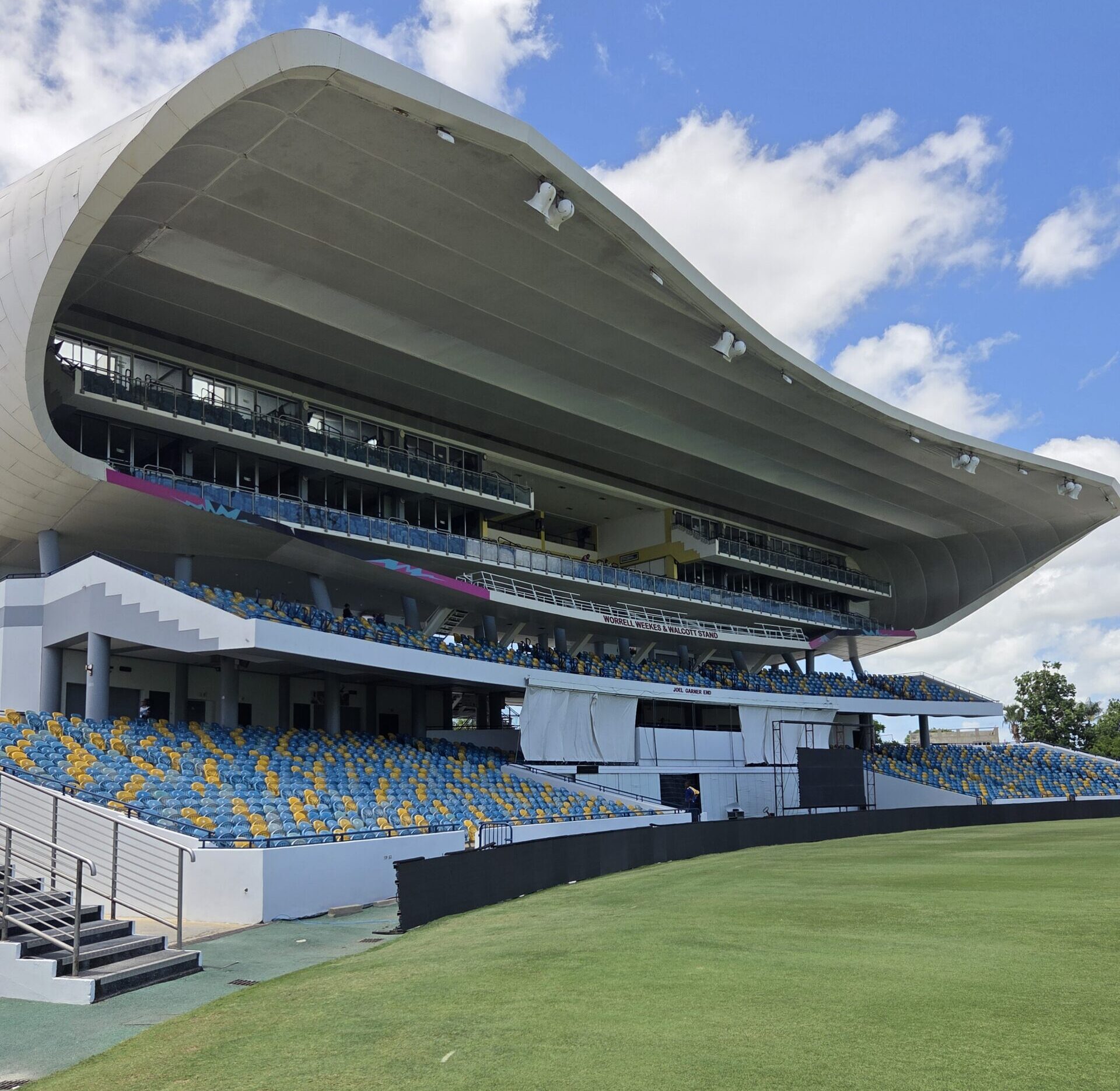
    The Caribbean Premier League (CPL), one of the most anticipated annual sporting celebrations in the region, is set to return to Antigua and Barbuda for six days of elite cricket, nonstop entertainment, and cultural celebration. Scheduled to run from August 20 to 25, 2026 at the iconic Sir Vivian Richards Stadium, this year’s iteration of the Republic Bank-backed tournament is already being hailed as the ultimate fusion of sport and island revelry, living up to the destination’s self-given title as the global “Home of Party Cricket.”

    At the heart of the local action is the Antigua and Barbuda Falcons, the tournament’s host team, which will play four home matches on its home turf throughout the week. Fans can mark their calendars for the team’s opening clash against the St. Kitts & Nevis Patriots on August 20, followed by matchups with the Trinbago Knight Riders on August 22, the Guyana Amazon Warriors on August 23, and the Barbados Tridents on the tournament’s closing day, August 25. All matches are slated to kick off at 7:00 p.m. local time, giving attendees plenty of daytime to explore the twin islands before the on-field action begins.

    Beyond the boundary ropes, the tournament represents a key strategic win for Antigua and Barbuda’s burgeoning sports tourism sector. Charmaine Spencer, Chief Marketing Officer of the Antigua and Barbuda Tourism Authority, explained that high-profile sporting events like the CPL are central to the country’s efforts to expand its tourism offerings, attract diverse visitor segments, extend average guest stays, and drive consistent travel demand across the calendar year.

    “CPL doesn’t just bring cricket fans to our shores—it gives us a one-of-a-kind platform to show the world the warmth of our hospitality, the stunning natural beauty of our islands, and the richness of our Caribbean culture,” Spencer noted. “We’re inviting every visitor to dig deeper and explore everything Antigua and Barbuda has to offer, long after the final wicket falls.”

    That approach is front and center in the 2026 campaign from the Antigua and Barbuda Falcons, which carries the tagline “Come for the Fete, Stay for the Match.” Sabrina Webster, the team’s Brand and Marketing Communications Manager, said the campaign is designed to frame the tournament as much more than a series of cricket matches—it’s an entry point to a full island experience that blends world-class sport with authentic Caribbean celebration.

    “Our 2026 campaign invites cricket fans from across the globe to experience the very best of Antigua and Barbuda through the electric energy and unmatched excitement that only CPL can deliver,” Webster said. For both die-hard cricket supporters and casual travelers looking for a one-of-a-kind tropical getaway, this August’s CPL stop in Antigua and Barbuda promises to deliver an unforgettable combination of top-tier athletic action and full-blooded Caribbean carnival fun.

  • COMMENTARY: Why Caribbean hospitals should embrace clinical ethicists in healthcare teams

    COMMENTARY: Why Caribbean hospitals should embrace clinical ethicists in healthcare teams

    Caribbean healthcare systems are grappling with a growing set of interconnected challenges that go far beyond the delivery of routine medical care. Shifts including rapid advancements in medical technology, rapidly aging regional populations, rising unmet demand for mental health services, and persistent systemic resource constraints have left frontline healthcare providers regularly confronting complex ethical dilemmas that lack clear, straightforward solutions. As these pressures continue to intensify, a leading regional bioethics expert is arguing that Caribbean hospitals must urgently evaluate the critical value of adding trained clinical ethicists to standard care teams.

    A clinical ethicist is a specialized professional trained to help clinical teams, patients, and their loved ones navigate the messy, emotionally charged ethical conflicts that arise in modern medicine. Unlike common misconceptions, their role is not to override the decisions of treating clinicians or family members; instead, they act as neutral facilitators, helping stakeholders clarify core ethical concerns, bridge communication gaps, and work toward decision outcomes that are fair, respectful, and aligned with all parties’ values. While formal clinical ethics support services are a standard fixture of healthcare systems across much of North America and Western Europe, these roles remain extremely limited across most of the Caribbean, even as demand for ethical guidance grows exponentially.

    One of the most prevalent ethical flashpoints in Caribbean healthcare centers on the role of family in medical decision-making. Caribbean cultures are broadly characterized by strong collective family ties, and it is standard practice for relatives to play an outsized role in care choices for loved ones. While this built-in support system often improves patient outcomes, it can also spark significant conflict between clinical teams and family members over treatment plans. Common points of contention include disagreements over whether to continue life-sustaining treatment, disputes over a patient’s capacity to understand their own diagnosis and prognosis, and uncertainty over legal and moral authority to make care decisions when a patient loses decision-making capacity. A trained clinical ethicist brings the skills to mediate these conversations in a way that honors both cultural norms and patient autonomy, creating space for respectful resolution.

    End-of-life care represents a second major domain where ethical tensions arise regularly across the region. Caribbean hospitals care for large numbers of patients living with advanced chronic conditions, serious traumatic injuries, and terminal illnesses, all of which require difficult conversations about treatment goals and quality of life. Clinicians often struggle with the moral weight of continuing aggressive, invasive treatment when meaningful recovery is effectively off the table, while families frequently face overwhelming emotional distress navigating choices around life support and palliative care. Without formal ethics support to structure these conversations, these situations often lead to confusion, open conflict, and persistent moral distress for clinicians, patients, and families alike. Clinical ethicists are trained to guide these difficult discussions in a calm, structured, and compassionate manner that reduces unnecessary tension.

    Systemic resource scarcity is an ongoing source of ethical strain for most public healthcare systems across the Caribbean. Public hospitals routinely face shortages of clinical staff, life-saving equipment, specialized care services, and inpatient beds, forcing frontline providers to make impossible triage decisions about which patients receive prioritized care. These unguided choices place enormous emotional strain on care teams and can often lead to perceptions of unfairness among patients and their families. Trained clinical ethicists can help institutional leadership develop clear, transparent, and equitable frameworks for resource allocation and institutional decision-making that reduce bias and build public trust.

    Additional context-specific ethical challenges emerge in Caribbean mental health and correctional healthcare settings, where questions around involuntary treatment, patient confidentiality, human dignity, autonomy, and institutional safety arise on a regular basis. Frontline clinicians managing these complex cases overwhelmingly report a lack of specialized guidance to navigate these dilemmas, making the structured support a clinical ethicist provides particularly valuable.

    Integrating clinical ethicists into care teams also delivers secondary benefits for hospitals, including structured staff education and improved organizational communication practices. A large share of formal patient complaints and clinical disputes can be traced back to simple miscommunication or uncertainty around how to approach difficult ethical choices. By creating space for open dialogue and addressing emerging ethical concerns early in the decision-making process, hospitals can reduce preventable conflict while strengthening trust between providers, patients, and the broader community.

    For generations, Caribbean healthcare has been rooted in core values of compassion, collective community care, and patient-centered practice. Formal clinical ethics services directly reinforce these values by helping institutions navigate difficult, high-stakes situations with thoughtfulness and respect. As regional healthcare systems continue to evolve to meet shifting population needs, ethical dilemmas are no longer rare edge cases—they have become a routine part of daily clinical practice.

    Crucially, adding clinical ethicists to care teams does not replace the specialized expertise of physicians, nurses, or hospital administrators. Instead, it complements and strengthens a hospital’s ability to respond to complex situations in a way that is fair, organized, and aligned with the region’s core care values. By proactively integrating clinical ethics services into standard care, Caribbean hospitals can improve patient outcomes, better support frontline clinicians facing moral distress, and deliver more effective, equitable care to the communities that rely on them.

    This analysis comes from Latelle J. Barton, II, MD, HEC-C, Northern Regional Representative for the Bioethics Society of the English-Speaking Caribbean.