作者: admin

  • Grenada swimming benefits from World Aquatics Age Group Coach Course

    Grenada swimming benefits from World Aquatics Age Group Coach Course

    The Grenada Amateur Swimming Association (GASA) is advancing its coaching capabilities through participation in the prestigious World Aquatics Age Group Swim Coach certification program. Valorie Andrew, assistant coach to Grenada’s 2025 OECS Champion team, has been selected for this elite hybrid training initiative currently underway in Budapest, Hungary.

    Andrew departed Grenada on November 22, 2025, to engage in the comprehensive program that combines 20 hours of e-learning through World Aquatics’ digital platform with five days of intensive in-person sessions. She joins a globally selected cohort of dedicated coaches participating in this rigorous certification process.

    The curriculum addresses multiple critical coaching competencies including integrity and safe sport practices, sport psychology and mental wellbeing, technical stroke development, gender differences in athletic development, nutrition and hydration science, strength and conditioning methodologies, long-term athlete development principles, sports science applications, coaching responsibilities, practical coaching techniques, and strategic planning and periodization.

    The Budapest sessions feature interactive classroom workshops and hands-on practical coaching applications. Participants must complete all program components and pass both online examinations and practical assessments to achieve certification. This initiative aligns directly with GASA’s strategic development plan to enhance coaching capacity and elevate the quality of swim athlete development throughout Grenada.

    Upon her return on November 29, 2025, Andrew is expected to disseminate her acquired knowledge and experience to fellow local coaches, potentially transforming Grenada’s swimming coaching landscape and improving athlete performance outcomes across all age groups.
  • VIDEO: Bequia hopes to give SVG another PM

    VIDEO: Bequia hopes to give SVG another PM

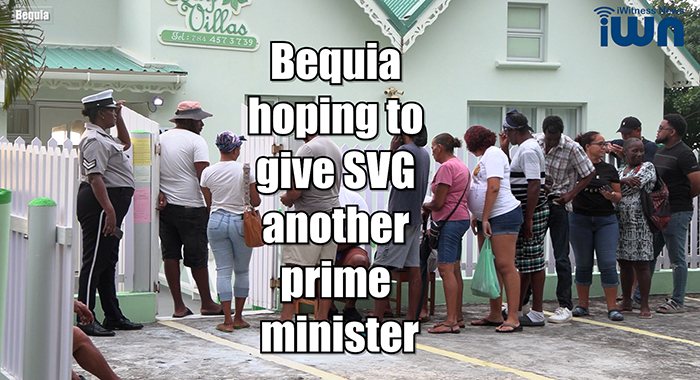
    As citizens of St. Vincent and the Grenadines participated in national elections this Thursday, the small island community of Bequia in the Northern Grenadines found itself at the center of a potential historic political achievement. Local residents expressed collective hope that their constituency could become the nation’s first to produce two individuals who have held the office of Prime Minister.

    The electoral process unfolded across the multi-island nation, with voters casting ballots to determine the composition of their next government. This democratic exercise carries particular significance for Bequia, which takes pride in its political heritage. The island previously produced Sir James Mitchell, who served as Prime Minister from 1984 to 2000, establishing a remarkable legacy of leadership.

    Political analysts note that while smaller island communities in archipelagic nations often have limited representation in national governance, Bequia has consistently demonstrated outsized political influence within the Vincentian context. The possibility of producing a second prime minister represents not just local pride but a significant moment in the nation’s political narrative, potentially shifting perceptions about political power distribution across the archipelago.

    The election occurs amid broader regional discussions about governance models in small island developing states, where personal connections and community representation often play crucial roles in political dynamics. Bequia’s unique position highlights how specific geographic communities can maintain sustained political influence within Caribbean democracies, challenging conventional assumptions about political geography in multi-island nations.

  • LVV ondersteunt SO/VSO Welgedacht C met extra plantjes en praktijkbegeleiding

    LVV ondersteunt SO/VSO Welgedacht C met extra plantjes en praktijkbegeleiding

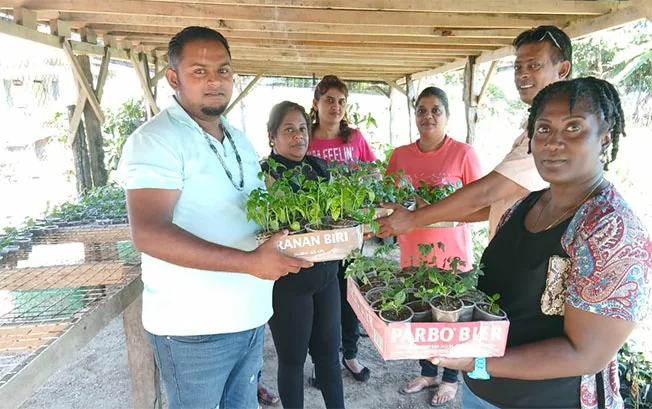
    In a significant educational enhancement initiative, Suriname’s Ministry of Agriculture, Animal Husbandry, and Fisheries (LVV) has substantially expanded its support for special needs education through a strategic plant donation program. The LVV Wanica resort in Lelydorp, under the leadership of Resort Manager Ruben Piroe, has donated 150 vegetable plants to the SO/VSO Welgedacht C School, building upon a previous donation of 60 plants that brings the total contribution to 210 plants.

    This initiative directly aligns with Agriculture Minister Mike Noersalim’s vision to provide additional opportunities for children, particularly disadvantaged students, while stimulating practical skill development from an early age. The Welgedacht C School, located in the Wanica C resort, offers specialized education at both primary and secondary levels, with older students participating in vocational training programs including horticulture, carpentry, woodworking, construction, and culinary skills.

    The ministry has identified a critical need for professional guidance in implementing horticultural activities within the school’s curriculum. Due to spatial constraints on the school premises, optimizing the educational garden presents significant challenges. In response, the LVV Wanica D resort has committed to close collaboration with LVV Wanica C to provide expert support in garden design and maintenance, ensuring maximum utilization of available space for practical education despite area limitations.

    LVV officials emphasize that such initiatives are fundamental to youth development, particularly within special education frameworks. The ministry maintains its commitment to supporting educational institutions through knowledge transfer, material resources, and professional guidance to enhance students’ practical skills and future prospects. This comprehensive approach aims to foster self-sufficiency and agricultural expertise among young learners while addressing educational disparities through hands-on learning experiences.

  • Rainy Weekend Ahead

    Rainy Weekend Ahead

    Meteorological authorities in Belize are forecasting a persistently rainy weekend as a stalled frontal system establishes itself over the nation. The system is expected to generate extensive rainfall and thunderstorms across multiple regions, prolonging wet conditions through Sunday.

    Chief Meteorologist Ronald Gordon confirmed that a saturated northerly airflow has already precipitated substantial rainfall, particularly affecting central Belize. Preliminary data from weather monitoring stations indicates precipitation accumulations ranging from one to three inches in Belize City within the past 24-hour period. The community of Hattieville experienced significantly heavier downpours, registering between five and six inches as intense rainfall persisted through nighttime hours into early morning.

    According to meteorological analysis, the approaching frontal boundary will remain nearly stationary over Belize during the coming days. Gordon elaborated on the atmospheric conditions: “A frontal boundary is currently approaching the area, preceded by a moisture-laden northeasterly airflow that is sustaining this coastal precipitation activity.” The forecaster further indicated that residents should anticipate “continued showers and potentially thunderstorms throughout Saturday extending into portions of Sunday.”

    The precipitation pattern is projected to initiate across northern and central territories before propagating nationwide. The Meteorological Service indicates that gradual atmospheric improvement is anticipated to commence by Monday, suggesting a return to more typical weather conditions.

  • Remittances to Belize Hit $173 Million

    Remittances to Belize Hit $173 Million

    The Inter-American Development Bank (IDB) has documented a historic surge in remittance flows to Latin America and the Caribbean, with Belize emerging as a significant beneficiary. New data reveals that migrant transfers to Belize reached $173 million in 2025, representing 5.2% of the nation’s GDP—a higher proportional impact than observed in larger economies like Mexico and Colombia.

    This financial lifeline, primarily originating from the United States where approximately 50,000 Belizean migrants reside, has become fundamental to household stability across the region. Remittances consistently cover essential expenses including nutrition, housing, education, and healthcare for countless families. The IDB emphasizes that these cross-border transfers have now maintained sixteen consecutive years of uninterrupted growth, with a projected 7.2% increase across the LAC region for 2025.

    The resilience of these flows is particularly remarkable given the economic and political uncertainty in host countries. The report identifies migrant behavioral adaptations—including utilizing savings for extraordinary transfers and increasing working hours—as key drivers sustaining this financial pipeline. This response mechanism emerged amid policy discussions surrounding remittance taxation and migration reforms under the current U.S. administration.

    Despite demonstrating robust growth, the IDB cautions that this resilience has limits. Potential declines in migration patterns or increased barriers to money transfers could immediately jeopardize household incomes. The bank notes that while remittances have lifted millions from extreme poverty, the most vulnerable populations often lack access to migration opportunities due to associated costs, creating an ongoing developmental challenge.

  • Property Tax resumes on Carriacou and Petite Martinique

    Property Tax resumes on Carriacou and Petite Martinique

    The Grenadian government has formally declared that Property Tax collections will resume effective January 1, 2026, for residents of Carriacou and Petite Martinique. This significant policy reversal concludes the temporary tax relief implemented following the devastating impact of Hurricane Beryl in 2024.

    In the aftermath of the catastrophic hurricane, authorities suspended fiscal obligations to alleviate economic pressure on households, protect livelihoods, and facilitate comprehensive recovery efforts across the sister islands. The deliberate pause in tax collection formed part of a broader governmental strategy to prioritize disaster response and community stabilization.

    Following substantial reconstruction progress over the past year—evidenced by rebuilt homes, revitalized businesses, and returning normalcy—the restoration of property taxation signifies a crucial milestone in reestablishing full administrative operations throughout the tri-island nation. This measured approach reflects the government’s commitment to balanced fiscal management while recognizing exceptional circumstances.

    Finance Ministry officials emphasize that special provisions will remain available for property owners continuing to face reconstruction challenges. Residents with significantly damaged or unrepaired structures are urged to consult with the Inland Revenue Division’s Carriacou Sub-Office to ascertain their eligibility for exemptions or customized payment arrangements. The government has explicitly committed to preventing undue financial burden on those experiencing genuine hardship.

    As the islands transition back to standard taxation protocols, authorities encourage ongoing engagement with official communications channels and prompt consultation with tax professionals for necessary guidance. Enhanced public information campaigns and direct community assistance will be deployed throughout the implementation period to ensure transparent and equitable reinstatement of property tax obligations.

    For detailed information or clarification, residents may contact the Inland Revenue Division Carriacou Sub-Office at 440-3556 or consult the official portal at ird.gd for continuous updates.

  • Agriculture Ministry Workers Halt Duties Over Safety Risks, Delayed Talks

    Agriculture Ministry Workers Halt Duties Over Safety Risks, Delayed Talks

    Employees at the Ministry of Agriculture have initiated a work stoppage, halting their official duties in a significant protest against unresolved workplace safety concerns and the prolonged stagnation of critical negotiations with government administrators.

    The collective action emerges from a deepening impasse between the workforce and ministry leadership. Staff representatives report that numerous formal appeals to address hazardous working conditions and procedural risks have been systematically ignored or met with indefinite delays. This alleged inaction has cultivated an environment of apprehension, compelling employees to withdraw their labor as a final recourse to demand accountability and meaningful dialogue.

    Compounding the safety issues is the reported breakdown in discussions concerning essential employment terms. Negotiations, which were anticipated to resolve longstanding grievances over safeguards and protocols, have allegedly reached a standstill, leaving critical matters in bureaucratic limbo. The cessation of work is intended to underscore the urgency of these issues and push them to the forefront of the ministerial agenda.

    The work stoppage is expected to disrupt a range of the ministry’s core functions, potentially affecting the processing of permits, the management of agricultural support programs, and the dissemination of vital information to the farming sector. This labor action highlights a critical clash between employee welfare and governmental operational efficiency, raising questions about the administration’s commitment to its workforce’s well-being.

    The ball now lies in the court of the ministry’s leadership to re-engage with employee unions and recommit to good-faith discussions. The resolution of this dispute is being closely watched, as it carries implications for public service delivery and the broader relationship between state employees and governmental bodies.

  • Mexican-Flagged Vessel “Captain America” to Make Brief Visit to Belize

    Mexican-Flagged Vessel “Captain America” to Make Brief Visit to Belize

    In a routine maritime procedure, the Mexican-flagged offshore supply vessel ‘Captain America’ is scheduled for a brief regulatory stop within Belizean territorial waters. The Belize Port Authority (BPA) confirmed the vessel’s temporary presence stems from compliance requirements under Mexican maritime regulations, which mandate that vessels periodically exit and re-enter national jurisdiction.

    The vessel, identified by IMO number 9526382, primarily operates within Mexico’s offshore sector. According to the BPA’s official statement, this visit represents a standard administrative formality rather than a commercial operation. During its stay, the ship will remain anchored in a pre-designated zone while Belizean authorities conduct mandatory verification and clearance protocols.

    The Port Authority emphasized that the ‘Captain America’ remains prohibited from engaging in any commercial activities, cargo operations, or crew changes during its Belizean stopover. This procedural visit follows established international maritime practices and will not disrupt regular port operations or maritime traffic. Upon completing the necessary clearance procedures, the vessel will immediately depart for Mexican waters.

    This incident highlights the complex regulatory framework governing international maritime operations, where vessels must occasionally make foreign port calls solely for administrative compliance purposes rather than commercial objectives.

  • ICJ to Decide Guatemala Bid in Sapodilla Case

    ICJ to Decide Guatemala Bid in Sapodilla Case

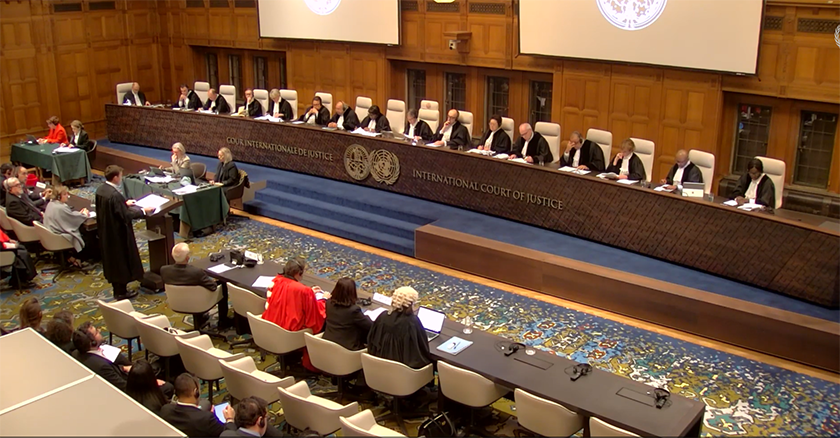
    The International Court of Justice (ICJ) has concluded three days of landmark hearings examining Guatemala’s unprecedented request to intervene in the separate maritime sovereignty case between Belize and Honduras concerning the disputed Sapodilla Cayes archipelago. Held from November 24-26 at the Peace Palace in The Hague, these proceedings could establish significant precedents for how the world court manages interconnected territorial disputes.

    Guatemala’s legal representatives petitioned the Court for non-party intervenor status, asserting that their nation’s longstanding territorial claim against Belize creates a substantive legal interest in the outcome of the Belize v. Honduras proceedings. They contended that participation is essential to safeguard what Guatemala characterizes as protected legal rights pertaining to the Sapodilla Islands.

    Honduras mounted a vigorous challenge to this proposition, maintaining that neither the ICJ Statute nor established procedural norms authorize such intervention in a distinctly separate case. Honduran delegates warned that admitting Guatemala would effectively introduce an entirely new dispute into the proceedings and represent an improper utilization of the intervention mechanism. They emphasized that Guatemala retains full opportunity to present Sapodilla-related arguments within its own ongoing case against Belize.

    Belize adopted a judicially strategic position, focusing arguments on the Court’s fundamental duty to ensure orderly and expeditious administration of justice. Belizean representatives advocated for coordinated management of the two parallel cases—Guatemala v. Belize and Belize v. Honduras—to facilitate comprehensive resolution of all outstanding regional territorial issues. They underscored that intervention remains discretionary rather than automatic, requiring strict adherence to procedural rules and prudent exercise of judicial authority to prevent unnecessary delays.

    The Court has now entered private deliberations ahead of issuing its ruling on Guatemala’s application. The Sapodilla Cayes case originated with Belize’s filing on November 16, 2022, addressing sovereignty over the small island chain persistently administered by Belizean authorities. Guatemala submitted its intervention petition nearly one year later on December 1, 2023. Simultaneously, both nations continue litigating the broader territorial, insular, and maritime dispute initiated through their Special Agreement—ratified by popular referenda and formally lodged with the ICJ in June 2019.

    Belize’s delegation featured ICJ Agent His Excellency Assad Shoman, accompanied by members of Belize’s international legal consortium and officials from the Office of the Agent.

  • The Quiet Work That Holds a Nation Together

    The Quiet Work That Holds a Nation Together

    While public attention often focuses on political figures and high-profile events, the true backbone of Belize’s national integrity operates largely in obscurity. Recent proceedings at the International Court of Justice highlighted how pivotal work by professionals like Ambassador H.E. Assad Shoman and his legal team unfolds away from public scrutiny—through meticulous research, strategic legal coordination, and disciplined diplomatic engagement rather than public recognition.

    This phenomenon extends far beyond international legal matters. Belize’s daily functioning depends on thousands of public servants whose contributions rarely capture headlines. Educators meticulously preparing lessons, law enforcement maintaining order, immigration officials processing borders, agricultural technicians facilitating trade, and health inspectors safeguarding public welfare collectively form an operational infrastructure that sustains national stability. Their work encompasses supervisory duties, nighttime report writing, case management, and regulatory inspections—tasks that receive little acknowledgment yet remain fundamental to national coherence.

    The social contract between citizens and state endures precisely because these systems persist regardless of individual personnel changes. While instances of corruption and service failures rightly demand attention and correction, they should not overshadow the broader narrative: modern Belize operates effectively due to the consistent, professional execution of duties by its public service majority.

    In international relations, this silent machinery preserves Belize’s global standing. In education, it maintains operational classrooms despite resource limitations. In commerce and agriculture, it enables cross-border economic movement. In public security, it upholds order amid growing regional instability.

    National progress ultimately accumulates through the dedicated efforts of unnamed individuals bearing indispensable responsibilities. As Belize confronts challenges ranging from territorial disputes to economic pressures, recognizing this foundational workforce transcends ceremonial appreciation—it constitutes an acknowledgment of the very mechanisms that maintain national cohesion.