作者: admin

  • Victims to be prioritised in criminal justice reforms

    Victims to be prioritised in criminal justice reforms

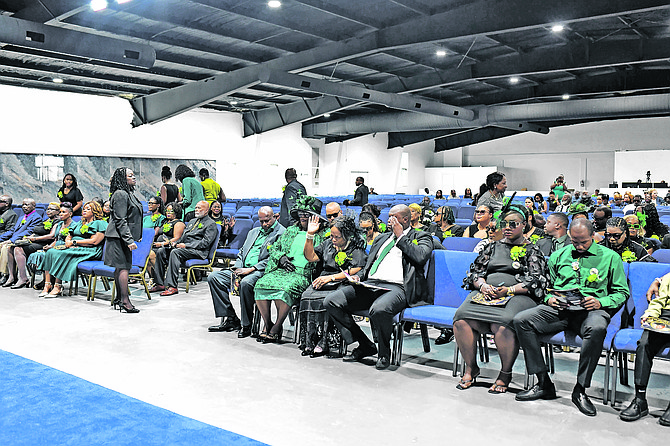
    Barbados has kickstarted a transformative overhaul of its national criminal justice framework that shifts the long-standing institutional focus from offender prosecution to victim-centered support and healing. The launch of the initiative took place Monday at the opening of a high-profile two-day stakeholder symposium held at the Radisson Hotel, where government officials outlined a plan to build a rigorous, compassionate and tightly coordinated support system that ensures trauma survivors do not have to navigate the aftermath of violence and crime on their own.

    The symposium brought together a cross-section of key stakeholders, including senior judiciary representatives, officers from the Barbados Police Service, officials from multiple government ministries, licensed social workers, trauma counsellors, and leaders from local non-governmental organisations focused on victim support. Addressing the gathered delegation, Minister of Legal Affairs and Criminal Justice Michael Lashley pledged rapid, tangible action to close long-standing gaps in institutional care for vulnerable crime survivors.

    Lashley acknowledged that while Barbados’ existing criminal justice system has long been recognised as fair and impartial, its historical structure has always prioritised the investigation and prosecution of offenders over the physical, emotional and legal healing of the people harmed by crime. “We have built our criminal justice system around the investigation of offences and the prosecution of offenders. One thing you can say about our system is that it is fair and that it is impartial, but we have not focused centrally on victims. How we treat the most vulnerable among us is a measure of who we are as a nation. If we are working on rebuilding the Barbadian civilisation, this matters,” Lashley told attendees.

    Drawing on decades of professional experience as a practicing attorney, Lashley shared first-hand accounts of the profound fear and secondary trauma that victims often face when navigating the country’s current legal ecosystem. He recalled a specific case from his private practice involving a domestic violence survivor who had successfully obtained a court-issued protection order, but was left trembling in terror after the perpetrator easily accessed her confidential safe housing location.

    Lashley explained that the current fragmented system, lacking a centralised, cross-agency coordination unit, leaves victims exposed to unnecessary harm when they enter the often-intimidating court environment. Survivors are regularly forced to relive traumatic events repeatedly during testimony and face aggressive cross-examination from experienced defence legal teams, he added. “Ask yourself what happens to the victim after the police report is filed. Who calls them weekly to check and see if they are safe? Who explains what bail means? Imagine a victim going into the court for the first time in their life, having to face trained and experienced legal counsel in a courtroom with jurors, and then the media is there too to report everything. The system itself can feel like a further burden through delays and complexity,” Lashley argued.

    Under the proposed reform plan, a dedicated specialised victim advisory unit will likely be established to conduct individual needs assessments, advocate on behalf of survivors within the legal system, and connect victims to critical support services including trauma counselling, emergency alternative housing, and personalised legal guidance. Lashley noted that recent legislative updates, including the recently passed anti-gang legislation, upcoming parliamentary debates on a specialised gun court, and proposed amendments to the Evidence Act, all work hand-in-hand with the new victim-centered reforms to strengthen overall public safety.

    To address deep-rooted systemic gaps, the Ministry of Legal Affairs and Criminal Justice has already conducted extensive cross-sector consultations with the Office of the Director of Public Prosecutions, national prison authorities, domestic violence and victim shelters, and individual trauma survivors to gather on-the-ground insight. Preliminary findings from these consultations confirmed that while a range of victim support services currently exist across Barbados, they operate in isolated institutional silos that create gaps in care, eroding public trust in the rule of law.

    Lashley emphasised that legislative change means little without consistent, robust implementation and enforcement, particularly when it comes to domestic violence protection orders. “An order on paper is only as good as its enforcement. We need to ensure that victims understand how to report breaches, and that breaches are responded to in a swift manner. Any new system must be designed with survivors, not just for them. Their feedback must drive continuous improvement,” he said.

    The minister assured attending stakeholders that the outcomes of the two-day symposium would not be left unused, pledging that a dedicated inter-agency working group would be formed immediately after the event’s closing session to translate symposium recommendations and priority actions into enforceable operational policy. “We are not just about talk. I don’t want out of this symposium a document dated and signed and then there is no action on it. There will be action on it. No victim should navigate the aftermath of crime alone,” he stated.

    Marilyn Rice-Bowen, event chairperson and a victim support program practitioner with 22 years of direct experience, echoed Lashley’s call for tangible action, stressing that the symposium must move beyond abstract academic debate to deliver concrete structural change for vulnerable Barbadian citizens. “Over the next two days, we will not be debating whether Barbados needs a national victim support framework; that question has already been answered. What we will be doing is something more purposeful. We will be designing it together with rigour, with compassion, and with a commitment to those who need it most at the centre of every decision we make,” Rice-Bowen said.

  • CARICOM Secretariat hosts Guyana Defence Force Senior officers for eecurity Engagement

    CARICOM Secretariat hosts Guyana Defence Force Senior officers for eecurity Engagement

    In a move designed to deepen ties with regional security bodies across the Caribbean, the CARICOM Secretariat recently hosted a cohort of senior military leaders from the Guyana Defence Force (GDF) participating in the 20th iteration of its Senior Command and Staff Course (SCSC #20).

    The official visit, held on June 4, centered on a structured knowledge-sharing workshop organized by the Secretariat’s specialized Crime and Security Programme, according to an official statement released by CARICOM. The interactive session was designed to give participating GDF officers firsthand, nuanced insight into how CARICOM operates to advance and synchronize cross-border security initiatives across the Caribbean bloc.

    Leading the discussion were two senior leaders from the CARICOM Crime and Security Programme: Sherwin Stephenson, the programme manager, and Mareesha Stephens, the programme’s project officer. Over the course of the workshop, participants engaged in open dialogue and collaborative problem-solving, exploring the CARICOM framework for tackling both longstanding and newly emerging crime and security risks that impact countries across the region. Attendees also received a detailed briefing on how the regional bloc facilitates functional cooperation between its 15 member states and specialized regional institutions, with the goal of building more robust, coordinated collective responses to shared security threats.

    Beyond the technical policy discussions, the GDF delegation took part in a guided tour of the CARICOM Secretariat headquarters in Georgetown, Guyana. The tour gave officers the chance to gain a clearer understanding of the organization’s governing structure, core mandates, and overarching mission to drive deeper regional integration and cross-sector cooperation across the Caribbean. As a formal gesture of gratitude for the Secretariat’s hospitality and the opportunity for engagement, Captain Stephion Gordan of the GDF delegation presented a commemorative plaque to Stephens, in a moment captured by CARICOM Communications photographers.

    CARICOM officials emphasized that the visit underscores the critical value of sustained, intentional partnership between the regional bloc and national defense and security agencies across the Caribbean. It also reaffirmed the organization’s longstanding commitment to developing aligned, collective strategies that strengthen cross-border crime prevention, deepen security cooperation, and uphold lasting stability for all CARICOM member states.

  • West Indies Women lose World Cup warm up

    West Indies Women lose World Cup warm up

    Ahead of the upcoming ICC Women’s World Cup, one of the most anticipated global events in women’s cricket, India’s national women’s team picked up a confidence-boosting 26-run win over the West Indies women’s side in a warm-up fixture held in Cardiff on Monday.

    With regular West Indies captain Hayley Matthews sidelined for the warm-up encounter, all-rounder Chinelle Henry stepped up to lead the Caribbean side. After winning the pre-game coin toss, Henry made the call to send India into bat first, putting her bowling unit to an early test. India’s top order delivered a dynamic batting performance, building up to a competitive total of 179 runs for the loss of eight wickets at the close of their 20 overs.

    Emerging batter Bharti Fulmali emerged as India’s standout performer with the bat, striking an unbeaten half-century off just 40 deliveries to anchor the late-innings push. Star opener Smriti Mandhana added a quick-fire 39 runs from 23 balls, giving India’s innings a powerful early momentum, while Yastika Bhatia chipped in with 36 runs before retiring out per warm-up match protocols. For West Indies, veteran spinner Afy Fletcher turned in a dominant bowling display, claiming four wickets for just 23 runs to keep her side in contention. Karishma Ramharack, Deandra Dottin and Aaliyah Alleyne each picked up one wicket to round out the West Indies bowling effort.

    Chasing the 180-run target, West Indies got off to a flying start, putting on 63 runs without losing a wicket by the ninth over. But a sudden batting collapse turned the tide of the match: the Caribbean side slumped to 102 runs for five wickets by the 14th over, and could never recover their early momentum. They were eventually restricted to 153 runs for eight wickets, falling 26 runs short of India’s total. Opener Dottin led the West Indies batting with a 44-ball 49, and opening partner Shemaine Campbelle scored 25 runs before retiring out, but the rest of the batting line-up failed to build on the solid opening stand. For India, young spinner Shreyanka Patil was the pick of the bowlers, taking four wickets for 36 runs, while left-arm spinner Radha Yadav supported her with three wickets for just 25 runs to seal the win.

    Following the match, Fletcher reflected on her strong individual performance, noting that she was pleased to see her off-season pre-tournament preparation pay off ahead of the World Cup. “It’s always good to be among the wicket takers, so I mean to see that work that has been done and to come out and just keep it simple and executing, it’s a good feeling,” Fletcher said. “Then the contribution from the team was excellent work. It’s always good to be contributing to the team.”

    West Indies will wrap up their warm-up schedule against defending champions Australia in Cardiff on Wednesday, before kicking off their official World Cup campaign against New Zealand in their opening group match on June 13.

  • Car stalls on Beetham Highway, bandits come for occupants

    Car stalls on Beetham Highway, bandits come for occupants

    A routine late-night trip along one of Trinidad’s busiest highways turned into a violent confrontation early Saturday, when two young men became the targets of an armed robbery after their car suffered a sudden mechanical failure. According to official police reports, the pair was traveling westbound on the Beetham Highway at approximately 2:34 a.m. when their white Mitsubishi Lancer began spewing fire from its engine compartment. Forced to pull over near the Beetham Landfill, the two men had little time to react to their vehicle crisis before they were confronted by two unidentified male attackers who immediately declared the encounter a robbery.

    A physical struggle broke out between the victims and the robbers, during which one of the two travelers was beaten by the assailants. After overpowering the pair, the attackers made off with a combined total of $410 in cash, along with a personal wallet that held critical identification and financial documents: a Republic Bank debit card, the victim’s driver’s permit, and a national identification card. Following the robbery, the suspects fled on foot into the nearby Beetham Gardens neighborhood, where they have remained at large as of the latest police updates.

    Authorities have released detailed descriptions of both suspects to aid in public tips and investigative efforts. The first suspect is identified as a person of African descent with a dark brown complexion, medium build, and stands roughly six feet tall. He has unkempt hair, no facial hair, and was last seen wearing a white athletic jersey and black three-quarter-length pants. The second suspect shares a dark brown complexion, also stands around six feet tall, and has a slim build. His distinguishing features include long unkempt hair and a goatee, and he was wearing a patterned orange-and-green T-shirt paired with grey three-quarter pants.

    The incident was promptly reported to law enforcement, with officers from the Besson Street Police Station taking charge of the ongoing investigation. Police have not yet announced any arrests or recovered stolen property, and are asking any members of the public who were in the area around the time of the attack or who have information about the suspects to come forward to assist with the case.

  • No Tsunami Threat to Antigua and Barbuda After 6.4 Magnitude Earthquake Near Cuba

    No Tsunami Threat to Antigua and Barbuda After 6.4 Magnitude Earthquake Near Cuba

    A 6.4-magnitude seismic event rattled the waters west of Cuba on Monday, triggering an immediate assessment from regional warning authorities that have ruled out a dangerous tsunami risk for nearby island nations including Antigua and Barbuda.

    The Pacific Tsunami Warning Center (PTWC), which coordinates hazard monitoring for the Caribbean region, released detailed data confirming the quake struck at 1800 UTC (2 p.m. Eastern Time) at a depth of 33 kilometers (20 miles) beneath the ocean surface. Its epicenter was pinpointed to geographic coordinates of 22.8 degrees north latitude and 85.3 degrees west longitude, placing it offshore of Cuba’s western coast.

    In an official tsunami advisory published within minutes of the tremor, PTWC noted that a comprehensive review of all available geological and seismic data led experts to conclude the earthquake does not carry a risk of a large, destructive tsunami. While the statement acknowledged an extremely remote chance of minor, localized sea level fluctuations along coastlines immediately adjacent to the epicenter, this minor potential does not require emergency response or evacuation measures.

    PTWC added that no additional public updates will be issued moving forward unless new geological data emerges or hazard conditions shift unexpectedly. This advisory was released as part of PTWC’s support for the UNESCO Intergovernmental Oceanographic Commission (UNESCO/IOC) Tsunami and Other Coastal Hazards Warning System for the Caribbean and Adjacent Regions, a regional network designed to deliver fast, accurate hazard assessments to protect coastal communities across the Caribbean basin.

  • CDB annual meeting ends with call to turn commitments into action

    CDB annual meeting ends with call to turn commitments into action

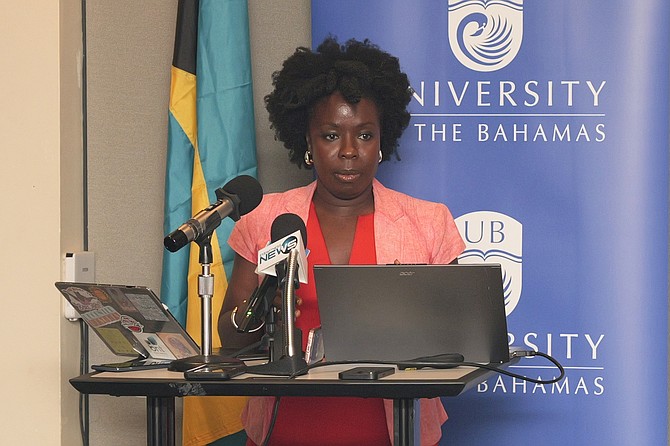
    After five days of high-level dialogue in Nassau, The Bahamas, the Caribbean Development Bank (CDB) has formally closed its 56th Annual Meeting of the Board of Governors, leaving attendees united on a clear mandate: move beyond conversation and deliver measurable, transformative progress for the Caribbean’s 44 million residents. Held under the overarching theme “Forging the Caribbean’s Future: Strategic Solutions for Uncertain Times”, the gathering brought together a cross-section of stakeholders, from regional Heads of Government and Finance Ministers to representatives of global development institutions, private sector leaders, civil society groups, and emerging youth voices, all converging to address the region’s most pressing barriers to inclusive growth. In his closing address to delegates, CDB President Daniel M. Best stressed that the true value of the conference would not be measured in the pledges made in Nassau, but in the outcomes delivered long after the meeting adjourned. Throughout the week of negotiations and discussions, Board of Governors members repeatedly pushed for a sharpened focus on execution over planning. Key priorities emphasized included deepening cross-regional collaboration, streamlining the rollout of development projects, and building more effective, mutually beneficial partnerships between public bodies, multilateral agencies, and the private sector to amplify impact. Best responded by reaffirming the CDB’s unwavering commitment to driving regional development, noting that the institution was already prepared to align its cross-border initiatives, speed up decision-making processes, and roll out context-specific, practical solutions to turn policy frameworks into tangible progress for communities. A core thread running through all the meeting’s working sessions was the growing set of interconnected challenges facing Caribbean small island developing states in today’s volatile global landscape. Delegates conducted deep dives into the compounding impacts of climate-driven extreme weather events, disruptive geopolitical tensions, chronically constrained national fiscal space, and prolonged post-pandemic economic slowdown, while collaborating to design targeted strategies to boost national and regional resilience and advance long-term sustainable development. The dialogue also extended to the parallel Youth FIRE Forum, where young Caribbean delegates pressed policymakers and multilateral institutions to embed intergenerational equity into current development planning, ensuring that ongoing initiatives open pathways to meaningful economic opportunity for the region’s youth, who will shape the Caribbean’s future. Additional working groups explored actionable pathways to unlock larger volumes of private sector investment across the region, expand equitable access to global climate finance, support small and medium-sized enterprise entrepreneurship, and leverage innovative financing mechanisms to stimulate inclusive economic growth and strengthen climate resilience. Attendees also highlighted that reliable, disaggregated data, continuous innovation, and cross-border knowledge sharing are non-negotiable foundations for effective development planning and successful on-the-ground implementation. Before closing the meeting, Best extended formal gratitude to the Government and people of The Bahamas for their warm hospitality and successful hosting of the 2026 gathering, and urged all delegates to carry forward the momentum built during the week of dialogue. “As we bring this 56th Annual Meeting of the Board of Governors to a close, we do so knowing that our work does not end here. If anything, it begins anew, carrying forward the ideas we shared, the partnerships we strengthened, and the commitments we made to build a stronger future for the Caribbean together,” Best said. He closed his remarks with a rousing call for urgent, unified action across the region. “Let us create a path where we will be remembered not as the generation that managed uncertainty, but as the generation that forged possibility—together. It is time for us to accelerate results and impact to transform our Caribbean. This is the decade of decision and action.” Looking ahead, the CDB has announced that its 57th Annual Meeting of the Board of Governors will be hosted by Belize in June 2027, where stakeholders will gather again to review progress and renew commitments to the region’s development.

  • AI integration necessary to strength Ports

    AI integration necessary to strength Ports

    As regional stakeholders gathered to chart the future of hemispheric maritime infrastructure, Barbados’ top tourism and transport official delivered a clear call to action: port authorities across the Americas must prioritize artificial intelligence and full digital transformation to build the resilient, efficient, and sustainable maritime networks the 21st century demands.

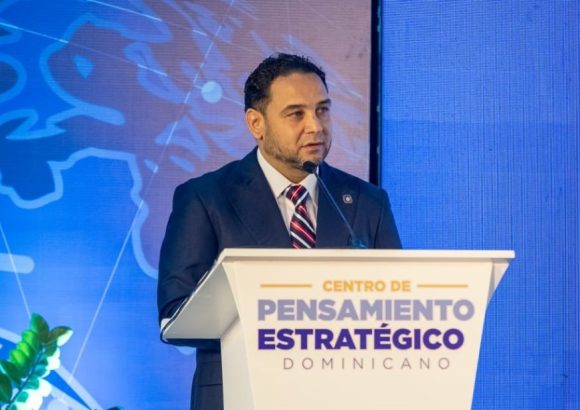
    Ian Gooding-Edghill, Barbados’ Minister of Tourism and International Transport, opened the 14th Regular Meeting of the Inter-American Committee on Ports (CIP) on Monday at the Lloyd Erskine Sandiford Centre, where more than 100 port leaders and industry stakeholders from 35 nations across the Americas have convened to explore this year’s theme, “The Scope of Artificial Intelligence: Reshaping Strategies for Sustainable and Secure Ports.”

    Gooding-Edghill emphasized that for small island developing states and coastal nations in particular, modern, well-functioning ports are far more than ancillary economic infrastructure – they are the critical lifelines that underpin national survival, economic prosperity, and collective security. The gathering comes at a uniquely pivotal moment, he noted, as regional nations work to shore up their maritime networks against a growing wave of global disruptions, from climate-fueled extreme weather to shifting supply chain dynamics and evolving security threats.

    “This meeting carries fundamental importance, because our collective future depends in large part on developing maritime gateways that are modern, resilient, and effectively governed,” the minister told delegates. “For small islands and coastal states especially, ports are not peripheral assets. They sustain our commerce, power our vital tourism sectors, and guarantee access to the food and energy supplies our populations depend on.” Beyond trade and economic activity, Gooding-Edghill added, ports also play an irreplaceable role in coordinating disaster response and post-event recovery, making ongoing modernization a non-negotiable priority at both the national and regional levels.

    Turning to the conference’s core focus on technological innovation, the minister stressed that digital transformation is no longer a discretionary upgrade for ports aiming to stay competitive in an increasingly interconnected global economy. “Digitization is no longer optional for ports that want to remain competitive, efficient, secure, and sustainable,” he said. He outlined the wide-ranging benefits AI already brings to port operations, from optimizing cargo logistics and enhancing on-site safety and security to enabling predictive maintenance that cuts costly downtime and improves data-driven operational decision-making.

    Yet Gooding-Edghill also issued a critical caution: technology alone cannot deliver long-term, inclusive success. Transforming regional port systems to meet future challenges requires more than just cutting-edge tools, he argued. It demands intentional investment in institutional readiness, robust governance frameworks, upskilling for existing workforces, and a sustained commitment to keeping innovation centered on people and inclusive of all communities.

    The minister called on regional leaders and policymakers to pursue collaborative action to ensure the benefits of AI and digital advancement are shared equitably across the entire hemisphere. “We share a collective responsibility to ensure that the gains from these advances are distributed broadly and fairly across our region,” he said, pushing for strengthened institutional capacity, updated policy frameworks, and clear safeguards to protect trust, enhance port security, and uphold public accountability.

    Gooding-Edghill added that national governments and private industry stakeholders must proactively center workers and local communities throughout the transition, ensuring no group is left behind as the maritime sector evolves. “If we move forward with intentional foresight and cross-border cooperation, we can build port communities that are not only smarter, but also more resilient, more sustainable, and more responsive to the changing needs of our people,” he concluded.

  • Eerste editie van Boeken, Bier en Meer succesvol van start

    Eerste editie van Boeken, Bier en Meer succesvol van start

    On a recent Saturday evening, the inaugural edition of the pop-up cultural event *Boeken, Bier en Meer* (translated as Books, Beer and More) launched in Souposo, marking the start of a new monthly gathering that blends literary discussion, live music, and casual community connection. The first event centered on the popular ongoing *Jazz Years* exhibition hosted by the Amsterdam City Archives, with researcher Mark Ponte leading a deep dive into the exhibition and its accompanying official book.

    Ponte’s talk shed new light on a little-recognized chapter of Dutch cultural history: the foundational contributions of Surinamese artists to Amsterdam’s mid-20th century jazz scene. He explained that the 1930s saw not only global jazz legends including Louis Armstrong, Josephine Baker and Coleman Hawkins drawing crowds to Amsterdam, but also a wave of Surinamese musicians rising to prominence in the local circuit.

    Among the pioneering artists Ponte highlighted was Lex van Spall (1903–1982), bandleader of the influential group the Chocolate Kiddies, who recorded several tracks alongside prominent African American jazz musicians Freddy Johnson and Rosie Poindexter. Ponte also noted that American saxophonist Coleman Hawkins, who resided in Amsterdam for several years, served as a key mentor to the growing cohort of Surinamese jazz artists joining the local scene. Many of these musicians adopted American stage names to boost their perceived credibility in the mainstream industry; the most successful among them included trumpeter Teddy Cotton (1912–1977) and renowned performer Kid Dynamite (1911–1964).

    Ponte’s presentation was complemented by a musical accompaniment from DJ Earl da Pearl, whose curated jazz selections enriched the discussion and set a warm, immersive tone for the entire evening. After the talk, attendees took part in an open question-and-answer session that invited guests to share their own knowledge, personal stories, and perspectives on the topic. A casual networking session followed, where visitors mingled over complimentary snacks and drinks, and had the opportunity to purchase the exhibition book – which sold out completely before the event ended.

    Reflecting on the debut, event project manager Shereen Carrot described the evening as an intimate, welcoming celebration that successfully wove together visual presentation, live music, and casual conversation. While Carrot noted that small adjustments, including technical refinements, better scheduling for event segments, and a revised opening introduction, will be implemented for future gatherings, she characterized the first edition as an overall rewarding success.

    *Boeken, Bier en Meer* is a monthly pop-up initiative organized by the Stichting Skrifi foundation, designed to bring literary conversation to accessible, informal settings. Each month, the event centers on a discussion of a selected book, alongside in-depth interviews with authors and literary experts that explore key trends and shifts in contemporary literature. Attendees can enjoy beer or wine in a relaxed, social setting, making cultural engagement feel approachable rather than intimidating.

    Beyond deepening readers’ understanding of literary topics, the event also functions as a community hub for anyone with a passion for storytelling and books. It creates space for attendees to connect with one another, discover new titles, and engage with fresh perspectives from across the literary world. The first edition has been widely described as a resounding success, seamlessly blending literature, jazz music, a cozy café atmosphere, and food and drink into a natural, enjoyable experience for all attendees. Organizers have already begun preparations for the second edition, scheduled to take place in July.

  • Invest in technology-driven learning to protect education amid insecurity

    Invest in technology-driven learning to protect education amid insecurity

    As Nigeria continues to battle widespread insecurity and a rising trend of school-linked abductions, a prominent Nigerian education leader is calling on federal and state authorities to ramp up investment in technology-powered learning infrastructure to guarantee that children’s education remains uninterrupted regardless of safety risks.

    Toyin Joseph Larayintan, Director of the Abuja-based Zion Study Centre, issued this appeal during the organization’s monthly youth engagement event, Echoes of Zion. The gathering, hosted at the centre’s facilities, brings together young people from across the region for mentorship and open discussion on pressing national issues, with educational resilience topping the agenda during the most recent session.

    Larayintan emphasized that repeated attacks on educational institutions and the kidnapping of students across multiple regions of Nigeria have exposed a critical gap in the country’s education system: a lack of flexible, emergency-ready learning alternatives. When physical classroom attendance becomes too dangerous for students and staff, he argues, digital platforms can bridge the gap and keep learners on track with their studies.

    While he acknowledged that Nigerian security forces are actively working to dismantle criminal networks and curb violent attacks, Larayintan noted that proactive system-level changes are just as critical to protecting students’ learning trajectories. “The future of education cannot depend solely on physical classrooms,” he stated. “Technology offers a reliable pathway for continuous learning, especially at a time when so many Nigerian parents live in fear for their children’s safety on the way to school.”

    To build this resilient system, Larayintan outlined four core investment priorities: expanding national digital infrastructure, scaling access to fully functional virtual classroom platforms, extending high-speed broadband connectivity to underserved communities across the country, and providing comprehensive training for teachers to effectively integrate digital tools into their instruction. “These investments will ensure that learning never stops, no matter what security challenges we face,” he added.

    Drawing on global case studies to support his argument, Larayintan highlighted how developed nations have integrated technology into their core education frameworks. South Korea boasts a 97% national internet penetration rate, with nearly every school connected to nationwide digital learning networks. Finland has embedded digital literacy as a core requirement in its national K-12 curriculum, while more than 95% of U.S. public schools already have high-speed internet access and standardized online learning platforms.

    He also pointed to the COVID-19 pandemic as a real-world test of educational resilience: countries with pre-existing robust digital education ecosystems were able to maintain learning for hundreds of millions of students through months of mandatory school closures, while nations with underdeveloped digital infrastructure saw massive learning loss that continues to impact students years later. Nigeria, he argued, can draw direct lessons from this global experience to prepare for ongoing and future emergency threats, including security instability.

    Beyond emergency preparedness, Larayintan stressed that investment in educational technology delivers long-term economic benefits for Nigeria’s large youth population. In an increasingly digital global economy, innovation and technological proficiency have become key determinants of professional success. Building out tech-driven learning systems will not just protect education during crises, he said, but will also equip young Nigerians with the in-demand skills they need to compete in regional and global job markets.

    To move this agenda forward, Larayintan called for coordinated action across multiple sectors: he urged government policymakers to prioritize edtech investment in national education budgets, encouraged international development partners to direct funding and technical support to digital learning initiatives, and called on private sector stakeholders to contribute infrastructure and expertise to expand access across low-income and rural communities. He framed the investment as a core step toward securing a prosperous, stable future for Nigeria’s growing young population.

    The monthly Echoes of Zion programme, which hosted the announcement, has operated for years as a nonpartisan platform to engage Nigerian youth on topics spanning national development, ethical leadership, educational access, and social responsibility, connecting emerging young leaders with mentors and policy advocates to address the country’s most pressing challenges.

  • Dad in tears after autopsy on daughter Mercedez

    Dad in tears after autopsy on daughter Mercedez

    The devastating murder of 12-year-old Mercedez Layne has gripped the nation in shock and grief, after an official autopsy confirmed the young Erin RC Primary School student died from severe blunt force trauma to the head. On the day the results were released, Mercedez’s father, Ronald Cabrera, struggled through overwhelming emotion as he addressed the public, describing a pain that no legal punishment could ever repair. The child’s partially clothed remains were discovered early Sunday morning near an inactive oil well along Carapal Road in Erin, just hours after her family reported her missing.

    Choking back tears, Cabrera explained that autopsy results linked the fatal head injuries to the bleeding from Mercedez’s ears that left relatives horrified when her body was first found. Reeling from his unimaginable loss, he questioned the purpose of even the harshest sentences for convicted criminals, asking: “Could anything bring back my daughter? You could get a million years. Could you bring back my daughter?” He also raised questions about the burden of incarcerating violent offenders, asking why public tax dollars should be used to support people who commit such heinous acts.

    At present, a 24-year-old man from Palo Seco remains in police custody as law enforcement continues its full investigation into the child’s killing. The details of Mercedez’s death have horrified communities across the country and reignited long-simmering demands for more robust, urgent measures to keep children safe across the nation.

    According to police accounts, Mercedez’s body was first spotted just after 6:40 a.m. Sunday by a maintenance worker with Trinity Exploration and Production Services, who was traveling to the oil well site for routine work. The worker found the child unresponsive on the ground and alerted the Erin Police Station immediately. Responding officers located the body roughly 500 feet down a narrow dirt track leading to the well; Mercedez was found face down, wearing only a green T-shirt, with no clothing below the waist.

    Crime scene investigators collected a range of potential evidence from the area, including garments believed to belong to the victim, a broken glass bottle, a single slipper, food items, and other pieces of forensic material. Investigators later confirmed that Mercedez was first reported missing around 4 p.m. Saturday by her grandfather, Morriso Gastoigne. Gastoigne told police he last saw his granddaughter around 11:30 a.m. that same day, when she got into a pink station wagon driven by an unknown man. The vehicle was reportedly traveling toward the family’s home along Los Iros Beach Road, but Mercedez never arrived at the residence.

    Clyde Elder, the Member of Parliament for La Brea, visited both the crime scene and the grieving family’s home on Sunday, describing the killing as a crushing blow to the small, tight-knit regional community. “This has been a shocking, heart-wrenching, gruesome, vexatious act committed,” Elder said in a statement following his visit. “The community of Los Iros, Carapal, Erin, is close-knit, and I think what has happened has left us all as a community in a state of disbelief. Right now people are just hoping for justice.”

    Opposition Leader Pennelope Beckles also extended formal condolences to Mercedez’s family and joined the call for immediate action to strengthen national child protection frameworks. “The apparent rise in incidents involving missing and abducted children in recent months warrants urgent and coordinated action by the State to strengthen child protection measures, improve public safety systems, and enhance community awareness,” Beckles said.