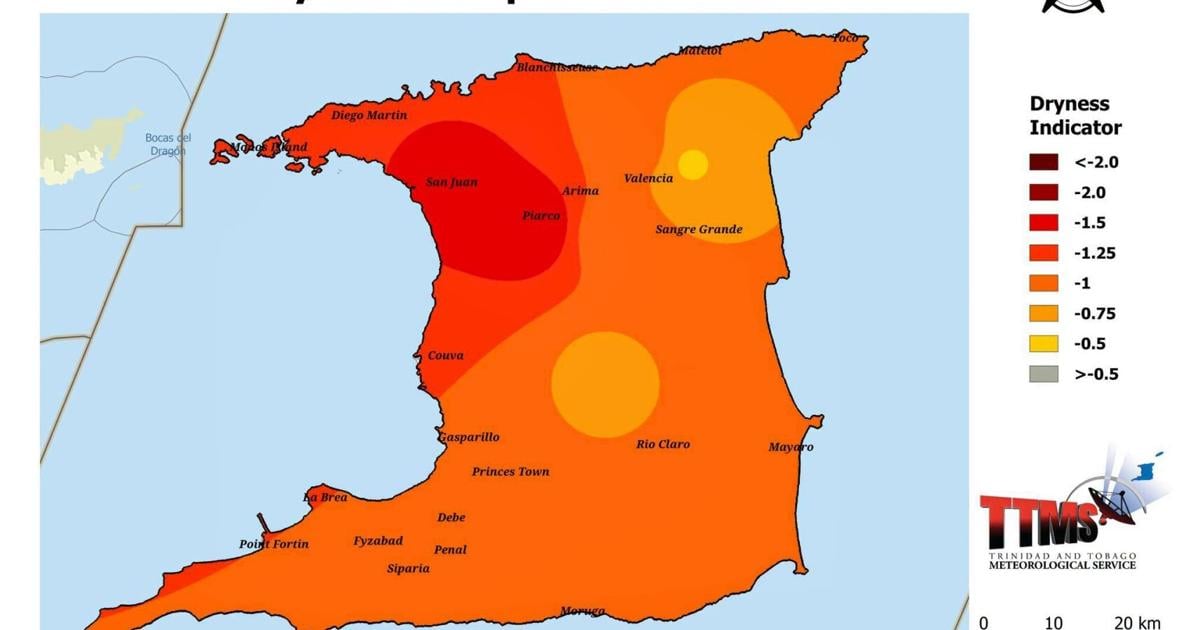
As the 2026 Atlantic hurricane season reaches its historically active peak, the twin-island nation of Trinidad and Tobago is facing an unexpected and growing climate threat: escalating dry conditions that are projected to worsen into 2027, according to an updated official outlook released by the Trinidad and Tobago Meteorological Service (TTMS) this week. Right in the heart of what is typically a wetter hurricane period, the country is already grappling with extreme heat stress, with recent maximum temperatures hitting 33°C in Trinidad and 32°C in Tobago. When adjusted for heat index – the perceived temperature that accounts for humidity – those values rose to 36°C and 35°C respectively, with forecasters projecting continued hot, mostly sunny conditions in the immediate short term. The current drought projection is built on analysis of the three-month Standardized Precipitation Index (SPI) covering July through September 2026, which shows an uneven but widespread pattern of below-average rainfall across both islands. In July, rainfall totals were near normal across most of Trinidad and sections of Tobago, but the Crown Point monitoring station in Tobago recorded just 72% of its typical monthly precipitation, at 115.8mm. Piarco, Trinidad’s main monitoring site, logged 215mm of rain, 94% of its long-term average. Over the full May-to-July period, extreme dryness was confirmed at Crown Point, south-western Tobago and Valencia, with slightly drier-than-normal conditions across central and north-eastern Tobago and north-eastern Trinidad. South-western Trinidad has already slipped into a moderately dry spell, with early drought development already underway. Nationwide, the number of consecutive dry days has risen steadily between June and July 2026, while the frequency of heavy rainfall events of 10mm or more has dropped across both islands. Looking ahead to September, the TTMS has issued an initial drought watch for most of Trinidad, with the highest risk of agricultural drought developing across the lower Caroni River basin from Piarco westward. Moderately dry conditions are expected in south-western Tobago, while central and north-eastern Tobago, north-eastern Trinidad, and the upper Caroni River basin will remain locked in persistent dry conditions through the end of the month. The trend of worsening dryness is expected to accelerate through October. By the end of that month, the TTMS projects that official drought warning conditions will take effect across all of Tobago and north-eastern Trinidad. The upper Caroni River basin will remain moderately dry, while the drought watch will expand from the lower Caroni westward into north-western Trinidad. That pattern is expected to hold through the end of November, with Tobago remaining under drought warning, drought watches in effect across the entire Caroni River basin extending into north-western Trinidad, and moderately dry conditions across northern Trinidad. Overall, short-term drought is projected across Tobago, north-eastern Trinidad, and the lower Caroni River basin between October and November 2026. Beyond the immediate three-month outlook, long-term projections raise even greater red flags. By December 2026 or January 2027, the TTMS warns that a long-term drought watch may need to be enacted, driven by a developing moderate-to-strong El Niño pattern forecast for late 2026. El Niño events across the region typically suppress wet season rainfall, push temperatures higher, and increase evaporation rates across northern South America and the Lesser Antilles, a pattern that could extend drier-than-normal conditions through the 2027 dry season. The growing drought poses major, immediate risks to two critical sectors of the nation’s economy: agriculture and public water supplies. For agricultural producers, irregular rainfall, extended hot spells, and falling soil moisture have combined to create elevated risks for both standing crops and livestock. Water resources are already under pressure, with reduced recharge rates for dams, natural streams, and underground aquifers cutting into the volume of available water for public distribution systems. In response to the developing crisis, the TTMS has issued a series of advisories for government agencies, businesses, and residents. Water and energy authorities are urged to roll out sustained water conservation measures immediately to protect reserves. The general public is asked to adopt careful water storage and usage habits to reduce unnecessary waste. For farmers, forecasters recommend close monitoring of on-farm water use, investment in improved irrigation and on-site water storage, regular weeding to cut down on water competition between weeds and crops, and increased surveillance for pest populations that thrive in drier-than-normal conditions. The TTMS is urging all relevant government and private sector stakeholders to use the updated drought outlook to update contingency plans, strengthen drought management protocols, and expand early warning systems to respond to the worsening conditions ahead.
作者: admin
-

‘Send them home’ won’t solve school problems
A new academic year kicked off across Trinidad and Tobago on Monday, and the national education landscape has quickly become the center of a heated public debate over school discipline policy, sparked by comments from Prime Minister Kamla Persad-Bissessar over the weekend.
In a back-to-school address delivered Sunday, Persad-Bissessar put forward a controversial call for educators across the country to adopt a strict zero-tolerance approach to both disruptive students and unengaged parents. The Prime Minister argued that school staff should not have to shoulder the stress of supporting students who refuse to adjust their behavior or parents who dismiss schools’ concerns about their children’s conduct. She instructed teachers and principals: if a student will not comply with school rules and their parents will not collaborate to address the issue, send the student straight home to have the problem worked out within the family.
The proposal has drawn sharp pushback from Dr. Nyan Gadsby-Dolly, a former education minister and opposition Member of Parliament for St Ann’s East, who framed the Prime Minister’s plan as nothing more than a superficial band-aid that ignores the deep, systemic roots of student misbehavior. In a public Facebook post published Monday, Gadsby-Dolly questioned whether removing disruptive students from campus entirely was the full extent of the government’s strategy to address school discipline challenges, arguing that every child deserves an equal shot at an education as a pathway out of poverty.
Gadsby-Dolly emphasized that disruptive conduct in schools is rarely a random choice; more often, it is a visible symptom of far deeper struggles that many young people face outside of the classroom. “Hungry children misbehave; abused children misbehave, children with undiagnosed learning disabilities misbehave, angry children misbehave, children who lack attention misbehave,” she noted, asking how sending vulnerable students home could possibly resolve the underlying issues driving their behavior. She clarified that her argument does not excuse harmful conduct in schools, but it demands a more thoughtful approach that accounts for the unstable, traumatic home environments many misbehaving students navigate daily.
The core of Gadsby-Dolly’s criticism centers on the current ruling United National Congress (UNC) administration’s prior cuts to student support infrastructure. She pointed out that the UNC dismantled the Student Support Services Division (SSSD), an agency that specialized in addressing root causes of misbehavior by providing parenting support, mental health guidance, and targeted coping resources for students facing life challenges. The administration chose not to renew contracts for hundreds of specialized support staff, including school social workers, guidance counselors, restorative justice practitioners, learning support assistants, diagnostic specialists, special education instructors, and school psychologists. Without these support systems in place, Gadsby-Dolly argues, the education system is abandoning the students who need intervention the most.
“Sending misbehaving children home will not cure the problem of school discipline; nor will it help thousands of students and parents who need counselling, guidance and support to overcome their challenges and succeed educationally,” she said. She also raised urgent questions about the long-term public safety impacts of the policy: “What effect will sending misbehaving students home with no help have on crime and criminality? How do we help misbehaving students to transform their behaviour?”
To replace the superficial zero-tolerance plan, Gadsby-Dolly called on the government to reverse course and restore the SSSD, expand targeted education sector support to address the root causes of disruptive conduct, and reinvest in residential youth programs like MILAT and youth camps. These programs, she explained, provide structured alternative environments for young people who need a full change of scenery to reorient their lives and grow into productive, engaged citizens. Closing her statement, she emphasized that the debate is not about partisan politics, but about the future of Trinidad and Tobago: “This is about the salvation of Trinidad and Tobago. We must think deeper.”
The Prime Minister’s proposal also faced pushback from Crystal Ashe, president of the Trinidad and Tobago Unified Teachers’ Association, who shared concerns about the plan’s long-term consequences during an interview on TV6’s Morning Edition Monday. Ashe noted that many disruptive students actually want to be sent home, as they have little investment in staying in the classroom. He echoed Gadsby-Dolly’s call for structured, supportive systems, arguing that removing students from campus without any rehabilitation or social support does nothing to help them grow.
“When you send them home, they going and watch TV, they going on Facebook, they going on social media. How is that benefiting them? And when years pass and when they become adults in society, how are they going to provide or make any input in society? Will they be productive? No. You are breeding and cultivating bandits,” Ashe said.
The debate comes as the new academic year begins, with educators, policymakers, and families across the country grappling with ongoing challenges of school discipline, student mental health, and equitable access to support resources for vulnerable youth.
-

All 777 schools reopen but problems remain
The 2024 academic term kicked off across Trinidad and Tobago yesterday, with all 777 government-run and state-assisted schools welcoming students back following a two-month summer break. But the celebration of a new school year has been overshadowed by widespread criticism from the Trinidad and Tobago Unified Teachers Association (TTUTA), which says dozens of institutions across the country still face serious unaddressed infrastructure and safety hazards that put students and staff at risk.
In a series of interviews and public statements released yesterday, TTUTA president Crystal Ashe outlined a litany of unresolved problems reported by educators and school leaders: widespread furniture shortages, bat infestations that create unsanitary learning conditions, faulty electrical systems, non-functional water infrastructure, and incomplete construction and repair projects that were supposed to be finished before the first day of class. Ashe emphasized that these are not minor inconveniences, but direct threats to the health and safety of every person entering school buildings.
Ashe, who previously helped collect infrastructural data for the Ministry of Education, argued that the current crisis is entirely preventable. The ministry has long maintained the School Infrastructural Management (SIM) platform, a digital system where school principals log repair needs as they arise — with some requests sitting unaddressed for years. All the information the ministry needed to prioritize and complete repairs over the vacation break was already available in the system, Ashe said, adding that ministry officials simply failed to act in a timely manner.
“The ministry dropped the ball on school preparations this term,” Ashe told TV6’s Morning Edition yesterday. He pointed to one high-profile example: crews from the Ministry of Works and Transport (MTS) only arrived at Malabar Government Primary School for the first time to start repairs this past Sunday, just one day before students were set to return to class.
Pushing back against claims that his criticism is politically motivated, Ashe said TTUTA is only stating verifiable facts to protect educators and students. He drew a clear distinction between his role as an education advocate and that of Education Minister Dr Michael Dowlath, calling on political leaders to show greater accountability. “When can we get political maturity?” Ashe asked. “Just be mature enough to say I made a mistake, I didn’t go as I planned.”
TTUTA officers conducted on-site visits to dozens of schools across the country over the past 48 hours, and their on-the-ground reporting confirms a wide range of ongoing hazards. Multiple schools including Arima Girls’ Government, Malabar Composite Secondary and Brazil Roman Catholic Primary are grappling with critical furniture shortages, while infrastructural construction drags on at Arima North Secondary. San Rafael RC Primary struggles with a broken water pump and a persistent bat infestation, and South East Port of Spain Government School still has nowhere near enough desks and chairs for teaching staff. At St Hilda’s Government School, bats have made their home in the school’s ceiling, creating ongoing health risks.
A recent electrical fire at Gloster Lodge Moravian School left affected areas of the campus still exposed and unsafe, forcing one class and its teacher to relocate to a temporary space. At Cunupia Government Primary School, ongoing flooring work in the administration wing has displaced the principal and vice principal, while multiple hazards have been documented at Fyzabad Anglican Secondary School.
In its official statement, TTUTA clarified it is not seeking confrontation with the ministry. Instead, the association says it is fulfilling its core responsibility to highlight threats to educator and student safety, and push for systemic improvements to school planning. The organization noted that the core issue is a systemic failure: most vacation repair projects started far too late to meet the reopening deadline, despite all necessary data being available through the ministry’s own infrastructure tracking system. TTUTA is calling on the ministry to move beyond just collecting data through its SIM platform, and start using that information to plan and complete repairs well in advance of future school terms.
One notable exception to the general reopening made headlines yesterday: students from Infants to Standard Two at Grant Memorial Presbyterian Primary School were relocated from the school’s original San Fernando Carib Street campus after a section of the building was deemed structurally unsafe by the Ministry of Works. For the duration of the 2024 term, these students will hold classes in a specially prepared space at St Paul’s Anglican School on Ruth Avenue, San Fernando.
In its official statement released ahead of reopening, the Ministry of Education reaffirmed its commitment to a range of ongoing education initiatives, including the national School Nutrition Programme with updated nutrition standards, school supply and book donation drives, digital and AI-enhanced learning programs, and expanded support for students and families. The ministry also confirmed that all Form 1 students will receive their promised free laptops this term, and the S.A.F.E. Police in Schools Programme will continue its work across the country.
In response to the repair backlog, the ministry stated that all outstanding work will be completed after school hours and on weekends to avoid disrupting classes, and that all required health and safety standards will be maintained to protect students and staff.
The National Parent Teacher Association (NPTA) has echoed TTUTA’s calls for urgent action. NPTA president Walter Stewart urged the ministry to resolve all outstanding issues as quickly as possible in a WhatsApp voice note released yesterday. Stewart noted that the association is pleased the vast majority of schools were able to open on schedule, but remains deeply concerned about unaddressed hazards at a number of institutions.
Stewart confirmed that two schools — Fyzabad Anglican Primary School and Gloster Lodge Moravian Primary School — were forced to close early yesterday due to the severity of their ongoing issues. He also highlighted additional problems at Malabar Secondary, which faces furniture shortages, and schools in the Toco area, where students are grappling with transport disruptions.
TTUTA has confirmed it will continue to monitor conditions at schools across the country throughout the opening weeks of the term, and will keep advocating for safe, healthy learning environments that meet the needs of all students and educators.
-

$2.5M Setback
A long-simmering financial accountability dispute between Trinidad and Tobago’s national sports authority and the country’s football governing body has come to a head, with the Sports Company of Trinidad and Tobago (SporTT) formally turning down a TT$2.5 million funding request from the Trinidad and Tobago Football Association (TTFA) to cover costs for the senior men’s national team’s 2026 Concacaf Nations League campaign.
The decision, documented in an internal SporTT board memo dated August 26, 2026 and obtained by local outlet the Express, upholds a funding freeze that has been in place for the TTFA since May of the same year. The embargo was imposed over a backlog of unsubmitted and unresolved expenditure reports for previous public funding allocations, a conflict that has cast a shadow over the nation’s football development ahead of key international fixtures.
The TTFA’s request, totaling TT$2,505,650.91, was earmarked to cover a full spectrum of match-related costs for the team’s home and away Nations League matches. These included international air travel for the squad and staff, hotel accommodation, on-ground transportation, venue music licensing, safety and security staffing, on-site ambulance services, and a contingency fund for unplanned expenses.
The Sports Development Performance Unit (SDPU), SporTT’s internal compliance and oversight body, had already recommended against approving the request, citing both the unresolved backlog of financial reports and the existing formal funding hold. Per the internal memo, SporTT notified the TTFA of the funding freeze via official correspondence on May 13, 2026, with the action triggered by the large volume of outstanding expenditure reconciliations.
While the SDPU acknowledged that the TTFA has recently begun responding to compliance queries and submitting supporting documentation to close out the backlogged reports, auditors are still in the process of reconciling more than TT$11.59 million in previously disbursed public funds. That unaccounted-for allocation covers three major programs: Years 3 and 4 of the Trinidad and Tobago Premier Football League (TTPFL), the first year of the senior men’s national team’s 2026 FIFA World Cup qualification campaign, and the senior women’s national team’s ongoing 2027 World Cup run.
The SDPU’s analysis attributes the build-up of unresolved reports to a pattern of non-compliance by the TTFA, including repeated late submissions, failure to align reporting requirements with standards set by Cabinet approval, and delayed provision of required supporting documentation even when reports are submitted. Given the active funding hold, the unit’s formal recommendation was to deny the new funding request.
The memo, prepared by SporTT Sport Development Officer Marlon Saldenha, explicitly confirms that approval was not granted for the Nations League funding request. The rejection comes at a critical juncture, as the national men’s team prepares to kick off its 2026 Nations League commitments, which require consistent financing for both home fixtures and travel for away matches.
This latest development follows a recent report from local sports outlet Wired868 that revealed multiple players, both based overseas and domestically, have already withdrawn from the upcoming Nations League squad, citing the TTFA’s failure to pay outstanding match fees from previous international campaigns. The funding dispute has compounded existing tensions between players and the football governing body.
As the state body responsible for distributing public funds to national governing sports bodies (NGBs), SporTT operates under formal service-level agreements and strict grant disbursement guidelines designed to enforce accountability for public money. The internal board memo makes no mention of whether the TTFA’s request would be reconsidered if the organisation resolves its outstanding reconciliation requirements.
When contacted by phone for comment, SporTT Chief Executive Arnold Ram declined to speak on the record about the decision. The current dispute is not unprecedented: in June 2026, the Sunday Express published an exclusive report detailing SporTT’s ongoing concerns about the TTFA’s financial accountability and oversight mechanisms. On the same day, TTFA President Kieron Edwards pushed back against those claims, defending his administration’s handling of public funds.
Responding to the latest rejection, Trinidad and Tobago’s Sport Minister Phillip Watts acknowledged the long-standing challenges SporTT has faced in getting the TTFA to complete its financial reconciliations. “Such issues have predated my tenure and continue to be a hurdle towards accountability and transparency,” Watts stated. “We will agree that matters of public purse should engage our attention, and we must be diligent in the allocation and spending of the same, and must not be accused of mishandling or misappropriating. I, as minister, will do all that is required to ensure that all NGBs comply with the rules and/or policies to ensure good governance in this country.” The minister confirmed the TTFA has held unresolved reconciliation dating back to 2024.
-

Police probe death of Curepe man
A suspicious death investigation is underway in Trinidad after the body of 75-year-old Chunilal Bandoo was discovered hidden beneath two large suitcases in a storeroom of an occupied Curepe residence, according to St Joseph police.
Bandoo, a well-known lifelong resident of the area who lived alone following a recent stroke, was last spotted alive on Saturday socializing with friends, a common routine for the humor-loving retiree. Witnesses confirm he spent several hours at a popular local gathering spot near his home on Mohammed Lane, Mc Inroy Street, but never returned to his residence after the casual meetup.
When Bandoo failed to come home, concerned family members filed an official missing person report with local law enforcement. The search operation launched the following day, Sunday afternoon at 6 p.m., combining forces of the volunteer Hunters Search and Rescue Team led by Vallence Rambharat, and officers from the St Joseph Police Station, supervised by Superintendent Jaikaran and led by Corporals Goonraj and Dill. The multi-team search continued through the night and into the next morning, before investigators made the grim discovery at approximately 12:08 p.m. in a back storeroom of Bandoo’s neighbor’s occupied home.
First responders immediately cordoned off the crime scene and contacted the Homicide Bureau to take over the investigation. Crime scene technicians processed the area and collected multiple pieces of evidence for forensic testing. While investigators have noted visible marks on Bandoo’s body, they have stressed that an official post-mortem examination, scheduled for this week at the Forensic Science Centre in Federation Park, will be required to confirm the exact cause and manner of death.
Local residents who knew Bandoo described him as a friendly, outgoing community favorite who often spent afternoons socializing, sharing jokes and drinking beer with neighbors. He had survived a stroke in recent months, and while he had not fully recovered, he remained mobile and independent, living alone in his home. His only immediate family member, a daughter who currently resides in the United States, has already been notified of his death and is expected to travel back to Trinidad to make arrangements.
Multiple odd details have emerged from witness accounts that have left local residents with unanswered questions. After Bandoo went missing, his personal clothing—including a three-quarter length pants, a T-shirt, and slippers—were left at the front yard gathering spot where he was last seen. Witness accounts confirm the clothing was first moved to Bandoo’s family before being returned to the front of the property where his body was ultimately found, then later discarded on the side of the road after the yard gate was locked.
Most notably, neighbors say the storeroom where Bandoo’s body was found is kept locked with a heavy padlock, located at the far back of the large residential yard, hundreds of feet from the front area where Bandoo was socializing. “So the police said he cannot go there for himself. They say that somebody would have had to put him there,” one neighbor explained, confirming local suspicions that foul play may be involved. Two large suitcases were found stacked directly on top of Bandoo’s body, further deepening community concern.
While residents have raised questions about the suspicious circumstances of Bandoo’s death, they have said they remain patient waiting for official conclusions from the police investigation and forensic autopsy. As of press time, St Joseph police have not released any additional updates on potential suspects or motives in the case.
-

Stralende ochtend met kans op regen in de middag
The Meteorological Service of Suriname has released its daily weather forecast for September 8, outlining a day of shifting conditions that starts with warm, sunny weather and ends with scattered severe thunderstorm activity across much of the country.
The day will open with largely dry conditions and abundant sunshine across most regions, though patchy light fog will reduce visibility in some low-lying areas through the early morning. Temperatures will climb rapidly as the morning progresses, reaching between 32°C and 35°C by midday. In direct sunlight, the heat index will push perceived temperatures even higher, hitting roughly 37°C. With the UV index reaching extremely high levels for the day, officials are urging anyone planning to spend extended periods outdoors to apply high-factor sunscreen and take regular breaks in shaded areas to avoid sun damage or heat-related illness.
Winds will be calm through the early part of the day, with a light easterly breeze registering at force 3 or lower on the Beaufort scale.
Starting in the afternoon, the weather pattern will gradually shift. Intense daytime heating of the land surface will create atmospheric instability, creating conditions ripe for localized rain showers and thunderstorms to develop across every region of the country. The national meteorological service warns that some of these storm cells could bring severe conditions, including heavy downpours, frequent lightning, and gusty winds.
Coastal districts including the capital Paramaribo are expected to stay drier than inland areas through the afternoon, but residents there still face a real chance of seeing a passing storm. Inland regions such as Stoelmanseiland and Kabalebo are likely to see the most intense precipitation, while the Langa tabbetje area will see mostly cloudy conditions with a moderate chance of scattered showers.
Overnight after the storms pass, temperatures will cool to between 22°C and 25°C. Thunderstorm activity will gradually move out of the region, but patchy fog is expected to develop in some locations through the overnight hours.
-
May the socialist state-owned enterprise system move forward and contribute to the country what it must
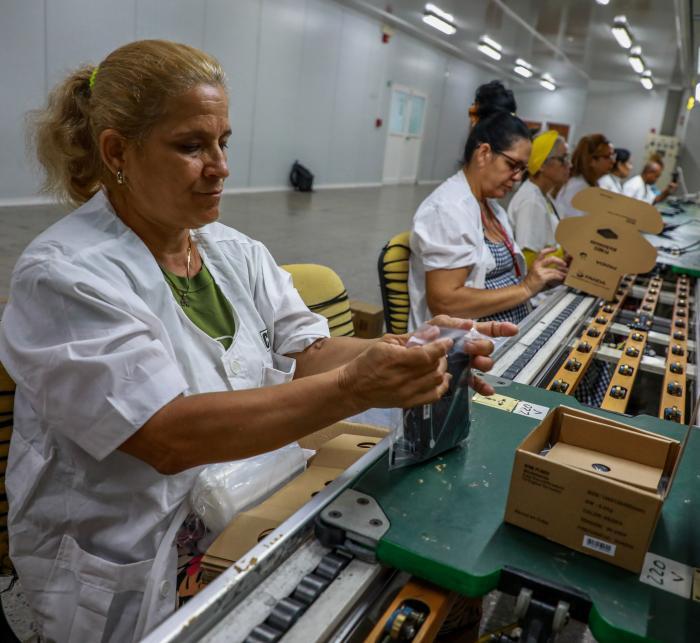
On September 8, 2026, Cuban President Miguel Díaz-Canel Bermúdez, who also serves as First Secretary of the Central Committee of the Communist Party of Cuba, convened a high-level meeting at the Palace of the Revolution with more than 30 leaders of top-performing state-owned economic entities. The gathering centered on advancing the country’s sweeping 176-point economic and social transformation agenda, a reform package designed to level the playing field between state-owned enterprises and other economic actors across the island.
The meeting was co-led by other senior Cuban leadership, including Prime Minister Manuel Marrero Cruz, Vice President Salvador Valdés Mesa, Central Committee Organization Secretary Roberto Morales Ojeda, and Deputy Prime Minister Inés María Chapman Waugh. Moderated by Roberto Ricardo Marrero, head of the National Institute of State Business Assets, the discussion offered space for participating business leaders to share on-the-ground results from early reform implementation, as well as to unpack existing strengths, emerging threats, and ongoing challenges facing the state-owned enterprise sector.
Multiple enterprise representatives highlighted tangible early progress from the reforms. Alberto Vicente Águila Abreus, general manager of the National Beekeeping Company, noted that working groups have tailored reform rollout to the specific needs of the beekeeping sector, with new flexible financing policies already enabling faster interim payments to primary producers. Wilson Ramírez Peña, president of the Agricultural Logistics Business Group (Gelma), which operates across most Cuban municipalities, acknowledged that the radical scope of the changes has sparked uncertainty among frontline workers, underscoring the critical need for ongoing open dialogue and experience-sharing to build broader buy-in.
Oscar Carvajal Serrano, general director of the Automotive Group under the Ministry of Transportation, reported that the new flexibilities have already put his sector on a strong financial footing. He confirmed that no subsidiary company will end 2026 with a loss, with projections for growth in both tax contributions and corporate profits. “Our companies now face no structural barriers to progress, and we have the autonomy to resolve our own problems,” Carvajal Serrano said, adding that the reforms represent a critical long-term leap forward that will require sustained effort to deliver full results.
Leaders from other key sectors, including pharmaceutical giant Labiofam, the hydraulics industry, and the electronics sector, echoed these observations. Edel Gómez Gómez, general director of the Comandante Camilo Cienfuegos Electronic Industrial Company, emphasized that the reforms fulfill a longstanding demand of state-owned enterprises: equal operating status alongside non-state and private actors. “These changes remove long-standing bureaucratic obstacles and barriers, allowing us to move faster to generate the wealth our country needs right now,” Gómez Gómez explained.
In closing remarks, President Díaz-Canel noted that the meeting followed a similar gathering just days earlier with representatives of Cuba’s non-state business sector, and that regular cross-sector meetings will continue moving forward. Future discussions will include leaders from state-owned, non-state, and cooperative business segments, with the goal of integrating all groups into a unified national business system aligned with Cuba’s broader economic and social model.
Díaz-Canel explained that a large share of the 176 transformation measures, which are organized into 23 thematic areas, already have full legal backing through new regulations and laws published in the Official Gazette. However, he urged enterprises not to wait for final regulatory approval to begin designing their own local implementation strategies, noting that dozens of the most proactive pioneering companies have already developed their roadmaps and are well-positioned to accelerate progress after taking early risks.
The president stressed the urgent need to update outdated leadership and management styles across the state sector, emphasizing that all reform efforts must center on frontline worker participation. He highlighted two key priorities for the remainder of 2026: company-level debates on the 176 transformations, and collaborative development of the 2027 national economic plan. “If workers do not embrace the transformations, there will be no transformation,” Díaz-Canel said, noting that reform is an iterative process that should welcome worker suggestions and course corrections identified by on-the-ground teams. For the 2027 plan, he added, priorities should emerge directly from worker input, reflecting the new autonomy granted to state enterprises.
He also pushed back against a common misperception among some local leaders that the reforms are primarily focused on immediate salary increases, reminding attendees that sustainable wage growth depends entirely on increased productivity and domestic wealth creation.
Framing the socialist state-owned enterprise system as Cuba’s core economic actor, Díaz-Canel reaffirmed the government and party’s full confidence in the sector’s ability to lead national economic recovery amid ongoing external economic pressure. “We must build productive sovereignty, strengthen connections between all economic actors, and leverage the national political will to help the state-owned enterprise system deliver on its promise to the Cuban people,” he stated.
The meeting ended with a collective call to action for sector leaders to embrace internal change and drive the reform agenda forward, cementing the role of state enterprises as the engine of Cuba’s ongoing economic evolution.
-

No Flying…
Tensions along the Israel-Gaza border have escalated in recent weeks over a surprising low-tech ‘aerial weapon’ that has captured the attention of Israeli intelligence and set off fresh threats of expanded military operations in the blockaded enclave. Palestinian activists in Gaza have been building and flying simple, handmade kites crafted entirely from non-metallic recycled materials, a design that renders them undetectable by standard military radar systems. Israeli officials, who refer to themselves as Zionists, have denounced the activity and framed these commonplace recreational objects as an unprecedented threatening new technology.
Israeli intelligence analysts have gone so far as to claim the kite design outperforms Iranian drone systems in key metrics: range, potential impact, and extremely low production cost. Constructed from scrap materials found in household waste and discarded personal items, each kite often costs nothing to build. Their non-metallic frames and fabric bodies avoid triggering radar alerts, and their variable sizes and shapes — many decorated to resemble the Palestinian flag or bear other national symbols — do nothing to hinder their flight capability. On even moderately windy days, the kites can climb hundreds of meters above the border, and if their tethers break, they can drift kilometers into Israeli-occupied territory before crashing on an unpredictable path. Bright, high-contrast color schemes make the kites visible from miles away, with no need for surveillance equipment to spot them.
Israeli authorities have leveraged the fact that children often build and fly the kites to justify their framing of the activity as a terrorist tactic, repeating their long-held claim that suspected terrorists can be as young as eight years old or younger. After Israeli forces recovered several kites that drifted across the border, military analysts conducted detailed examinations and confirmed the craft carry neither cameras for reconnaissance nor explosive payloads. Despite this finding, Israeli officials have threatened to ramp up large-scale military operations in Gaza if the kite-flying activity continues, arguing that the flights violate international and humanitarian law.
The repeated threats have had a chilling effect on the activity. Fearing Israeli retaliation will target their children, Gaza families have banned minors from flying kites along the border. While small-scale artisanal production of the kites is believed to continue, the risk of violence has put a sharp stop to regular flights. What began as a low-stakes expression of Palestinian identity has been reframed as a hostile security threat, highlighting the extreme escalation of tensions in the region. As the final line of the original reporting notes: Palestinian kites do not spy, do not explode, they simply fly. And in the context of Israeli occupation, the simple acts of imagining, creating, and continuing daily life are treated as suspect, even criminal, acts.
-
“The blockade punishes the daily life of a people in every aspect”
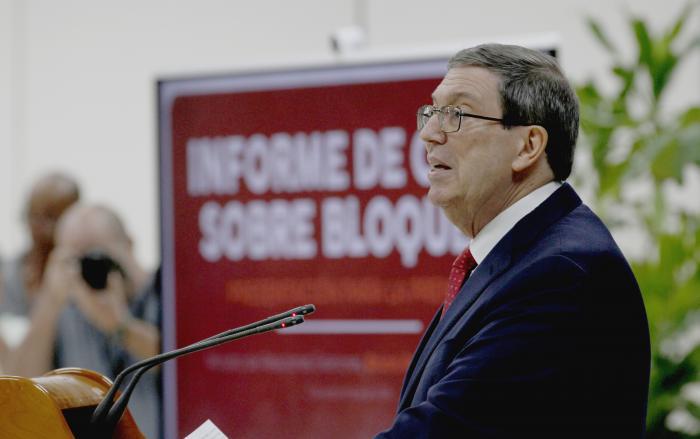
On September 8, 2026, Cuban Foreign Minister Bruno Rodríguez Parrilla unveiled a comprehensive report detailing the devastating human and economic harm inflicted by the United States’ decades-long economic, commercial, and financial blockade against Cuba, covering the 12-month period from March 2025 to February 2026. Speaking to an assembled audience of domestic and international journalists, Rodríguez framed the current intensification of the U.S. policy as an intentional act of collective punishment that meets the international legal definition of genocide.
Rodríguez painted a visceral picture of daily life for ordinary Cubans under the tightened blockade, describing widespread, prolonged power cuts that leave communities with just two to three hours of electricity access, or less, each day. “The long months living with only two or three hours of electricity a day or less, food spoiling, the heat that makes it impossible to sleep, parents fanning their babies, children doing their homework in near darkness, young people without internet access or recreation, grandparents without television or, sometimes, even radio—all family life is damaged,” he said.
The most acute crisis stems from a U.S. executive order imposed in January 2026 that formalized a full fuel blockade, which prohibits fuel imports, intimidates international shipping and tanker companies from delivering cargo to Cuba, and even blocks shipments of spare parts for the country’s existing thermoelectric and solar energy infrastructure. Rodríguez explained that 11 of Cuba’s 15 operational thermal power generation units are currently out of service for critical maintenance that cannot be completed due to blocked parts, resulting in a combined generating capacity shortfall of 1,400 megawatts. Despite Cuba’s rapid push to expand domestic solar energy capacity – with new photovoltaic parks able to be constructed in as little as 45 days – U.S. threats are now blocking shipments of solar panels and energy storage batteries needed to complete these projects. The energy crisis has rippled across every sector of Cuban society, from cutting power to water pumping stations that rely on electric infrastructure to disrupting public transportation that leaves most of the country’s vehicle fleet idled for lack of fuel, forcing students and workers to walk long distances to reach schools and workplaces.
The human cost of the blockade is most severe in Cuba’s universal public health system, which has long been a point of national pride. Rodríguez detailed how routine power cuts put vulnerable patients at extreme risk: newborns relying on electrically powered incubators must be sustained by manual ventilation when backup generators fail, and some emergency surgeries have been completed using only the light from rechargeable lamps or medical staff’s personal cell phones. More than 95% of the country’s medical equipment is affected by shortages of spare parts and supplies. Thousands of patients on hemodialysis face disrupted care due to ambulance fuel shortages, and 100,000 people – including 12,000 children – are currently on surgical waiting lists. The report documents that the childhood cancer survival rate has fallen from 85% to 65% due to blocked access to cancer medications and treatment supplies, with more than 70 people dying from the disease each day. Rodríguez emphasized that the rise in infant mortality recorded between 2018 and 2025 was entirely preventable: “These are children, not numbers. These are deaths that should not have happened” because Cuba was stripped of access to legitimate medical resources needed for its robust public health system.
The 2025–2026 report quantifies the total direct economic losses from the blockade at $8.083 billion, a 7% increase from the prior 12-month reporting period. Cumulative total damages, calculated at current dollar values, reach $178.7 billion; adjusted for gold price appreciation against the U.S. dollar, cumulative damages top $3.89 trillion. Without the blockade, Cuban GDP would have grown by 10.8% in 2025 alone. The energy blockade alone caused more than $802 million in direct losses over the reporting period, with a 2.67 million ton shortfall in planned fuel imports and more than 980 gigawatt-hours of lost generation capacity. The agricultural sector recorded $848 million in losses, with irrigation access falling to just 2 hours per day from the required 16 during the critical cold growing season, and 20,000 tons of prepositioned United Nations food aid for vulnerable communities held up by fuel shortages for distribution. The education sector recorded $98 million in combined losses, with 30% of students forced to relocate to access classes, and critical assistive technologies for disabled students – including 21 irreparable Braille machines and limited access to cochlear implants – left unavailable. Tourism, one of Cuba’s largest export sectors, suffered more than $2 billion in losses, while the national biopharmaceutical sector recorded $134 million in losses.
Rodríguez rejected claims that the harm inflicted by the blockade is accidental “collateral damage,” stressing that the suffering of the Cuban people is a deliberately planned outcome. He drew a parallel between the current policy and the genocide unfolding in Gaza, noting: “It is the same ruthless sentiment and destructive spirit behind the genocide being committed in Gaza. In Cuba, it is silent, without bombs, but it is killing nonetheless.” He also linked the current U.S. policy to the 19th century Spanish reconcentration policy that killed hundreds of thousands of Cubans, arguing that the ideological architects of the modern blockade, from mid-20th century U.S. policy planner Lester Mallory to current U.S. politicians and State Department officials, carry forward the same hostile intent to subjugate Cuba to foreign control for the benefit of anti-Cuban interest groups based in Miami.
Addressing claims from the U.S. government that it has provided $100 million in humanitarian aid to Cuba, Rodríguez called the assertion a deliberate falsehood. He noted that only a single small shipment of food and hygiene products for 700 families has been delivered to date, and challenged U.S. officials to disclose when full aid will arrive, why implementation has been delayed for months, and whether it will include critical medicine and food that Cuban communities urgently need. He clarified that Cuba welcomes all humanitarian aid offered in accordance with international law and UN norms, but will not accept aid that comes with political strings.
On the topic of bilateral talks between Cuba and the U.S., Rodríguez confirmed that exploratory discussions with the U.S. State Department are ongoing, but no progress has been made due to a lack of good faith on the U.S. side. Cuba remains open to continuing negotiations on the basis of sovereign equality, mutual respect, no preconditions, and non-interference in internal affairs, he said, but no binding agreements or roadmaps have been reached to date.
Responding to questions about recent economic and social reforms approved by Cuba’s National Assembly of People’s Power, Rodríguez emphasized that these reforms are an exercise of Cuba’s sovereign right to shape its own domestic policy, and do not require any approval or comment from the U.S. government. He added that broad sectors of U.S. society, including members of Congress, business leaders, and Cuban Americans living in the U.S., have expressed strong interest in exploring new trade and investment opportunities created by the reforms. The U.S. blockade’s recent escalation, particularly the energy strangulation policy, has hit small and medium-sized Cuban private enterprises particularly hard, with more than 7,000 pre-paid, contracted cargo containers still blocked from entering the country, most carrying food, medicine, and medical devices. Rodríguez called the energy blockade an act of war that violates freedom of navigation and international trade norms in peacetime.
Rodríguez noted that the damage figures included in the 2025–2026 report do not yet include the full impact of the January 2026 energy blockade and new secondary sanctions, whose effects only began to be felt after the reporting period’s cut-off. The report’s methodology, he added, adheres to strict international accounting standards and was previously audited and validated by a U.S. congressional commission. The Cuban government will release a full update on the additional damages from the recent escalation as soon as data collection is completed.
On the topic of rising threats of direct U.S. military aggression against Cuba, Rodríguez warned that the Cuban government takes these threats seriously, as multiple credible sources, independent analysts, and U.S. NGOs have documented active military preparations for a potential attack. He noted that senior U.S. officials, including the president, secretary of state, and secretary of defense, have publicly named direct military action as an option on the table. “Our people, our State, take them very seriously and are preparing to defend with determination, to the utmost, our independence, sovereignty, and territorial integrity,” he said. A U.S. military attack would serve no legitimate U.S. national interest, he added, and would result in a devastating bloodbath that would kill both Cubans and young U.S. service members forced to fight a war they do not support.
The United Nations General Assembly is set to vote once again on a resolution calling for an end to the U.S. blockade on October 27–28, 2026. Rodríguez said that despite intense U.S. diplomatic pressure and intimidation aimed at UN member states, the Cuban people remain confident in retaining the overwhelming international support the resolution has received for decades. “Behind every statistic is a human face. Behind every blockade measure is a tragedy, harm, or family drama,” he said. “Faced with this cruel challenge, Cuba is working tirelessly. It will never be defeated.” Reaffirming that Cuba poses no threat to the United States, Rodríguez ended with a simple demand: “Let us live in peace.”
-
Olieprijs naar zeswekelijkse piek na escalatie VS-Iran in Straat van Hormuz
Global crude oil prices climbed to a nearly six-week peak on Monday, driven by a sharp escalation of military tensions between the United States and Iran in the strategically critical Strait of Hormuz, amplifying already persistent concerns over global energy supply shortages. As of Monday’s trading, Brent crude, the global benchmark for oil pricing, hovered around $97 per barrel. This marks a 9% jump over the past five trading days and a 19% increase over the last month, after briefly touching an intraday high of $97.93 — the highest level recorded since the end of July. U.S. West Texas Intermediate (WTI) crude also rose to settle at $92.27 per barrel.
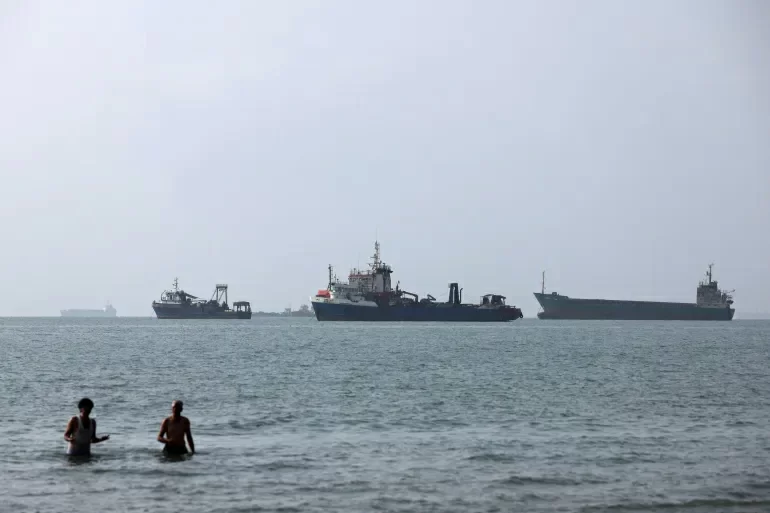
The sudden upward swing in oil prices follows a series of recent missile exchanges in and around the Strait of Hormuz, a chokepoint that carries roughly one-fifth of the world’s total oil trade every day. The U.S. Central Command (CENTCOM) announced Saturday that it had attacked three Iranian oil tankers after U.S. naval vessels came under ballistic missile fire. Two of the targeted tankers were permanently disabled, while the third was completely destroyed. Iran issued a conflicting account of the incident, claiming it had launched strikes on three tankers and three U.S. naval vessels, and warned of far harsher retaliatory measures in response to American aggression.
This round of clashes marks the latest escalation in a long-running conflict that began in February when U.S. and Israeli forces launched strikes on Iranian targets. A June ceasefire failed to hold, and hostilities have reignited and intensified steadily since late August. “This latest escalation is a direct reflection of the ongoing cross-fire and sustained conflict, and global oil supply shortages continue to persist with little end in sight,” explained Rachel Ziemba, adjunct senior fellow at the Center for a New American Security (CNAS).
Tensions worsened further on Monday when Saudi Aramco’s refinery in Jizan was struck for the second time in just one month. Industry insiders note that the attack could delay the facility’s planned return to full production capacity. Shipping data compiled by analytics firm Kpler shows that traffic through the strait has dropped dramatically, with only an average of 10 cargo vessels transiting the strategic waterway each day — the lowest daily volume recorded since May.
American consumers are already bearing the immediate brunt of higher crude prices at fuel pumps. Data from the American Automobile Association (AAA) shows the average national price of a gallon of gasoline has jumped 7 cents in a single week to $4.15. That is 39% higher than the $2.98 per gallon average recorded before the conflict began on February 28. Even more alarming are record-breaking diesel prices, which hit $5.85 per gallon last week and climbed above $5.90 on Monday. “U.S. diesel prices have never been this high, and we are now just waiting for these higher costs to trickle down to every single product consumers purchase,” Patrick De Haan, head of petroleum analysis at fuel pricing platform GasBuddy, wrote on social platform X. Diesel is the primary fuel for freight trucking, agricultural operations and construction, meaning price increases are eventually passed through to nearly all consumer goods. Calculations from Brown University’s Watson School of International and Public Affairs find that the average U.S. household has spent an extra $764.59 on fuel since the conflict began, $418.82 above typical seasonal spending.
The disruption to Hormuz oil shipments has widespread global impact: 10 major economies rely heavily on Middle Eastern oil exports that pass through the strait, with Eritrea and Madagascar sourcing nearly 90% of their total oil supply from the region. Three of the world’s largest economies — Japan, China, and South Korea — source more than half of their oil from Middle Eastern exporters.
In the United States, skyrocketing fuel prices have become a defining issue ahead of the country’s midterm elections, scheduled for November 3 to 5. Polling shows widespread voter dissatisfaction with President Donald Trump’s handling of the economy. A recent Financial Times poll found only 17% of American voters approve of Trump’s economic policies. A separate Economist/YouGov survey found 39% of voters believe the Democratic Party offers better economic policy, compared to just 32% who favor Republican leadership. Recent economic data offers a mixed picture: the U.S. economy added 162,000 new jobs in August, and the unemployment rate held steady at 4.1%, indicating ongoing modest growth. But soaring fuel costs and broader inflation have eroded consumer purchasing power significantly, creating widespread financial strain for households.
For China, which is heavily dependent on oil imports passing through the Strait of Hormuz, analysts say the country has taken steps to buffer against supply disruptions. China maintains a large strategic petroleum reserve, has reduced domestic oil consumption growth in recent years, and benefits from close energy ties with Russia, which can meet nearly half of China’s daily oil demand. The country has also accelerated its transition to electric vehicles, with EVs now accounting for more than half of all new car sales in China, according to John Gong, an economics professor at the University of International Business and Economics. Even so, U.S. Treasury Secretary Scott Bessent warns that Iran only has roughly 30 million barrels of crude oil remaining available for export to China, and U.S. blockades of Iranian ports have already drained that stockpile rapidly. Once the remaining reserve is exhausted, China will lose access to cheap Iranian crude, a shift that could put even more upward pressure on global oil markets.