作者: admin

  • Government and Congress unite behind “Let Her Go” anti-violence reform

    Government and Congress unite behind “Let Her Go” anti-violence reform

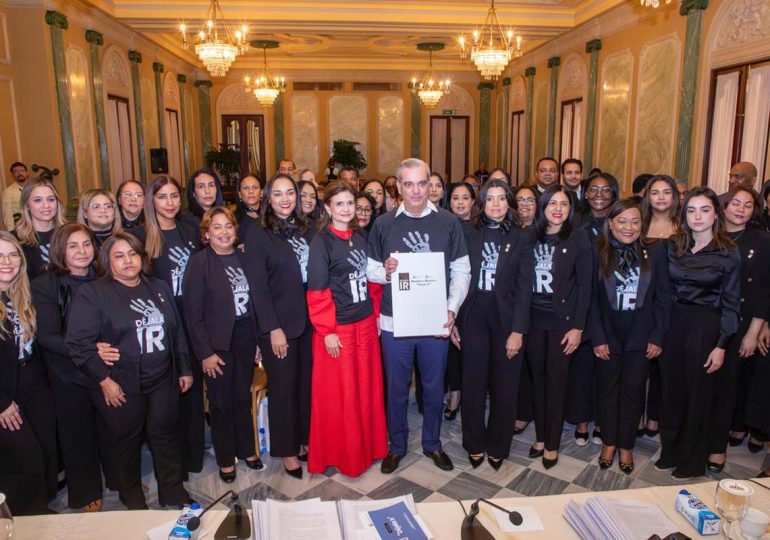
    SANTO DOMINGO – In a significant address, Dominican President Luis Abinader has pledged his administration’s full backing for a comprehensive national strategy to eradicate gender-based and domestic violence. The initiative, known as the ‘Let Her Go’ Comprehensive Reform and the National Pact for Life, has garnered unprecedented cross-party support, uniting senators and representatives from across the political spectrum to establish a coordinated framework for the protection, prevention, and prediction of femicides and filicides.

    President Abinader detailed the substantial progress already achieved, citing a dramatic expansion of protective infrastructure. Under his leadership, the number of shelters for victims has increased sixfold, from a mere three to eighteen operational facilities. Furthermore, a specialized investigative unit dedicated to these crimes has been established within the National Police. The most striking statistic presented was a drastic reduction in femicides, which have plummeted from 233 in 2011 to 51 recorded between January and November of this year. However, the President solemnly declared that ‘one death is one too many,’ vowing to meticulously review the proposed legislative reforms and commit all necessary financial and institutional resources for their execution.

    The ambitious ‘Let Her Go’ reform proposal entails a substantial investment of RD$5 billion, earmarked exclusively for bolstering prevention programs and protection services. A core objective is to forge a more robust legal architecture to ensure policy continuity remains unaffected by future changes in government. Representative Kinsberly Taveras, a key proponent, highlighted the overwhelming legislative consensus, with the initiative securing endorsement from 95% of lawmakers. She also underscored the pivotal role of female leadership in driving this change, noting the historic presence of 71 women in the Chamber of Deputies and 4 in the Senate, whose collective influence was instrumental in advancing the pact.

  • WIN weighing legal options for Region 10 Council chairmanship

    WIN weighing legal options for Region 10 Council chairmanship

    A constitutional impasse over the leadership of Guyana’s Region 10 (Upper Demerara-Upper Berbice) has escalated into a potential legal confrontation, with the We Invest in Nationhood (WIN) party contemplating litigation against Regional Executive Officer Dwight John. The political stalemate stems from John’s failure to convene additional council meetings following September’s general and regional elections, which resulted in an unprecedented 9-9 tie between WIN and A Partnership for National Unity (APNU) for the regional chairmanship.

    WIN Leader Azruddin Mohamed revealed his party is consulting legal counsel before proceeding with potential judicial intervention. “I have to consult with my attorney because to be honest, I don’t know if we take legal action now even that will delay the process further,” Mohamed stated in an interview with Demerara Waves Online News. He expressed frustration with the administration’s handling of the situation, alleging deliberate delays by the governing People’s Progressive Party (PPP).

    The deadlock has created unprecedented consequences for regional governance. President Irfaan Ali notably excluded Region 10’s leadership from Thursday’s swearing-in ceremony for all other regional chairs and vice-chairs. The President maintained constitutional compliance, stating: “I am sure that within the ambit of the Constitution and within the ambit of the rules of any elections that the chair and vice chair of Region 10 will be sworn in at the appropriate time when they conclude their elections.

    Complicating matters further, the impasse has created jurisdictional complications within local government structures. Linden Town Clerk Lennox Gasper confirmed that the situation involves APNU’s Dominique Blair, who refuses to resign as Deputy Mayor while potentially assuming the regional chairmanship. Gasper has sought legal guidance from Attorney General Anil Nandlall regarding whether Blair can simultaneously hold both positions, as no existing legislation explicitly prohibits such dual roles.

    The ongoing constitutional crisis highlights growing tensions in Guyana’s decentralized governance system and raises questions about procedural mechanisms for resolving electoral deadlocks at the regional level.

  • Taiwan : The commune of La Victoire is modernizing

    Taiwan : The commune of La Victoire is modernizing

    In a significant demonstration of bilateral cooperation, Haitian Presidential Transitional Advisor Emmanuel Vertilaire and Taiwanese Ambassador Hu Cheng Hao jointly inaugurated a comprehensive modernization initiative for the commune of La Victoire during recent patron saint celebrations. The high-level delegation’s visit to Vertilaire’s hometown in the Saint-Raphaël district marked a substantial advancement in Haiti-Taiwan diplomatic relations.

    Following ceremonial observances, the officials conducted an extensive assessment of security infrastructure, local development needs, and public utilities. Their inspection included critical facilities such as the La Victoire police station and municipal government offices, where they addressed pressing concerns regarding access to clean drinking water with local authorities.

    The visit culminated in the announcement of four fully-funded development projects that will transform La Victoire into a major construction zone. The initial phase includes building a modern administrative complex, establishing a new public marketplace, renovating the central public square, and implementing comprehensive street paving operations.

    Additionally, three strategic infrastructure proposals are currently under formal consideration: constructing vital road connections linking Pignon/La Victoire/Mombin Crochu to Ouanaminthe, developing the transportation artery connecting La Victoire to Bohoc, and erecting a new National School facility for the community.

    Collaborative efforts with the National Education Fund (FNE) have already commenced for school construction and rehabilitation throughout the municipality. Vertilaire expressed particular satisfaction with the rapid progress achieved in preliminary planning stages for these essential initiatives. The Haitian government has committed an initial 150 million gourdes to launch this transformative modernization program, heralding a new developmental era for the commune.

  • NDP sweeps to power, ending 24-year reign of Gonsalves’ ULP

    NDP sweeps to power, ending 24-year reign of Gonsalves’ ULP

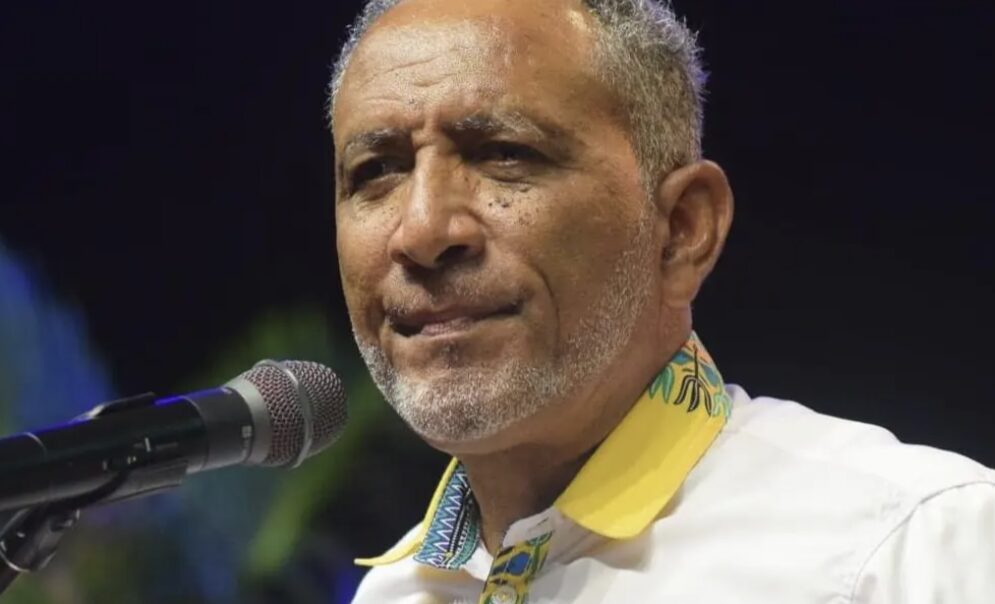
    The Caribbean nation of St Vincent and the Grenadines has witnessed a monumental political transformation as the New Democratic Party (NDP) emerged victorious in Thursday’s general election, conclusively terminating the Unity Labour Party’s (ULP) 25-year governance. This watershed moment represents a profound rejection of Prime Minister Ralph Gonsalves’ administration that had governed since 2001.

    According to preliminary electoral data, the NDP—under the leadership of Dr. Godwin Friday—secured commanding leads in 12 of the nation’s 15 parliamentary constituencies. This decisive outcome thwarted Dr. Gonsalves’ ambitious attempt to achieve an unprecedented seventh consecutive term in office, marking a significant realignment in the country’s political landscape.

    Despite his party’s comprehensive defeat, Dr. Gonsalves appeared poised to retain his parliamentary position representing the Windward constituency. Simultaneously, Dr. Friday comfortably maintained his electoral stronghold in the Northern Grenadines constituency, positioning him to assume the premiership following this historic political transition.

    The electoral outcome signals a dramatic shift in voter sentiment and ushers in a new era of governance for the Eastern Caribbean nation, with implications for both domestic policy and regional diplomatic relationships.

  • Gonsalves Defeated as Friday Steers NDP to Resurgence in St Vincent

    Gonsalves Defeated as Friday Steers NDP to Resurgence in St Vincent

    In a historic political shift, the New Democratic Party (NDP) has clinched a decisive victory in St. Vincent and the Grenadines’ 2025 general election, marking its return to power after a quarter-century in opposition. The electoral outcome concludes the extensive tenure of incumbent Prime Minister Ralph Gonsalves and his Unity Labour Party (ULP).

    Official results confirm the NDP secured a commanding majority of nine parliamentary seats, effectively ending Gonsalves’ 25-year administration. This victory paves the way for Dr. Godwin Friday, the NDP leader, to ascend as the nation’s seventh Prime Minister since gaining independence. The leadership transition is scheduled to occur imminently.

    The electorate’s decision reflects widespread demand for new governance approaches amid pressing national concerns. Dr. Friday’s incoming administration faces immediate challenges including economic revitalization, social program modernization, and addressing systemic public service issues. Political analysts characterize this election as a watershed moment demonstrating democratic maturity within the Caribbean nation.

    International observers have commended the peaceful electoral process, while regional leaders extend congratulations to Dr. Friday. The Prime Minister-elect has pledged inclusive governance and comprehensive policy reforms, emphasizing economic stability and social equity as paramount priorities for his government’s agenda.

  • SIB Reassures Public After E. Coli Concerns in Household Water

    SIB Reassures Public After E. Coli Concerns in Household Water

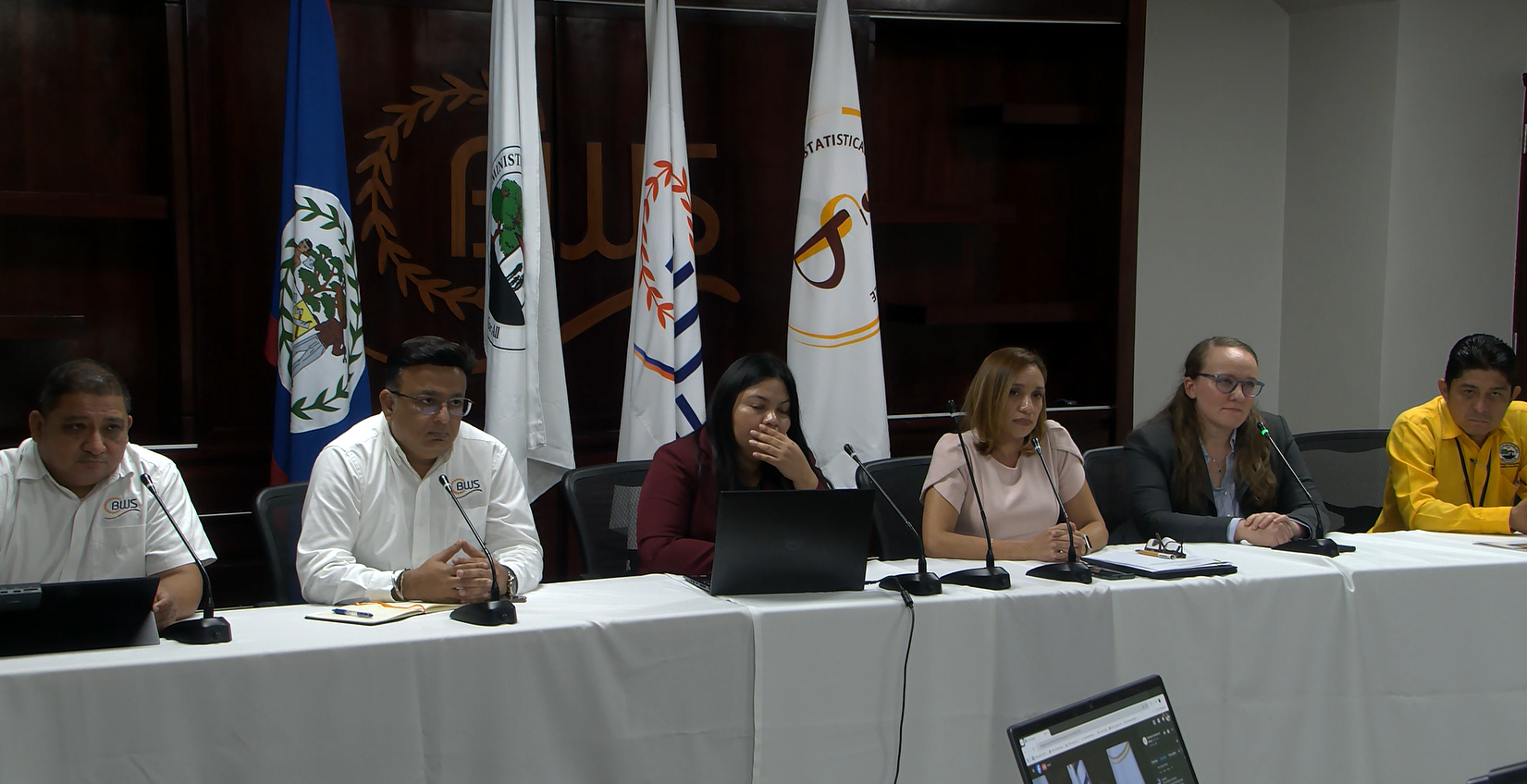
    Belizean health authorities have moved swiftly to clarify findings from a major national survey that initially raised alarms about water safety. The Statistical Institute of Belize’s seventh Multiple Indicator Cluster Survey (MICS7) revealed concerning E. coli contamination rates in drinking water samples collected from approximately 5,000 households across both urban and rural areas.

    The comprehensive study, which examines health, education, gender equality, and child protection indicators, detected contamination in 33.7% of samples taken at the point of consumption. However, officials from multiple agencies emphasized that the national water supply itself meets international safety standards, with contamination occurring primarily after water reaches residential storage systems.

    Diana Castillo-Trejo, Director General of SIB, clarified the critical distinction: “The MICS7 results did not seek to measure contaminants in our national water supply, but rather at the point of consumption in the home.” The data revealed that households relying on rainwater collection systems showed the highest contamination rates, indicating needs for improved catchment infrastructure and hygiene practices.

    Sanjay Keshwani, Chief Operations Officer at Belize Water Services, detailed the rigorous testing protocols maintaining national water quality: “We follow minimum WHO standards, but we aim for AWWA standards, which are more stringent.” The utility conducts daily water quality assessments using seven distinct procedures to ensure safety throughout the distribution system.

    The Ministry of Health and Wellness confirmed that national water supplies consistently meet World Health Organization guidelines for potable water. Water Analyst Ary Sosa explained their responsive protocol: “All our laboratory results are screened against WHO guidelines. Once we see a red flag, we act expeditiously to remedy the situation.

    Health authorities now recommend improved household water management practices, including the ‘flush first’ method for rainwater systems and regular disinfection of water storage containers. The MICS7 data provides crucial information for policymakers and households alike to address water safety at the point of consumption.

  • NDP secures historic victory in 2025 elections in St. Vincent and the Grenadines

    NDP secures historic victory in 2025 elections in St. Vincent and the Grenadines

    In a historic electoral upheaval, the New Democratic Party (NDP) has achieved a decisive victory in St. Vincent and the Grenadines’ 2025 national elections, conclusively terminating the Unity Labour Party’s (ULP) quarter-century grip on power. This political watershed moment positions Dr. Godwin Friday to ascend as the nation’s seventh prime minister since gaining independence in 1979.

    The electoral outcome represents a profound shift in the Caribbean nation’s governance trajectory, with Friday emerging victorious following an intensely competitive contest against incumbent Prime Minister Ralph Gonsalves, whose administration had guided the island’s destiny for over two decades. The transition marks not merely a change in leadership but potentially a comprehensive reorientation of national policy directions and international alignments.

    Throughout the capital city, jubilant NDP supporters engaged in widespread celebrations, characterizing the triumph as the culmination of persistent opposition efforts and a mandate for transformative governance. Political observers emphasize that this power transfer could precipitate substantial modifications in both domestic agenda-setting and foreign policy engagements.

    The impending swearing-in ceremony, scheduled within days, will formally inaugurate Friday’s administration, presenting the new government with the complex challenge of implementing its campaign commitments while navigating post-election expectations. This transition period generates heightened anticipation regarding policy innovations across economic management, social development, and diplomatic relations.

    Analysts project that the leadership change may stimulate recalibrations in regional partnerships and international cooperation frameworks, as the incoming administration establishes its distinctive governance approach following extensive political incubation in opposition roles.

  • How Was the MICS7 Water Samples Tested?

    How Was the MICS7 Water Samples Tested?

    BELIZE CITY – A groundbreaking water quality investigation by the Statistical Institute of Belize (SIB) has revealed that detected E. coli bacteria in household drinking water originates primarily from domestic hygiene practices rather than utility providers. The findings, released on November 27, 2025, emerged from the comprehensive MICS7 survey methodology that examined water safety at both source and consumption points.

    SIB Statistician Wendy Benavides detailed the rigorous dual-sample collection process: ‘We obtain two distinct water samples – one directly from the respondent’s drinking vessel and another from their declared water source, whether rainwater tanks, wells, or municipal supplies. Each sample is carefully transferred into sanitized collection bags to prevent external contamination.’

    The research demonstrates that contamination frequently occurs at the point of consumption through handling practices. Benavides emphasized that the study specifically measured ‘the handling and consumption point of water intake,’ not the purification standards of water providers.

    In response to these findings, Deputy of Public Health & Wellness Laura Friesen outlined critical intervention strategies: ‘Proper hand hygiene before eating, food preparation, and after bathroom use is paramount. Bacterial transmission occurs through contact with everyday objects – doorknobs, electronic devices, currency, and debit cards all carry significant bacterial loads.’

    Friesen further elaborated on comprehensive household safety protocols: ‘Effective food management practices are equally crucial – including separation of raw and cooked foods, appropriate food storage, and systematic cleaning of food preparation surfaces. These measures collectively prevent the circulation of pathogens like E. coli within domestic environments.’

    The Ministry of Health and Wellness is developing public education initiatives to address these behavioral factors in water safety, shifting focus from infrastructure to personal hygiene practices as the primary defense against waterborne illnesses.

  • How Does BWS Water Testing Differ from MICS7?

    How Does BWS Water Testing Differ from MICS7?

    Belize Water Services Limited (BWS) has issued a definitive rebuttal to circulating rumors regarding an E. coli contamination in the national water supply. The utility company maintains that tap water across its network remains entirely safe for consumption, emphasizing its commitment to rigorous daily testing protocols.

    The controversy emerged following the release of the Multiple Indicator Cluster Survey 7 (MICS7) by the Statistical Institute of Belize, which detected E. coli in some residential water samples. However, officials clarified that the survey’s methodology was specifically designed to assess household hygiene practices rather than evaluate the quality of water provided by utilities.

    Hugo Rancharan, Assistant Operations Manager at BWS, provided detailed insight into the organization’s comprehensive testing procedures. “We adhere to strict international guidelines and protocols,” Rancharan explained. “Our process begins with disinfecting faucets and allowing water to flow for two to five minutes before collecting samples in sterile containers under controlled conditions.”

    The samples are immediately transported in temperature-controlled coolers to laboratories where technicians employ membrane filtration methods. These filters undergo incubation at precise temperatures for a minimum of twenty-four hours before microscopic examination for bacterial presence. This methodology aligns with standards established by the World Health Organization, the US Environmental Protection Agency, and the American Water Works Association.

    The distinction between MICS7’s household-focused assessment and BWS’s utility-level testing explains the apparent discrepancy in findings, confirming that the national water distribution system maintains proper safety standards.

  • Attempted Murder Charge Questioned as Teen Walks Free

    Attempted Murder Charge Questioned as Teen Walks Free

    In a remarkable judicial development, a nineteen-year-old fourth-form student from western Belize has been released on bail after facing attempted murder charges that now appear fundamentally flawed. The case, stemming from a stabbing incident during Garifuna Settlement Day celebrations in Dangriga on November 19th, took an unexpected turn when the alleged victim provided sworn testimony exonerating the accused.

    Justice Candace Nanton granted bail under stringent conditions following compelling arguments from defense attorney Orson ‘OJ’ Elrington. The court approved release upon payment of six thousand dollars plus two sureties, but imposed rigorous restrictions including mandatory weekly reporting to San Ignacio Police, residence with his father, attendance at all court proceedings, and a prohibition against contacting the victim or witnesses. International travel remains prohibited without judicial authorization.

    The case unraveled when Gavin Armstrong, the purported victim, submitted a sworn affidavit explicitly stating he cannot identify his attacker and confirming the accused teenager was not responsible for his injuries. According to court documents, Armstrong made three unsuccessful attempts to provide this critical information to investigators, who allegedly failed to collect his follow-up statement. The victim formally requested dismissal of all charges, asserting the young man’s complete innocence.

    The Office of the Director of Public Prosecutions raised no objection to bail, acknowledging the evidentiary complications. This development raises significant questions about police investigative procedures and the initial basis for the attempted murder charge against the minor. Legal experts suggest the case may collapse entirely given the victim’s testimony and lack of supporting evidence.