作者: admin

  • NCB Merchant Bank CEO resigns

    NCB Merchant Bank CEO resigns

    A major leadership shift is underway at NCB Merchant Bank (Trinidad and Tobago) Ltd, after CEO Marli Creese formally resigned from his post just weeks following a high-profile seizure of $2 million in bank-owned cash at Piarco International Airport. The bank confirmed in an official statement released this week that Creese submitted his resignation on June 30, with his final day of employment falling on July 31. No official explanation for his departure has been released by the institution.

    The resignation comes just under one month after Trinidad and Tobago law enforcement and regulatory officials launched a probe into the June 25 cash seizure, where customs agents confiscated a white crocus bag holding $2 million in U.S. currency at the airport’s South Terminal. Investigations into the incident remain ongoing by the Trinidad and Tobago Police Service, more than a month after the cash was seized.

    Per official records, the seized funds originated from NCB Merchant Bank and were en route to Miami via a stopover in Jamaica when they were flagged by Customs and Excise inspectors. Officials halted the shipment over what they described as “certain transactional and accountability deficiencies,” triggering the formal investigation. On July 2, Creese publicly confirmed that the seized funds were property of the bank, which has maintained that the cash was part of a standard, legitimate inter-institutional transfer within the broader NCB Group, aligned with established business protocols.

    To maintain operational continuity following Creese’s departure, the bank has named Mahalia Alleyne, current Head of Operations, as acting CEO effective August 1. In its statement, the bank highlighted Alleyne’s deep institutional expertise, noting her intimate familiarity with the merchant bank’s daily operations, customer base, workforce, and risk profile. The appointment was framed as a measure to preserve stable leadership and uphold the bank’s commitment to responsible, well-governed operations. A formal, structured search process will be launched by the board of directors to identify a permanent successor for the CEO role.

    Sheree Martin, interim CEO of Jamaica-based National Commercial Bank Ltd, the parent entity of NCB Merchant Bank Trinidad and Tobago, praised Alleyne’s leadership credentials. “Mahalia is a respected leader who understands our organisation, our people, our customers, and the operating environment in which we serve,” Martin said, adding that the appointment demonstrates the strength of the group’s internal leadership pipeline and ensures no disruption through the transition period. Martin also extended gratitude for Creese’s tenure, saying “On behalf of the NCB banking group, we thank Marli for his service and contribution to NCB Merchant Bank (Trinidad and Tobago) Ltd, and we wish him every success in his next chapter.” Martin emphasized that the group’s priority remains preserving stakeholder confidence, supporting customers and employees, and upholding the group’s longstanding standards of governance, service, and professionalism.

    The bank moved quickly to reassure customers that the leadership transition will have no impact on customer accounts, banking services, relationship management, or day-to-day operations. Clients were advised to continue engaging their existing relationship managers and using the bank’s standard service channels as usual. “NCB Merchant Bank (T&T) Ltd remains committed to strong governance, regulatory cooperation, operational continuity, and maintaining the confidence of its customers, employees, regulators, and the wider public,” the statement read.

    The cash seizure has already spurred regulatory action at the national level. A senior official with the Central Bank of Trinidad and Tobago confirmed that an institutional probe into the incident was launched shortly after the seizure, with a coordinating meeting held with customs officials in early July. In the wake of public scrutiny over U.S. currency export practices, the Central Bank announced it is preparing to strengthen oversight of cross-border cash shipments and foreign exchange reporting as part of planned reforms to the nation’s Exchange Control Act.

    While declining to share specific details on the ongoing NCB case, the Central Bank confirmed that the investigation remains active. The regulator also defended its overall management of the country’s foreign exchange system, while openly acknowledging that improvements are necessary. “The Bank recognises that there are many areas of the management of the system that need to be strengthened and a number of initiatives will be rolled out in the coming months. This includes updating the Exchange Control Act,” the Central Bank said in a statement.

    When contacted for comment this week, Central Bank Governor Larry Howai said he had no knowledge of Creese’s resignation and had “nothing to share at this stage” regarding the ongoing investigation into the cash seizure.

  • A welcome lift

    A welcome lift

    With just 24 hours to go until the annual African Emancipation Day celebration, vendors at the Lidj Yasu Omowale Emancipation Village in Port of Spain are reporting a steady uptick in business after a quiet opening to the event, with many praising the decision to relocate the village to an eastern stretch of Queen’s Park Savannah for a better overall experience for sellers and attendees alike.

    Hosted annually in the lead-up to African Emancipation Day, the village brings together dozens of small entrepreneurs selling a wide range of African-centered goods, from traditional clothing and handcrafted jewelry to homemade beauty products and cultural art pieces. The event wraps up its run tomorrow with the main Emancipation Day celebrations, drawing crowds of locals and tourists interested in African heritage and cultural commerce.

    Vendors universally noted that business started slow on the opening Monday, as is typical for the annual event, but foot traffic and sales have climbed steadily each day since, fueled by growing public awareness of the village and a surge of after-work visitors drawn to cooler afternoon and evening temperatures. Marcia Seales-Rodney, owner of local Afrocentric accessory brand Afrocessories, said the opening weekend of Saturday and Sunday already brought strong foot traffic despite hot weather, with Monday holding steady at a slower pace before activity picked up sharply this week.

    “I’ve exceeded my daily sales targets every day this week,” Seales-Rodney said, crediting her consistent off-season marketing across social media and local events for building a loyal customer base that seeks her out annually. “I had customers waiting for me to set up my booth before I even opened. This year is already stronger than last – I do a full performance review every year to adjust my strategy, and it’s paying off.”

    Other long-time participants echoed Seales-Rodney’s positive assessment. Josephine Hayford, owner of Hay Looks and a Ghanaian vendor who has traveled to Trinidad to join the Emancipation Village for 25 years, sources all her goods directly from African artisans. She reflected on how much the event has grown since her first year, when only a handful of vendors sold African cultural goods.

    “When I first came here, you couldn’t find shops selling African wear or handcrafted jewelry anywhere around. Now I’m so proud to see so many local entrepreneurs building businesses around these products,” Hayford said, noting that while sales have not hit the peaks they reached in past years, the cultural pride of the event remains as strong as ever. She added one small suggestion for future organizers: raising tent flooring to better withstand rainy weather.

    Candice Williams, who sells handmade natural body care products at the village, said she saw the same pattern of slow early days followed by steady growth. “The first two days had low turnout because most people don’t know we’re here right away, but each day gets busier. Most customers start arriving after 3 p.m. once it cools down, and a lot of my sales come from repeat visitors who come looking for me every year,” Williams explained. “Every year you add a few more loyal customers, so your base just keeps growing.”

    A major point of praise from nearly all vendors was this year’s decision to relocate the village further east on Queen’s Park Savannah, a shift made necessary to preserve the iconic North Stand structure ahead of Carnival. Many sellers said the new greener location, set on grass rather than the hard concrete of the old site, created a far more pleasant atmosphere for shoppers and vendors alike.

    Seales-Rodney admitted she was skeptical of the move at first, a common reaction to change for long-time participants. “When they first announced we’d be moving closer to Jerningham Avenue, I was worried people wouldn’t find us,” she said. “But the grassy space gave the whole village extra life – it feels more sophisticated and open than being stuck on concrete. I ended up loving the move.”

    Chanel, a vendor with local brand De Jeunesse, echoed that approval, noting that sales have improved each day and the new location draws more foot traffic from nearby neighborhoods after work. She suggested minor adjustments for future events, including adding portable air conditioning to the enclosed tents to improve airflow and comfort, and noted that the overall organization of this year’s village was a marked improvement. Williams also praised the greener setting, saying it created a naturally cooler, more welcoming space for browsing.

    National Carnival Commission chairman Peter Kanhai, who toured the village Wednesday, confirmed the relocation was a compromise made to preserve the North Stand for upcoming Carnival preparations, and said the Emancipation Support Committee has been fully satisfied with the new space. “They’re very happy with the green, open layout we have this year,” Kanhai said, urging members of the public to visit the village, patronize the small businesses, and join tomorrow’s Emancipation Day celebrations before the event closes.

  • Saudi-Arabië lanceert maritieme defensiealliantie voor bescherming vitale scheepvaartroutes

    Saudi-Arabië lanceert maritieme defensiealliantie voor bescherming vitale scheepvaartroutes

    Against a backdrop of rising geopolitical instability and repeated attacks on critical maritime trade routes in the Middle East, Saudi Arabia has announced the formation of a new Multinational Maritime Defense Alliance alongside 13 partner nations, aimed at safeguarding navigation freedom across strategically vital waterways including the Bab al-Mandeb Strait, the Red Sea, and the Gulf of Aden. The coalition is designed to protect international trade and energy transit routes at a time of escalating regional tension.

    In an official statement released Thursday, the Saudi Ministry of Defense framed the new alliance as a collaborative framework to strengthen coordinated maritime defense efforts across participating nations. The founding members include Turkey, Kuwait, Bahrain, Qatar, Jordan, Egypt, Pakistan, Djibouti, Somalia, Bangladesh, Yemen, Sudan, and the Comoros, all of whom have affirmed their shared commitment to securing the critical maritime corridor that connects the Indian Ocean to the Mediterranean Sea.

    The launch of the alliance comes amid rapidly escalating tensions between the United States and Iran that have left the Strait of Hormuz, one of the world’s most important oil export chokepoints, effectively closed to most commercial traffic. The disruption has already sent shockwaves through global energy supplies and the broader world economy. Compounding this instability, the waters of Bab al-Mandeb, the Red Sea, and the Gulf of Aden have faced repeated attacks from the Iran-aligned Houthi movement in Yemen. Just last week, the Houthis imposed a maritime blockade on Saudi Arabia, disrupting oil shipments that pass through the Red Sea and highlighting the extreme vulnerability of the region, which handles millions of barrels of oil and a large share of global maritime trade every single day.

    Representatives from 43 of the 51 invited countries attended the founding session for the new alliance, including a delegation from the European Union. The EU already operates its own maritime security mission, codenamed Aspides, in the Red Sea, but it remains unclear how the existing EU mission will align its activities with the new Saudi-led coalition. Notably, the United Arab Emirates and Oman — two regional states with direct security interests in the waterways — have not joined the founding bloc. The Saudi Ministry of Defense emphasized that the door remains open for additional countries to join after completing their domestic approval processes.

    According to the Saudi defense ministry, the coalition is “exclusively defensive in nature and is not directed against any single state.” Participating nations will collaborate on intelligence sharing, joint operational planning, combined military exercises, and coordinated maritime patrols. No details have yet been released regarding the deployment of specific vessels or aircraft to the coalition.

    The Bab al-Mandeb Strait, just 29 kilometers wide at its narrowest point between Eritrea, Djibouti, and Yemen, is a critical global maritime chokepoint where two major shipping lanes converge. Any disruption to transit through the straat can trigger massive volatility in global energy markets and sharp price increases for energy and traded goods worldwide. Currently, Saudi Arabia relies on its East-West Pipeline to export oil via the Red Sea, after the Strait of Hormuz became largely unusable due to tensions with Iran. Houthi control over portions of Yemen’s coastline adjacent to Bab al-Mandeb gives the group significant strategic leverage to threaten commercial shipping in these vital waters.

    The formation of the new alliance underscores growing international concern over maritime security in a region that underpins global trade and energy security. As geopolitical tensions escalate and non-state actors increasingly pose threats to commercial navigation, countries are moving to coordinate collective action to maintain regional stability. Proponents argue the new maritime defense coalition will help strengthen regional cooperation and prevent further escalations that could cause severe damage to the global economy.

  • “The path is difficult, the situation is complex, but our will to overcome is unwavering”

    “The path is difficult, the situation is complex, but our will to overcome is unwavering”

    On July 30, 2026, amid the nation’s commemoration of the ‘Year of the Centennial of Commander-in-Chief Fidel Castro Ruz’, Cuban President Miguel Mario Díaz-Canel Bermúdez delivered a landmark closing address to the 7th Ordinary Session of the 10th Legislature of the National Assembly of People’s Power, opening with a tribute to revolutionary icon Ramiro Valdés Menéndez that framed the nation’s current struggle against external aggression.

    Díaz-Canel honored Valdés, a founding member of Cuba’s parliamentary system since 1976 and a core figure of the revolutionary Centennial Generation, as a living paragon of the ethical and patriotic legacy left by Fidel Castro, Raúl Castro, Che Guevara and other revolutionary leaders. Echoing José Martí’s famous maxim that ‘all the glory of the world fits into a grain of corn’, he highlighted Valdés’ lifelong commitment to revolutionary unity and unwavering resistance to imperialism, noting that his example remains a critical inspiration for Cuba as it confronts unprecedented modern challenges.

    The president painted a stark portrait of the global and domestic context facing Cuba in 2026, describing the months since the December 2025 assembly session as a period marked by an ‘extremely complex and threatening scenario’ that has left the nation functioning as a ‘besieged fortress’. Pointing to the January 2026 military intervention in Venezuela and the deepening crisis in Gaza, he warned that the current U.S. administration’s neo-fascist policies mirror the expansionist horrors of 20th-century German fascism, with rising xenophobia, cult of personality, ideological repression, and resource plundering threatening global order and peace. He drew particular attention to the ongoing humanitarian catastrophe in Gaza, where UN estimates place the death toll between 75,000 and 90,000, 60% of them women and children, with nearly 2 million people displaced into a tiny 35 to 40 square kilometer strip, creating unsustainable conditions for basic survival.

    Díaz-Canel emphasized that this pattern of aggression is now being directly applied to Cuba, where a U.S.-enforced energy and economic blockade has pushed the Cuban people’s suffering to levels incompatible with basic modern needs. He detailed that a January 2026 executive order from the U.S. president threatens third countries with sanctions for supplying fuel to Cuba, a measure that has left Cuba receiving just one fuel shipment in seven months. The resulting energy crisis has stripped the national electrical grid of 1,400 megawatts of daily generation capacity, extending blackouts that have crippled water access, disrupted agricultural planting and harvesting, paralyzed industrial production, damaged the critical tourism sector, and put patients at risk in hospitals and intensive care units. All imports – from medical supplies and food to power plant repair parts and private sector raw materials – face months of delays in international ports due to U.S. threats against shipping companies. Cuban medical collaboration, a key source of revenue for the nation’s universal public healthcare system, is also targeted with false claims, worsening shortages of critical medical supplies.

    Additional May 2026 secondary sanctions targeting any foreign individual or company doing business with Cuba have created the most extensive effort to cut off the small island nation’s economy from the global community in modern history. Díaz-Canel rejected the U.S. denial of the energy embargo and its false claims of providing aid to Cubans, noting that the cumulative cost of the decades-long blockade now exceeds $150 billion, a harm that touches every aspect of daily life. He highlighted that the international community has overwhelmingly condemned the policy, with the United Nations General Assembly voting 136-9 in July 2026 to reject the U.S. attempt to block debate on the blockade. He also recognized the growing opposition to the blockade within the U.S. itself, from honest members of Congress to long-standing solidarity organizations including The People’s Forum, Pastors for Peace, and Code Pink, expressing confidence that the American people, once informed of the truth, will stand on the side of justice.

    Against this backdrop of external aggression, Díaz-Canel outlined Cuba’s sovereign plan for domestic economic and social transformation, rooted in the nation’s long-standing commitment to socialist construction and adapted to meet current challenges. Drawing parallels to the Special Period economic crisis, he explained that 176 targeted reform measures have been developed in line with the 2011 Party Congress policy guidelines and shaped by popular input from thousands of community assemblies held across the country ahead of the December 2025 parliamentary approval of the government program. He acknowledged legitimate public concerns about private capital growth, wealth concentration, potential privatization, inequality, corruption, and the ideological impact of capitalist relations, stressing that the reforms are not designed to advance capitalism, but to strengthen socialism that puts human needs at its center.

    As of the address, 120 of the 176 measures are ready for implementation, prioritized to unlock productive forces, strengthen both state and non-state business sectors, expand municipal autonomy, increase domestic supply of goods, improve wage-price balance, boost export earnings, and attract foreign investment through structured partnerships between state, private, and cooperative sectors. Five core supporting regulations have already been approved by the National Assembly, providing legal certainty for all actors. Díaz-Canel stressed that the reforms are a sovereign decision, not a concession to the United States, and that key public sectors including health, education, science, and culture will remain fully public, free, and universal, with reforms focused on generating resources to improve their quality rather than privatizing them.

    He emphasized that successful implementation depends on deepening popular participation, decentralizing economic authority to provincial and municipal levels, breaking bureaucratic inertia, combating corruption, and ensuring that economic growth goes hand in hand with social recovery that prioritizes vulnerable populations. ‘Economic efficiency must serve social justice, which encapsulates much of the meaning of the Revolution and its commitment to the people,’ he stated.

    Díaz-Canel also highlighted grassroots progress already underway across Cuban communities: growing adoption of renewable energy by state and private entities, private and public partnerships to deliver water and collect solid waste, collaborative solutions to cash flow gaps for worker and retiree payments, and improved support for the Family Care System and 32 other social assistance programs, all driven by collective solidarity at the local level. He acknowledged the ongoing intensity of daily hardship, but praised the tireless work of Party, state, military, and community organizers who have worked around the clock to support the population.

    Turning to regional and global geopolitics, Díaz-Canel warned that the current U.S. regime has put Cuba under explicit military threat, spreading false claims that the small island poses a threat to U.S. national security to manufacture a pretext for aggression. He reaffirmed Cuba’s commitment to peace and its willingness to resolve bilateral differences through dialogue based on sovereign equality, but stressed that the nation will not surrender its independence. He noted a growing shift toward extreme right-wing rule across Latin America and the Caribbean, driven by U.S. imperial pressure, that has reversed decades of progress toward regional integration and sovereign independence, even as Cuba retains the solidarity of regional peoples and progressive governments. He condemned new U.S. attempts to criminalize Cuba’s legacy of international solidarity and rewrite history, reaffirming that anti-imperialism and international solidarity remain core components of Cuban national identity.

    Closing the address just days ahead of the centennial of Fidel Castro’s birth, Díaz-Canel celebrated the enduring legacy of the revolutionary leader, noting that ten years after his death, Fidel’s ideas continue to grow in influence across generations and continents, inspiring movements for justice globally. ‘Fidel lives and promises to continue fighting battles for a better world,’ he declared. He closed with the iconic revolutionary slogans that have defined Cuba’s resistance for decades: ‘Socialism or Death! Homeland or Death! We will win!’

  • Column: Cedric van Samson kan groter worden dan zijn woorden

    Column: Cedric van Samson kan groter worden dan zijn woorden

    Some public comments are so poorly phrased that they take on a life of their own, and that is exactly what has happened to Cedric van Samson, a member of the Surinamese parliament from the VHP party. After reviewing the full recording of his recent interview on Amsterdam-based Stanvaste Radio, there is no avoiding the conclusion: the elected official made a serious misstep.

    It is entirely appropriate, even a core responsibility, for a politician to deliver sharp criticism of a sitting president. But Van Samson’s words left the clear impression that his objection extended beyond President Jennifer Simons’ performance in office to her very identity as a woman. Since the interview, Van Samson has attempted to walk back his comments, offering nuanced explanations of what he claims he actually meant. But ongoing public debate makes clear that these clarifications have not eased the widespread discomfort his words sparked. This may be because the conversation has long since shifted beyond what Van Samson actually said, to the deeper meaning his words evoked for so many Surinamese.

    This moment actually presents Van Samson with an opportunity to demonstrate genuine leadership, rather than endlessly repeating explanations for his original comment. For politicians, who rely entirely on public trust to hold office, strength does not only come from articulating clear convictions. It also comes from taking accountability when words land differently than intended. Today, Van Samson has the chance to rise above his own harmful phrasing.

    Van Samson must recognize that his comment is no longer merely a dispute over criticism of President Simons’ policy or leadership style. It has unearthed a much broader, long-simmering conversation about gender equality and the place of women in public governance. This is not a new debate, but many had thought that this specific form of open gender bias was a thing of the past in Suriname.

    Today, Van Samson’s remarks resonate far beyond the original comment, touching every woman who holds political ambition or aspires to public office. This issue is particularly sensitive in Suriname, where women have fought a long, hard battle to earn full participation in public life. Less than 80 years ago, Surinamese women were denied the right to vote, legally deemed unfit to make their own decisions, and barred from carrying out most independent legal actions without their husband’s explicit permission. The path to full political equality was never a given, and progress remains fragile.

    This fight for gender equity in politics is not unique to Suriname. For decades, activists across the globe have organized to secure equal rights and equal opportunity for women in public life. A defining milestone came in 1995, at the United Nations Fourth World Conference on Women in Beijing, where the Beijing Declaration and Platform for Action was adopted. Suriname was among the signatory nations, committing to the core principle that women and men must have equal access to participation in political and public life.

    Van Samson’s comment stands in direct opposition to that international commitment Suriname made. The core principle holds that political office must be open to all, regardless of gender. This does not mean that women are inherently better leaders than men, nor does it bar robust criticism of a female president. It does mean that criticism should focus on policy, governance decisions and leadership, not the gender of the person holding office.

    This debate also touches on the fundamental principle of freedom of expression. Is Van Samson legally allowed to say what he said? The answer is straightforward: yes. Freedom of speech is a foundational pillar of any democratic constitutional state. But freedom of expression has never meant freedom from the consequences of one’s words. In fact, even this fundamental right has clear limits. It protects citizens from arbitrary government censorship, but it does not give anyone an open license to say anything without being held accountable for the impact of their words. Anyone who exercises this freedom must also take responsibility for the outcomes of their speech. Freedom without accountability loses all meaning and devolves into recklessness. This is true for every citizen, and it carries even more weight for an elected representative.

    A member of parliament does not speak only as a private individual. He speaks as a legislator and a representative of the entire Surinamese people. That is why his words carry far more weight than an ordinary citizen’s. This is not because elected officials have fewer rights than others, but because they bear greater responsibility. That is precisely why this moment is an opportunity for Van Samson: rather than rehashing explanations or arguing over context and interpretation, he can demonstrate real leadership.

    In political culture, an apology is often misread as a sign of weakness. Many assume that acknowledging a mistake means abandoning one’s core convictions. The opposite is true. When a politician takes responsibility for harmful words, it proves that they understand the weight of the office they hold. A straightforward apology would not diminish Van Samson. It would lift him up.

    It would demonstrate that he understands words often travel further than the speaker ever intended. It would prove that he recognizes a poorly phrased comment can ignite a debate the speaker never meant to start, and that he understands the difference between clinging to a core political conviction and clinging to an accidental harmful turn of phrase.

    Strong leadership does not mean never making mistakes or never misspeaking. What sets strong leaders apart is the courage to admit when they have gone wrong. Modern politics is unforgiving, and social media amplifies every misstep into a national conversation. That makes it all the more important for leaders to be able to say simply: “I should have phrased this differently.”

    At the end of the day, this debate is not just about Cedric van Samson. It is about the kind of political culture Suriname will build: one where scoring points matters more than accountability, or one where leaders understand that authority is built not just through words, but through self-reflection. Cedric van Samson can rise above his words today. And the one word that could deliver his greatest political victory right now is simply: sorry.

  • News : Zapping…

    News : Zapping…

    As of late July 2026, a series of interconnected developments spanning politics, migration, sports, diplomacy, elections and culture have unfolded across Haiti and in Haitian communities abroad, marking a critical period for the Caribbean nation.

    One of the most impactful announcements comes from U.S. immigration authorities, who have formally ended the Temporary Protected Status (TPS) program that previously allowed Haitian nationals to live and work legally in the United States. In an official update posted to the E-Verify employment verification platform on July 29, 2026, U.S. Citizenship and Immigration Services (USCIS) confirmed that the program’s expiration is now in effect. Alongside the end of TPS, the agency clarified that existing work authorization documents coded under categories A12 and C19 are no longer legally valid. The agency also issued a formal notice to U.S. employers and businesses, warning that Haitian workers who previously held TPS status no longer have legal permission to accept employment in the country.

    In diplomatic news, Henry T. Wooster, the serving Chargé d’Affaires at the U.S. Embassy in Port-au-Prince, has formally marked the end of his posting in Haiti with a public farewell to the Haitian people. In a video address shared publicly, Wooster closed his message with a Creole phrase translating to “Our paths will cross again,” signaling a close to his tenure in the country amid ongoing political transition.

    On the electoral front, Haiti continues to move forward with long-awaited planning for upcoming elections, with the Provisional Electoral Council (CEP) announcing key timeline updates. Speaking Thursday, July 30, on the sidelines of the official launch of voter registration drives in Haiti’s West Department, CEP President Jacques Desrosiers confirmed that the window for political groups to complete their registration will close on August 14, 2026. Full updated electoral schedules and official decrees are available for public review through official government channels and Haitian news platforms.

    In international sports, the Haitian Football Federation (FHF) has confirmed a last-minute venue change for the country’s upcoming 2026-2027 CONCACAF Nations League home fixtures. Due to ongoing instability and infrastructure challenges in Haiti, the two scheduled home matches will instead be hosted at Kingston, Jamaica’s Sabina Park. The team is set to face Trinidad and Tobago on September 24, 2026, followed by a match against Costa Rica three days later on September 27. Following the Jamaica-hosted fixtures, Haiti’s national team will move into a pair of consecutive away matches, facing the Dominican Republic on October 1 and a return fixture against Costa Rica on October 4.

    At the youth level, Haiti’s U-14 national men’s team, nicknamed the Young Grenadiers, notched another warm-up victory in their preparation for the 2026 CFU Challenge Series. In a friendly match held July 30 at the FHF National Technical Center in Croix-des-Bouquets, the young Haitian side defeated local club side LEG-AZ 1-0, with forward Marvens Fénelon scoring the match’s only goal in the 50th minute. The team is currently holding two training sessions daily as they prepare for the regional tournament, scheduled to run August 16 to 23 in Punta Cana, Dominican Republic, where 28 Caribbean national teams will compete. Coaching staff have noted that the young squad has shown strong discipline and tactical focus in training ahead of the tournament.

    In cultural news, Haitian-origin writer Thélyson Orelien, who resides in Quebec, Canada, has earned major literary recognition, taking home the 2026 Médus Prize for his debut novel. Titled *C’était ça ou mourir* (translated as It Was That or Die), the work was published by Quebec-based Éditions Boréal, with a French edition released by Paris-based publishing house Grasset. The annual Médus Prize is awarded at the opening of the annual French literary fall season to honor an outstanding debut Francophone work selected as one of the season’s most exciting new literary discoveries. Along with the literary honor, Orelien receives a 5,000 euro cash prize and an original artwork by contemporary artist Nicolas Lefebvre.

  • Transcript weerspreekt beroep Van Samson op ‘verkeerd citeren’

    Transcript weerspreekt beroep Van Samson op ‘verkeerd citeren’

    A firestorm of political controversy has erupted in Suriname after ruling party lawmaker Cedric van Samson of the VHP made an incendiary public claim that the nation should never again elect a woman to the presidency, triggering a walkout of coalition lawmakers and an indefinite adjournment of parliamentary proceedings. Through it all, van Samson has repeatedly insisted he was misquoted and deliberately misinterpreted by critics, even releasing a formal statement following a tense parliamentary debate to reaffirm this narrative. But a full review of the complete transcript from his original radio interview with Stanvaste Radio Amsterdam tells a different story, confirming the controversial remark was made voluntarily and verbatim by the lawmaker, with any qualifying context added only after the interviewer called out the comment as discriminatory.

    The core of the dispute centers on the sequence of van Samson’s comments during the interview, which touched on the performance of incumbent Suriname President Jennifer Simons. Van Samson drew his own unprompted conclusion mid-discussion, stating explicitly: “En daarom moeten we nooit meer een vrouw hebben als president worden. Nooit meer moeten we deze vergissing maken.” Immediately after this remark, he continued, arguing that responsibility and accountability are inherently expected of male leaders in a way that does not apply to women.

    It was only after this unprompted statement that interviewer Frans Pinas interrupted to point out that van Samson’s comments amounted to gender discrimination. Only then did van Samson shift his tone, claiming he was not discriminating, and that he was judging the current president based on her job performance rather than her gender. He added that the incumbent should not receive special treatment because of her gender, and that all presidents should be held to the same standard of political accountability. This sequencing is critical: the blanket ban on female presidents was not made in response to a leading question or as part of an initial nuanced argument. The clarification came only after the discriminatory nature of the original remark was explicitly flagged.

    When the controversy spilled into the National Assembly (DNA) for a heated debate this week, van Samson doubled down on his claim that reporters had shared only selective snippets of his full interview. Acting VHP party leader Dew Sharman backed him up, accusing critics of “framing” the lawmaker by taking an isolated quote out of context. But National Assembly Speaker Ashwin Adhin pushed back, noting that van Samson had failed to produce any evidence that he was misquoted, and had only argued that his remarks should be placed in a broader context.

    The debate quickly escalated, with all female lawmakers from the ruling coalition walking out of the chamber in protest of van Samson’s refusal to retract his comment or issue a public apology. Their male coalition colleagues quickly joined the walkout in solidarity. Ruling coalition faction leader Rabin Parmessar then requested an immediate adjournment of proceedings, and issued a formal apology on behalf of the entire coalition to the people of Suriname, and to women in particular. Parliament was then adjourned for an indefinite period.

    Even after the chaotic parliamentary session, van Samson has refused to backtrack, reiterating in a post-debate public statement that his words were deliberately misrepresented. The full transcript confirms that the controversial remark was made word-for-word as it was originally reported, with nuance added only after the fact. What began as a single off-air interview comment has now grown into a national political crisis, with the question of gender equity in Suriname’s highest office at the center of a growing public and parliamentary reckoning.

  • Caribische Hof: Uitleveringsprocedure tegen Guyanese oppositieleider en zijn vader kan doorgaan

    Caribische Hof: Uitleveringsprocedure tegen Guyanese oppositieleider en zijn vader kan doorgaan

    In a landmark ruling that ripples through Guyana’s volatile political landscape, the Caribbean Court of Justice (CCJ) delivered a decisive decision Wednesday, allowing the extradition process of Guyana’s top opposition leader Azruddin Mohamed and his father Nazar Mohamed to move forward. The court rejected the pair’s legal challenge against the extradition request filed by the United States, clearing a critical procedural hurdle in a high-stakes case that carries far-reaching implications for the oil-rich South American nation’s politics and rule of law.

    The United States has charged both Mohameds with large-scale gold smuggling and money laundering offenses. According to the U.S. Department of Justice, the pair illegally exported over 10,000 kilograms of gold into the United States and evaded more than $50 million in tax obligations. Long among Guyana’s most prominent gold traders and exporters, the Mohameds built a sprawling business empire that included gold sales to buyers in Miami and Dubai, alongside a profitable currency exchange operation and extensive real estate holdings across the country.

    Azruddin Mohamed, who was elected leader of the opposition in Guyana’s parliament earlier this year and founded the up-and-coming political party We Invest in Nationhood, has consistently denied all allegations against him. His rapid political ascent—just six months after launching his new party—cemented his status as a major power player in a country where systemic corruption and persistent political tensions have been longstanding issues.

    The case has thrown into sharp relief the growing pains Guyana faces as it navigates an unprecedented economic boom driven by massive newly discovered offshore oil reserves. This newfound energy wealth has drawn billions in global investment, but it has also exacerbated internal political divisions and amplified widespread accusations of corruption and abuse of power among the country’s ruling and opposition circles. Complicating the political dynamics of the extradition case further is the longstanding close diplomatic and economic relationship between the U.S. and the current administration of Guyanese President Irfaan Ali, a tie that has sparked unconfirmed speculation among local political observers about behind-the-scenes influence.

    Holding its public hearing in Trinidad, where the CCJ is based as the final appellate court for multiple Caribbean nations, presiding judge Winston Anderson described the case as uniquely “complex.” The defense team for the Mohameds argued that several of the charges brought by the U.S. did not qualify as extraditable offenses under regional and international law, but the CCJ rejected all of these legal arguments in its full 256-page ruling.

    Following the court’s decision, Azruddin Mohamed addressed his supporters via social media, striking a defiant but respectful tone. “The fight continues,” he wrote. “While the CCJ did not rule in our favor, we respect the decision of the court.” His father Nazar added that the pair’s legal team is still reviewing the full ruling, and confirmed they are prepared to continue fighting the extradition request “until the end.”

    The Mohameds have been released on bail since their arrest last year, but the greenlight for extradition proceedings means they could be compelled to travel to the U.S. in the near future to face the charges against them. Legal and political analysts warn that a potential extradition would reshape Guyana’s political balance ahead of upcoming general elections scheduled for 2025, and could set a major precedent for cross-border anti-corruption and anti-crime enforcement across the Caribbean region.

  • What Will Fifteen Boxes of Defense Ministry Records Reveal?

    What Will Fifteen Boxes of Defense Ministry Records Reveal?

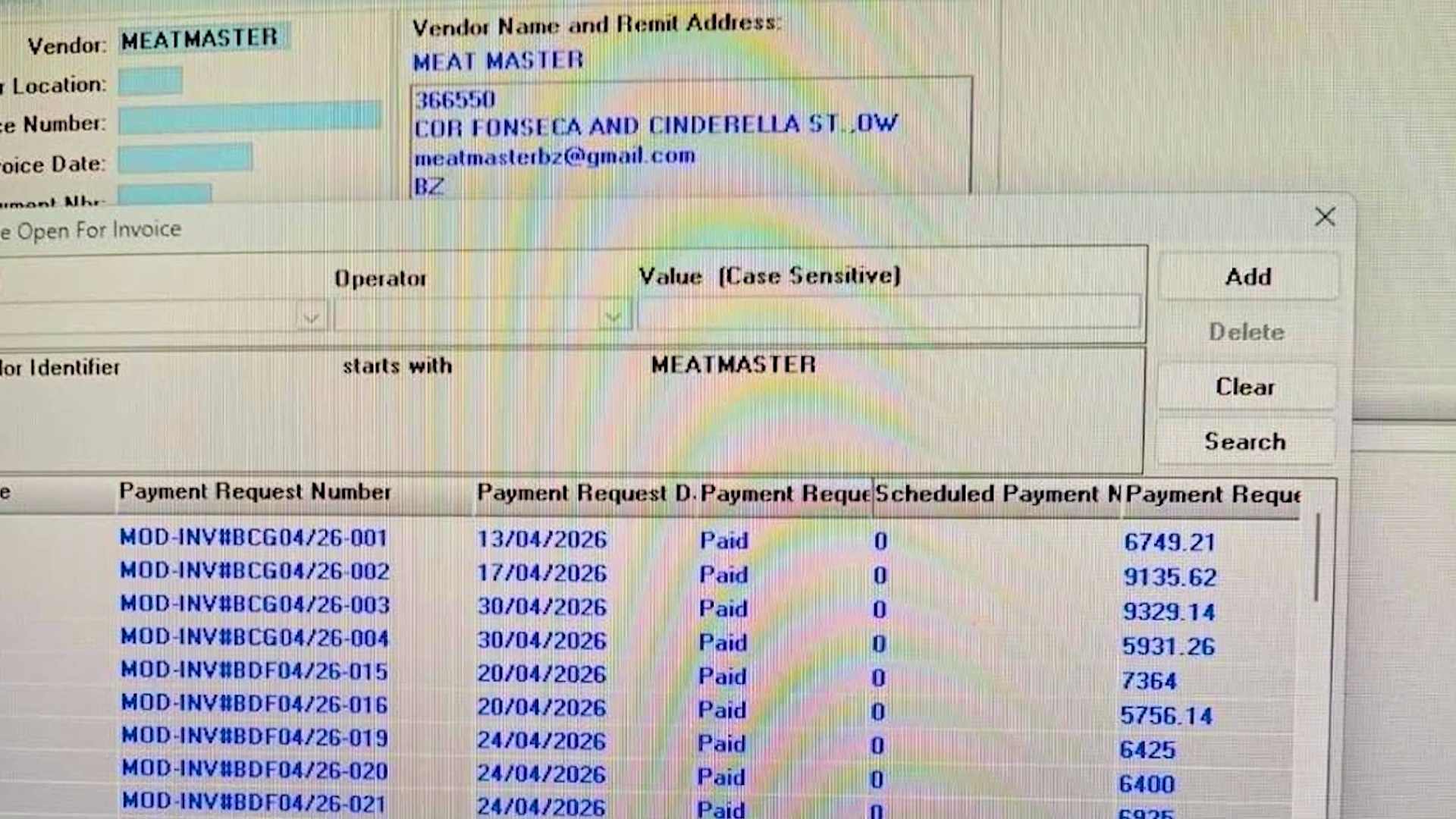
    In a high-stakes probe into public spending governance at one of the government’s most sensitive departments, the Auditor General’s Office has secured 15 boxes of five years of financial records from Belize’s Ministry of Defense, launching a thorough review that will examine potential conflicts of interest, procurement irregularities, and improper ties between elected officials and contracted suppliers.

    Auditor General Maria Rodriguez, in an interview with local outlet News Five, outlined that her team has prioritized investigation into alleged conflicts of interest, the core public concern that triggered the urgent record retrieval process. Following public claims of obvious conflicts of interest – including allegations that contracts were awarded to relatives of sitting ministers – Rodriguez emphasized that her office’s review will be strictly evidence-based, rejecting premature conclusions about wrongdoing.

    Under Belize’s constitution and public service regulations, public officials are required to avoid not just actual conflicts of interest, but also the perception of such conflicts. Rodriguez confirmed that her team is conducting its review in line with these constitutional requirements, with ongoing legal support to ensure all findings are legally sound. She pushed back against claims of obvious, pre-proven misconduct, noting that it would be unfair to label any party as guilty before documentary evidence is thoroughly reviewed.

    Amid public speculation about the experience and capability of the audit team, Rodriguez offered a full-throated defense of her staff. The lead auditor on the case is a certified fraud examiner (CFE) accredited by the Association of Certified Fraud Examiners, with a master’s degree, and all other team members hold bachelor’s degrees in accounting. With 26 years of personal experience as an auditor and a CFE credential herself, Rodriguez conducts final quality control checks on every report that leaves her office, saying any gaps that the team might miss would be caught in her review.

    She also addressed circulating misinformation and disinformation about the team’s qualifications, noting that even experienced auditors build their expertise on the job, and dismissing calls to rule out less tenured staff as unfair. Rodriguez added that the 15 boxes of records were retrieved immediately after the audit was announced, out of caution that documents might be removed or altered if the team delayed. The audit process has expanded to include interviews with multiple stakeholders and key players involved in the ministry’s procurement processes, with investigators working to trace all spending to contracted businesses, as is standard for financial probe.

    When the first audit report is completed by the end of September 2026, it will not be released directly to the public. Instead, it will first be submitted to Ministry of Defense CEO Francis Usher, with copies provided to the Financial Secretary and Accountant General. Critics have already questioned whether the final report will result in any meaningful action, but Rodriguez pushed back against these claims, pointing to a decade-long track record of impactful audit reports from her office dating back to 2015.

    “All our reports have created impact. We have not created a report that does not have impact,” Rodriguez said, adding that her office conducts audits to drive change, not just document procedural violations. She called on the public to trust the process: “I know that the expectations are high. I know that for sure, but I say trust the process, trust the work.”

    Rodriguez confirmed that all individuals named in the financial documentation will be called in for interviews, including Belmopan Area Representative Oscar Mira and former Minister Marin. While her office does not hold the authority to prosecute or discipline public officials directly, the audit will issue formal recommendations: if evidence of misconduct is found, the case can be referred to national police for criminal investigation or to the Public Service Commission for disciplinary action. The Auditor General’s office will also serve as witnesses in any resulting legal proceedings.

  • Requena Asked If His Ministry Uses Same Payment Practice

    Requena Asked If His Ministry Uses Same Payment Practice

    As an ongoing audit of Belize’s Ministry of Defense unfolds, a growing controversy over questionable low-value payment procedures has spilled over to other government portfolios, putting cabinet officials directly in the spotlight. On July 30, 2026, during a public event held in Belize City, Cabinet Minister Oscar Requena shared his perspective on the unfolding situation with reporters, acknowledging that the emerging scandal represents a significant test for the current administration that cannot be ignored.

    Requena, who leads a ministry tasked with advancing rural transformation initiatives—work that requires regular procurement of hardware and infrastructure supplies—was directly asked whether his department engages in the same under-$10,000 payment practice that is now the focus of official scrutiny. The practice has raised red flags among observers for its potential to circumvent formal public procurement rules designed to ensure accountability and transparency in government spending.

    When asked if the controversial payment structure amounts to a violation of procurement regulations, Requena avoided directly judging the practice used by other agencies, instead noting that every government ministry operates with its own internal administrative systems. He emphasized that regardless of transaction size—whether $10,000 or $50,000—core principles of full accountability and total transparency must govern all public spending. Requena added that the government already has clear financial regulations in place, and all officials with spending authority bear a personal responsibility to adhere to these rules.

    Pressed again to confirm whether his own ministry uses the scrutinized payment approach, Requena offered a clear, categorical denial. “I want to categorically say, no we don’t, and what I want to say is that we make sure that we follow the procedure,” he stated.

    On the broader controversy stemming from the Defense Ministry audit, Requena expressed confidence in the government’s response to the emerging issues. He argued that when public administrations face challenges, the appropriate path forward requires acknowledging problems, identifying their root causes, and putting permanent structures in place to resolve them. He noted that Prime Minister has already overseen the launch of a formal review process, and the public should allow that process to run its course. Ultimately, Requena said, the outcome of the process will guide necessary improvements to address gaps that have been exposed.

    This report is adapted from a transcript of an evening television news broadcast, with all translated statements from Kriol language adjusted to conform to standard English spelling conventions for clarity.